
What is Evolution Evolution Process by which populations
What is Evolution?
Evolution Process by which populations change overtime.
Population All the individuals of a species that live in the same area at the same time.
Species A group of closely related organisms (living things) ◦ Can mate to produce fertile offspring.
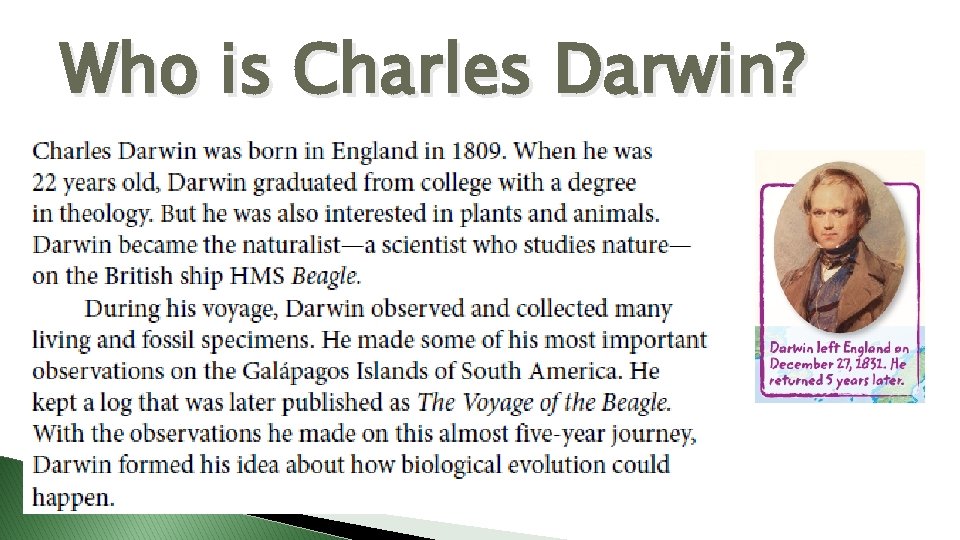
Who is Charles Darwin?
Charles Darwin Scientist credited with theory of evolution by natural selection.
Natural Selection and Adaptations Source: Discovery. com
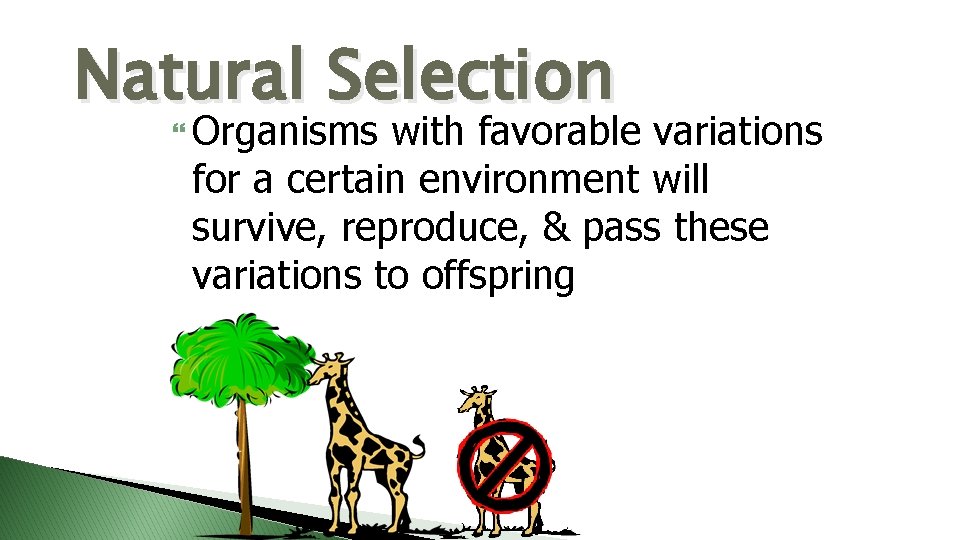
Natural Selection Organisms with favorable variations for a certain environment will survive, reproduce, & pass these variations to offspring
Natural Selection Organisms (living things) with favorable variations for a certain environment.
Selective Breeding Selection, by humans, of the animals & plants that are allowed to breed based on the traits that people want.
Selective Breeding When humans choose (select) to breed animals or plants to get the traits of animal or plant that they want.
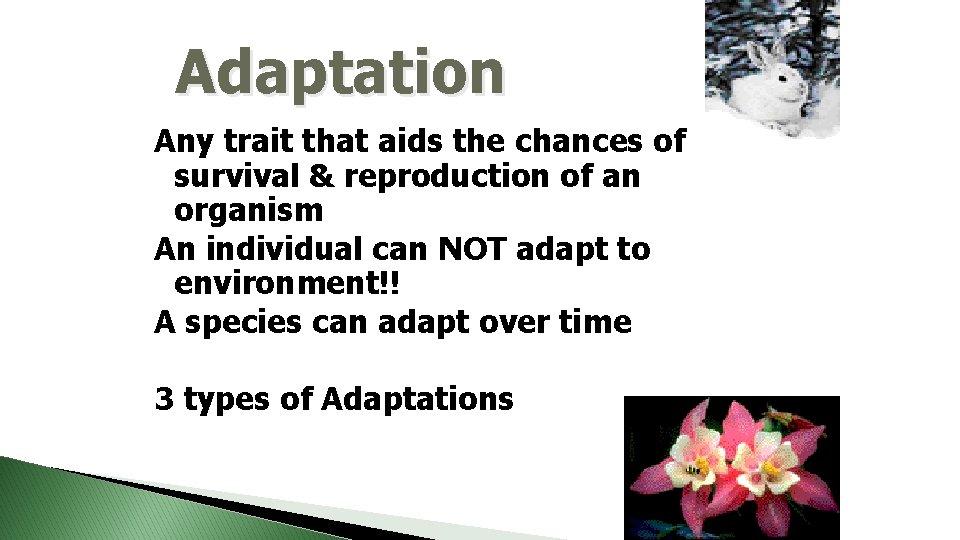
Adaptation Any trait that aids the chances of survival & reproduction of an organism An individual can NOT adapt to environment!! A species can adapt over time 3 types of Adaptations
Adaptation Any trait that aids (helps) the chances of survival and reproduction of an organism (living thing)
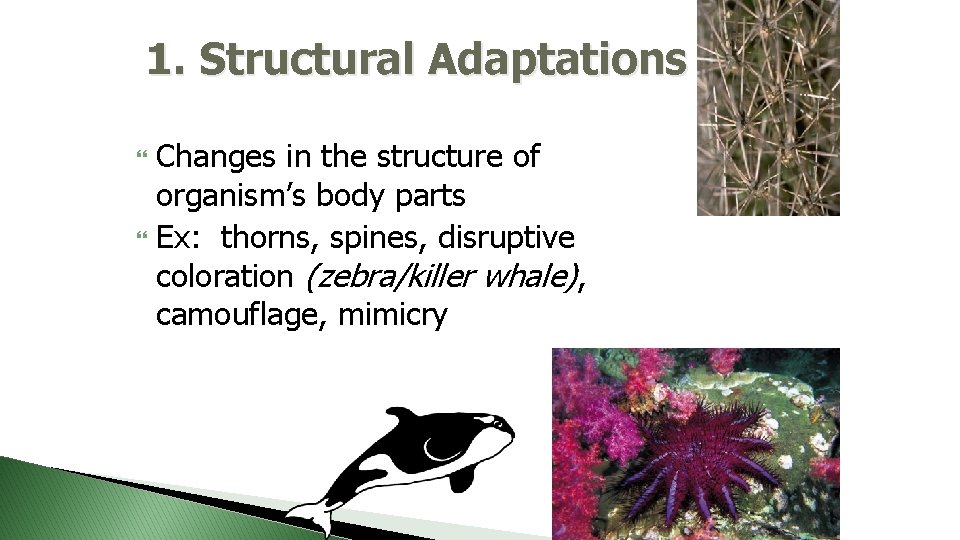
1. Structural Adaptations Changes in the structure of organism’s body parts Ex: thorns, spines, disruptive coloration (zebra/killer whale), camouflage, mimicry
Structural Adaptation Changes in the structure (form) of an organism’s body parts.
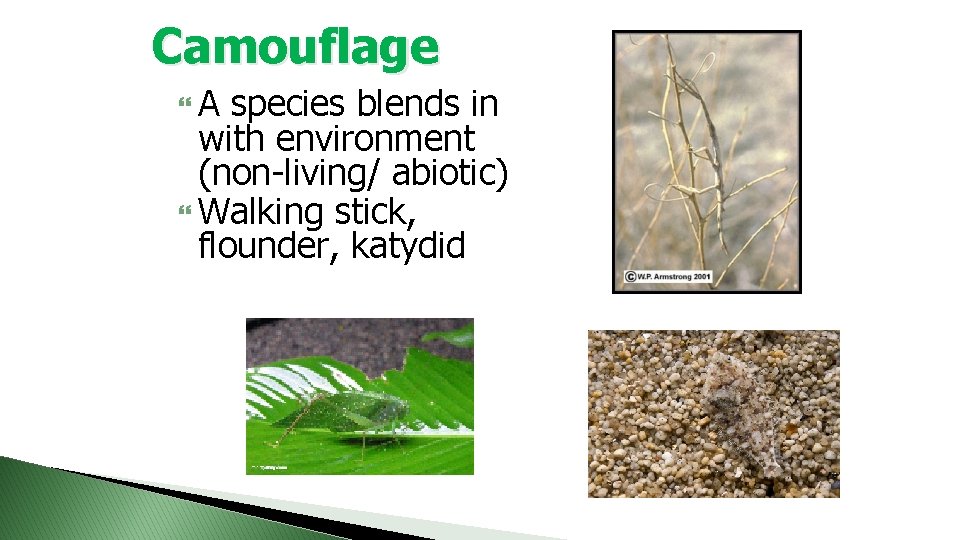
Camouflage A species blends in with environment (non-living/ abiotic) Walking stick, flounder, katydid
Camoflage When a species blends in with it’s environment.
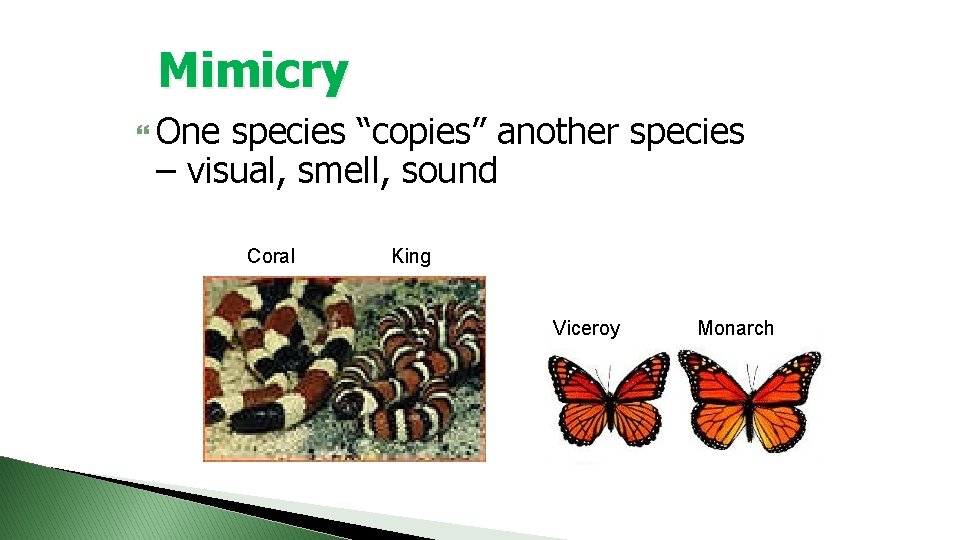
Mimicry One species “copies” another species – visual, smell, sound Coral King Viceroy Monarch
Mimicry When one species “copies” another species.
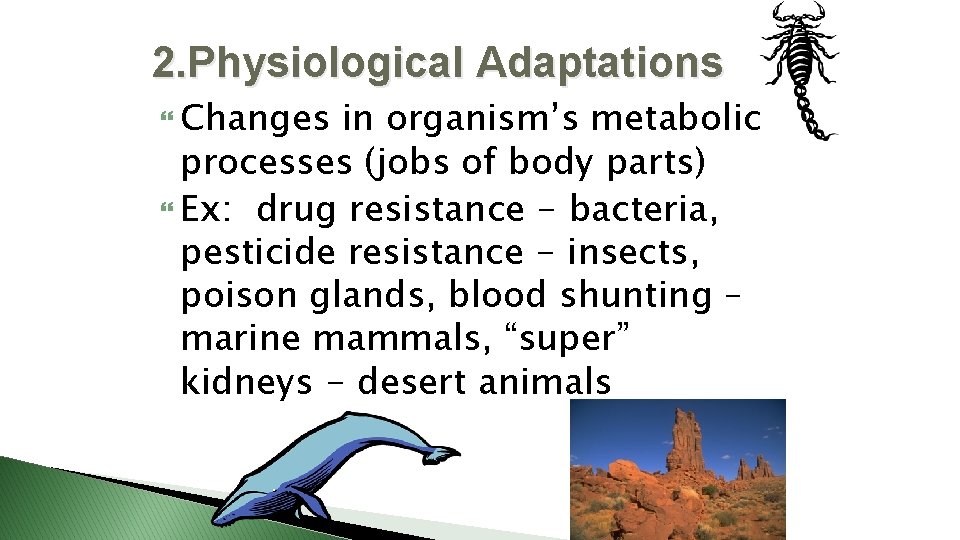
2. Physiological Adaptations Changes in organism’s metabolic processes (jobs of body parts) Ex: drug resistance - bacteria, pesticide resistance - insects, poison glands, blood shunting – marine mammals, “super” kidneys - desert animals
Physiological Adaptations Changes in an organism’s metabolic processes.
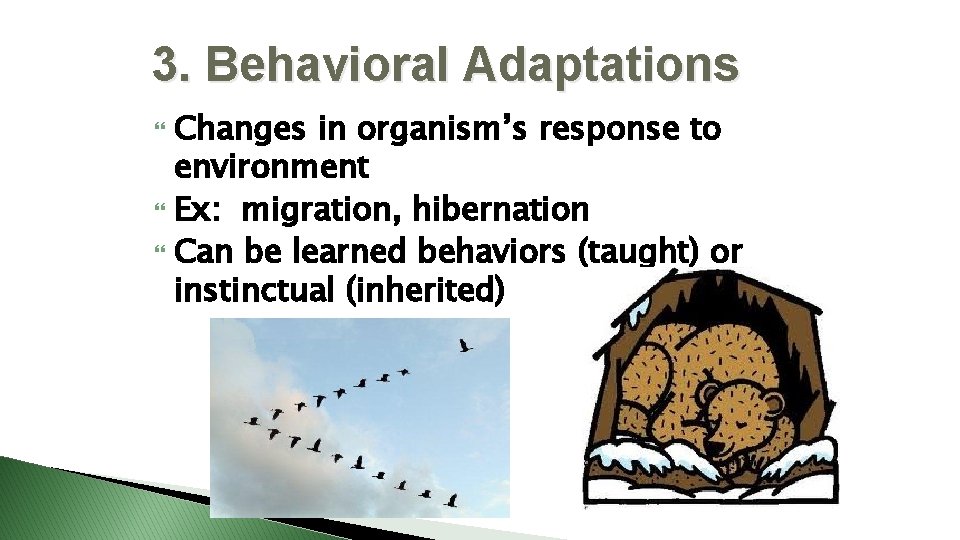
3. Behavioral Adaptations Changes in organism’s response to environment Ex: migration, hibernation Can be learned behaviors (taught) or instinctual (inherited)
Behavioral Adaptations Changes in organism’s (living things) response (reaction) to it’s environment.
- Slides: 23