
What is EVOLUTION An Introduction Martin Where did
- Slides: 15
What is EVOLUTION? An Introduction Martin
Where did theory of evolution come from? Ancient Greeks and Romans suggested Ø All living things are related Ø Living things had changed over time Martin
Then what? In 1809, Jean Baptiste de Lamarck proposed that traits developed by a parent, during his or her lifetime, would be passed down to the offspring. He was incorrect—there was no genetic change. Martin
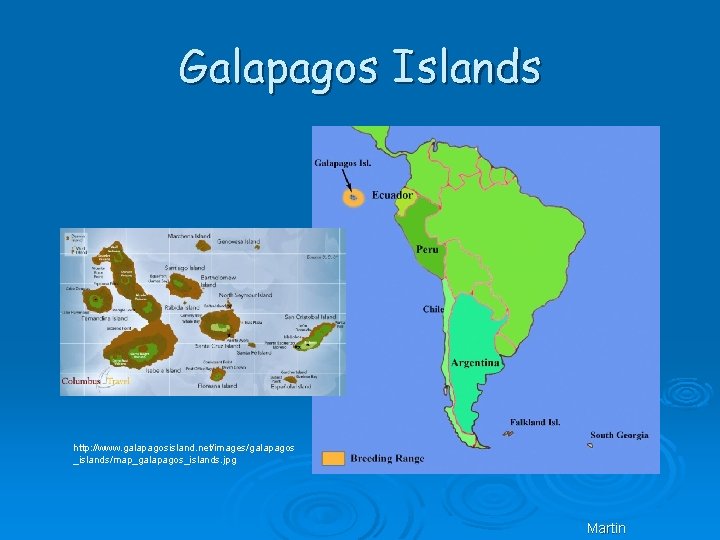
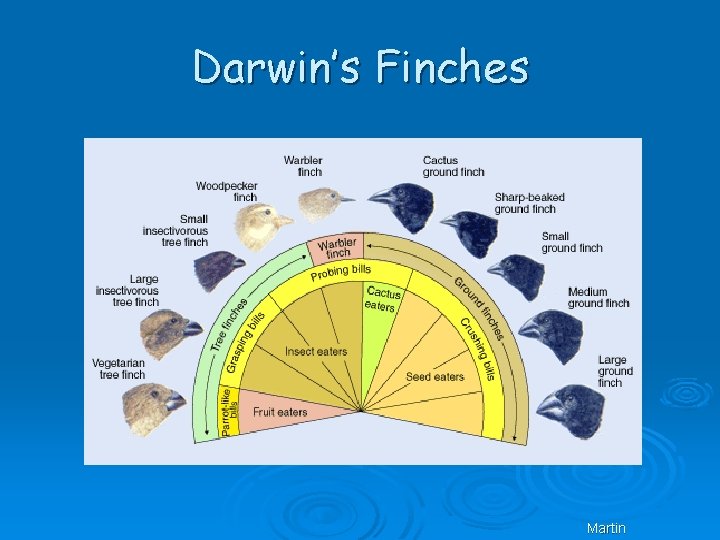
Charles Darwin In 1831, Darwin sailed from England on the H. M. S. Beagle Ø Explored the South American coast Ø Explored the wildlife of the Galapagos Islands Ø Observed 13 species of finches on the island that were similar to 1 species of finch he had seen on South America Martin
Galapagos Islands http: //www. galapagosisland. net/images/galapagos _islands/map_galapagos_islands. jpg Martin
Darwin’s Finches Martin
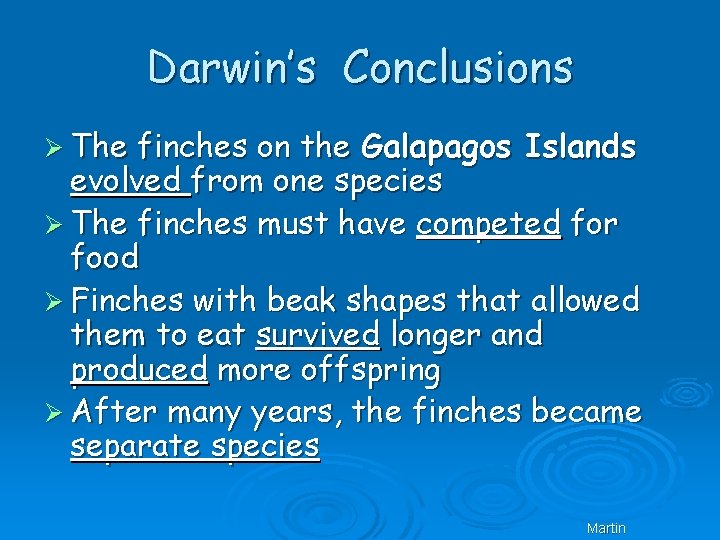
Darwin’s Conclusions Ø The finches on the Galapagos Islands evolved from one species Ø The finches must have competed for food Ø Finches with beak shapes that allowed them to eat survived longer and produced more offspring Ø After many years, the finches became separate species Martin
Darwin’s Book On the Origin of Species by Means of Natural Selection, published 1859 Ø Species were not specially created in their present forms, but evolved from ancestral forms Ø The mechanism for this evolution was natural selection Martin
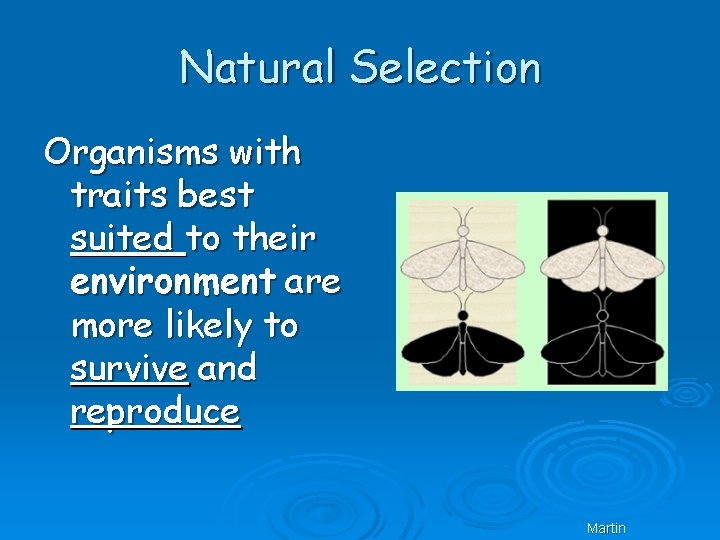
Natural Selection Organisms with traits best suited to their environment are more likely to survive and reproduce Martin
Principles of Natural Selection 1. Organisms produce more offspring than can survive 2. Differences, or variations, occur among individuals of a species. 3. Some variations are helpful. More individuals with these helpful variations survive and reproduce 4. Over time, the offspring of these individuals make up more of the species and eventually become a separate species Martin
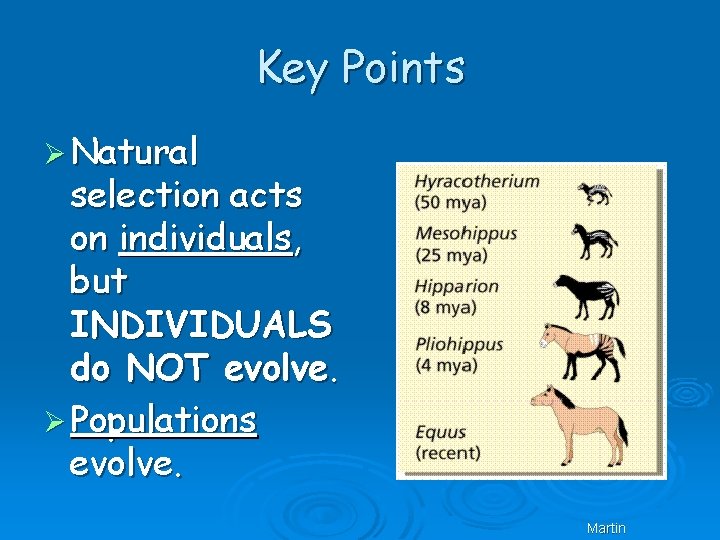
Key Points Ø Natural selection acts on individuals, but INDIVIDUALS do NOT evolve. Ø Populations evolve. Martin
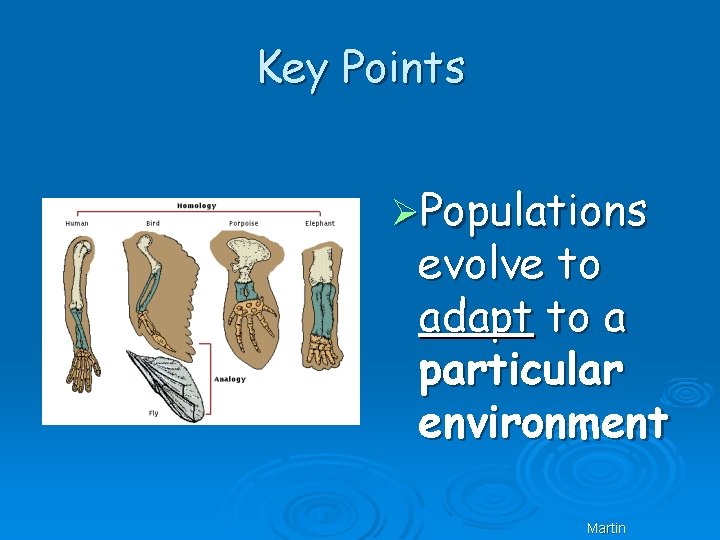
Key Points ØPopulations evolve to adapt to a particular environment Martin
Key Points Ø Selection act on inherited traits, not acquired traits (Remember Lamarck was incorrect) Martin
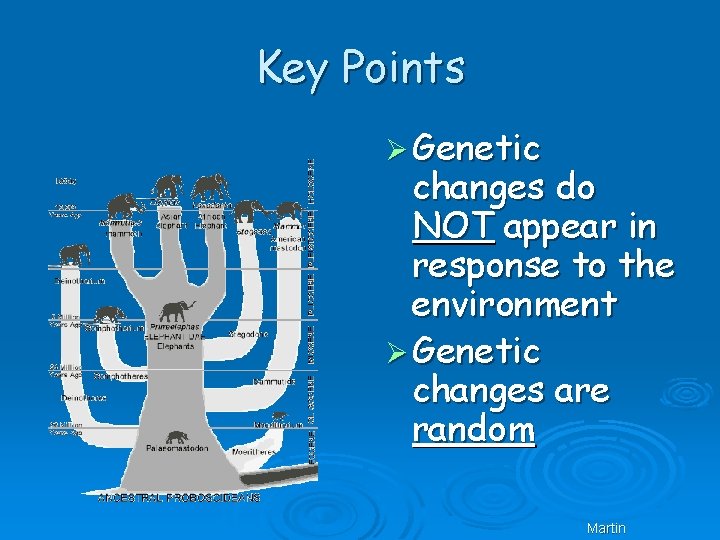
Key Points Ø Genetic changes do NOT appear in response to the environment Ø Genetic changes are random Martin
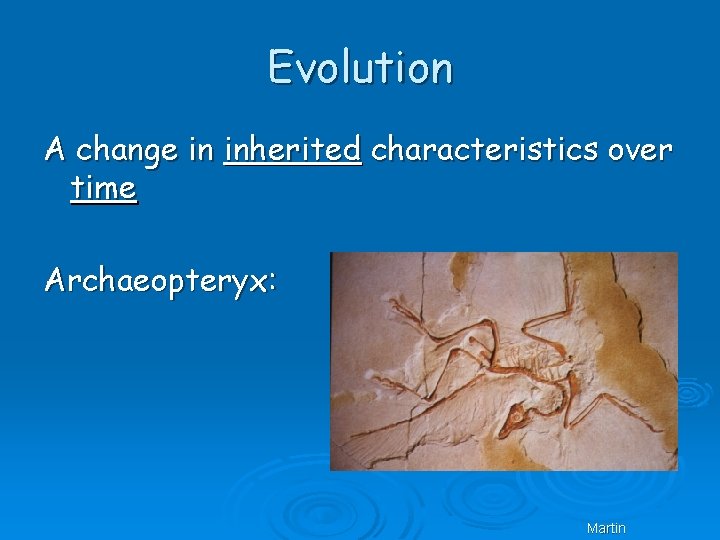
Evolution A change in inherited characteristics over time Archaeopteryx: Martin