
What is Ergonomics Ergonomics is the science and

- Slides: 31
What is Ergonomics? Ergonomics is the science and practice of designing jobs or workplaces to match the capabilities and limitations of the human body. F Benefits – – of ergonomics include: safer jobs with fewer injuries increased efficiency and productivity improved quality and fewer errors improved morale
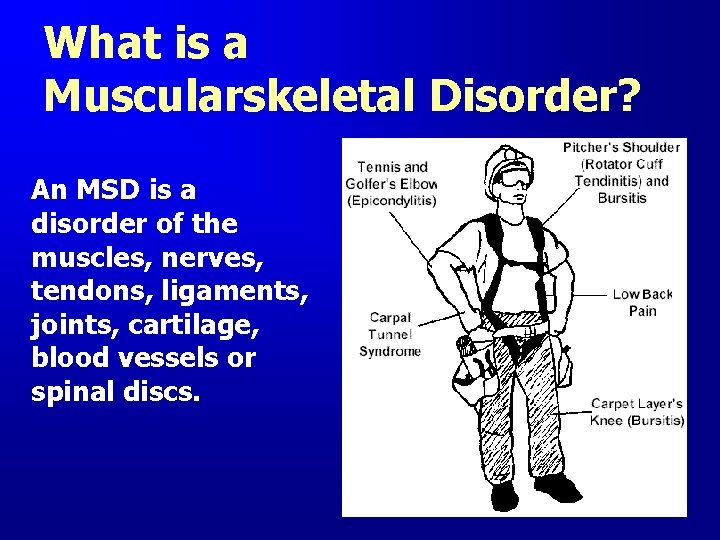
What is a Muscularskeletal Disorder? An MSD is a disorder of the muscles, nerves, tendons, ligaments, joints, cartilage, blood vessels or spinal discs.
WHAT IS A WMSD? Workplace MSD’s are caused by exposure to risk factors: 3 Repetition 3 Force 3 Awkward Postures 3 Contact Stress 3 Vibration
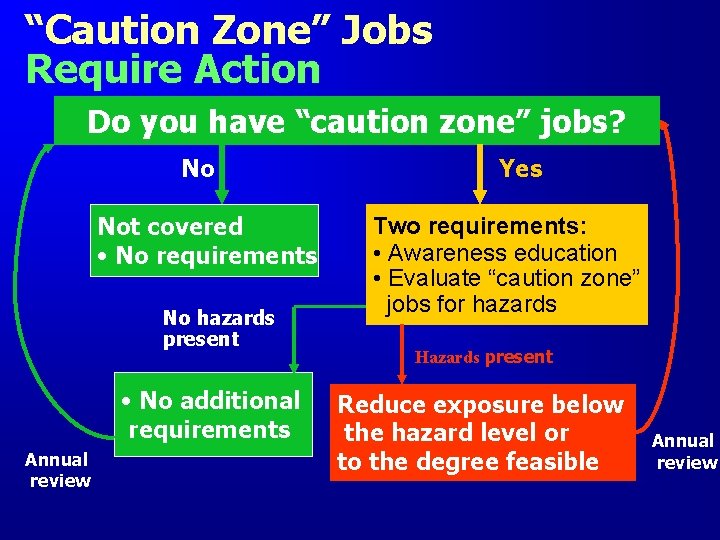
“Caution Zone” Jobs Require Action Do you have “caution zone” jobs? No Not covered • No requirements No hazards present • No additional requirements Annual review Yes Two requirements: • Awareness education • Evaluate “caution zone” jobs for hazards Hazards present Reduce exposure below the hazard level or to the degree feasible Annual review
Caution Zone What is a “Caution Zone” job?
Look for These Indicators: Awkward Postures F High Hand Force F Highly Repetitive Motion F Repeated Impact F Heavy, Frequent or Awkward Lifting F Moderate to High Hand -Arm Vibration F Caution Zone
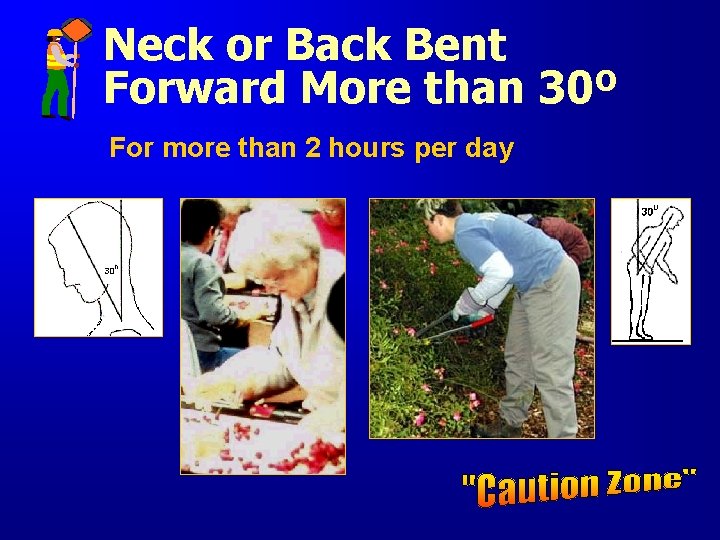
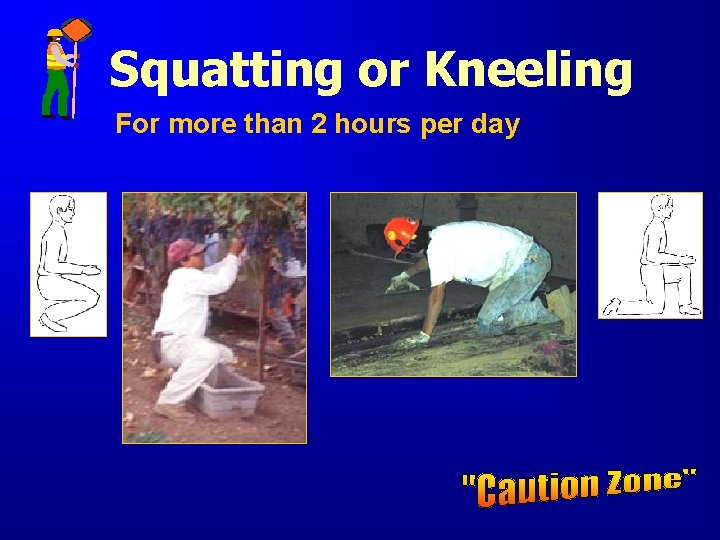
Awkward Postures Being in these work positions for more than 2 hours total per day – – – Hands above head Elbow above shoulder Back bent forward more than 30 degrees Neck bent more than 30 degrees Squatting Kneeling
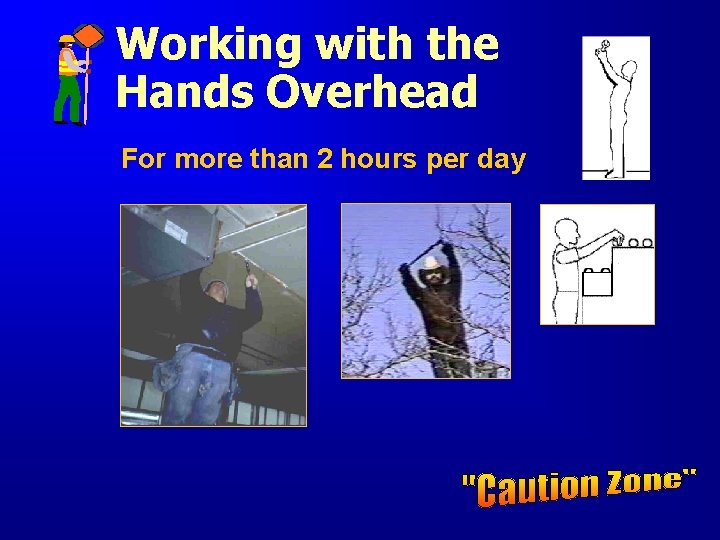
Working with the Hands Overhead For more than 2 hours per day
Neck or Back Bent Forward More than 30º For more than 2 hours per day
Squatting or Kneeling For more than 2 hours per day
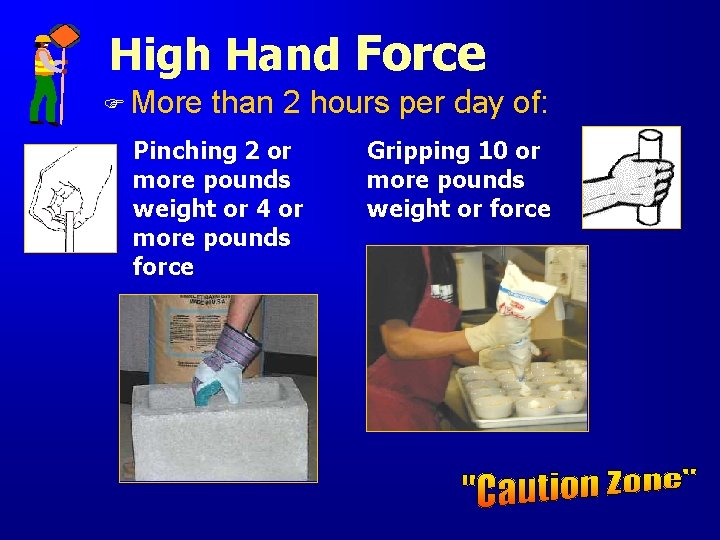
High Hand Force F More than 2 hours per day of: Pinching 2 or more pounds weight or 4 or more pounds force Gripping 10 or more pounds weight or force
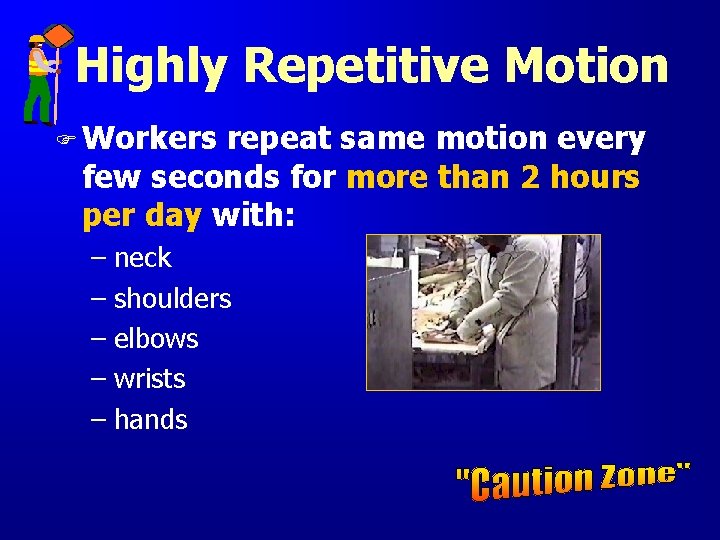
Highly Repetitive Motion F Workers repeat same motion every few seconds for more than 2 hours per day with: – neck – shoulders – elbows – wrists – hands
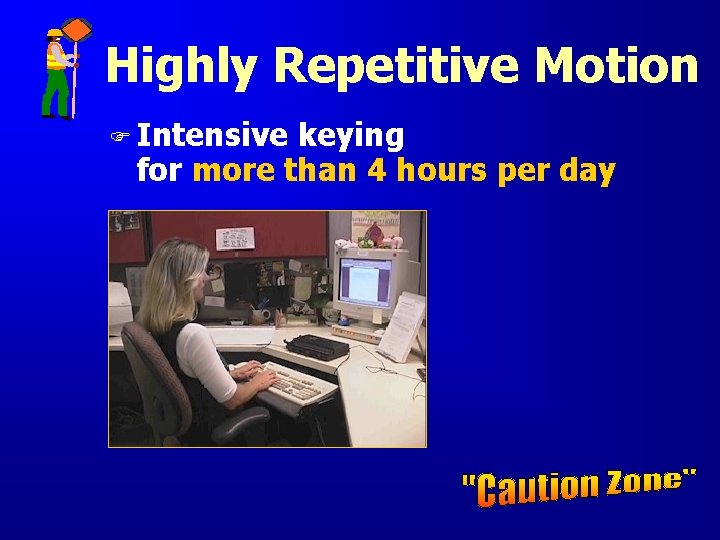
Highly Repetitive Motion F Intensive keying for more than 4 hours per day
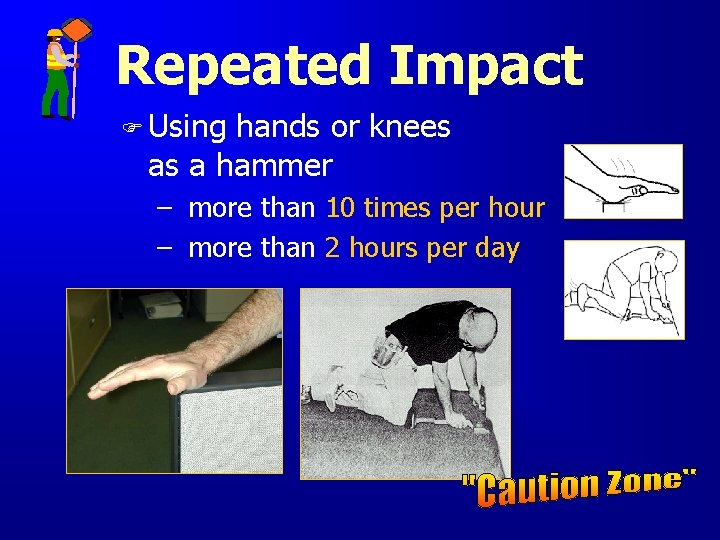
Repeated Impact F Using hands or knees as a hammer – more than 10 times per hour – more than 2 hours per day
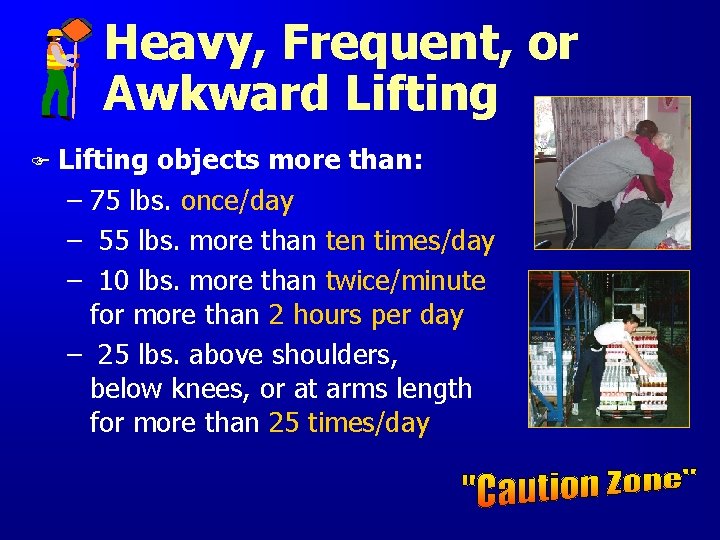
Heavy, Frequent, or Awkward Lifting F Lifting objects more than: – 75 lbs. once/day – 55 lbs. more than ten times/day – 10 lbs. more than twice/minute for more than 2 hours per day – 25 lbs. above shoulders, below knees, or at arms length for more than 25 times/day
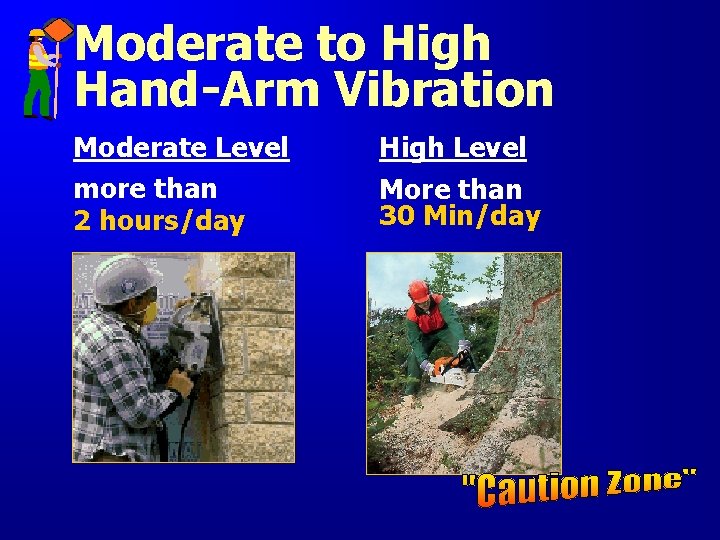
Moderate to High Hand-Arm Vibration Moderate Level more than 2 hours/day High Level More than 30 Min/day
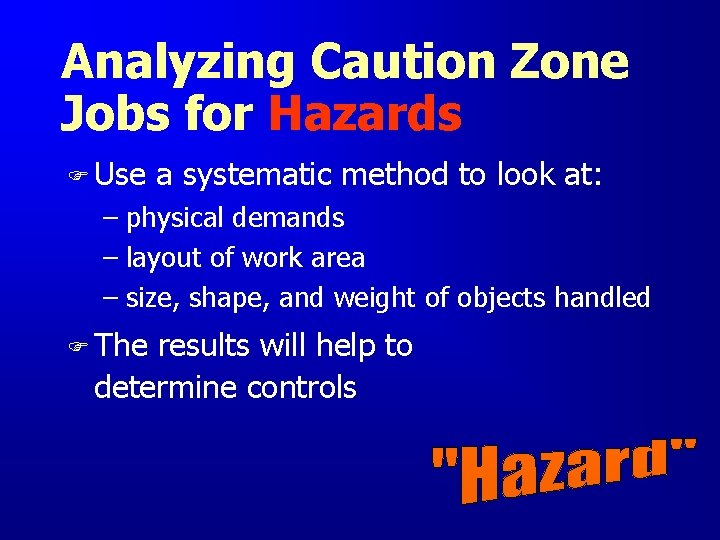
Analyzing Caution Zone Jobs for Hazards F Use a systematic method to look at: – physical demands – layout of work area – size, shape, and weight of objects handled F The results will help to determine controls
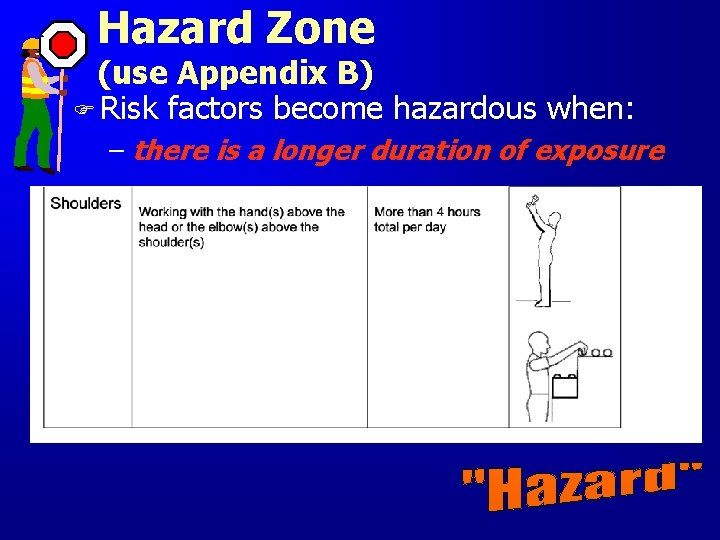
Hazard Zone (use Appendix B) F Risk factors become hazardous when: – there is a longer duration of exposure
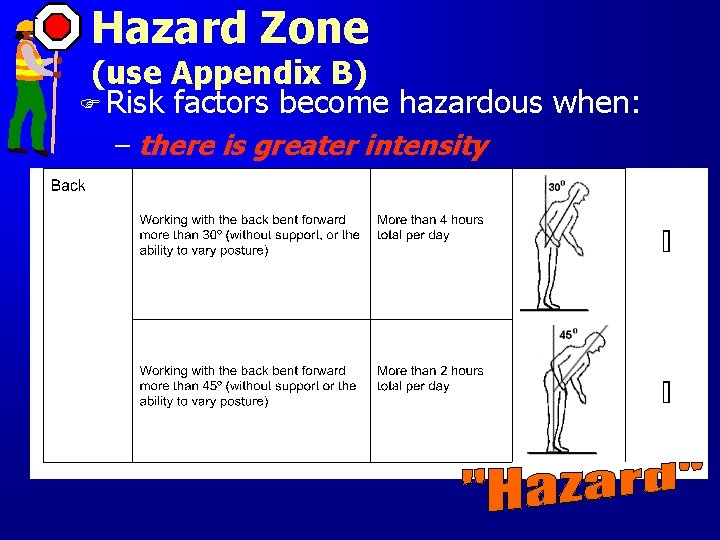
Hazard Zone (use Appendix B) F Risk factors become hazardous when: – there is greater intensity
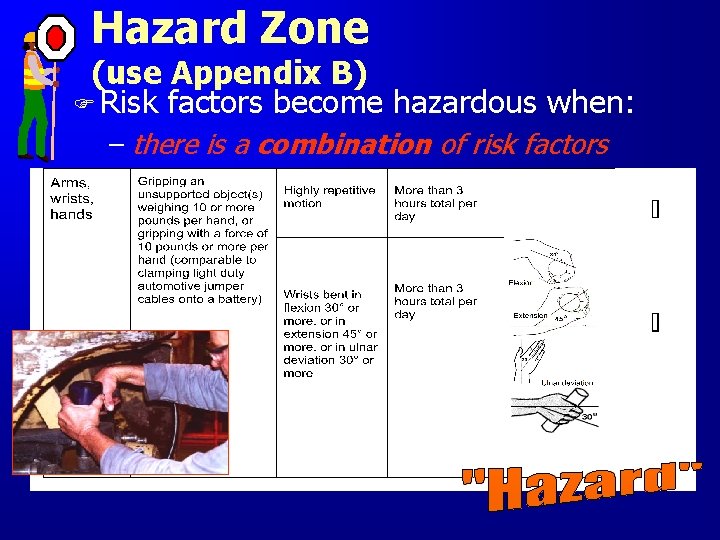
Hazard Zone (use Appendix B) F Risk factors become hazardous when: – there is a combination of risk factors
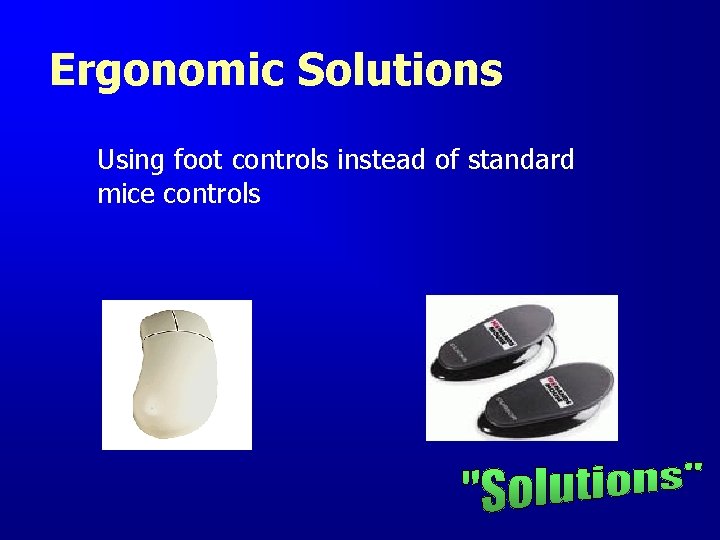
Ergonomic Solutions Using foot controls instead of standard mice controls
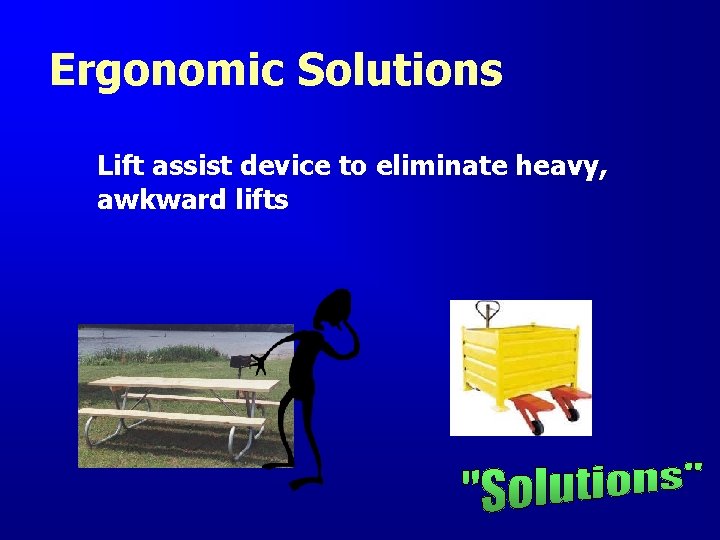
Ergonomic Solutions Lift assist device to eliminate heavy, awkward lifts
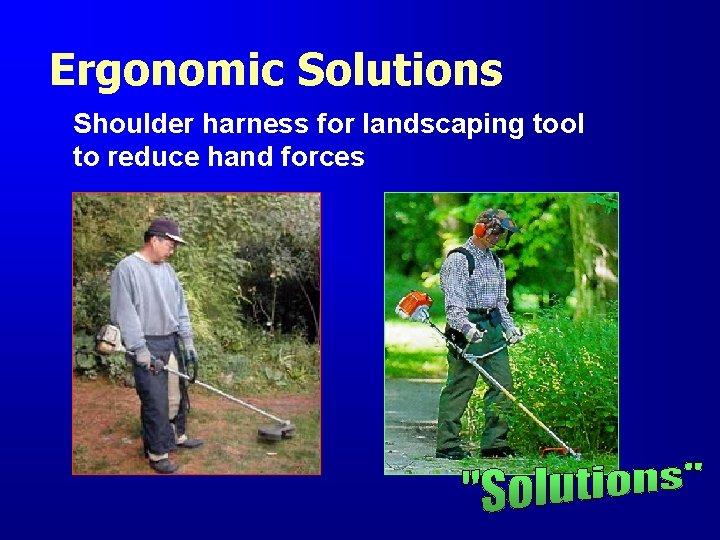
Ergonomic Solutions Shoulder harness for landscaping tool to reduce hand forces
Ergonomic Solutions Voice activated software to eliminate keystrokes
If You Have “Caution Zone” Jobs F Begin an employee awareness education program F Analyze your workplace for hazards F Reduce any hazards you find
Ergonomics Awareness Education Should: F Provide information on all “caution zone” risk factors F Show the types, symptoms and impacts of WMSDs F Show the importance of early reporting of symptoms F Identify the hazards and measures to reduce them F Teach the requirements of the ergonomics rule
Reducing Identified Hazards F You need to reduce hazards to below hazard level, or to a degree technologically and economically feasible through: – Engineering and administrative controls (preferred) and/or – Individual work practices and PPE F Employers are not required to reduce employee hours to comply
Job-Specific Training F Job-specific training is required only if controls change the job or work practices F Training must include: – hazards of the work activities – safe work practices – proper use and maintenance of control measures
Employee Involvement F Your safety committee should be involved in selecting the methods of employee participation F Involve your employees in: – Analyzing “Caution Zone” Jobs – Selecting hazard control methods – Reviewing ergonomics activities annually F Results should be shared with your safety committee
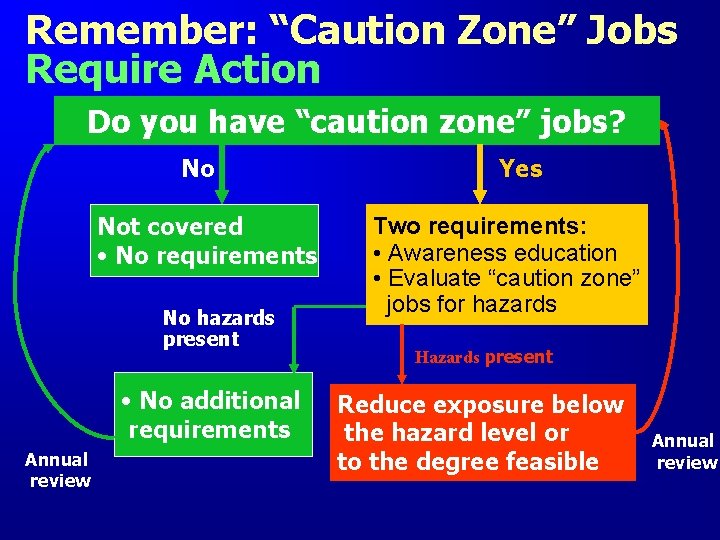
Remember: “Caution Zone” Jobs Require Action Do you have “caution zone” jobs? No Not covered • No requirements No hazards present • No additional requirements Annual review Yes Two requirements: • Awareness education • Evaluate “caution zone” jobs for hazards Hazards present Reduce exposure below the hazard level or to the degree feasible Annual review
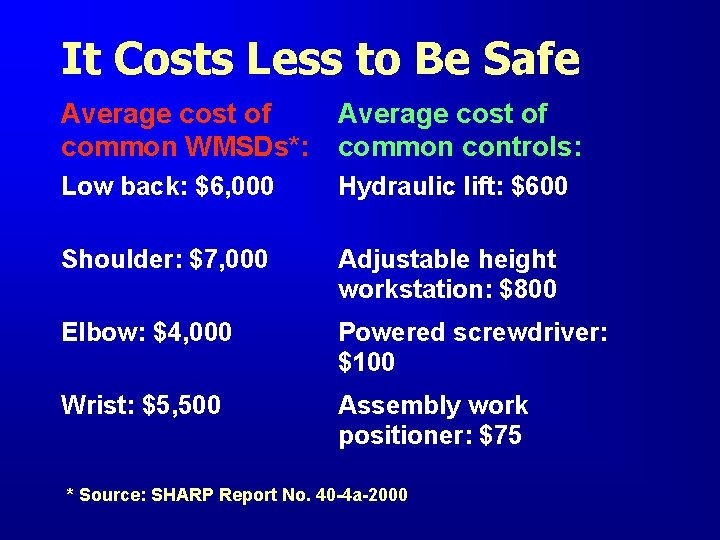
It Costs Less to Be Safe Average cost of common WMSDs*: Average cost of common controls: Low back: $6, 000 Hydraulic lift: $600 Shoulder: $7, 000 Adjustable height workstation: $800 Elbow: $4, 000 Powered screwdriver: $100 Wrist: $5, 500 Assembly work positioner: $75 * Source: SHARP Report No. 40 -4 a-2000