
What is Equality Initial Ideas Q 1 What
- Slides: 21
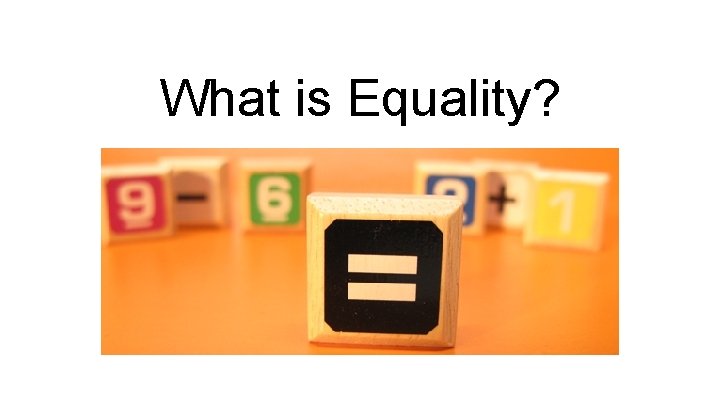
What is Equality?
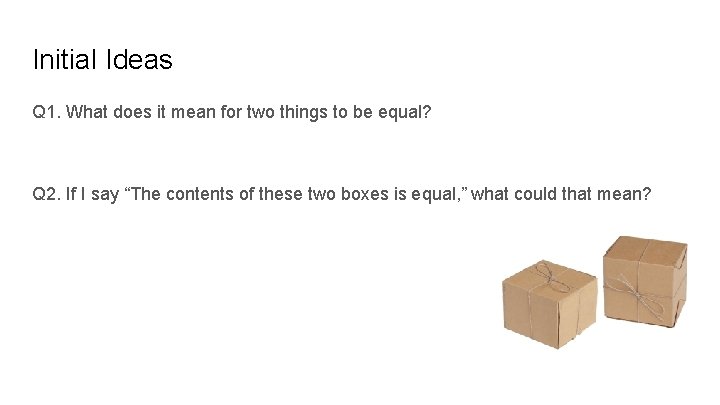
Initial Ideas Q 1. What does it mean for two things to be equal? Q 2. If I say “The contents of these two boxes is equal, ” what could that mean?
❖ With your group, choose one best response for each question. ❖ Draw and explain your idea on a whiteboard. ❖ Be prepared to present your ideas.
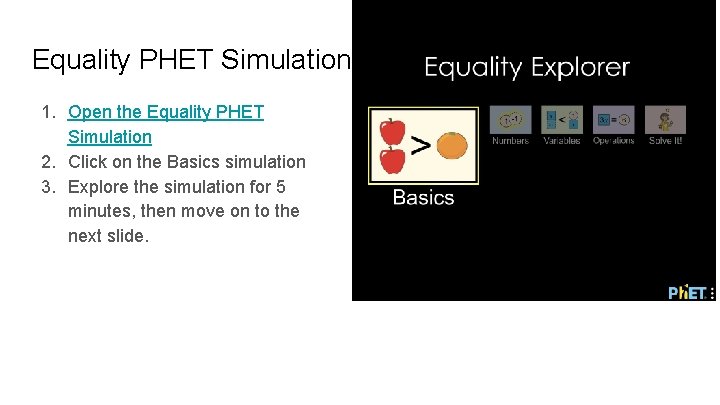
Equality PHET Simulation 1. Open the Equality PHET Simulation 2. Click on the Basics simulation 3. Explore the simulation for 5 minutes, then move on to the next slide.
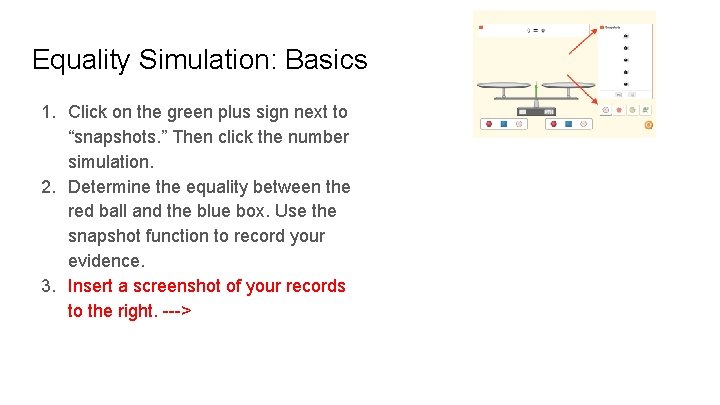
Equality Simulation: Basics 1. Click on the green plus sign next to “snapshots. ” Then click the number simulation. 2. Determine the equality between the red ball and the blue box. Use the snapshot function to record your evidence. 3. Insert a screenshot of your records to the right. --->
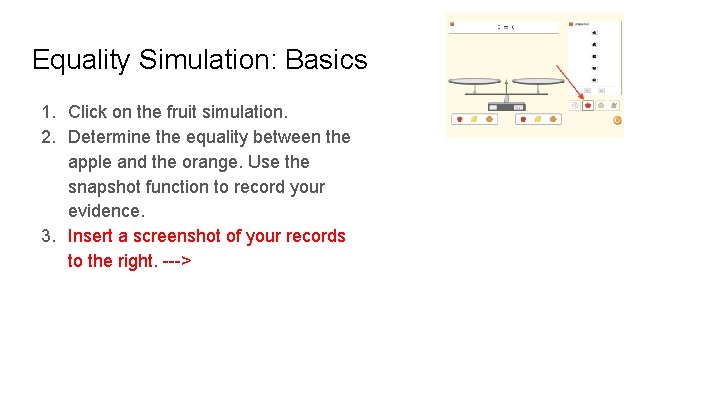
Equality Simulation: Basics 1. Click on the fruit simulation. 2. Determine the equality between the apple and the orange. Use the snapshot function to record your evidence. 3. Insert a screenshot of your records to the right. --->
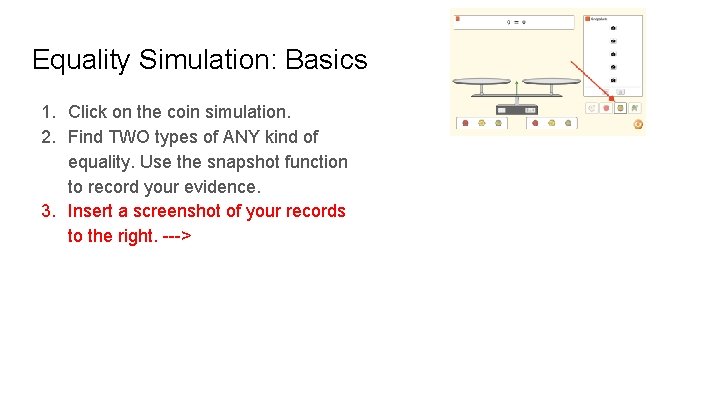
Equality Simulation: Basics 1. Click on the coin simulation. 2. Find TWO types of ANY kind of equality. Use the snapshot function to record your evidence. 3. Insert a screenshot of your records to the right. --->
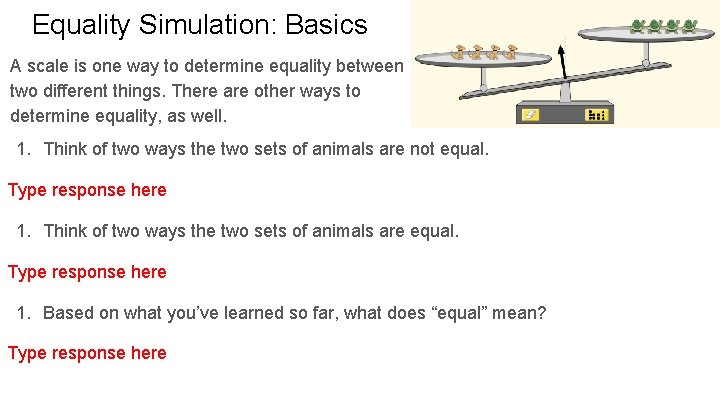
Equality Simulation: Basics A scale is one way to determine equality between two different things. There are other ways to determine equality, as well. 1. Think of two ways the two sets of animals are not equal. Type response here 1. Think of two ways the two sets of animals are equal. Type response here 1. Based on what you’ve learned so far, what does “equal” mean? Type response here
❖ With your group, choose one best response for each question on the previous slide. ❖ Draw and explain your idea on a whiteboard. ❖ Be prepared to present your ideas.
Equality PHET Simulation 1. Open the Equality PHET Simulation 2. Click on the Numbers simulation 3. Explore the simulation for 5 minutes, then move on to the next slide.
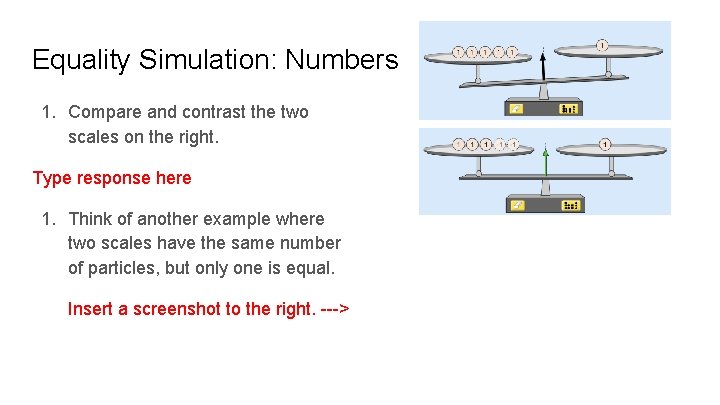
Equality Simulation: Numbers 1. Compare and contrast the two scales on the right. Type response here 1. Think of another example where two scales have the same number of particles, but only one is equal. Insert a screenshot to the right. --->
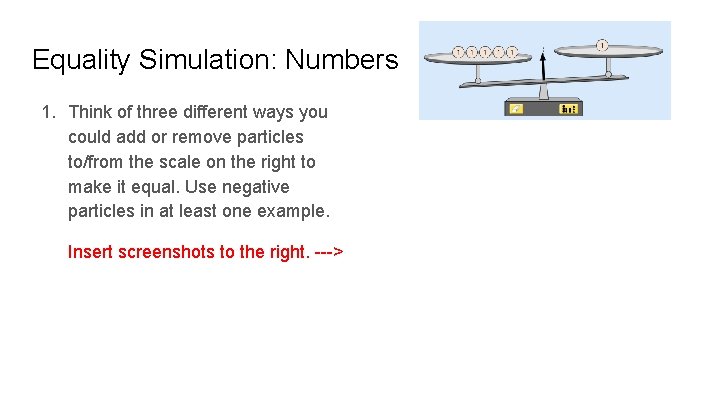
Equality Simulation: Numbers 1. Think of three different ways you could add or remove particles to/from the scale on the right to make it equal. Use negative particles in at least one example. Insert screenshots to the right. --->
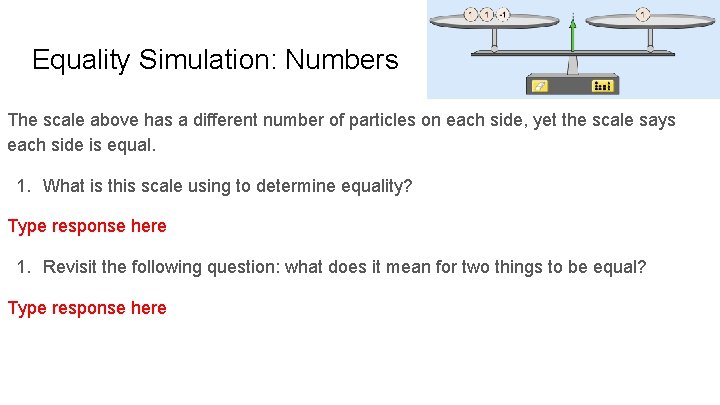
Equality Simulation: Numbers The scale above has a different number of particles on each side, yet the scale says each side is equal. 1. What is this scale using to determine equality? Type response here 1. Revisit the following question: what does it mean for two things to be equal? Type response here
❖ With your group, choose one best response for each question on the previous slide. ❖ Draw and explain your idea on a whiteboard. ❖ Be prepared to present your ideas.
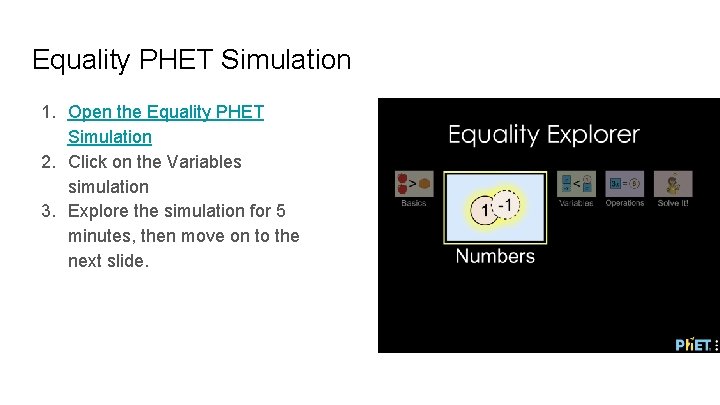
Equality PHET Simulation 1. Open the Equality PHET Simulation 2. Click on the Variables simulation 3. Explore the simulation for 5 minutes, then move on to the next slide.
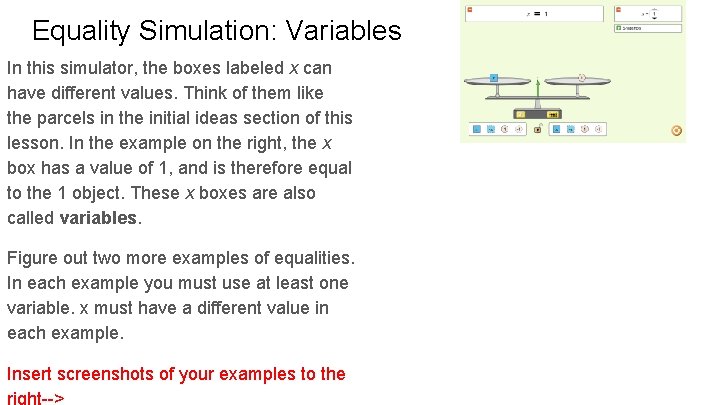
Equality Simulation: Variables In this simulator, the boxes labeled x can have different values. Think of them like the parcels in the initial ideas section of this lesson. In the example on the right, the x box has a value of 1, and is therefore equal to the 1 object. These x boxes are also called variables. Figure out two more examples of equalities. In each example you must use at least one variable. x must have a different value in each example. Insert screenshots of your examples to the right-->
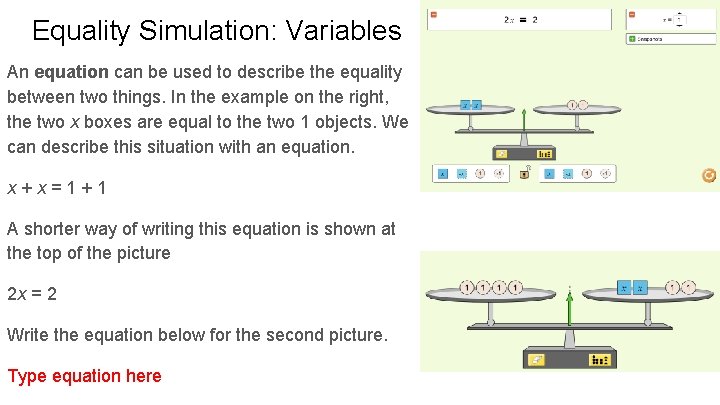
Equality Simulation: Variables An equation can be used to describe the equality between two things. In the example on the right, the two x boxes are equal to the two 1 objects. We can describe this situation with an equation. x+x=1+1 A shorter way of writing this equation is shown at the top of the picture 2 x = 2 Write the equation below for the second picture. Type equation here
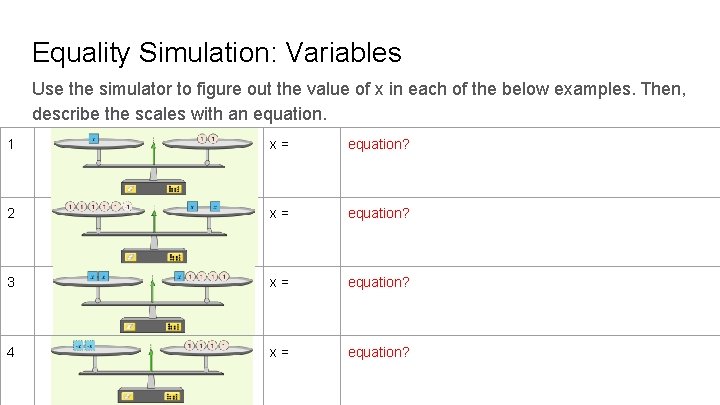
Equality Simulation: Variables Use the simulator to figure out the value of x in each of the below examples. Then, describe the scales with an equation. 1 x= equation? 2 x= equation? 3 x= equation? 4 x= equation?
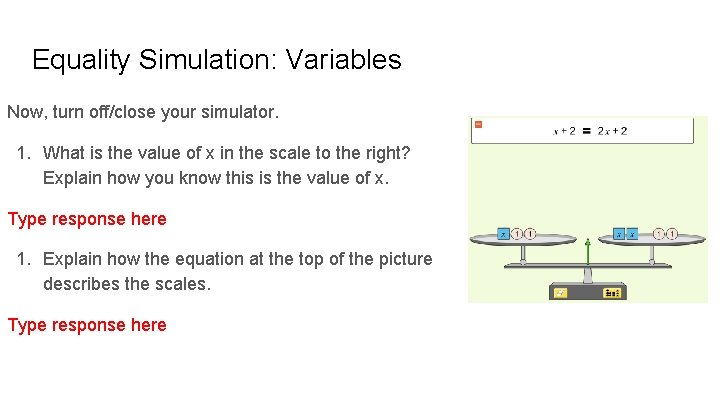
Equality Simulation: Variables Now, turn off/close your simulator. 1. What is the value of x in the scale to the right? Explain how you know this is the value of x. Type response here 1. Explain how the equation at the top of the picture describes the scales. Type response here
❖ With your group, choose one best response for each question on the previous slide. ❖ Draw and explain your idea on a whiteboard. ❖ Be prepared to present your ideas.
Equality: Summary In life, we sometimes encounter things that appear to be equal in some ways, but are not equal in other ways. In math, we use the term “equal” to refer to two things that are the same in some determined, measurable way. A scale is one way of determining if two things are equal. Things can also be equal in number, in length of time, in monetary value, in location, etc. Often in math, we discuss equality with numbers alone. For example, we can say 4 = 4, or 1 + 3 = 2 + 2 without discussing what these numbers really represent. We can use symbols to represent a statement of equality. An equation uses the equals symbol = to show that two things are equal in some way. You can think of an equation as saying “Everything together on the left side of the = has the same value as everything together on the right side of the =”