
What is Environmental Health Inside Outside A Student
- Slides: 46
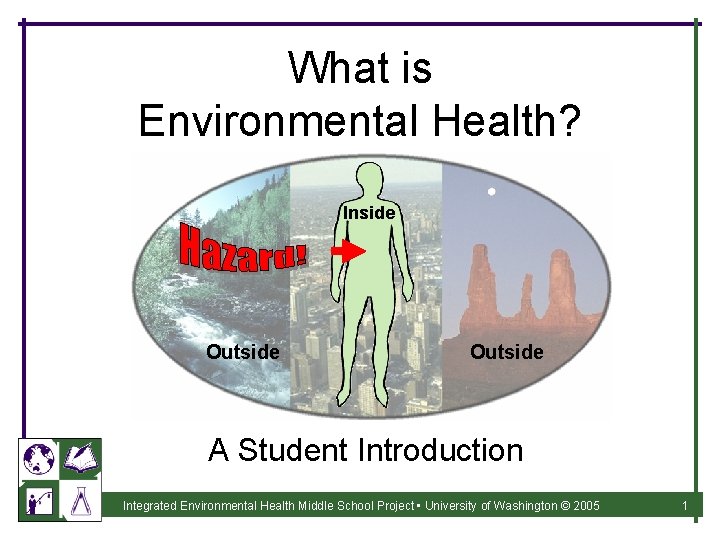
What is Environmental Health? Inside Outside A Student Introduction Integrated Environmental Health Middle School Project • University of Washington © 2005 1
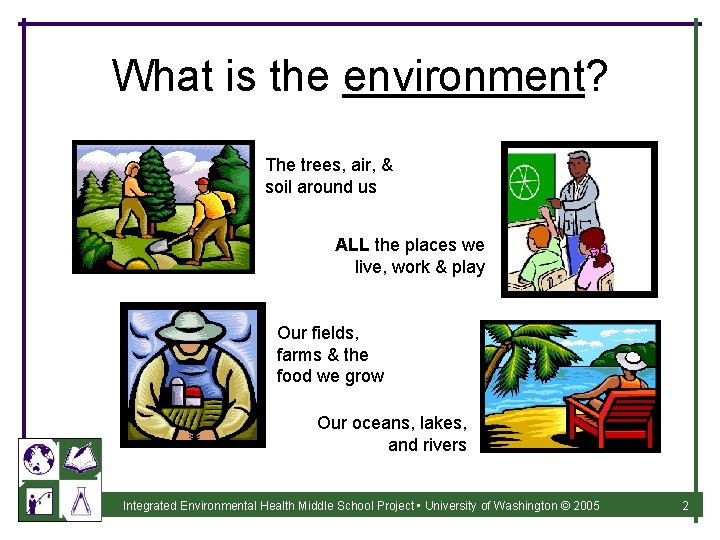
What is the environment? The trees, air, & soil around us ALL the places we live, work & play Our fields, farms & the food we grow Our oceans, lakes, and rivers Integrated Environmental Health Middle School Project • University of Washington © 2005 2
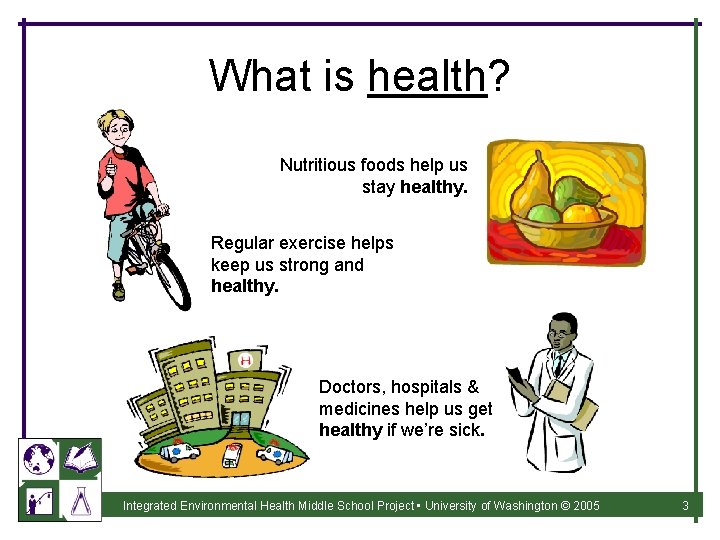
What is health? Nutritious foods help us stay healthy. Regular exercise helps keep us strong and healthy. Doctors, hospitals & medicines help us get healthy if we’re sick. Integrated Environmental Health Middle School Project • University of Washington © 2005 3
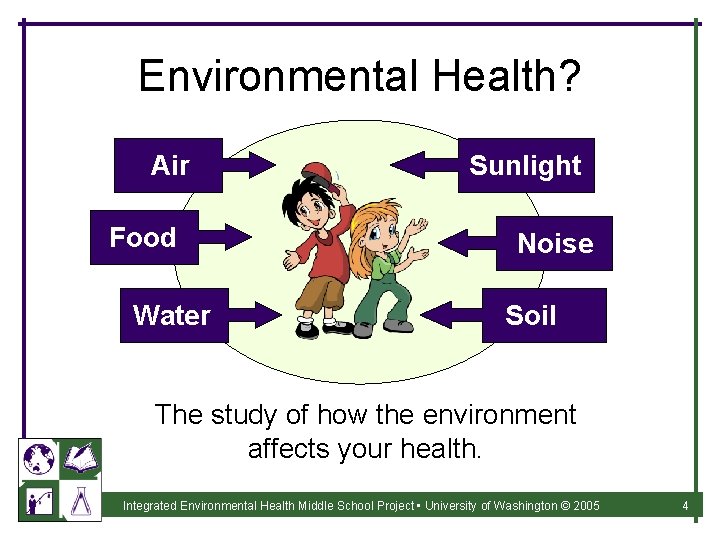
Environmental Health? Air Food Water Sunlight Noise Soil The study of how the environment affects your health. Integrated Environmental Health Middle School Project • University of Washington © 2005 4
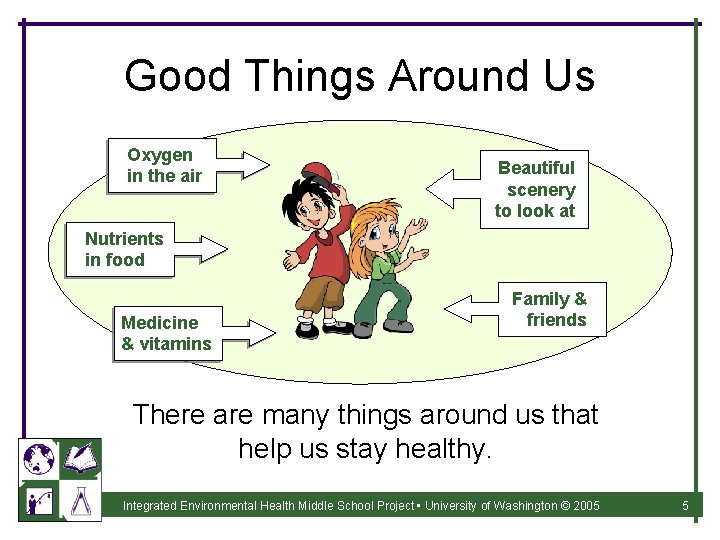
Good Things Around Us Oxygen in the air Beautiful scenery to look at Nutrients in food Medicine & vitamins Family & friends There are many things around us that help us stay healthy. Integrated Environmental Health Middle School Project • University of Washington © 2005 5
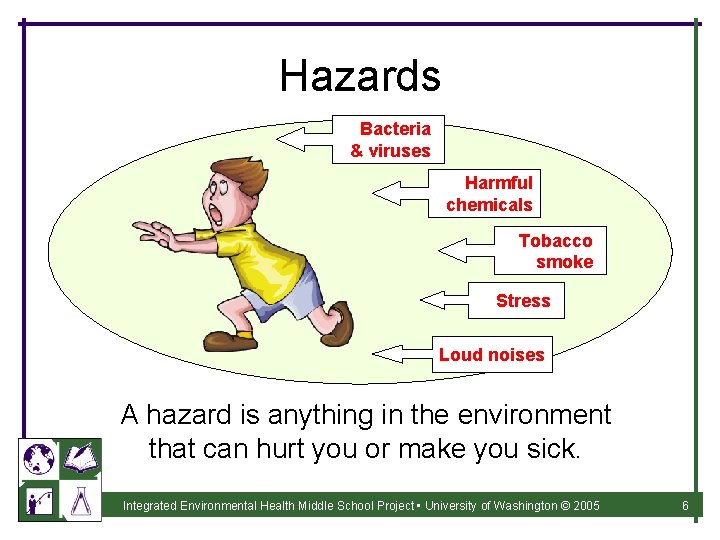
Hazards Bacteria & viruses Harmful chemicals Tobacco smoke Stress Loud noises A hazard is anything in the environment that can hurt you or make you sick. Integrated Environmental Health Middle School Project • University of Washington © 2005 6
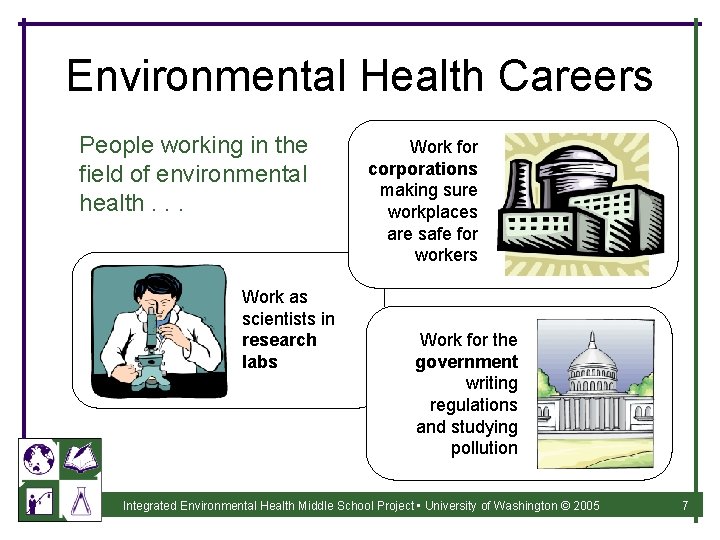
Environmental Health Careers People working in the field of environmental health. . . Work as scientists in research labs Work for corporations making sure workplaces are safe for workers Work for the government writing regulations and studying pollution Integrated Environmental Health Middle School Project • University of Washington © 2005 7
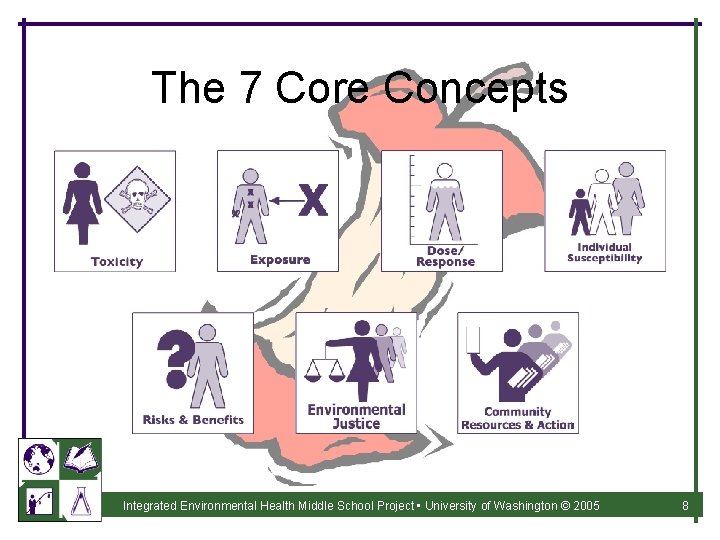
The 7 Core Concepts Integrated Environmental Health Middle School Project • University of Washington © 2005 8
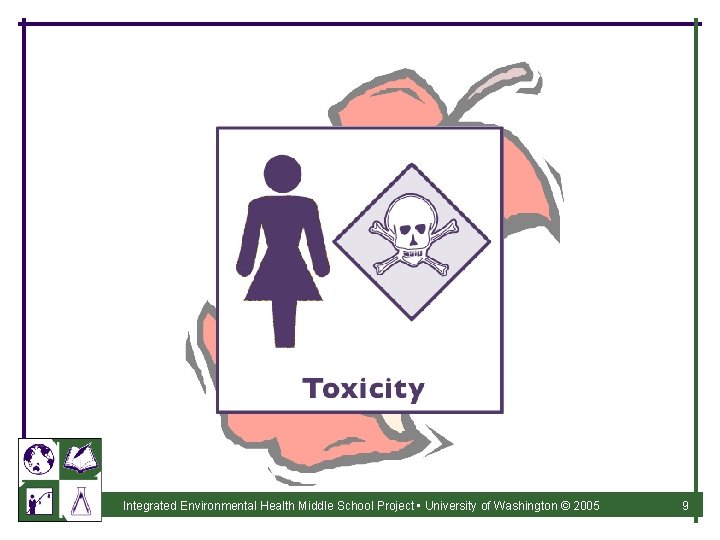
Integrated Environmental Health Middle School Project • University of Washington © 2005 9
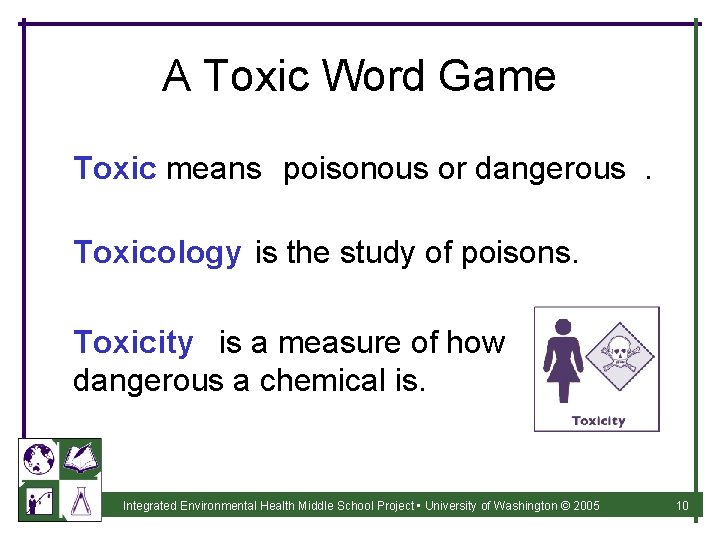
A Toxic Word Game poisonous or dangerous Toxic means ___________. Toxic_____ ology is the study of poisons. Toxic___ ity is a measure of how dangerous a chemical is. Integrated Environmental Health Middle School Project • University of Washington © 2005 10
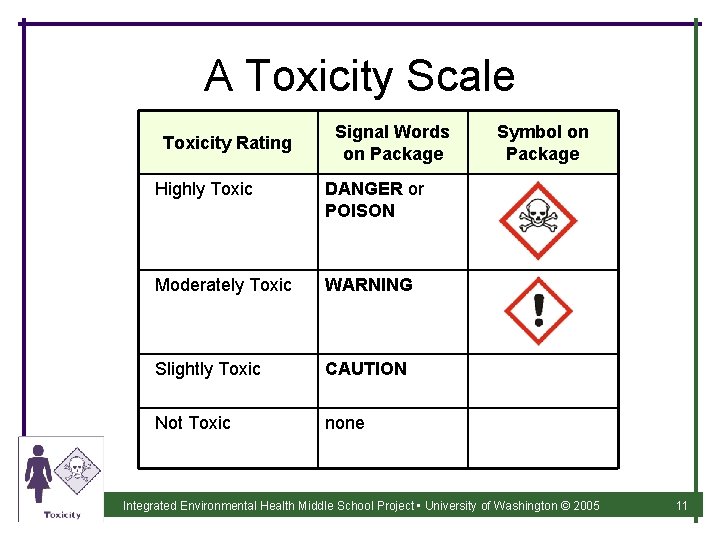
A Toxicity Scale Toxicity Rating Signal Words on Package Highly Toxic DANGER or POISON Moderately Toxic WARNING Slightly Toxic CAUTION Not Toxic none Symbol on Package Integrated Environmental Health Middle School Project • University of Washington © 2005 11
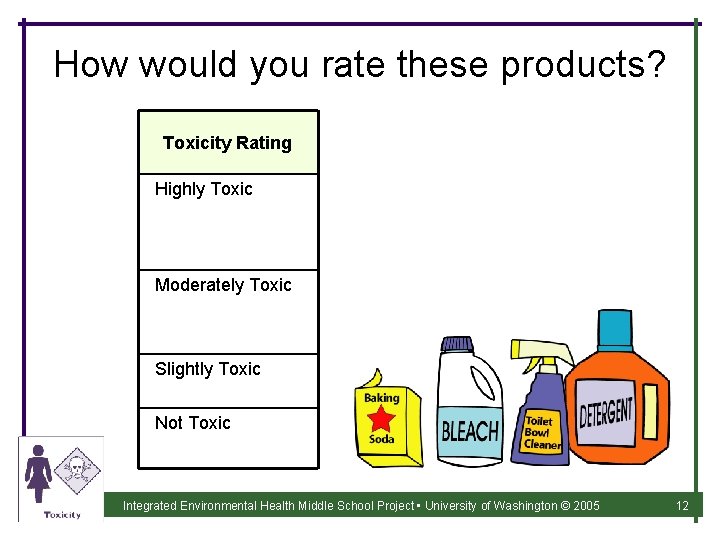
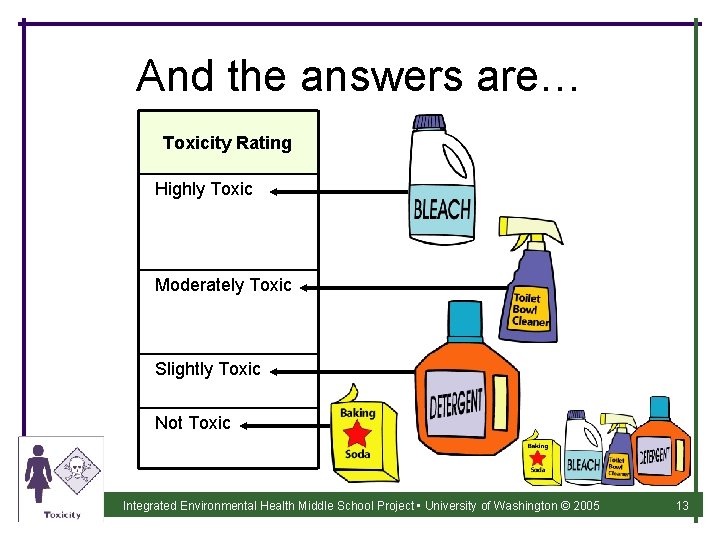
How would you rate these products? Toxicity Rating Highly Toxic Moderately Toxic Slightly Toxic Not Toxic Integrated Environmental Health Middle School Project • University of Washington © 2005 12
And the answers are… Toxicity Rating Highly Toxic Moderately Toxic Slightly Toxic Not Toxic Integrated Environmental Health Middle School Project • University of Washington © 2005 13
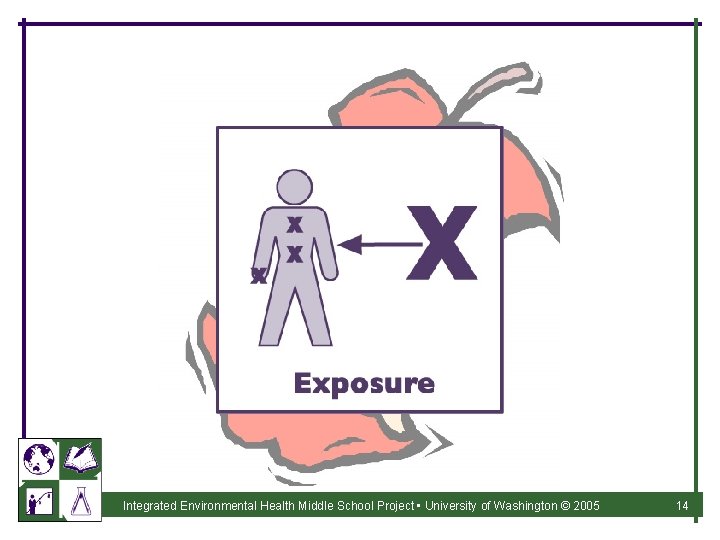
Integrated Environmental Health Middle School Project • University of Washington © 2005 14
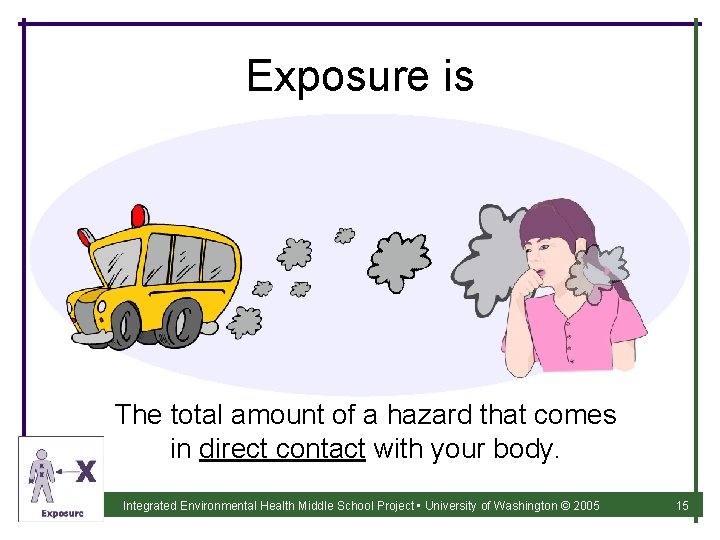
Exposure is The total amount of a hazard that comes in direct contact with your body. Integrated Environmental Health Middle School Project • University of Washington © 2005 15
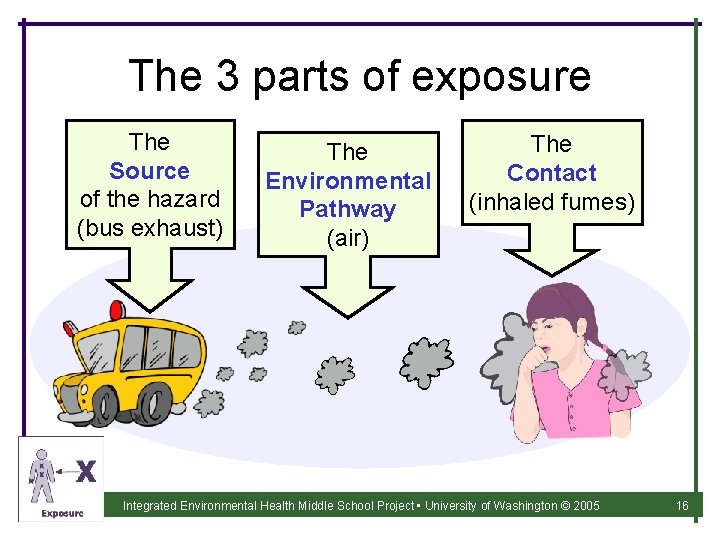
The 3 parts of exposure The Source of the hazard (bus exhaust) The Environmental Pathway (air) The Contact (inhaled fumes) Integrated Environmental Health Middle School Project • University of Washington © 2005 16
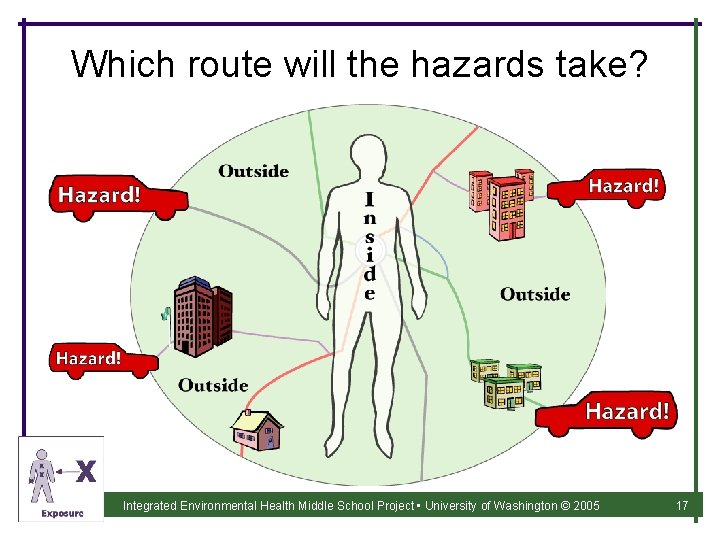
Which route will the hazards take? Integrated Environmental Health Middle School Project • University of Washington © 2005 17
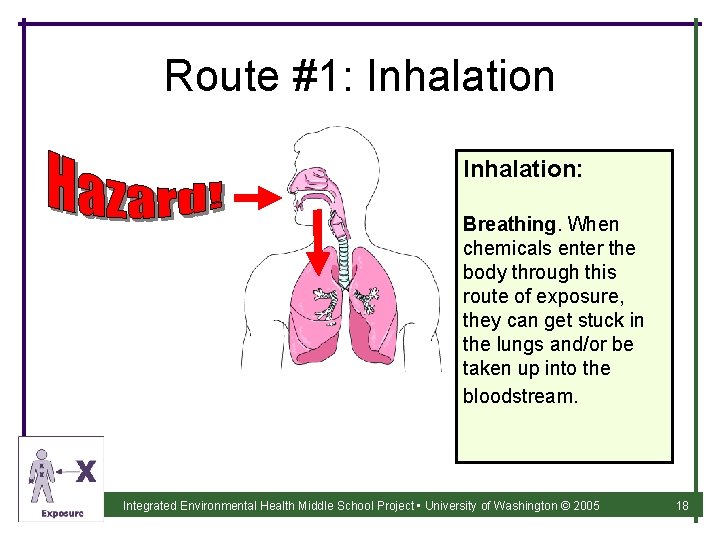
Route #1: Inhalation: Breathing. When chemicals enter the body through this route of exposure, they can get stuck in the lungs and/or be taken up into the bloodstream. Integrated Environmental Health Middle School Project • University of Washington © 2005 18
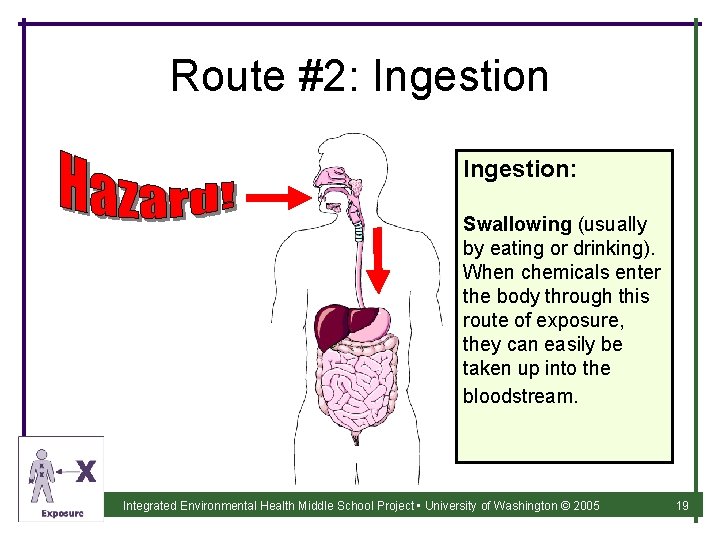
Route #2: Ingestion: Swallowing (usually by eating or drinking). When chemicals enter the body through this route of exposure, they can easily be taken up into the bloodstream. Integrated Environmental Health Middle School Project • University of Washington © 2005 19
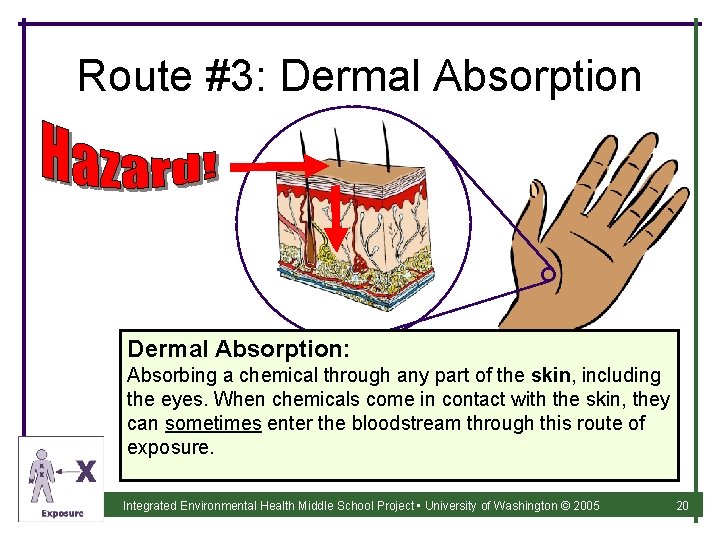
Route #3: Dermal Absorption: Absorbing a chemical through any part of the skin, including the eyes. When chemicals come in contact with the skin, they can sometimes enter the bloodstream through this route of exposure. Integrated Environmental Health Middle School Project • University of Washington © 2005 20
Integrated Environmental Health Middle School Project • University of Washington © 2005 21
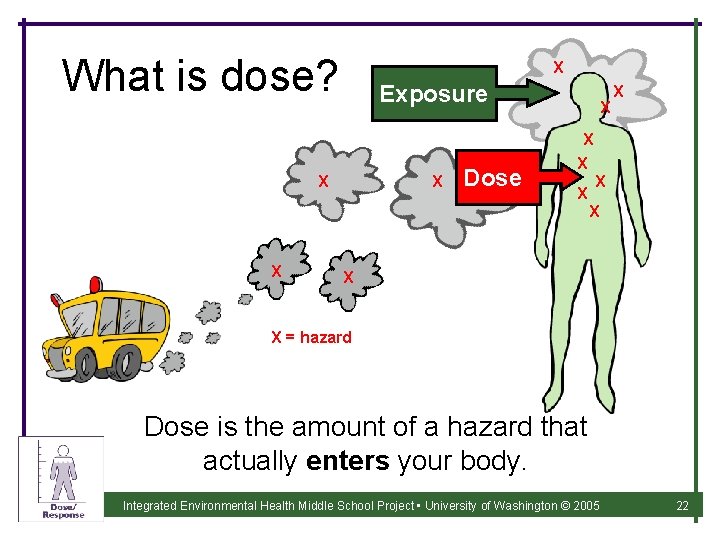
What is dose? X Exposure X X Dose X X X = hazard Dose is the amount of a hazard that actually enters your body. Integrated Environmental Health Middle School Project • University of Washington © 2005 22
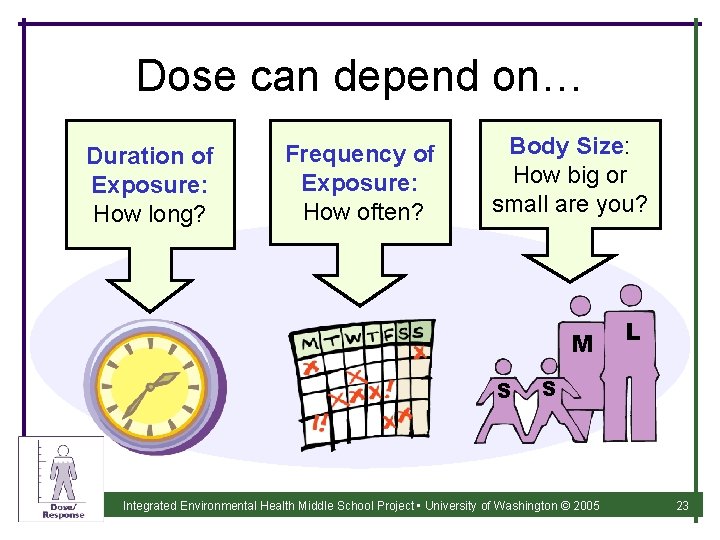
Dose can depend on… Duration of Exposure: How long? Frequency of Exposure: How often? Body Size: How big or small are you? M S L S Integrated Environmental Health Middle School Project • University of Washington © 2005 23
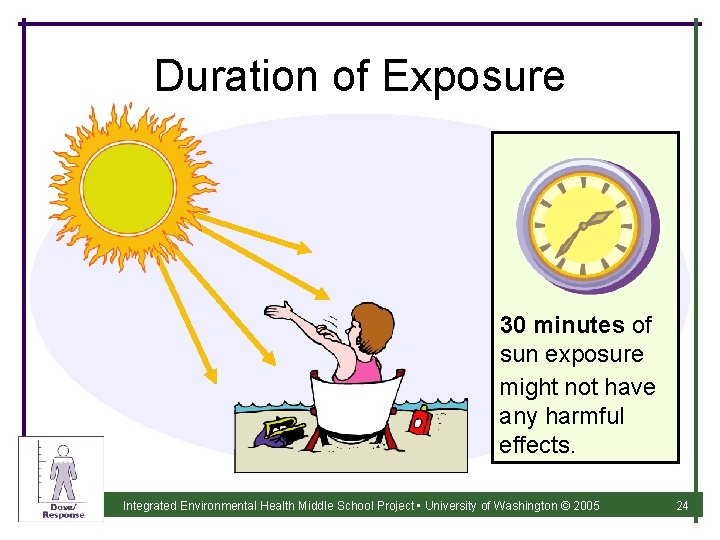
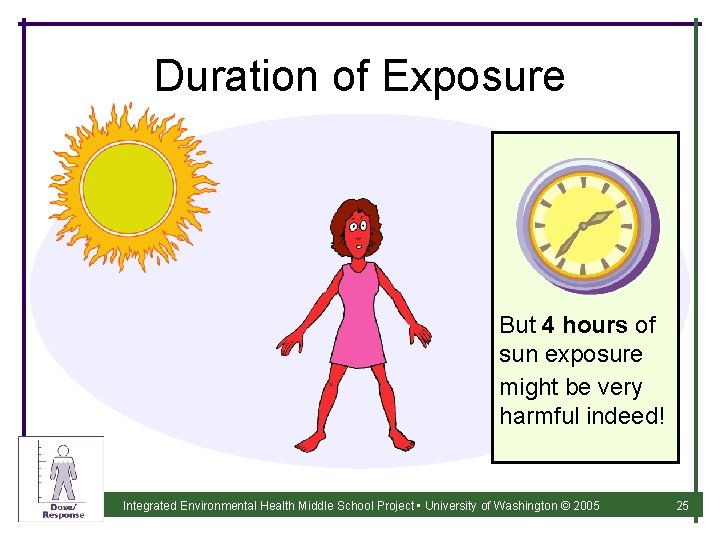
Duration of Exposure 30 minutes of sun exposure might not have any harmful effects. Integrated Environmental Health Middle School Project • University of Washington © 2005 24
Duration of Exposure But 4 hours of sun exposure might be very harmful indeed! Integrated Environmental Health Middle School Project • University of Washington © 2005 25
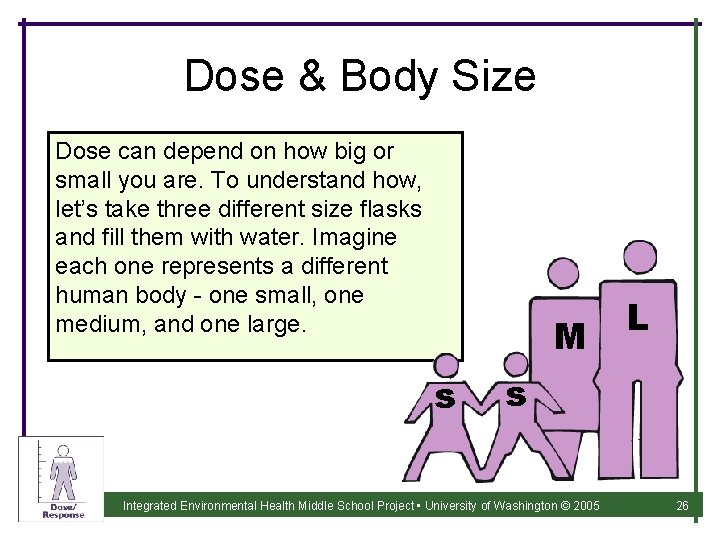
Dose & Body Size Dose can depend on how big or small you are. To understand how, let’s take three different size flasks and fill them with water. Imagine each one represents a different human body - one small, one medium, and one large. M s L s Integrated Environmental Health Middle School Project • University of Washington © 2005 26
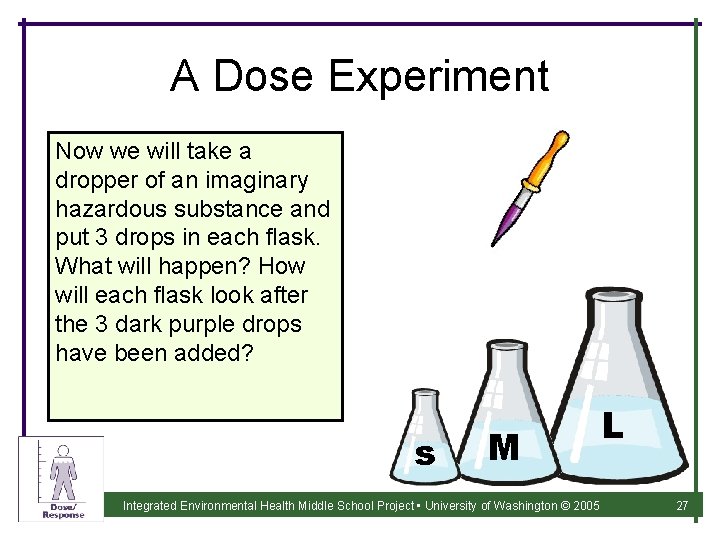
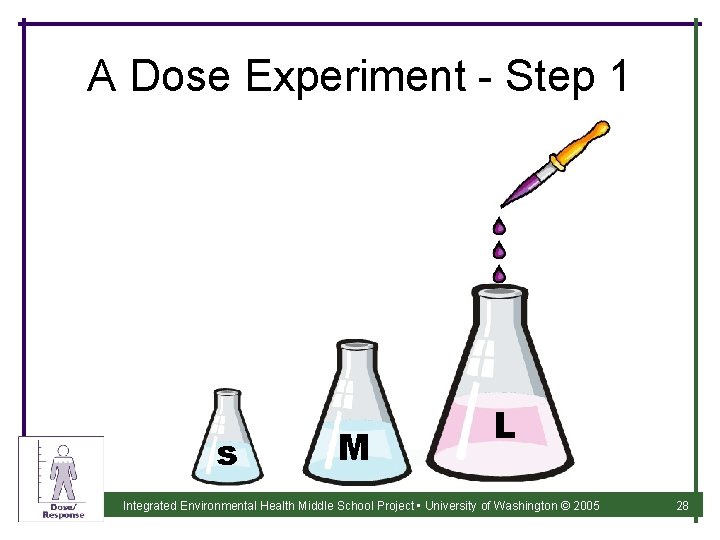
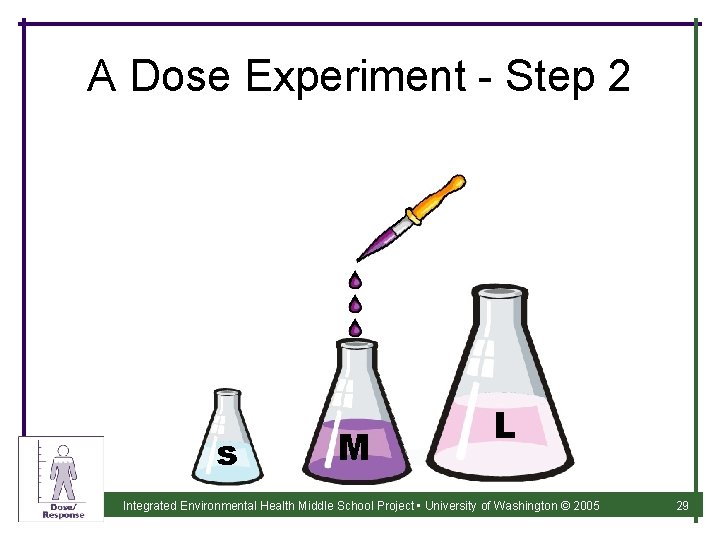
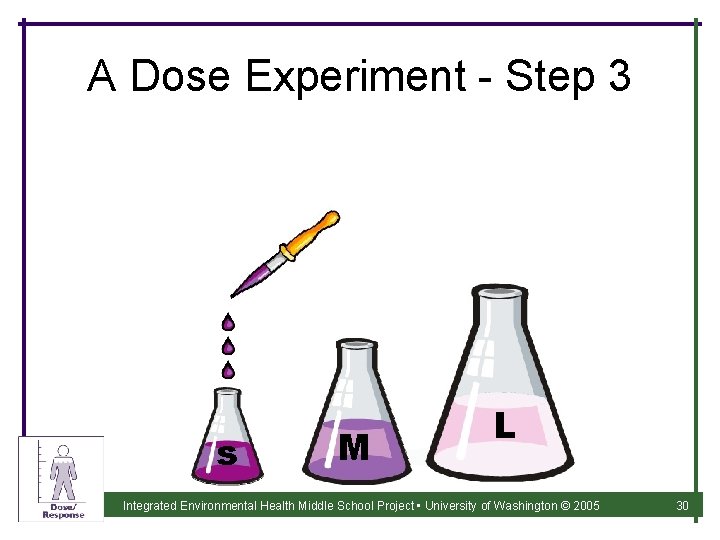
A Dose Experiment Now we will take a dropper of an imaginary hazardous substance and put 3 drops in each flask. What will happen? How will each flask look after the 3 dark purple drops have been added? s M Integrated Environmental Health Middle School Project • University of Washington © 2005 L 27
A Dose Experiment - Step 1 s M L Integrated Environmental Health Middle School Project • University of Washington © 2005 28
A Dose Experiment - Step 2 s M L Integrated Environmental Health Middle School Project • University of Washington © 2005 29
A Dose Experiment - Step 3 s M L Integrated Environmental Health Middle School Project • University of Washington © 2005 30
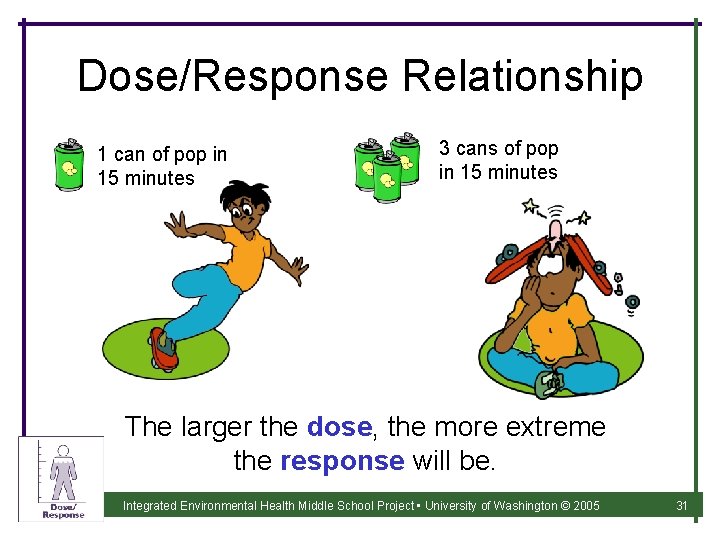
Dose/Response Relationship 1 can of pop in 15 minutes 3 cans of pop in 15 minutes The larger the dose, the more extreme the response will be. Integrated Environmental Health Middle School Project • University of Washington © 2005 31
Integrated Environmental Health Middle School Project • University of Washington © 2005 32
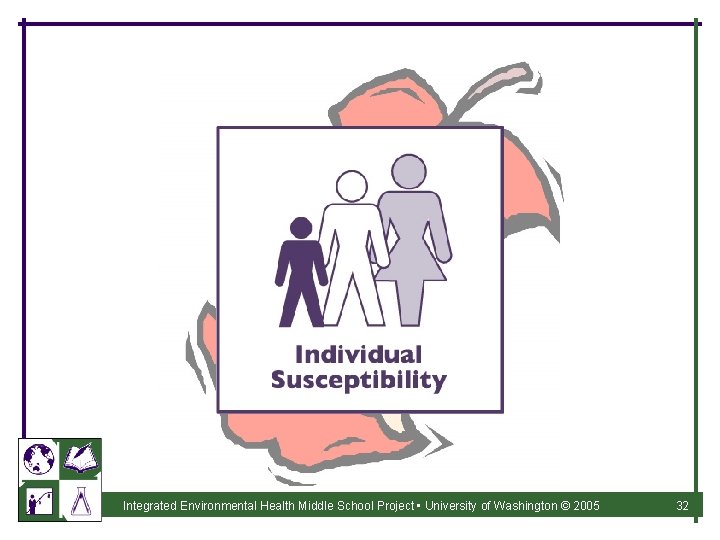
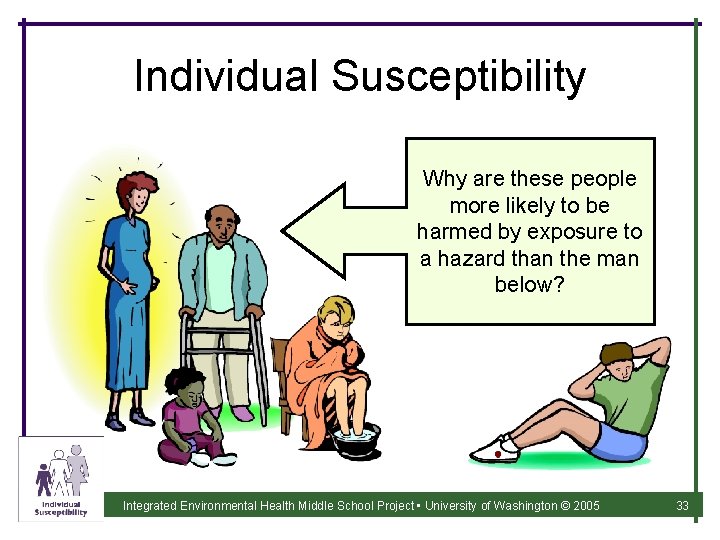
Individual Susceptibility Why are these people more likely to be harmed by exposure to a hazard than the man below? Integrated Environmental Health Middle School Project • University of Washington © 2005 33
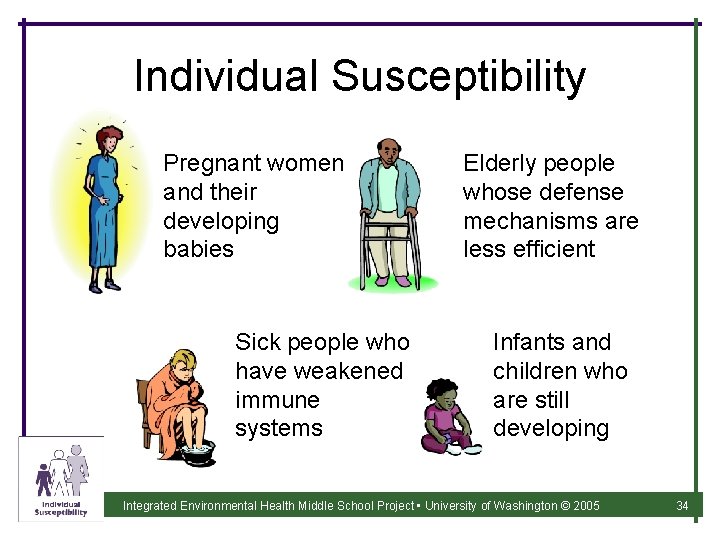
Individual Susceptibility Pregnant women and their developing babies Sick people who have weakened immune systems Elderly people whose defense mechanisms are less efficient Infants and children who are still developing Integrated Environmental Health Middle School Project • University of Washington © 2005 34
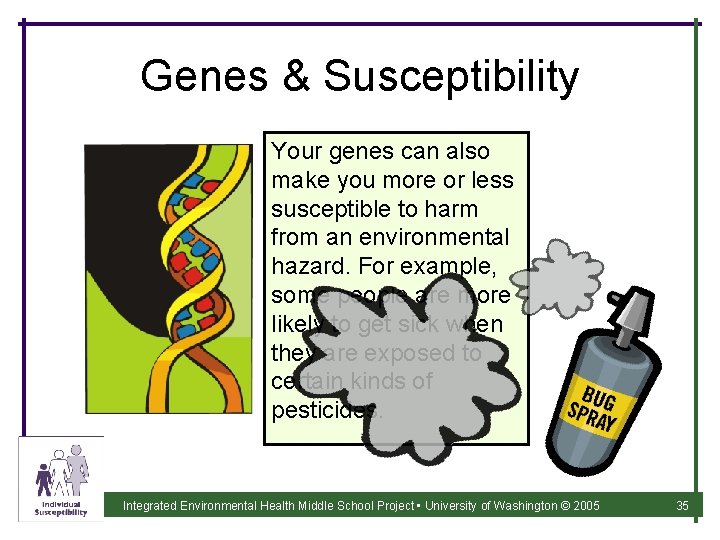
Genes & Susceptibility Your genes can also make you more or less susceptible to harm from an environmental hazard. For example, some people are more likely to get sick when they are exposed to certain kinds of pesticides. Integrated Environmental Health Middle School Project • University of Washington © 2005 35
Integrated Environmental Health Middle School Project • University of Washington © 2005 36
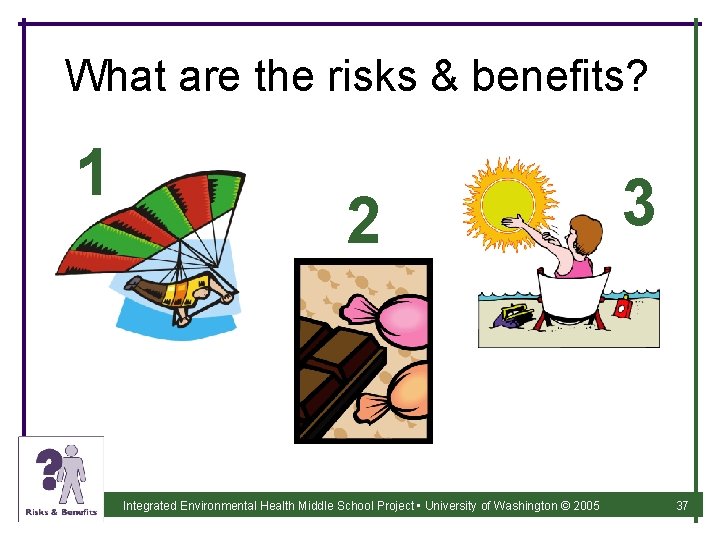
What are the risks & benefits? 1 2 Integrated Environmental Health Middle School Project • University of Washington © 2005 3 37
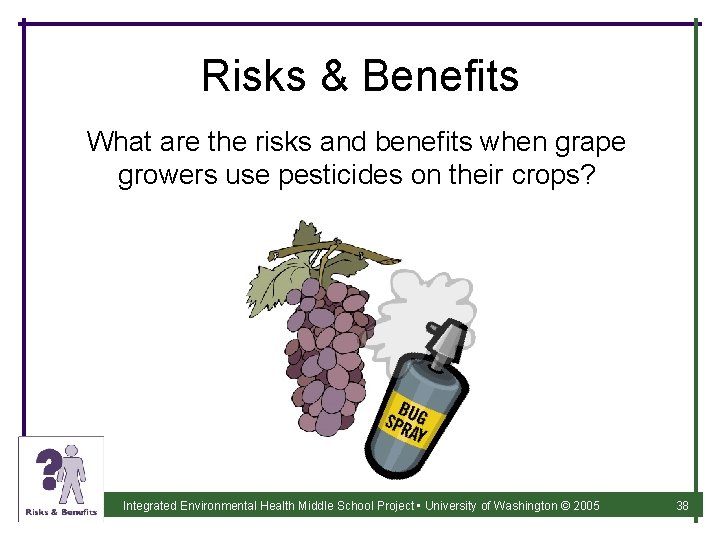
Risks & Benefits What are the risks and benefits when grape growers use pesticides on their crops? Integrated Environmental Health Middle School Project • University of Washington © 2005 38
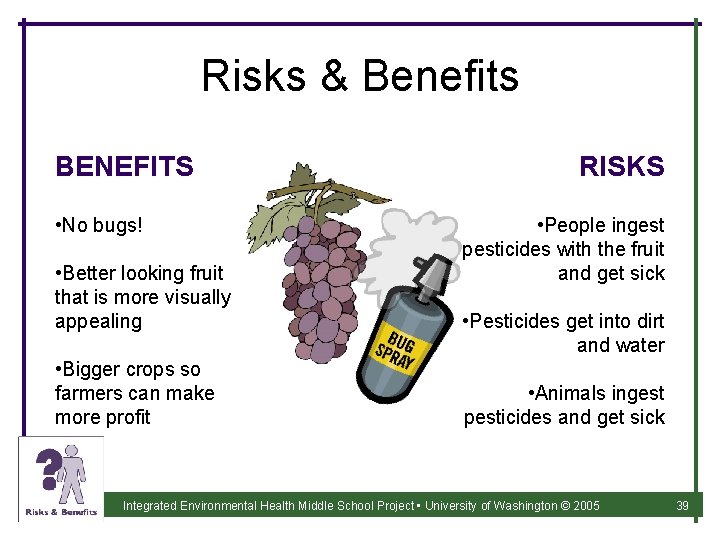
Risks & Benefits BENEFITS • No bugs! • Better looking fruit that is more visually appealing • Bigger crops so farmers can make more profit RISKS • People ingest pesticides with the fruit and get sick • Pesticides get into dirt and water • Animals ingest pesticides and get sick Integrated Environmental Health Middle School Project • University of Washington © 2005 39
Integrated Environmental Health Middle School Project • University of Washington © 2005 40
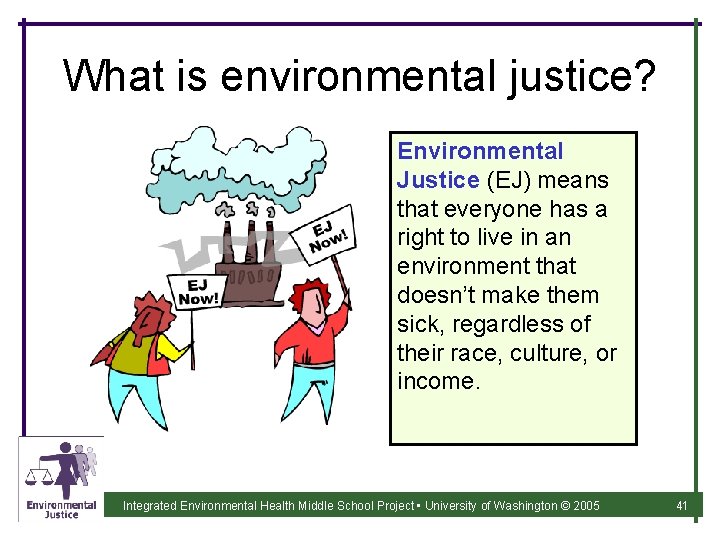
What is environmental justice? Environmental Justice (EJ) means that everyone has a right to live in an environment that doesn’t make them sick, regardless of their race, culture, or income. Integrated Environmental Health Middle School Project • University of Washington © 2005 41
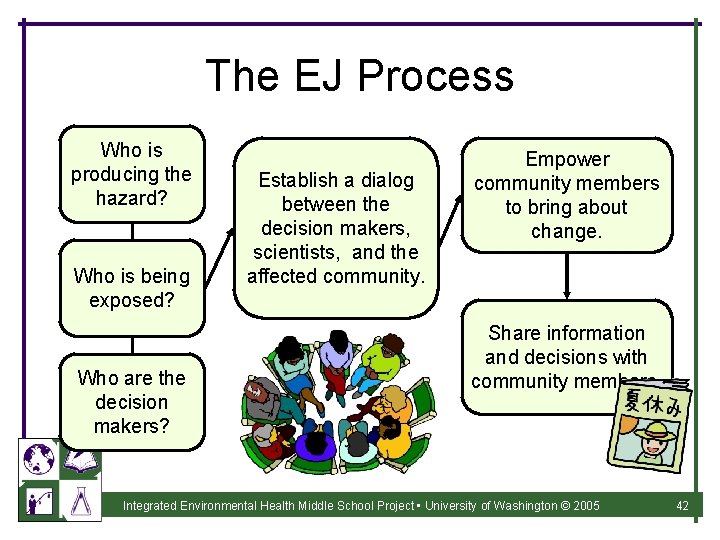
The EJ Process Who is producing the hazard? Who is being exposed? Who are the decision makers? Establish a dialog between the decision makers, scientists, and the affected community. Empower community members to bring about change. Share information and decisions with community members. Integrated Environmental Health Middle School Project • University of Washington © 2005 42
Integrated Environmental Health Middle School Project • University of Washington © 2005 43
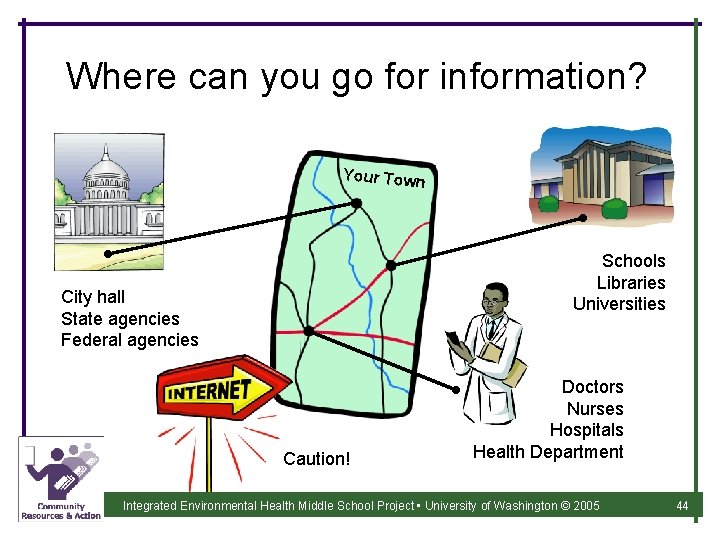
Where can you go for information? Your Town Schools Libraries Universities City hall State agencies Federal agencies Caution! Doctors Nurses Hospitals Health Department Integrated Environmental Health Middle School Project • University of Washington © 2005 44
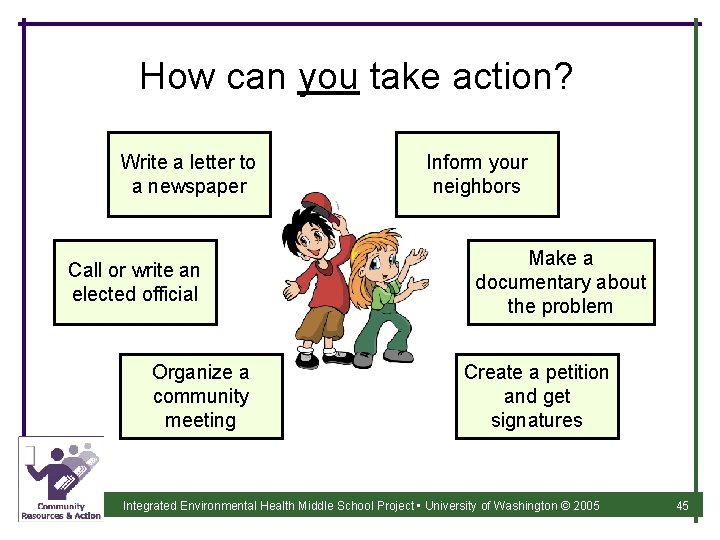
How can you take action? Write a letter to a newspaper Call or write an elected official Organize a community meeting Inform your neighbors Make a documentary about the problem Create a petition and get signatures Integrated Environmental Health Middle School Project • University of Washington © 2005 45
Any Questions? Integrated Environmental Health Middle School Project • University of Washington © 2005 46