
WHAT IS ENERGY ENERGY AND WORK Energy ability
WHAT IS ENERGY?
ENERGY AND WORK Energy – ability to do work (by creating a force) When work is done, energy is transferred • You can only observed Energy when it is being transferred Joule is the SI unit for energy and work
Remember – work is done only when an object moves. W=Fd But - energy can be present in an object or a system when nothing is happening. (stored energy aka: potential energy) However – it can only be observed when it is transferred from one object or system to another.
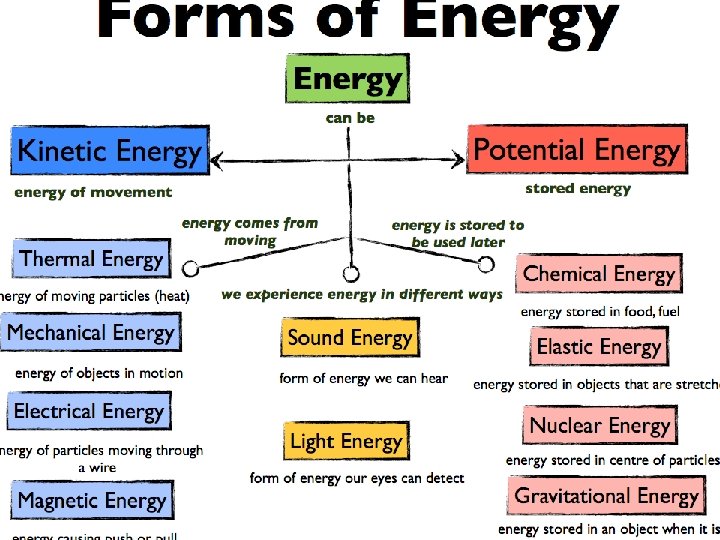
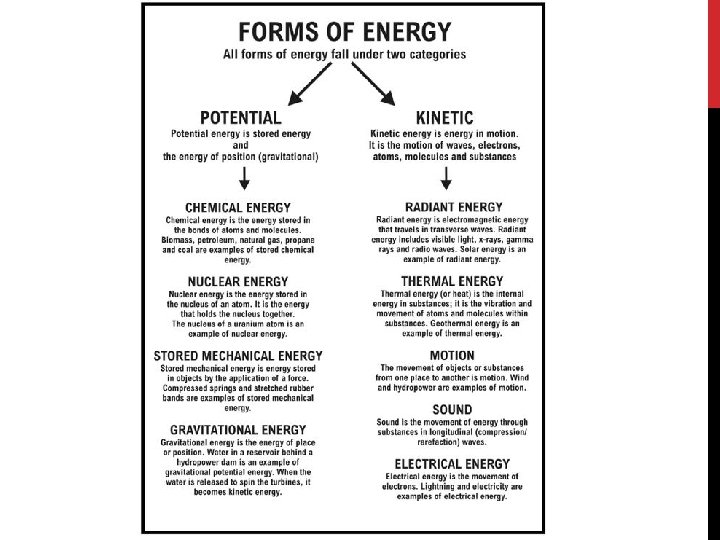
The Forms of energy • There are many forms of energy. • They all can be classified into 2 types: Potential (stored ) or Kinetic (motion) • You must know these and examples of each. • Energy can change from one form to another. Ex: turning on the lights: energy changes from electrical energy to light energy • Energy can do work. Ex: The energy of a water fall(mechanical energy) can apply a force to turn a turbine which will also be used to create electrical energy.
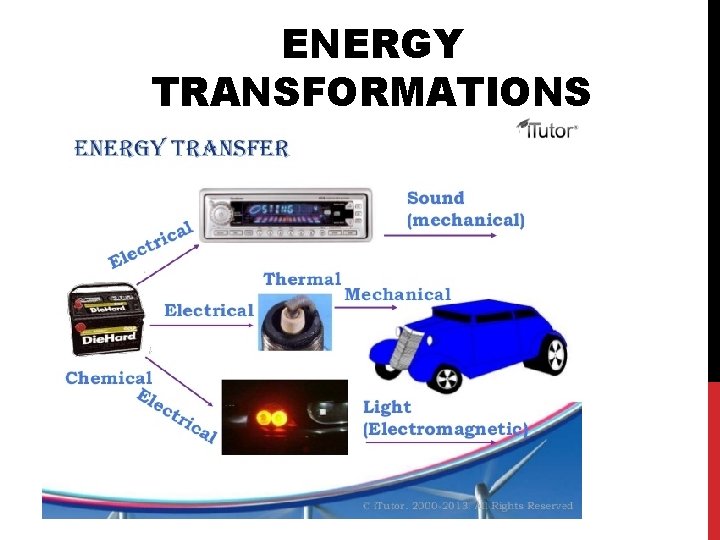
ENERGY TRANSFORMATIONS
ENERGY TRANSFER • Energy can change from one form to another. Ex: turning on the lights: energy changes from electrical energy to light energy • Energy can do work. Ex: The energy of a water fall(mechanical energy) can apply a force to turn a turbine which will also be used to create electrical energy.
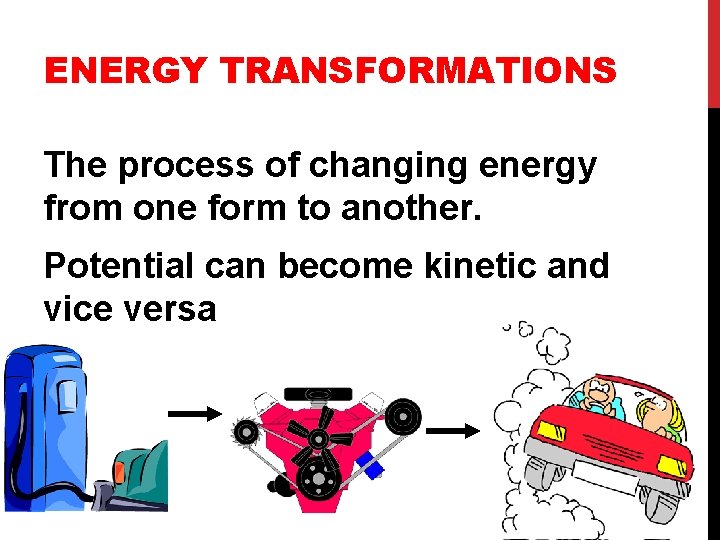
ENERGY TRANSFORMATIONS The process of changing energy from one form to another. Potential can become kinetic and vice versa
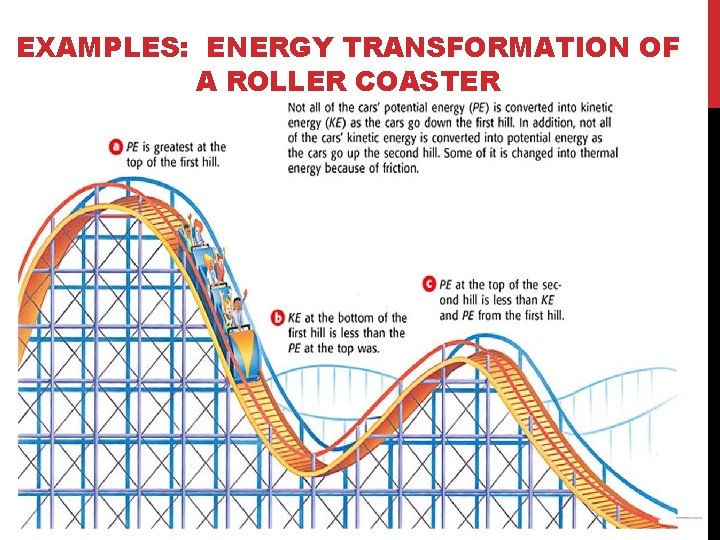
EXAMPLES: ENERGY TRANSFORMATION OF A ROLLER COASTER
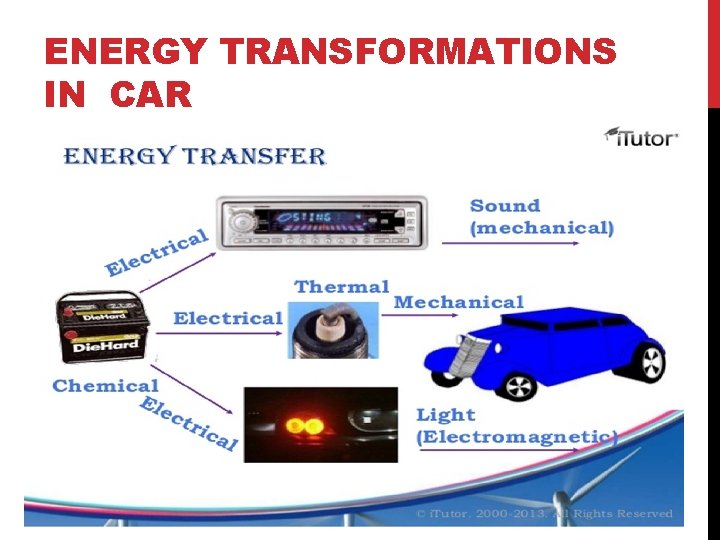
ENERGY TRANSFORMATIONS IN CAR
HOW TO WRITE THEM… 1. Driving a car- Gas (chemical energy) in a car is used to produce heat (thermal energy) on the motor and motion (mechanical energy) on the car. • Chemical therml mechanical 2. Running- transfers energy from food (Chemical energy) to running motion (mechanical energy) • Chemical mechanical 3. Nuclear Power plants- atoms fuse together in a nuclear reaction (nuclear energy) releasing heat (thermal energy) which is used to create electricity (electrical energy). • Nuclear thermal electrical
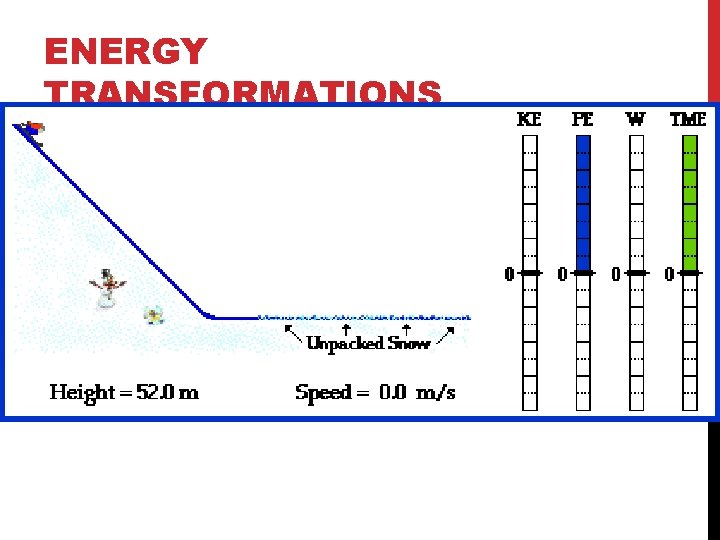
ENERGY TRANSFORMATIONS
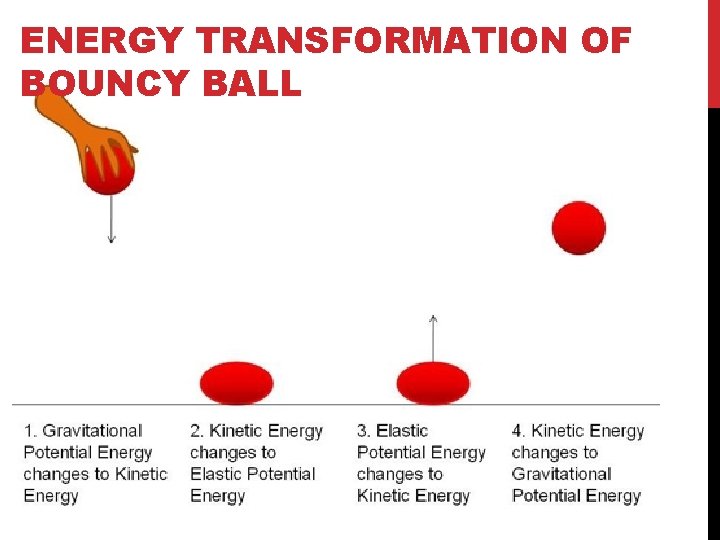
ENERGY TRANSFORMATION OF BOUNCY BALL
ENERGY TRANSFORMATIONS Mechanical Energy can change to other forms • When a ball bounces, not all of KE changes to elastic PE (some is transferred as sound and heat); therefore with each bounce, it loses some mechanical energy and doesn’t bounce as high
LAW OF CONSERVATION OF ENERGY Law of conservation of energy – energy cannot be created or destroyed; it only changes form Energy can be transferred to another object/system or to another form (potential to Kinetic) If energy appears to be lost, then it usually has changed to heat (due to friction) and/or sound energy.
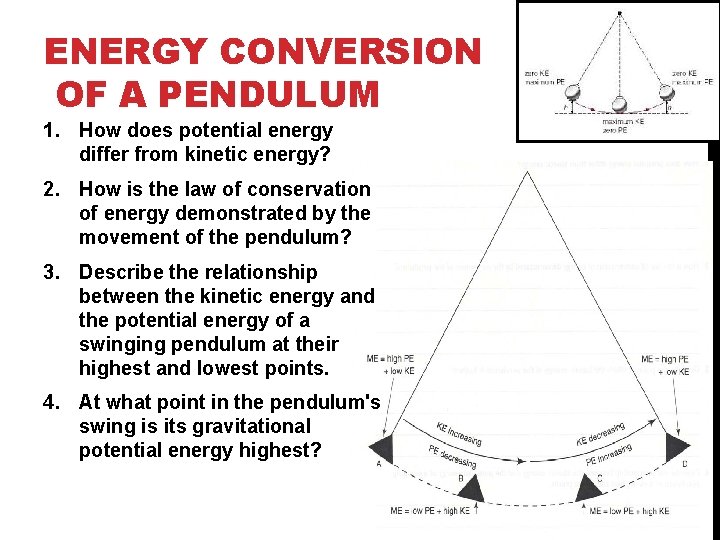
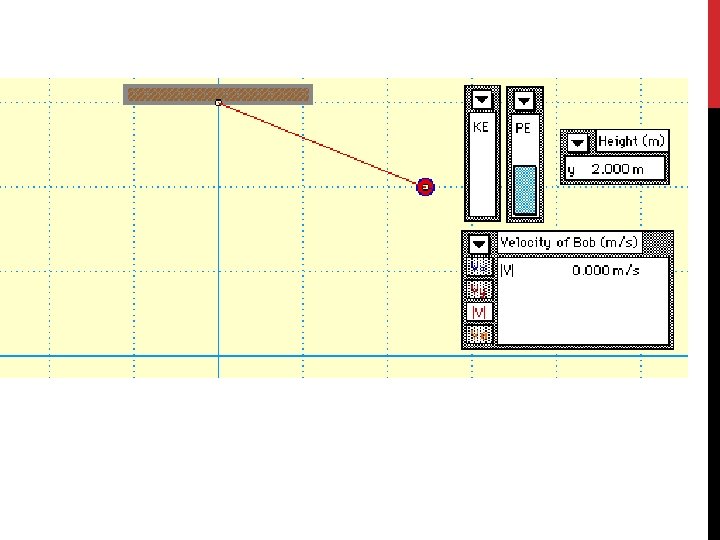
ENERGY CONVERSION OF A PENDULUM 1. How does potential energy differ from kinetic energy? 2. How is the law of conservation of energy demonstrated by the movement of the pendulum? 3. Describe the relationship between the kinetic energy and the potential energy of a swinging pendulum at their highest and lowest points. 4. At what point in the pendulum's swing is its gravitational potential energy highest?
CONVERSIONS REVIEW 1. Describe conversions between potential and kinetic as a tennis ball drops, hits the ground, and bounces back up. 2. What energy conservations take place in a pendulum? Why does it eventually stop? 3. Describe the energy conversions that take place when a flashlight is turned on. 4. Identify the conversions: An object is raised and then allowed to fall. As it hits the ground it stops, produces a sound, and becomes warmer.
- Slides: 19