
What is Economics Chapter 1 What is Economics
- Slides: 25
What is Economics? Chapter 1
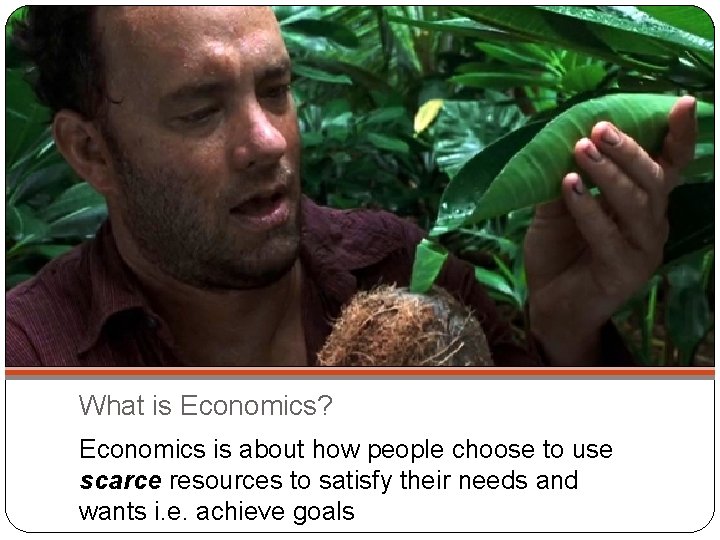
What is Economics? Economics is about how people choose to use scarce resources to satisfy their needs and wants i. e. achieve goals
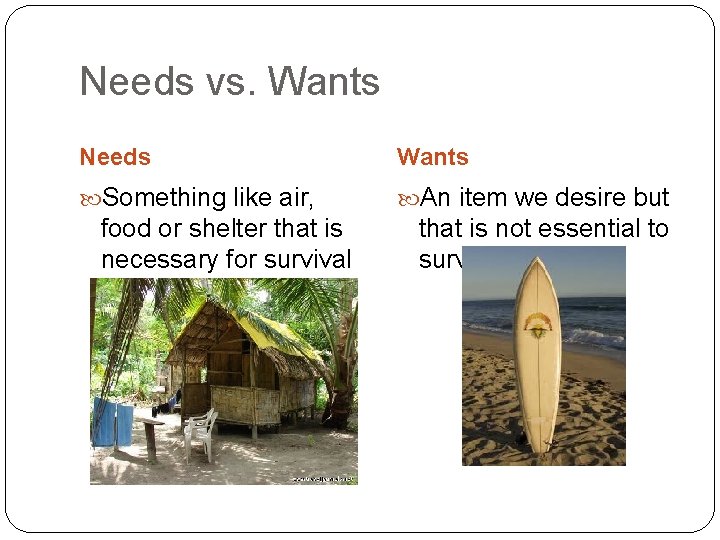
Needs vs. Wants Needs Wants Something like air, An item we desire but food or shelter that is necessary for survival that is not essential to survival
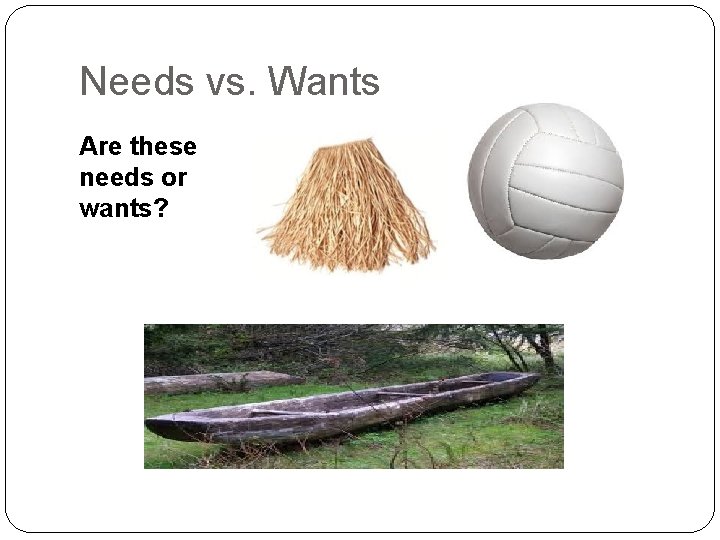
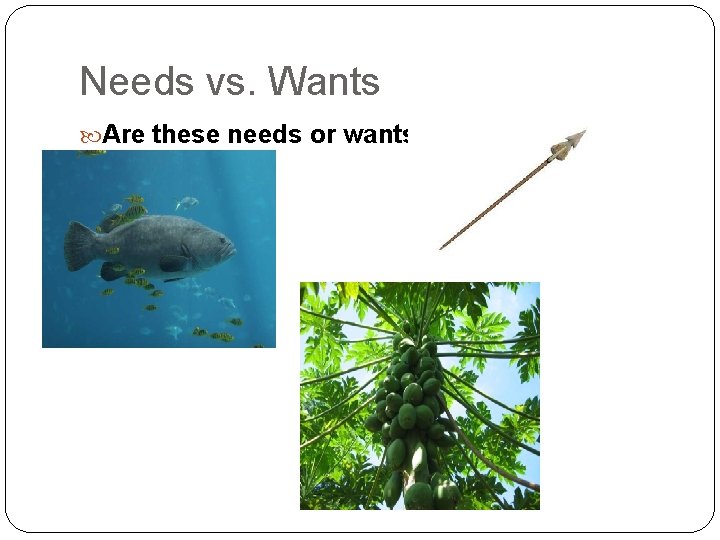
Needs vs. Wants Are these needs or wants?
Needs vs. Wants Are these needs or wants?
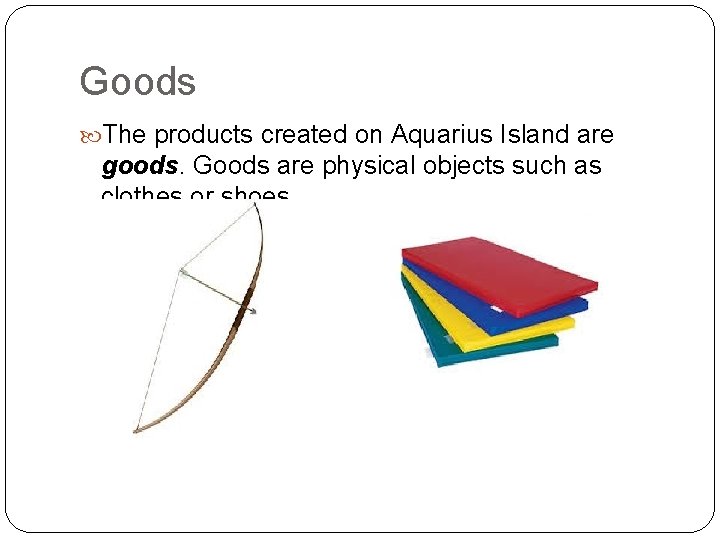
Goods The products created on Aquarius Island are goods. Goods are physical objects such as clothes or shoes.
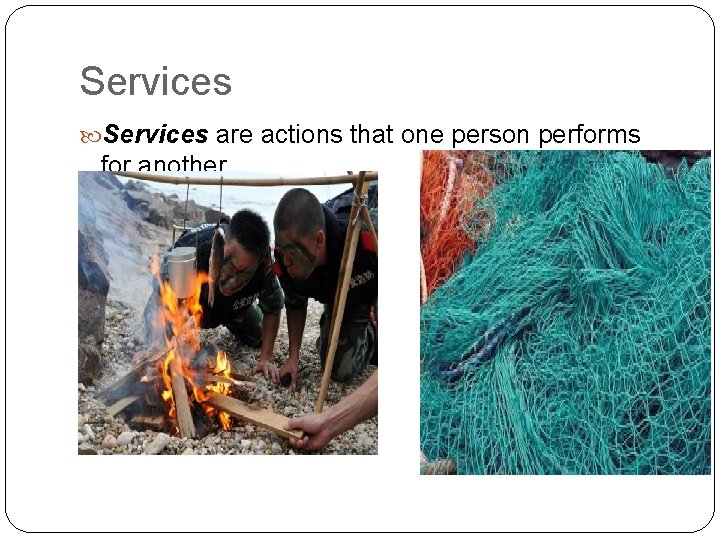
Services are actions that one person performs for another
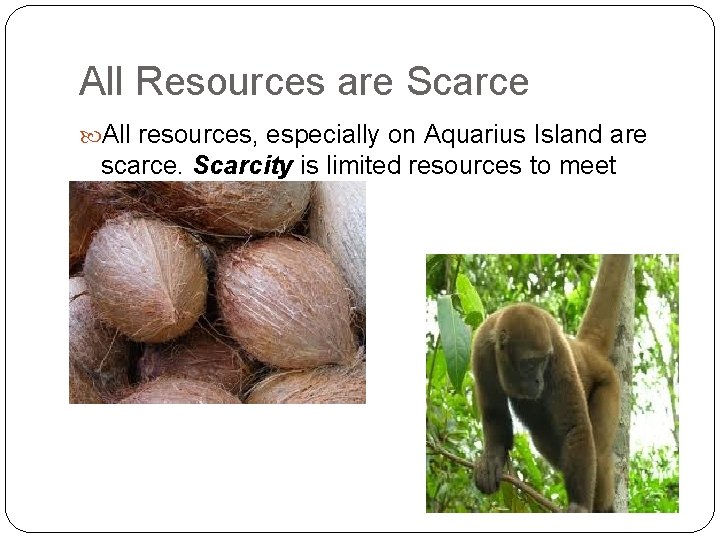
All Resources are Scarce All resources, especially on Aquarius Island are scarce. Scarcity is limited resources to meet unlimited wants.
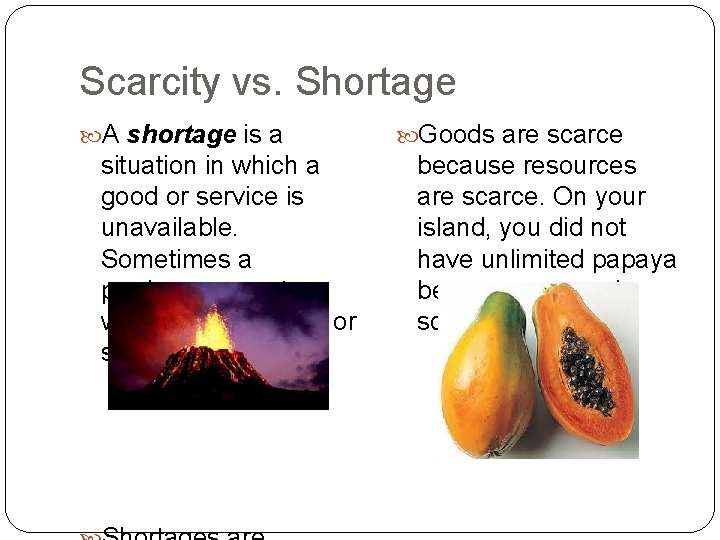
Scarcity vs. Shortage A shortage is a situation in which a good or service is unavailable. Sometimes a producer cannot or will not offer a good or service. Goods are scarce because resources are scarce. On your island, you did not have unlimited papaya because papaya is scarce.
Scarcity �Our resources are insufficient to achieve all our goals and all or wants �We cannot have everything we want �Using economic reasoning, i. e. making choices, we can get more from our resources
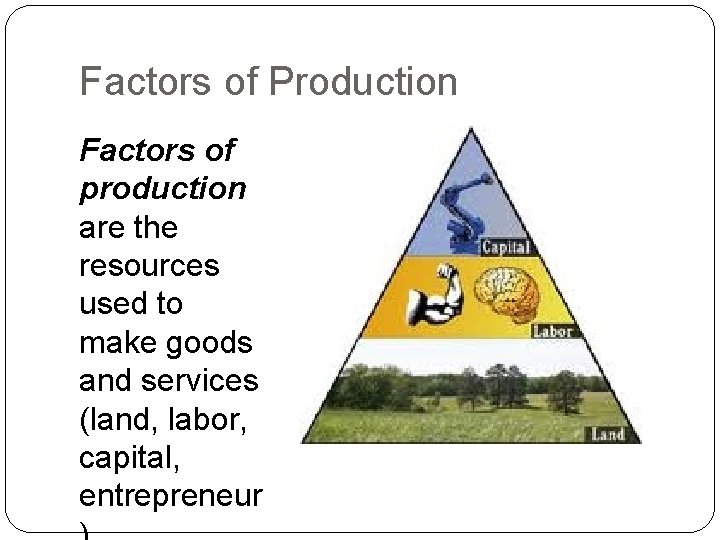
Factors of Production Factors of production are the resources used to make goods and services (land, labor, capital, entrepreneur
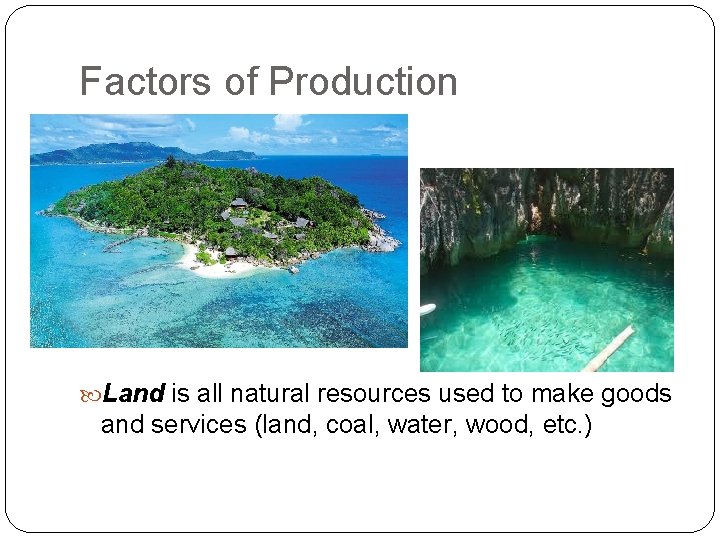
Factors of Production Land is all natural resources used to make goods and services (land, coal, water, wood, etc. )
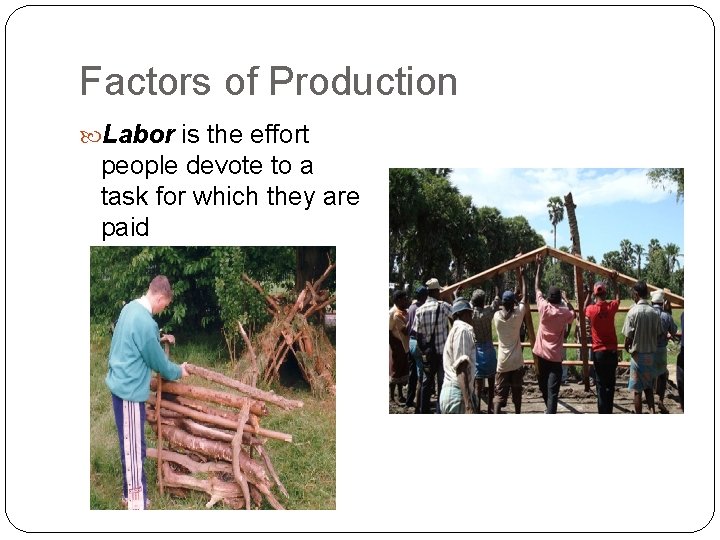
Factors of Production Labor is the effort people devote to a task for which they are paid
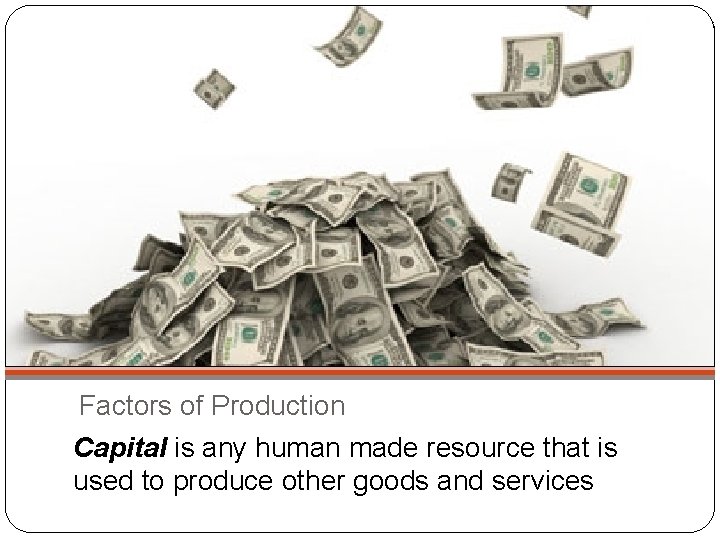
Factors of Production Capital is any human made resource that is used to produce other goods and services
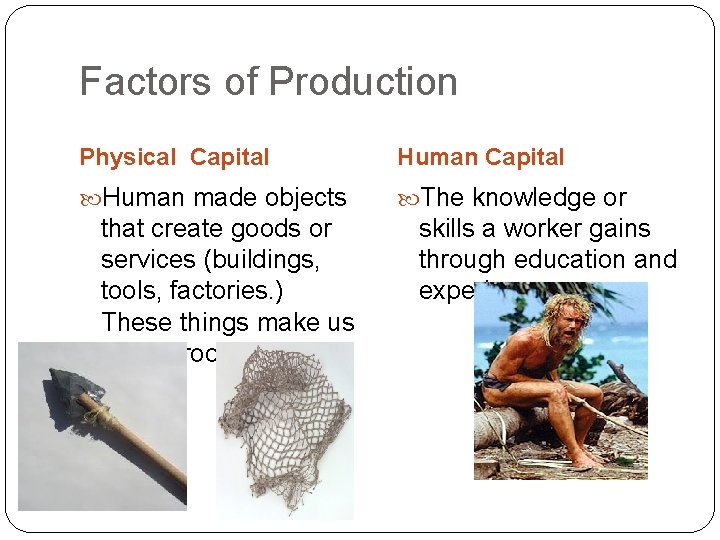
Factors of Production Physical Capital Human Capital Human made objects The knowledge or that create goods or services (buildings, tools, factories. ) These things make us more productive skills a worker gains through education and experience
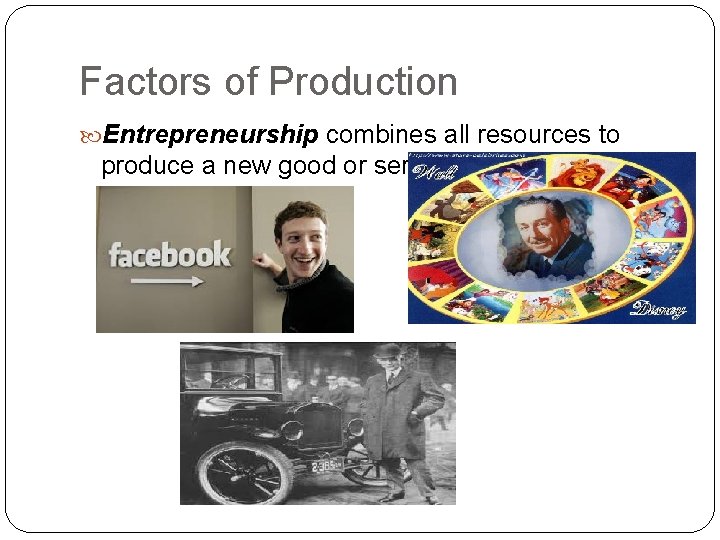
Factors of Production Entrepreneurship combines all resources to produce a new good or service
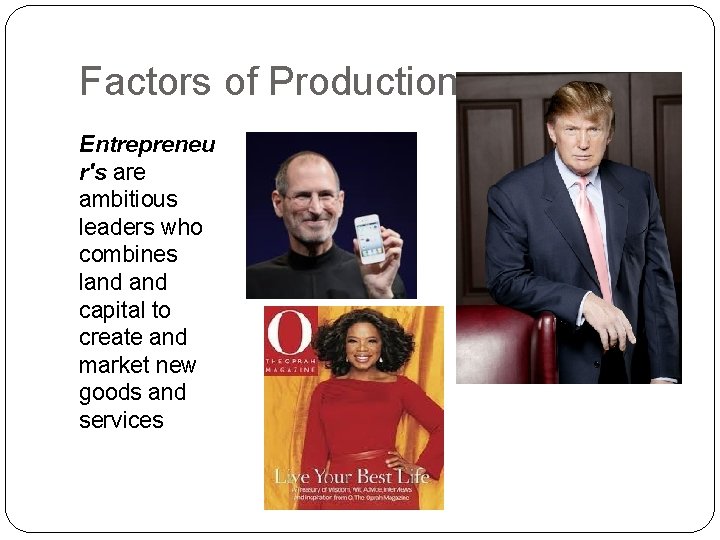
Factors of Production Entrepreneu r's are ambitious leaders who combines land capital to create and market new goods and services
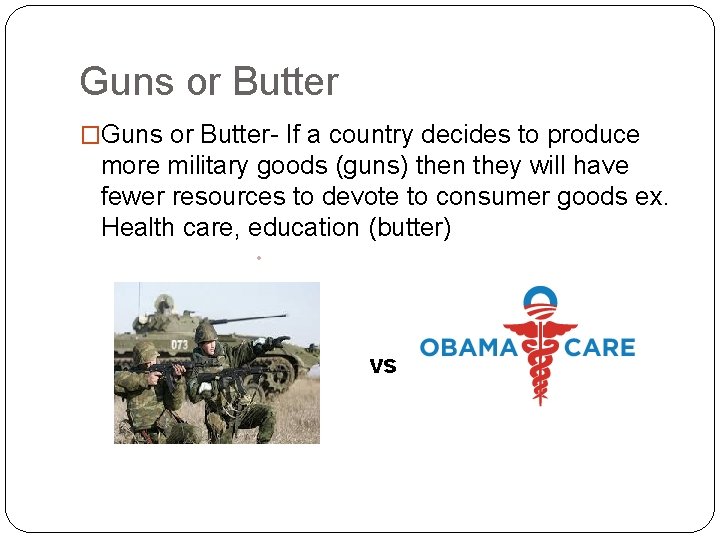
Guns or Butter �Guns or Butter- If a country decides to produce more military goods (guns) then they will have fewer resources to devote to consumer goods ex. Health care, education (butter) • • vs
Trade-offs vs. Opportunity Costs Trade-Offs Opportunity Costs Are an alternative we Is the most desirable sacrifice when we make a decision Individual trade-offs: Work more, play less Business trade-offs: Produce more coconuts rather than papaya alternative given up as the result of a decision Ex. You choose to make a life on Aquarius Island rather than try and escape
Thinking at the Margin Thinking at the margin means deciding how much more or less to do. Usually we don’t stay up all night to build shelter. We build part of it one day and build part of it the next day, that way you can still sleep
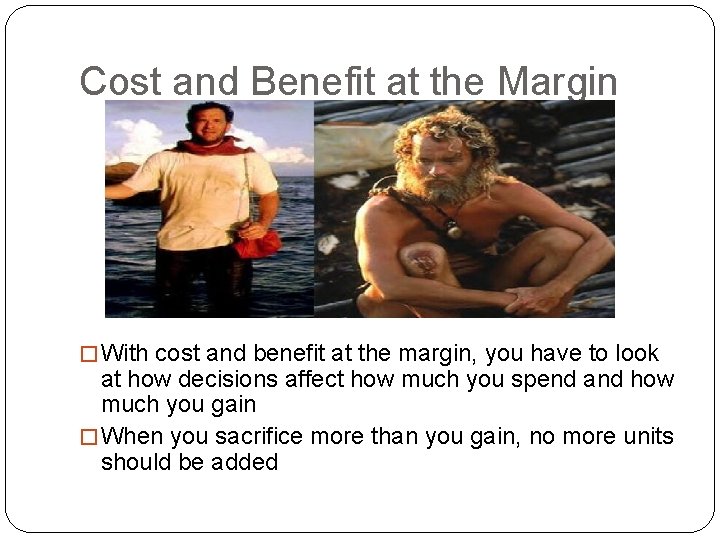
Cost and Benefit at the Margin � With cost and benefit at the margin, you have to look at how decisions affect how much you spend and how much you gain � When you sacrifice more than you gain, no more units should be added
Efficiency and Productivity Remember, the goal of an economy is to be efficient. Efficiency is when an economy uses it’s resources in such a way as to maximize the production of goods and services. Efficiency means increasing productivity!
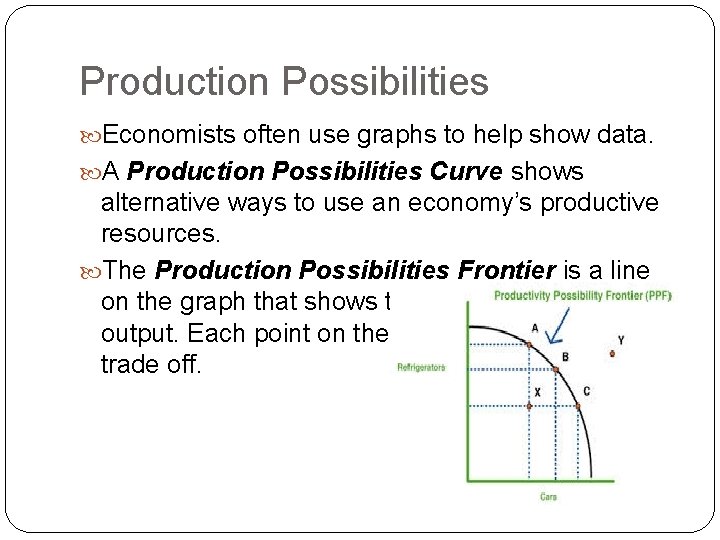
Production Possibilities Economists often use graphs to help show data. A Production Possibilities Curve shows alternative ways to use an economy’s productive resources. The Production Possibilities Frontier is a line on the graph that shows the maximum possible output. Each point on the graph represents a trade off.
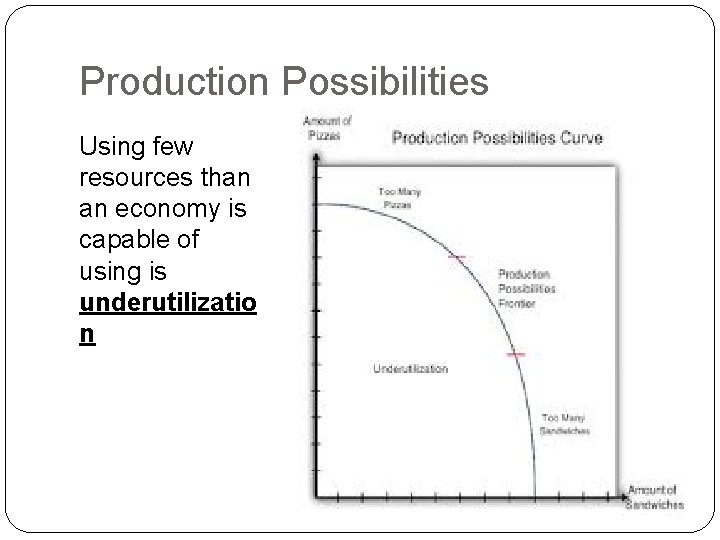
Production Possibilities Using few resources than an economy is capable of using is underutilizatio n
Production Possibilities For every choice we make, there is a cost. Law of Increasing Costs states that as we shift factors of production from making one good or service to another, the cost of producing the second item increases.