
WHAT IS ECONOMICS Chapter 1 SECTION 1 SCARCITY
- Slides: 23
WHAT IS ECONOMICS? Chapter 1
SECTION 1: SCARCITY AND THE FACTORS OF PRODUCTION Economics and You Economics is the study of how individuals, businesses, and governments make choices when faced with a limited supply of resources. Scarcity forces us to decide what is important.
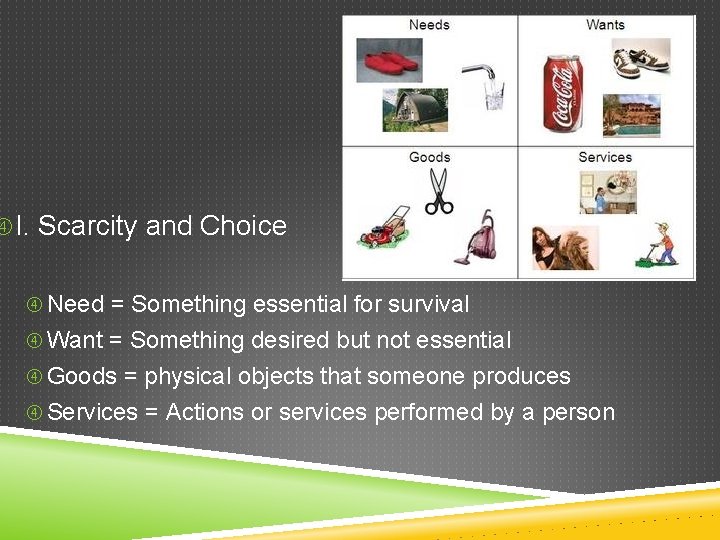
I. Scarcity and Choice Need = Something essential for survival Want = Something desired but not essential Goods = physical objects that someone produces Services = Actions or services performed by a person
I-A. The Problem of Limits Wants and needs are unlimited Goods and services are limited – this is called scarcity. Scarcity forces choices Economics = how we make choices to fulfill wants / needs
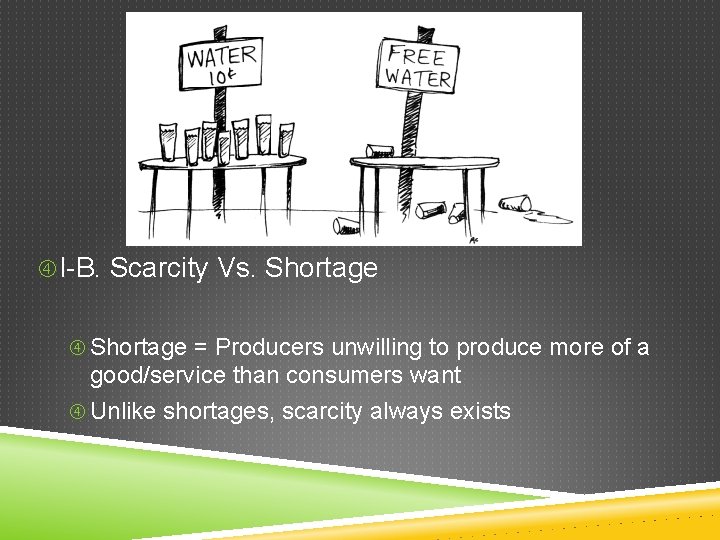
I-B. Scarcity Vs. Shortage = Producers unwilling to produce more of a good/service than consumers want Unlike shortages, scarcity always exists
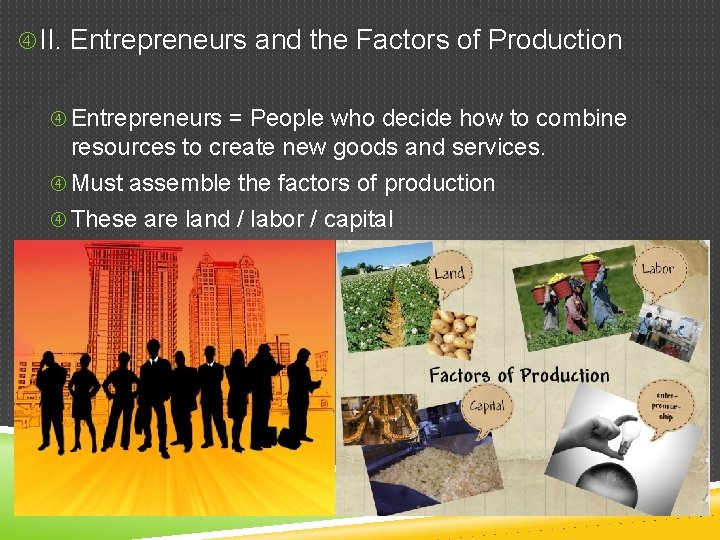
II. Entrepreneurs and the Factors of Production Entrepreneurs = People who decide how to combine resources to create new goods and services. Must assemble the factors of production These are land / labor / capital
II-A. Land = All natural resources used to produce goods and services II-B. Labor = The effort people devote to tasks for which they are paid II-C. Capital = Any human made resource that is used to produce other goods and services. Physical Capital – AKA Capital Goods. These are buildings, equipment, and tools. Human Capital – The knowledge and skills a worker gains through education and experience.
II – D. Benefits of Capital is the key factor in production It makes producers more productive Example…. A dishwasher Extra Time / More Knowledge / More Productivity
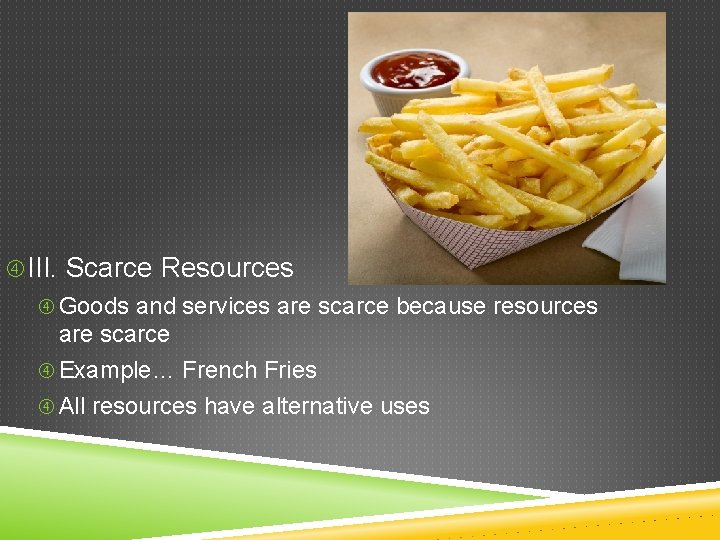
III. Scarce Resources Goods and services are scarce because resources are scarce Example… French Fries All resources have alternative uses
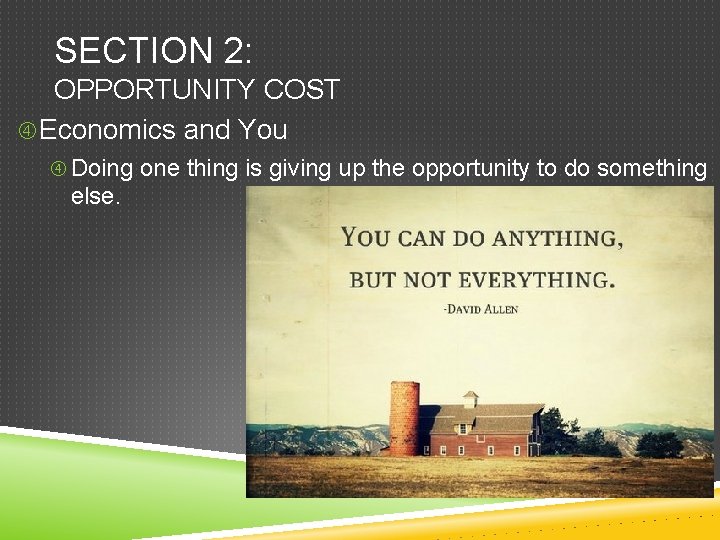
SECTION 2: OPPORTUNITY COST Economics and You Doing one thing is giving up the opportunity to do something else.
I. Trade-Offs – giving up one benefit to gain another I-A. Individuals and Trade Offs Being in a play prevents you from being in track I-B. Businesses and Trade Offs Farming broccoli prevents you from farming squash I-C. Governments and Trade Offs “guns or butter” Spend money on military or domestic needs? The reason for any trade off is scarcity
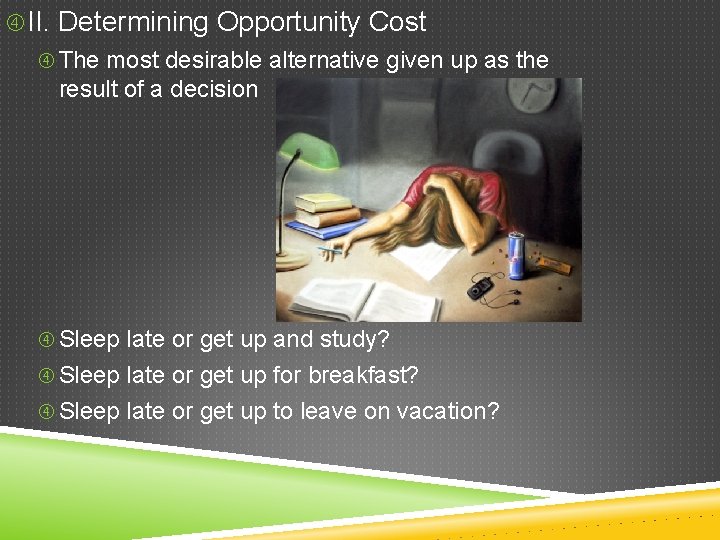
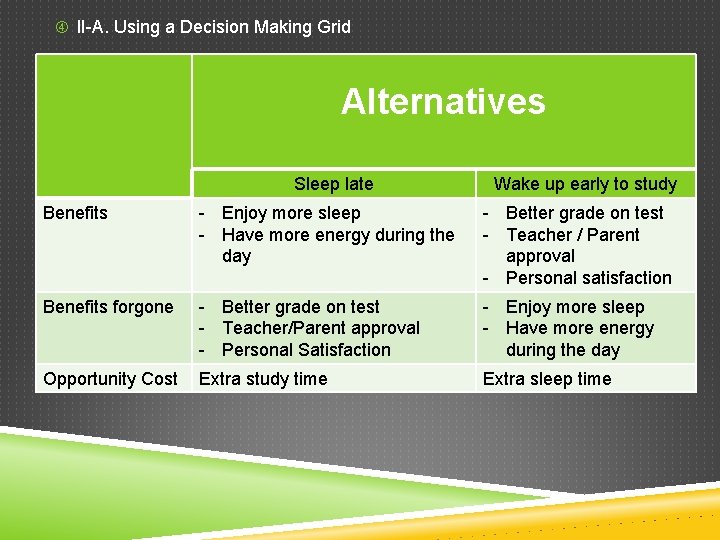
II. Determining Opportunity Cost The most desirable alternative given up as the result of a decision Sleep late or get up and study? Sleep late or get up for breakfast? Sleep late or get up to leave on vacation?
II-A. Using a Decision Making Grid Alternatives Sleep late Wake up early to study Benefits - Enjoy more sleep - Have more energy during the day - Better grade on test - Teacher / Parent approval - Personal satisfaction Benefits forgone - Better grade on test - Teacher/Parent approval - Personal Satisfaction - Enjoy more sleep - Have more energy during the day Opportunity Cost Extra study time Extra sleep time
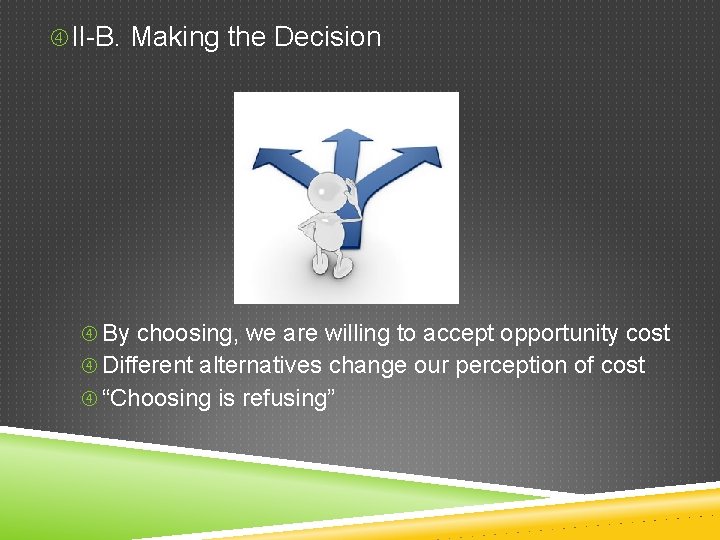
II-B. Making the Decision By choosing, we are willing to accept opportunity cost Different alternatives change our perception of cost “Choosing is refusing”
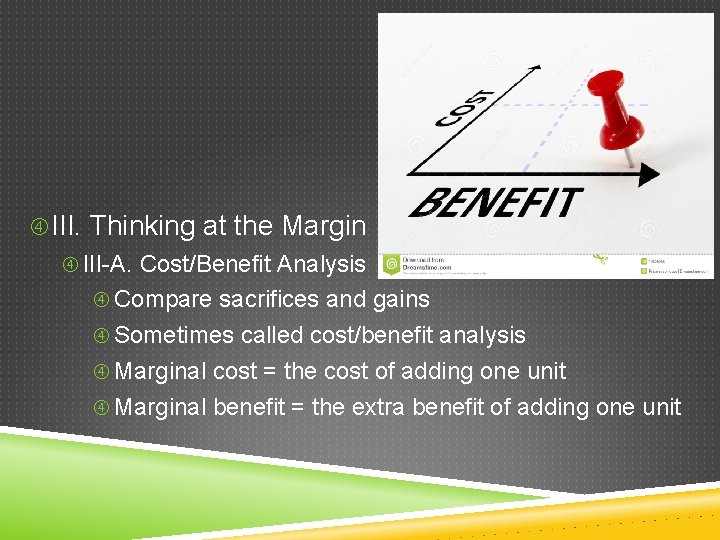
III. Thinking at the Margin III-A. Cost/Benefit Analysis Compare sacrifices and gains Sometimes called cost/benefit analysis Marginal cost = the cost of adding one unit Marginal benefit = the extra benefit of adding one unit
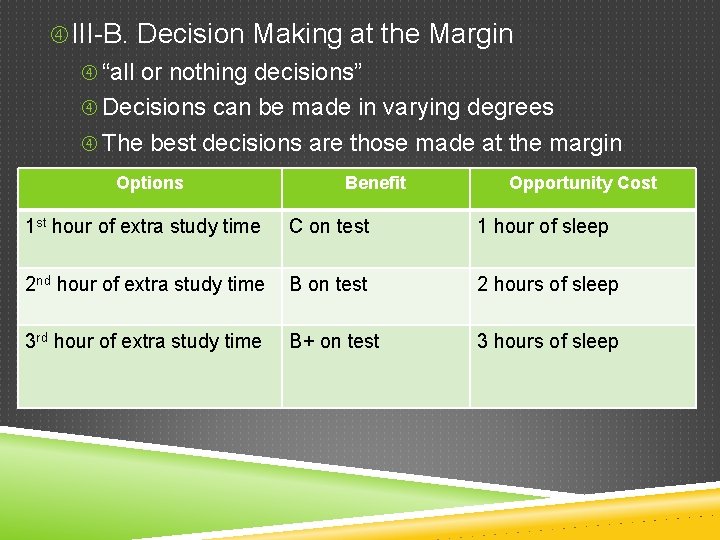
III-B. Decision Making at the Margin “all or nothing decisions” Decisions can be made in varying degrees The best decisions are those made at the margin Options Benefit Opportunity Cost 1 st hour of extra study time C on test 1 hour of sleep 2 nd hour of extra study time B on test 2 hours of sleep 3 rd hour of extra study time B+ on test 3 hours of sleep
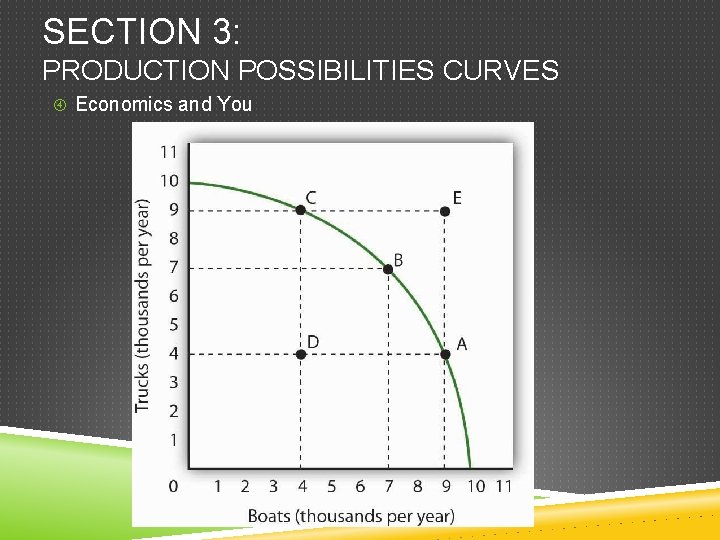
SECTION 3: PRODUCTION POSSIBILITIES CURVES Economics and You
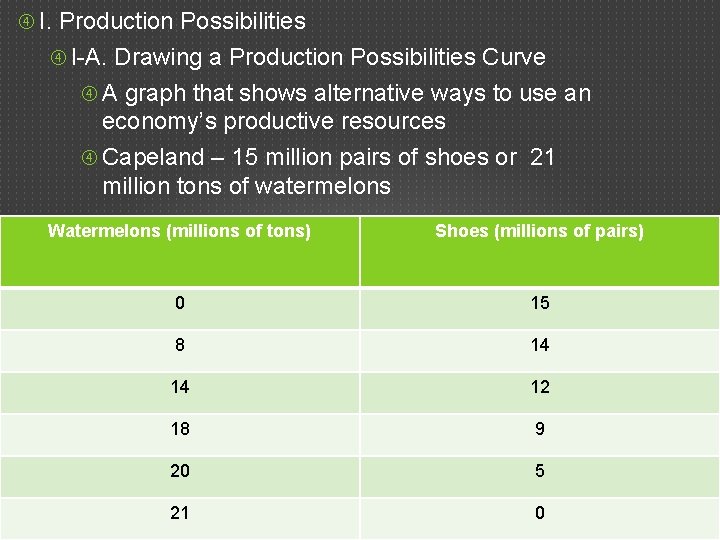
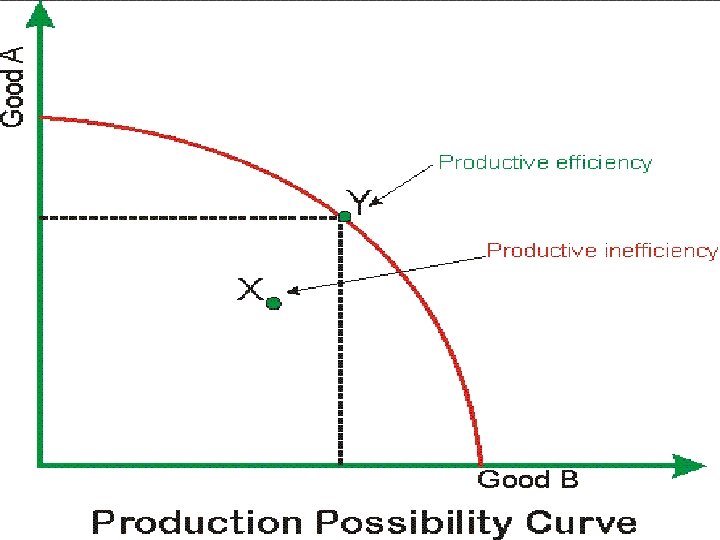
I. Production Possibilities I-A. Drawing a Production Possibilities Curve A graph that shows alternative ways to use an economy’s productive resources Capeland – 15 million pairs of shoes or 21 million tons of watermelons Watermelons (millions of tons) Shoes (millions of pairs) 0 15 8 14 14 12 18 9 20 5 21 0
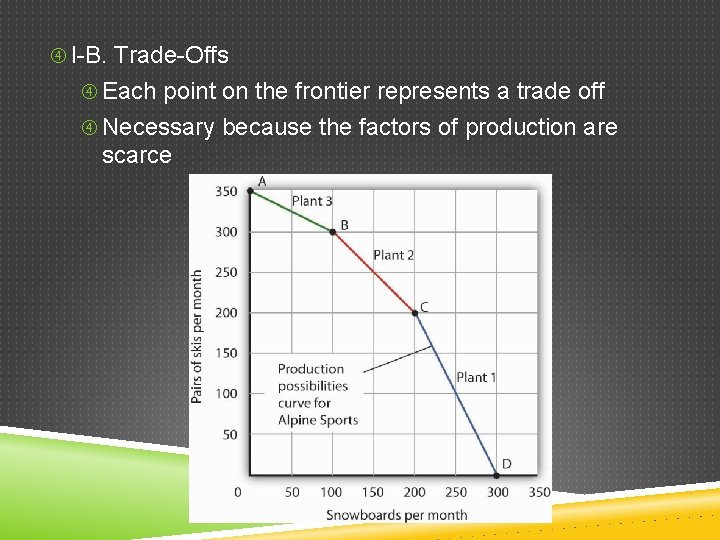
I-B. Trade-Offs Each point on the frontier represents a trade off Necessary because the factors of production are scarce
II. Efficiency, Growth, and Cost II-A. Efficiency Use of resources in a way that maximizes the output of goods and services Underutilization – using fewer resources than the economy is capable of using Future production possibilities frontier II-B. Growth In reality, the curve is always moving Change in land, labor, or capital changes the curve “shifted to the right” / “shifted to the left”
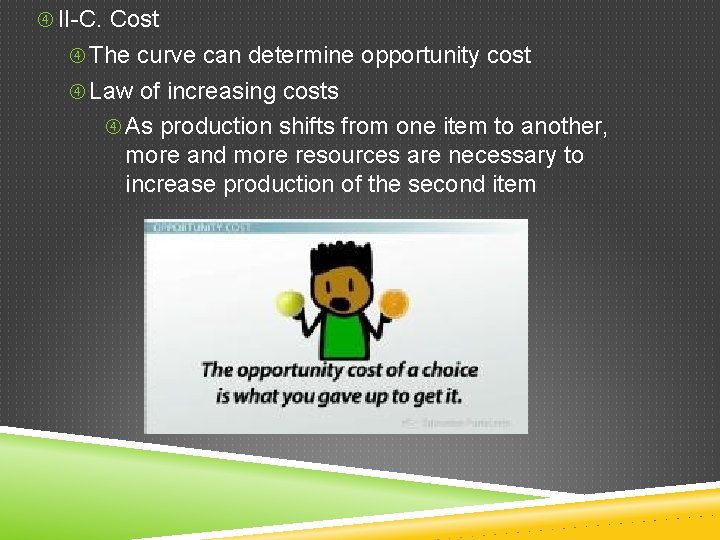
II-C. Cost The curve can determine opportunity cost Law of increasing costs As production shifts from one item to another, more and more resources are necessary to increase production of the second item
III. Technology and Education Examination of the possible goods and services based on available resources Technology – the process used to create goods and services Technology impacts the possible output of a production possibilities curve Can increase a nation’s efficiency Education can do this as well