
What is Ecology Interactions between organisms environment Interdisciplinary
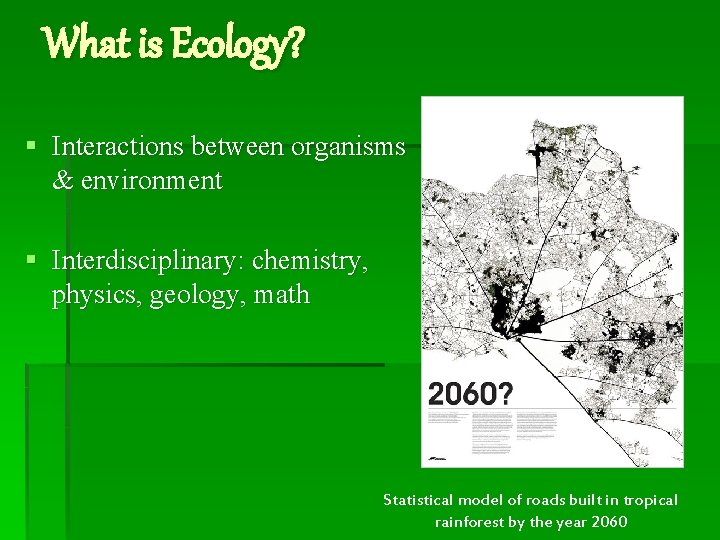
What is Ecology? § Interactions between organisms & environment § Interdisciplinary: chemistry, physics, geology, math Statistical model of roads built in tropical rainforest by the year 2060
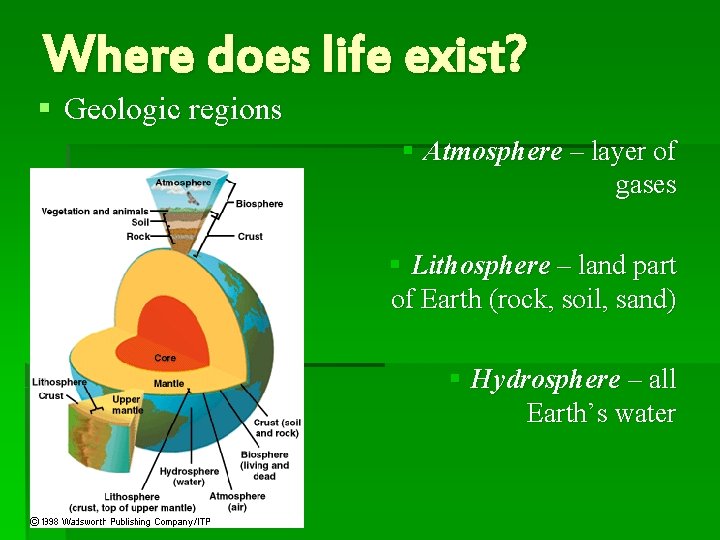
Where does life exist? § Geologic regions § Atmosphere – layer of gases § Lithosphere – land part of Earth (rock, soil, sand) § Hydrosphere – all Earth’s water
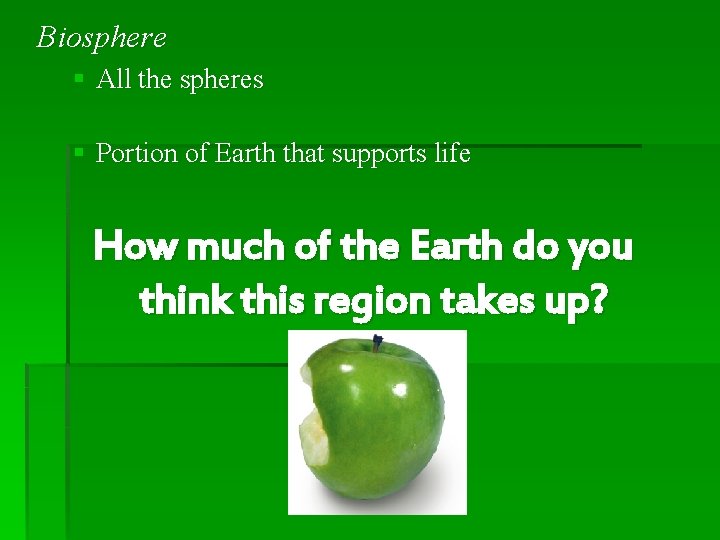
Biosphere § All the spheres § Portion of Earth that supports life How much of the Earth do you think this region takes up?
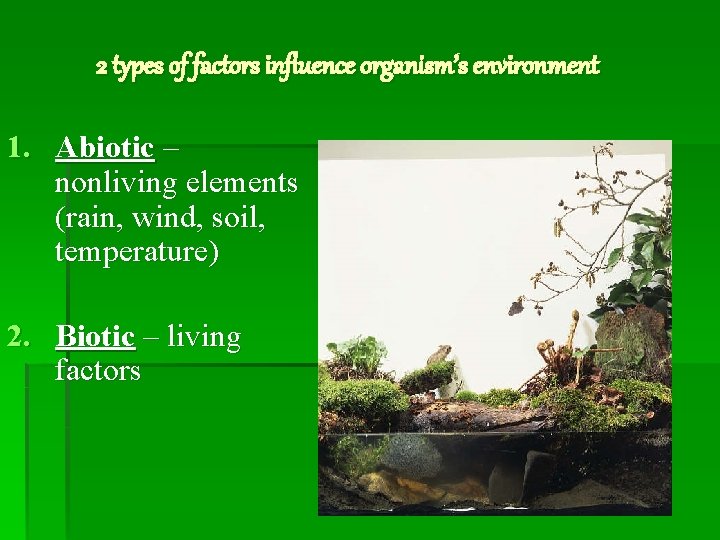
2 types of factors influence organism’s environment 1. Abiotic – nonliving elements (rain, wind, soil, temperature) 2. Biotic – living factors
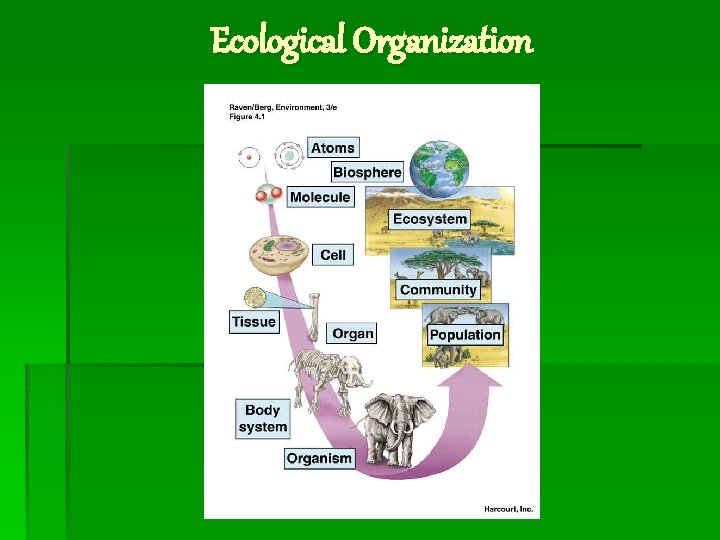
Ecological Organization
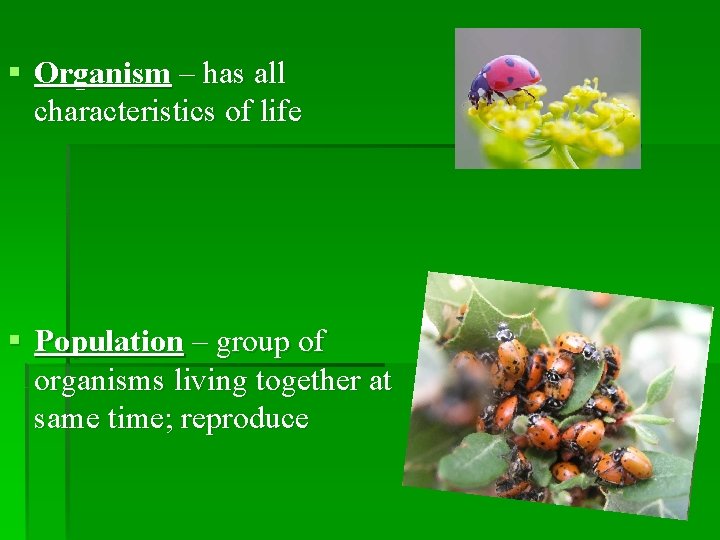
§ Organism – has all characteristics of life § Population – group of organisms living together at same time; reproduce
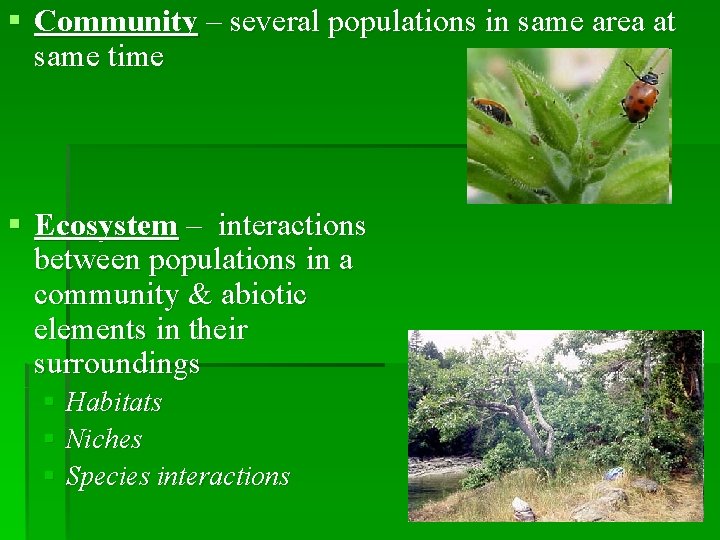
§ Community – several populations in same area at same time § Ecosystem – interactions between populations in a community & abiotic elements in their surroundings § Habitats § Niches § Species interactions
Niche & Habitat –where organism lives out its life Includes abiotic & biotic factors Not static Niche – organism’s role & location in its environment to meet unique needs How organism: Obtains food Finds shelter Reproduces Reduces competition
Influences on Ecosystems Can you think of any examples of things that might influence a habitat? Natural & human causes
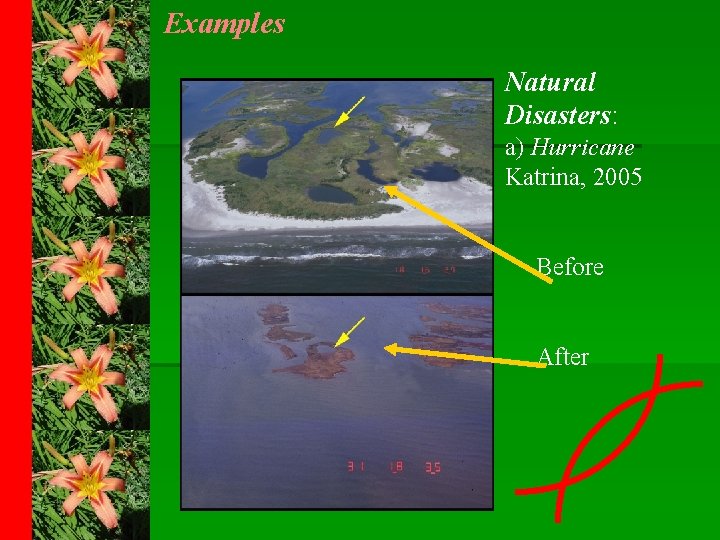
Examples Natural Disasters: a) Hurricane Katrina, 2005 Before After
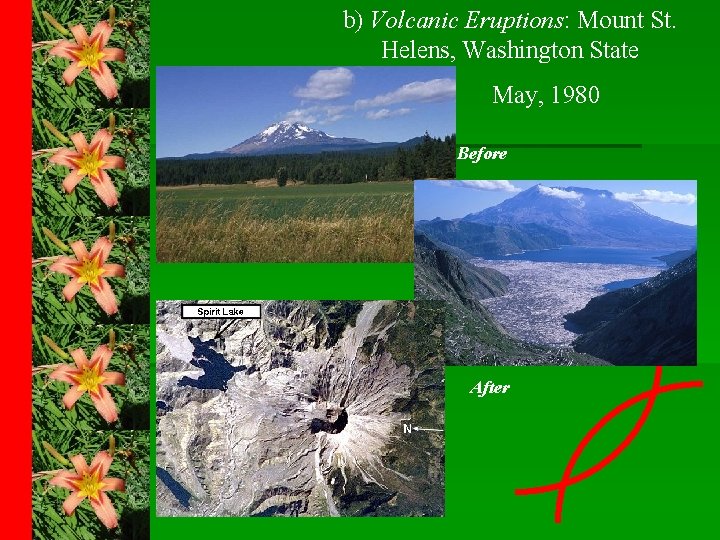
b) Volcanic Eruptions: Mount St. Helens, Washington State May, 1980 Before After
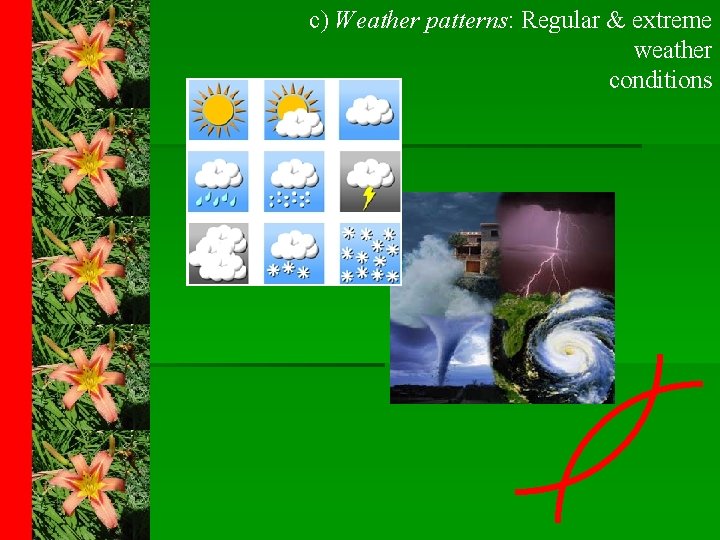
c) Weather patterns: Regular & extreme weather conditions
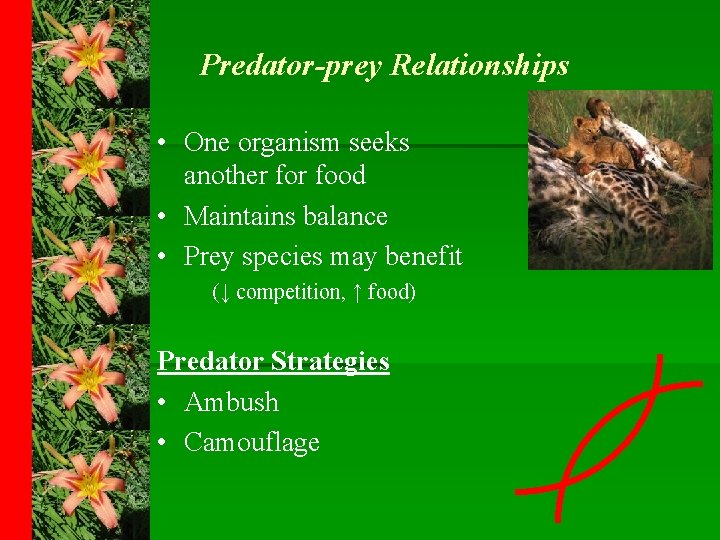
Predator-prey Relationships • One organism seeks another food • Maintains balance • Prey species may benefit (↓ competition, ↑ food) Predator Strategies • Ambush • Camouflage
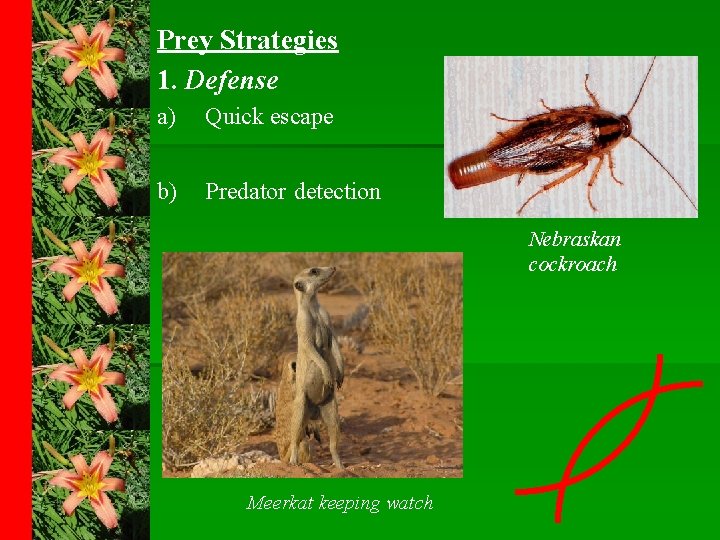
Prey Strategies 1. Defense a) Quick escape b) Predator detection Nebraskan cockroach Meerkat keeping watch
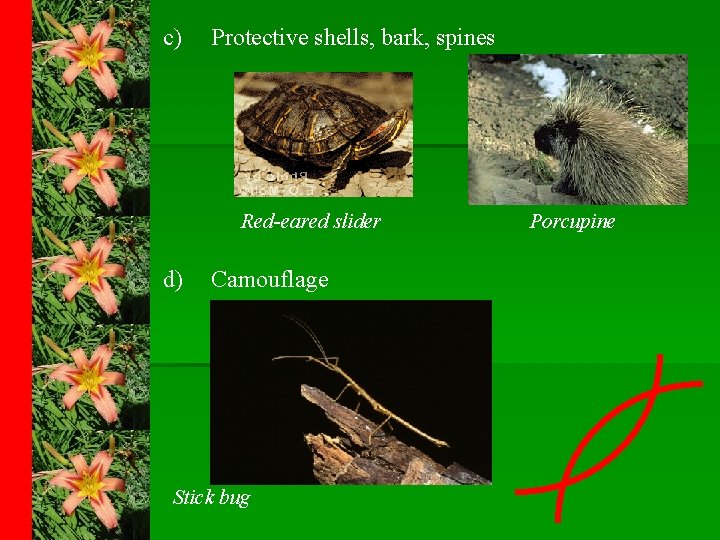
c) Protective shells, bark, spines Red-eared slider d) Camouflage Stick bug Porcupine
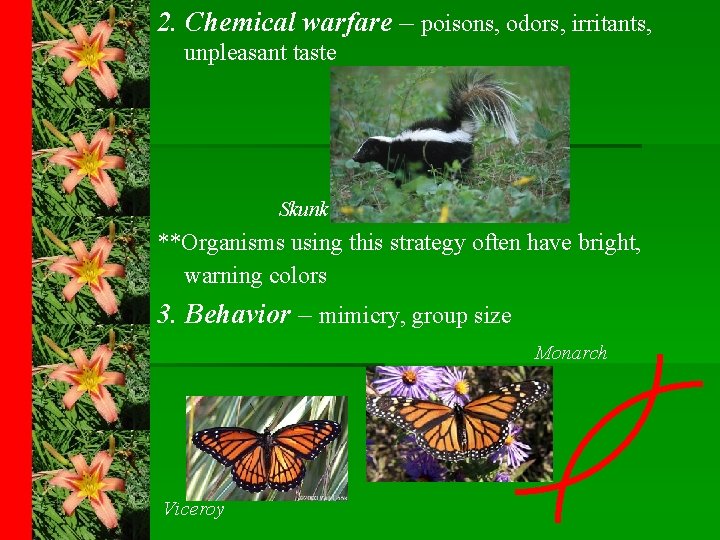
2. Chemical warfare – poisons, odors, irritants, unpleasant taste Skunk **Organisms using this strategy often have bright, warning colors 3. Behavior – mimicry, group size Monarch Viceroy
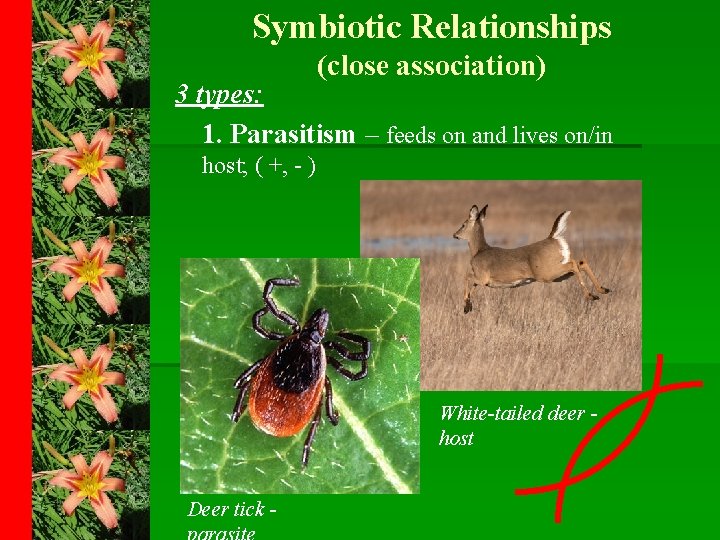
Symbiotic Relationships (close association) 3 types: 1. Parasitism – feeds on and lives on/in host; ( +, - ) White-tailed deer host Deer tick -
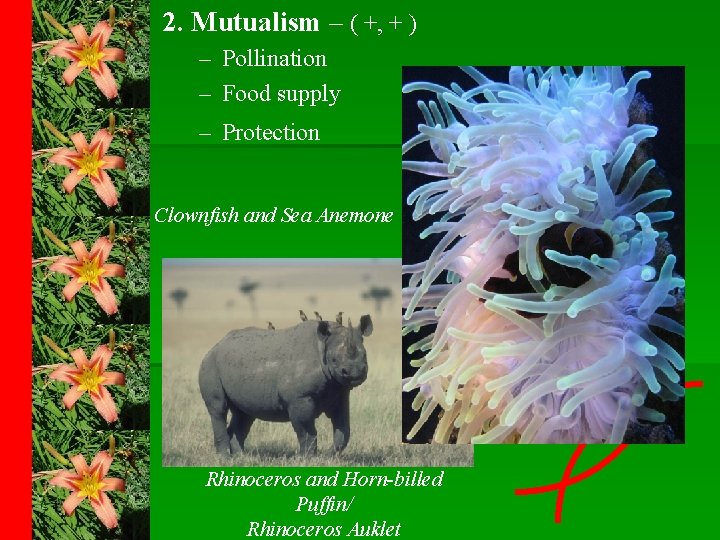
2. Mutualism – ( +, + ) – Pollination – Food supply – Protection Clownfish and Sea Anemone Rhinoceros and Horn-billed Puffin/ Rhinoceros Auklet
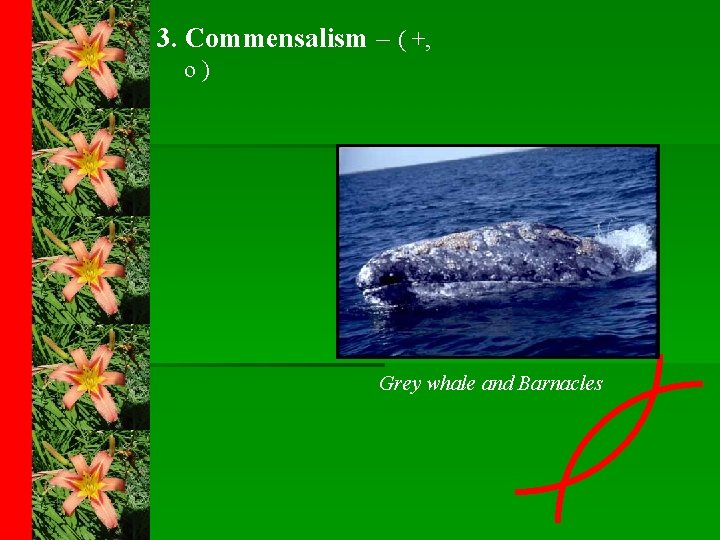
3. Commensalism – ( +, o) Grey whale and Barnacles
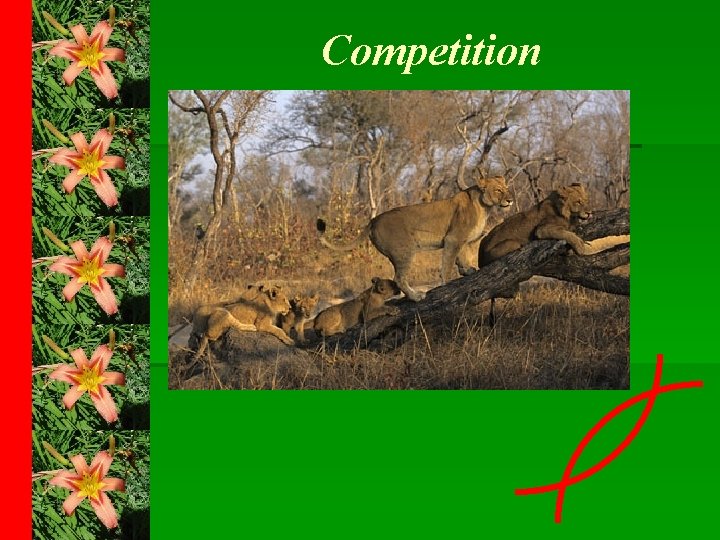
Competition
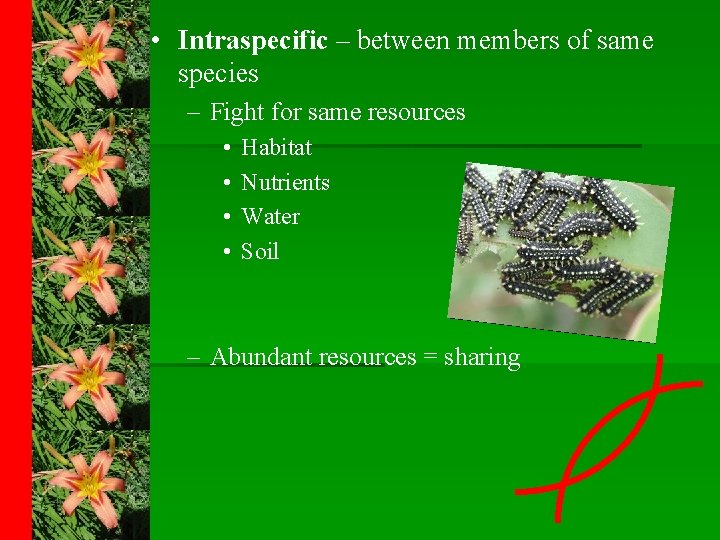
• Intraspecific – between members of same species – Fight for same resources • • Habitat Nutrients Water Soil – Abundant resources = sharing
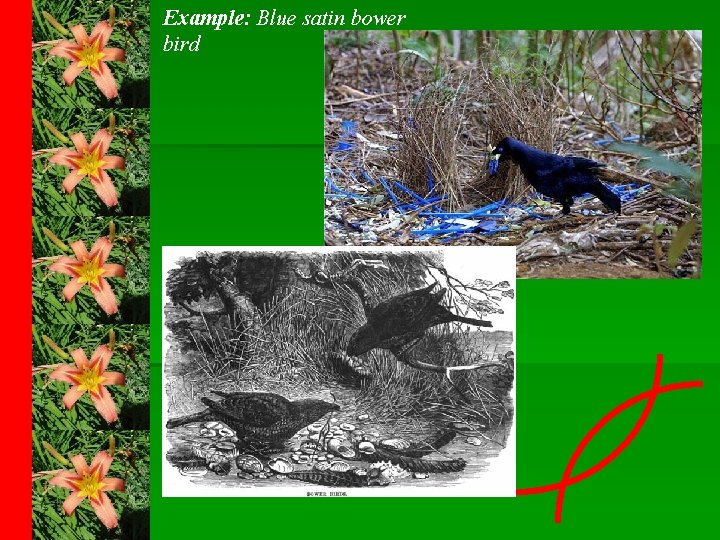
Example: Blue satin bower bird
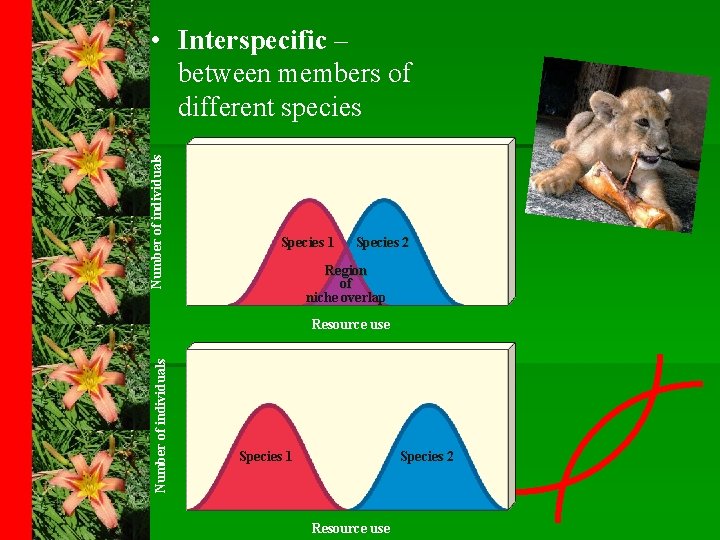
Number of individuals • Interspecific – between members of different species Species 1 Species 2 Region of niche overlap Number of individuals Resource use Species 1 Species 2 Resource use
- Slides: 24