
What is Ecology 1 Organisms and Their Environment
- Slides: 29
What is Ecology? 1
Organisms and Their Environment 2
What is Ecology? ? • The study of interactions that take place between organisms and their environment. • It explains how living organisms affect each other and the world they live in. • GREEK origin of ECOLOGY oikos – home and logos – to study 3
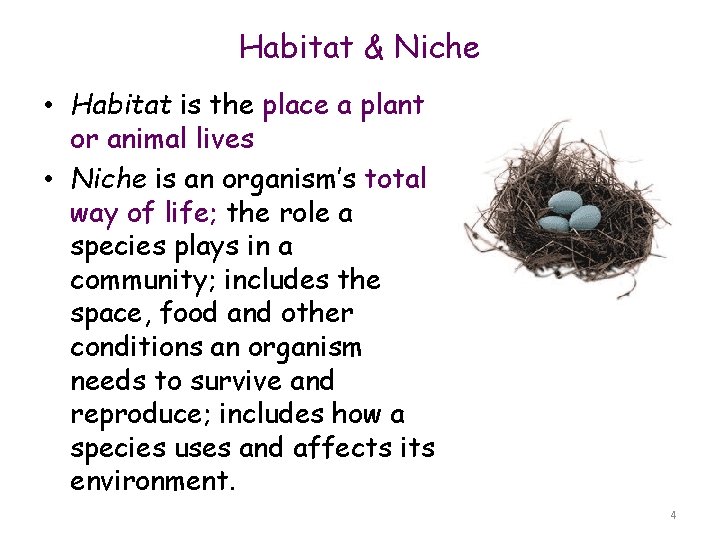
Habitat & Niche • Habitat is the place a plant or animal lives • Niche is an organism’s total way of life; the role a species plays in a community; includes the space, food and other conditions an organism needs to survive and reproduce; includes how a species uses and affects its environment. 4
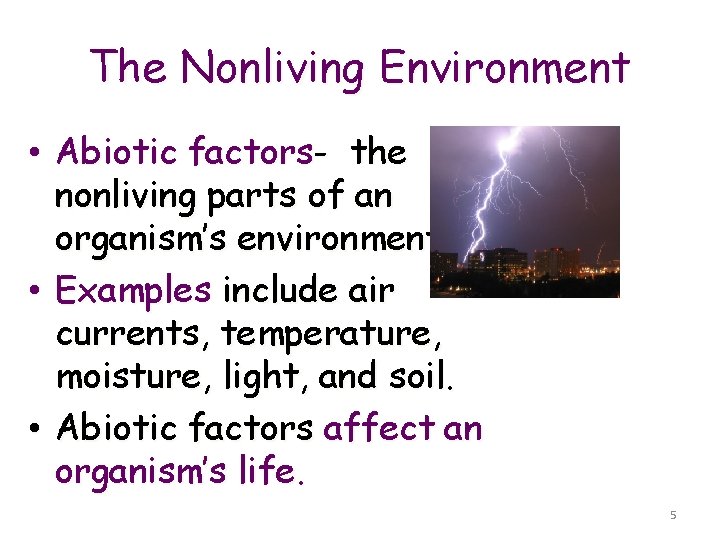
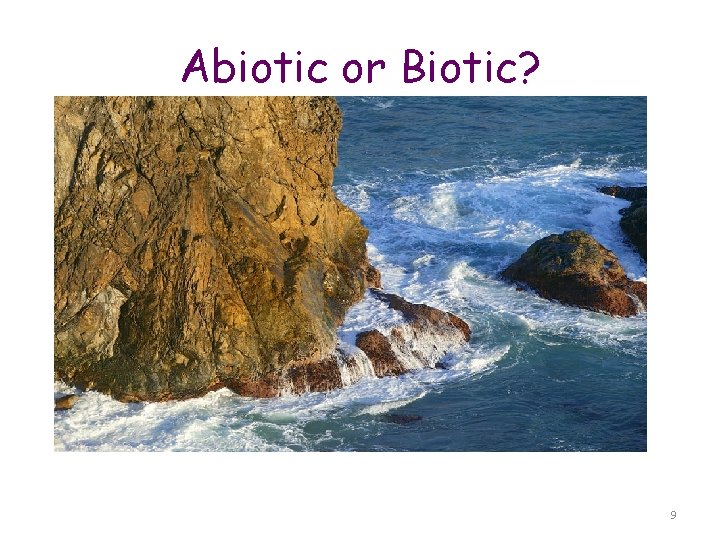
The Nonliving Environment • Abiotic factors- the nonliving parts of an organism’s environment. • Examples include air currents, temperature, moisture, light, and soil. • Abiotic factors affect an organism’s life. 5
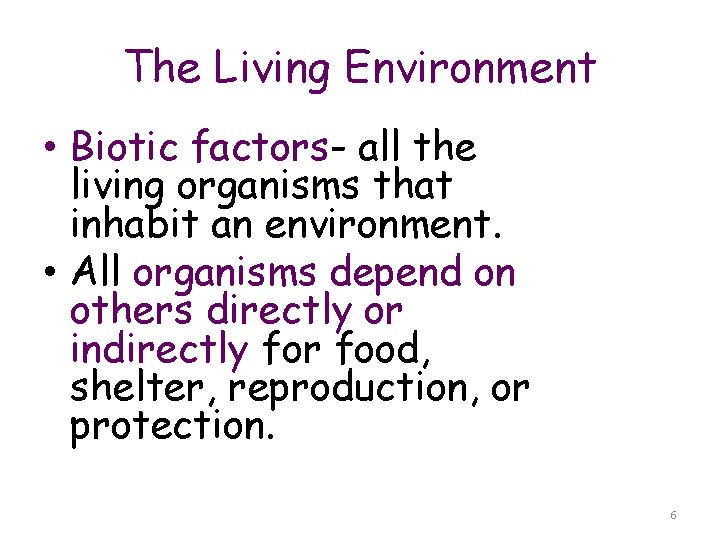
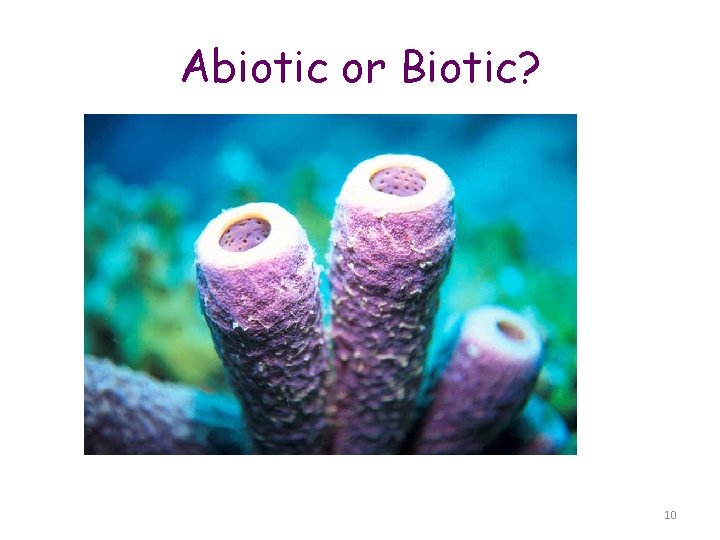
The Living Environment • Biotic factors- all the living organisms that inhabit an environment. • All organisms depend on others directly or indirectly for food, shelter, reproduction, or protection. 6
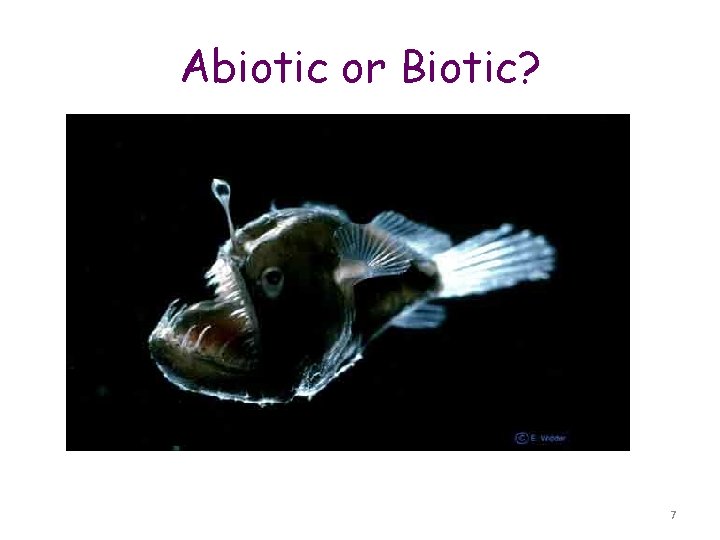
Abiotic or Biotic? Biotic 7
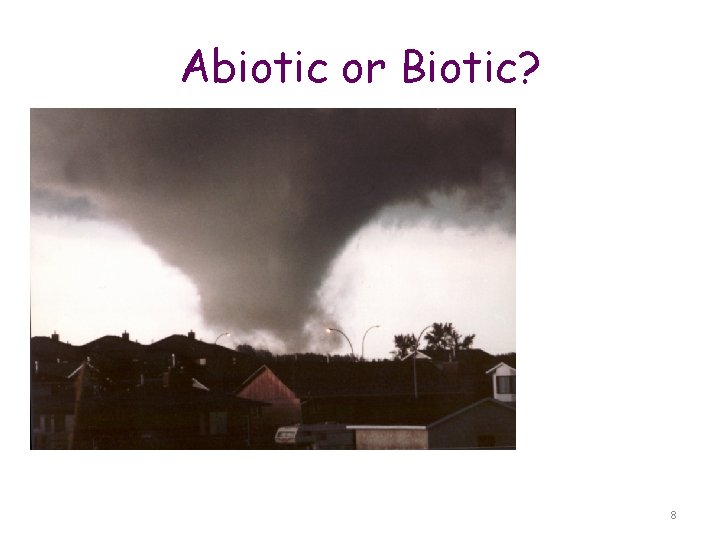
Abiotic or Biotic? Abiotic 8
Abiotic or Biotic? Abiotic 9
Abiotic or Biotic? Biotic 10
Levels of Organization 11
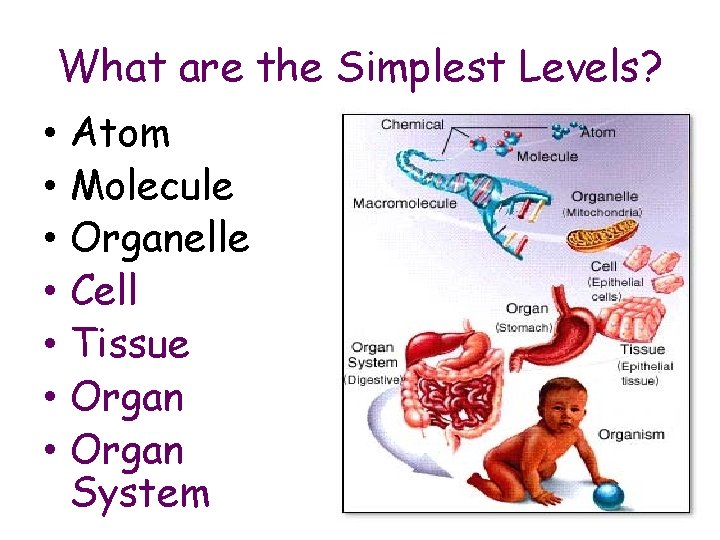
What are the Simplest Levels? • • Atom Molecule Organelle Cell Tissue Organ System 12
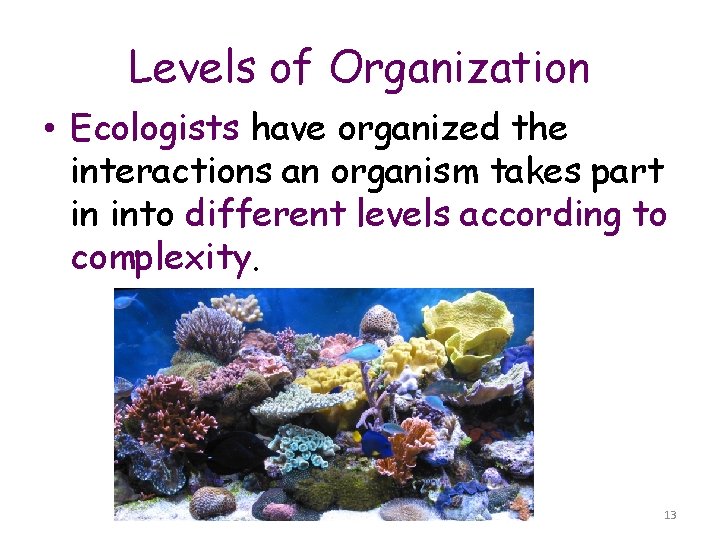
Levels of Organization • Ecologists have organized the interactions an organism takes part in into different levels according to complexity. 13
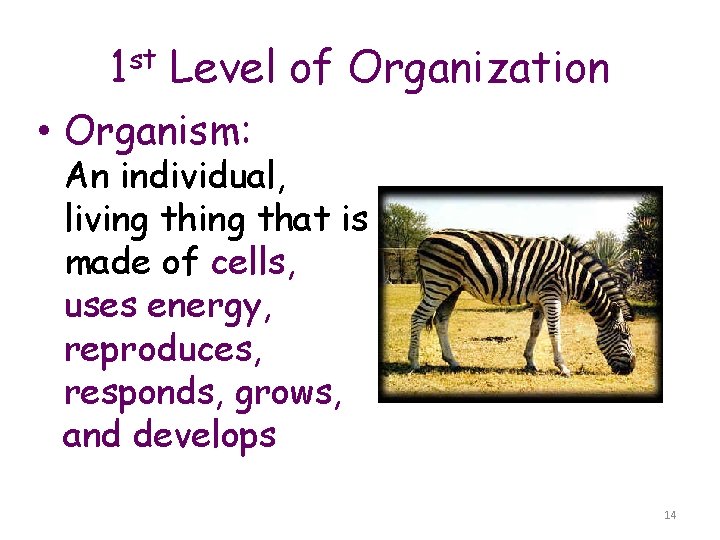
1 st Level of Organization • Organism: An individual, living that is made of cells, uses energy, reproduces, responds, grows, and develops 14
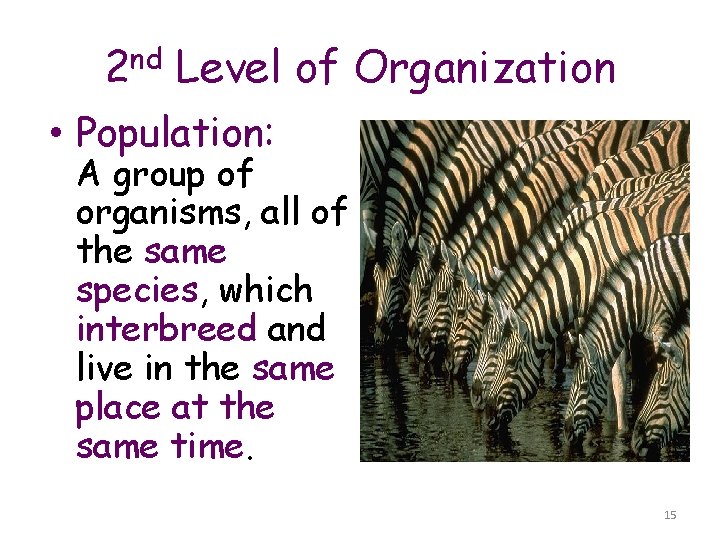
2 nd Level of Organization • Population: A group of organisms, all of the same species, which interbreed and live in the same place at the same time. 15
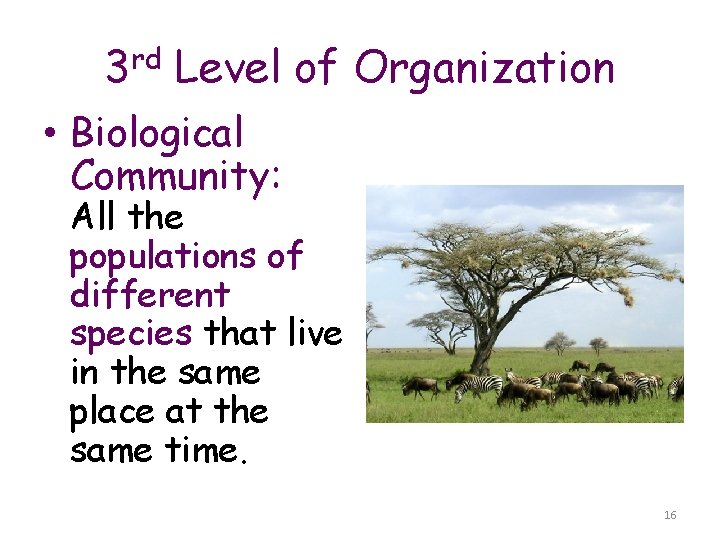
3 rd Level of Organization • Biological Community: All the populations of different species that live in the same place at the same time. 16
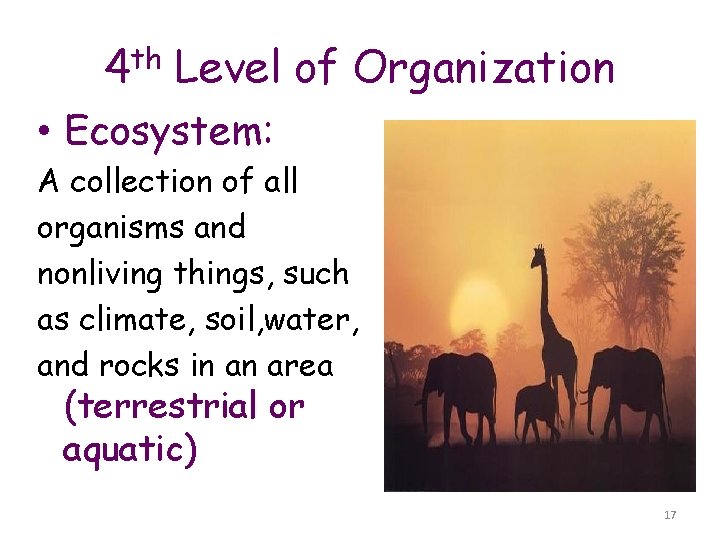
4 th Level of Organization • Ecosystem: A collection of all organisms and nonliving things, such as climate, soil, water, and rocks in an area (terrestrial or aquatic) 17
5 th Level of Organization • Biome: • A regional or global community of organisms characterized by the climate conditions and plant communities that thrive there • Rainforests, deserts, tundras, deciduous and coniferous forests, grasslands, taigas, oceans, estuaries, ponds, lakes 18
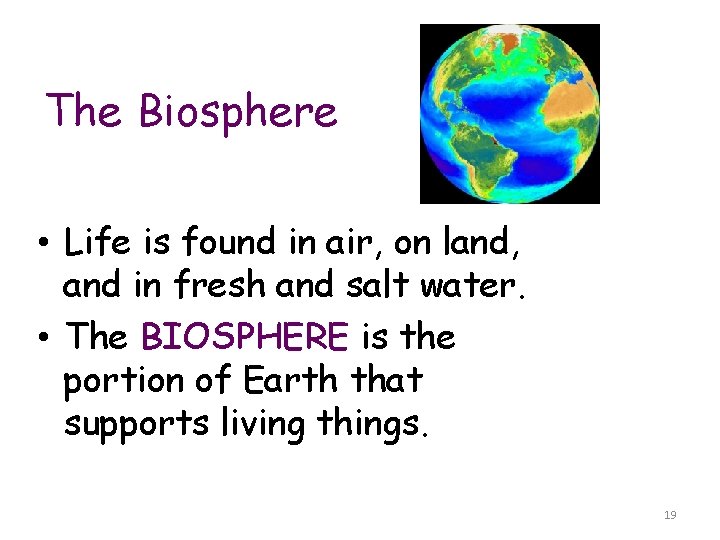
The Biosphere • Life is found in air, on land, and in fresh and salt water. • The BIOSPHERE is the portion of Earth that supports living things. 19
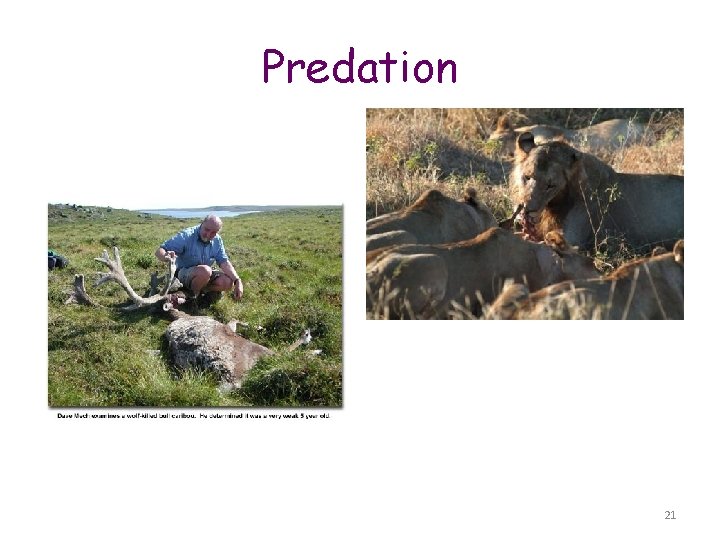
Relationships in an Ecosystem • Predation – one organism kills and eats the other; predator kills and eats the prey • Examples – lion and zebra hawk and rabbit wolf and caribou 20
Predation 21
Competition • Occurs when two organisms fight for the same limited resources 1. Interspecific competition - two different species compete for a limited resource such as space, water, food 2. Intraspecific competition – occurs among members of the same species 22
Symbiosis • Symbiosis –a close and permanent association between organisms of different species; “living together” • Three types: Parasitism Mutualism Commensalism 23
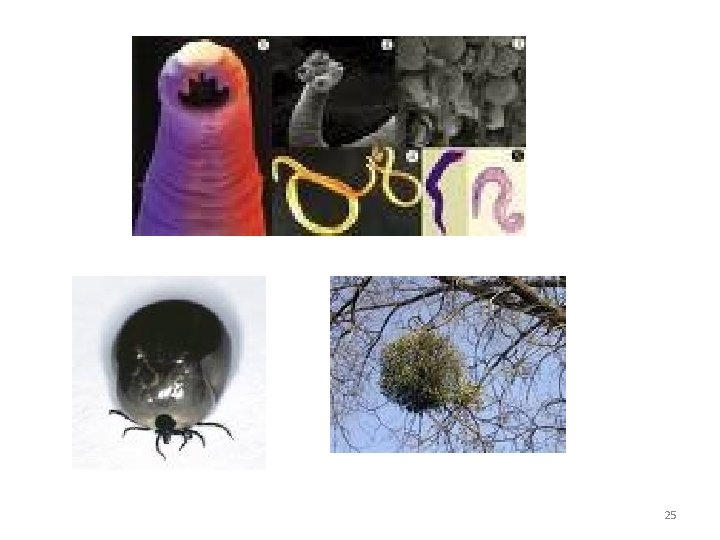
Parasitism • One organism lives on or in another living organism; the parasite takes nourishment from its host; host is usually harmed but not killed • Examples: tick and dog tapeworm and human mistletoe and tree 24
25
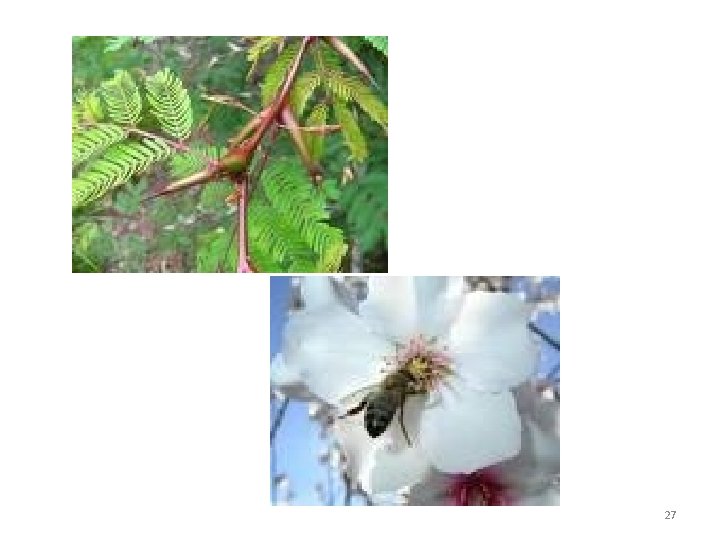
Mutualism • Organisms of two different species both benefit • Examples: bees pollinating flowers acacia trees and ants (ants attack any herbivore which tries to feed on the tree and clears the area around the tree while the tree provides nectar and a home for the ants 26
27
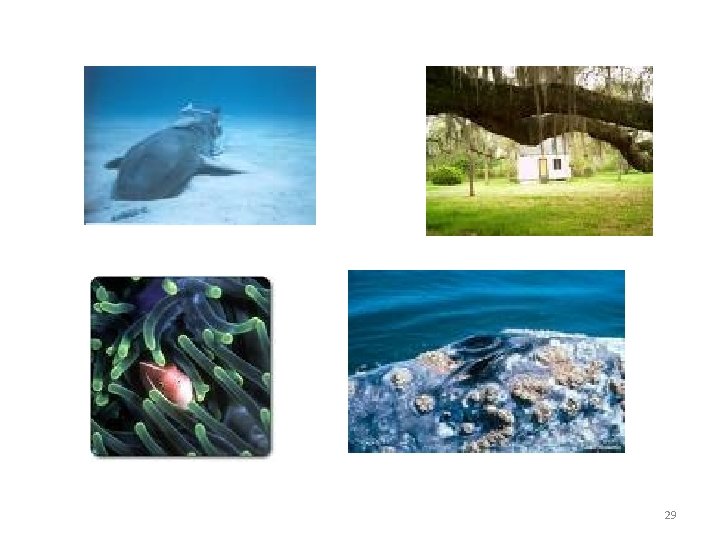
Commensalism • One organism benefits while the other is not affected • Examples: Spanish moss and trees Gray whale and barnacles Sea anemone and clown fish Remora and sharks 28
29