
What is dyslexia Dyslexia is a learning problem
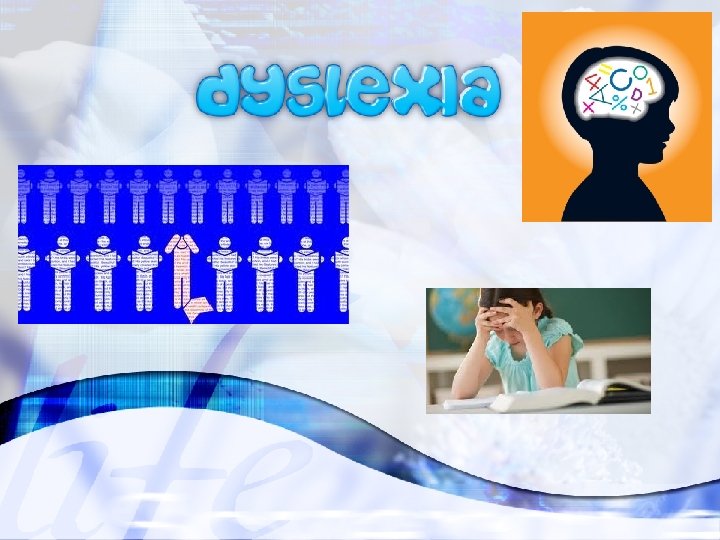

What is dyslexia Dyslexia is a learning problem some people have. It makes words appears scrambled causing problems with reading, writing and other activities.
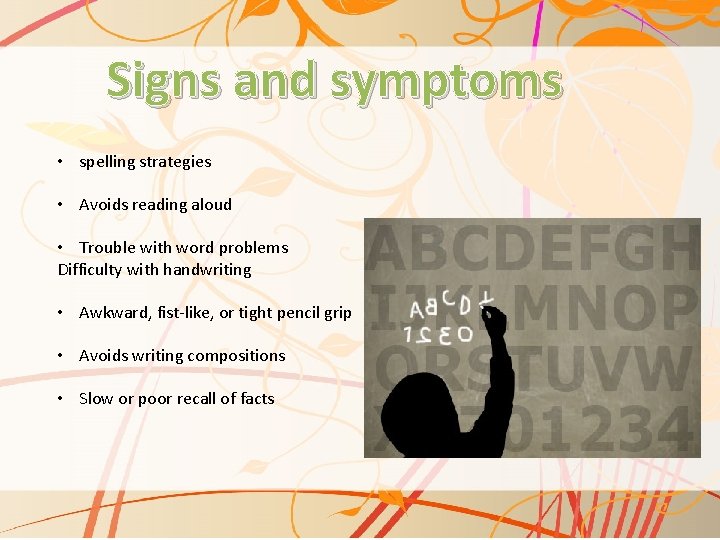
Signs and symptoms • spelling strategies • Avoids reading aloud • Trouble with word problems Difficulty with handwriting • Awkward, fist-like, or tight pencil grip • Avoids writing compositions • Slow or poor recall of facts
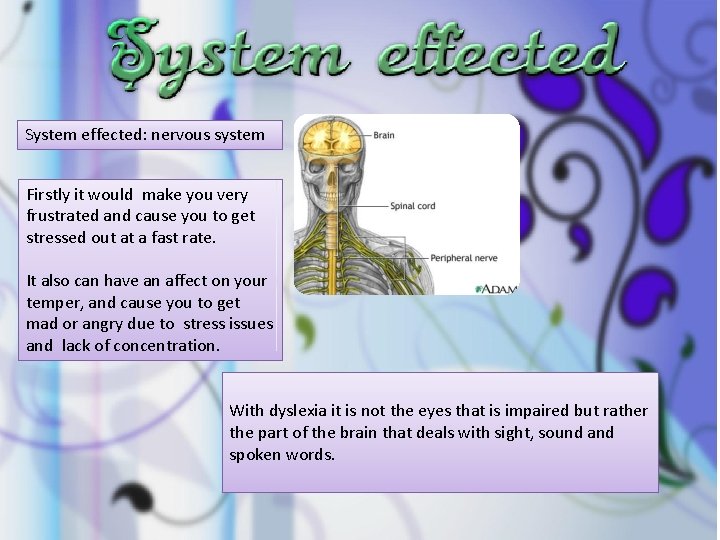
System effected: nervous system Firstly it would make you very frustrated and cause you to get stressed out at a fast rate. It also can have an affect on your temper, and cause you to get mad or angry due to stress issues and lack of concentration. With dyslexia it is not the eyes that is impaired but rather the part of the brain that deals with sight, sound and spoken words.
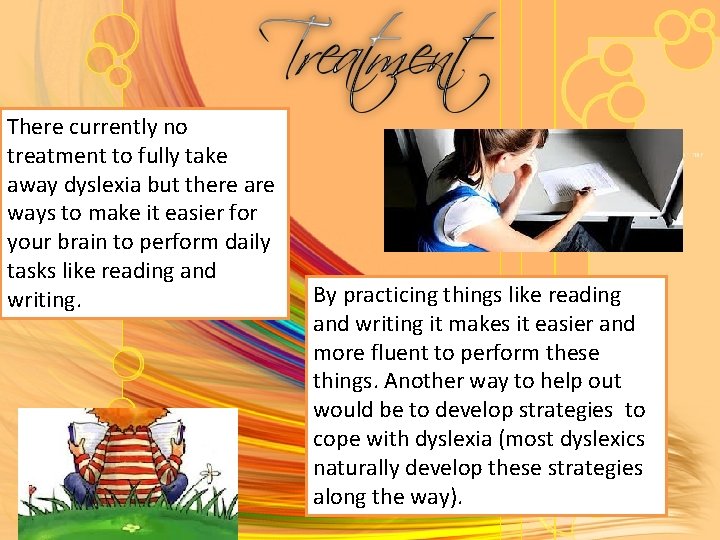
There currently no treatment to fully take away dyslexia but there are ways to make it easier for your brain to perform daily tasks like reading and writing. By practicing things like reading and writing it makes it easier and more fluent to perform these things. Another way to help out would be to develop strategies to cope with dyslexia (most dyslexics naturally develop these strategies along the way).
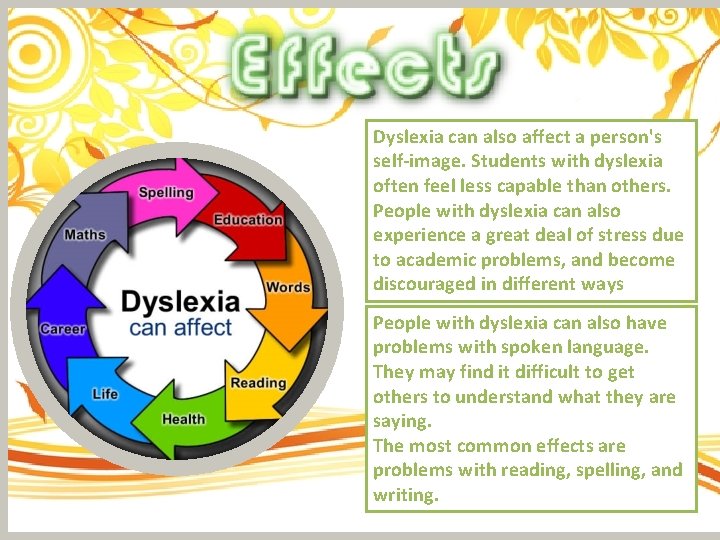
Dyslexia can also affect a person's self-image. Students with dyslexia often feel less capable than others. People with dyslexia can also experience a great deal of stress due to academic problems, and become discouraged in different ways People with dyslexia can also have problems with spoken language. They may find it difficult to get others to understand what they are saying. The most common effects are problems with reading, spelling, and writing.
Dyslexics often struggle to read small “sight” words such as “that, ” “an, ” “in. ” Dyslexics tend to be more curious, creative, and intuitive than average Dyslexia affects nearly 10% of the population making it a very common learning disability Some of the most brilliant minds have been known to have dyslexia: Albert Einstein, Alexander Graham Bell, Thomas Edison, Winston Churchill, Benjamin Franklin, and John Lennon.

Your Text Here Video clip
- Slides: 8