
What IS DNA anyway Do Now 1 Pass
- Slides: 12
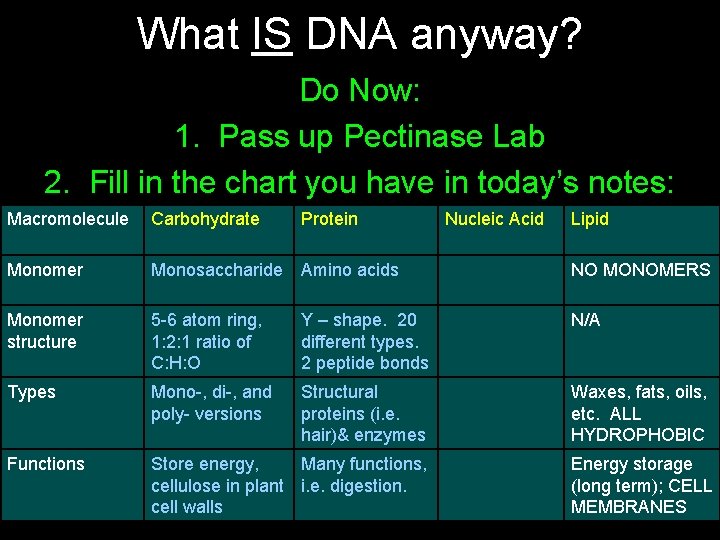
What IS DNA anyway? Do Now: 1. Pass up Pectinase Lab 2. Fill in the chart you have in today’s notes: Macromolecule Carbohydrate Protein Nucleic Acid Lipid Monomer Monosaccharide Amino acids NO MONOMERS Monomer structure 5 -6 atom ring, 1: 2: 1 ratio of C: H: O Y – shape. 20 different types. 2 peptide bonds N/A Types Mono-, di-, and poly- versions Structural proteins (i. e. hair)& enzymes Waxes, fats, oils, etc. ALL HYDROPHOBIC Functions Store energy, Many functions, cellulose in plant i. e. digestion. cell walls Energy storage (long term); CELL MEMBRANES
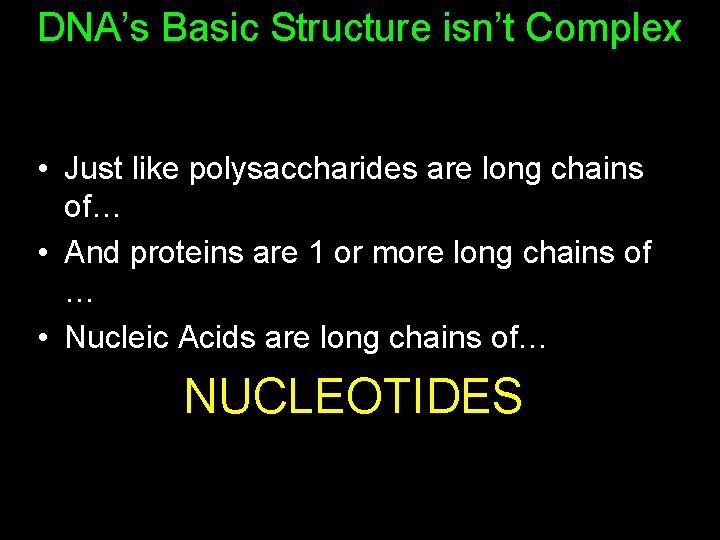
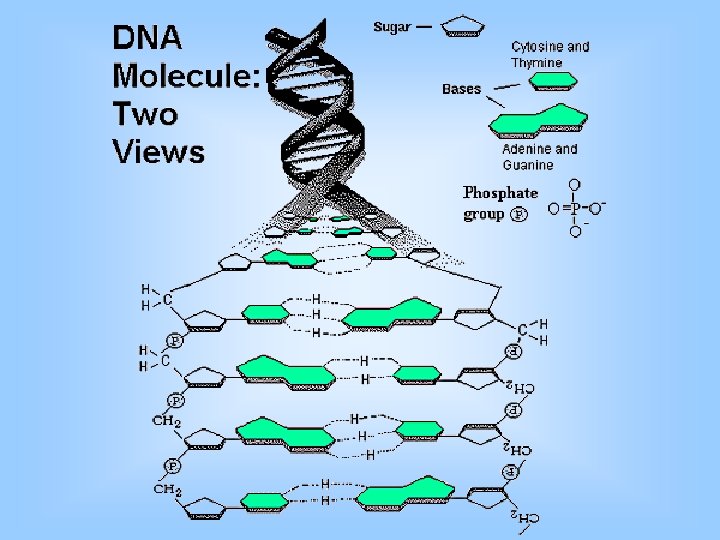
DNA’s Basic Structure isn’t Complex • Just like polysaccharides are long chains of… • And proteins are 1 or more long chains of … • Nucleic Acids are long chains of… NUCLEOTIDES
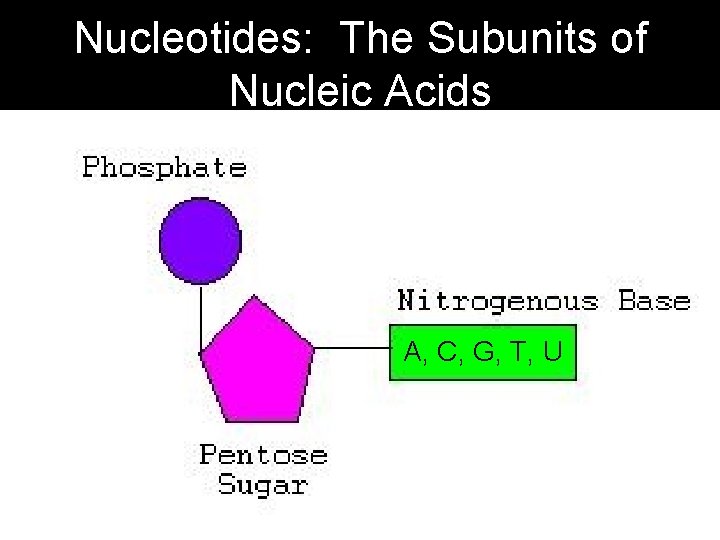
Nucleotides: The Subunits of Nucleic Acids A, C, G, T, U
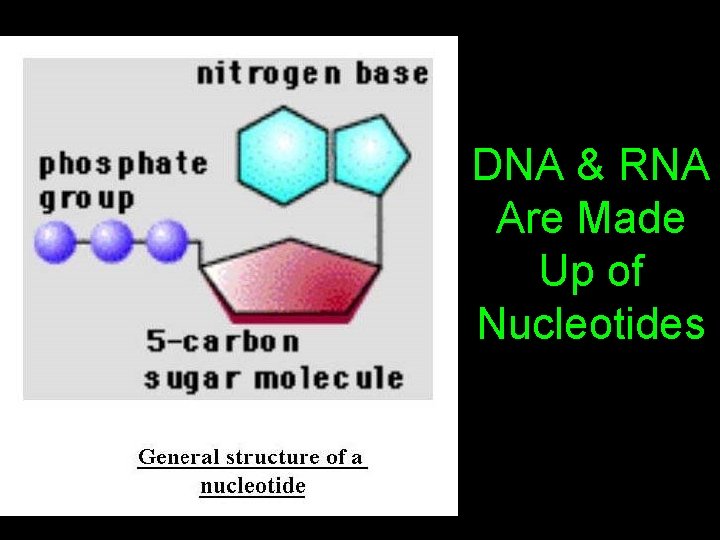
DNA & RNA Are Made Up of Nucleotides
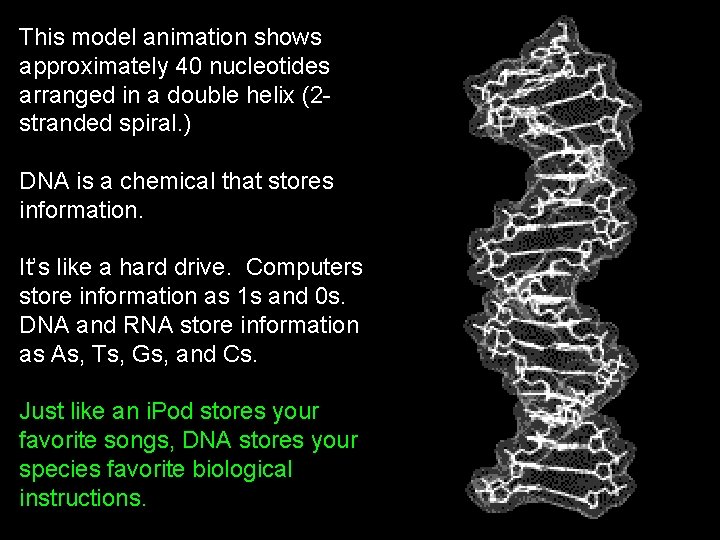
This model animation shows approximately 40 nucleotides arranged in a double helix (2 stranded spiral. ) DNA is a chemical that stores information. It’s like a hard drive. Computers store information as 1 s and 0 s. DNA and RNA store information as As, Ts, Gs, and Cs. Just like an i. Pod stores your favorite songs, DNA stores your species favorite biological instructions.
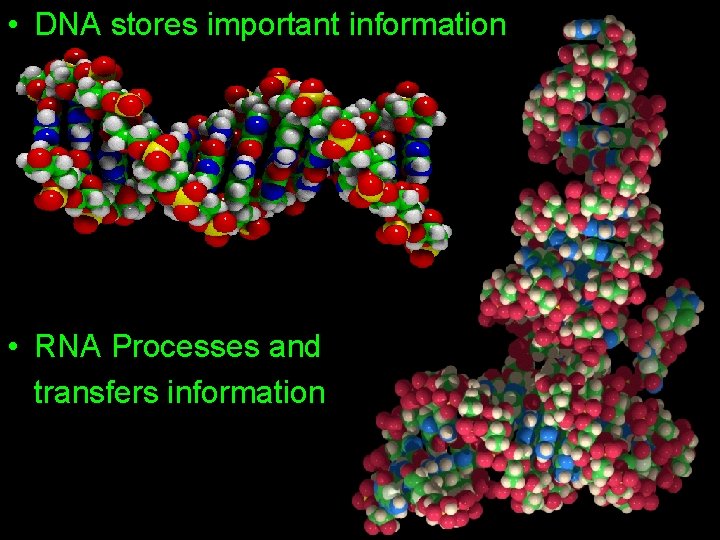
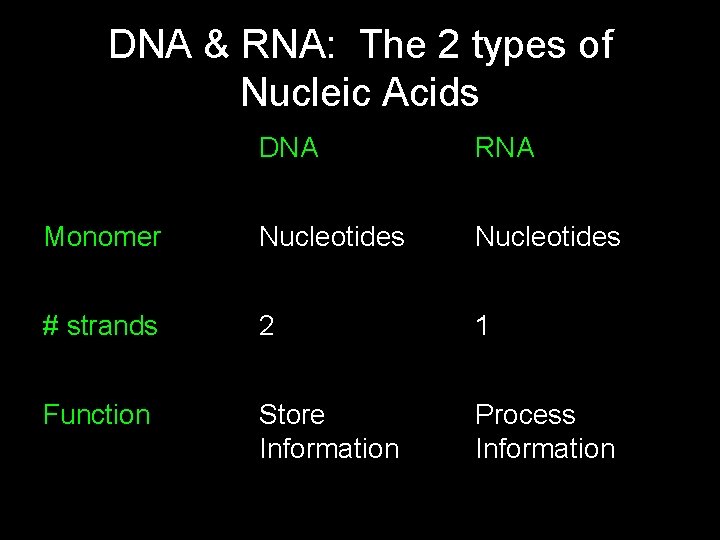
• DNA stores important information • RNA Processes and transfers information
DNA & RNA: The 2 types of Nucleic Acids DNA RNA Monomer Nucleotides # strands 2 1 Function Store Information Process Information
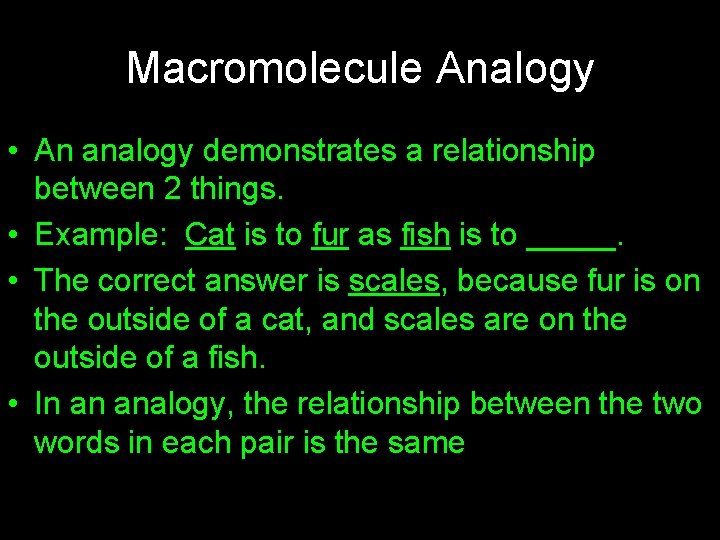
Macromolecule Analogy • An analogy demonstrates a relationship between 2 things. • Example: Cat is to fur as fish is to _____. • The correct answer is scales, because fur is on the outside of a cat, and scales are on the outside of a fish. • In an analogy, the relationship between the two words in each pair is the same
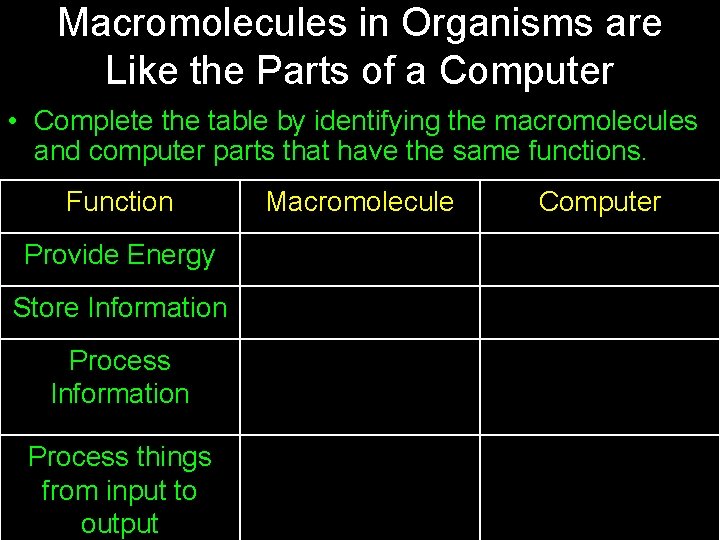
Macromolecules in Organisms are Like the Parts of a Computer • Complete the table by identifying the macromolecules and computer parts that have the same functions. Function Provide Energy Store Information Process things from input to output Macromolecule Computer
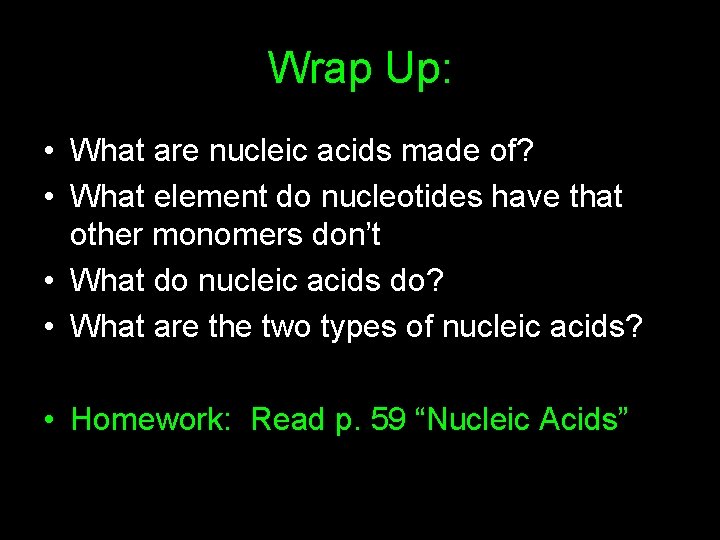
Wrap Up: • What are nucleic acids made of? • What element do nucleotides have that other monomers don’t • What do nucleic acids do? • What are the two types of nucleic acids? • Homework: Read p. 59 “Nucleic Acids”