
What is Dissolving When an ionic compound eg
- Slides: 22
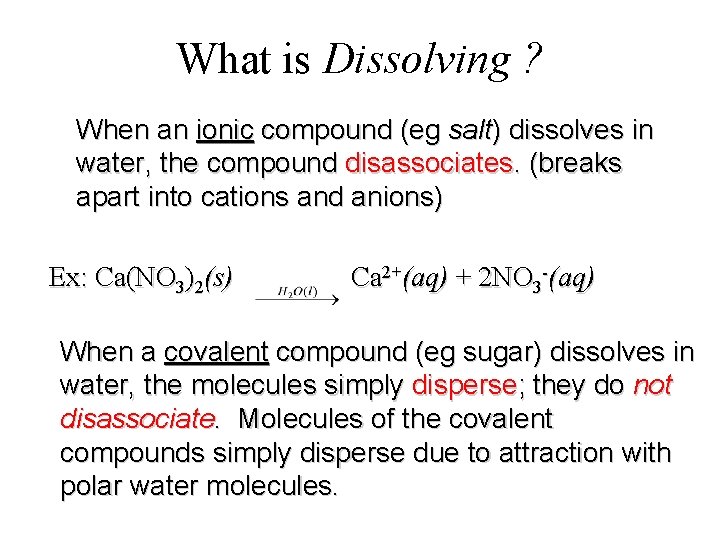
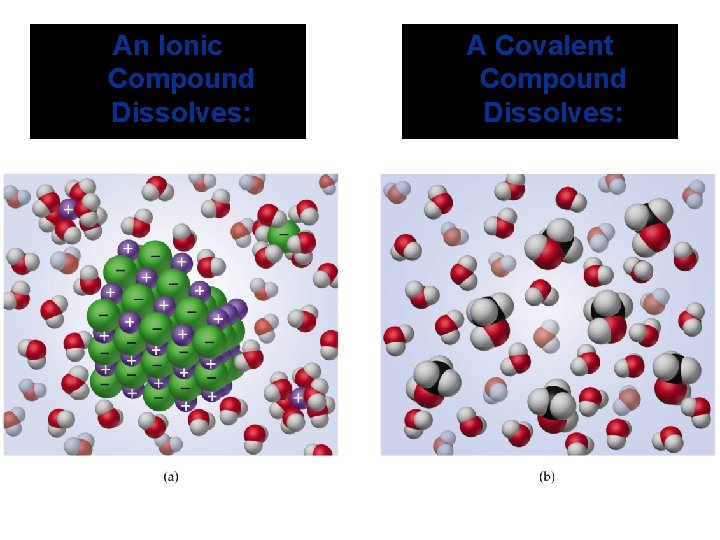
What is Dissolving ? When an ionic compound (eg salt) dissolves in water, the compound disassociates. (breaks apart into cations and anions) Ex: Ca(NO 3)2(s) Ca 2+(aq) + 2 NO 3 -(aq) When a covalent compound (eg sugar) dissolves in water, the molecules simply disperse; they do not disassociate. Molecules of the covalent compounds simply disperse due to attraction with polar water molecules.
An Ionic Compound Dissolves: A Covalent Compound Dissolves:
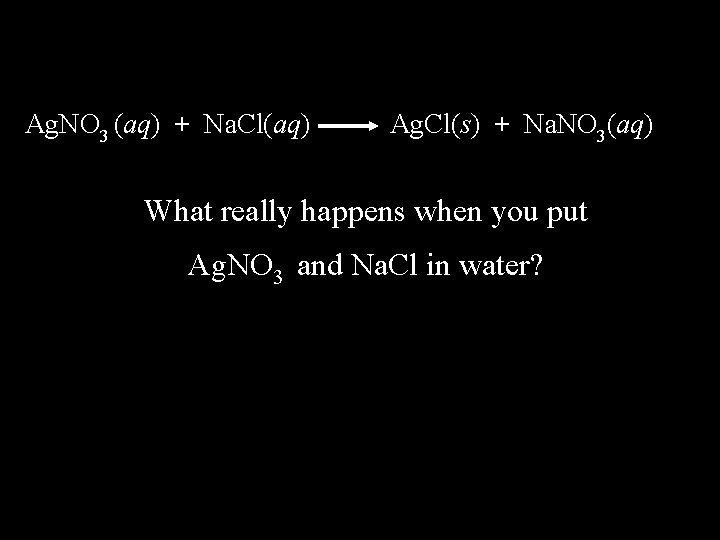
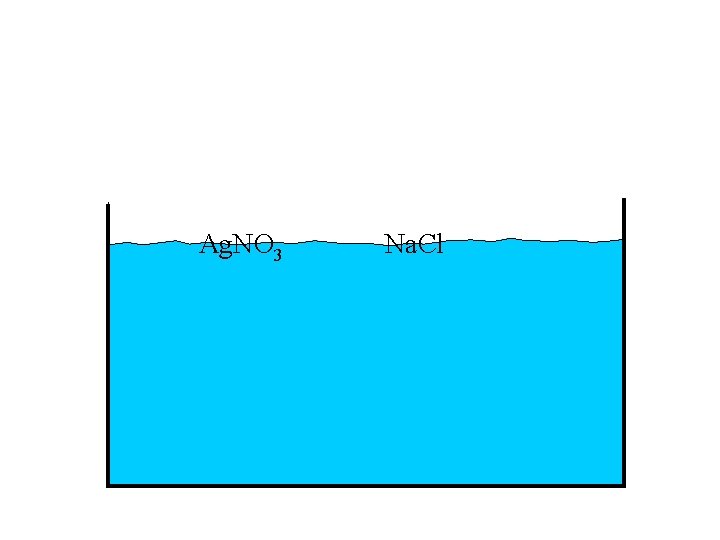
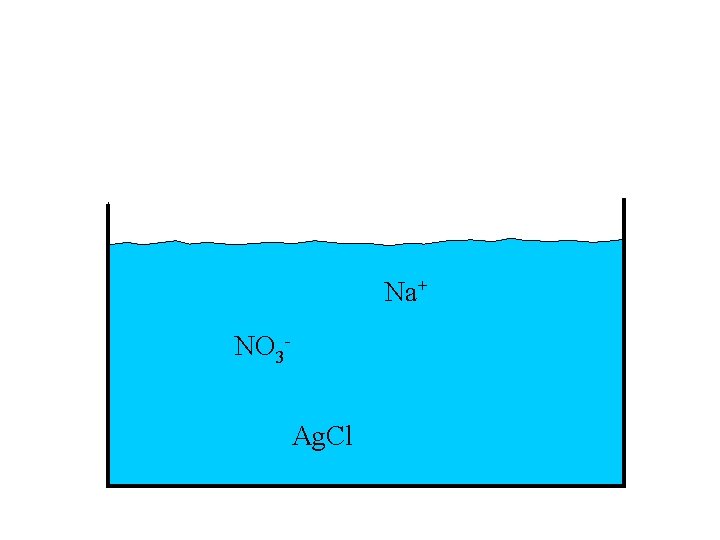
Ag. NO 3 (aq) + Na. Cl(aq) Ag. Cl(s) + Na. NO 3(aq) What really happens when you put Ag. NO 3 and Na. Cl in water?
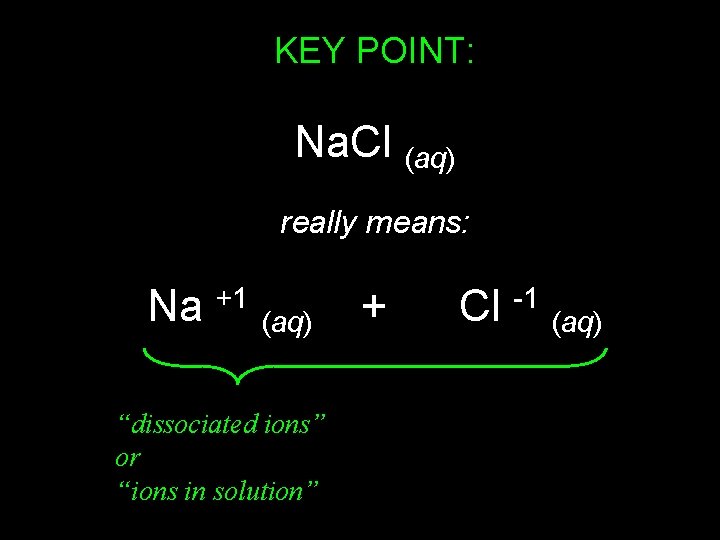
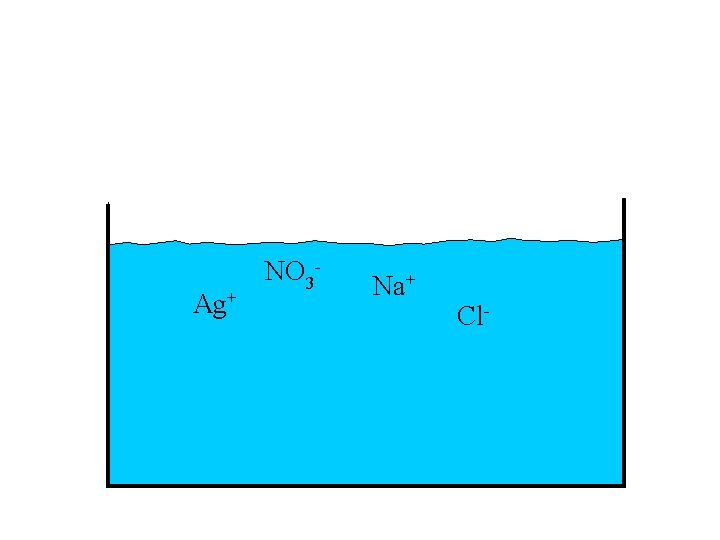
KEY POINT: Na. Cl (aq) really means: Na +1 (aq) “dissociated ions” or “ions in solution” + Cl -1 (aq)
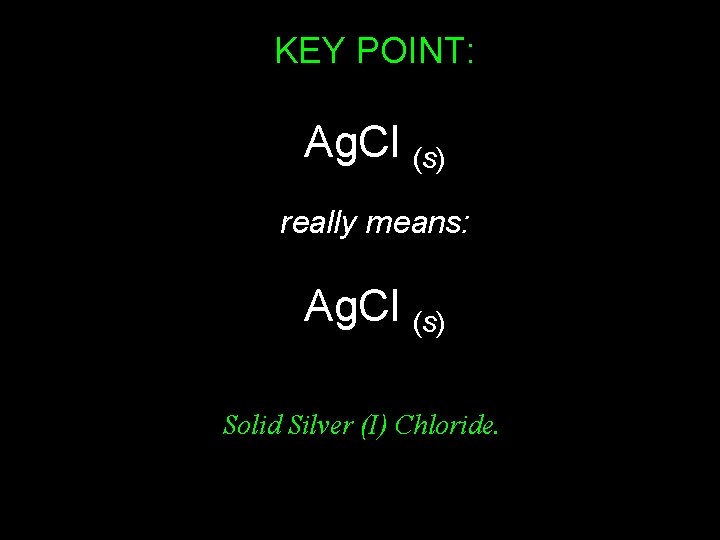
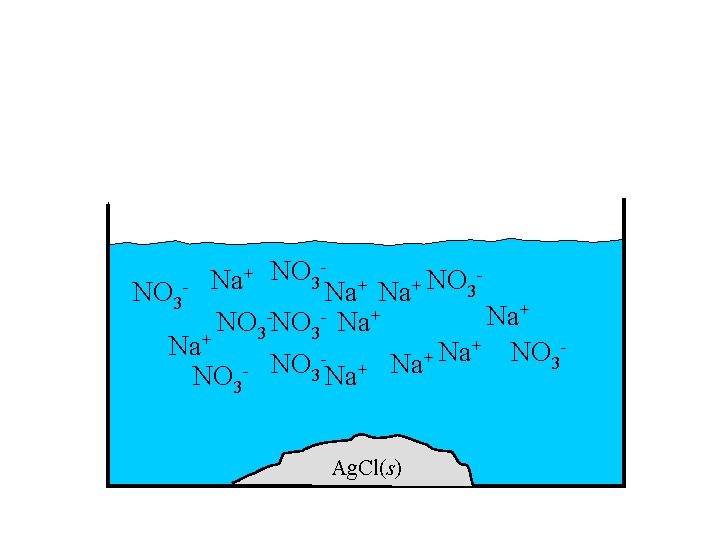
KEY POINT: Ag. Cl (s) really means: Ag. Cl (s) Solid Silver (I) Chloride.
Ag. NO 3 Na. Cl
Ag+ NO 3 - Na+ Cl-
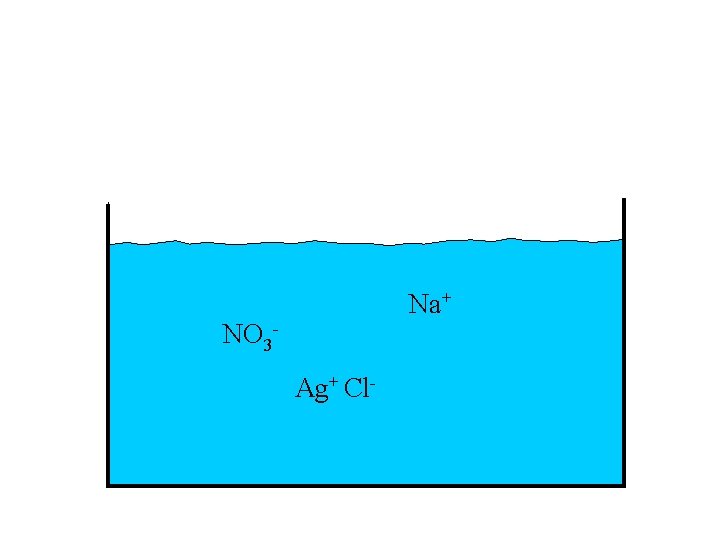
Na+ NO 3 Ag+ Cl-
Na+ NO 3 Ag. Cl
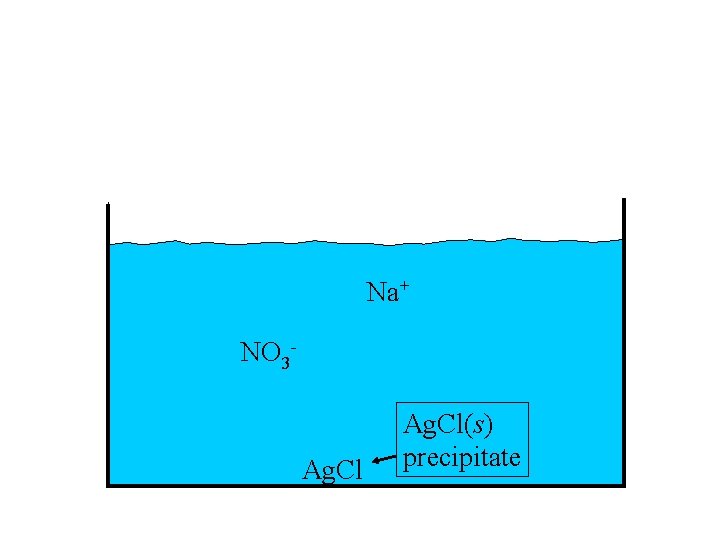
Na+ NO 3 - Ag. Cl(s) precipitate
NO 3 NO + + 3 NO 3 Na Na Na+ NO 3 - Na+ + Na NO + 3 NO Na Na+ 3 Ag. Cl(s)
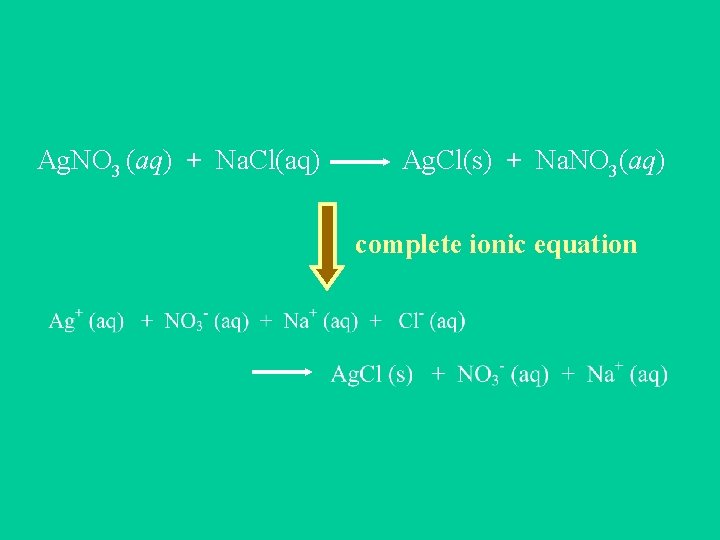
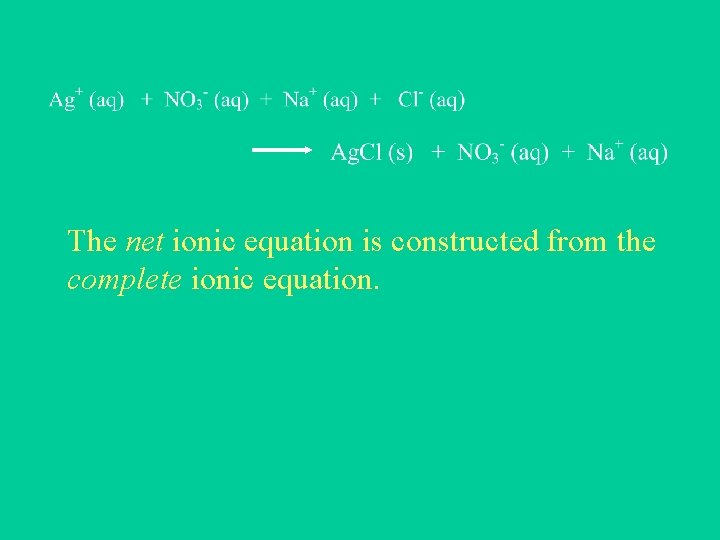
Ag. NO 3 (aq) + Na. Cl(aq) Ag. Cl(s) + Na. NO 3(aq) complete ionic equation
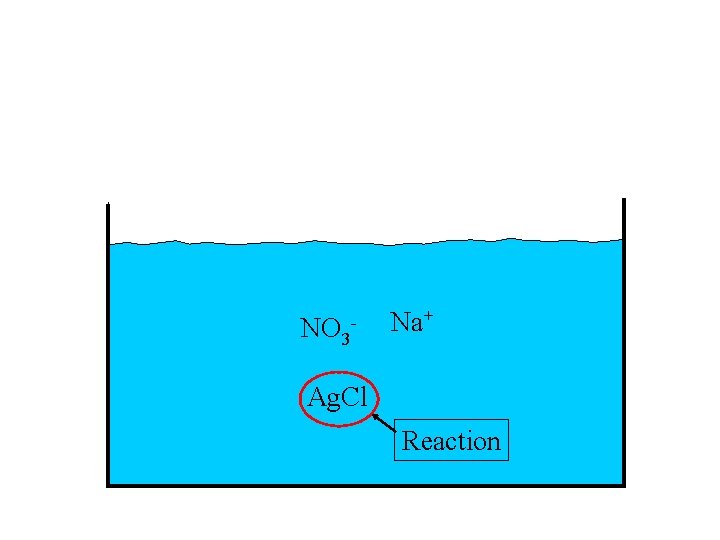
NO 3 - Na+ Ag. Cl Reaction
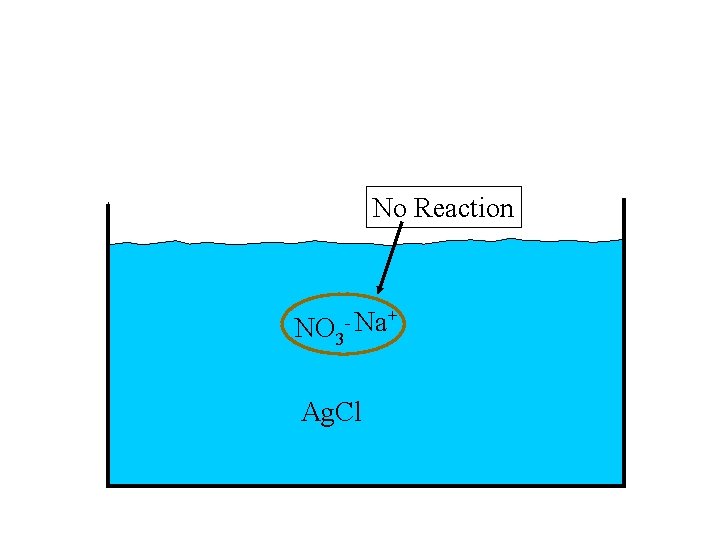
No Reaction NO 3 - Na+ Ag. Cl
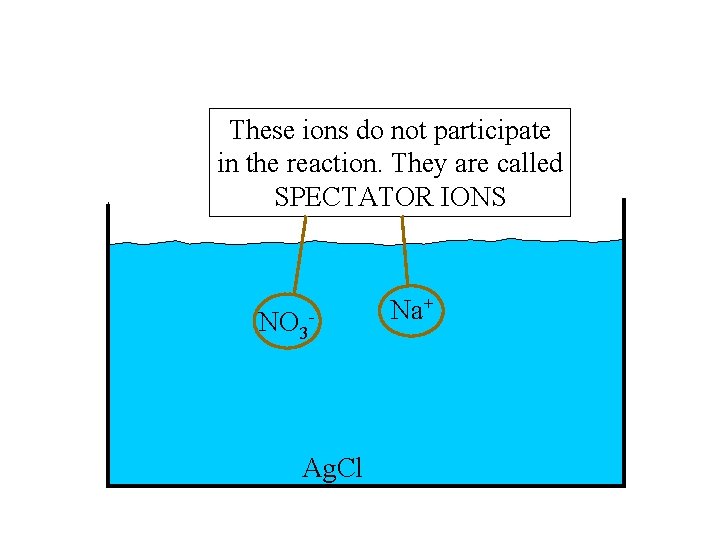
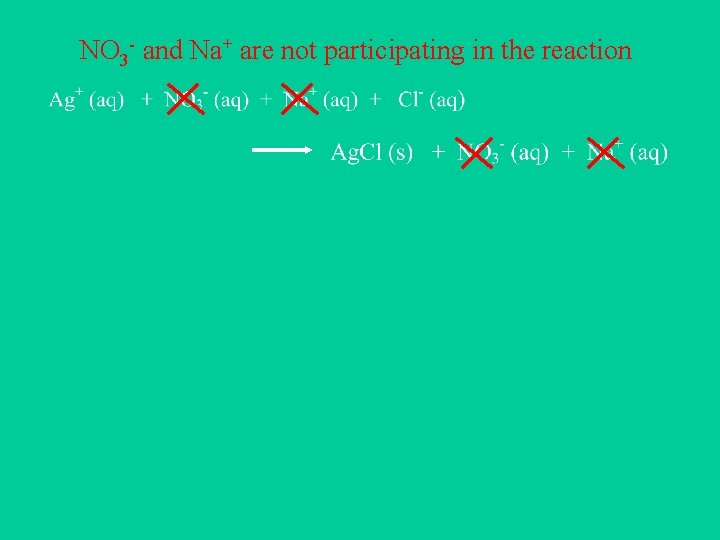
These ions do not participate in the reaction. They are called SPECTATOR IONS NO 3 - Ag. Cl Na+
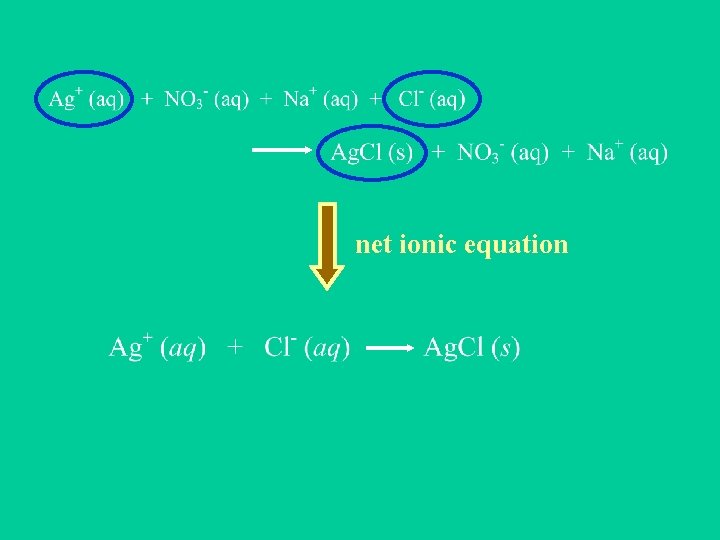
The net ionic equation is constructed from the complete ionic equation.
NO 3 - and Na+ are not participating in the reaction
net ionic equation
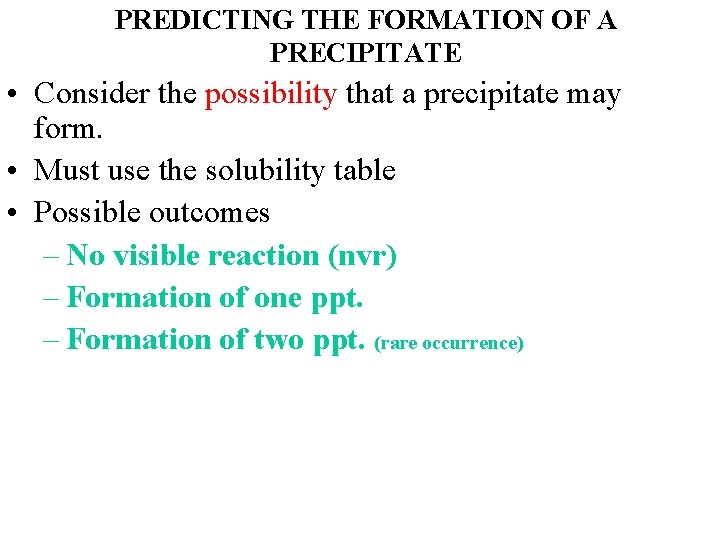
PREDICTING THE FORMATION OF A PRECIPITATE • Consider the possibility that a precipitate may form. • Must use the solubility table • Possible outcomes – No visible reaction (nvr) – Formation of one ppt. – Formation of two ppt. (rare occurrence)
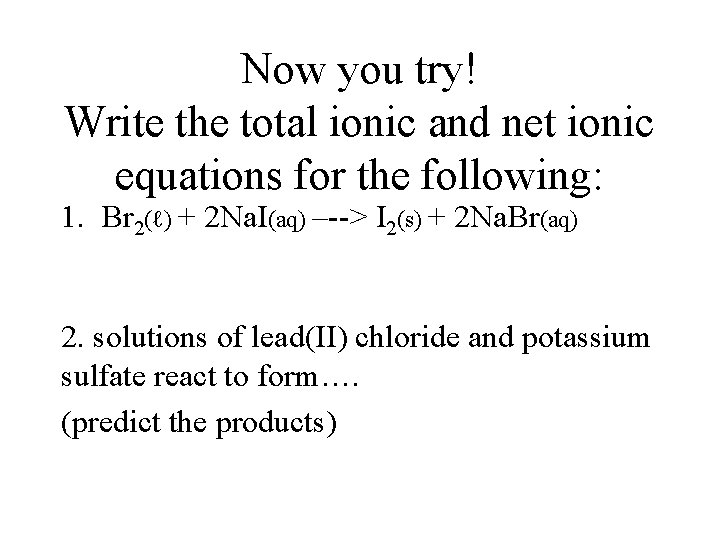
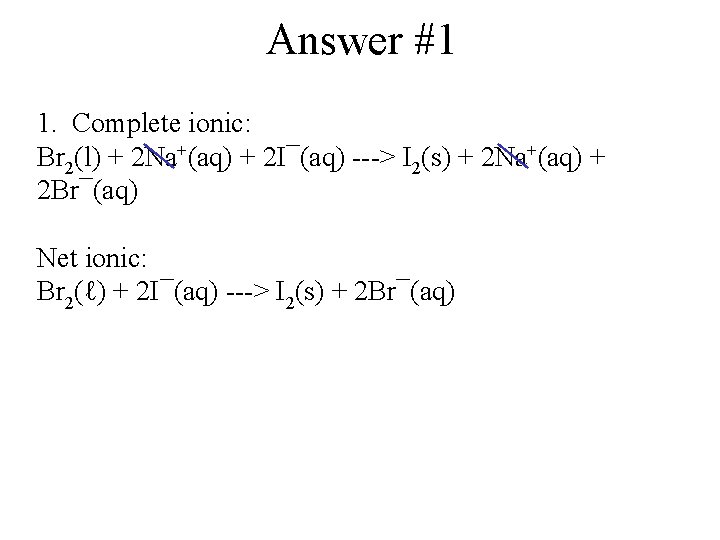
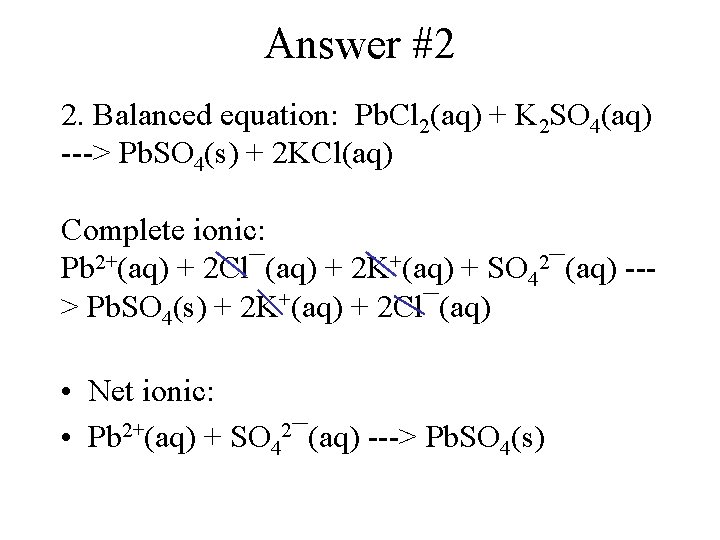
Now you try! Write the total ionic and net ionic equations for the following: 1. Br 2(ℓ) + 2 Na. I(aq) –--> I 2(s) + 2 Na. Br(aq) 2. solutions of lead(II) chloride and potassium sulfate react to form…. (predict the products)
Answer #1 1. Complete ionic: Br 2(l) + 2 Na+(aq) + 2 I¯(aq) ---> I 2(s) + 2 Na+(aq) + 2 Br¯(aq) Net ionic: Br 2(ℓ) + 2 I¯(aq) ---> I 2(s) + 2 Br¯(aq)
Answer #2 2. Balanced equation: Pb. Cl 2(aq) + K 2 SO 4(aq) ---> Pb. SO 4(s) + 2 KCl(aq) Complete ionic: Pb 2+(aq) + 2 Cl¯(aq) + 2 K+(aq) + SO 42¯(aq) --> Pb. SO 4(s) + 2 K+(aq) + 2 Cl¯(aq) • Net ionic: • Pb 2+(aq) + SO 42¯(aq) ---> Pb. SO 4(s)