
What is disease FAILURE of the body to
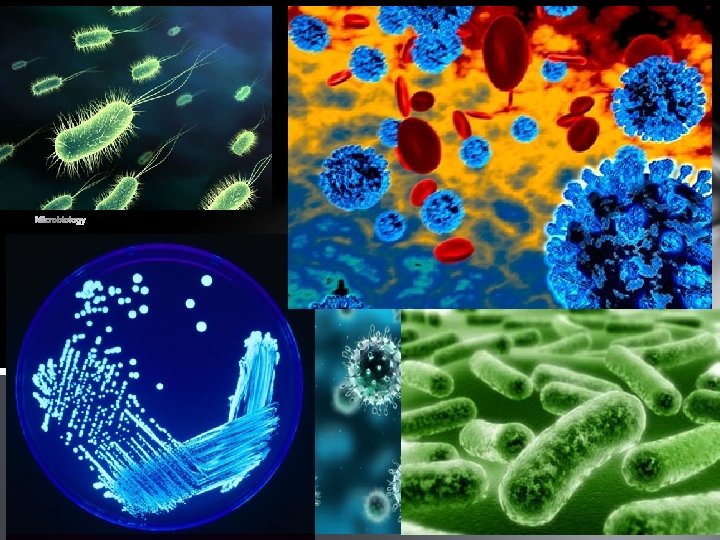

What is disease? FAILURE of the body to function normally Inherited diseases disease caused by birth defects age-related degenerative disease Tumors trauma environmental toxins nutritional deficiencies
Leading cause of disease…. . pathogens are disease producing microorganisms s n e hog pat n o i t fec The symptoms that develop in response to the invasion of pathogens in
INFECTIONS Localized: Restricted to a Small area Systemic: More widespread throughout The body d loo b the y db a e r Sp
If you have a wound… There may be microorganisms present but not causing illness… colonization Could lead to infect Microorganisms present ion causing illness
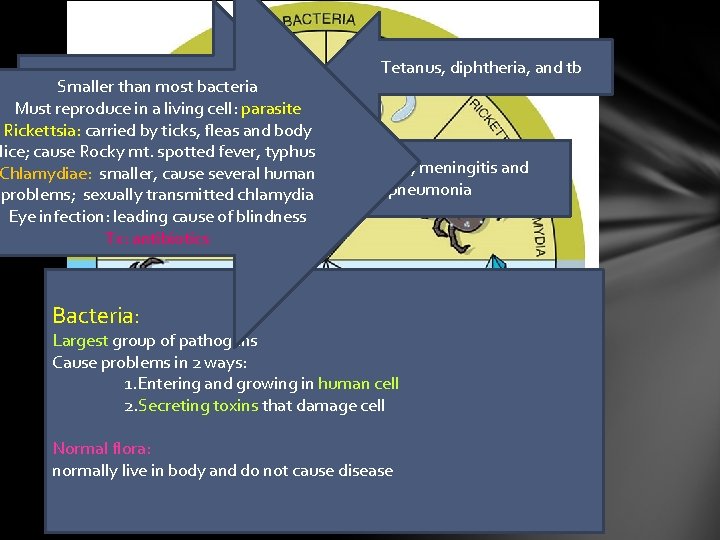
Smaller than most bacteria Vibrio: slightincurve; cholera Must reproduce a living cell: parasite Spirillum: (spirochetes) syphilis Rickettsia: carried by ticks, fleas and body Tetanus, diphtheria, and tb lice; cause Rocky mt. spotted fever, typhus Chlamydiae: smaller, cause several human Gonorrhea, meningitis and pneumonia problems; sexually transmitted chlamydia Eye infection: leading cause of blindness Tx: antibiotics Bacteria: Largest group of pathogens Cause problems in 2 ways: 1. Entering and growing in human cell 2. Secreting toxins that damage cell Normal flora: normally live in body and do not cause disease
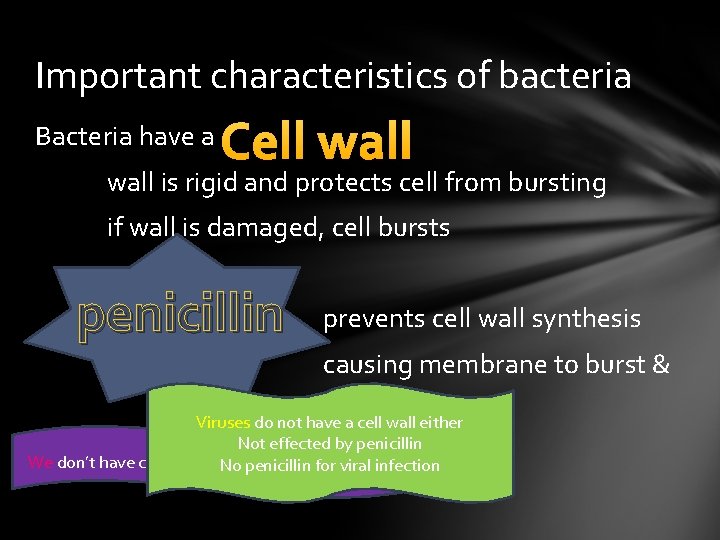
Important characteristics of bacteria Bacteria have a Cell wall is rigid and protects cell from bursting if wall is damaged, cell bursts penicillin prevents cell wall synthesis causing membrane to burst & bacterium to Viruses do not have a cell wall either Not effected by penicillin We don’t have cell walls: not by penicillin Nodamaged penicillin for viral infection die
Many bacteria can form spores y p e e l s in t s i x e a i r il t e t n c u a t B n a m r o d r state o ns improve o conditi Spores allow bacteria to survive during harsh environmental conditions Like drying, heating, and exposure to certain disinfectants

E Viruses: smallest infection agent (not cells) Consist of RNA or DNA surrounded by protein shell Only live in a host; parasites xamples: measles, mumps, influenza, AIDS Makes it difficult to develop antiviral meds EX: AZT used to treat AIDS damages host cells too
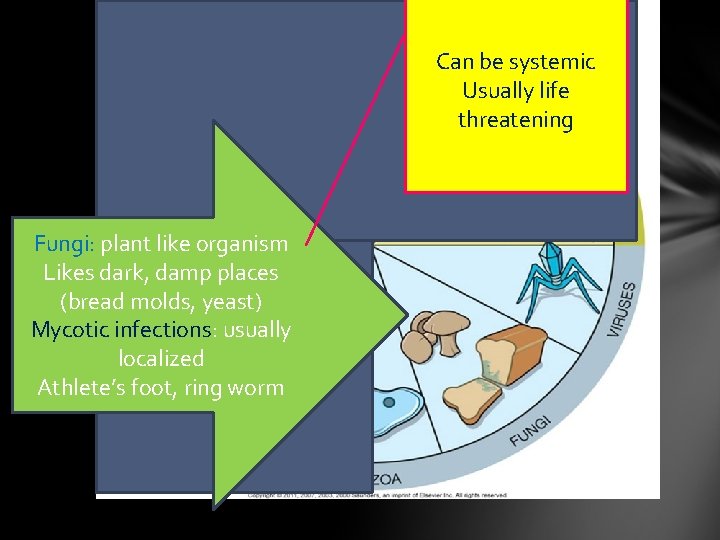
Can be systemic Usually life threatening Fungi: plant like organism Likes dark, damp places (bread molds, yeast) Mycotic infections: usually localized Athlete’s foot, ring worm
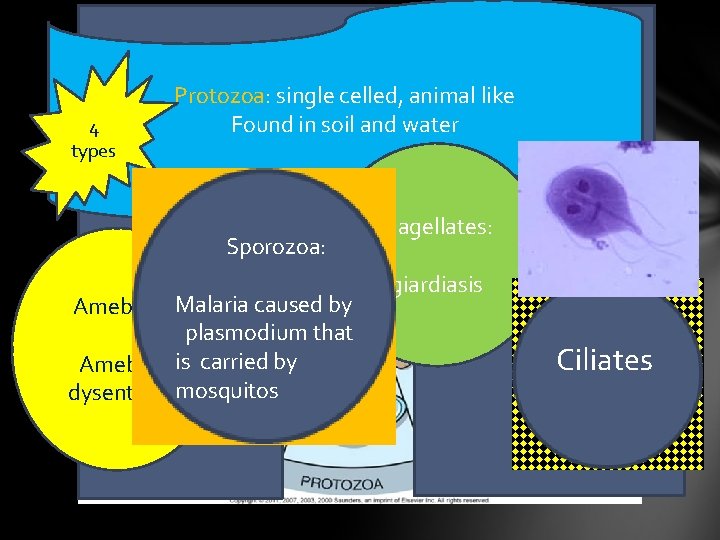
4 types Protozoa: single celled, animal like Found in soil and water Sporozoa: Amebas: Malaria caused by plasmodium that Amebic is carried by dysentary mosquitos Flagellates: giardiasis Ciliates
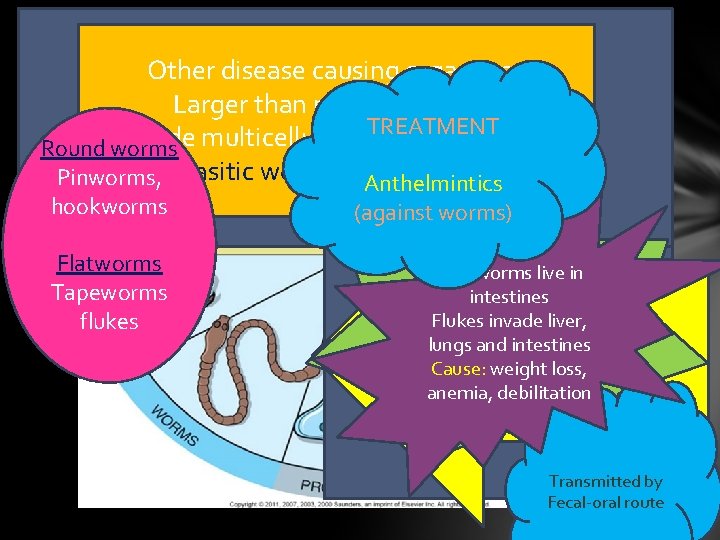
Other disease causing organisms Larger than microorganisms TREATMENT Include multicellular organisms such as Round worms arthropods Pinworms, parasitic worms and Anthelmintics hookworms Flatworms Tapeworms flukes (against worms) Pinworm infestation is Tapeworms live in common in children intestines Flukes invade liver, Live in intestinal tract worms Helminths: parasitic lungs intestines Lay eggs and on outer perianal Identifications requires examination of Cause: weight loss, areabody and causes itching samples. Usually stool anemia, debilitation Transmitted by Fecal-oral route
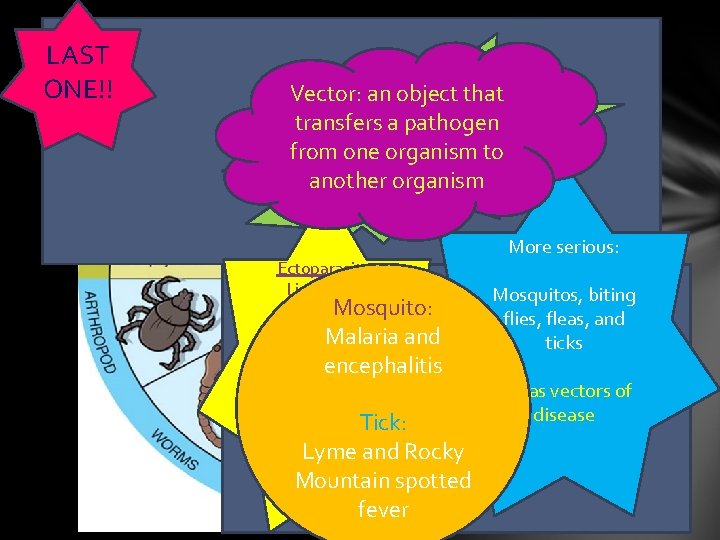
LAST ONE!! Vector: an object that ARTHROPODS transfers a pathogen with jointed from. Animals one organism to legs, include insects another organism Ectoparasites Live on the surface Mosquito: of the body Malaria and encephalitis Mites and lice Cause itching Not life Tick: threatening Lyme and Rocky Mountain spotted fever More serious: Mosquitos, biting flies, fleas, and ticks Act as vectors of disease
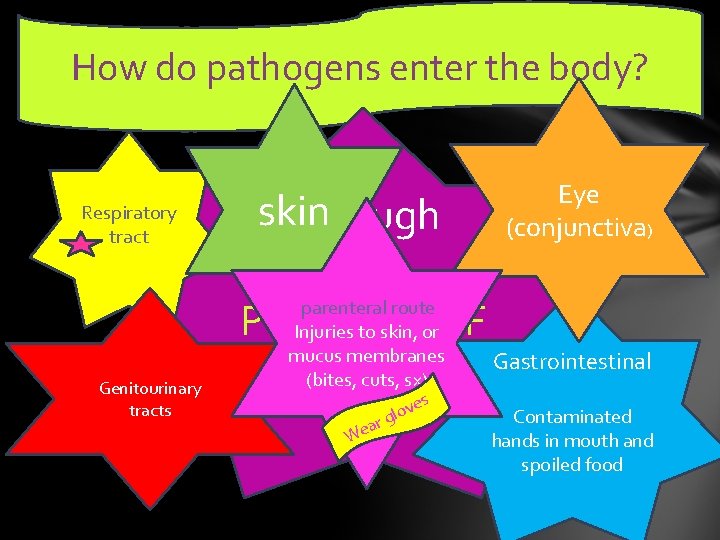
How do pathogens enter the body? Respiratory tract Genitourinary tracts skin Through Eye (conjunctiva) PORTALS OF Gastrointestinal ENTRYs parenteral route Injuries to skin, or mucus membranes (bites, cuts, sx) W ea ov l g r e Contaminated hands in mouth and spoiled food
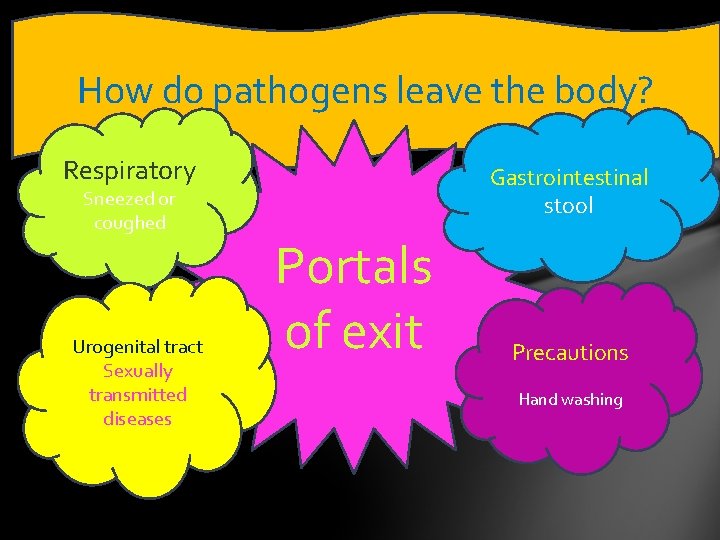
How do pathogens leave the body? Respiratory Sneezed or coughed Urogenital tract Sexually transmitted diseases Gastrointestinal stool Portals of exit Precautions Hand washing
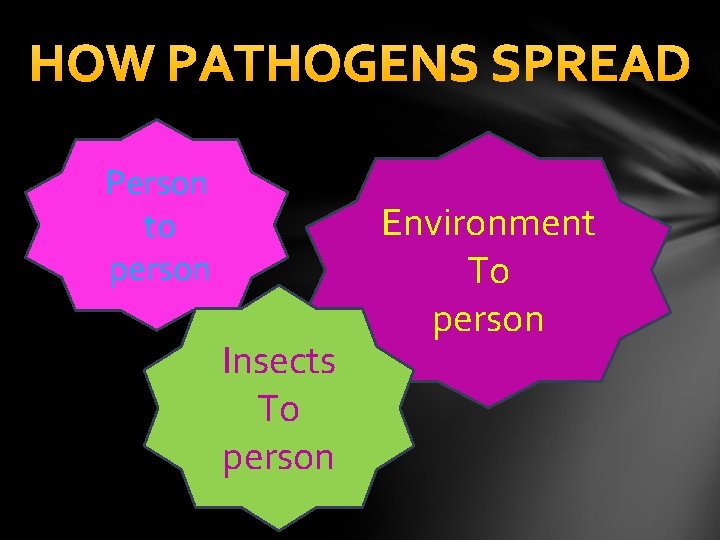
HOW PATHOGENS SPREAD Person to person Insects To person Environment To person
- Slides: 16