
What is culture A peoples way of life
- Slides: 30
What is culture A people’s way of life, their behavior, their shared understandings about themselves and the world Regions an area of a common characteristics Aspects of culture are some of the best features we can use to define regions
CULTURAL LANDSCAPE Each culture has a cultural landscape that develops from the modifications which they have made on their environment to meet specific needs, technology, and lifestyle. What are the defining characteristics of Towson’ cultural landscape
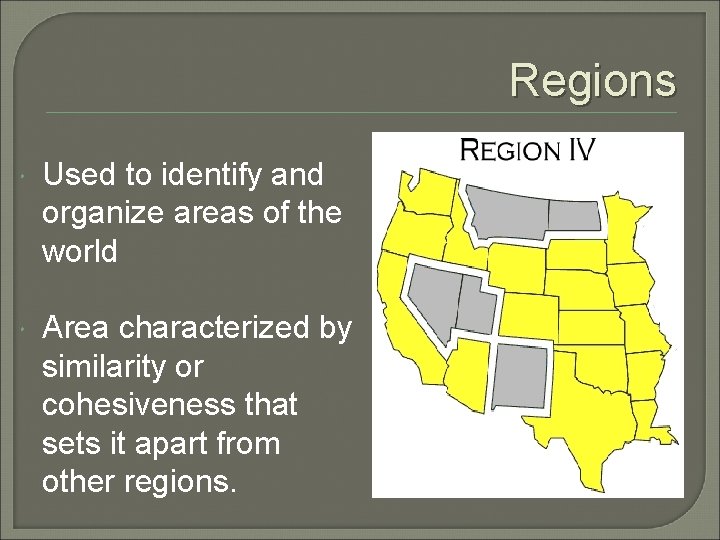
Regions Used to identify and organize areas of the world Area characterized by similarity or cohesiveness that sets it apart from other regions.
Geographic Defining of a Region Use of cultural traits to define a cultural region REGIONAL IDENTITY = Key component • the inhabitants of the region are aware of the commonalities in the region and its difference from other regions
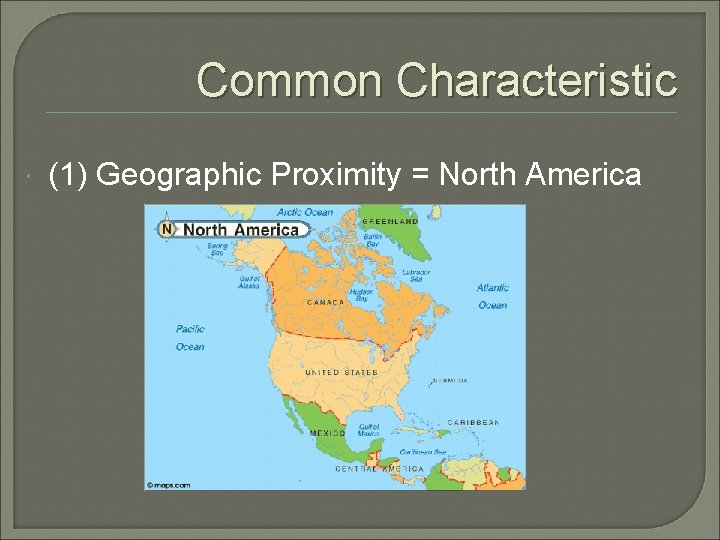
Common Characteristic (1) Geographic Proximity = North America
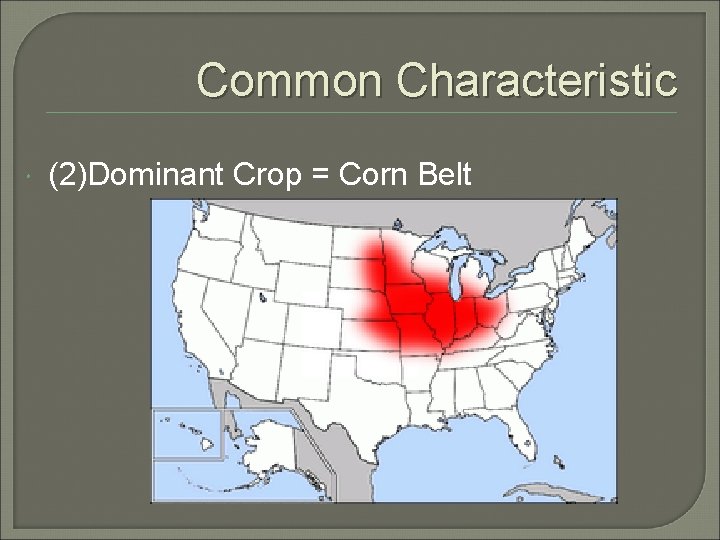
Common Characteristic (2)Dominant Crop = Corn Belt
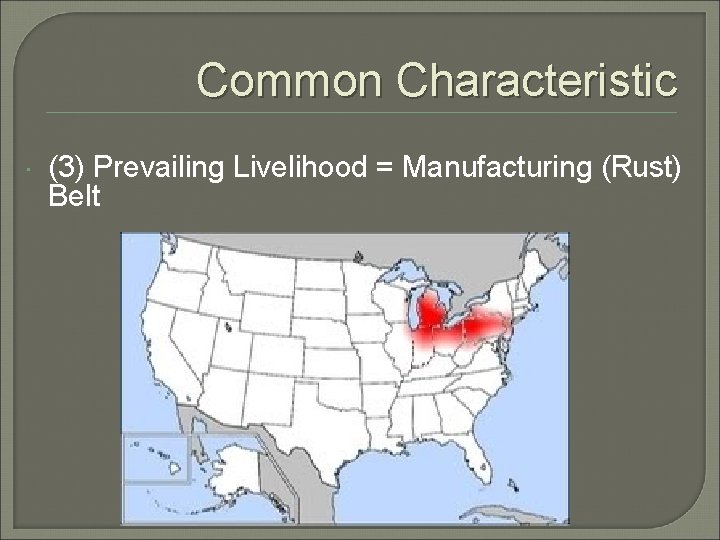
Common Characteristic (3) Prevailing Livelihood = Manufacturing (Rust) Belt
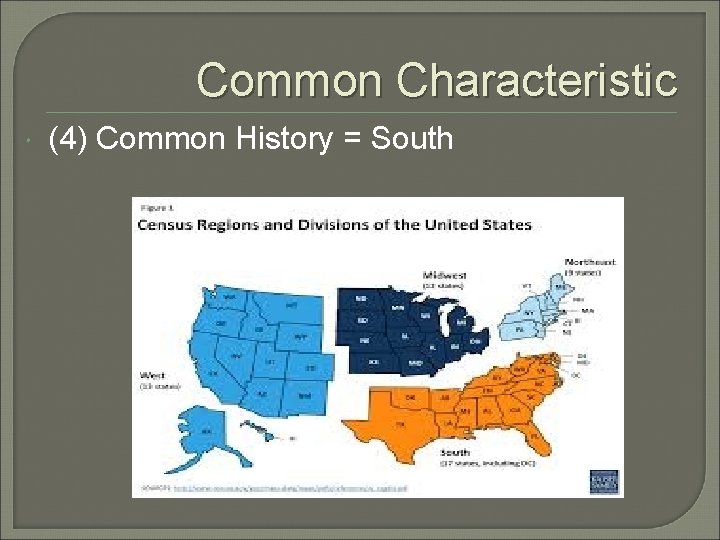
Common Characteristic (4) Common History = South
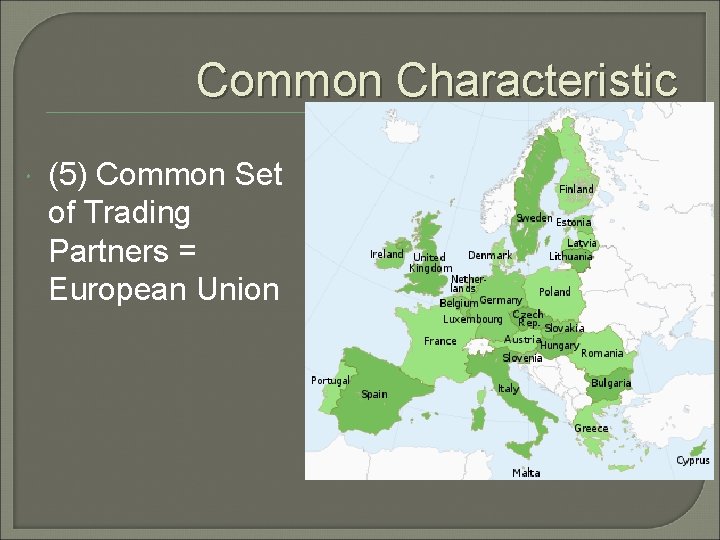
Common Characteristic (5) Common Set of Trading Partners = European Union
Regions = Mental Construct Conceptualizing a region is a method for geographers to impose order on the messy complexities of the real world An attempt to make sense out of geographic chaos
Three levels of Regional Influence (1) core – the centralized zone of concentration, or the most pure area that posses all of the cultural traits used to define the region
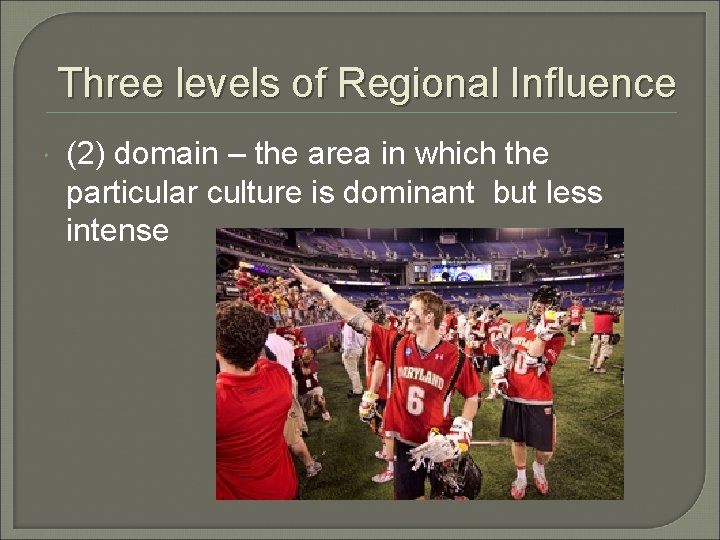
Three levels of Regional Influence (2) domain – the area in which the particular culture is dominant but less intense
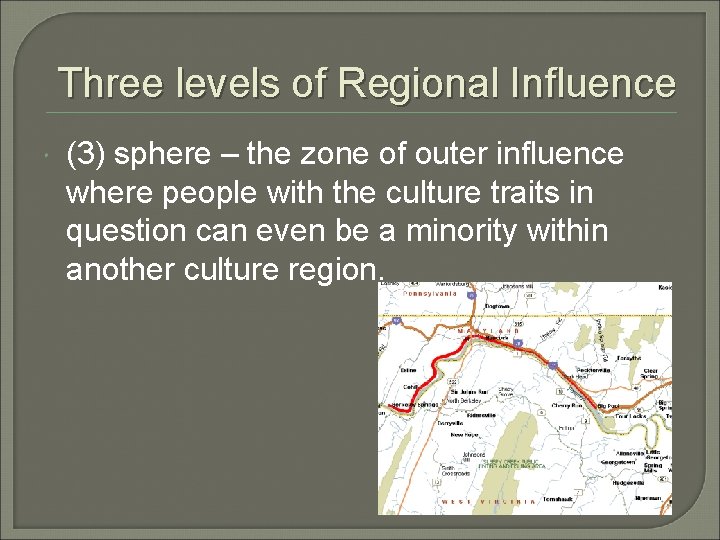
Three levels of Regional Influence (3) sphere – the zone of outer influence where people with the culture traits in question can even be a minority within another culture region.
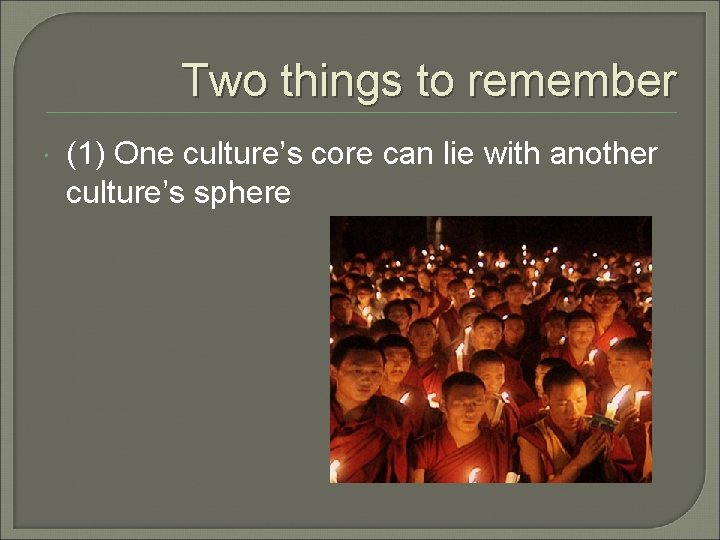
Two things to remember (1) One culture’s core can lie with another culture’s sphere
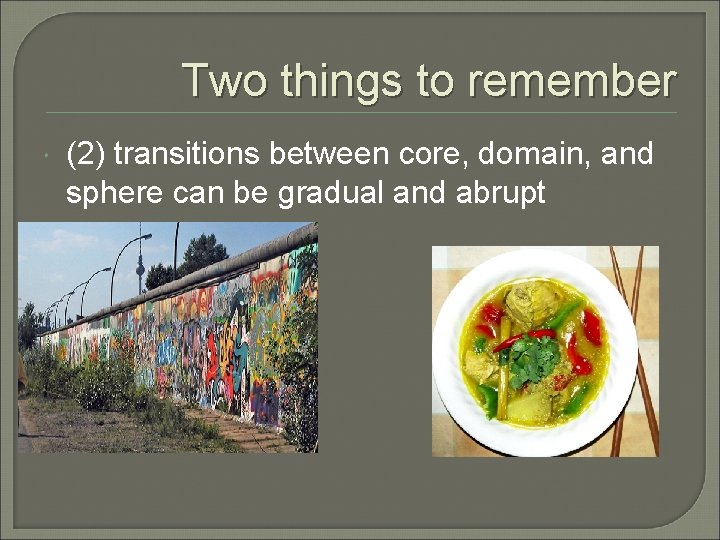
Two things to remember (2) transitions between core, domain, and sphere can be gradual and abrupt
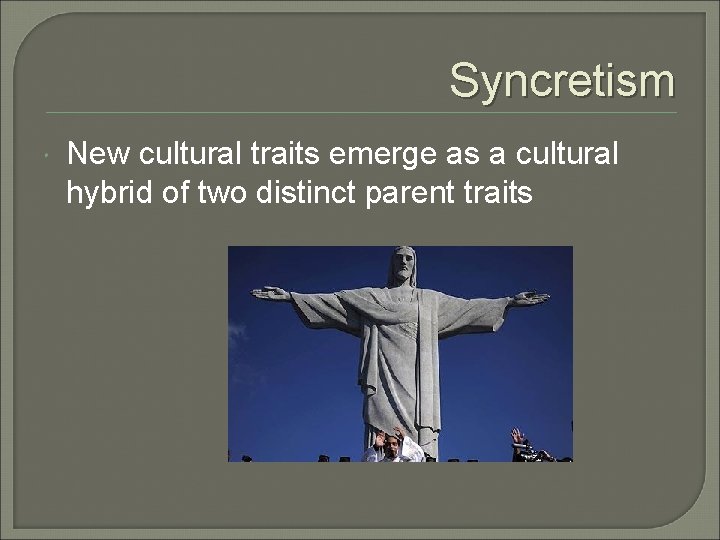
Syncretism New cultural traits emerge as a cultural hybrid of two distinct parent traits
Various Different Classifications Formal Region Functional (Nodal) Region Perceptual (Vernacular) Region
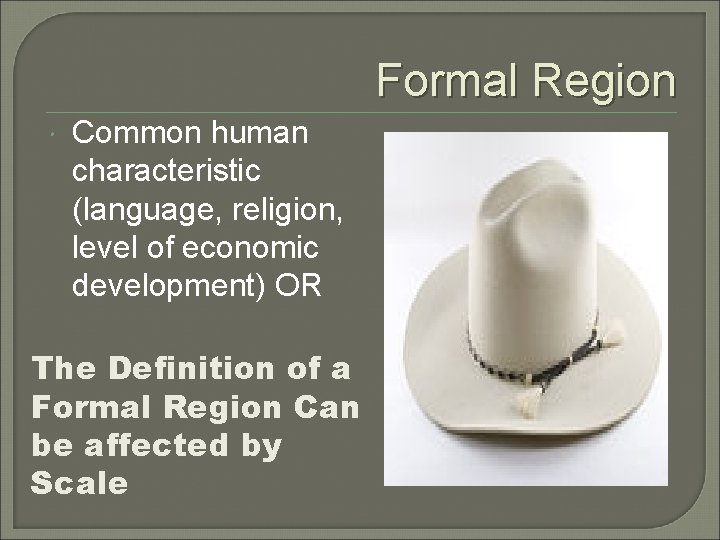
Formal Region Common human characteristic (language, religion, level of economic development) OR The Definition of a Formal Region Can be affected by Scale
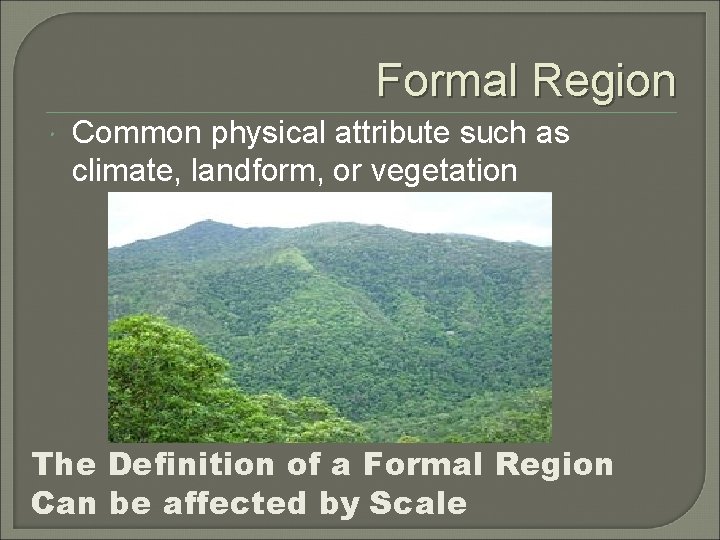
Formal Region Common physical attribute such as climate, landform, or vegetation The Definition of a Formal Region Can be affected by Scale
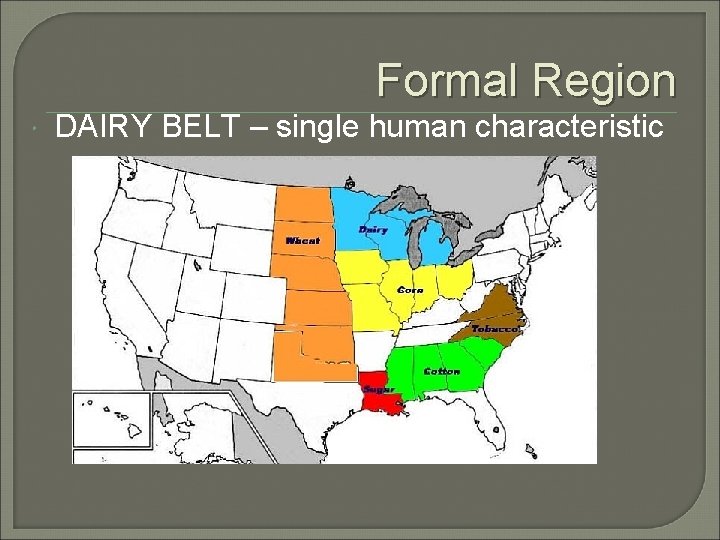
Formal Region DAIRY BELT – single human characteristic
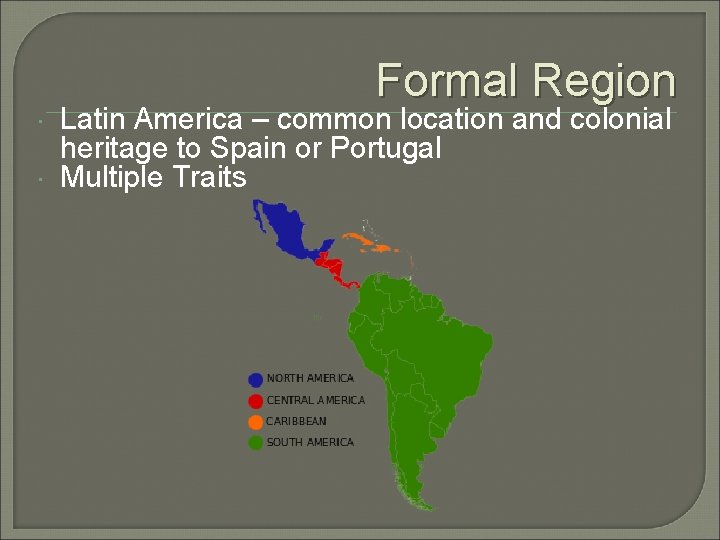
Formal Region Latin America – common location and colonial heritage to Spain or Portugal Multiple Traits
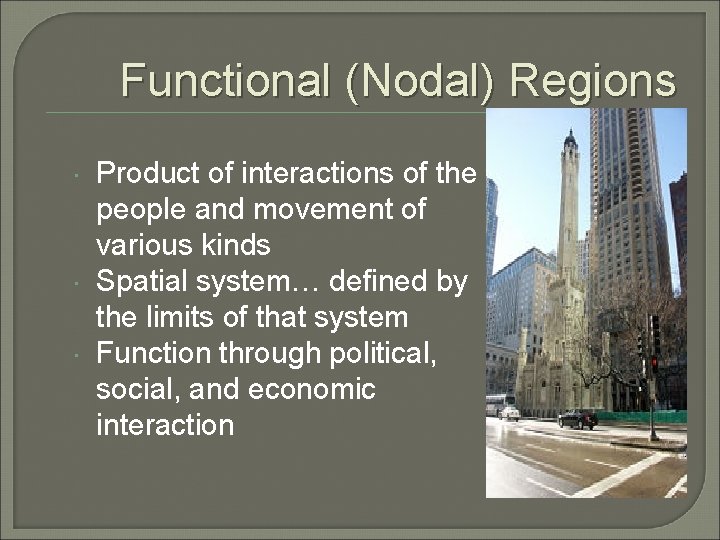
Functional (Nodal) Regions Product of interactions of the people and movement of various kinds Spatial system… defined by the limits of that system Function through political, social, and economic interaction
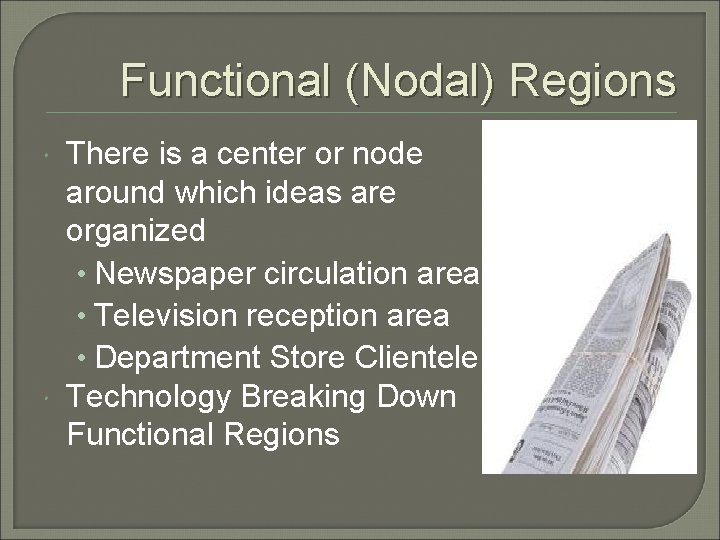
Functional (Nodal) Regions There is a center or node around which ideas are organized • Newspaper circulation area • Television reception area • Department Store Clientele Technology Breaking Down Functional Regions
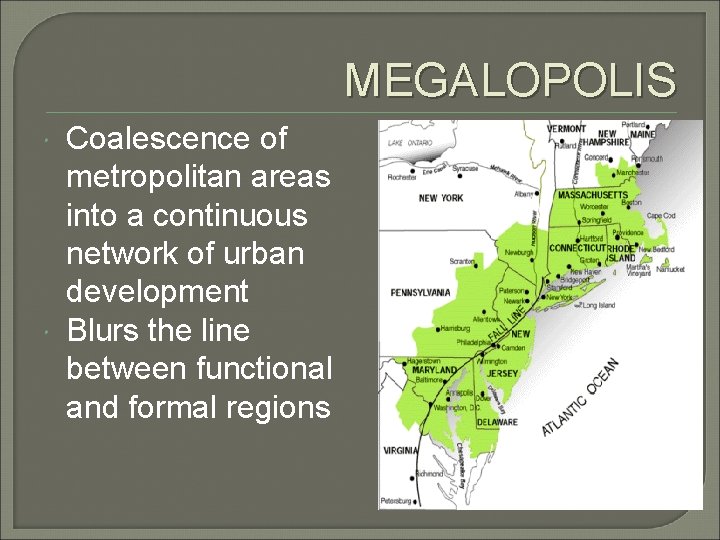
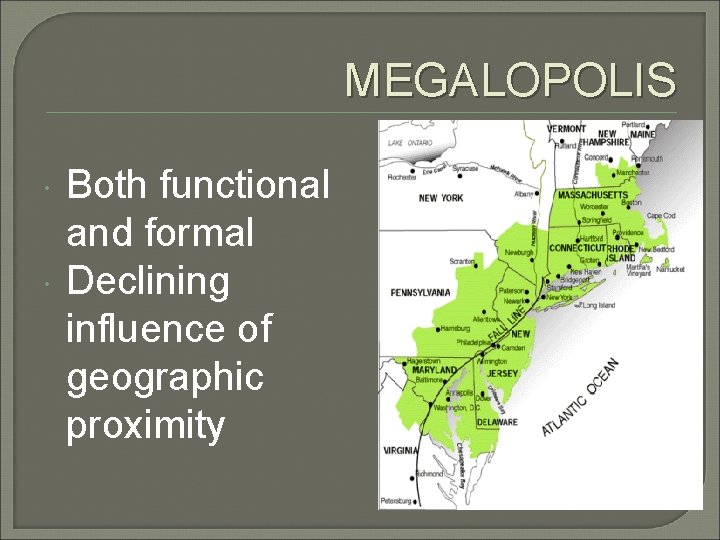
MEGALOPOLIS Coalescence of metropolitan areas into a continuous network of urban development Blurs the line between functional and formal regions
MEGALOPOLIS Both functional and formal Declining influence of geographic proximity
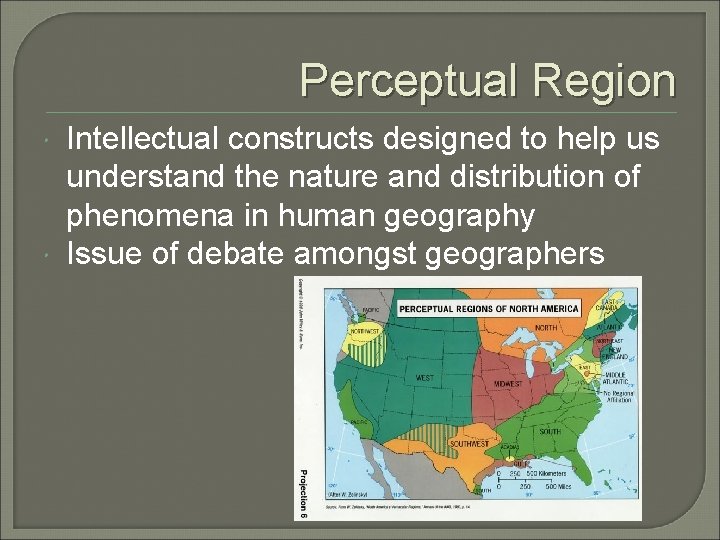
Perceptual Region Intellectual constructs designed to help us understand the nature and distribution of phenomena in human geography Issue of debate amongst geographers
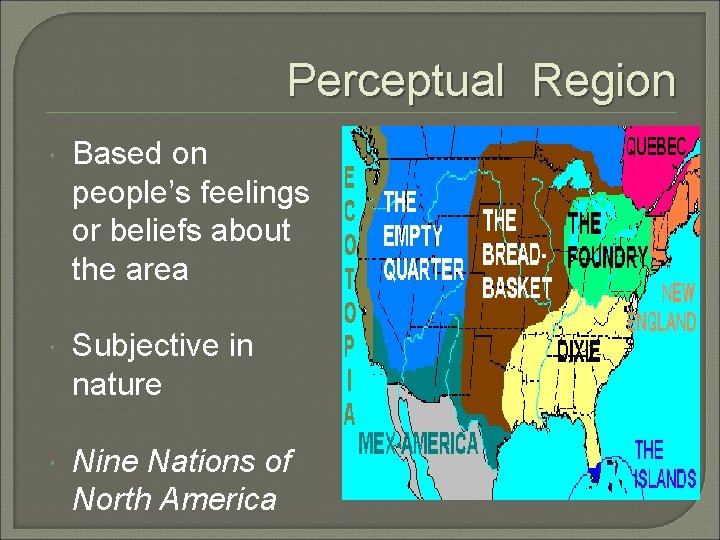
Perceptual Region Based on people’s feelings or beliefs about the area Subjective in nature Nine Nations of North America
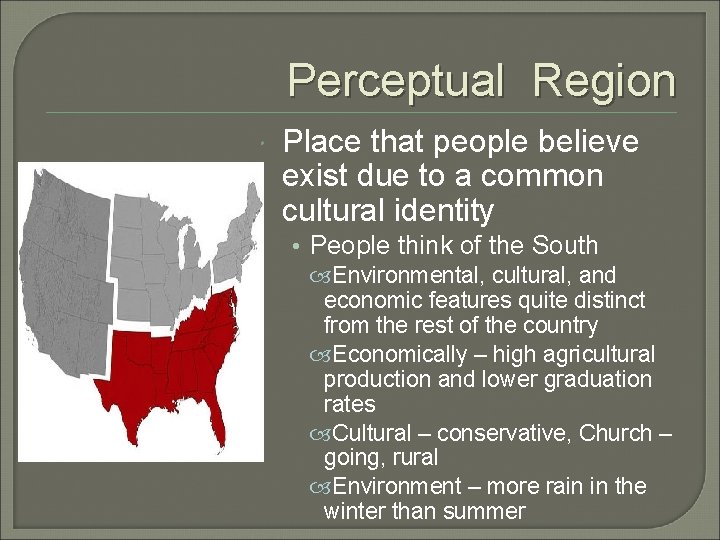
Perceptual Region Place that people believe exist due to a common cultural identity • People think of the South Environmental, cultural, and economic features quite distinct from the rest of the country Economically – high agricultural production and lower graduation rates Cultural – conservative, Church – going, rural Environment – more rain in the winter than summer
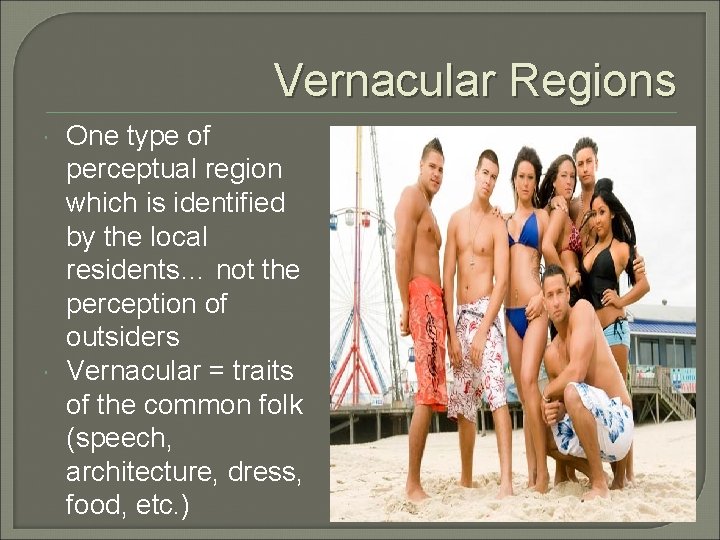
Vernacular Regions One type of perceptual region which is identified by the local residents… not the perception of outsiders Vernacular = traits of the common folk (speech, architecture, dress, food, etc. )
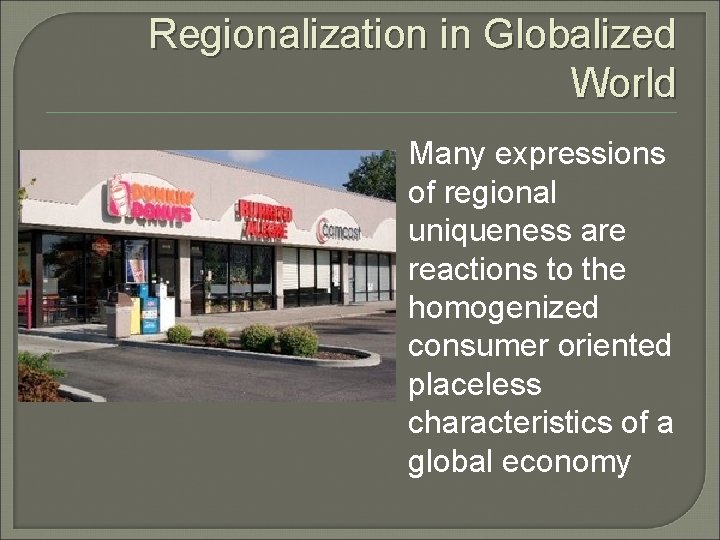
Regionalization in Globalized World Many expressions of regional uniqueness are reactions to the homogenized consumer oriented placeless characteristics of a global economy