
What is CPTED Reconnecting theory with application in


- Slides: 49
What is CPTED? Reconnecting theory with application in the words of users and abusers Dr Leanne Monchuk
Content of presentation 1. The importance of CPTED 2. Re-considering CPTED 3. Methodology – burglars and police 4. Key findings 5. Moving forward
Defining CPTED “The proper design and effective use of the built environment, that can lead to a reduction in the fear or incidence of crime and an improvement in the quality of life” (Crowe, 2000 p. 46) “The design, manipulation and management of the built environment to reduce crime and the fear of crime and to enhance sustainability through the process and application of measures at the micro (individual building/structure) and macro (neighbourhood) level” (Armitage, 2013 p. 23)
Importance of CPTED: Policy • Increasing emphasis upon deregulation – Safer Places cancelled • National Planning Policy Framework (2012) and Planning Practice Guidance state importance of crime prevention • Modern Crime Prevention Strategy (2016) highlights important of CPTED – opportunity defined as 1 of the 6 drivers of crime • HMIC’s 2014 inspection of crime prevention, police attendance and use of police time – Core Business
Importance of CPTED: Research • Previous research confirms the importance of design in the reduction of burglary: • Limiting through movement (Armitage et al, 2011; Johnson & Bowers, 2010) • Enhanced natural surveillance (Armitage 2006; Armitage et al, 2011) • Demonstrated in evaluations of interventions that implement CPTED features in combination – e. g. UK’s Secured by Design initiative (Armitage & Monchuk, 2011)
Secured by Design (SBD)
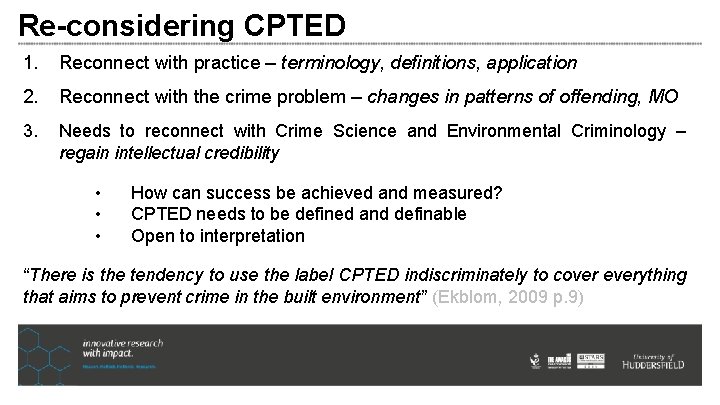
Re-considering CPTED 1. Reconnect with practice – terminology, definitions, application 2. Reconnect with the crime problem – changes in patterns of offending, MO 3. Needs to reconnect with Crime Science and Environmental Criminology – regain intellectual credibility • • • How can success be achieved and measured? CPTED needs to be defined and definable Open to interpretation “There is the tendency to use the label CPTED indiscriminately to cover everything that aims to prevent crime in the built environment” (Ekblom, 2009 p. 9)
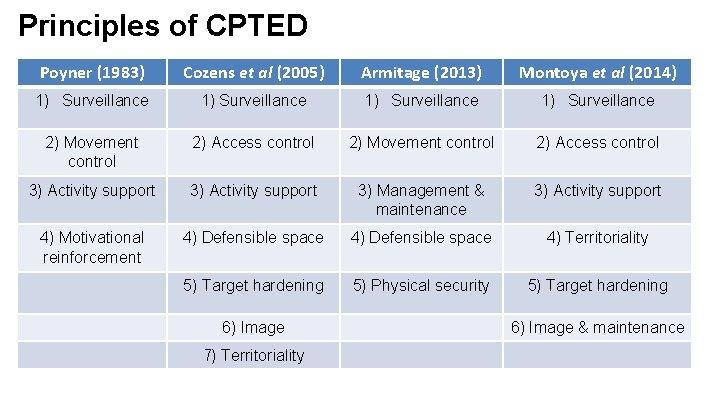
Principles of CPTED Poyner (1983) Cozens et al (2005) Armitage (2013) Montoya et al (2014) 1) Surveillance 2) Movement control 2) Access control 3) Activity support 3) Management & maintenance 3) Activity support 4) Motivational reinforcement 4) Defensible space 4) Territoriality 5) Target hardening 5) Physical security 5) Target hardening 6) Image 7) Territoriality 6) Image & maintenance
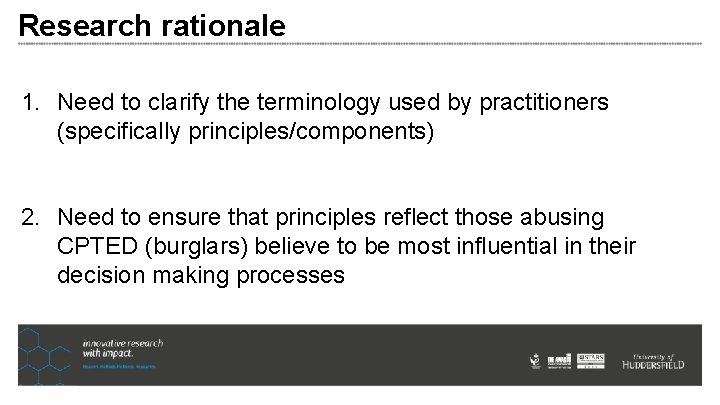
Research rationale 1. Need to clarify the terminology used by practitioners (specifically principles/components) 2. Need to ensure that principles reflect those abusing CPTED (burglars) believe to be most influential in their decision making processes
Research • Brings together two research projects 1. Monchuk (2016) Investigating the application and delivery of CPTED across England Wales 2. Armitage and Joyce (2016) Why my house? Exploring offender perspectives on risk and protective factors in residential housing design
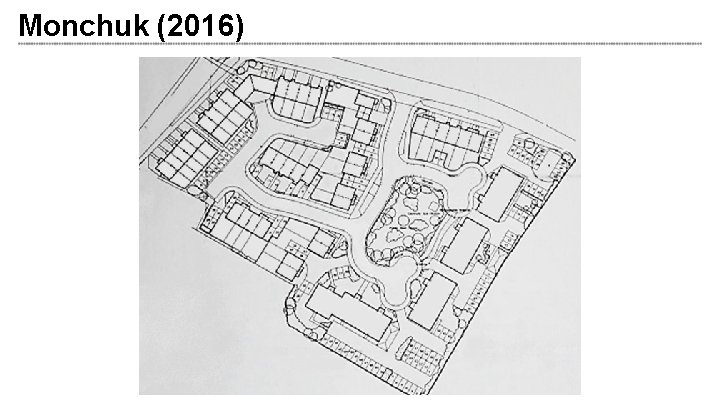
Monchuk (2016) - Testing the application of CPTED - Semi-structured interviews with 28 experienced Designing Out Crime Officers across England & Wales - Serving police officers, retired police & police staff - Asked to review a site plan
Monchuk (2016)
Monchuk (2016) 1. From looking at the site plan, what initially do you like from a crime prevention perspective and why? 2. From looking at the site plan, what don’t you like about from a crime prevention perspective and why?
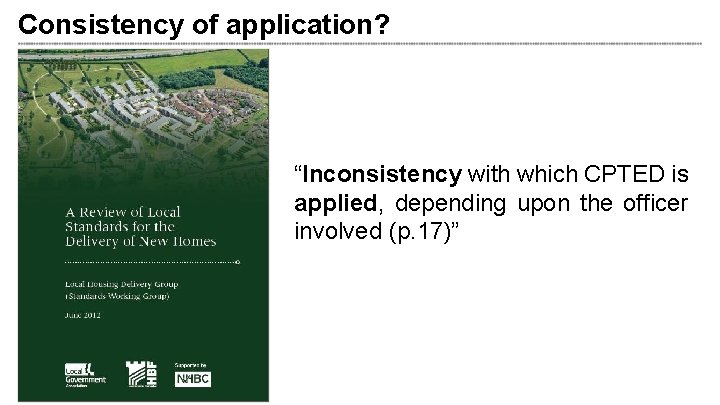
Consistency of application? “Inconsistency with which CPTED is applied, depending upon the officer involved (p. 17)”
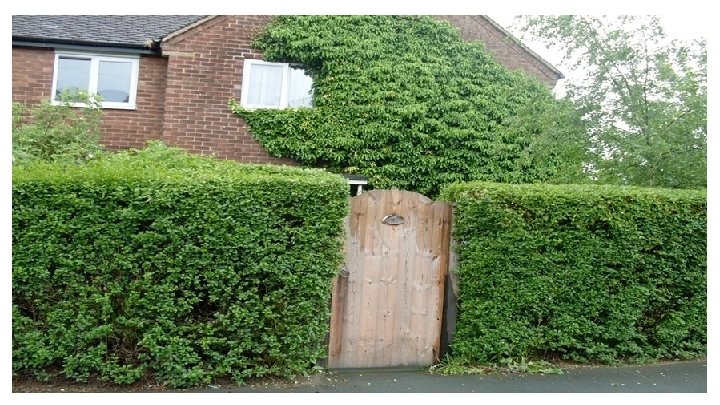
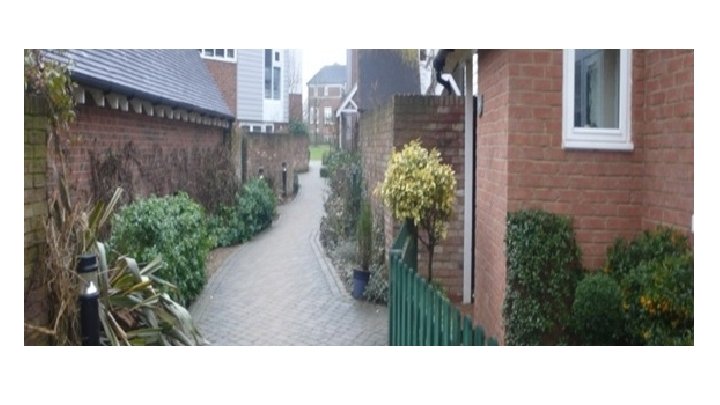
Armitage & Joyce (2016) - Interviews with incarcerated adult males convicted of burglary - Identified by the prison’s Integrated Offender Management Team to be prolific - Asked to look at a series of 16 images of residential housing
Armitage & Joyce (2016) 1. From what you can see from the photo, can you describe what would attract you to this property when selecting a target for burglary 2. From what you can see from the photo, can you describe what would deter you (put you off) from selecting this property as a target for burglary
Research questions 1. When describing the features of housing design that influence their decision making, do burglars refer to some features more regularly than others? When describing the features of housing design that they believe will influence crime risk, do police refer to some features more regularly than others? 2. When describing the features of housing design that influence their decision making, do burglars reference the same concepts/principles that are presented in existing CPTED literature/theory? When describing the features of housing design that they believe influence crime risk, do police reference the same concepts/principles that are presented in existing CPTED literature/theory?
Research questions 3. Is there consistency between burglars in the terminology used to describe the concepts/principles of design that are associated with heightened crime risk? Is there consistency between police in the terminology used to describe the concepts/principles of design that they think are associated with heightened crime risk? 4. Is there consistency between police and offenders when describing the principles/concepts of design that influence crime risk?
This paper… - Exploratory and inductive! - 20 participants (police and burglars) encouraged to express their perceptions of housing design features and burglary risk - 2 separate studies - Plans? Photographs?
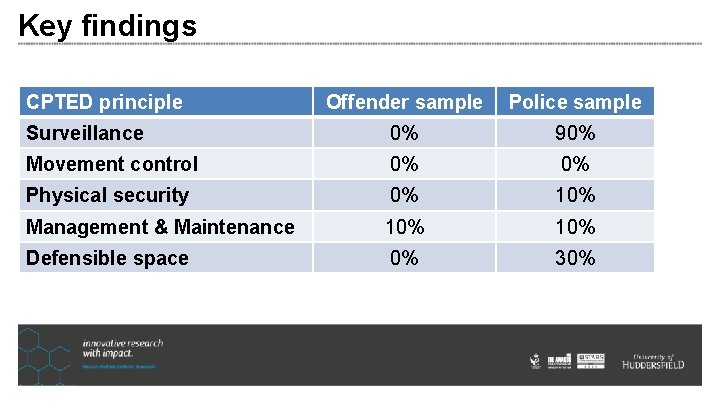
Key findings CPTED principle Offender sample Police sample Surveillance 0% 90% Movement control 0% 0% Physical security 0% 10% Management & Maintenance 10% Defensible space 0% 30%
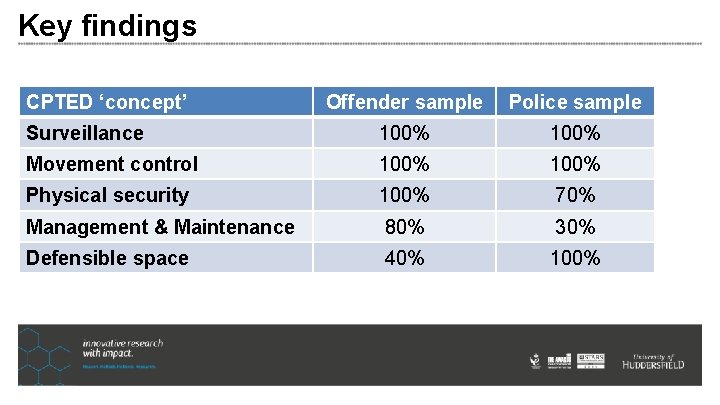
Key findings CPTED ‘concept’ Offender sample Police sample Surveillance 100% Movement control 100% Physical security 100% 70% Management & Maintenance 80% 30% Defensible space 40% 100%
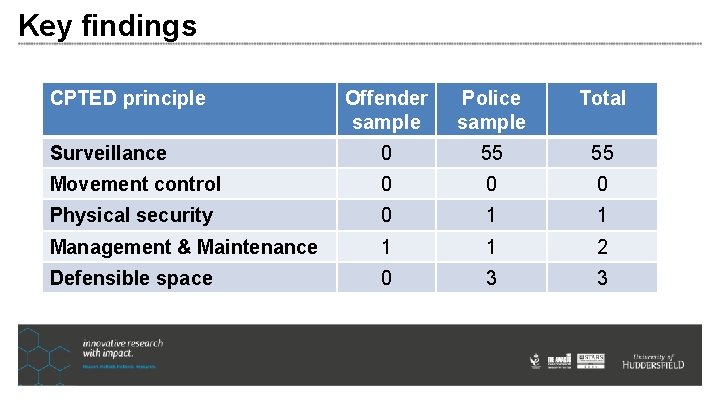
Key findings CPTED principle Offender sample Police sample Total Surveillance 0 55 55 Movement control 0 0 0 Physical security 0 1 1 Management & Maintenance 1 1 2 Defensible space 0 3 3
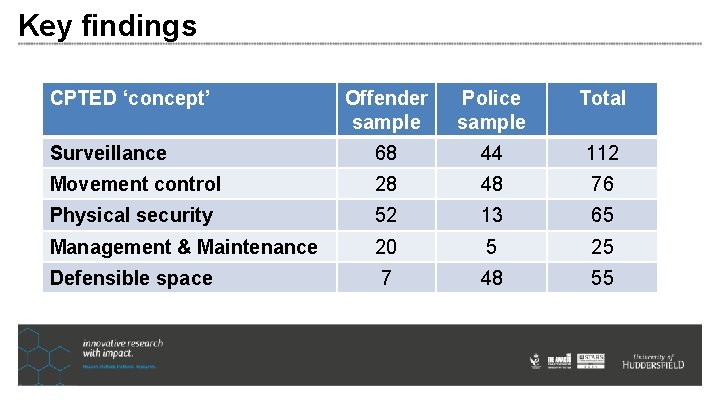
Key findings CPTED ‘concept’ Offender sample Police sample Total Surveillance 68 44 112 Movement control 28 48 76 Physical security 52 13 65 Management & Maintenance 20 5 25 Defensible space 7 48 55
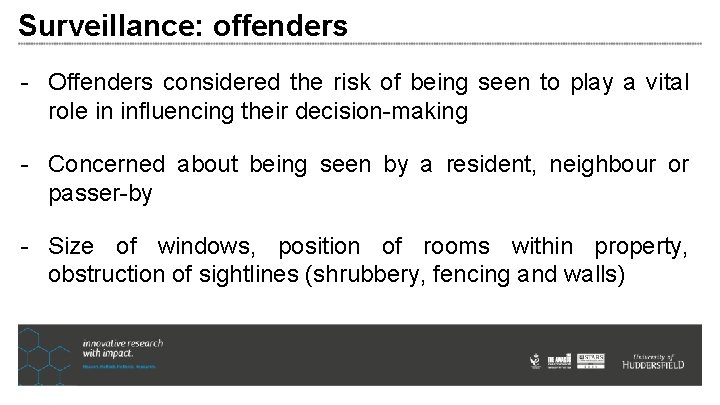
Surveillance: offenders - Offenders considered the risk of being seen to play a vital role in influencing their decision-making - Concerned about being seen by a resident, neighbour or passer-by - Size of windows, position of rooms within property, obstruction of sightlines (shrubbery, fencing and walls)
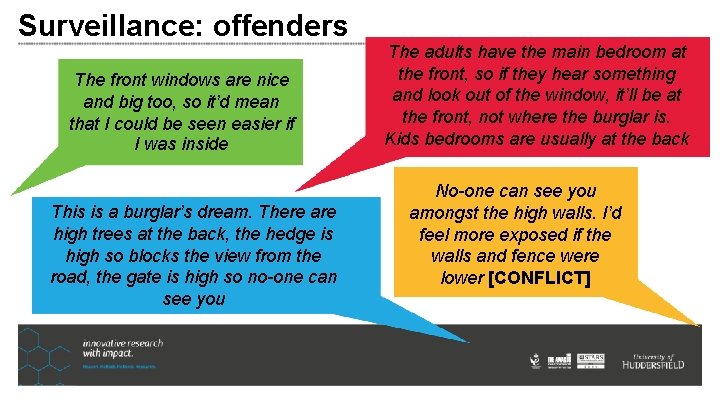
Surveillance: offenders The front windows are nice and big too, so it’d mean that I could be seen easier if I was inside This is a burglar’s dream. There are high trees at the back, the hedge is high so blocks the view from the road, the gate is high so no-one can see you The adults have the main bedroom at the front, so if they hear something and look out of the window, it’ll be at the front, not where the burglar is. Kids bedrooms are usually at the back No-one can see you amongst the high walls. I’d feel more exposed if the walls and fence were lower [CONFLICT]
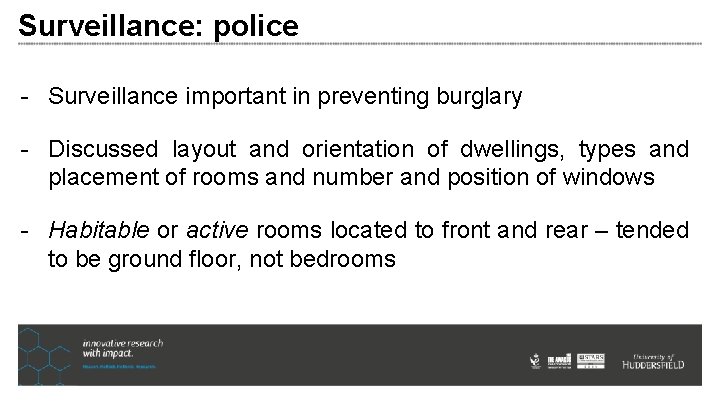
Surveillance: police - Surveillance important in preventing burglary - Discussed layout and orientation of dwellings, types and placement of rooms and number and position of windows - Habitable or active rooms located to front and rear – tended to be ground floor, not bedrooms
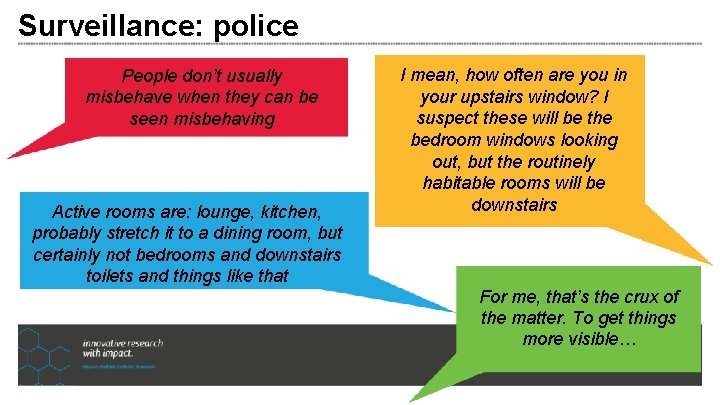
Surveillance: police People don’t usually misbehave when they can be seen misbehaving Active rooms are: lounge, kitchen, probably stretch it to a dining room, but certainly not bedrooms and downstairs toilets and things like that I mean, how often are you in your upstairs window? I suspect these will be the bedroom windows looking out, but the routinely habitable rooms will be downstairs For me, that’s the crux of the matter. To get things more visible…
Movement control: offenders - Considered lack of through movement as a deterrent - Prefer to know how to exit the development prior to committing the offence - Deterred by a true cul-de-sac - Legitimate movement through a development provides them with an excuse for being in a location - Opportunity to assess a property before committing an offence
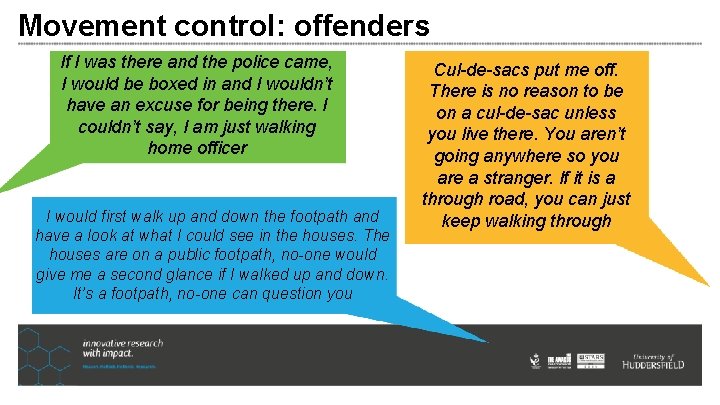
Movement control: offenders If I was there and the police came, I would be boxed in and I wouldn’t have an excuse for being there. I couldn’t say, I am just walking home officer I would first walk up and down the footpath and have a look at what I could see in the houses. The houses are on a public footpath, no-one would give me a second glance if I walked up and down. It’s a footpath, no-one can question you Cul-de-sacs put me off. There is no reason to be on a cul-de-sac unless you live there. You aren’t going anywhere so you are a stranger. If it is a through road, you can just keep walking through
Movement control: police - Restricting both pedestrian and vehicular movement - Limit pedestrian access – helps offenders select targets and move around whilst remaining anonymous - Gate rear parking courtyards to restrict unauthorised access
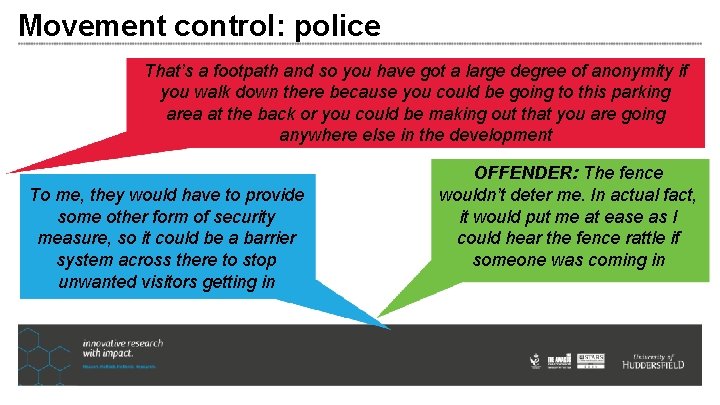
Movement control: police That’s a footpath and so you have got a large degree of anonymity if you walk down there because you could be going to this parking area at the back or you could be making out that you are going anywhere else in the development To me, they would have to provide some other form of security measure, so it could be a barrier system across there to stop unwanted visitors getting in OFFENDER: The fence wouldn’t deter me. In actual fact, it would put me at ease as I could hear the fence rattle if someone was coming in
Physical security: offenders - Prioritised assessing levels of security on the images - Distinguish between poor and good quality door locks and estimated time/level of effort - Able to identify Europrofile locks - Not deterred by gates or grilles – viewed as excessive security – suggestive of something worth taking - Not deterred by burglar alarms - don’t trigger a response
Physical security: offenders If I smashed a window and the alarm went off, I might scuttle away and then come back ten minutes later to see if anyone had bothered dealing with it. From personal experience, eight out of ten won’t bother doing anything with them
Physical security: police - Focus on gating/barriers for car parking and access control into flats - One participant stated that physical security should not be a principle of CPTED…
Physical security: police To be honest, that is secondary as far as I am concerned – the physical security. If we get the design of the estate right with CPTED, then the actual physical property, they hopefully won’t get that far, so that doesn’t really matter
Management & Maintenance: offenders - Majority of responses contradicted the assumption - untidy houses will attract offenders - Poorly maintained properties deemed unattractive targets untidy external space equates to a lack of money - Attracted to tidy, well maintained properties
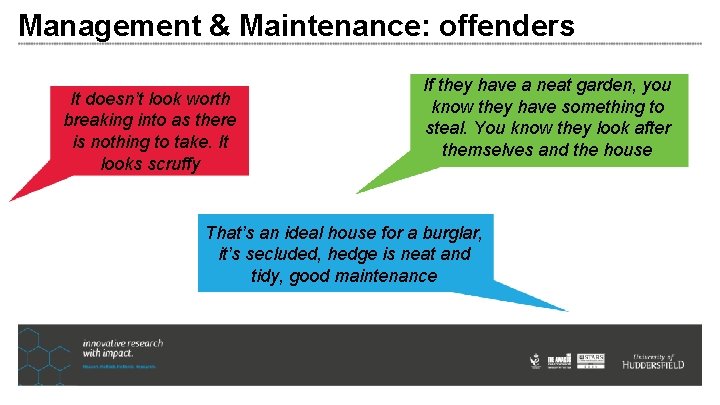
Management & Maintenance: offenders It doesn’t look worth breaking into as there is nothing to take. It looks scruffy If they have a neat garden, you know they have something to steal. You know they look after themselves and the house That’s an ideal house for a burglar, it’s secluded, hedge is neat and tidy, good maintenance
Management & Maintenance: police - Rarely mentioned, but references tended to relate to vegetation How tall are these trees going to grow? What sort of obstruction will they eventually be?
Defensible space: offenders - Creation of a closed community acts as a deterrent - However, some methods attract offenders - One photo = narrowing of the road, change in road colour and texture… - Gave impression of exclusivity, wealth and indicated owneroccupied housing
Defensible space: offenders The private road sign and the change in road colour and texture give me the impression that it’s an exclusive area – they have more money and that would attract, not deter me
Defensible space: police - 30% specifically referred to ‘defensible space’ - Other terms: ‘territoriality’, ‘ownership’, ‘demarcation’, ‘barriers’, ‘private and public space’ - Referred to importance of rumble strips, change in road colour and texture
Defensible space: police I would either have a rumble strip, a change in colour or road surface, something like that, some pillars to define that you are going onto an estate…If you put something there like that, it’s saying to a criminal out there ‘that’s a public space and in here is private space’. A bit of psychology so they are reluctant to cross that boundary
Key findings - Principles not used consistently across police sample - Not one principle exactly referred to - Exact term: Surveillance (90%); defensible space (30%); 10% physical security; management and maintenance (10%) and movement control (0%) - Concept: Surveillance, movement control and defensible space (100%), but only 70% referenced physical security and 30% management and maintenance
Key findings - Discrepancy between emphasis participants placed on each principle - Both police and offenders refer to surveillance and movement control but… - Offenders placed more emphasis on physical security - Police appeared to over-emphasise defensible space
Key findings - Surveillance – high fences recommended by police but are more attractive to offenders - Surveillance – police consider rooms on ground floor important but offenders consider the positioning of bedrooms as a key decision making factor - Defensible space – police recommend change in colour/texture, offenders warned of portraying wealth and exclusivity - Management and maintenance – as a component of CPTED should be reviewed - well maintained interpreted as sign of wealth
Moving forward - Need to reshape, refocus and clarify CPTED - Need to enhance the scientific credibility of CPTED - Clearer description of the principles that can be defined, implemented and measured - Imperative for service delivery and consistency - Principles not used consistently across police sample - Confusion and frustration amongst built environment professionals - Training – to assist those on ground with application
Thank you Dr Leanne Monchuk +44 (0)1484 472670 l. y. monchuk@hud. ac. uk @leannemonchuk