
What Is Computer Literacy To be computer literate
What Is Computer Literacy? • To be computer literate, you must: – Understand a computer’s capabilities and limitations – Know how to use a computer Copyright © 2010 Pearson Education, Inc. Publishing as Prentice Hall 1
Being a Savvy Computer User and Consumer • Avoid hackers and viruses • Protect your privacy • Understand the real privacy and security risks • Use the Internet wisely • Avoid online annoyances • Maintain your computer • Make good purchase decisions • Integrate the latest technology Copyright © 2010 Pearson Education, Inc. Publishing as Prentice Hall 2
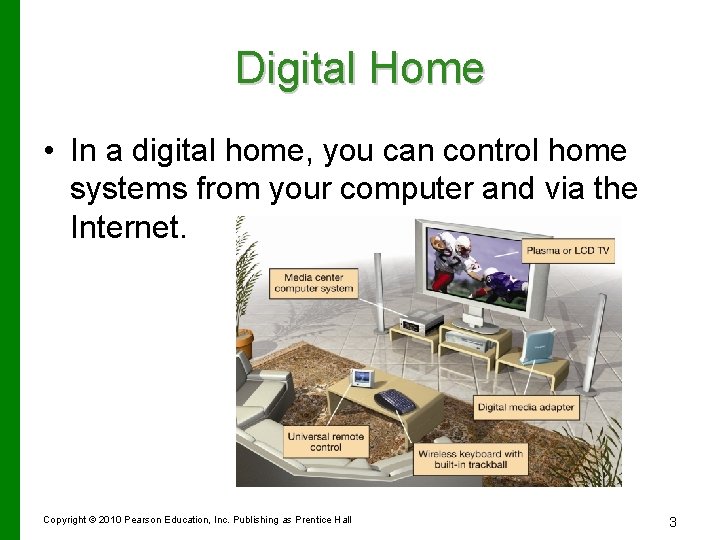
Digital Home • In a digital home, you can control home systems from your computer and via the Internet. Copyright © 2010 Pearson Education, Inc. Publishing as Prentice Hall 3
Digital Home - Components • Media computer with: – TV tuner – Radio tuner – Media software – Blu-ray, DVD, and/or CD – Network adapter Copyright © 2010 Pearson Education, Inc. Publishing as Prentice Hall – A network – A digital television – A digital media adapter – A universal remote 4
Computers in Your Career? • Information technology (IT) involves: – Information handling – Information retrieval – Computers – Telecommunications – Software deployment • The seven fastest-growing occupations are computer related. Copyright © 2010 Pearson Education, Inc. Publishing as Prentice Hall 5
Computers in Your Career? • Computer careers in: – Business – Retail – Shipping – Arts – Computer gaming – Education Copyright © 2010 Pearson Education, Inc. Publishing as Prentice Hall –Law enforcement –Legal system –Agriculture –Automotive technology –Medicine –Sciences 6
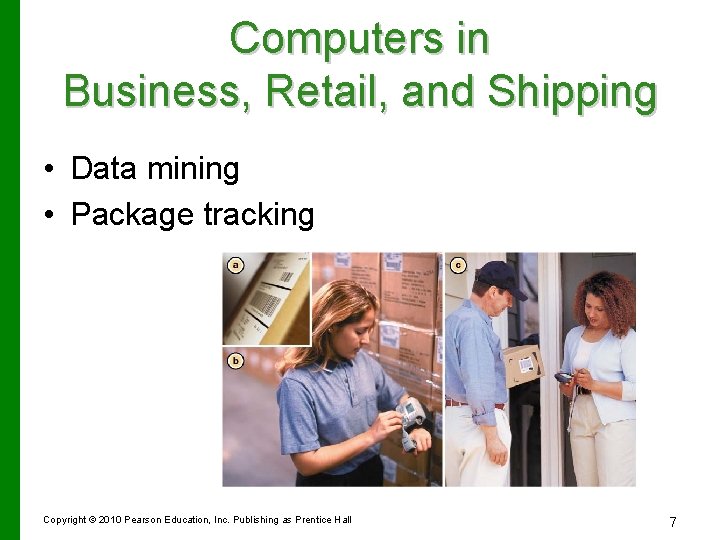
Computers in Business, Retail, and Shipping • Data mining • Package tracking Copyright © 2010 Pearson Education, Inc. Publishing as Prentice Hall 7
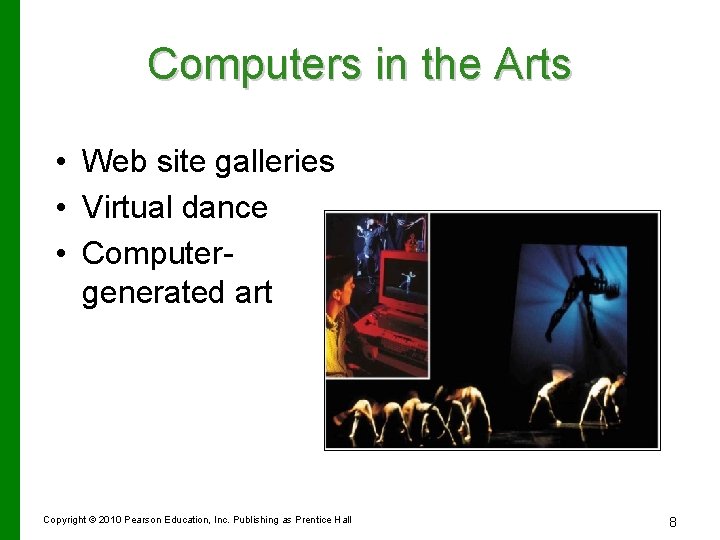
Computers in the Arts • Web site galleries • Virtual dance • Computergenerated art Copyright © 2010 Pearson Education, Inc. Publishing as Prentice Hall 8
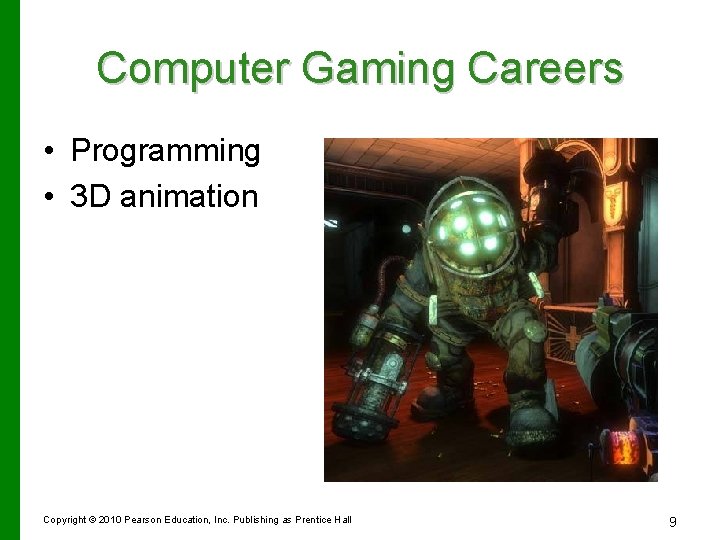
Computer Gaming Careers • Programming • 3 D animation Copyright © 2010 Pearson Education, Inc. Publishing as Prentice Hall 9
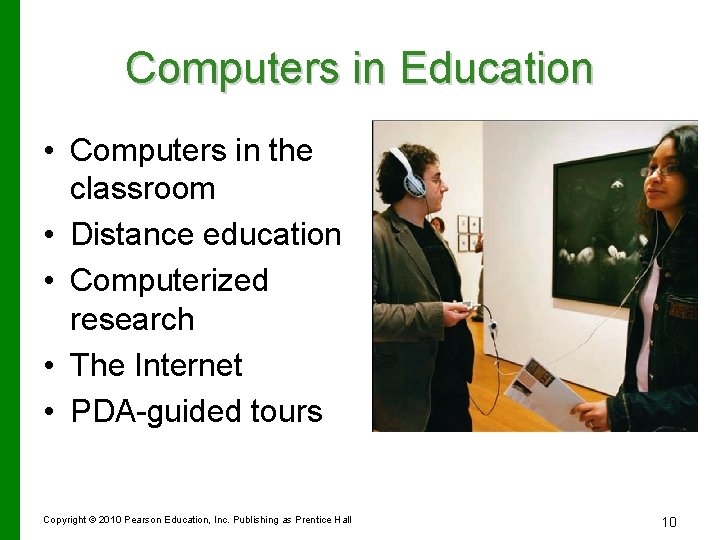
Computers in Education • Computers in the classroom • Distance education • Computerized research • The Internet • PDA-guided tours Copyright © 2010 Pearson Education, Inc. Publishing as Prentice Hall 10
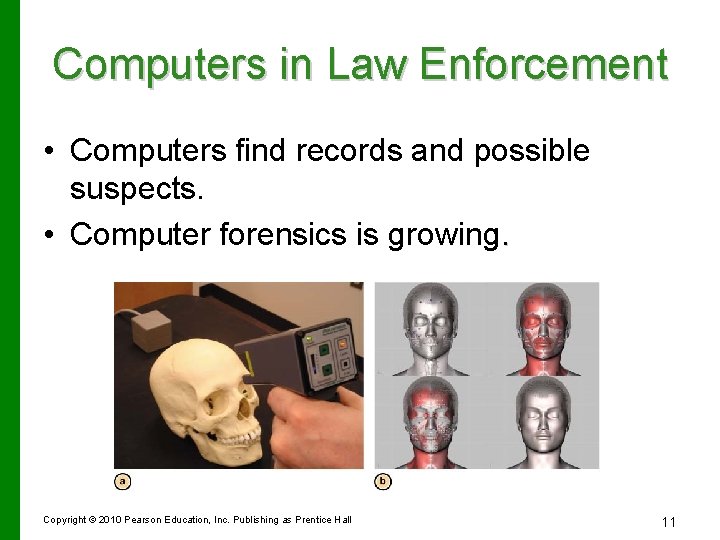
Computers in Law Enforcement • Computers find records and possible suspects. • Computer forensics is growing. Copyright © 2010 Pearson Education, Inc. Publishing as Prentice Hall 11
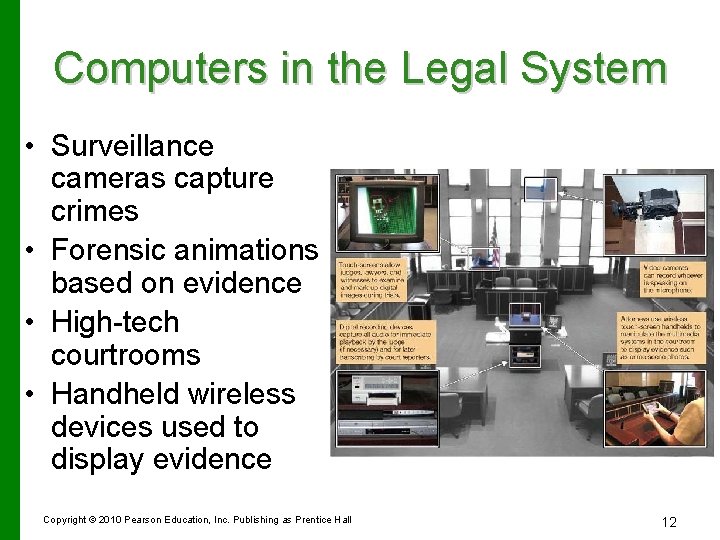
Computers in the Legal System • Surveillance cameras capture crimes • Forensic animations based on evidence • High-tech courtrooms • Handheld wireless devices used to display evidence Copyright © 2010 Pearson Education, Inc. Publishing as Prentice Hall 12
Computers in Agriculture • Programs assist in managing complex farming business and information systems. • RFID tags track and record animals in case of diseases. • Computerized sensors monitor conditions and activate equipment to protect crops. Copyright © 2010 Pearson Education, Inc. Publishing as Prentice Hall 13
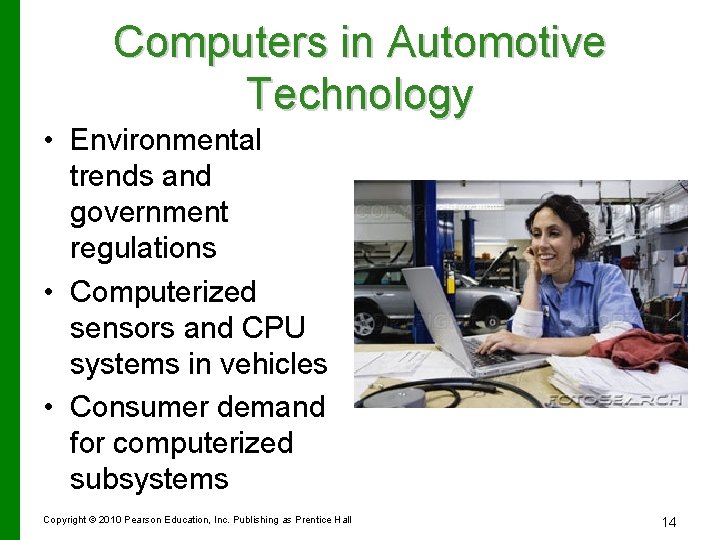
Computers in Automotive Technology • Environmental trends and government regulations • Computerized sensors and CPU systems in vehicles • Consumer demand for computerized subsystems Copyright © 2010 Pearson Education, Inc. Publishing as Prentice Hall 14
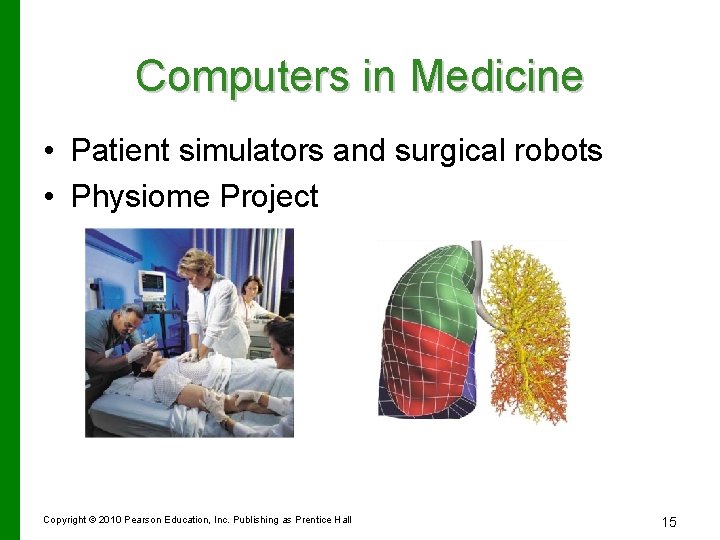
Computers in Medicine • Patient simulators and surgical robots • Physiome Project Copyright © 2010 Pearson Education, Inc. Publishing as Prentice Hall 15
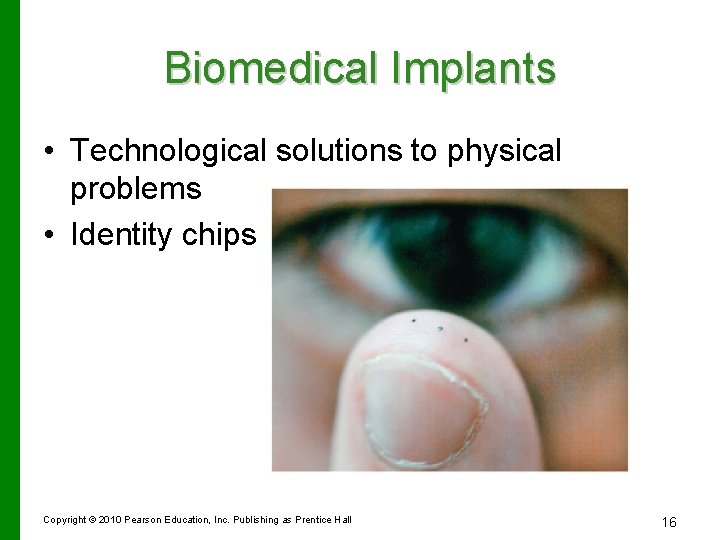
Biomedical Implants • Technological solutions to physical problems • Identity chips Copyright © 2010 Pearson Education, Inc. Publishing as Prentice Hall 16
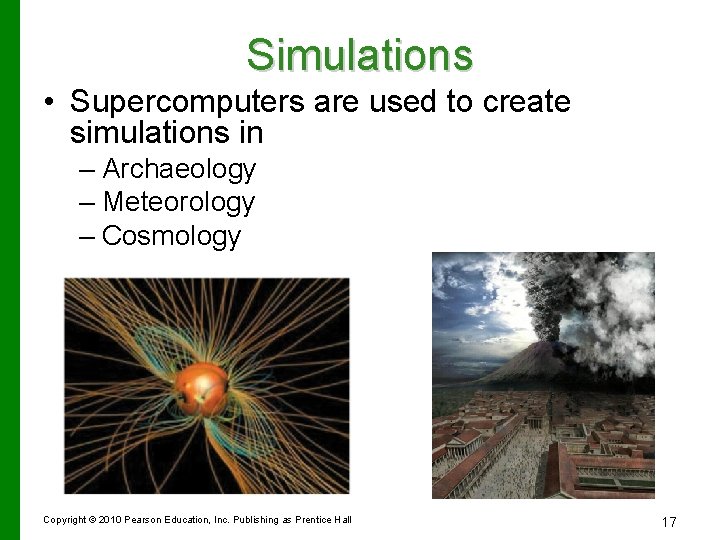
Simulations • Supercomputers are used to create simulations in – Archaeology – Meteorology – Cosmology Copyright © 2010 Pearson Education, Inc. Publishing as Prentice Hall 17
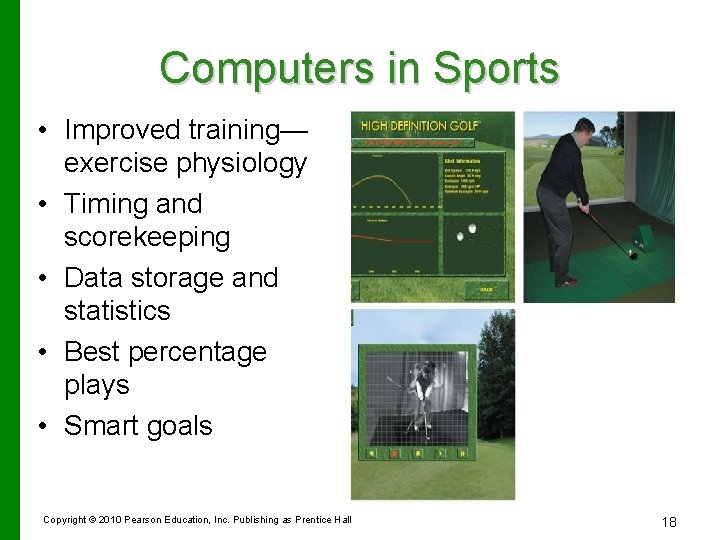
Computers in Sports • Improved training— exercise physiology • Timing and scorekeeping • Data storage and statistics • Best percentage plays • Smart goals Copyright © 2010 Pearson Education, Inc. Publishing as Prentice Hall 18
Nanotechnology • Nanoscience: Study of molecules and nanostructures—billionth of a meter • Nanotechnology: Science of use of nanostructures • Smaller computers use less electric power and stay cooler Copyright © 2010 Pearson Education, Inc. Publishing as Prentice Hall 19
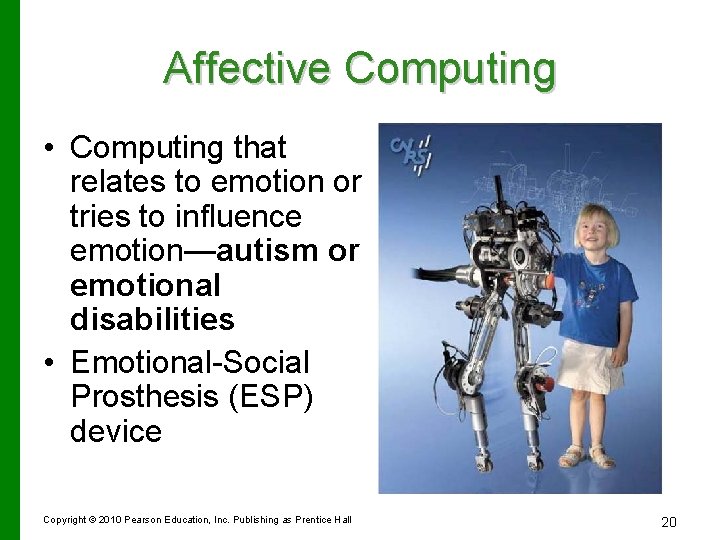
Affective Computing • Computing that relates to emotion or tries to influence emotion—autism or emotional disabilities • Emotional-Social Prosthesis (ESP) device Copyright © 2010 Pearson Education, Inc. Publishing as Prentice Hall 20
Challenges Facing a Digital Society • Privacy risks: – Personal data collection – E-mail monitoring • Copyright infringement • Reliance on computers for security • Digital divide—have and have nots Copyright © 2010 Pearson Education, Inc. Publishing as Prentice Hall 21
- Slides: 21