
What is communication Communication The process of sending
- Slides: 9
What is communication?
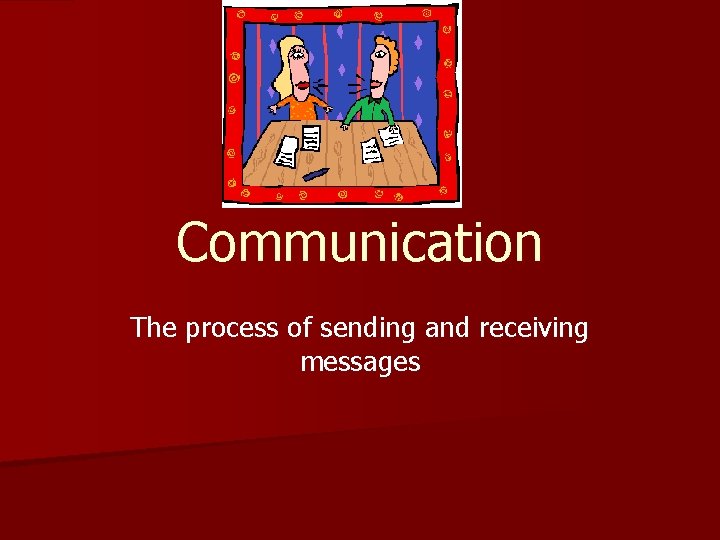
Communication The process of sending and receiving messages
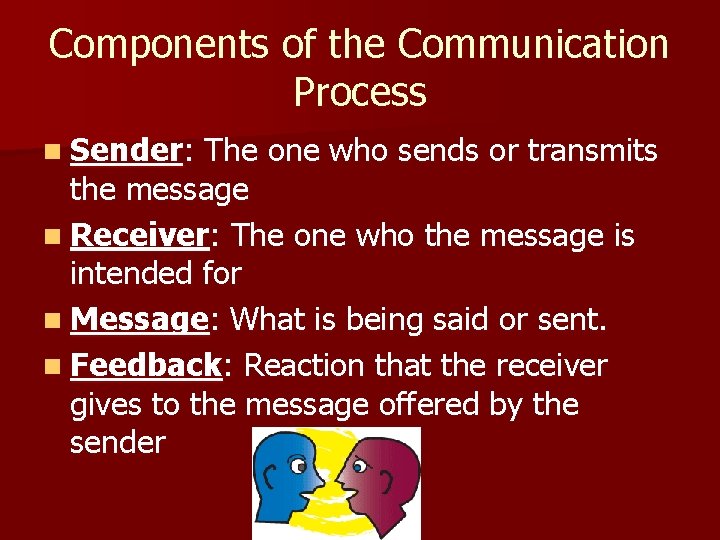
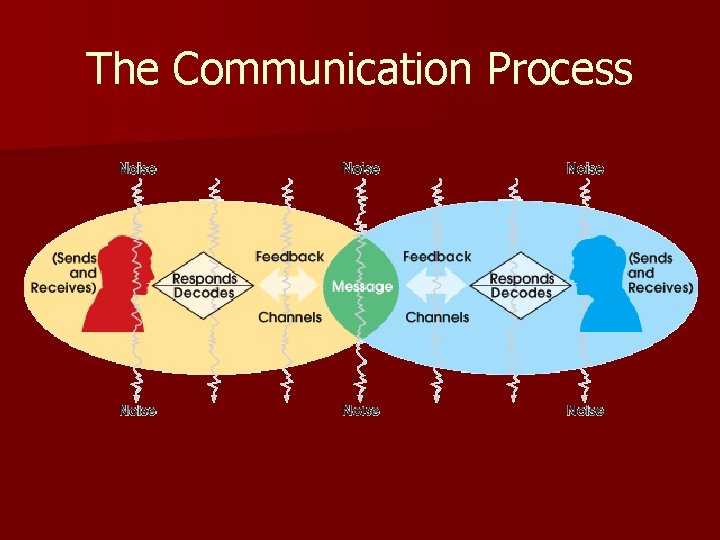
Components of the Communication Process n Sender: The one who sends or transmits the message n Receiver: The one who the message is intended for n Message: What is being said or sent. n Feedback: Reaction that the receiver gives to the message offered by the sender
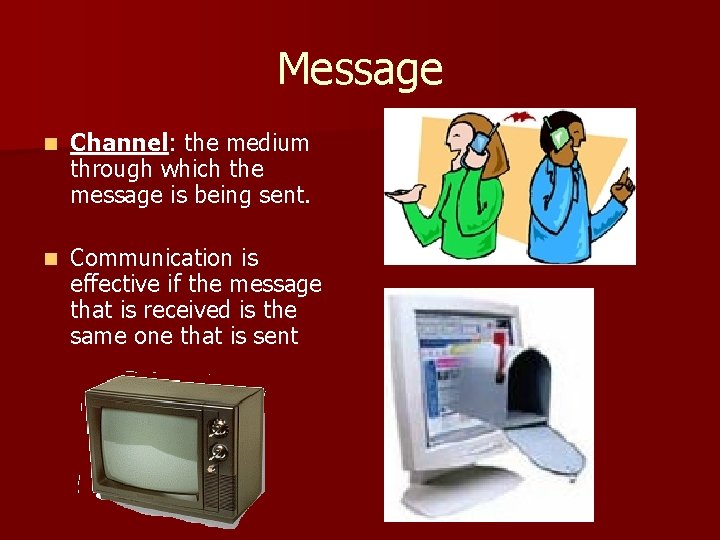
Message n Channel: the medium through which the message is being sent. n Communication is effective if the message that is received is the same one that is sent
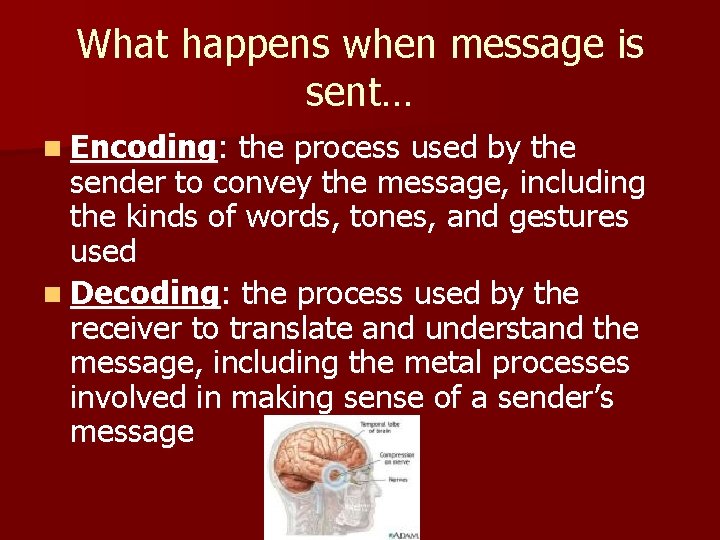
What happens when message is sent… n Encoding: the process used by the sender to convey the message, including the kinds of words, tones, and gestures used n Decoding: the process used by the receiver to translate and understand the message, including the metal processes involved in making sense of a sender’s message
Factors that affect Decoding and Encoding n Experience: the process or fact of personally observing, encountering, or undergoing something n Reaction to experience: how the sender/receiver reacted n Reality: combination of all meaning which come from a person’s experience and reactions to those experiences
Barriers to Listening n Noise: external and internal factors that interfere with the understanding of the message – External noise- any distraction from the outside of the body that competes with the message and or attention of the audience – Internal noise- any distraction from the inside of the body that competes with the message and or the attention of the audience
Where communication takes place… n Environment: the place and or situation in which communication occurs n Culture: the larger society which communication takes place. Cultures establish rules and expectations which affect communication.
The Communication Process