
What is Color The reflection of light Primary
- Slides: 38
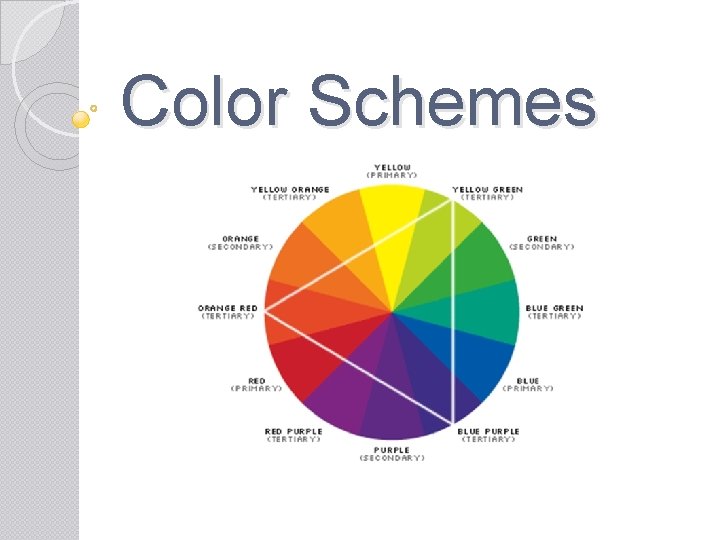
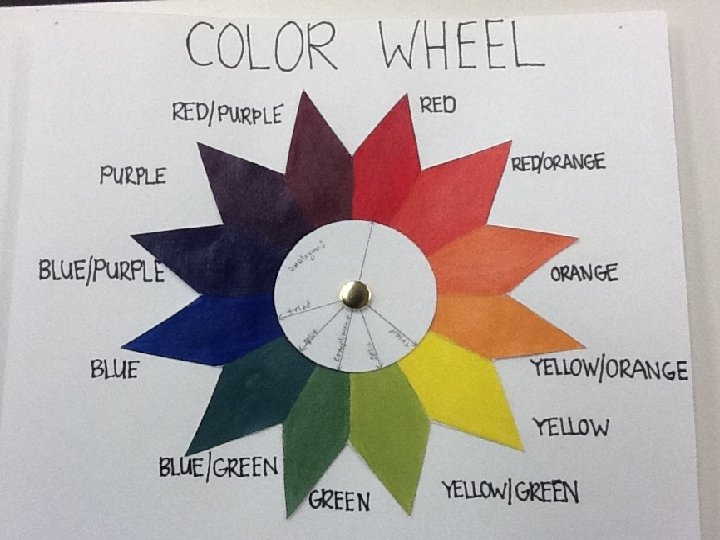
What is Color? The reflection of light �Primary colors: Red, Yellow and Blue �Secondary colors: Made by mixing equal parts of two primary colors. Green, Violet, and Orange � Complimentary colors: Opposite colors on the color wheel. Red/Green, Yellow/Violet, Blue/Orange. �Tertiary colors: Made by mixing a primary and a secondary color. Yellow-green, Blue-violet, Red-orange, & Yellow-orange
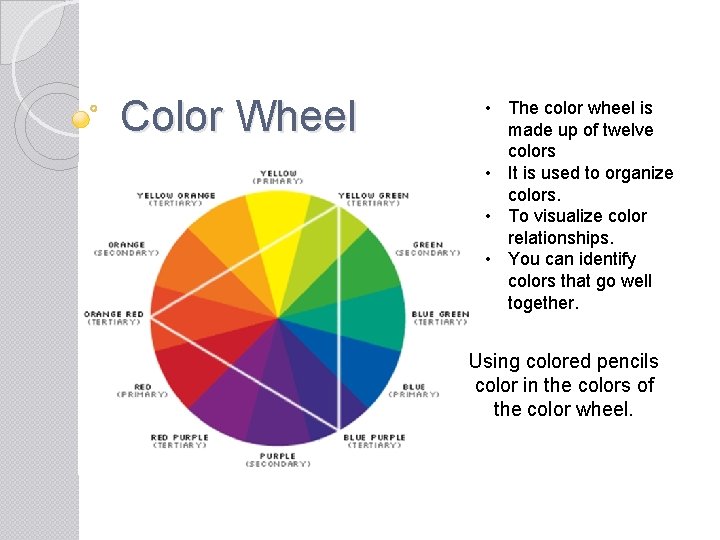
Color Wheel • The color wheel is made up of twelve colors • It is used to organize colors. • To visualize color relationships. • You can identify colors that go well together. Using colored pencils color in the colors of the color wheel.
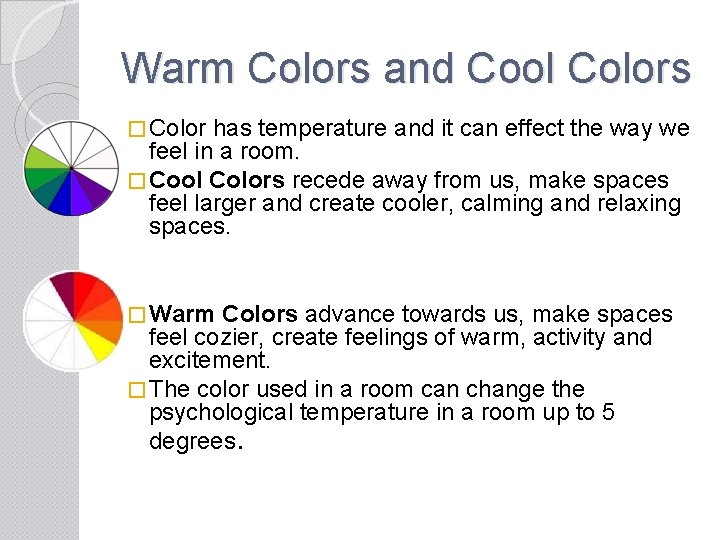
Warm Colors and Cool Colors � Color has temperature and it can effect the way we feel in a room. � Cool Colors recede away from us, make spaces feel larger and create cooler, calming and relaxing spaces. � Warm Colors advance towards us, make spaces feel cozier, create feelings of warm, activity and excitement. � The color used in a room can change the psychological temperature in a room up to 5 degrees.
Create a Color Wheel. �Using the color wheel provided �Label each color around the outside of the color wheel. �Then mix the primary colors to create each of the secondary and tertiary colors. �Paint each of the colors in the appropriate space. �Allow it to dry
Color Schemes
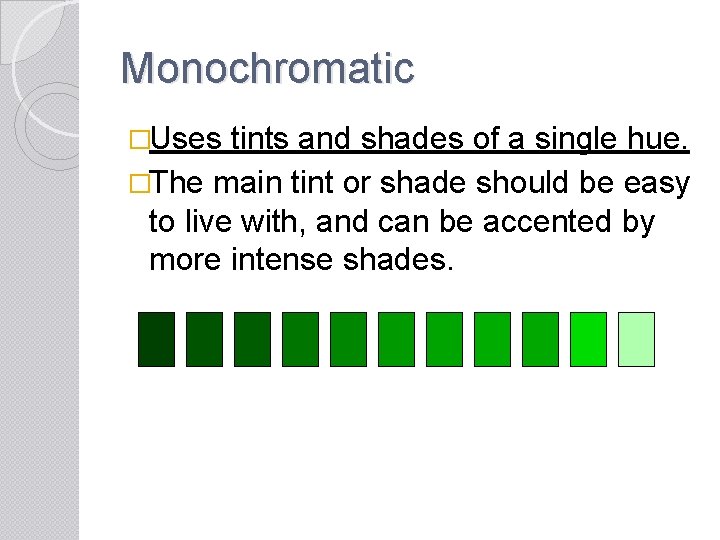
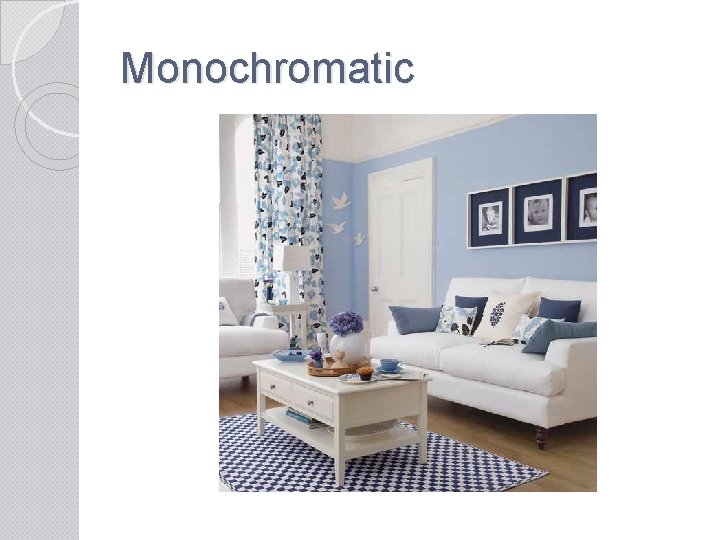
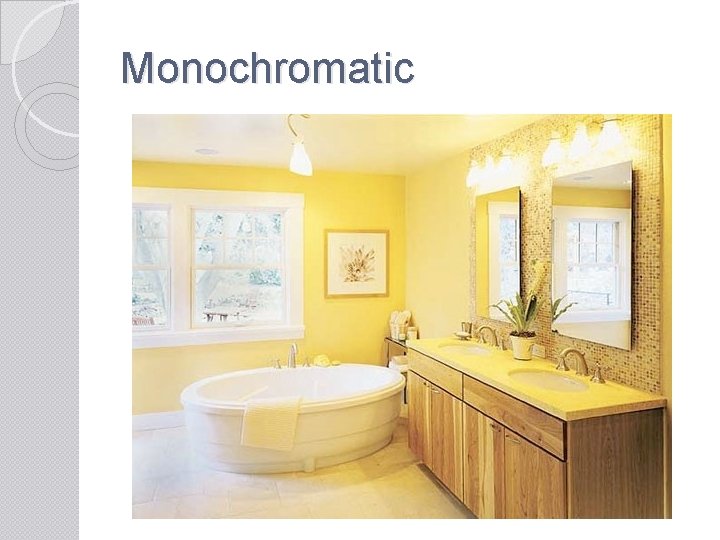
Monochromatic �Uses tints and shades of a single hue. �The main tint or shade should be easy to live with, and can be accented by more intense shades.
Monochromatic
Monochromatic
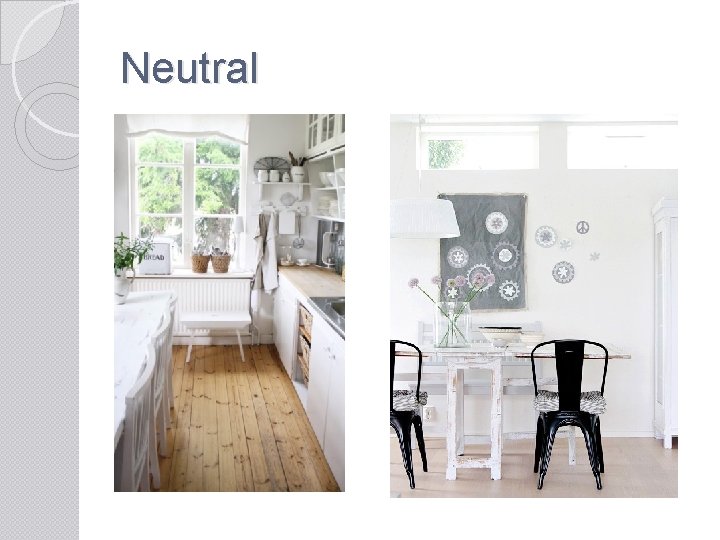
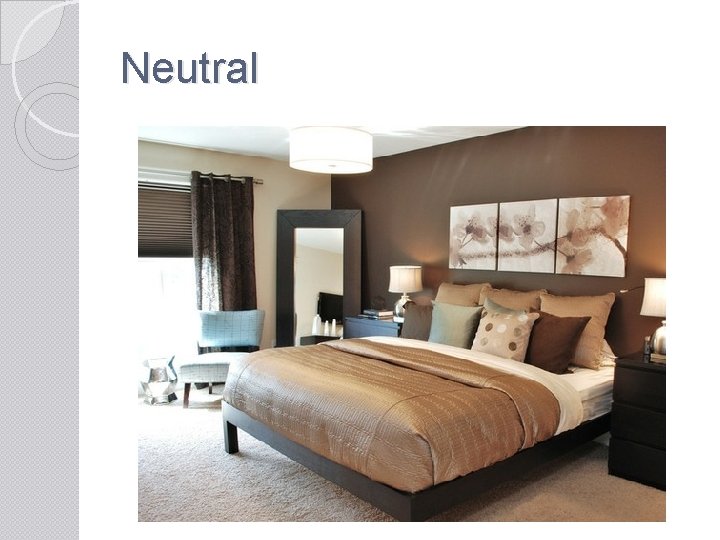
Neutral �A color scheme that uses browns or metallic colors. �Neutral color schemes can be easier to live with than with vibrant color schemes. �To make this scheme look best, use a variety of textures and shapes to add interest.
Neutral
Neutral
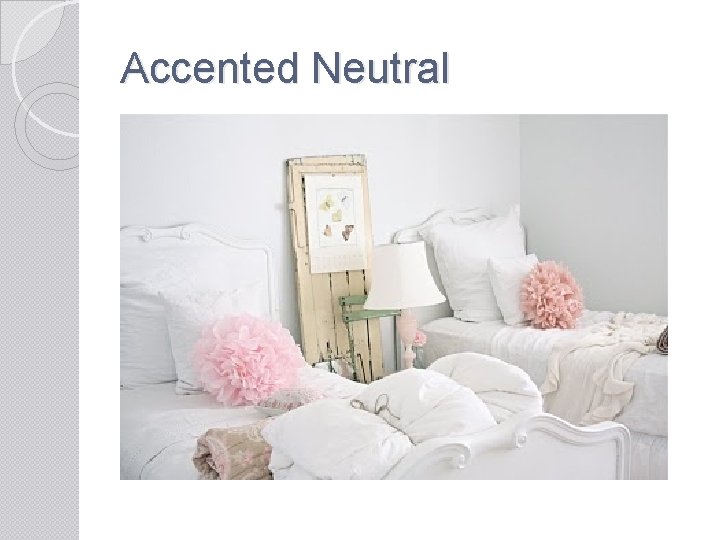
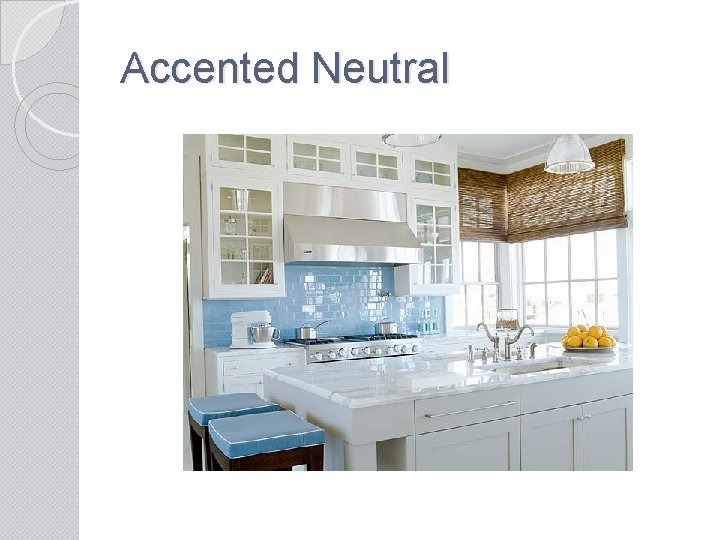
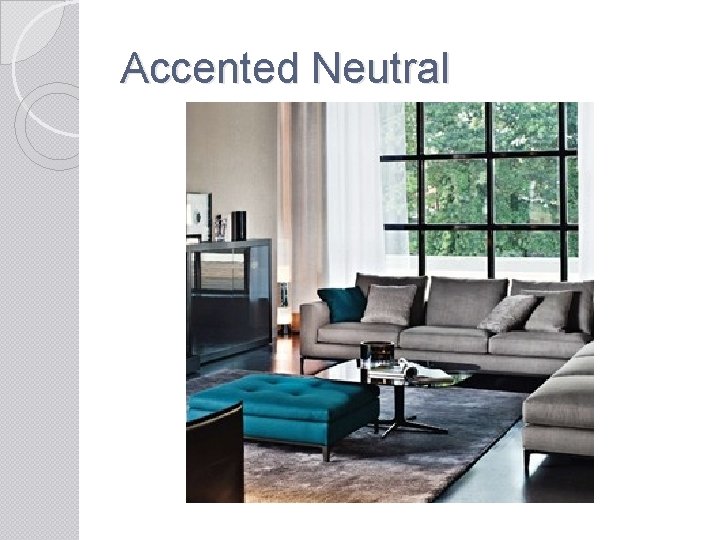
Accented Neutral �A neutral color scheme with one accent color for interest and variety.
Accented Neutral
Accented Neutral
Accented Neutral
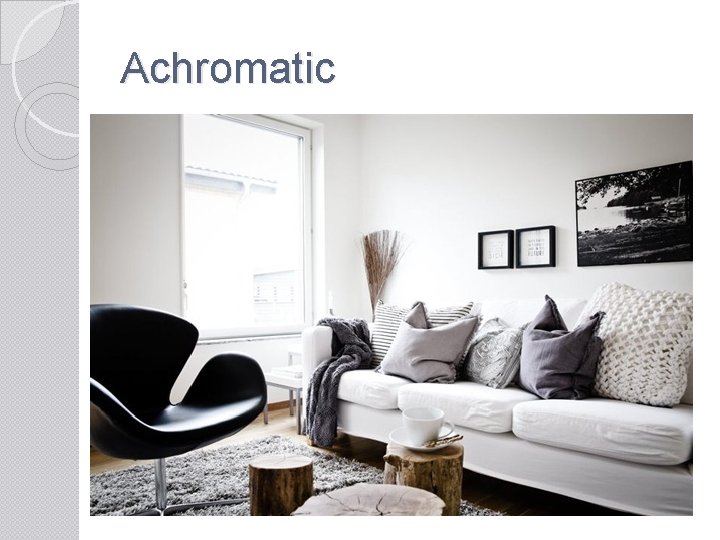
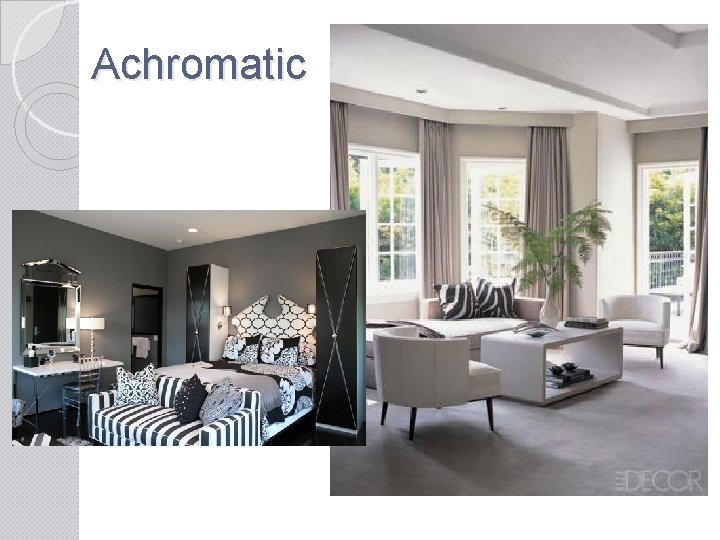
Achromatic �A color scheme using black, white, and/or gray
Achromatic
Achromatic
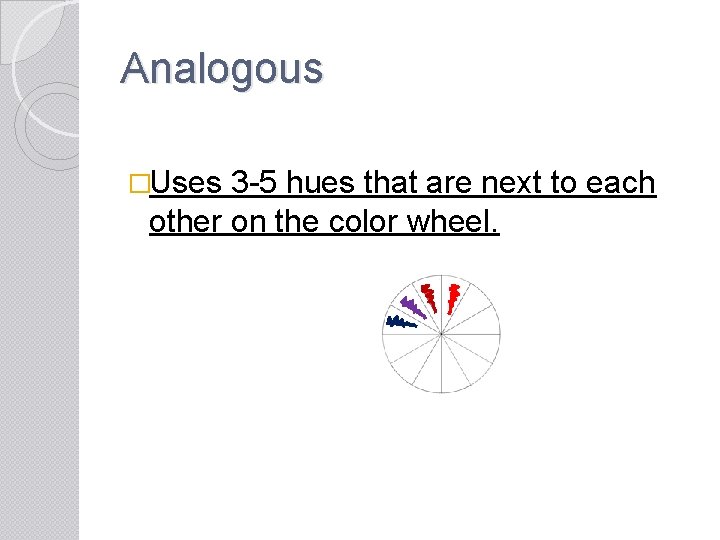
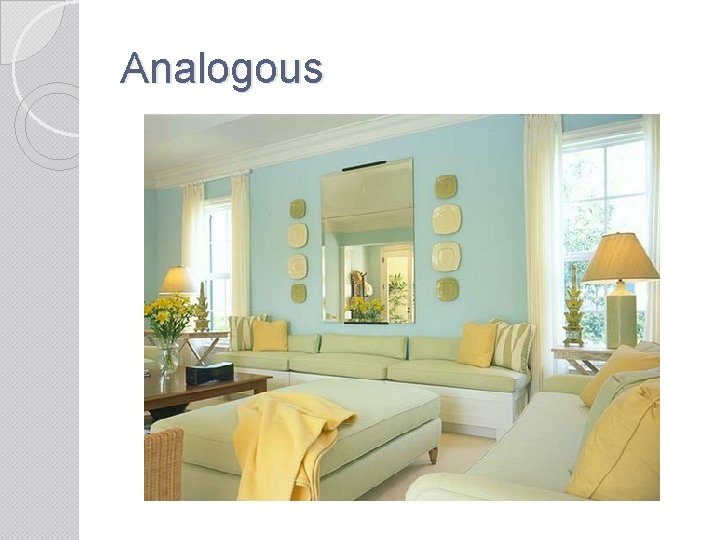
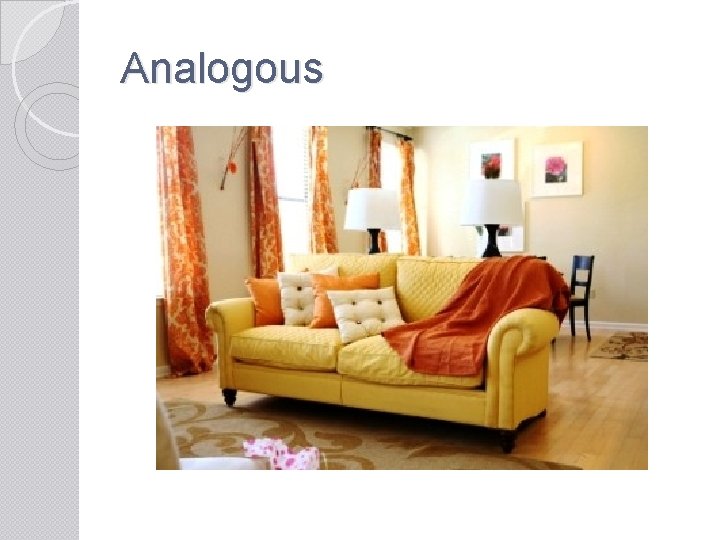
Analogous �Uses 3 -5 hues that are next to each other on the color wheel.
Analogous
Analogous
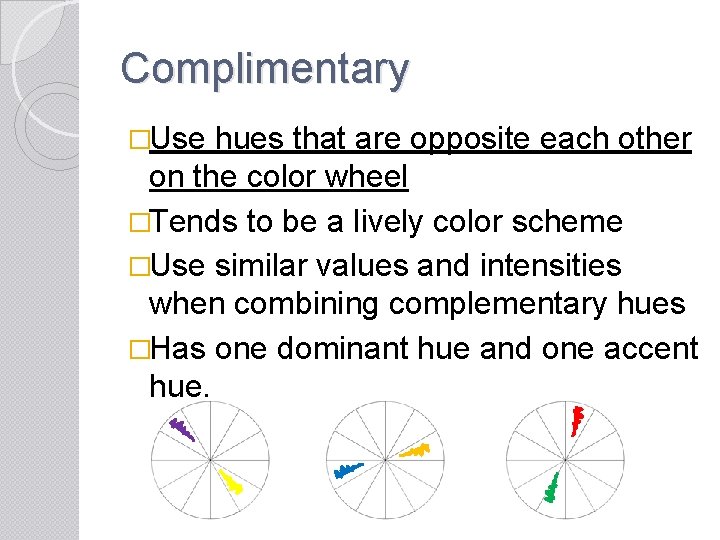
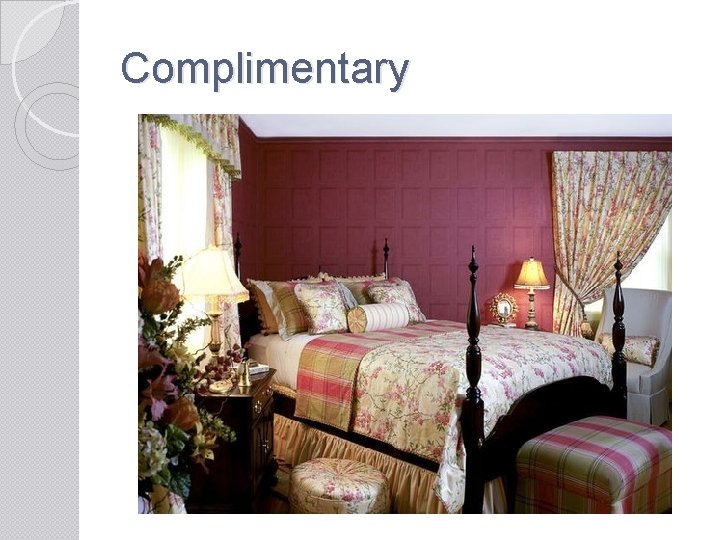
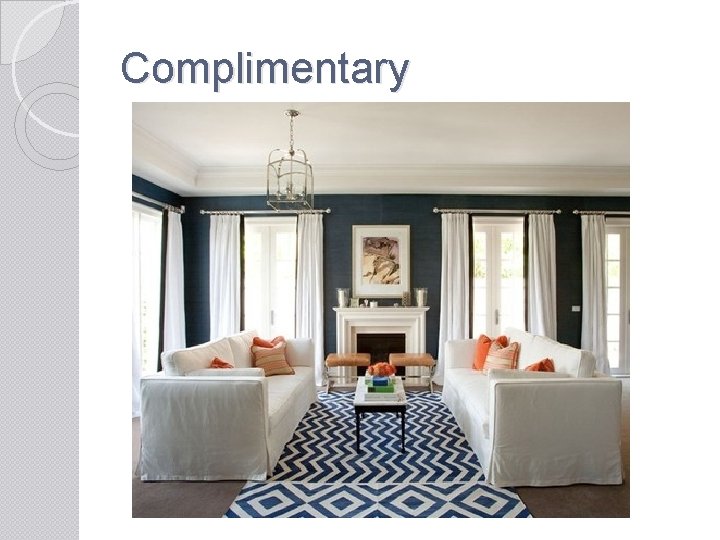
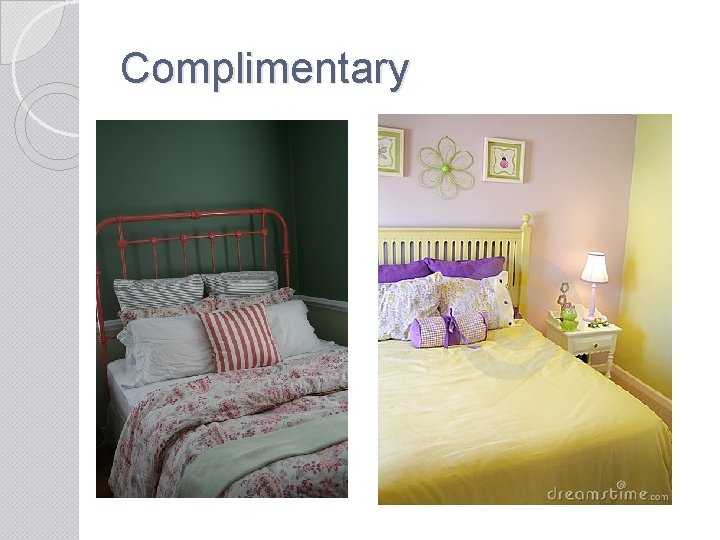
Complimentary �Use hues that are opposite each other on the color wheel �Tends to be a lively color scheme �Use similar values and intensities when combining complementary hues �Has one dominant hue and one accent hue.
Complimentary
Complimentary
Complimentary
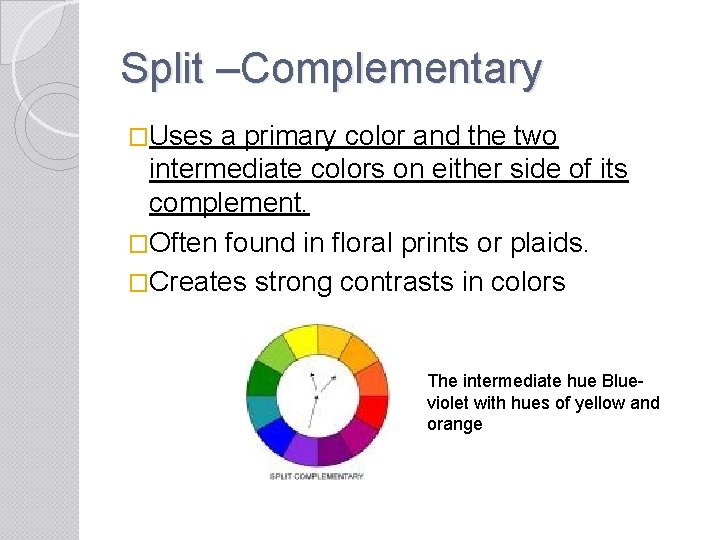
Split –Complementary �Uses a primary color and the two intermediate colors on either side of its complement. �Often found in floral prints or plaids. �Creates strong contrasts in colors The intermediate hue Blueviolet with hues of yellow and orange
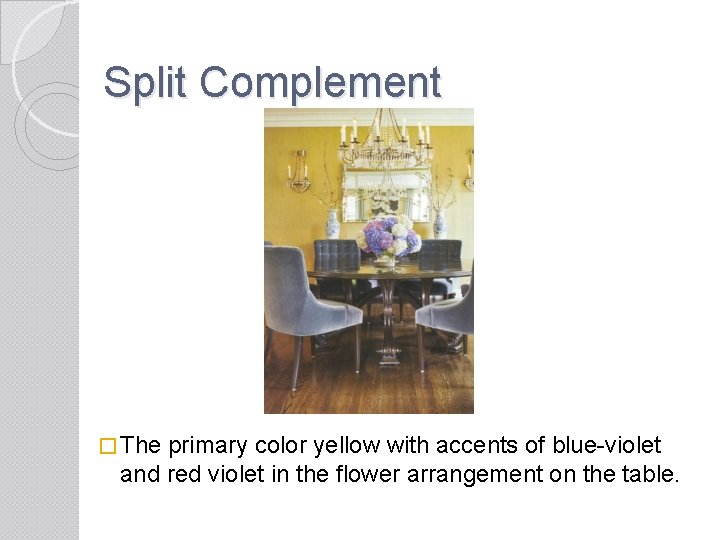
Split Complement � The primary color yellow with accents of blue-violet and red violet in the flower arrangement on the table.
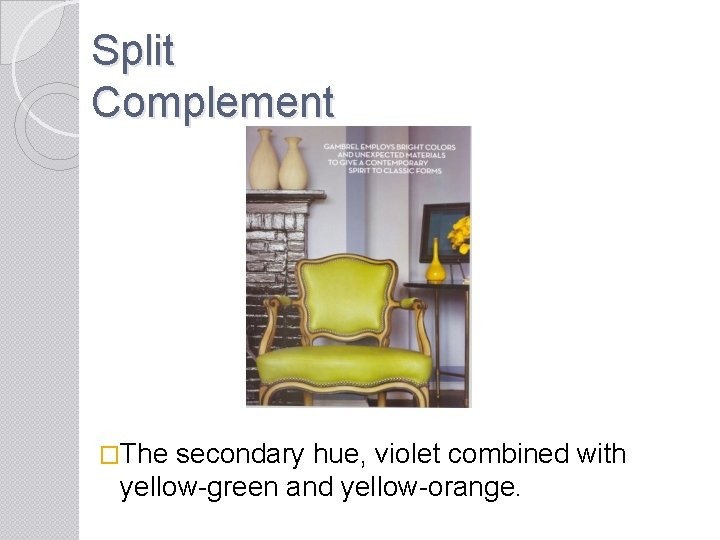
Split Complement �The secondary hue, violet combined with yellow-green and yellow-orange.
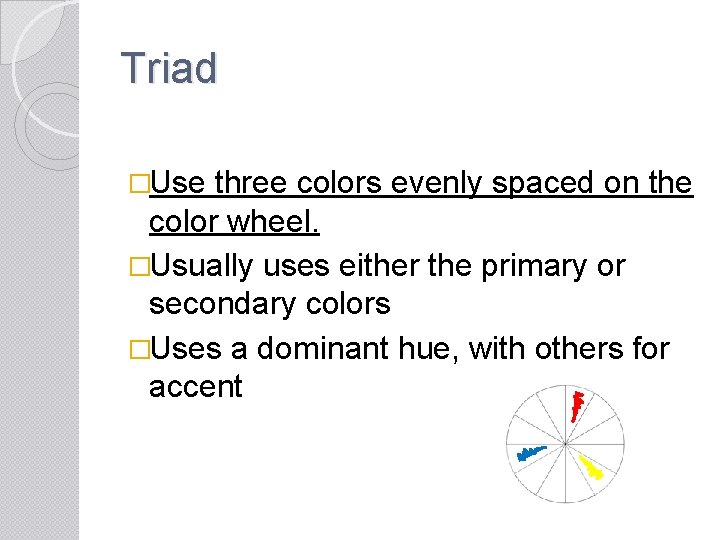
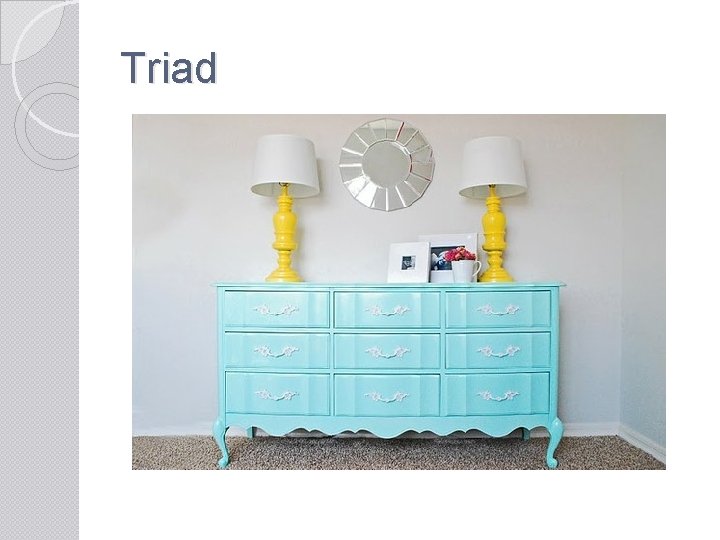
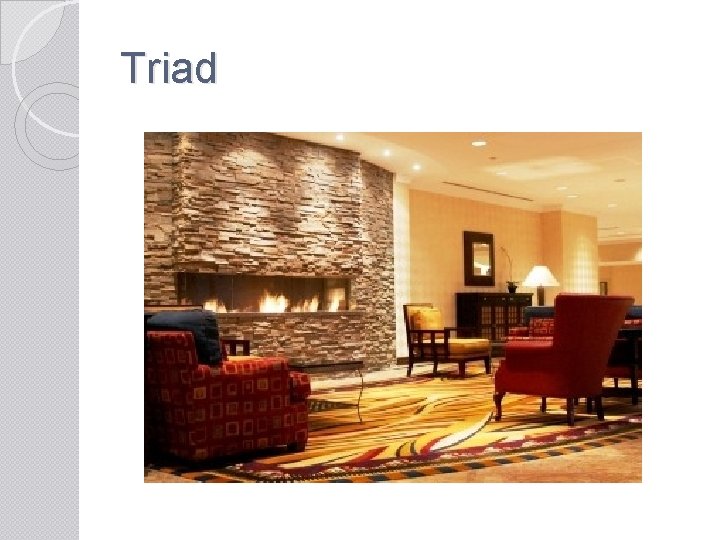
Triad �Use three colors evenly spaced on the color wheel. �Usually uses either the primary or secondary colors �Uses a dominant hue, with others for accent
Triad
Triad
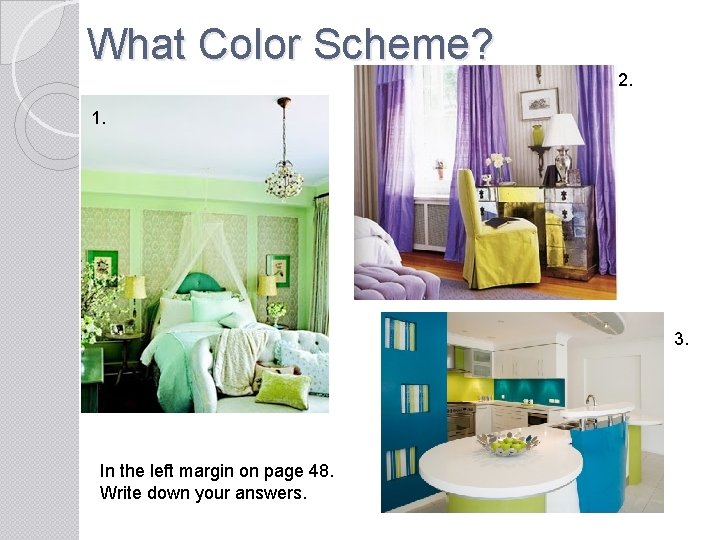
What Color Scheme? 2. 1. 3. In the left margin on page 48. Write down your answers.
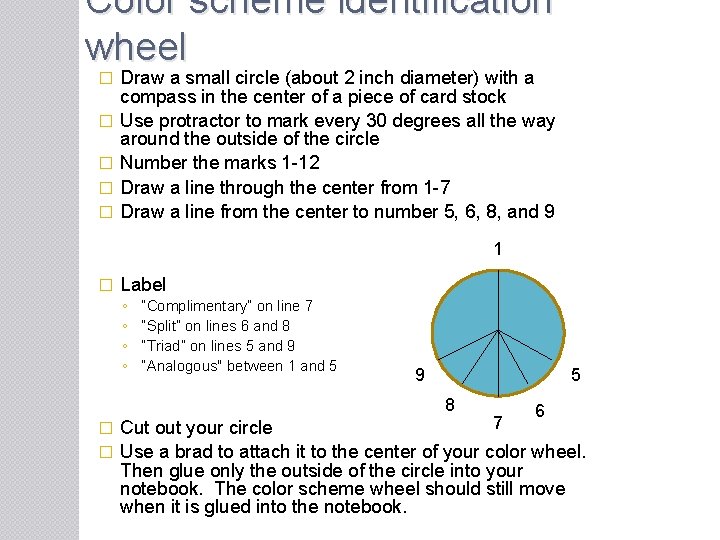
Color scheme identification wheel � � � Draw a small circle (about 2 inch diameter) with a compass in the center of a piece of card stock Use protractor to mark every 30 degrees all the way around the outside of the circle Number the marks 1 -12 Draw a line through the center from 1 -7 Draw a line from the center to number 5, 6, 8, and 9 1 � Label ◦ ◦ “Complimentary” on line 7 “Split” on lines 6 and 8 “Triad” on lines 5 and 9 “Analogous" between 1 and 5 9 5 8 7 6 Cut out your circle � Use a brad to attach it to the center of your color wheel. Then glue only the outside of the circle into your notebook. The color scheme wheel should still move when it is glued into the notebook. �
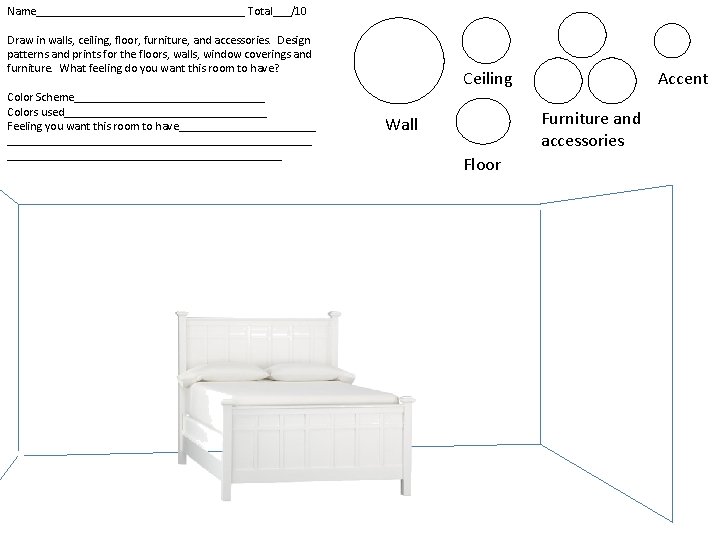
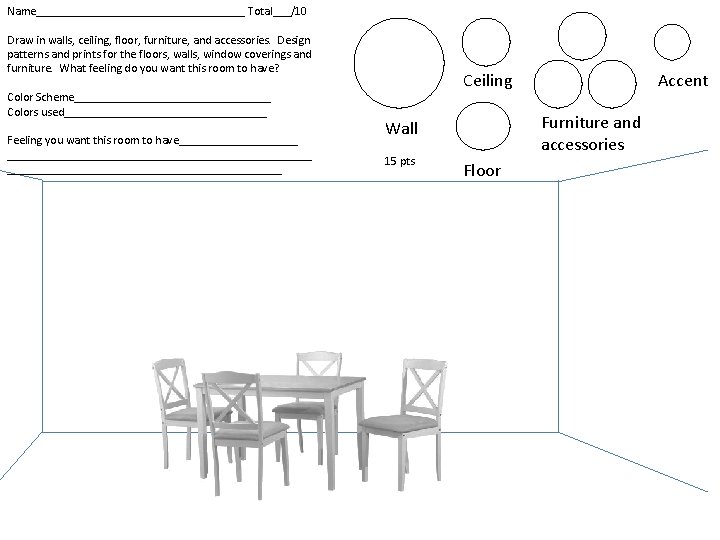
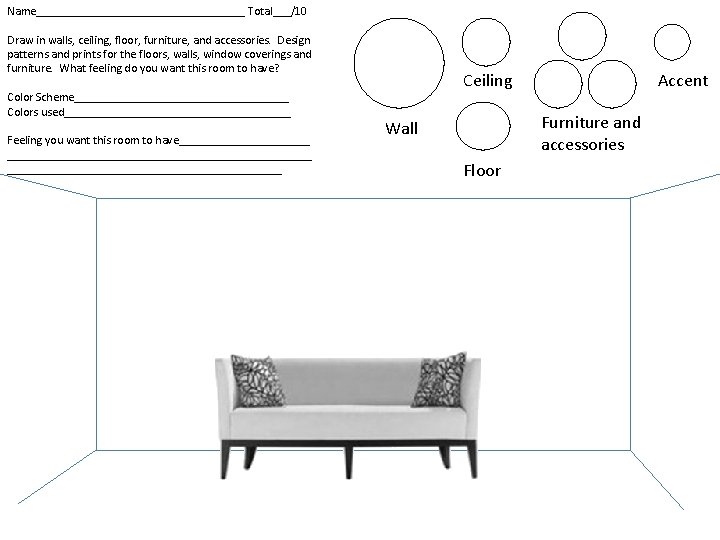
Create your own �You will color 3 rooms in different color schemes from the 8 discussed in class. Follow the directions. �FIRST Identify the color scheme you will be using. �Draw in windows, furniture, and accessories. Design patterns and prints for the floors, rugs, walls, window coverings and furniture. �Decide what colors to use on the walls, furniture, floors, etc. �What feeling do you want this room to have?
Name__________________ Total___/10 Draw in walls, ceiling, floor, furniture, and accessories. Design patterns and prints for the floors, walls, window coverings and furniture. What feeling do you want this room to have? Color Scheme________________ Colors used_________________ Feeling you want this room to have_____________________________________ Ceiling Accent Furniture and accessories Wall Floor
Name__________________ Total___/10 Draw in walls, ceiling, floor, furniture, and accessories. Design patterns and prints for the floors, walls, window coverings and furniture. What feeling do you want this room to have? Color Scheme_________________ Colors used_________________ Feeling you want this room to have_______________________________________ Ceiling Furniture and accessories Wall 15 pts Accent Floor
Name__________________ Total___/10 Draw in walls, ceiling, floor, furniture, and accessories. Design patterns and prints for the floors, walls, window coverings and furniture. What feeling do you want this room to have? Color Scheme__________________ Colors used___________________ Feeling you want this room to have______________________________________ Ceiling Accent Furniture and accessories Wall Floor