
WHAT IS COHOUSING Cohousing is a form of
- Slides: 21
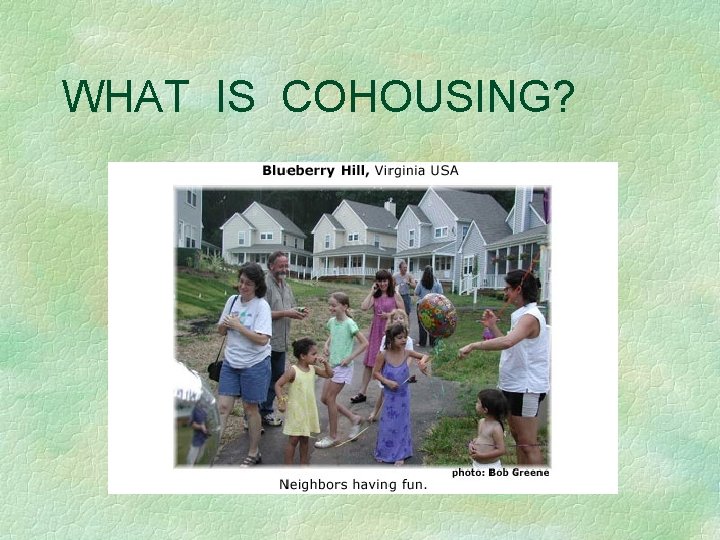
WHAT IS COHOUSING?
Cohousing. . . • is a form of intentional community that was imported to the United States from Denmark in the late 80 s. • provides the privacy we are accustomed to with the community we seek.
Characteristics of Cohousing Participatory Process -Residents participate extensively in the planning and design process for the housing development.
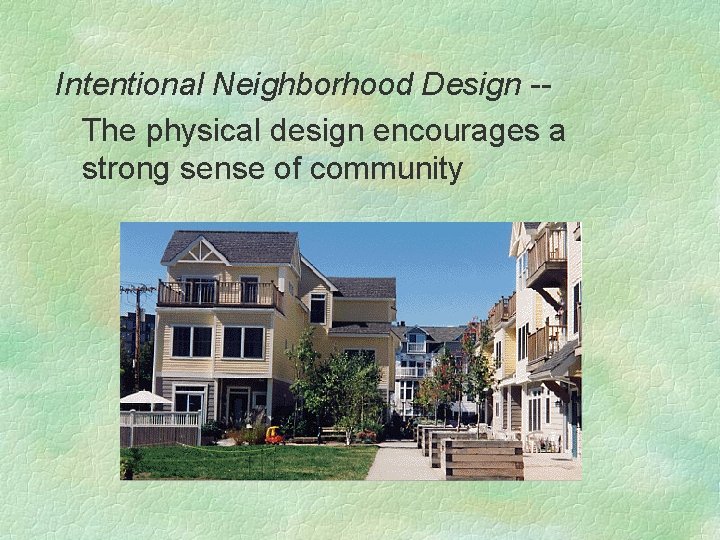
Intentional Neighborhood Design -The physical design encourages a strong sense of community
Extensive Common Facilities -To supplement private living areas, common areas are designed for community activities like optional shared meals and community gardens. Complete Resident Management -Most decisions are made using a refined consensus process.
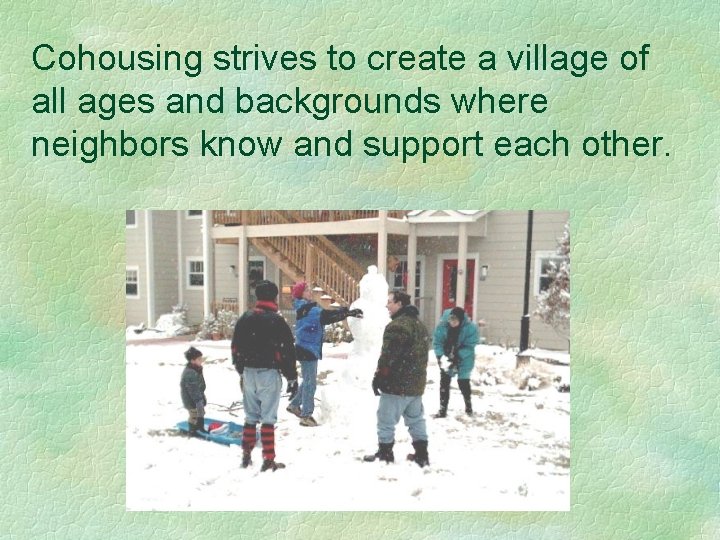
Cohousing strives to create a village of all ages and backgrounds where neighbors know and support each other.
Cohousing is supportive of all generations. • Children have the opportunity to be raised by a nearby “extended family”. • Adults enjoy the opportunity to socialize and form interest and support groups without the stress of driving across town.
Bringing people close together can make it easier to share resources. • Individuals’ unique skills are shared and valued. You can always find someone to help with a chore or do something you cannot. • Children can have many adult mentors from whom they can learn a variety of skills.
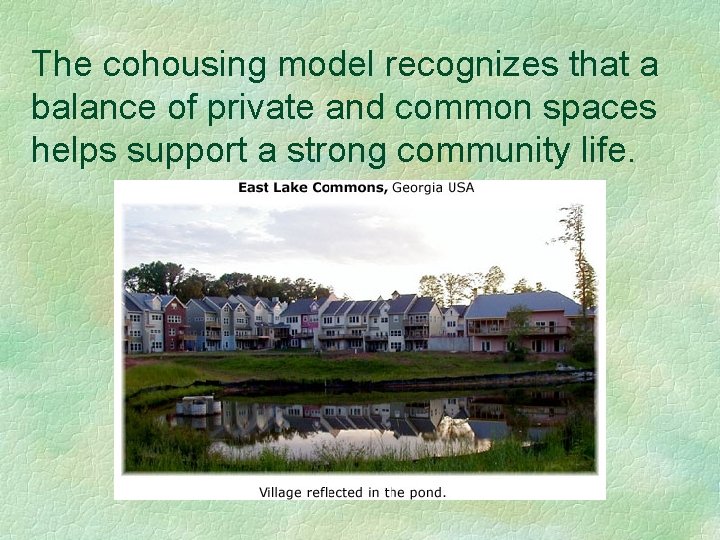
The cohousing model recognizes that a balance of private and common spaces helps support a strong community life.
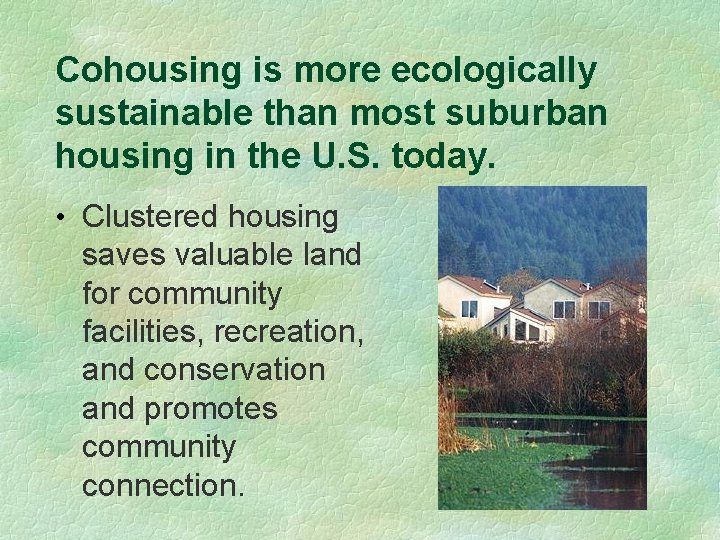
Cohousing is more ecologically sustainable than most suburban housing in the U. S. today. • Clustered housing saves valuable land for community facilities, recreation, and conservation and promotes community connection.
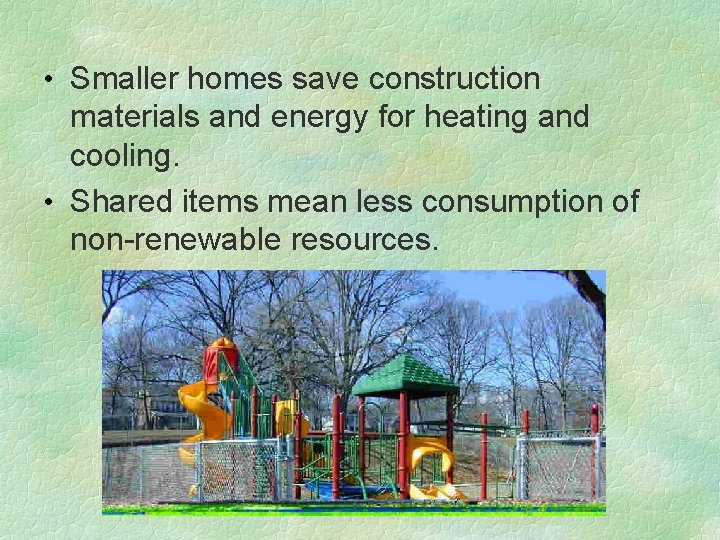
• Smaller homes save construction materials and energy for heating and cooling. • Shared items mean less consumption of non-renewable resources.
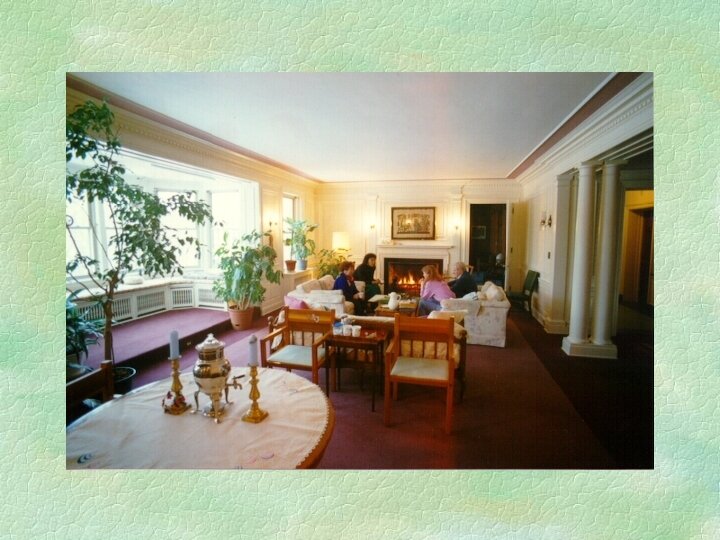
The common house is a shared space used by residents for many functions. • Cooking and dining together • Celebrations • Large events, such as weddings • Entertainment -- theatre, music, and multicultural sharing • Meetings
The common house also provides. . . • Guest rooms as a community asset for visiting friends and relatives. • A kids’ room as a play space and childcare area, where children can be children.
• Laundry facilities which save resources and bring people together. • A community workshop which allows tools and materials to be shared, thus freeing up space in individual homes.
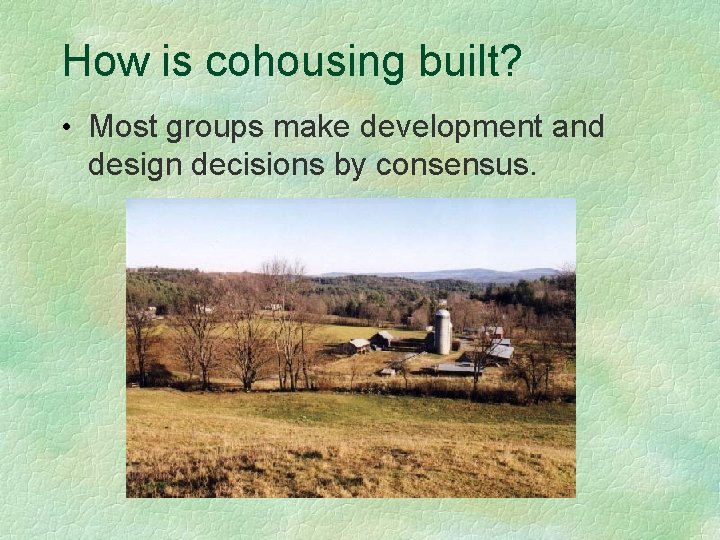
How is cohousing built? • Most groups make development and design decisions by consensus.
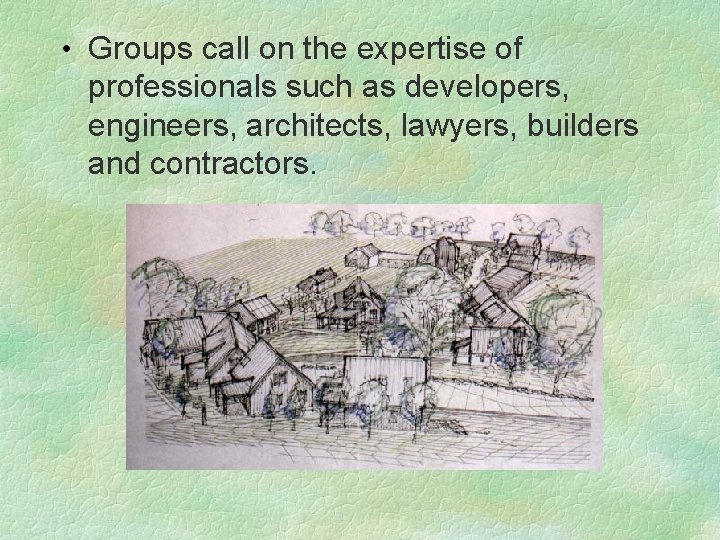
• Groups call on the expertise of professionals such as developers, engineers, architects, lawyers, builders and contractors.
It takes longer to build a cohousing community, but the process is worth it! Because residents design the community themselves. . . They feel a connection to the land each other before the physical community is built.
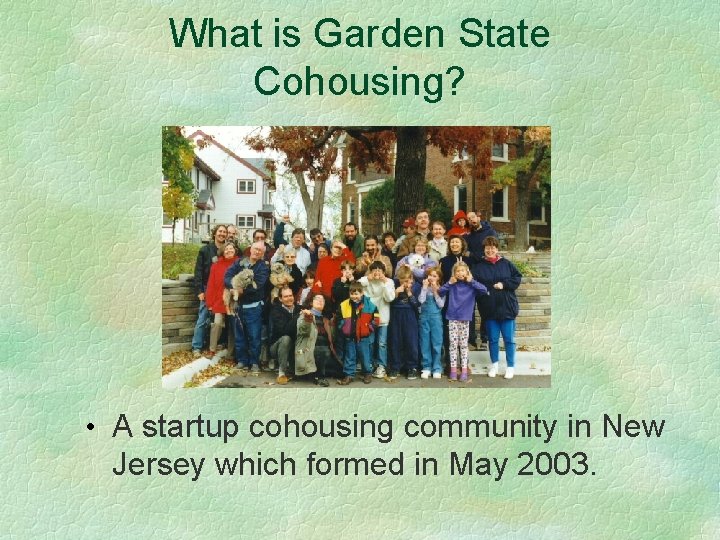
What is Garden State Cohousing? • A startup cohousing community in New Jersey which formed in May 2003.
• We envision about 30 units in our community. • We are researching sites within 1 ½ hours of NYC. • We are currently determining our land criteria.
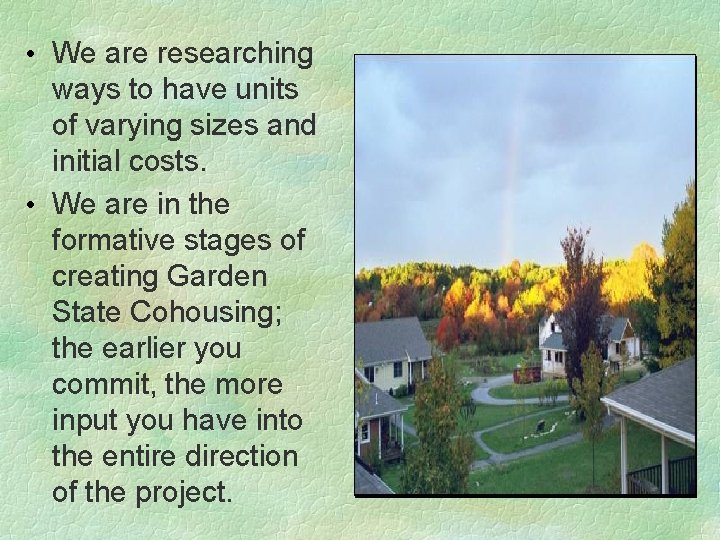
• We are researching ways to have units of varying sizes and initial costs. • We are in the formative stages of creating Garden State Cohousing; the earlier you commit, the more input you have into the entire direction of the project.