
What is Cognitive Moral Development Center for ETHICS

- Slides: 29
What is Cognitive Moral Development? Center for ETHICS* 12/7/2020 1
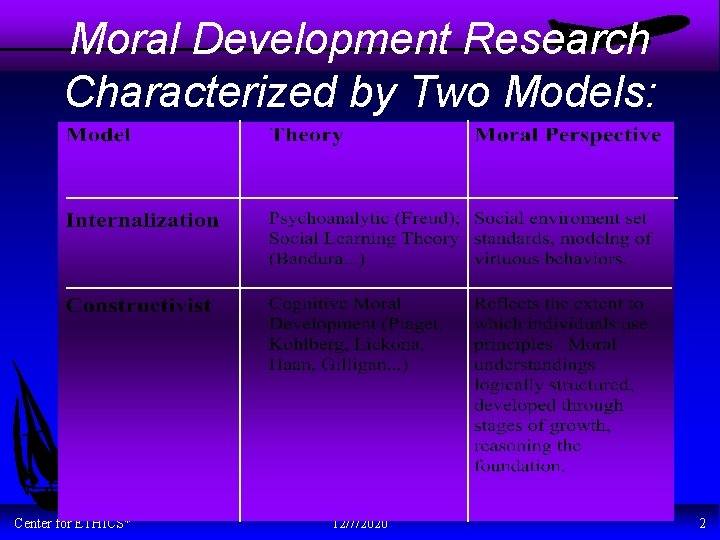
Moral Development Research Characterized by Two Models: Center for ETHICS* 12/7/2020 2
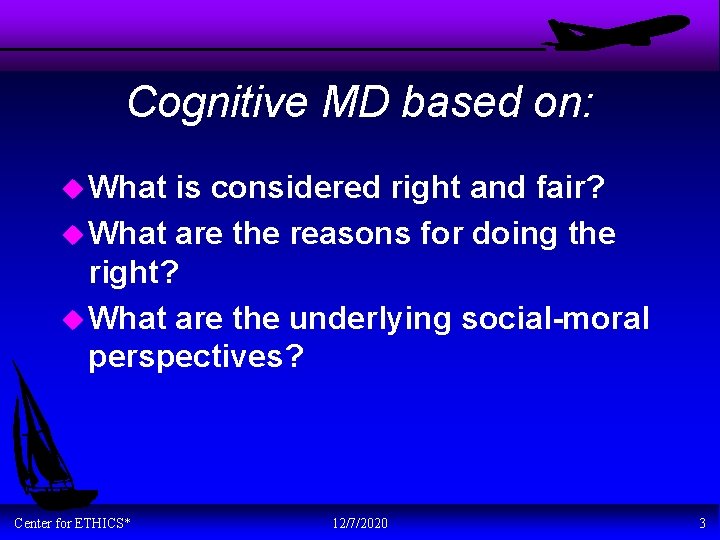
Cognitive MD based on: u What is considered right and fair? u What are the reasons for doing the right? u What are the underlying social-moral perspectives? Center for ETHICS* 12/7/2020 3
Cognitive Developmentalists Piaget, Kohlberg, Gilligan, Lickona. . . Center for ETHICS* 12/7/2020 4
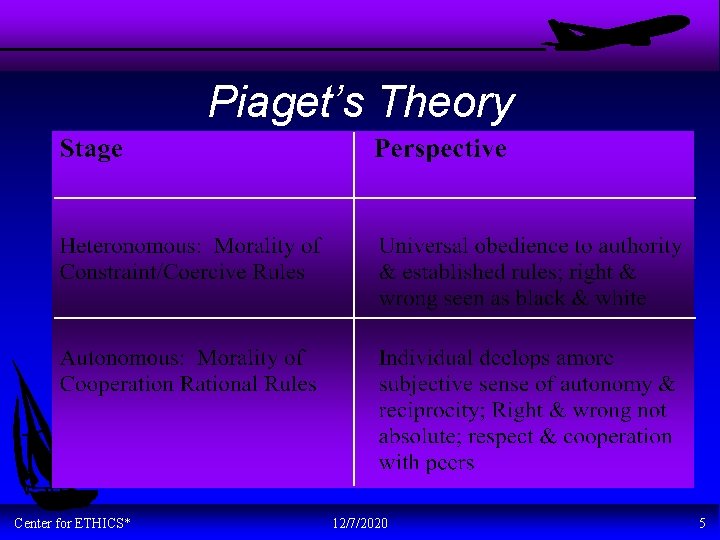
Piaget’s Theory Center for ETHICS* 12/7/2020 5
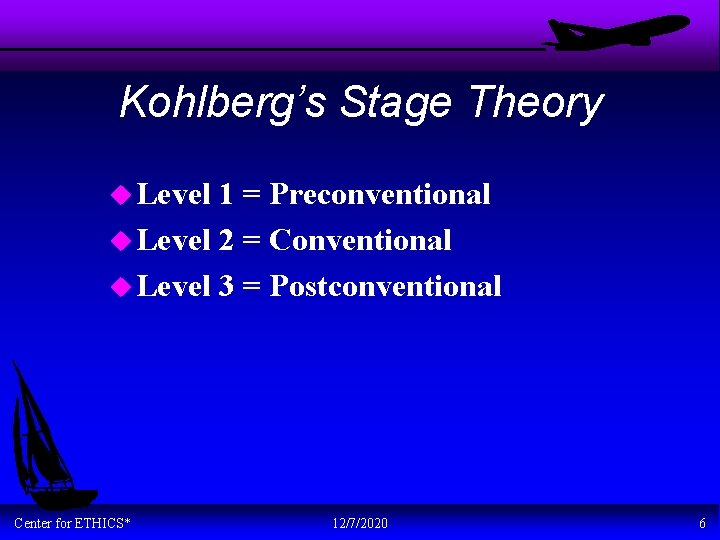
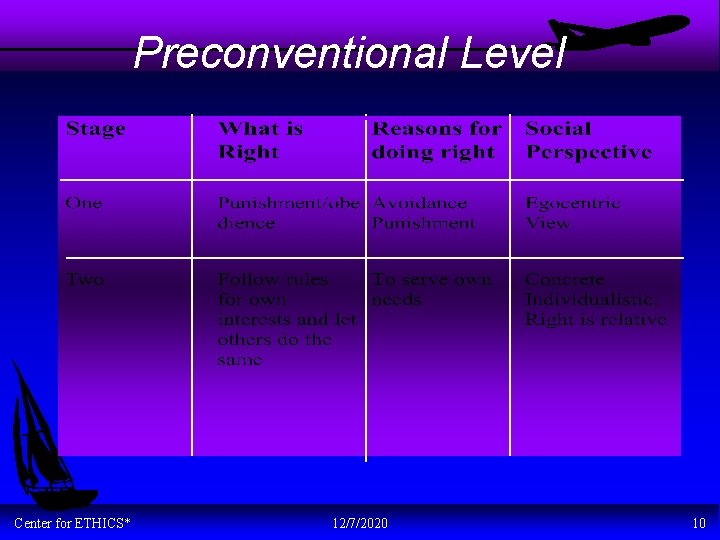
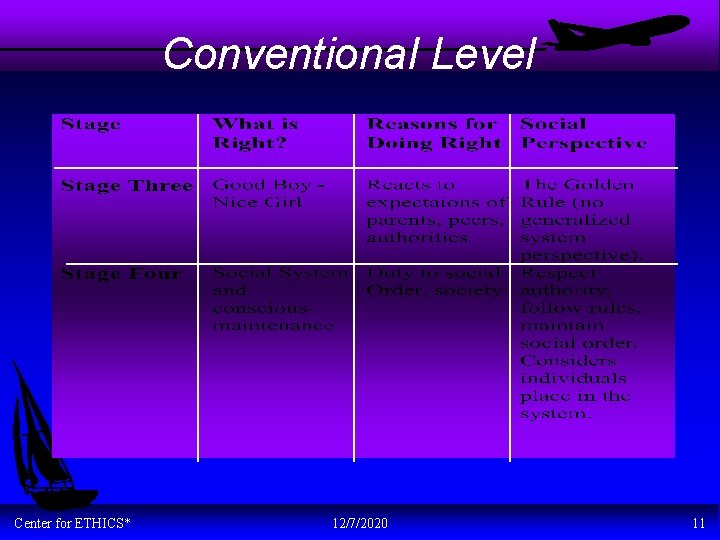
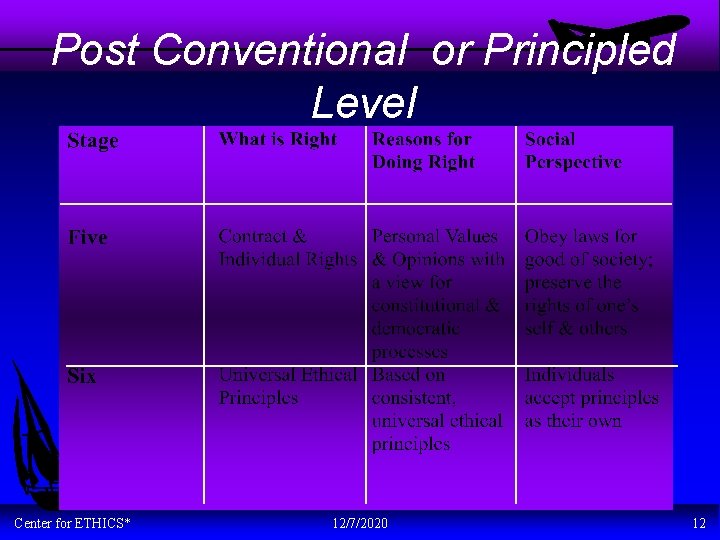
Kohlberg’s Stage Theory u Level 1 = Preconventional u Level 2 = Conventional u Level 3 = Postconventional Center for ETHICS* 12/7/2020 6
Kohlberg…the man u. A Ph. D. From Yale in Psychology. u As a youth spent time in a Kibbutz and changed his perspective about moral education and the importance of it. u Established a center for moral development at Harvard…which folded after his death. See Prologue on Kohlberg, Handbook or Moral Behavior and Development/ Vol 1: Theory by Kurtines and Gewirtz. . . Center for ETHICS* 12/7/2020 7
Kolhberg’s Work u Was highly criticized for his theory of moral development. u Called too limited, non-theoretical, and male centric. u Some Feminists…especially Carol Gilligan…called work unfair because of justice orientation. Center for ETHICS* 12/7/2020 8
Carol Gilligan u “In a Different Voice” u “Mapping the Moral Domain” u “Between Voice and Silence: Women and Girls, Race and Relationships” by Jill Mc. Lean Taylor, Carol Gilligan and Amy M. Sullivan u Her Center for ETHICS* argument and the difference she made. . . 12/7/2020 9
Preconventional Level Center for ETHICS* 12/7/2020 10
Conventional Level Center for ETHICS* 12/7/2020 11
Post Conventional or Principled Level Center for ETHICS* 12/7/2020 12
What does Research Tell Us About Moral Education in Athlete Populations? Center for ETHICS* 12/7/2020 13
The Effect of Competition and Educational Moral Reasoning Methodologies on Competitive Populations Research gleaned from 25+ studies with over 40, 000 subjects in North America. The information presented here is representative only. For referred publications to support, contact: jbeller@uidaho. edu Center for ETHICS* 12/7/2020 14
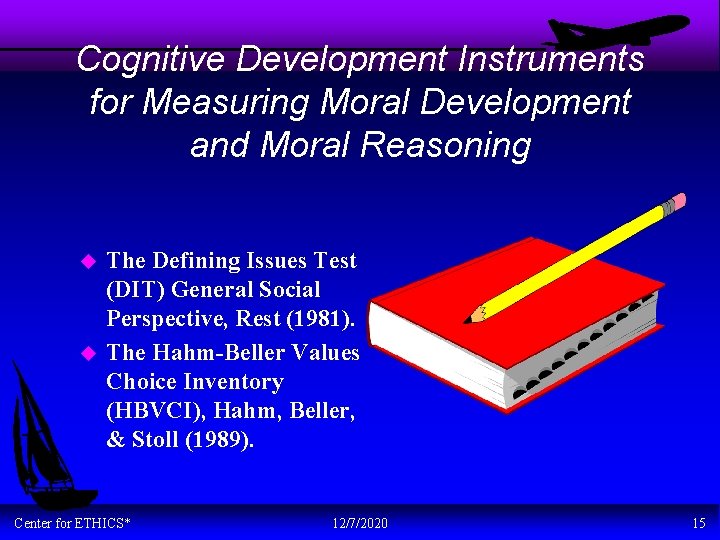
Cognitive Development Instruments for Measuring Moral Development and Moral Reasoning u u The Defining Issues Test (DIT) General Social Perspective, Rest (1981). The Hahm-Beller Values Choice Inventory (HBVCI), Hahm, Beller, & Stoll (1989). Center for ETHICS* 12/7/2020 15
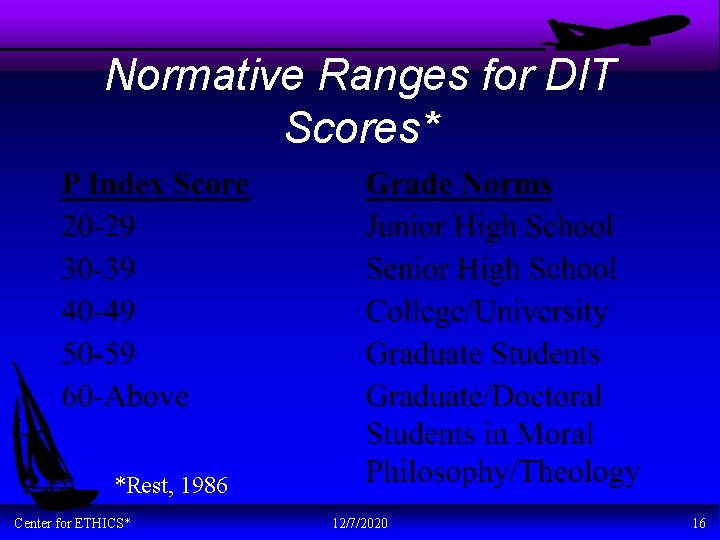
Normative Ranges for DIT Scores* *Rest, 1986 Center for ETHICS* 12/7/2020 16
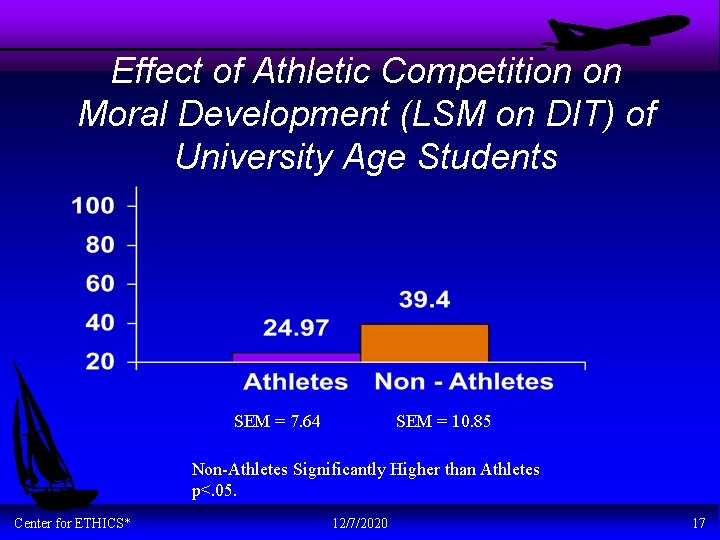
Effect of Athletic Competition on Moral Development (LSM on DIT) of University Age Students SEM = 7. 64 SEM = 10. 85 Non-Athletes Significantly Higher than Athletes p<. 05. Center for ETHICS* 12/7/2020 17
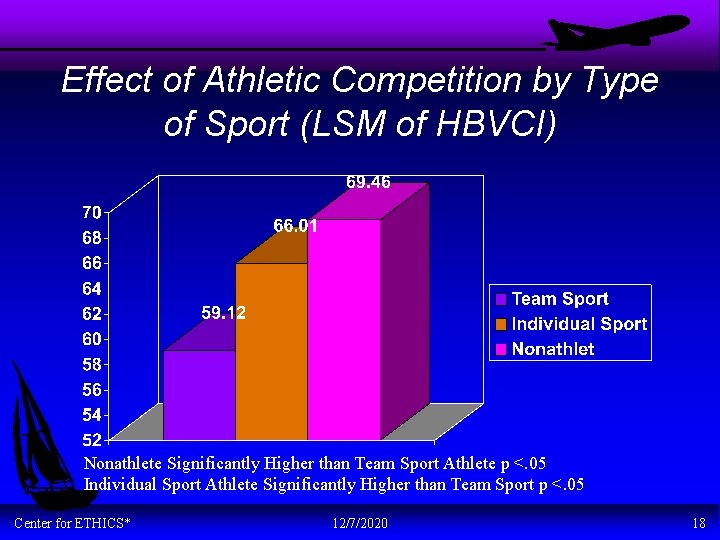
Effect of Athletic Competition by Type of Sport (LSM of HBVCI) Nonathlete Significantly Higher than Team Sport Athlete p <. 05 Individual Sport Athlete Significantly Higher than Team Sport p <. 05 Center for ETHICS* 12/7/2020 18
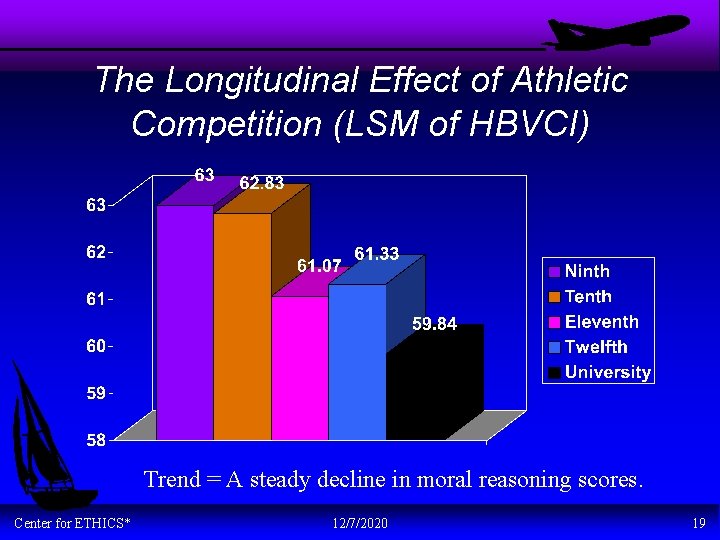
The Longitudinal Effect of Athletic Competition (LSM of HBVCI) Trend = A steady decline in moral reasoning scores. Center for ETHICS* 12/7/2020 19
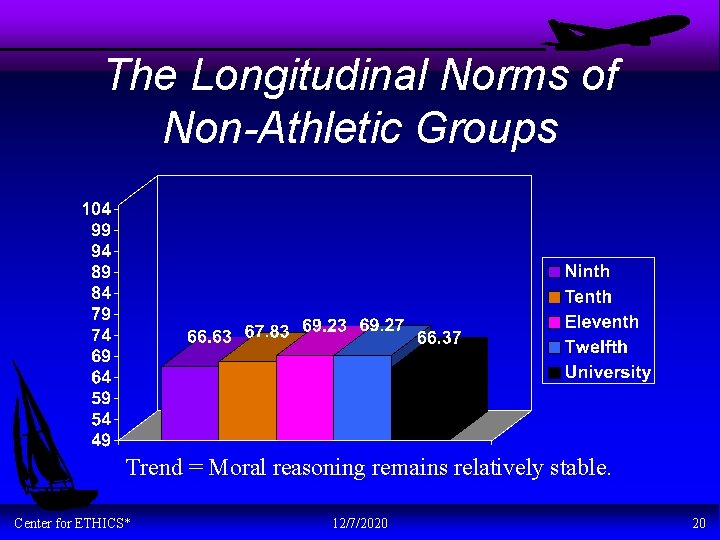
The Longitudinal Norms of Non-Athletic Groups Trend = Moral reasoning remains relatively stable. Center for ETHICS* 12/7/2020 20
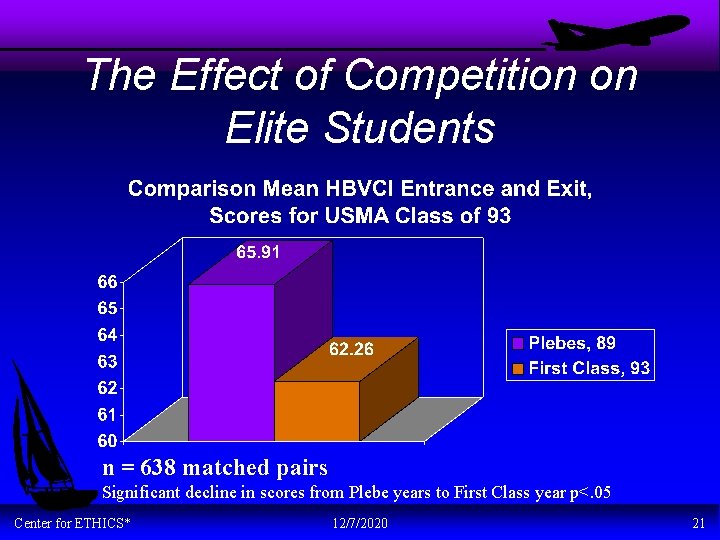
The Effect of Competition on Elite Students n = 638 matched pairs Significant decline in scores from Plebe years to First Class year p<. 05 Center for ETHICS* 12/7/2020 21
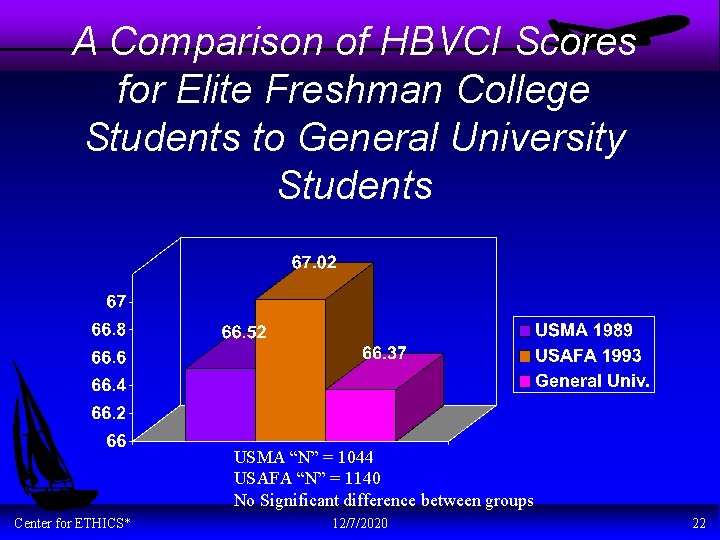
A Comparison of HBVCI Scores for Elite Freshman College Students to General University Students USMA “N” = 1044 USAFA “N” = 1140 No Significant difference between groups Center for ETHICS* 12/7/2020 22
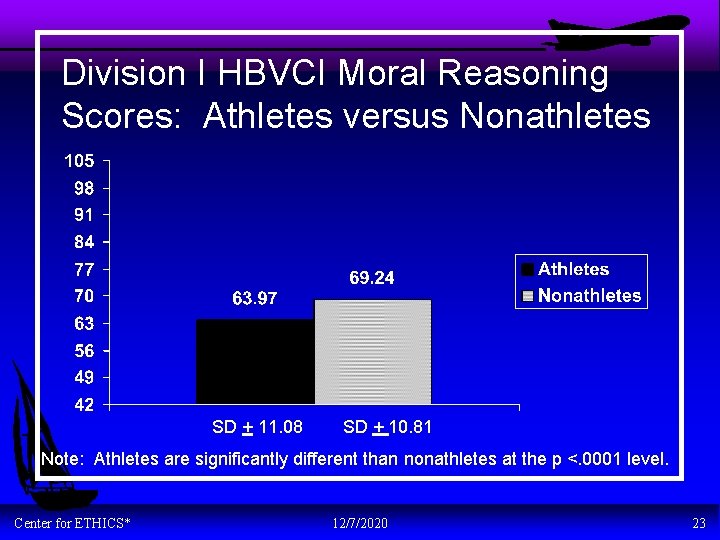
Division I HBVCI Moral Reasoning Scores: Athletes versus Nonathletes SD + 11. 08 SD + 10. 81 Note: Athletes are significantly different than nonathletes at the p <. 0001 level. Center for ETHICS* 12/7/2020 23
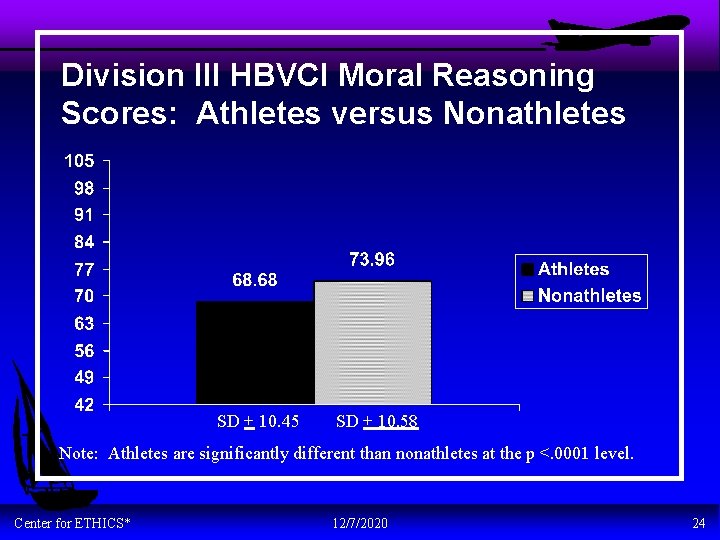
Division III HBVCI Moral Reasoning Scores: Athletes versus Nonathletes SD + 10. 45 SD + 10. 58 Note: Athletes are significantly different than nonathletes at the p <. 0001 level. Center for ETHICS* 12/7/2020 24
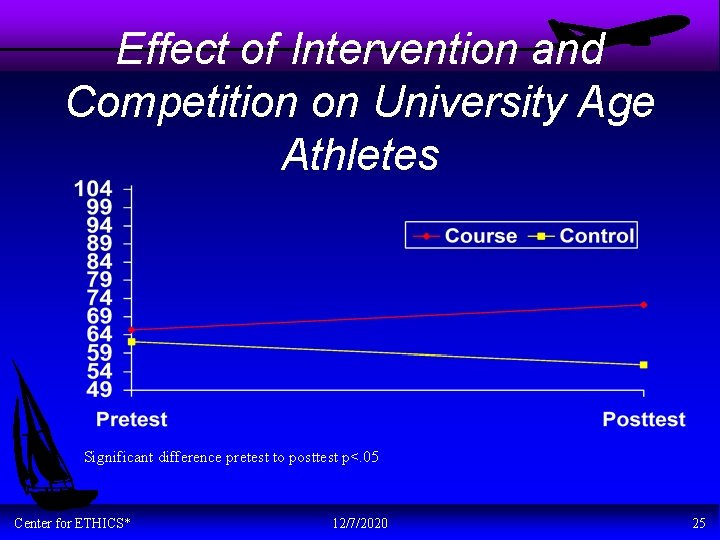
Effect of Intervention and Competition on University Age Athletes Significant difference pretest to posttest p<. 05 Center for ETHICS* 12/7/2020 25
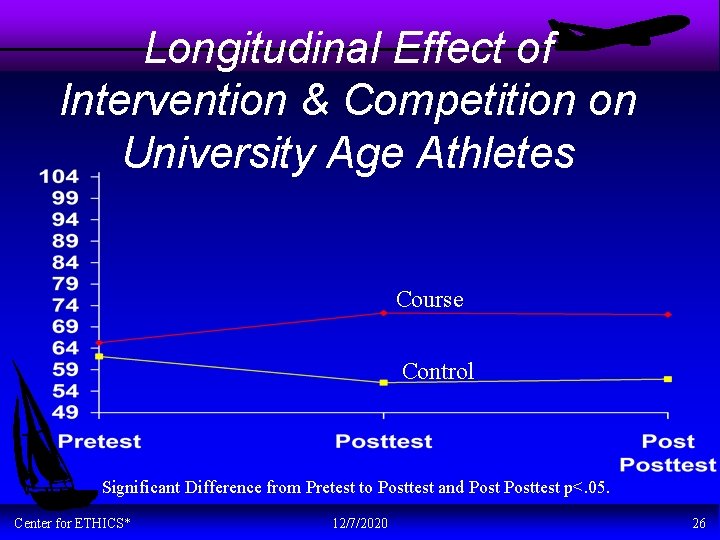
Longitudinal Effect of Intervention & Competition on University Age Athletes Course Control Significant Difference from Pretest to Posttest and Posttest p<. 05. Center for ETHICS* 12/7/2020 26
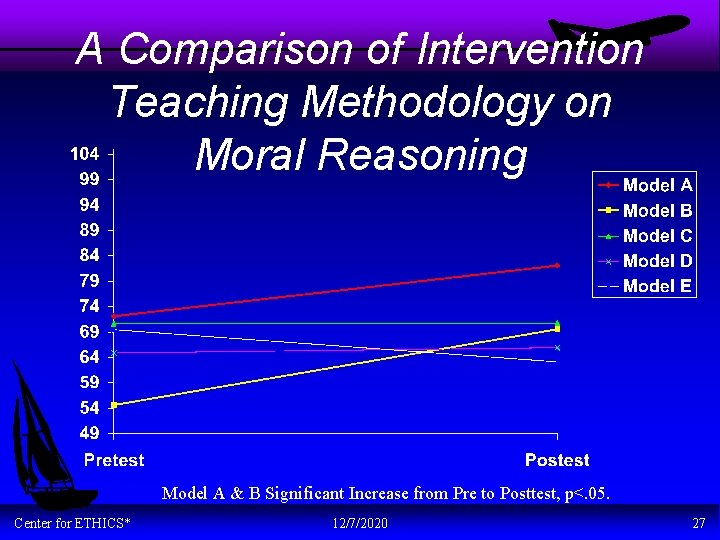
A Comparison of Intervention Teaching Methodology on Moral Reasoning Model A & B Significant Increase from Pre to Posttest, p<. 05. Center for ETHICS* 12/7/2020 27
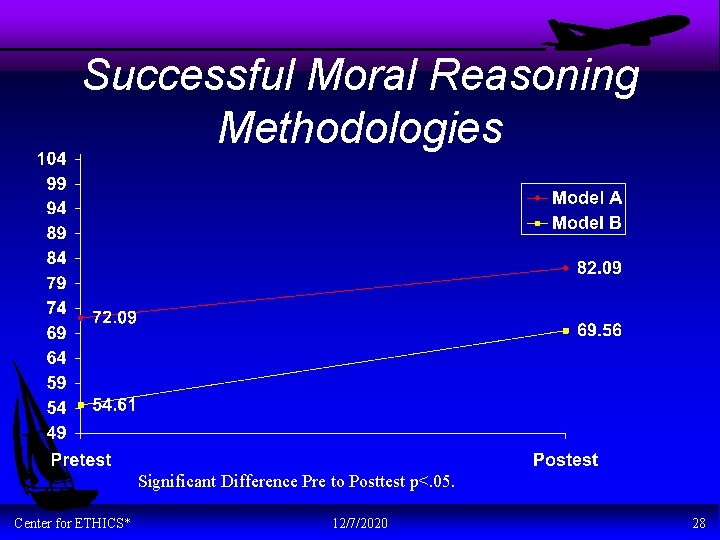
Successful Moral Reasoning Methodologies Significant Difference Pre to Posttest p<. 05. Center for ETHICS* 12/7/2020 28
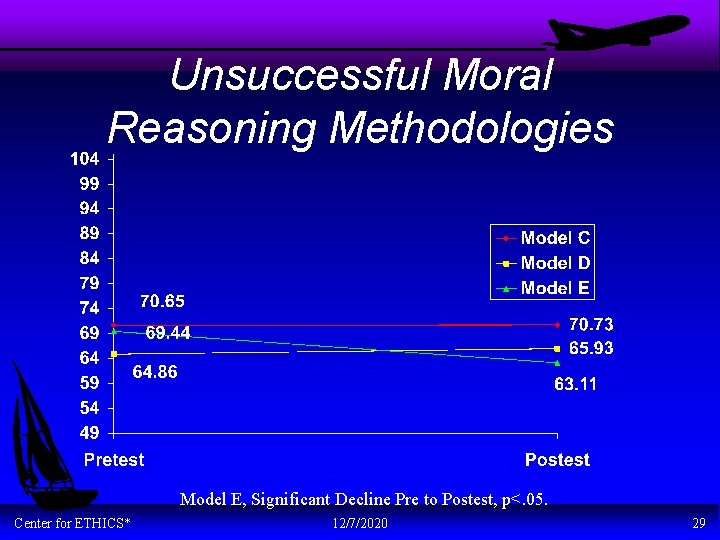
Unsuccessful Moral Reasoning Methodologies Model E, Significant Decline Pre to Postest, p<. 05. Center for ETHICS* 12/7/2020 29