
What is classification the grouping of objects or
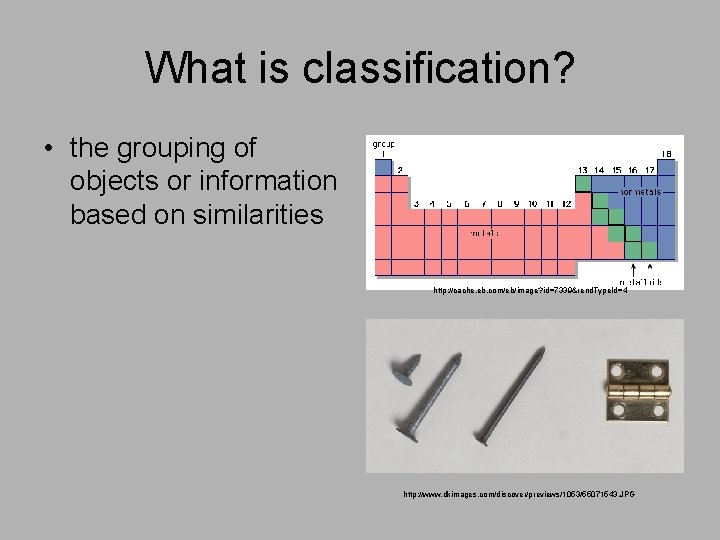
What is classification? • the grouping of objects or information based on similarities http: //cache. eb. com/eb/image? id=7339&rend. Type. Id=4 http: //www. dkimages. com/discover/previews/1053/55071543. JPG
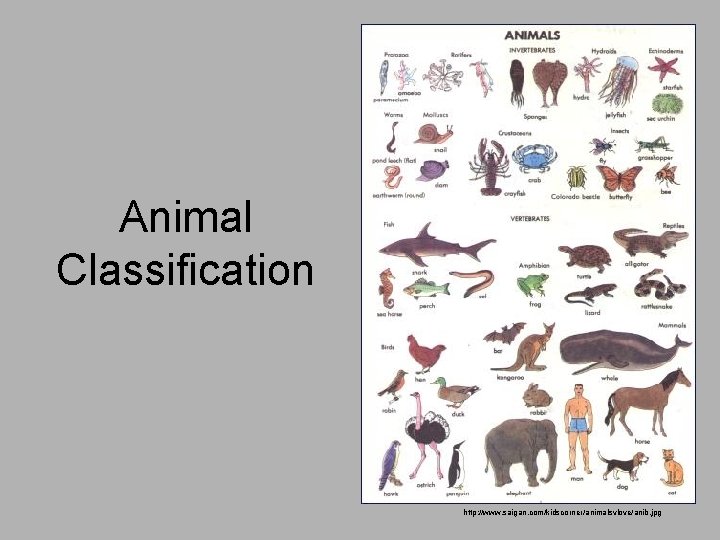
Animal Classification http: //www. saigan. com/kidscorner/animalsvlove/anib. jpg
What is taxonomy? • the branch of biology that groups or names organisms based on the study of their different characteristics
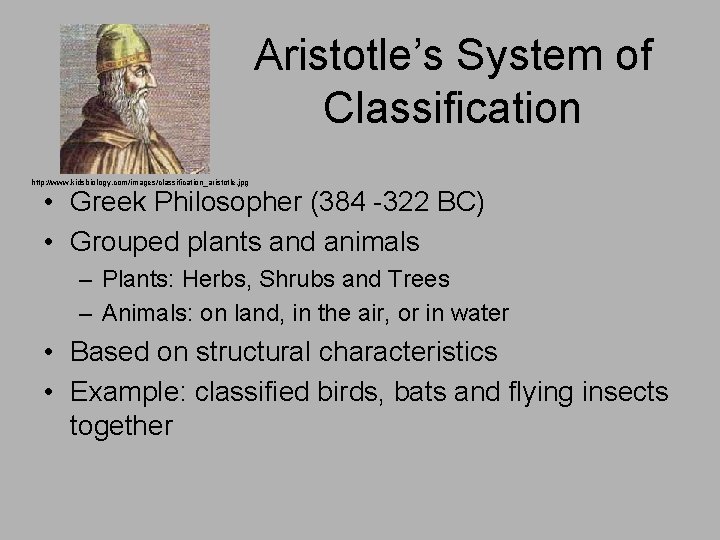
Aristotle’s System of Classification http: //www. kidsbiology. com/images/classification_aristotle. jpg • Greek Philosopher (384 -322 BC) • Grouped plants and animals – Plants: Herbs, Shrubs and Trees – Animals: on land, in the air, or in water • Based on structural characteristics • Example: classified birds, bats and flying insects together
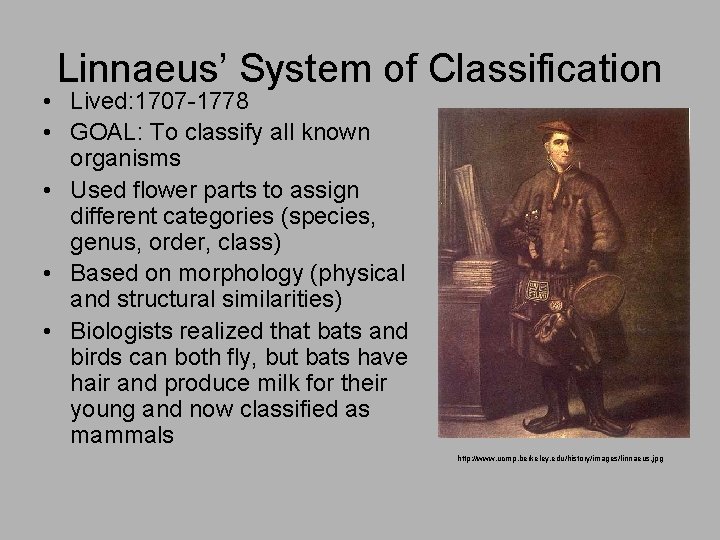
Linnaeus’ System of Classification • Lived: 1707 -1778 • GOAL: To classify all known organisms • Used flower parts to assign different categories (species, genus, order, class) • Based on morphology (physical and structural similarities) • Biologists realized that bats and birds can both fly, but bats have hair and produce milk for their young and now classified as mammals http: //www. ucmp. berkeley. edu/history/images/linnaeus. jpg
Binomial Nomenclature • Bi- means 2 • Nom- means name
Binomial Nomenclature • In Latin or Greek • Genus species • Genus means plural or genera and consists of a group of similar species • Species describes a characteristic of the organism • Genus is capitalized and species is lowercase • If written (underline) or if typed (italics)
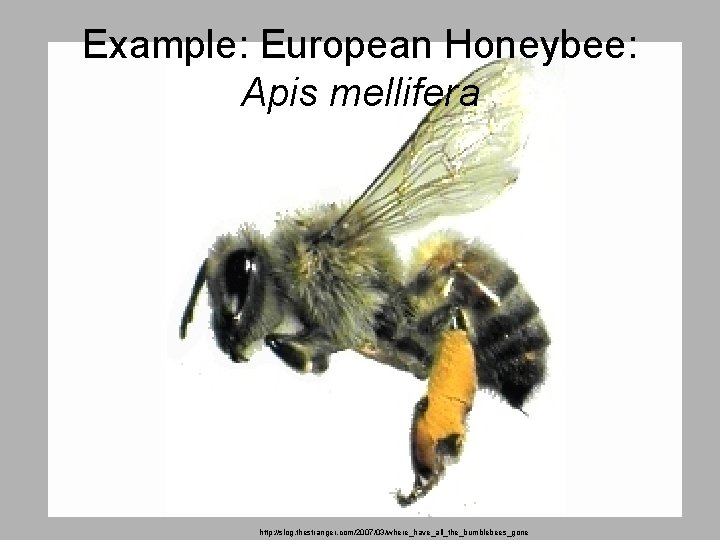
Example: European Honeybee: Apis mellifera http: //slog. thestranger. com/2007/03/where_have_all_the_bumblebees_gone
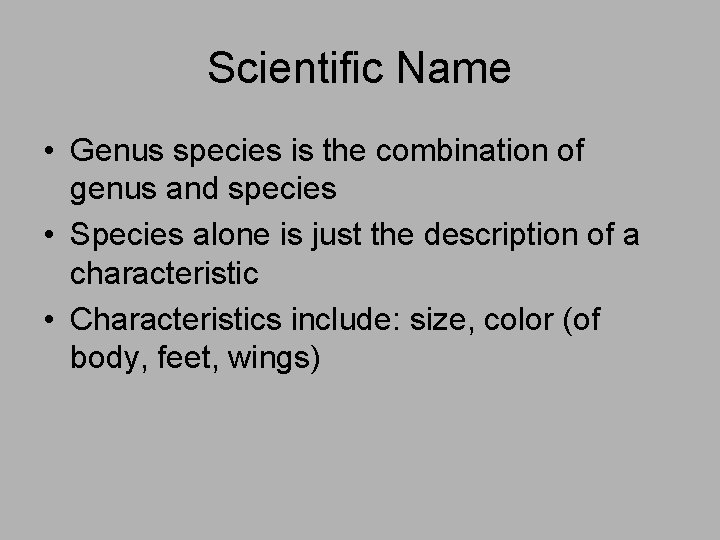
Scientific Name • Genus species is the combination of genus and species • Species alone is just the description of a characteristic • Characteristics include: size, color (of body, feet, wings)
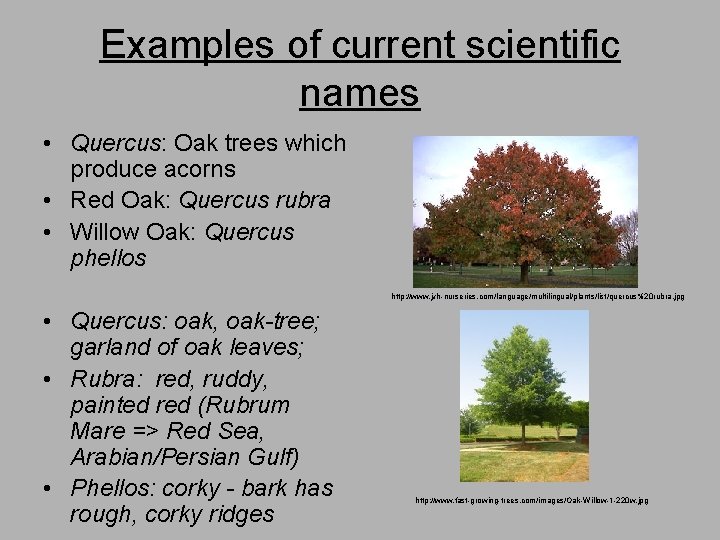
Examples of current scientific names • Quercus: Oak trees which produce acorns • Red Oak: Quercus rubra • Willow Oak: Quercus phellos http: //www. jvh-nurseries. com/language/multilingual/plants/list/quercus%20 rubra. jpg • Quercus: oak, oak-tree; garland of oak leaves; • Rubra: red, ruddy, painted red (Rubrum Mare => Red Sea, Arabian/Persian Gulf) • Phellos: corky - bark has rough, corky ridges http: //www. fast-growing-trees. com/images/Oak-Willow-1 -220 w. jpg
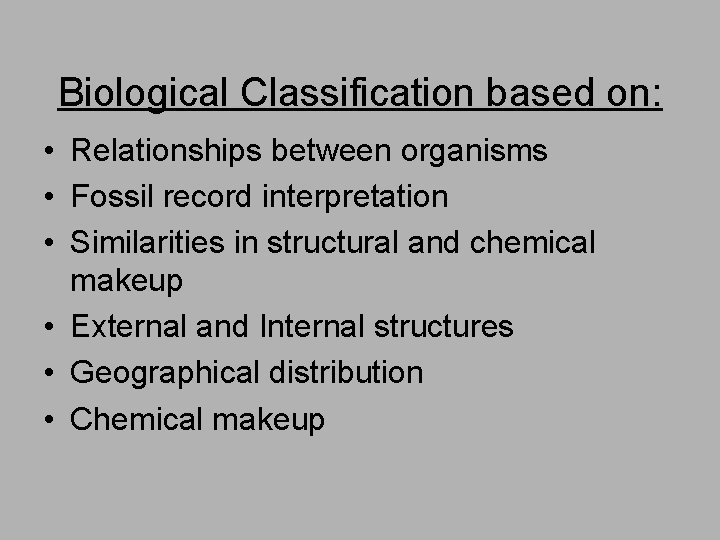
Biological Classification based on: • Relationships between organisms • Fossil record interpretation • Similarities in structural and chemical makeup • External and Internal structures • Geographical distribution • Chemical makeup
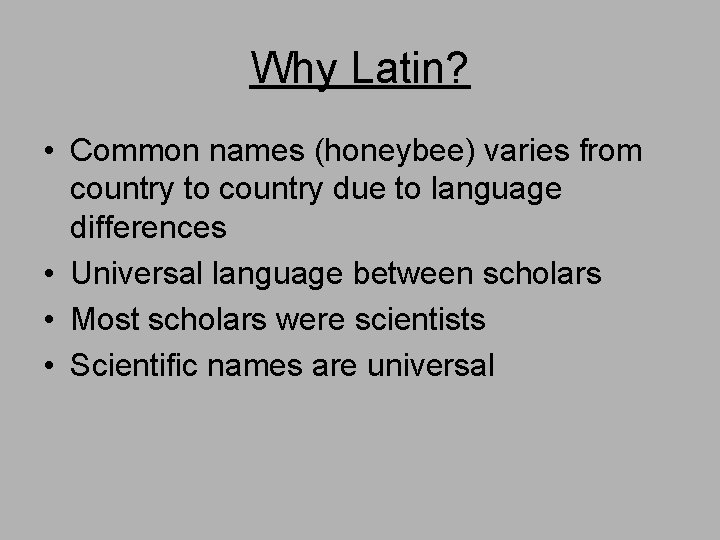
Why Latin? • Common names (honeybee) varies from country to country due to language differences • Universal language between scholars • Most scholars were scientists • Scientific names are universal
The Six Kingdoms 17. 2
Types of characteristics used in classification: • • Morphology Embryology Chromosomes Biochemistry Physiology Phylogeny Biosystematics
Morphology • Structure and anatomy; Reflects evolutionary relationships
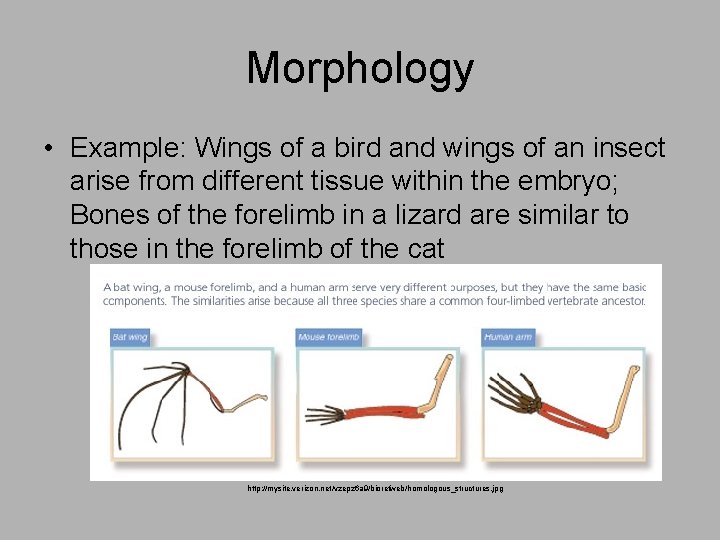
Morphology • Example: Wings of a bird and wings of an insect arise from different tissue within the embryo; Bones of the forelimb in a lizard are similar to those in the forelimb of the cat http: //mysite. verizon. net/vzepz 6 a 9/biorefweb/homologous_structures. jpg
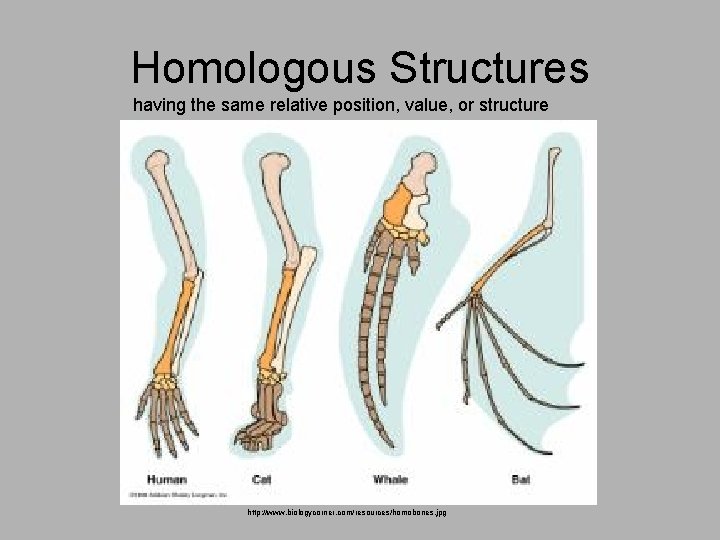
Homologous Structures having the same relative position, value, or structure http: //www. biologycorner. com/resources/homobones. jpg
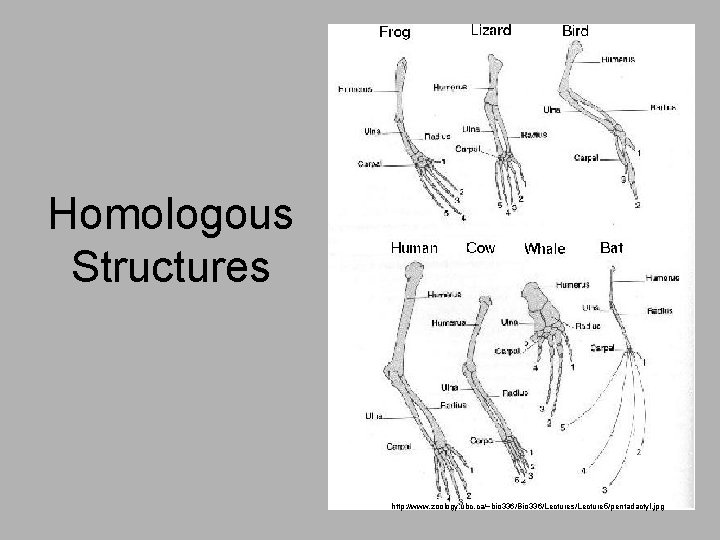
Homologous Structures http: //www. zoology. ubc. ca/~bio 336/Bio 336/Lectures/Lecture 5/pentadactyl. jpg
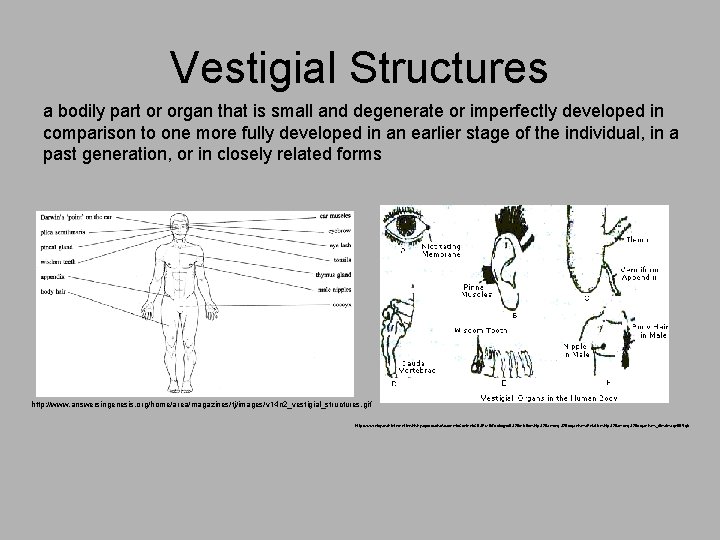
Vestigial Structures a bodily part or organ that is small and degenerate or imperfectly developed in comparison to one more fully developed in an earlier stage of the individual, in a past generation, or in closely related forms http: //www. answersingenesis. org/home/area/magazines/tj/images/v 14 n 2_vestigial_structures. gif http: //www. vidyavahini. ernet. in/shishya/products/Academic. Content/CBSE/XII/Zoology/xii%20 relationship%20 among%20 organisms/Relationship%20 among%20 organisms_files/image 005. gif
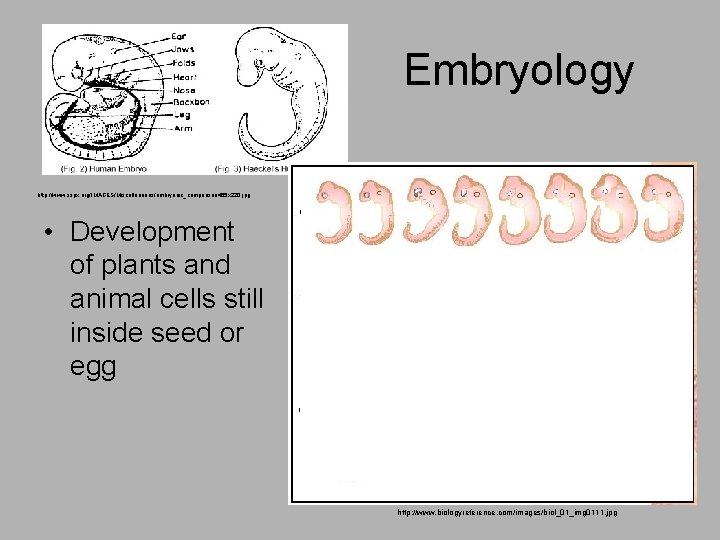
Embryology http: //www. sspx. org/IMAGES/Miscellaneous/embryonic_comparison 455 x 220. jpg • Development of plants and animal cells still inside seed or egg http: //www. biologyreference. com/images/biol_01_img 0111. jpg
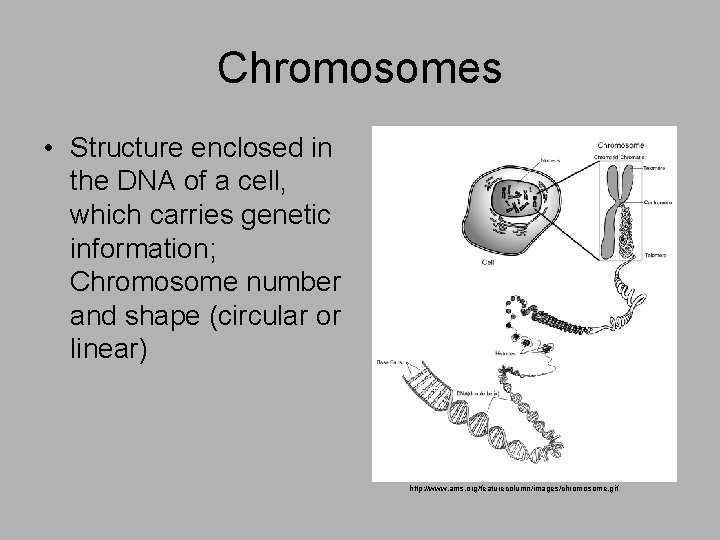
Chromosomes • Structure enclosed in the DNA of a cell, which carries genetic information; Chromosome number and shape (circular or linear) http: //www. ams. org/featurecolumn/images/chromosome. gif
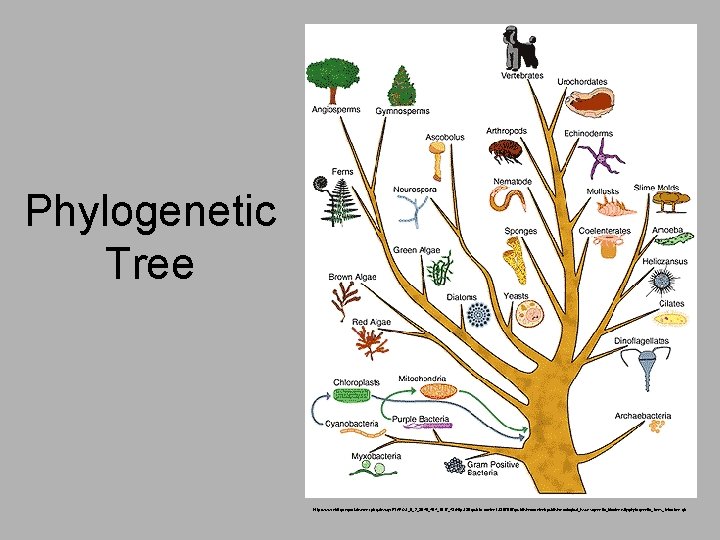
Phylogenetic Tree http: //www. nbii. gov/portal/server. pt/gateway/PTARGS_0_2_3846_404_1617_43/http%3 B/public-content%3 B 7087/publishedcontent/publish/ecological_issues/genetic_biodiversity/phylogenetic_trees_intro/tree. gif
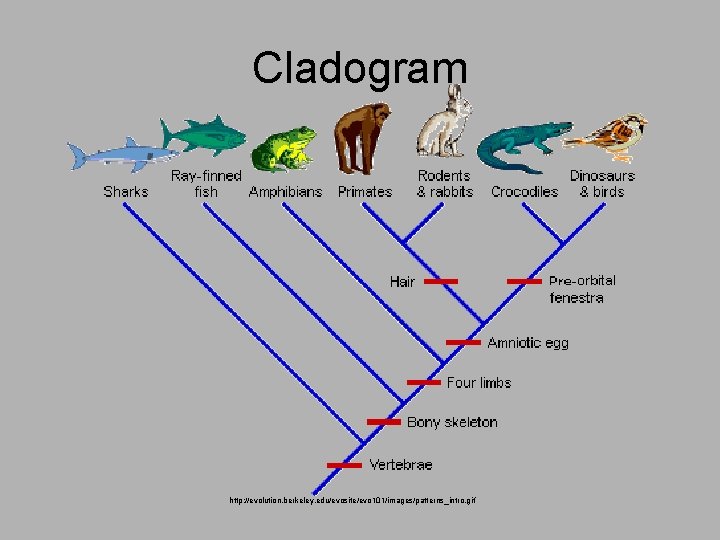
Cladogram http: //evolution. berkeley. edu/evosite/evo 101/images/patterns_intro. gif
Biochemistry • Chemical make-up of the body and its systems; Metabolism; Sequence of nucleotide bases (DNA); Comparing: Proteins, amino acids sequences, DNA and RNA
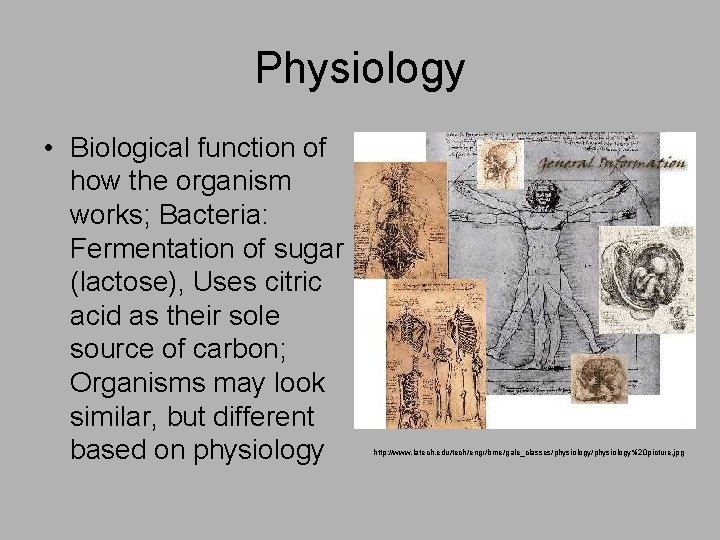
Physiology • Biological function of how the organism works; Bacteria: Fermentation of sugar (lactose), Uses citric acid as their sole source of carbon; Organisms may look similar, but different based on physiology http: //www. latech. edu/tech/engr/bme/gale_classes/physiology%20 picture. jpg
Phylogeny • Evolutionary history; Line of evolutionary descent; How organisms have evolved; Characteristics based upon the same characteristics (by ancestry); GOAL: to produce classification system that is easy to use and informative regarding patterns of evolution.
Biosystematics • Reproductive compatibility and gene flow; Classification hierarchy; Determined by similar characteristics; Characteristics: structural, chromosomal, or molecular feature distinguishing one group from another
Know the classification hierarchy: • Kingdom-Phylum-Class-Order-Family-Genus-Species • Least Similar……to……Most Similar
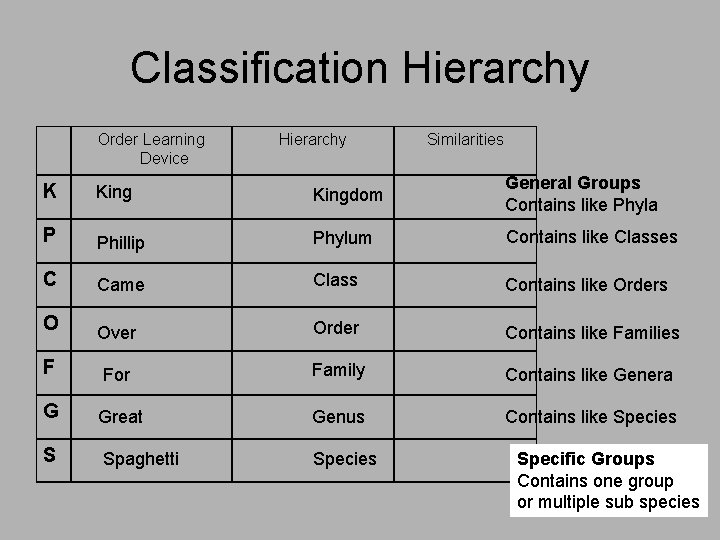
Classification Hierarchy Order Learning Device Hierarchy Similarities K Kingdom General Groups Contains like Phyla P Phillip Phylum Contains like Classes C Came Class Contains like Orders O Over Order Contains like Families F For Family Contains like Genera G Great Genus Contains like Species S Spaghetti Species Specific Groups Contains one group or multiple sub species
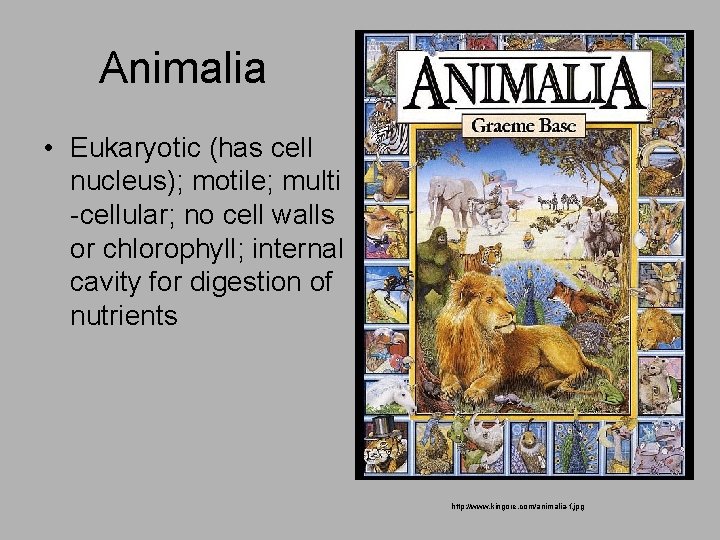
Animalia • Eukaryotic (has cell nucleus); motile; multi -cellular; no cell walls or chlorophyll; internal cavity for digestion of nutrients http: //www. kingore. com/animalia-f. jpg
Chordata • Dorsal hollow nerve cord, notochord, and pharyngeal pouches
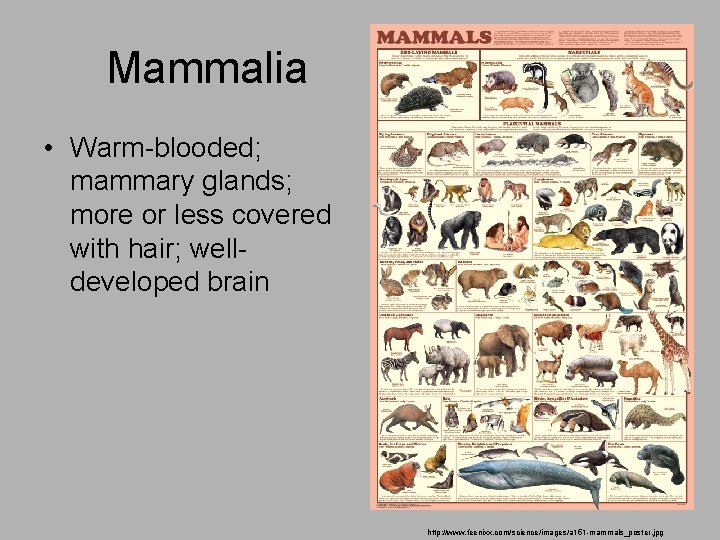
Mammalia • Warm-blooded; mammary glands; more or less covered with hair; welldeveloped brain http: //www. feenixx. com/science/images/a 151 -mammals_poster. jpg
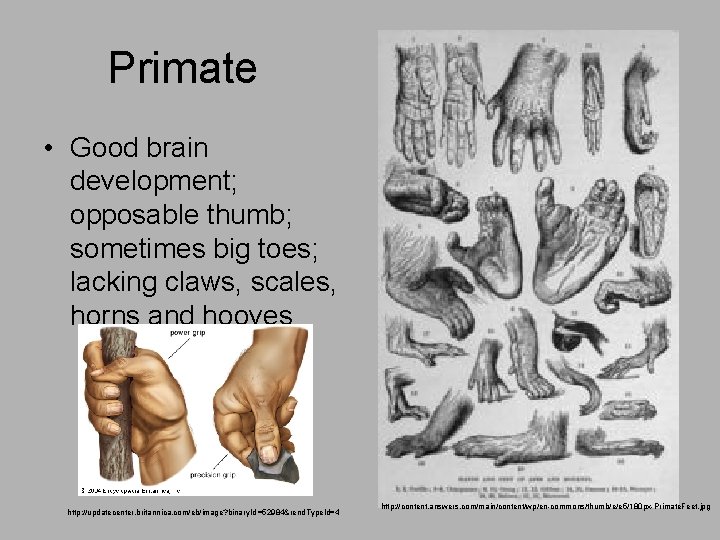
Primate • Good brain development; opposable thumb; sometimes big toes; lacking claws, scales, horns and hooves http: //updatecenter. britannica. com/eb/image? binary. Id =52984&rend. Type. Id=4 http: //content. answers. com/main/content/wp/en-commons/thumb/e/e 5/180 px-Primate. Feet. jpg
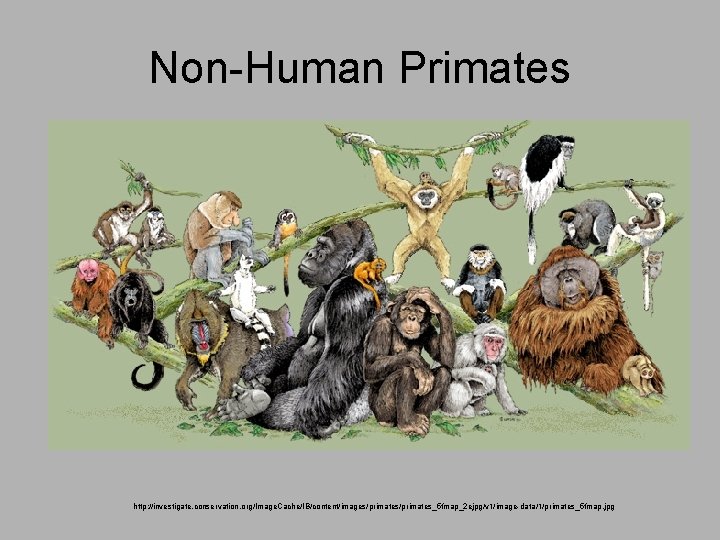
Non-Human Primates http: //investigate. conservation. org/Image. Cache/IB/content/images/primates_5 fmap_2 ejpg/v 1/image-data/1/primates_5 fmap. jpg
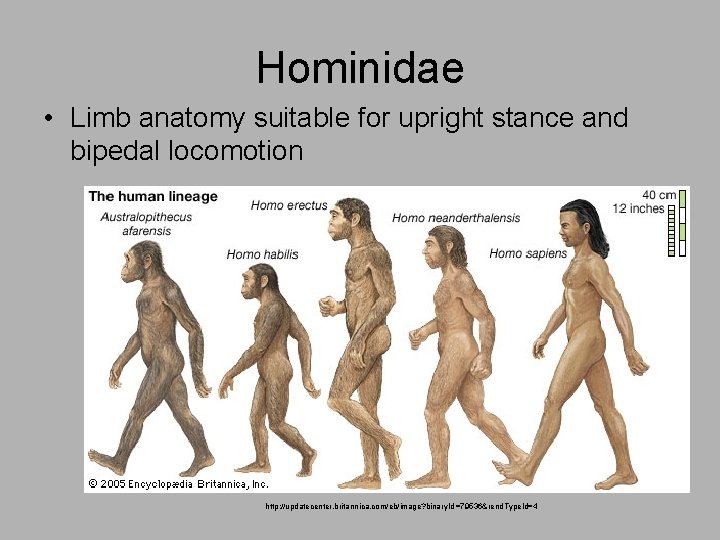
Hominidae • Limb anatomy suitable for upright stance and bipedal locomotion http: //updatecenter. britannica. com/eb/image? binary. Id =79536&rend. Type. Id=4
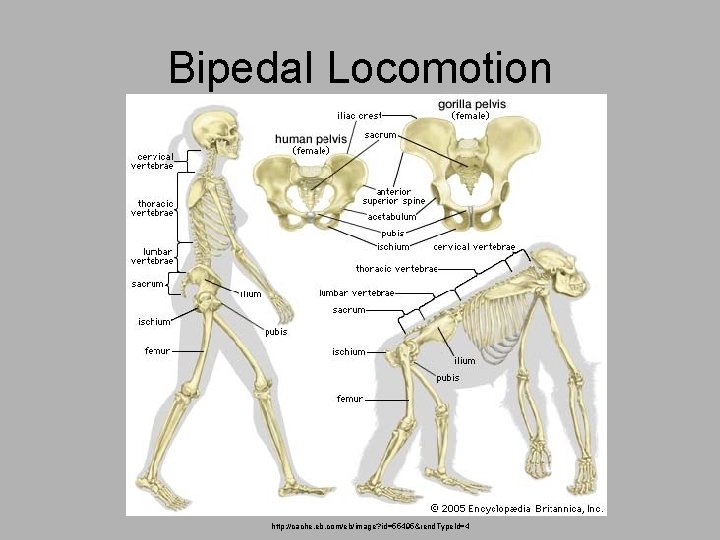
Bipedal Locomotion http: //cache. eb. com/eb/image? id=55495&rend. Type. Id=4
Homo • Maximum brain development (particular portions); Hand anatomy suitable for making tools
Homo sapiens • Body proportion of modern humans; speech centers of brain well-developed; sapiens means “wise”
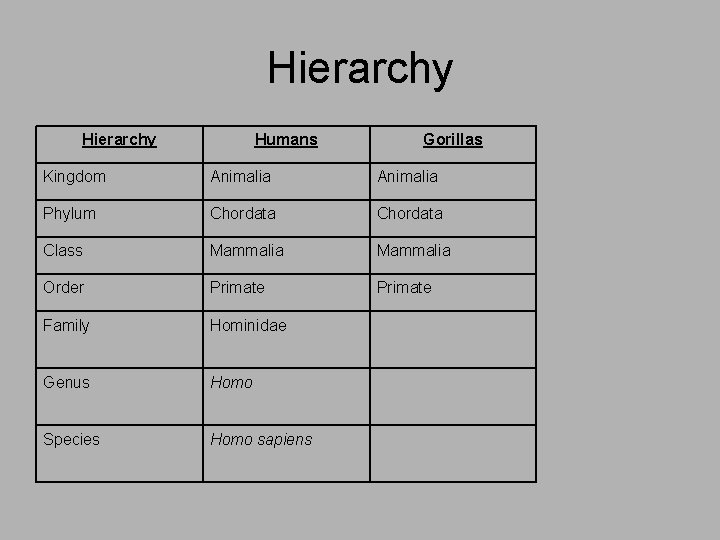
Hierarchy Humans Gorillas Kingdom Animalia Phylum Chordata Class Mammalia Order Primate Family Hominidae Genus Homo Species Homo sapiens
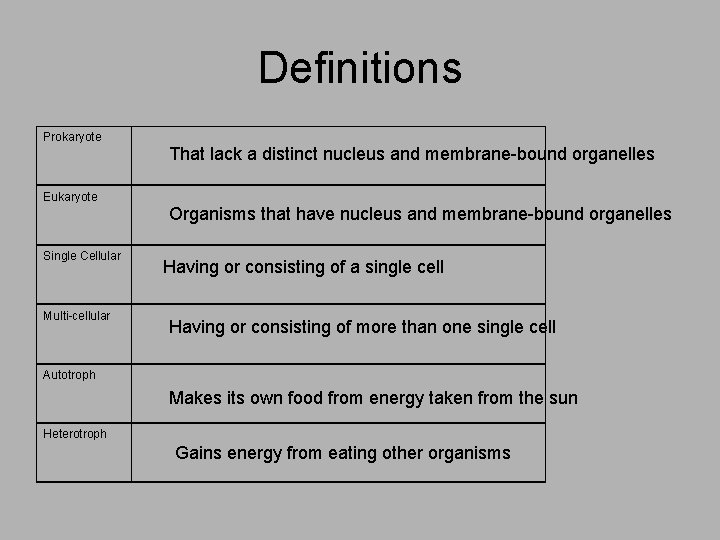
Definitions Prokaryote That lack a distinct nucleus and membrane-bound organelles Eukaryote Organisms that have nucleus and membrane-bound organelles Single Cellular Multi-cellular Having or consisting of a single cell Having or consisting of more than one single cell Autotroph Makes its own food from energy taken from the sun Heterotroph Gains energy from eating other organisms
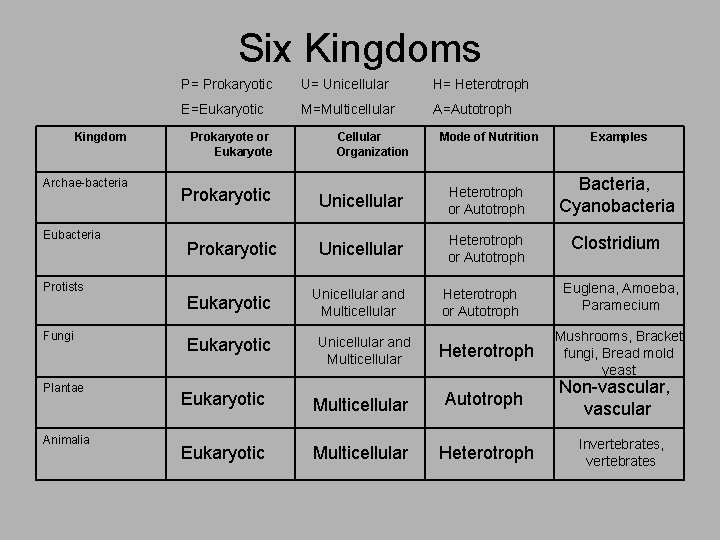
Six Kingdoms Kingdom Archae-bacteria Eubacteria Protists Fungi Plantae Animalia P= Prokaryotic U= Unicellular H= Heterotroph E=Eukaryotic M=Multicellular A=Autotroph Prokaryote or Eukaryote Mode of Nutrition Examples Unicellular Heterotroph or Autotroph Bacteria, Cyanobacteria Prokaryotic Unicellular Heterotroph or Autotroph Clostridium Eukaryotic Unicellular and Multicellular Prokaryotic Cellular Organization Heterotroph or Autotroph Unicellular and Multicellular Heterotroph Eukaryotic Multicellular Autotroph Eukaryotic Multicellular Heterotroph Eukaryotic Euglena, Amoeba, Paramecium Mushrooms, Bracket fungi, Bread mold yeast Non-vascular, vascular Invertebrates, vertebrates
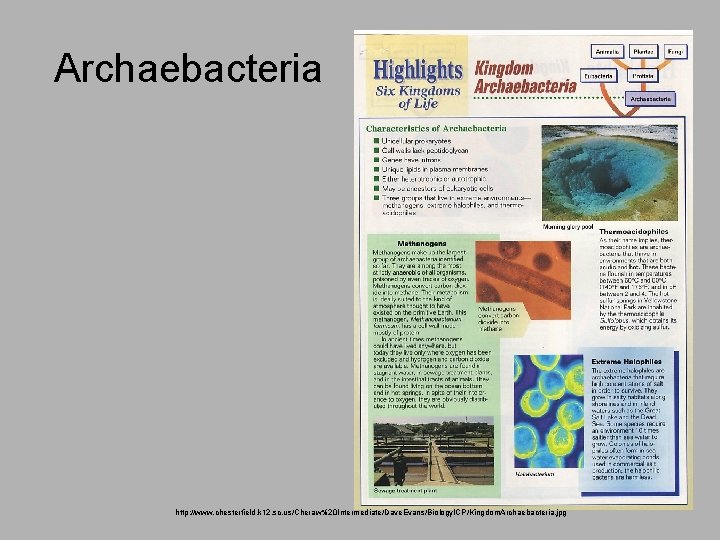
Archaebacteria http: //www. chesterfield. k 12. sc. us/Cheraw%20 Intermediate/Dave. Evans/Biology. ICP/Kingdom. Archaebacteria. jpg
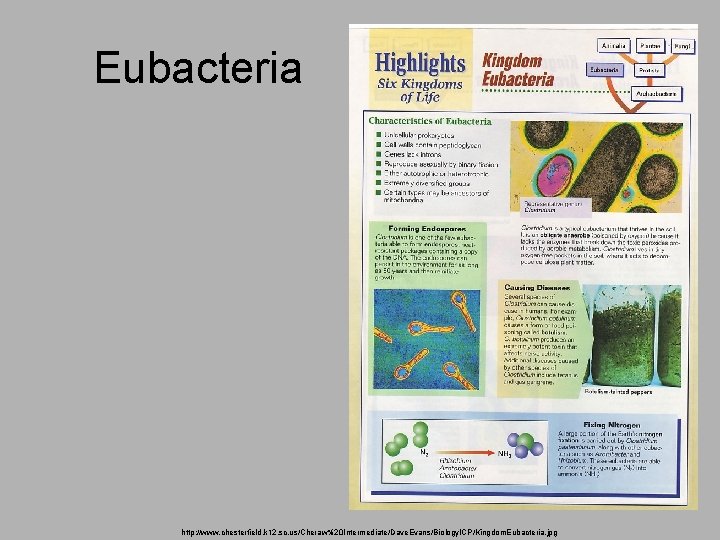
Eubacteria http: //www. chesterfield. k 12. sc. us/Cheraw%20 Intermediate/Dave. Evans/Biology. ICP/Kingdom. Eubacteria. jpg
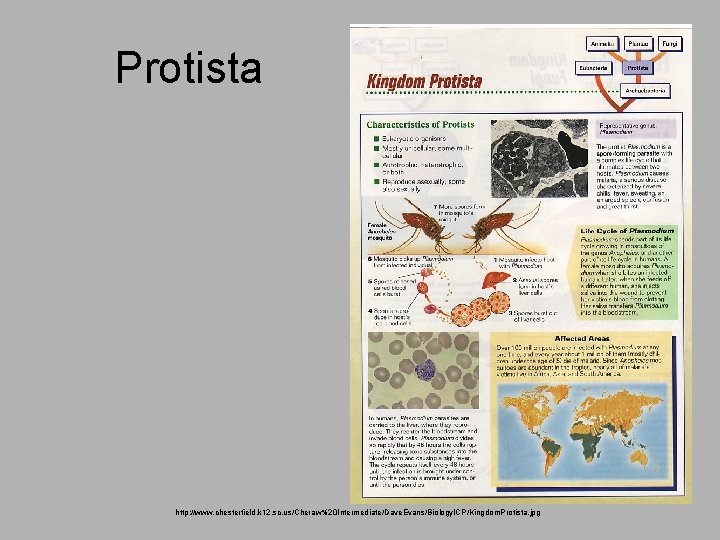
Protista http: //www. chesterfield. k 12. sc. us/Cheraw%20 Intermediate/Dave. Evans/Biology. ICP/Kingdom. Protista. jpg
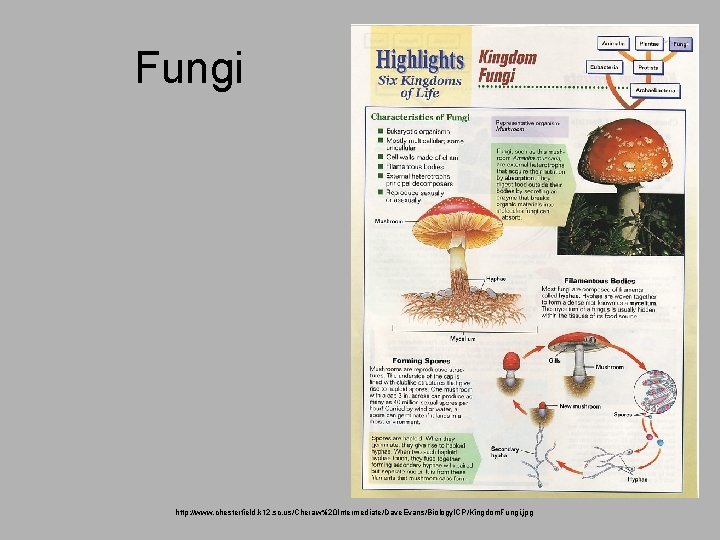
Fungi http: //www. chesterfield. k 12. sc. us/Cheraw%20 Intermediate/Dave. Evans/Biology. ICP/Kingdom. Fungi. jpg
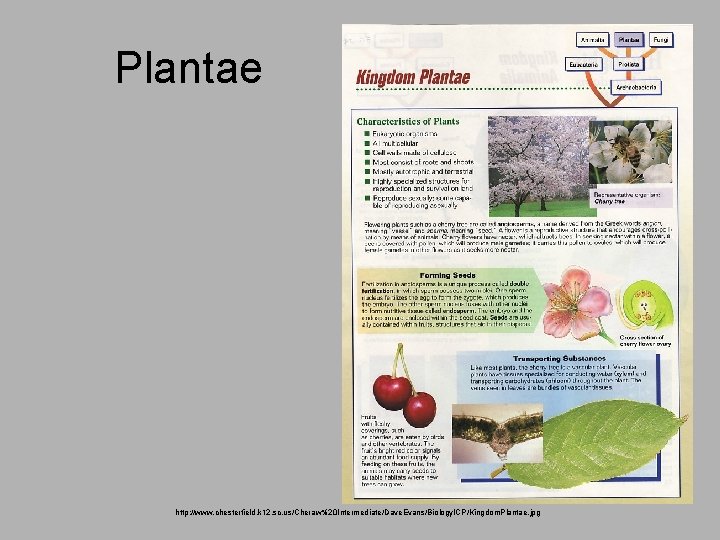
Plantae http: //www. chesterfield. k 12. sc. us/Cheraw%20 Intermediate/Dave. Evans/Biology. ICP/Kingdom. Plantae. jpg
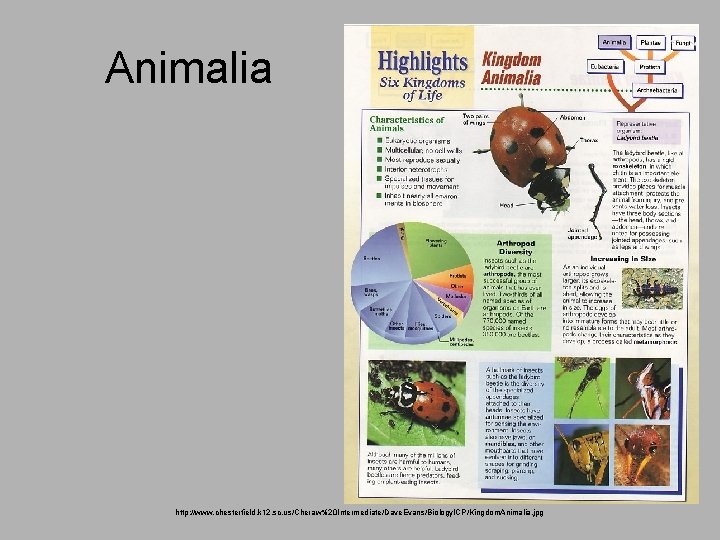
Animalia http: //www. chesterfield. k 12. sc. us/Cheraw%20 Intermediate/Dave. Evans/Biology. ICP/Kingdom. Animalia. jpg
- Slides: 47