
What is Biology aka Chapter 1 Biology and
What is Biology? aka. Chapter 1 Biology and You
The word Biology can be split into two parts: BIO = “LIFE” OLOGY = “THE STUDY OF…” …So, Biology is the study of life! life
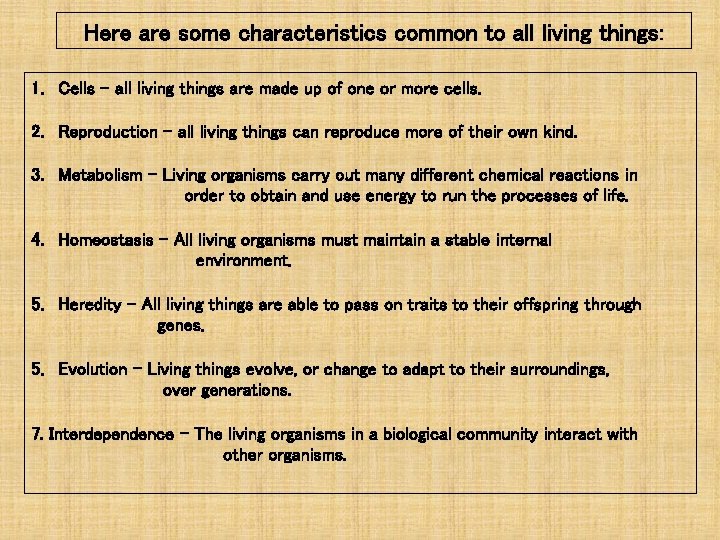
Here are some characteristics common to all living things: 1. Cells – all living things are made up of one or more cells. 2. Reproduction – all living things can reproduce more of their own kind. 3. Metabolism – Living organisms carry out many different chemical reactions in order to obtain and use energy to run the processes of life. 4. Homeostasis – All living organisms must maintain a stable internal environment. 5. Heredity – All living things are able to pass on traits to their offspring through genes. 5. Evolution – Living things evolve, or change to adapt to their surroundings, over generations. 7. Interdependence – The living organisms in a biological community interact with other organisms.
All life is organized: • All living things are made up of one or more cells. These tiny cells are highly organized structures with thin coverings called membranes. • A cell is the smallest unit capable of all life’s functions. • Some organisms have only one cell, while others have trillions, like us!
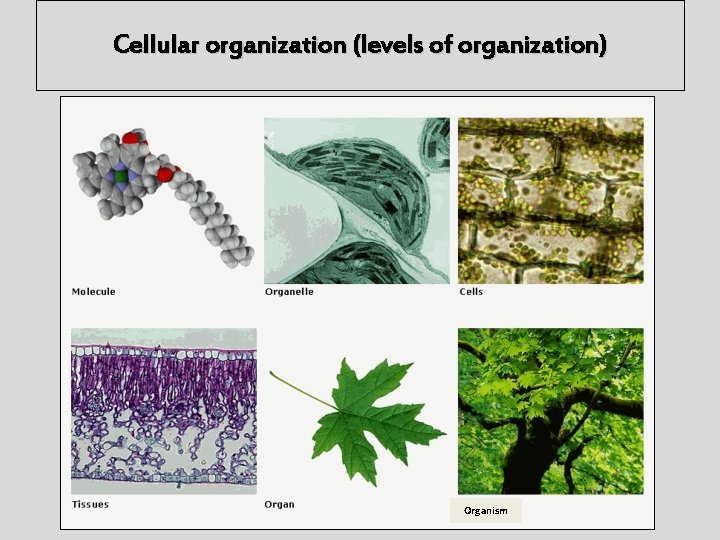
Cellular organization (levels of organization) Organism
All living things can reproduce: • This is the process by which organisms make more of their own kind from one generation to the next.
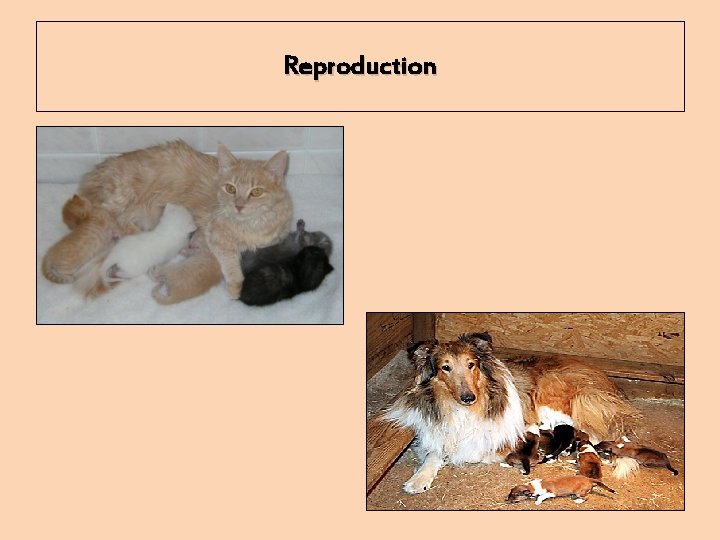
Reproduction
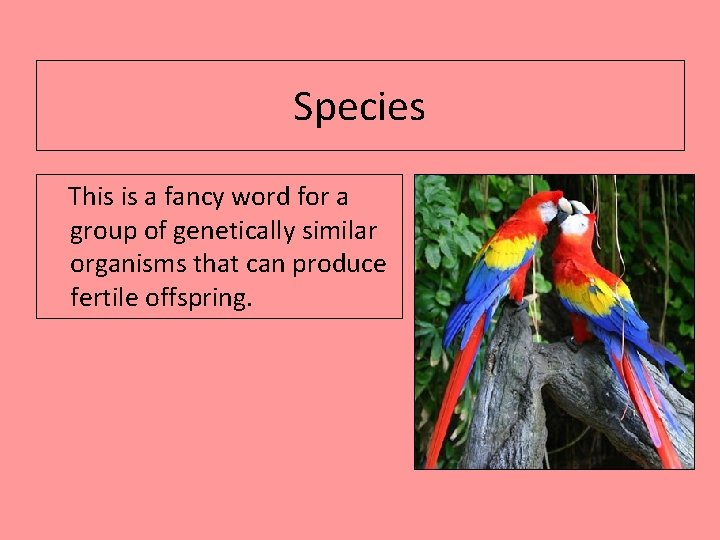
Species This is a fancy word for a group of genetically similar organisms that can produce fertile offspring.
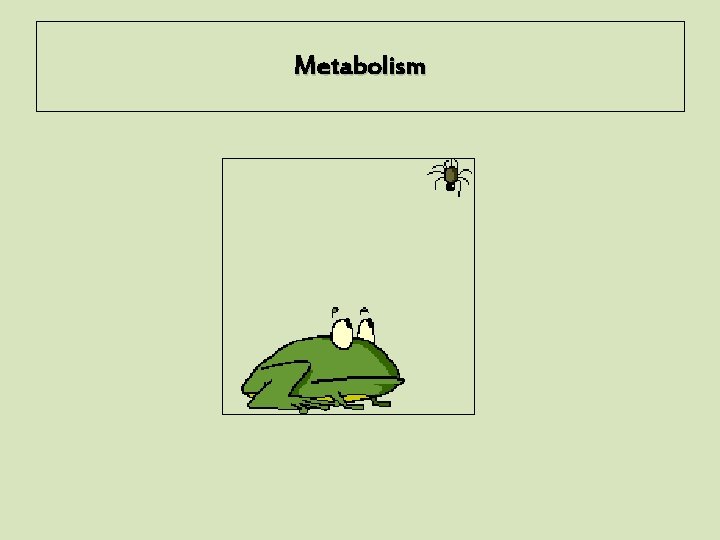
Living organisms carry out many chemical reactions: • All living things use energy to grow, move, process information, etc… • Many chemical reactions are needed in order to harvest energy from the food organisms eat. • The sum of all chemical reactions within an organism is called metabolism
Metabolism
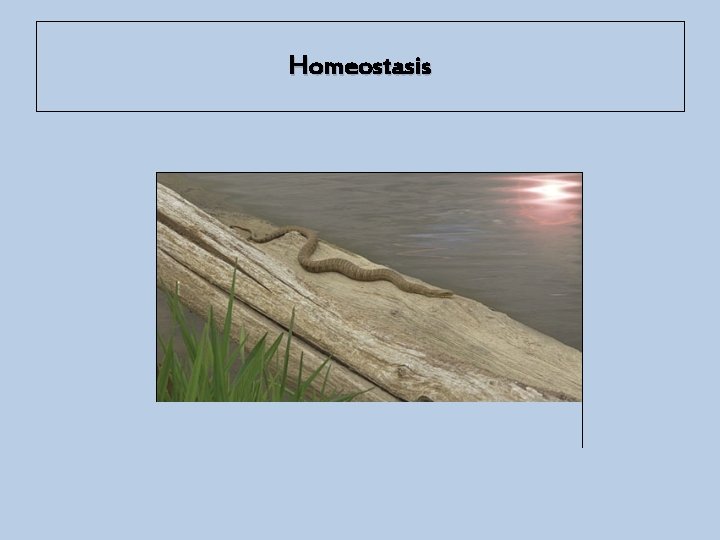
Stable living conditions: • All living organisms must maintain a stable internal environment in order to stay alive. They must do this even in spite of changes that occur outside of their bodies. • This process is called homeostasis
Homeostasis
Living organisms pass on their traits: • Passing of traits (or characteristics) from parent to offspring is called heredity • The basic unit of heredity is a gene This is a molecule of DNA, which determines what an organism will be.
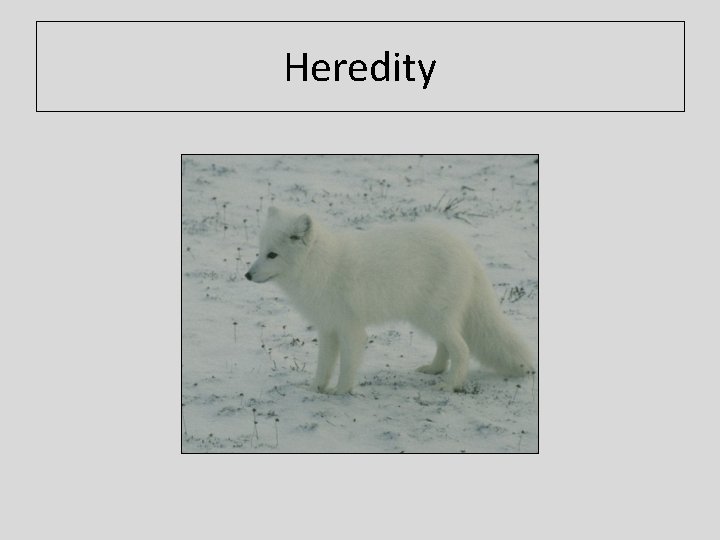
Heredity
Change or die! • If organisms cannot change in response to the ever changing conditions in the environment around them, then they will die. • When organisms change over generations, as a result of the passing on of favorable traits (ones that are more likely to ensure survival) to offspring, it is called evolution
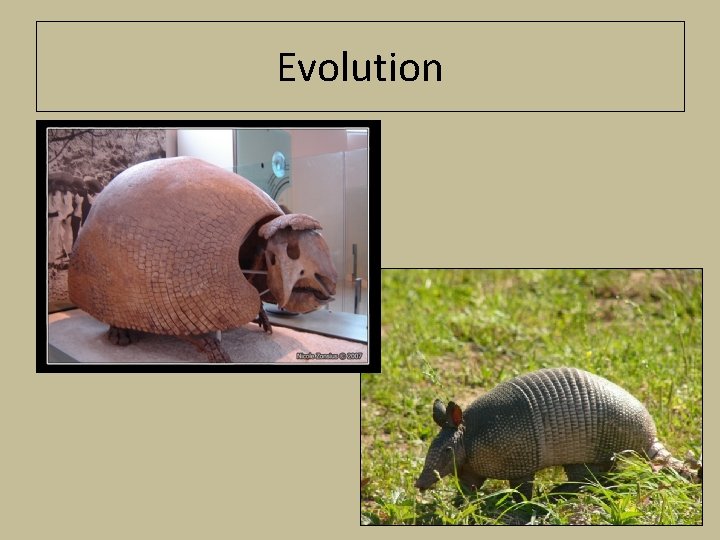
Evolution
Organisms interact with their “neighbors” in the environment: • A biological community is made up of thousands of organisms living together and interacting with one another in various ways. • This interaction of organisms is linked to the organisms’ way of life, etc… This relationship is called interdependence • Scientists who study the interactions of organisms within a community with one another and with the environment are called Ecologists

Natural Selection The process in which organisms with more favorable traits are more likely to survive and reproduce.
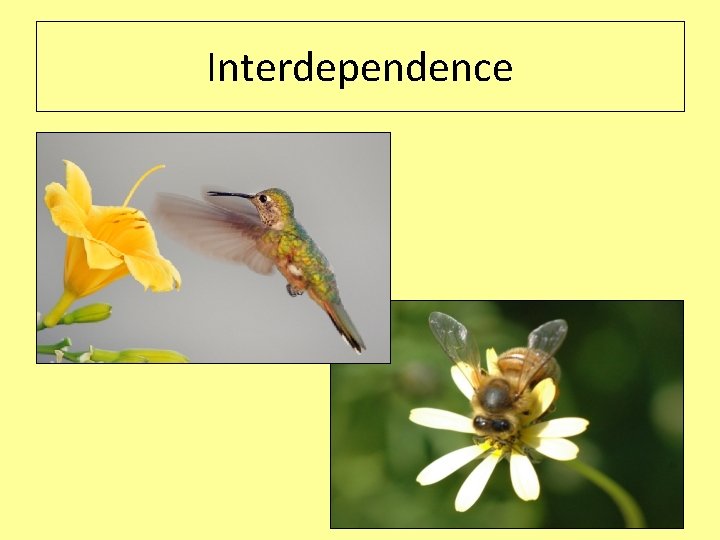
Interdependence
Solving some real world problems with biology: 1. Preserving our environment 2. Improving the food supply 3. Understanding the human genome 4. Fighting diseases 5. Gene therapy
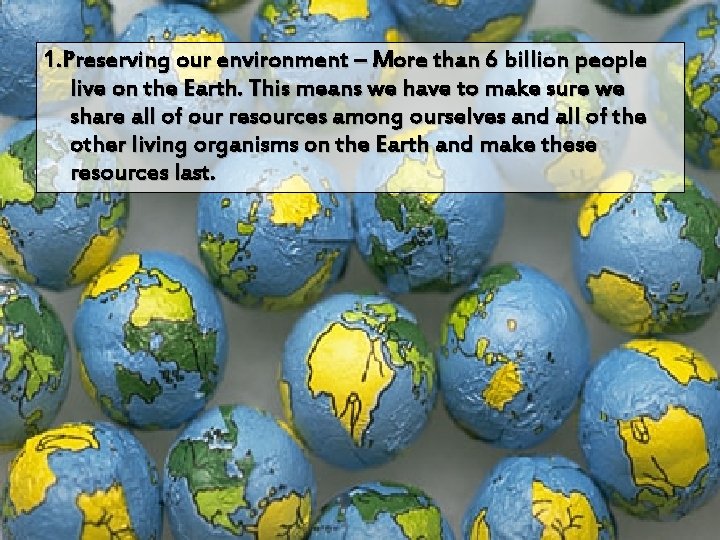
1. Preserving our environment – More than 6 billion people live on the Earth. This means we have to make sure we share all of our resources among ourselves and all of the other living organisms on the Earth and make these resources last.
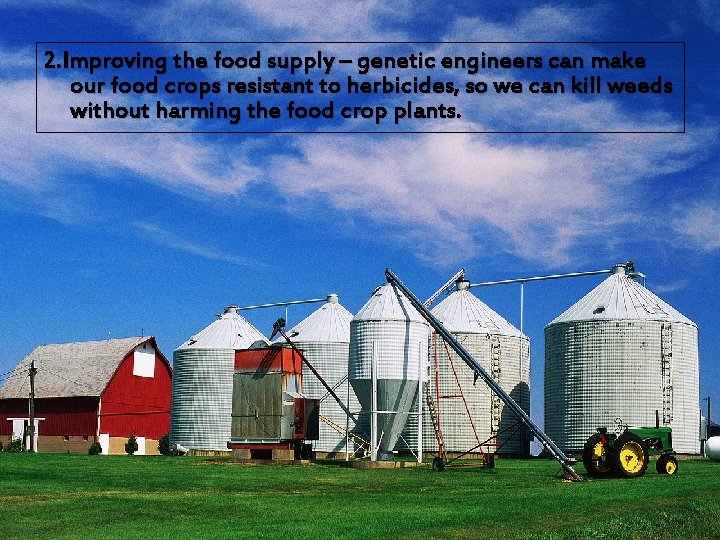
2. Improving the food supply – genetic engineers can make our food crops resistant to herbicides, so we can kill weeds without harming the food crop plants.
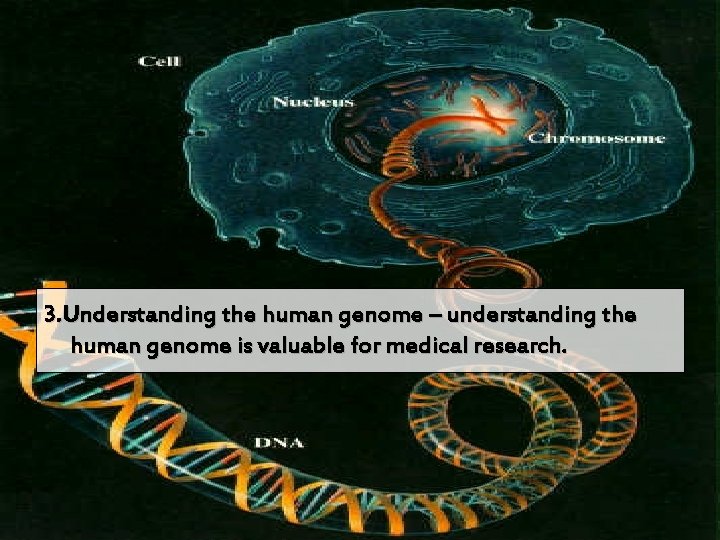
3. Understanding the human genome – understanding the human genome is valuable for medical research.
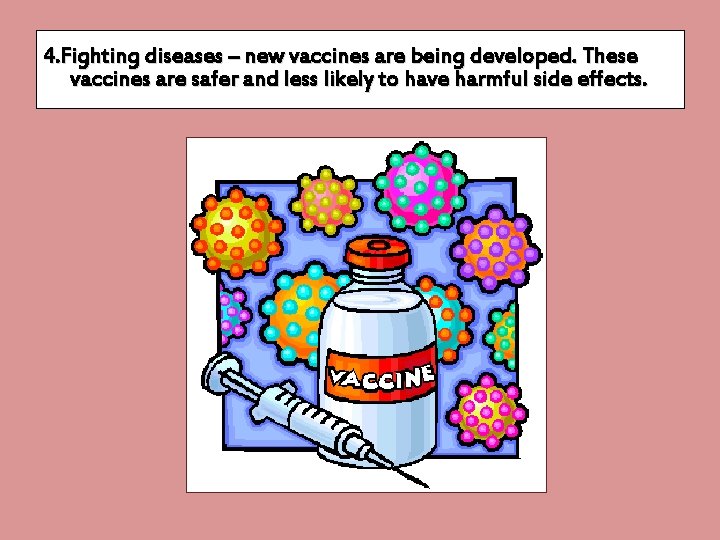
4. Fighting diseases – new vaccines are being developed. These vaccines are safer and less likely to have harmful side effects.
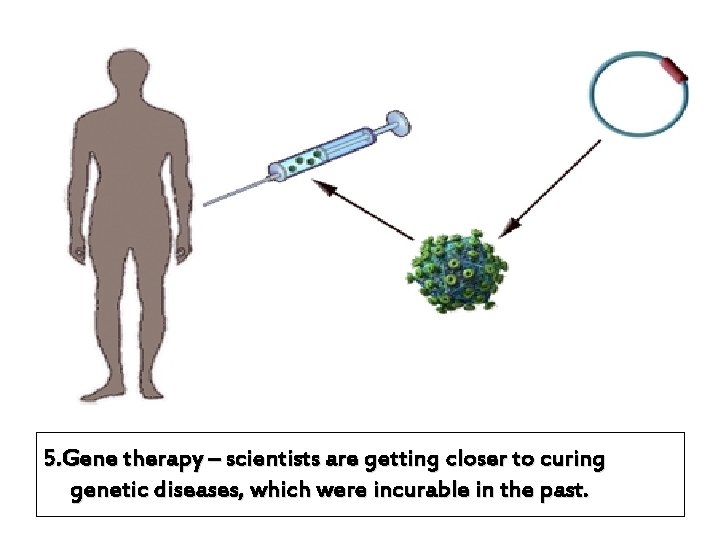
5. Gene therapy – scientists are getting closer to curing genetic diseases, which were incurable in the past.
The Scientific Method • • Collecting observations Asking questions Form a hypothesis Make a prediction Plan an experiment Obtain data Draw conclusions
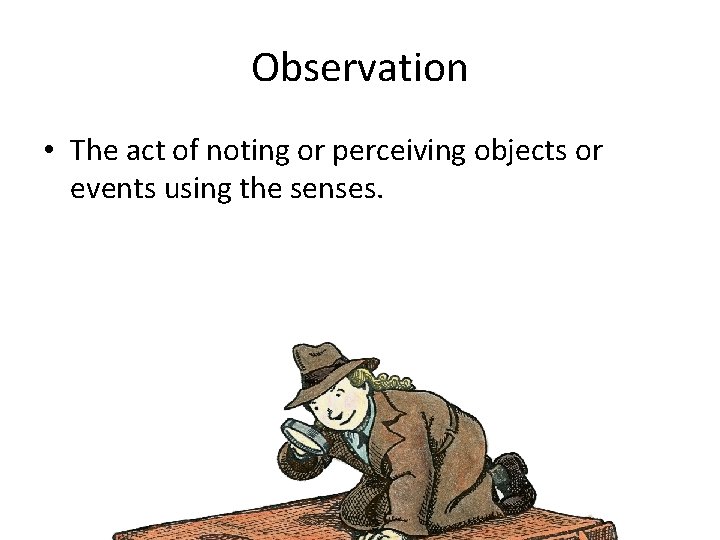
Observation • The act of noting or perceiving objects or events using the senses.
Question • Why is the thing I am observing happening? What causes it to happen? Etc… Wh ? y h W at? W ? n he How ?
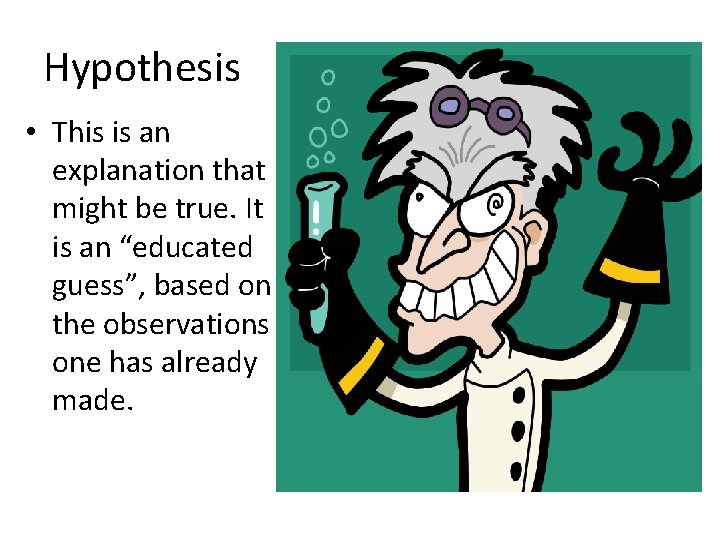
Hypothesis • This is an explanation that might be true. It is an “educated guess”, based on the observations one has already made.

Prediction • This is the expected outcome of an experiment, assuming that the hypothesis was correct.
Experiment • This is a planned procedure to test a hypothesis. It is carefully conducted and documented every step of the way.
Data • Without collection of data, experimentation is essentially useless. Other scientists need to be able to repeat the experiment under the same conditions in order to prove that the conclusions are valid. If there is no data, there is no proof.
Conclusion • What was the outcome? It could be that the hypothesis is correct, but that is not always the case. Either way, the scientist learns from the experiment.
Theory • After many scientists test several related hypothesis and confirm them many times, the explanation of this broad range of hypotheses is then called a theory.
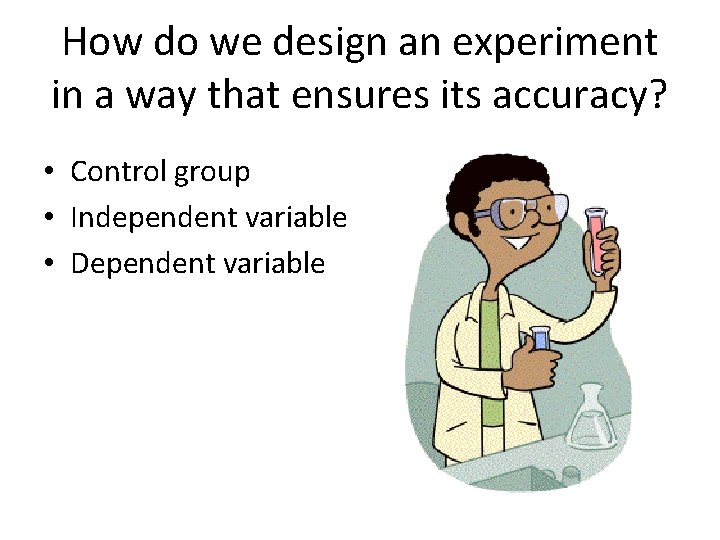
How do we design an experiment in a way that ensures its accuracy? • Control group • Independent variable • Dependent variable
Control Group • This group in an experiment receives no experimental treatment. The control and experimental group are designed to be identical in every aspect, except one factor, also known as a variable. (Variable, because it changes or varies. )
Independent Variable • This is the factor that we change or manipulate in an experiment.
Dependent Variable • This factor changes as a result of what we have done to the independent variable. We can measure a change to this factor. The amount of change in the dependent variable depends on what has been done to the independent variable.
Ready for a practice problem? • Ex. We are testing plant fertilizer to see if it helps the plant grow faster. • What is our control? (remember: this is the thing that gets no experimental treatment) • What is our independent variable? (remember: this is the thing that we manipulate or change) • What is our dependent variable? (remember: this is the measurable outcome; it may not be an object; this may be more abstract)

THE END
- Slides: 40