
WHAT IS BIOINFORMATICS Daniel Svozil Laborato informatiky a
WHAT IS BIOINFORMATICS? Daniel Svozil, Laboratoř informatiky a chemie svozild@vscht. cz http: //ich. vscht. cz/~svozil
Canceled lecture • Wed, 4. 3. 2015, lecture is canceled
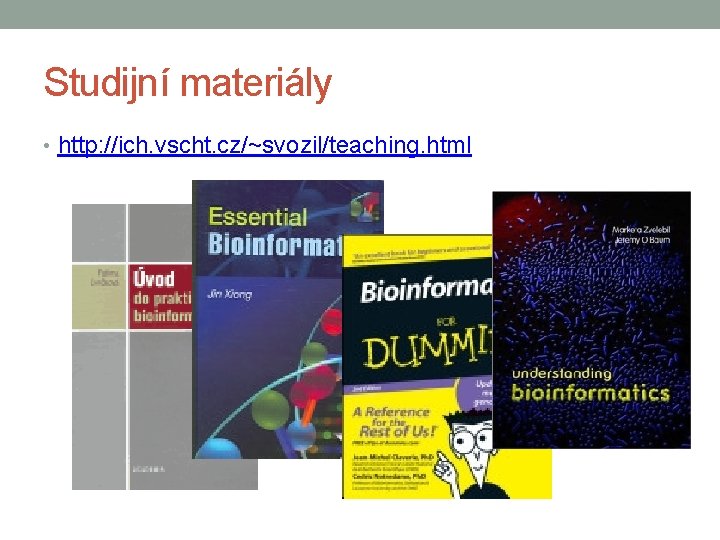
Studijní materiály • http: //ich. vscht. cz/~svozil/teaching. html
Coursera • MOOC • www. coursera. org • Bioinformatic Methods I, II • Bioinformatics: Life Sciences on Your Computer • Bioinformatics Algorithms 1, 2 • Algorithms, Biology, and Programming for Beginners • Computational Molecular Evolution
ed. X • www. edx. org • Data Analysis for Genomics
studuj. bioinformatiku. cz

Definition • NCBI • Bioinformatics is the field of science in which biology, computer science, and information technology merge into a single discipline. The ultimate goal of the field is to enable the discovery of new biological insights and to create a global perspective from which unifying principles in biology can be discerned. • Wikipedia. org • The application of information technology and statistics to the field of molecular biology. • The creation and advancement of databases, algorithms, computational and statistical techniques, and theory to solve formal and practical problems arising from the management, analysis and interpretation of biological data. http: //www. ncbi. nlm. nih. gov/About/primer/bioinformatics. html
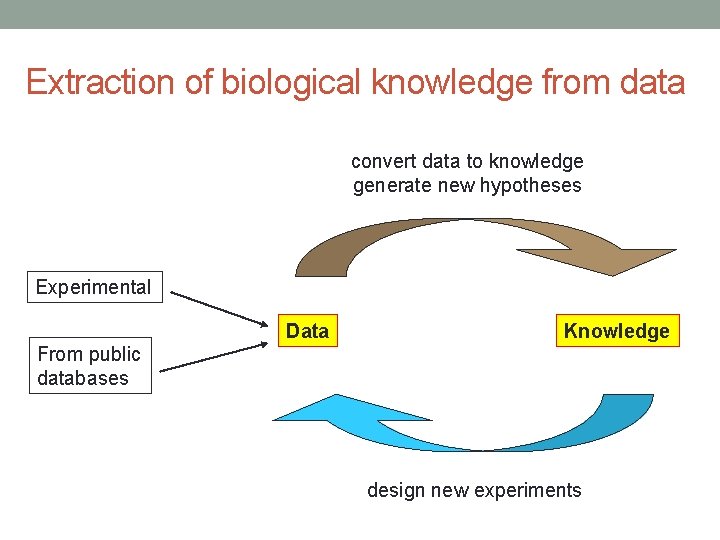
Extraction of biological knowledge from data convert data to knowledge generate new hypotheses Experimental Data Knowledge From public databases design new experiments
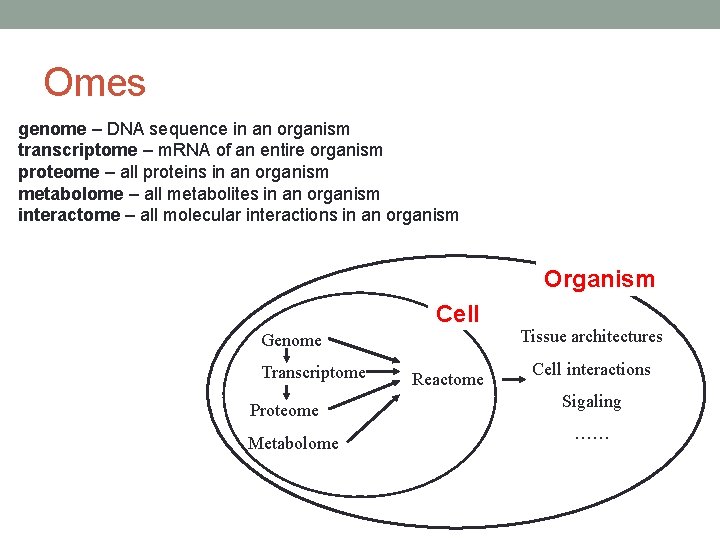
Omes genome – DNA sequence in an organism transcriptome – m. RNA of an entire organism proteome – all proteins in an organism metabolome – all metabolites in an organism interactome – all molecular interactions in an organism Organism Cell Genome Transcriptome Proteome Metabolome Reactome Tissue architectures Cell interactions Sigaling ……
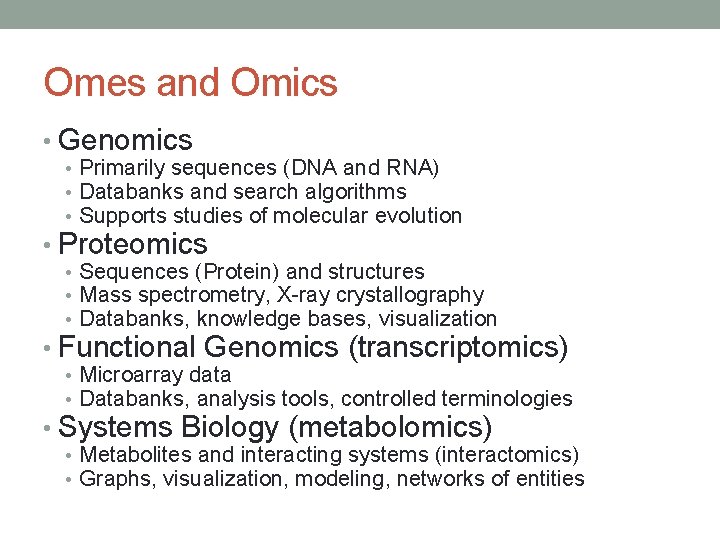
Omes and Omics • Genomics • Primarily sequences (DNA and RNA) • Databanks and search algorithms • Supports studies of molecular evolution • Proteomics • Sequences (Protein) and structures • Mass spectrometry, X-ray crystallography • Databanks, knowledge bases, visualization • Functional Genomics (transcriptomics) • Microarray data • Databanks, analysis tools, controlled terminologies • Systems Biology (metabolomics) • Metabolites and interacting systems (interactomics) • Graphs, visualization, modeling, networks of entities
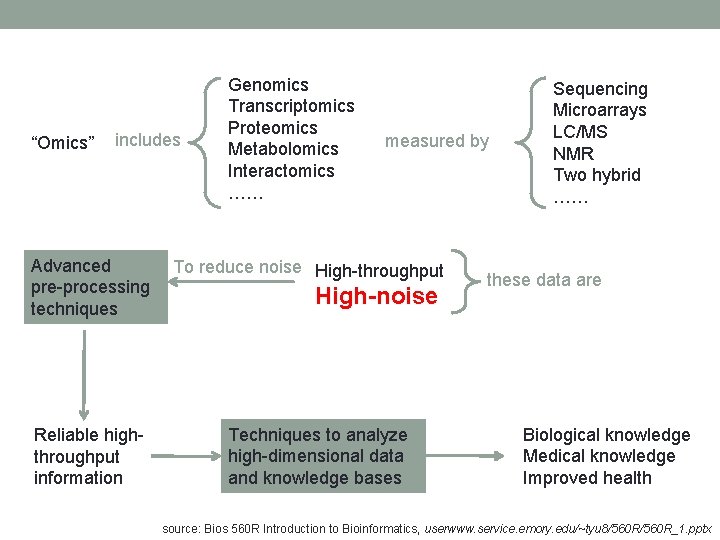
“Omics” includes Advanced pre-processing techniques Reliable highthroughput information Genomics Transcriptomics Proteomics Metabolomics Interactomics …… measured by To reduce noise High-throughput High-noise Techniques to analyze high-dimensional data and knowledge bases Sequencing Microarrays LC/MS NMR Two hybrid …… these data are Biological knowledge Medical knowledge Improved health source: Bios 560 R Introduction to Bioinformatics, userwww. service. emory. edu/~tyu 8/560 R_1. pptx
Key reasearch in bioinformatics • sequence bioinformatics • structural bioinformatics • systems biology • analysis of biological pathways to gain e. g. the understanding of disease processes
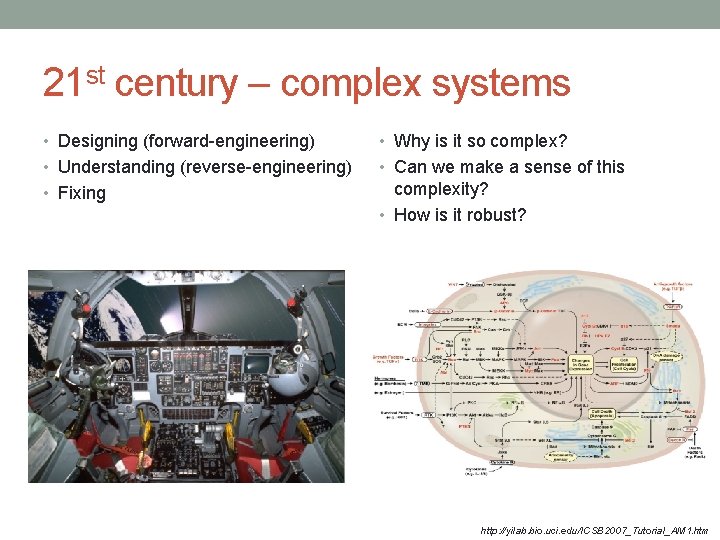
21 st century – complex systems • Designing (forward-engineering) • Why is it so complex? • Understanding (reverse-engineering) • Can we make a sense of this • Fixing complexity? • How is it robust? http: //yilab. bio. uci. edu/ICSB 2007_Tutorial_AM 1. htm
CELL BIOLOGY Daniel Svozil
Molecular biology • Though all aspects of biology can be studied at the molecular level, molecular biology is usually restricted to the molecules of genes/gene products/heredity – molecular genetics • Experiments in molecular biology are done using model organisms • Two classes of organism • Prokaryotes • Eukaryotes
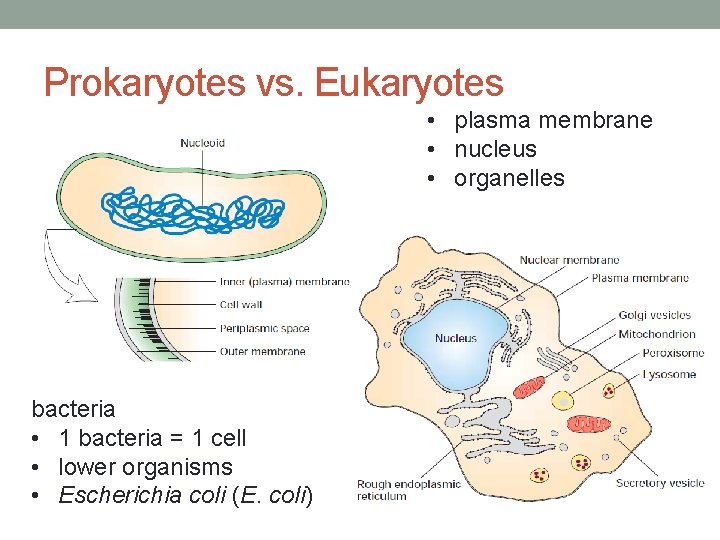
Prokaryotes vs. Eukaryotes • plasma membrane • nucleus • organelles bacteria • 1 bacteria = 1 cell • lower organisms • Escherichia coli (E. coli)
Cells in eukaryotes • body (somatic) cells • differentiated into special cell types (brain cells, liver cells …) • produce by simple cell division – mitosis • sex cells (gametes) • egg, sperm • used for sexual reproduction (only eukaryotes) • meiosis – reduction of the amount of genetic material
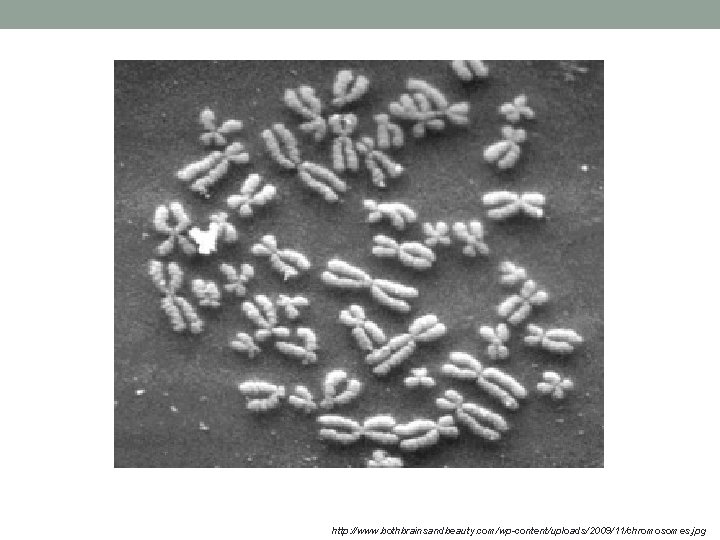
Eukaryotic chromosomes • Threadlike DNA, carries genes • Each organism has specific number of chromosomes • Sex chromosomes (determine gender – XX (female), XY (male)), autosomal chromosomes • 46 in human, 2 sex, 44 autosomal • Come in pairs (two in a pair have the same shape and same set of genes (but different alleles)), homologs, diploid
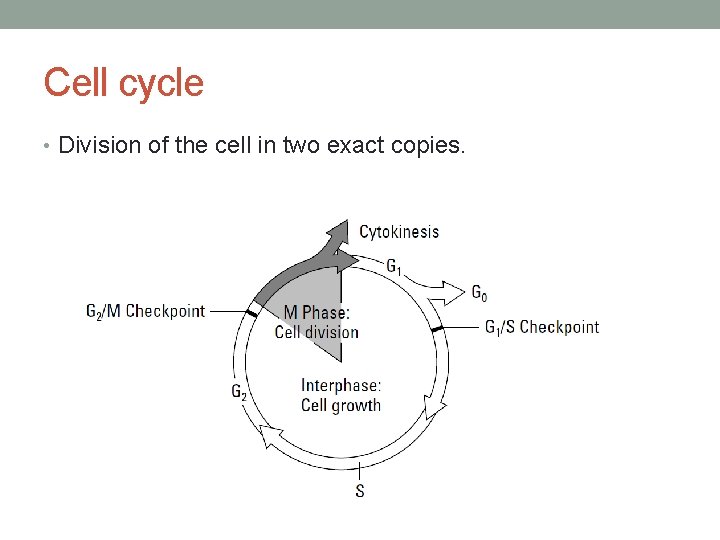
Cell cycle • Division of the cell in two exact copies.
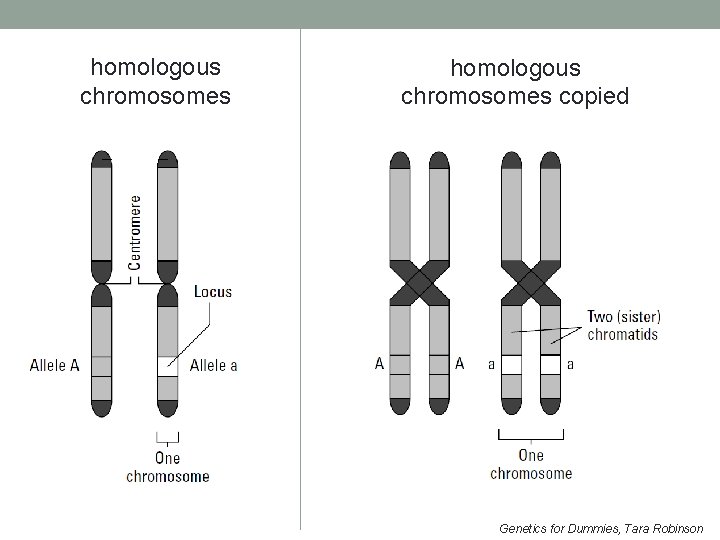
homologous chromosomes copied Genetics for Dummies, Tara Robinson
http: //www. bothbrainsandbeauty. com/wp-content/uploads/2009/11/chromosomes. jpg
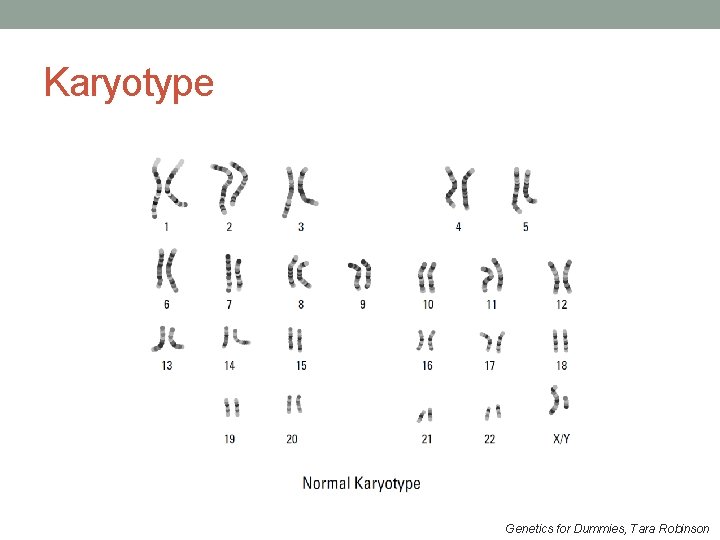
Karyotype Genetics for Dummies, Tara Robinson
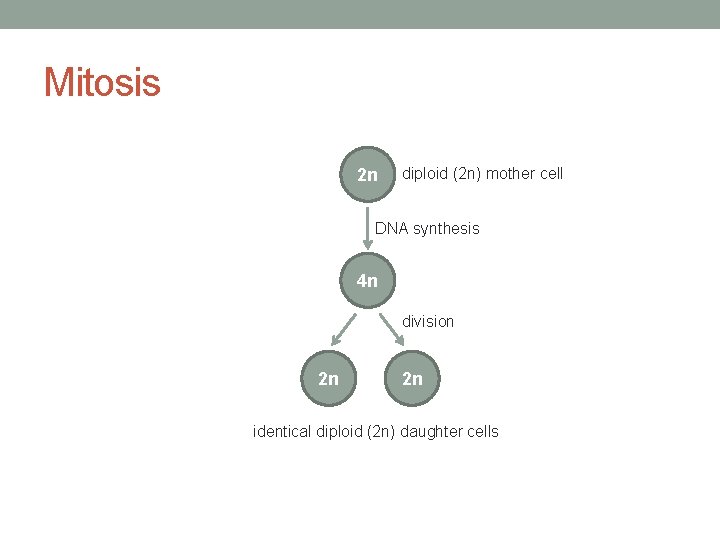
Mitosis 2 n diploid (2 n) mother cell DNA synthesis 4 n division 2 n 2 n identical diploid (2 n) daughter cells
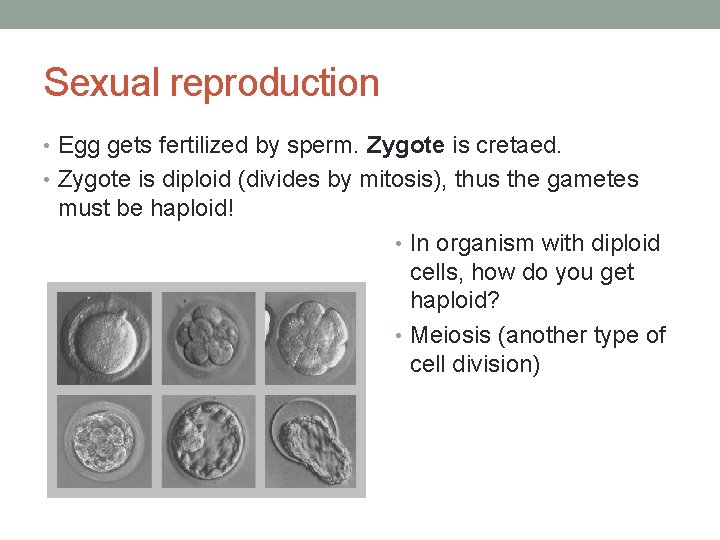
Sexual reproduction • Egg gets fertilized by sperm. Zygote is cretaed. • Zygote is diploid (divides by mitosis), thus the gametes must be haploid! • In organism with diploid cells, how do you get haploid? • Meiosis (another type of cell division)
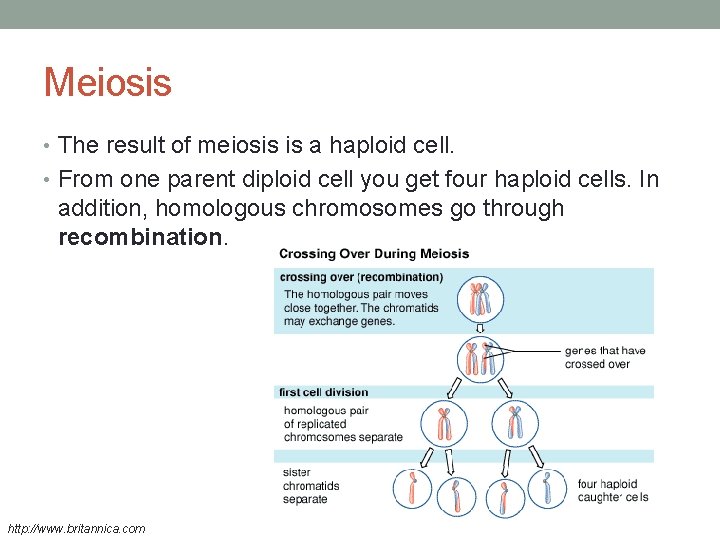
Meiosis • The result of meiosis is a haploid cell. • From one parent diploid cell you get four haploid cells. In addition, homologous chromosomes go through recombination. http: //www. britannica. com
DNA – The Basis of Life
DNA • Biomacromolecule • Consists of repeating units • DNA in organism does not usually exist in one piece • chromosomes
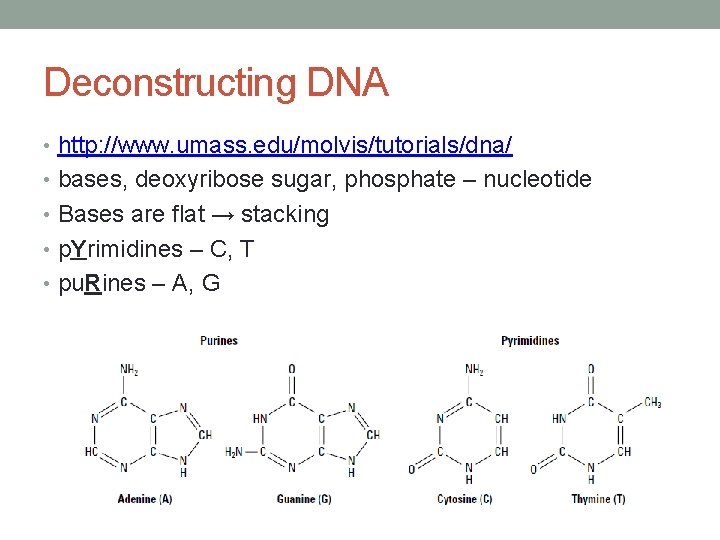
Deconstructing DNA • http: //www. umass. edu/molvis/tutorials/dna/ • bases, deoxyribose sugar, phosphate – nucleotide • Bases are flat → stacking • p. Yrimidines – C, T • pu. Rines – A, G
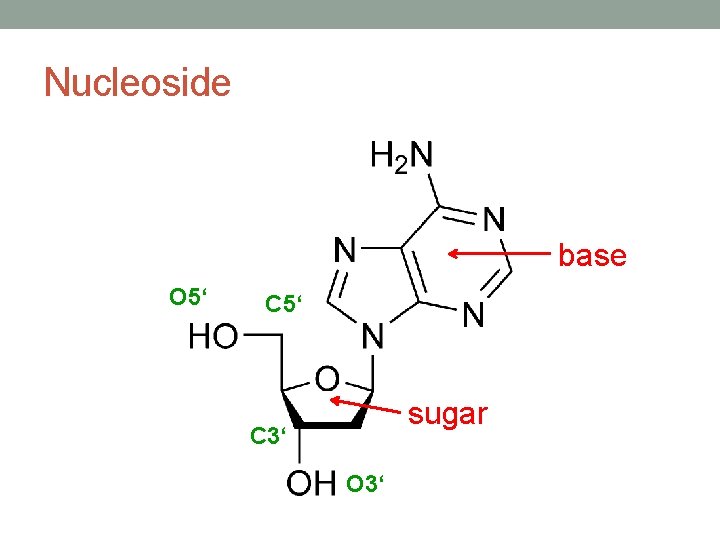
Nucleoside base O 5‘ C 5‘ sugar C 3‘ O 3‘
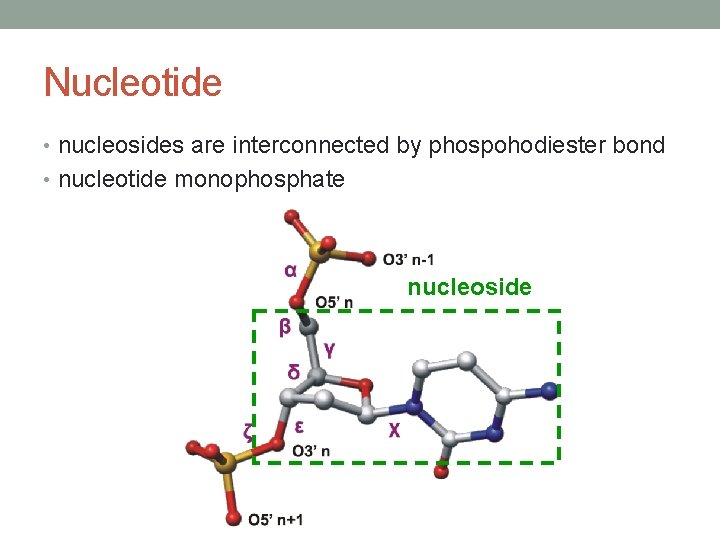
Nucleotide • nucleosides are interconnected by phospohodiester bond • nucleotide monophosphate nucleoside
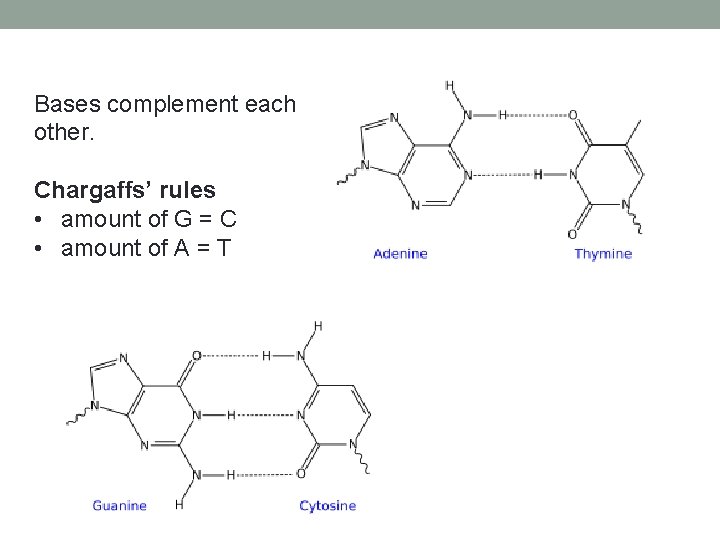
Bases complement each other. Chargaffs’ rules • amount of G = C • amount of A = T

DNA conformations A B Z B-DNA A-DNA Z-DNA

Biological role of different DNAs • B-DNA • canonical DNA • predominant • A-DNA • Conditions of lower humidity, common in crystallographic experiments. However, they’re artificial. • In vivo – local conformations induced e. g. by interaction with proteins. • Z-DNA • No definite biological significance found up to now. • It is commonly believed to provide torsional strain relief (supercoiling) while DNA transcription occurs. • The potential to form a Z-DNA structure also correlates with regions of active transcription.
Different sets of DNA • nuclear DNA • cell’s nucleus • majority of functions cell carries out • sequencing the genome – scientists mean nuclear DNA • mitochondrial DNA • mt. DNA • circular, in human very short (17 kbp) with 37 genes (controling cellular metabolism) • all mt. DNA comes from mom, no recombination - Mitochondrial Eve • chloroplast DNA • cp. DNA • circular and fairly large (120 – 160 kbp), with only 120 genes • inheritance is either maternal, or paternal
Structure of DNA in the eukaryotic cell • DNA in human chromosomes: 3. 2 109 bp. As we’re diploid: 6. 4 109 bp. • 0. 33 nm per bp 2. 1 m in each nucleus, size of the nucleus: 5 -10 m across • DNA is highly compacted. Combination DNA + proteins. • During interphase, when cells are not dividing, the genetic material exists as a nucleoprotein complex called chromatin, which is dispersed through much of the nucleus. • Further folding and compaction of chromatin during mitosis produces the visible metaphase chromosomes. • euchromatin – extended • heterochromatin – condensed
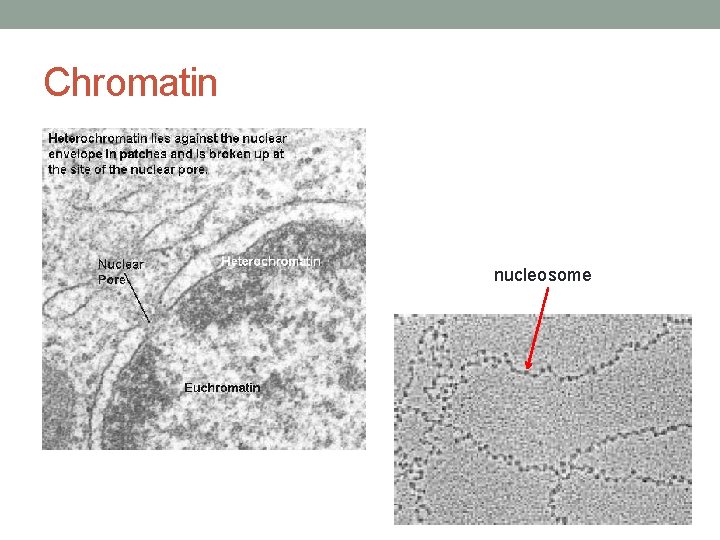
Chromatin nucleosome
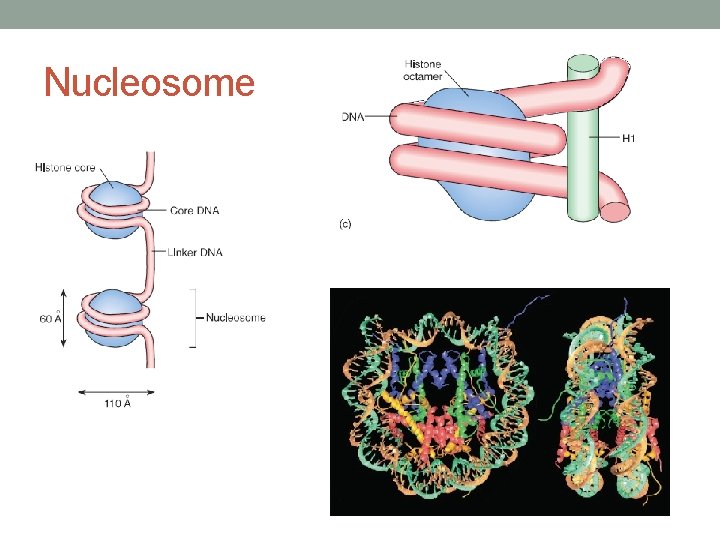
Nucleosome


Central dogma of molecular biology Wikipedia
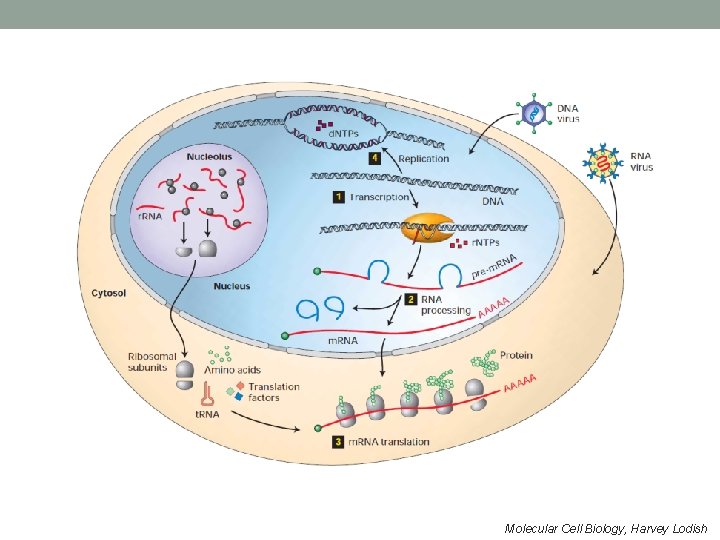
Molecular Cell Biology, Harvey Lodish
- Slides: 40