
What is Assisted Reproduction Technology What is ART
- Slides: 18
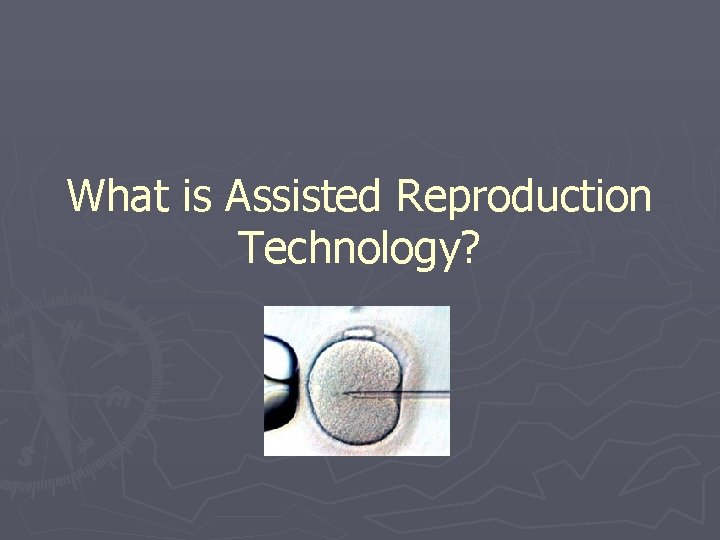
What is Assisted Reproduction Technology?
What is ART? ► Group of high tech treatment methods to assist infertile couples. ► Techniques include: § In Vitro Fertilization § Artificial Insemination § Gamete Intra-Fallopian Transfer § And many more
History of ART ► 1978 - first successful birth using In Vitro Fertilization ► 1984 - first successful birth using Gamete Intra Fallopian Transfer ► 1986 -first successful birth using Zygote Intra Fallopian Transfer
What is Infertility? ► Inability to conceive a baby after one year of unprotected intercourse. ► Affects the reproductive organs of both men and women. ► Infertility affects about 15% of couples in North America.
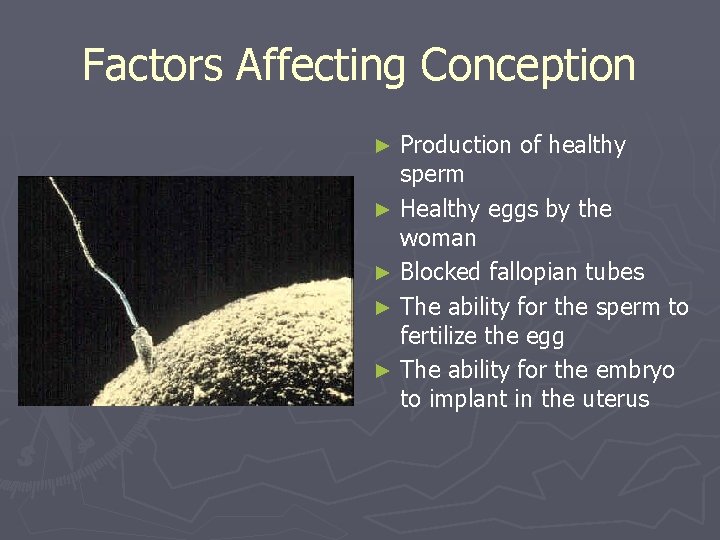
Factors Affecting Conception Production of healthy sperm ► Healthy eggs by the woman ► Blocked fallopian tubes ► The ability for the sperm to fertilize the egg ► The ability for the embryo to implant in the uterus ►
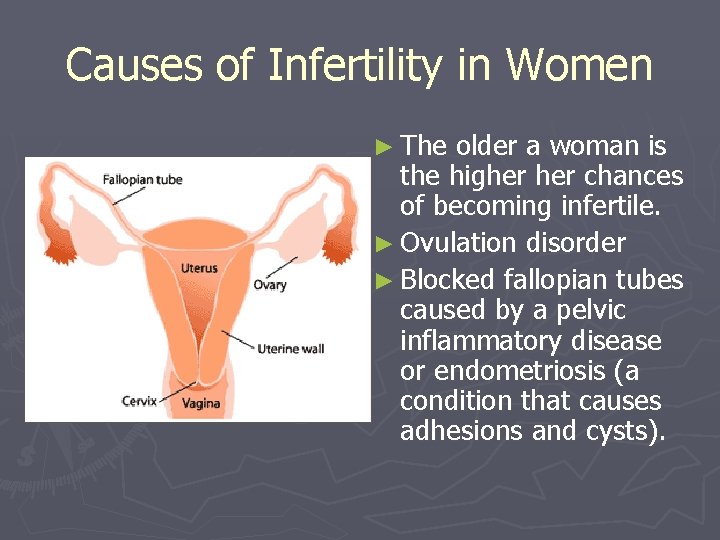
Causes of Infertility in Women ► The older a woman is the higher chances of becoming infertile. ► Ovulation disorder ► Blocked fallopian tubes caused by a pelvic inflammatory disease or endometriosis (a condition that causes adhesions and cysts).
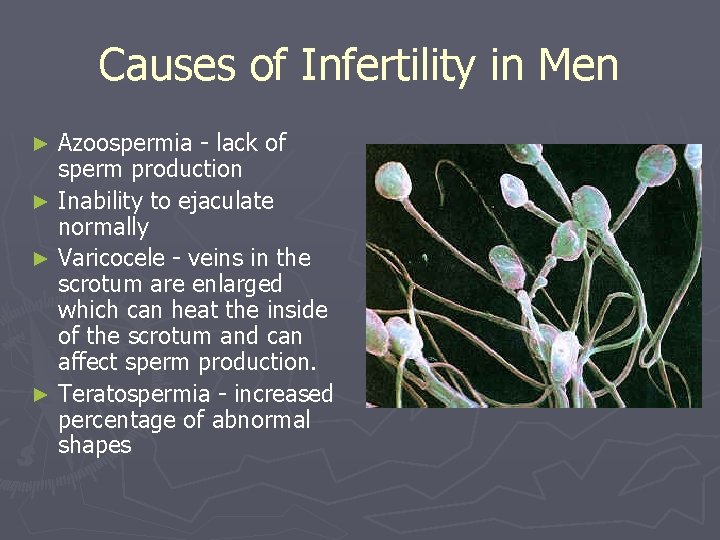
Causes of Infertility in Men Azoospermia - lack of sperm production ► Inability to ejaculate normally ► Varicocele - veins in the scrotum are enlarged which can heat the inside of the scrotum and can affect sperm production. ► Teratospermia - increased percentage of abnormal shapes ►
Statistics ► Infertility affects more than 15% of the couples in North America. ► About one-third of infertility cases are caused by male factors. ► In about 20% of infertile couples the cause is unknown. ► The remaining one-third of infertile cases is caused by a combination of factors in both partners. ► The chances of becoming pregnant decreases 35% per year after the age of 30.
Most Common Choices of Treatment ► Artificial Insemination ► In Vitro Fertilization ► Gamete Intra Fallopian Transfer ► Zygote Intra Fallopian Transfer ► Intra-Cytoplasmic Sperm Injection ► Frozen Embryos
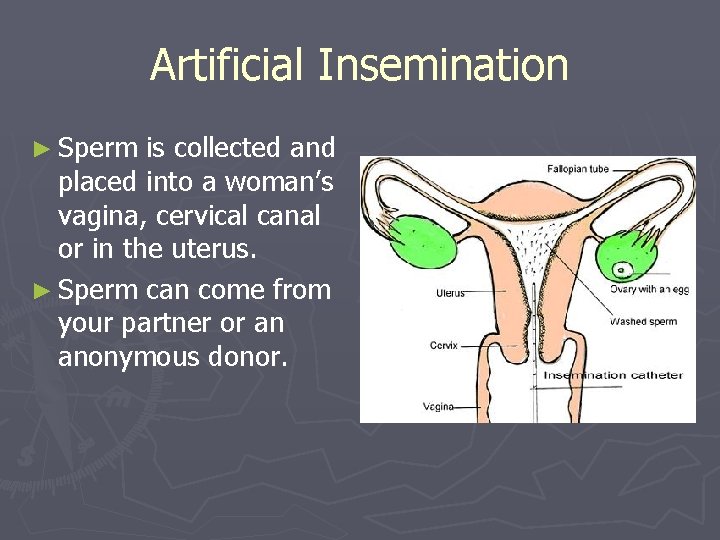
Artificial Insemination ► Sperm is collected and placed into a woman’s vagina, cervical canal or in the uterus. ► Sperm can come from your partner or an anonymous donor.
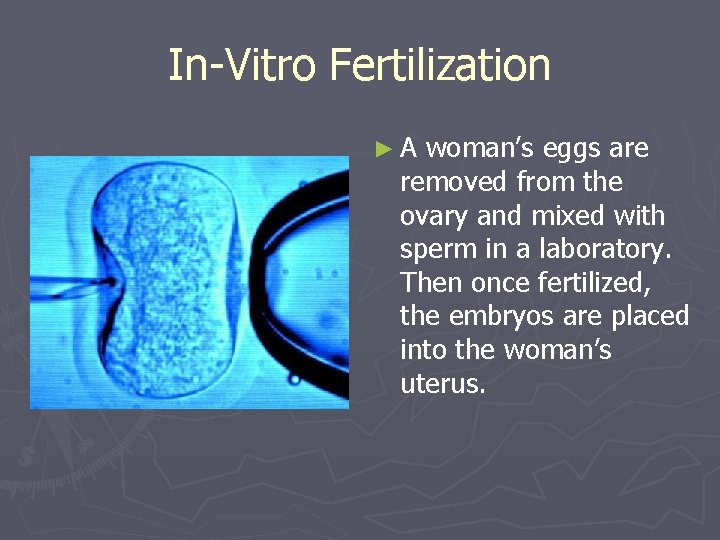
In-Vitro Fertilization ►A woman’s eggs are removed from the ovary and mixed with sperm in a laboratory. Then once fertilized, the embryos are placed into the woman’s uterus.
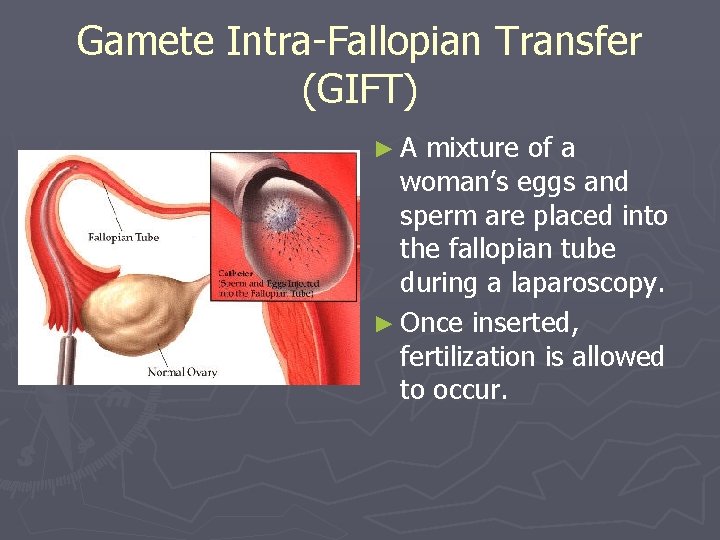
Gamete Intra-Fallopian Transfer (GIFT) ►A mixture of a woman’s eggs and sperm are placed into the fallopian tube during a laparoscopy. ► Once inserted, fertilization is allowed to occur.
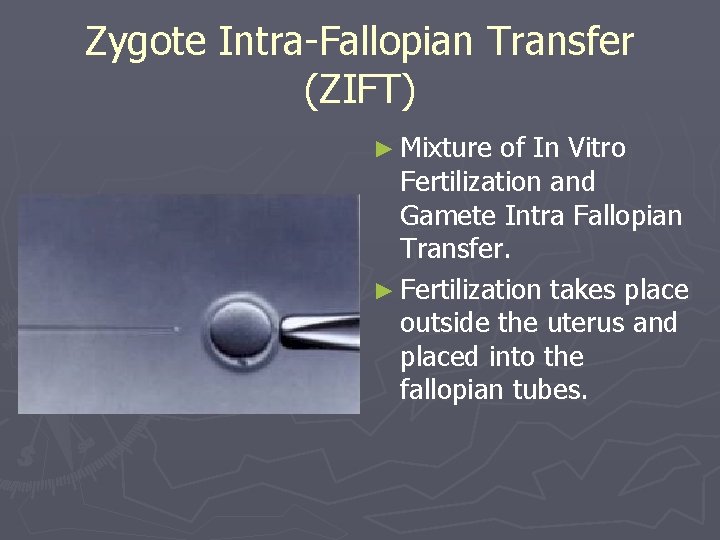
Zygote Intra-Fallopian Transfer (ZIFT) ► Mixture of In Vitro Fertilization and Gamete Intra Fallopian Transfer. ► Fertilization takes place outside the uterus and placed into the fallopian tubes.
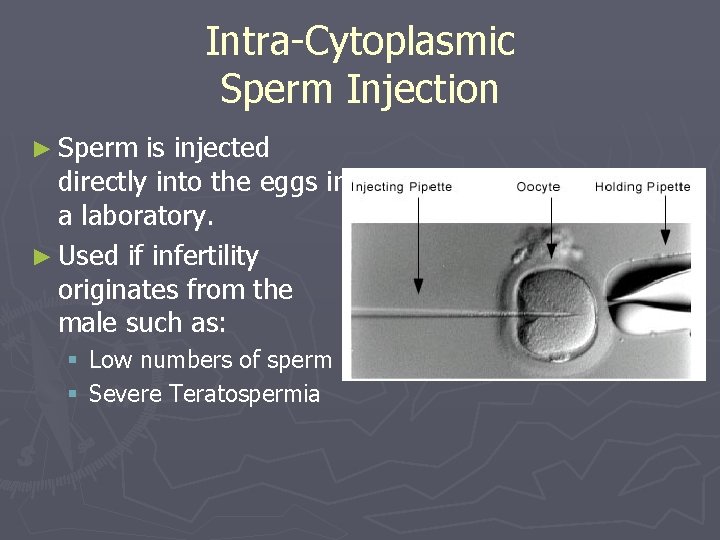
Intra-Cytoplasmic Sperm Injection ► Sperm is injected directly into the eggs in a laboratory. ► Used if infertility originates from the male such as: § Low numbers of sperm § Severe Teratospermia
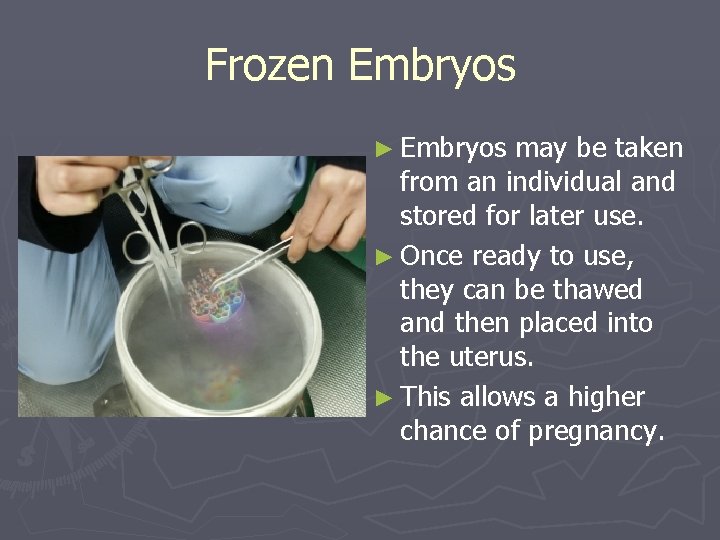
Frozen Embryos ► Embryos may be taken from an individual and stored for later use. ► Once ready to use, they can be thawed and then placed into the uterus. ► This allows a higher chance of pregnancy.
Factor to Consider when selecting an ART Program ► Qualifications and experience of the clinic and its personnel. ► Support services available ► Cost ► Success rates of that specific program
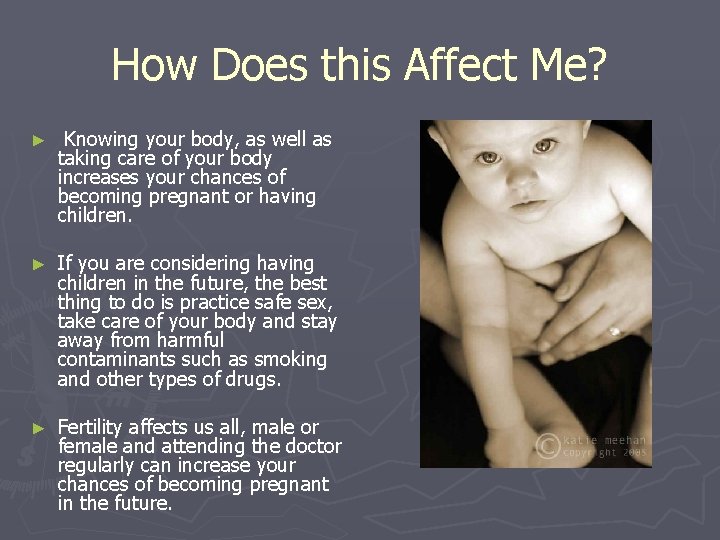
How Does this Affect Me? ► Knowing your body, as well as taking care of your body increases your chances of becoming pregnant or having children. ► If you are considering having children in the future, the best thing to do is practice safe sex, take care of your body and stay away from harmful contaminants such as smoking and other types of drugs. ► Fertility affects us all, male or female and attending the doctor regularly can increase your chances of becoming pregnant in the future.
Works Cited ► ► ► “Age and Female Fertility. ” 2006. American Fertility Association. 8 March 2006. http: //theafa. org/faqs/afa_ageandfemaleinfertility. html “Assisted Reproductive Techonologies. ” Society for Assisted Reproductive Technology. 2005. 8 March 2006. <http: //www. sart. org> “Assisted Reproductive Technologies: A guide for Patients. ” United States Department of Health & Human Services. 2003. American Society for Reproductive Medicine. 8 March 2006. http: //asrm. org/Patients/patientechnologybooklets/Art. pdf “Embryo Freezing. ” IVF-Infertility. com. 15 October 2005. 8 March 2006. http: //www. ivfinfertility. com/ivf/frozen. php Insemination. 1 March 2005, Home ed. , Info. Trac. College of the Sequoias Library, Visalia, CA. 1 March 1999. The Reproductive System. Westport, CT: Greenwood Press, c 2004 “Male Infertility. ” Familydoctor. org. 3 March 2005. American Academy of Family Physicians. 8 March 2006. http: //familydoctor. org/766. xml Understanding Fertility and Infertility: The Sourcebook for Reproductive Problems, Treatments and Issues. New York: Checkmark. Books. c 2003 “What is Infertility? ” Frequently Asked Questions About Infertility. 2006. American Society for Reproductive Medicine. 8 March 2006. http: //www. asrm. org/Patients/faqs. html#Q 1: Wisot, Arthur L et. Al. Conceptions & Misconceptions: The Informed Consumer’s Guide through the Maze of In Vitro Fertilization and other Assisted Reproduction Techniques. “Zygote Intrafallopian Transfer. ” Pregnancyinfo. net. 2005. 8 March 2006. http: //www. pregnancyinfo. net/infertility_medical_options_zift. html