
What is Artificial Intelligence AI AI is the
- Slides: 8
What is Artificial Intelligence (AI)? • AI is the study of intelligence, particularly intelligent machines • AI wants to create and understand things that act intelligently, i. e. that act rationally and “do the right thing” in most situations • So far success has been for only on specific problems • Humans are the only generally intelligent thing we know of • Can only humans be generally intelligent? • We often compare machine performance to human performance • E. g. is a computer can do X as well as a human, then the computer is intelligent with respect to X • Be careful: humans don’t do everything well, so a computer achieving human-level performance on, say, multiplying 5 -digit numbers, would mean your computer isn’t very good!
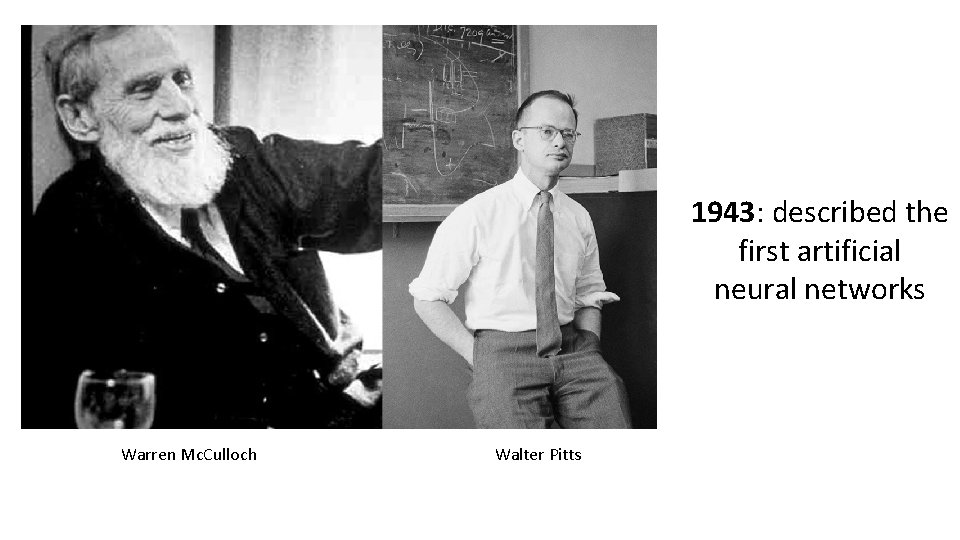
1943: described the first artificial neural networks Warren Mc. Culloch Walter Pitts
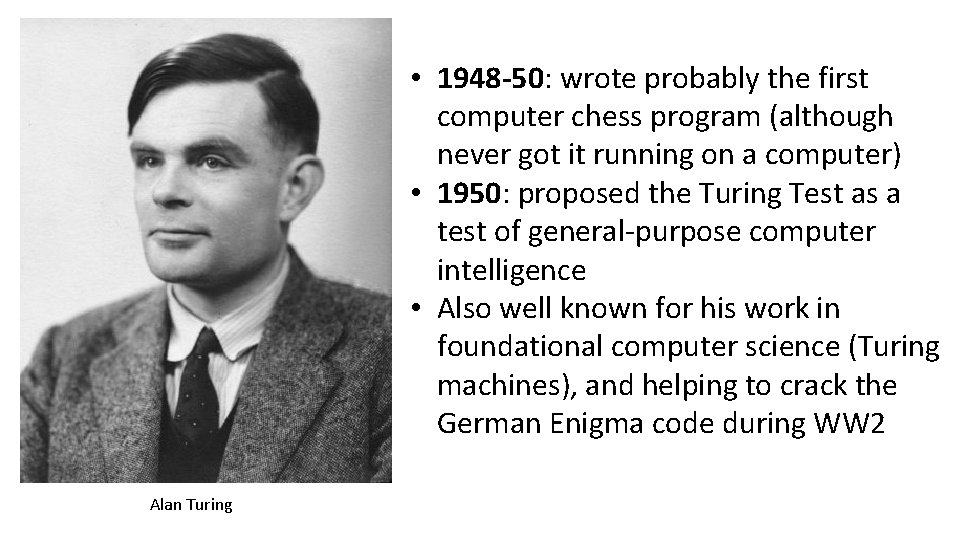
• 1948 -50: wrote probably the first computer chess program (although never got it running on a computer) • 1950: proposed the Turing Test as a test of general-purpose computer intelligence • Also well known for his work in foundational computer science (Turing machines), and helping to crack the German Enigma code during WW 2 Alan Turing
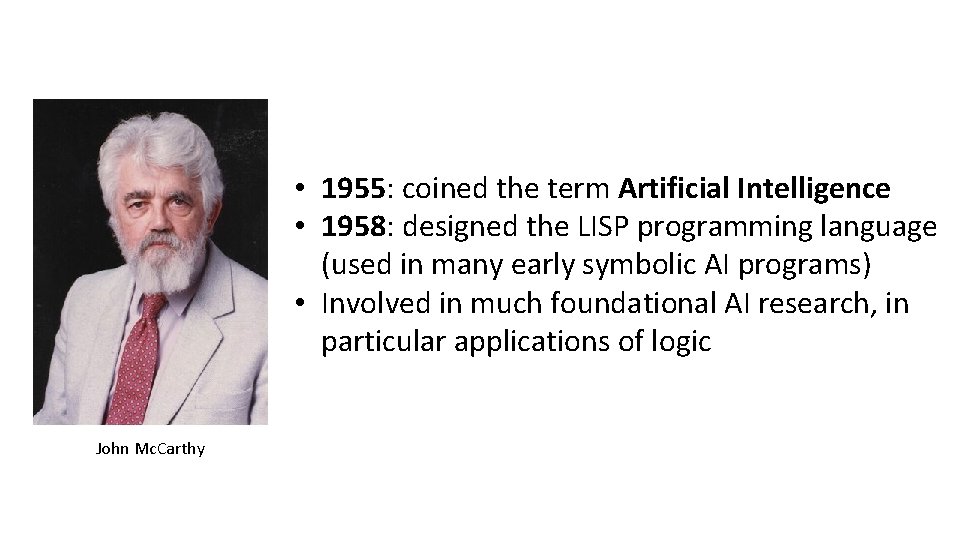
• 1955: coined the term Artificial Intelligence • 1958: designed the LISP programming language (used in many early symbolic AI programs) • Involved in much foundational AI research, in particular applications of logic John Mc. Carthy
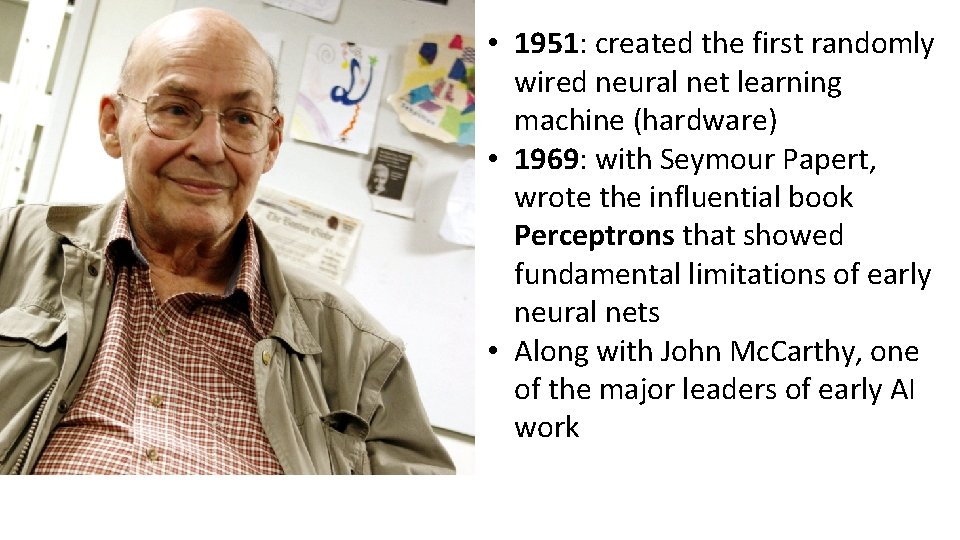
• 1951: created the first randomly wired neural net learning machine (hardware) • 1969: with Seymour Papert, wrote the influential book Perceptrons that showed fundamental limitations of early neural nets • Along with John Mc. Carthy, one of the major leaders of early AI work
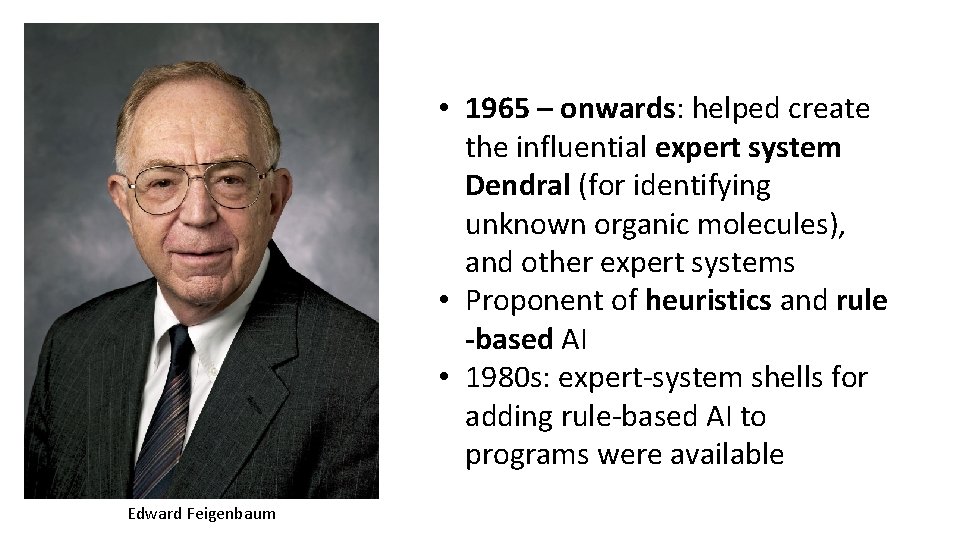
• 1965 – onwards: helped create the influential expert system Dendral (for identifying unknown organic molecules), and other expert systems • Proponent of heuristics and rule -based AI • 1980 s: expert-system shells for adding rule-based AI to programs were available Edward Feigenbaum
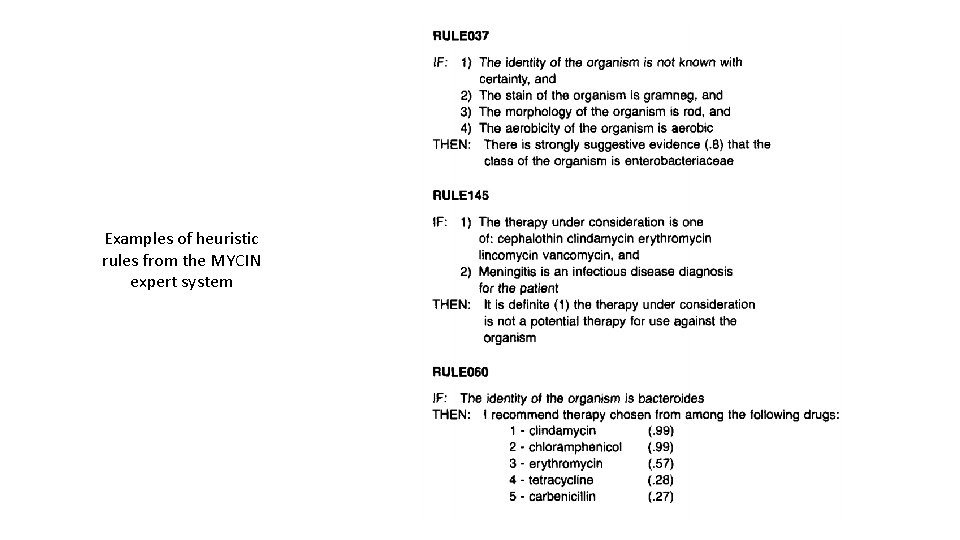
Examples of heuristic rules from the MYCIN expert system
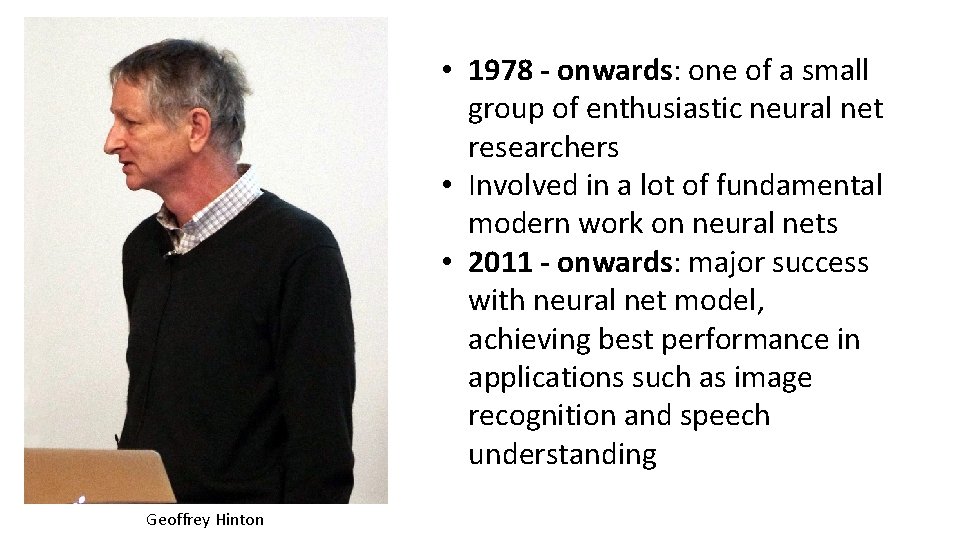
• 1978 - onwards: one of a small group of enthusiastic neural net researchers • Involved in a lot of fundamental modern work on neural nets • 2011 - onwards: major success with neural net model, achieving best performance in applications such as image recognition and speech understanding Geoffrey Hinton