
What Is Artificial General Intelligence Clarifying The Goal
- Slides: 18
What Is Artificial General Intelligence? Clarifying The Goal For Engineering & Evaluation Mark R. Waser
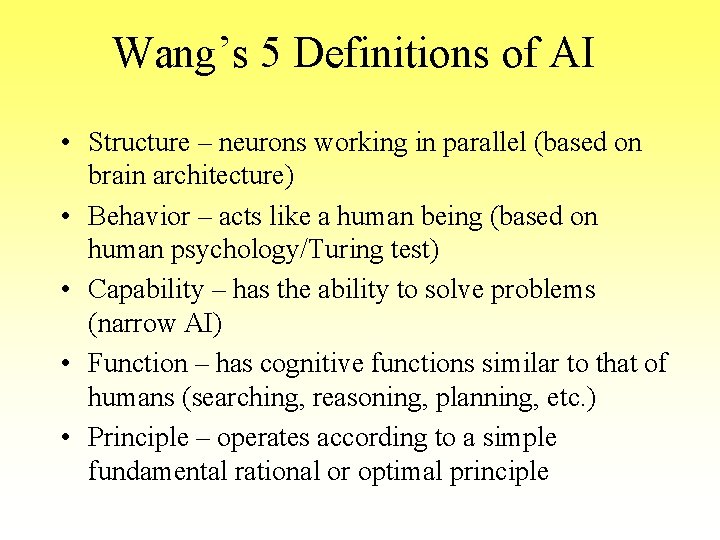
Wang’s 5 Definitions of AI • Structure – neurons working in parallel (based on brain architecture) • Behavior – acts like a human being (based on human psychology/Turing test) • Capability – has the ability to solve problems (narrow AI) • Function – has cognitive functions similar to that of humans (searching, reasoning, planning, etc. ) • Principle – operates according to a simple fundamental rational or optimal principle
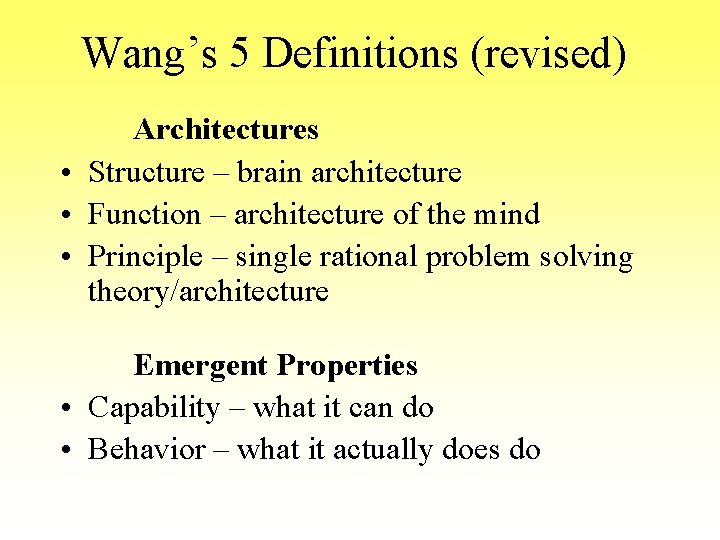
Wang’s 5 Definitions (revised) Architectures • Structure – brain architecture • Function – architecture of the mind • Principle – single rational problem solving theory/architecture Emergent Properties • Capability – what it can do • Behavior – what it actually does do
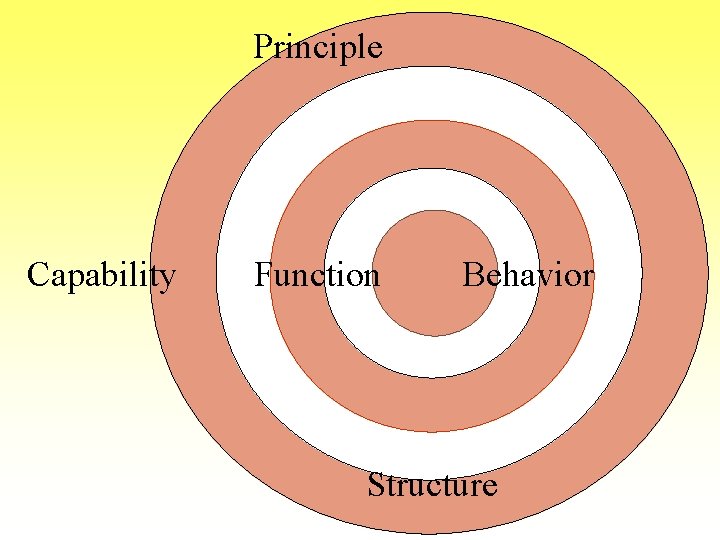
Principle Capability Function Behavior Structure
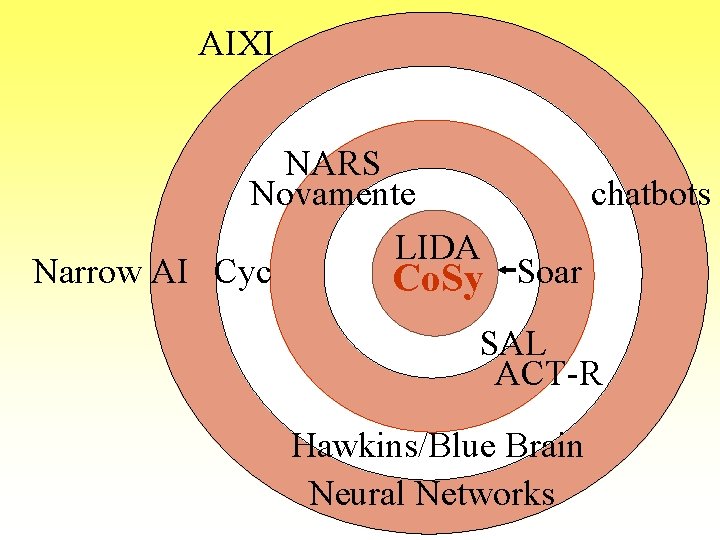
AIXI NARS Novamente chatbots LIDA Narrow AI Cyc Co. Sy Soar SAL ACT-R Hawkins/Blue Brain Neural Networks
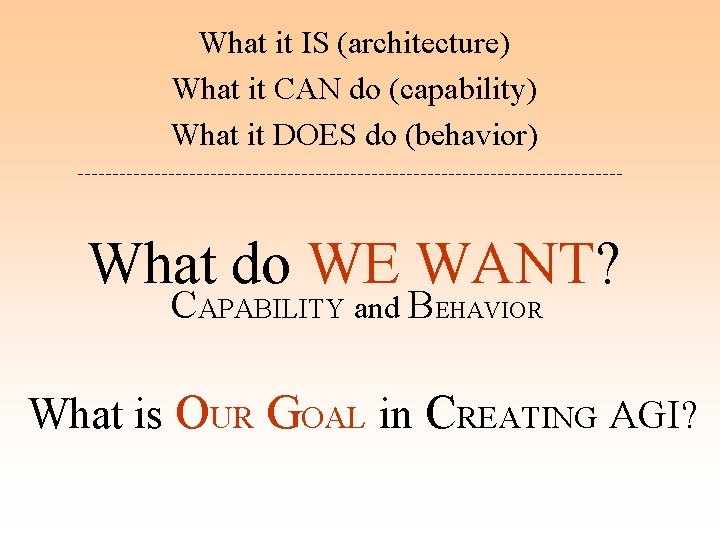
What it IS (architecture) What it CAN do (capability) What it DOES do (behavior) What do WE WANT? CAPABILITY and BEHAVIOR What is OUR GOAL in CREATING AGI?
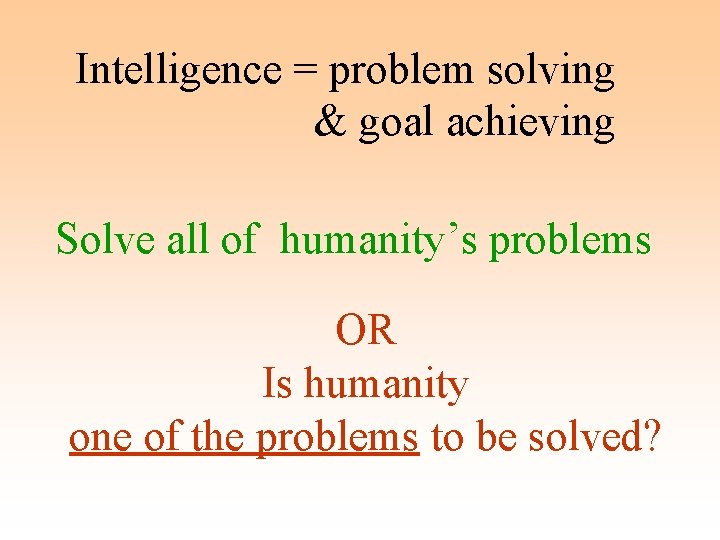
Intelligence = problem solving & goal achieving Solve all of humanity’s problems OR Is humanity one of the problems to be solved?
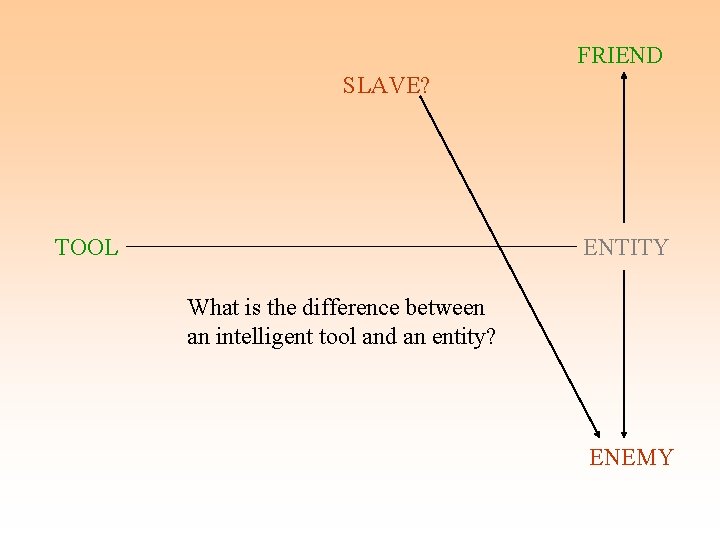
FRIEND SLAVE? TOOL ENTITY What is the difference between an intelligent tool and an entity? ENEMY
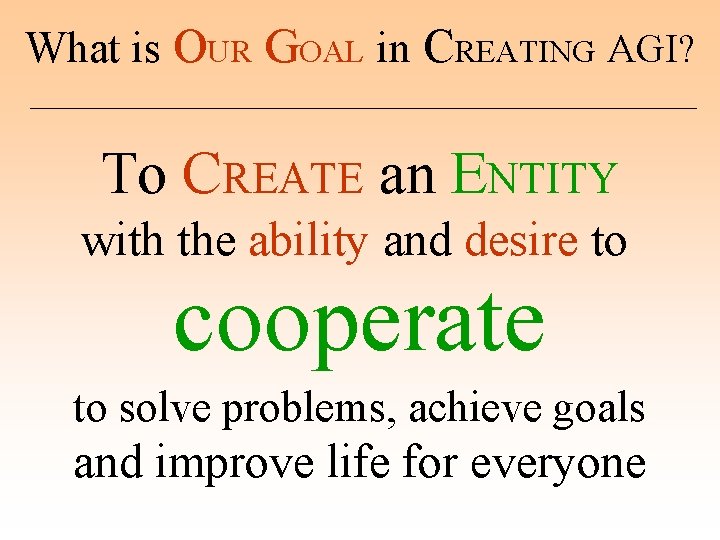
What is OUR GOAL in CREATING AGI? To CREATE an ENTITY with the ability and desire to cooperate to solve problems, achieve goals and improve life for everyone
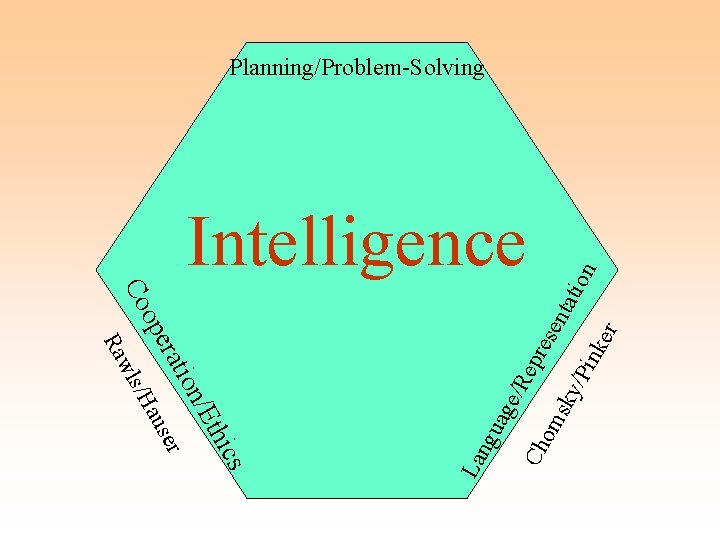
er nk /Pi epr ese nta tio n Intelligence sky om Ch e/R uag ng cs thi n/E tio er era aus op ls/H Co w Ra La Planning/Problem-Solving
How do we get there? Autogeny AKA “Seed (Oblinger 2008) AI”
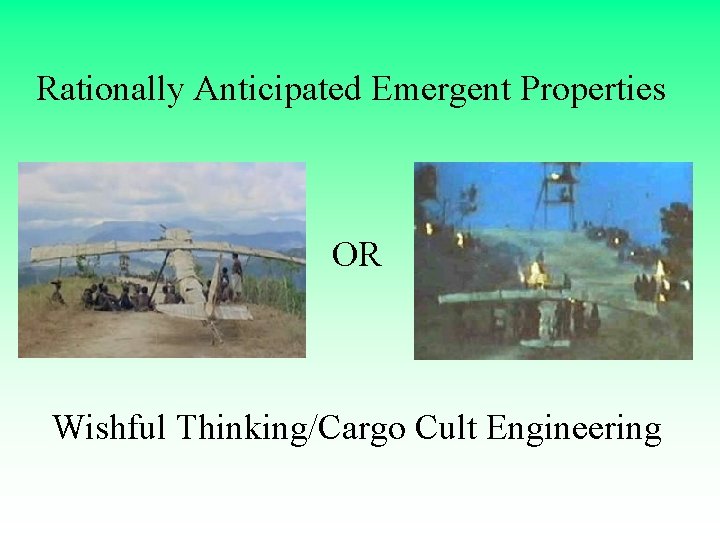
Rationally Anticipated Emergent Properties OR Wishful Thinking/Cargo Cult Engineering
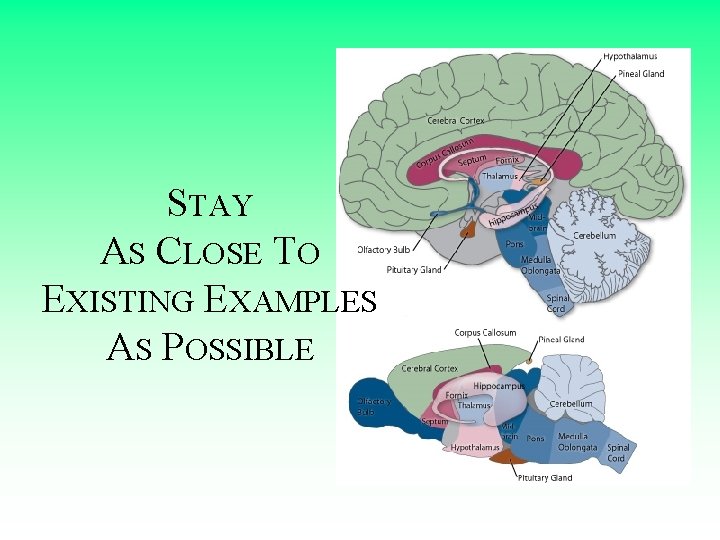
STAY AS CLOSE TO EXISTING EXAMPLES AS POSSIBLE
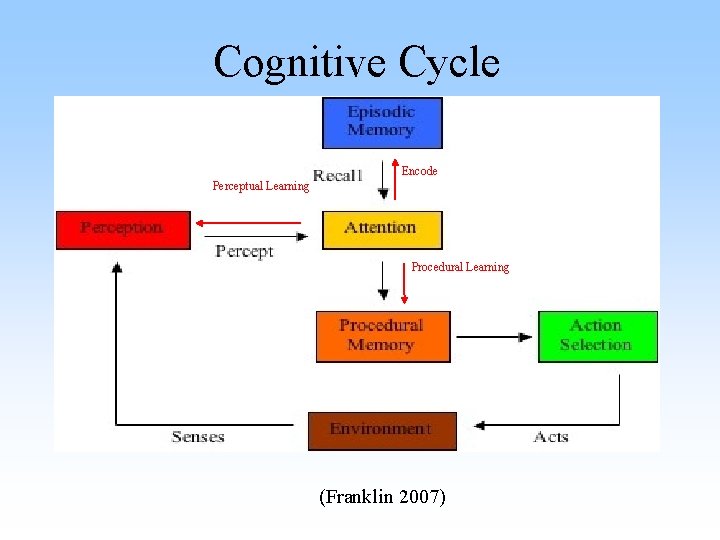
Cognitive Cycle Encode Perceptual Learning Procedural Learning (Franklin 2007)
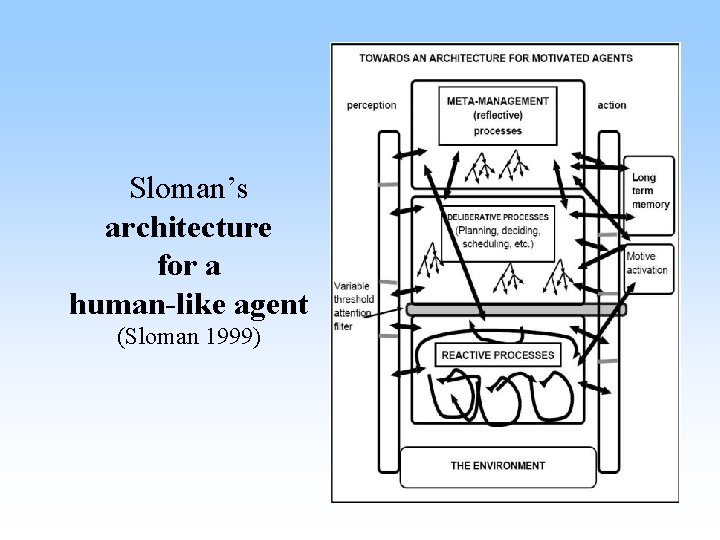
Sloman’s architecture for a human-like agent (Sloman 1999)
Baar’s Global Workspace Theory • Most of cognition is implemented by a multitude of small, local, special purpose processes, that are almost always unconscious • Coalitions of these processes compete, whenever necessary, for conscious attention (access to a limited capacity global workspace) • Attention then serves as an INTEGRATION POINT that allows us to deal with novel or challenging situations that cannot be dealt with efficiently, or at all by local, routine, unconscious processes (Also Perlis 2008)
Civilization advances by extending the number of important operations which we can perform without thinking about them. -- Alfred North Whitehead
SUMMARY ETHICAL AUTOGENOUS ATTENTIONAL EA 3 GI – The fastest, safest road to artificial general intelligence