
What is Anatomy Physiology Anatomy studies the structure

- Slides: 44
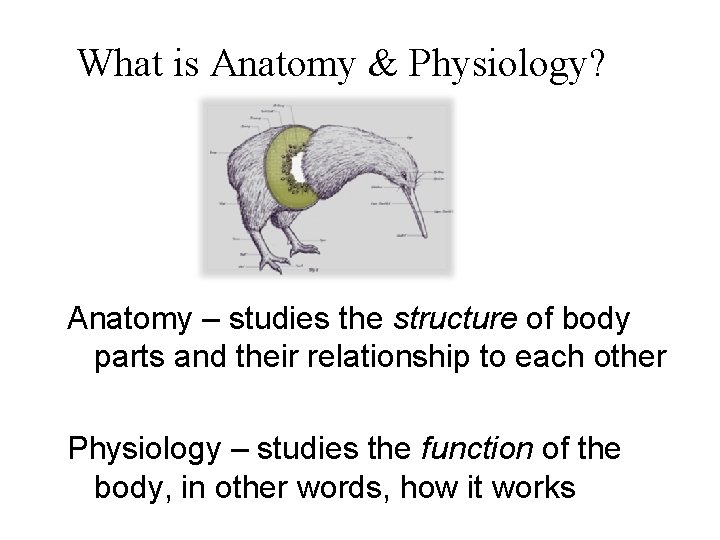
What is Anatomy & Physiology? Anatomy – studies the structure of body parts and their relationship to each other Physiology – studies the function of the body, in other words, how it works
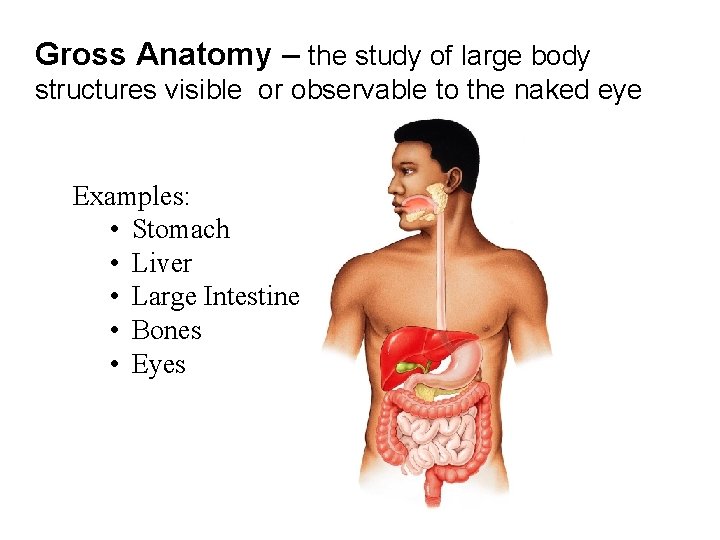
Gross Anatomy – the study of large body structures visible or observable to the naked eye Examples: • Stomach • Liver • Large Intestine • Bones • Eyes
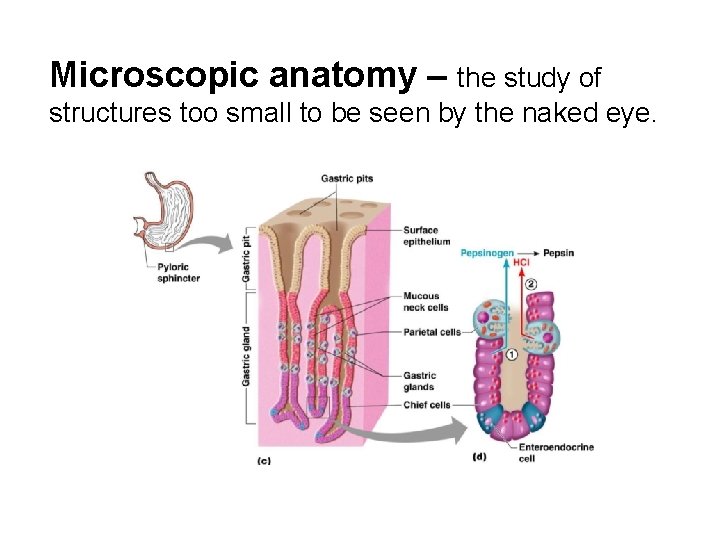
Microscopic anatomy – the study of structures too small to be seen by the naked eye.
A Look at Physiology ØConsiders the operation of specific organ systems Renal physiology – kidney function neurophysiology – workings of the nervous system cardiovascular physiology – the operation of the heart and blood vessesl ØFocuses on the functions of the body, often at the cellular or molecular level ØUnderstanding physiology also required a knowledge of physics, which explains electrical currents, blood pressure, and the way muscles use bones for movement
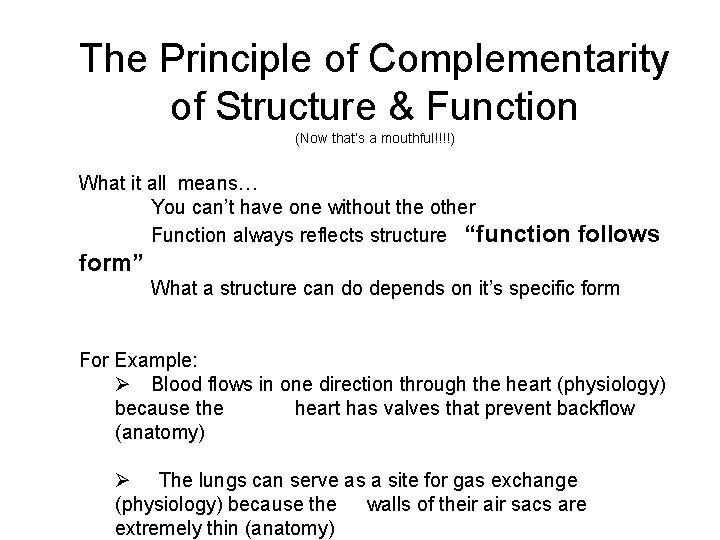
The Principle of Complementarity of Structure & Function (Now that’s a mouthful!!!!) What it all means… You can’t have one without the other Function always reflects structure “function follows form” What a structure can do depends on it’s specific form For Example: Ø Blood flows in one direction through the heart (physiology) because the heart has valves that prevent backflow (anatomy) Ø The lungs can serve as a site for gas exchange (physiology) because the walls of their air sacs are extremely thin (anatomy)
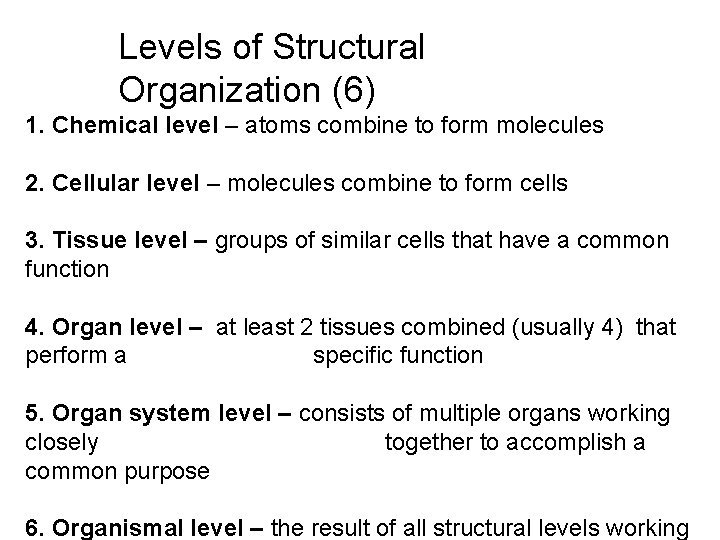
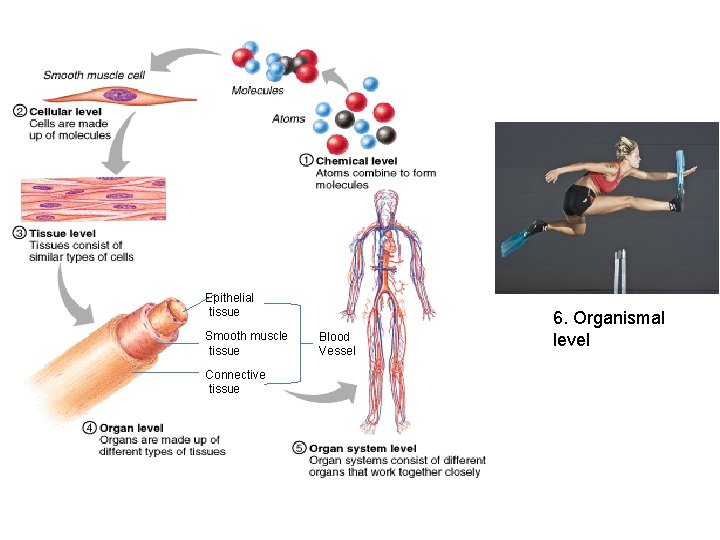
Levels of Structural Organization (6) 1. Chemical level – atoms combine to form molecules 2. Cellular level – molecules combine to form cells 3. Tissue level – groups of similar cells that have a common function 4. Organ level – at least 2 tissues combined (usually 4) that perform a specific function 5. Organ system level – consists of multiple organs working closely together to accomplish a common purpose 6. Organismal level – the result of all structural levels working
Epithelial tissue Smooth muscle tissue Connective tissue Blood Vessel 6. Organismal level
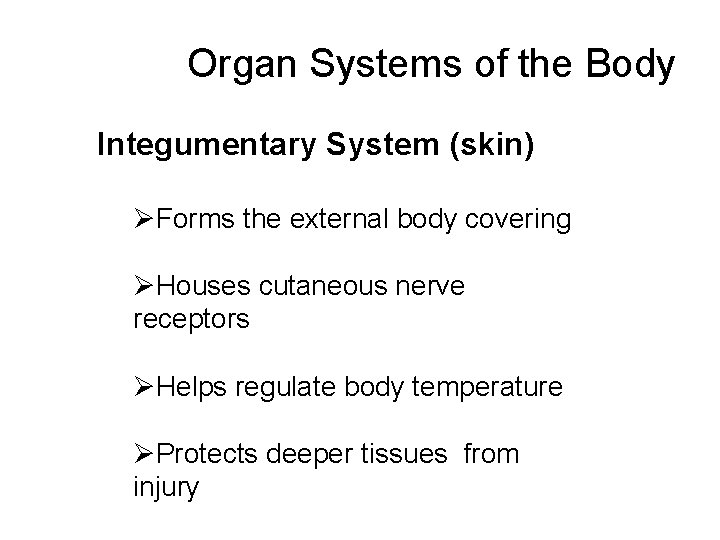
Organ Systems of the Body Integumentary System (skin) ØForms the external body covering ØHouses cutaneous nerve receptors ØHelps regulate body temperature ØProtects deeper tissues from injury
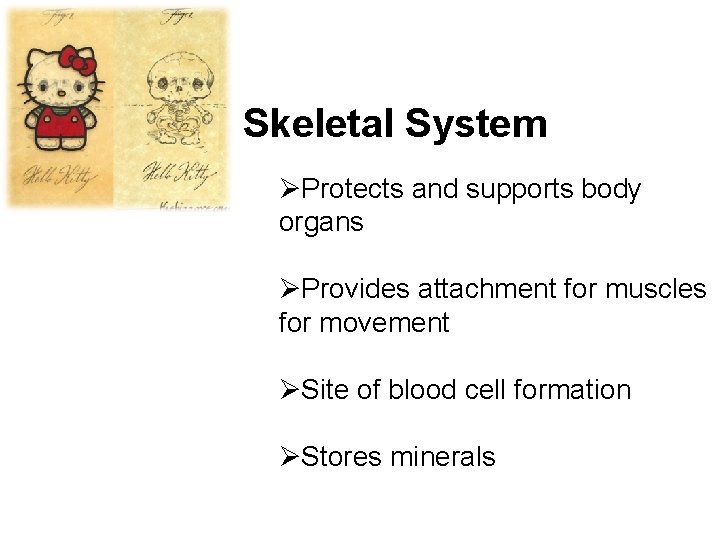
Skeletal System ØProtects and supports body organs ØProvides attachment for muscles for movement ØSite of blood cell formation ØStores minerals
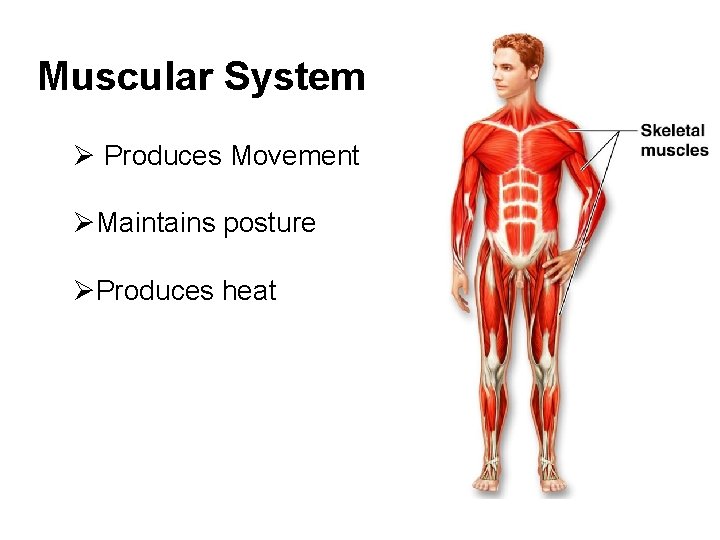
Muscular System Ø Produces Movement ØMaintains posture ØProduces heat
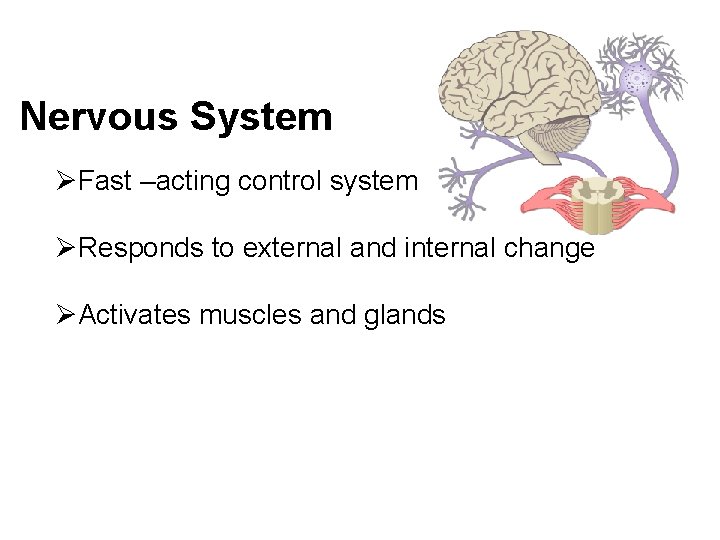
Nervous System ØFast –acting control system ØResponds to external and internal change ØActivates muscles and glands
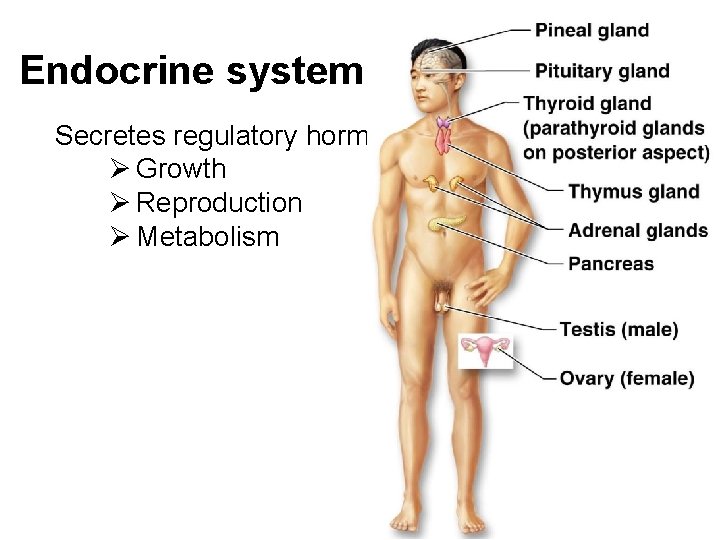
Endocrine system Secretes regulatory hormones Ø Growth Ø Reproduction Ø Metabolism
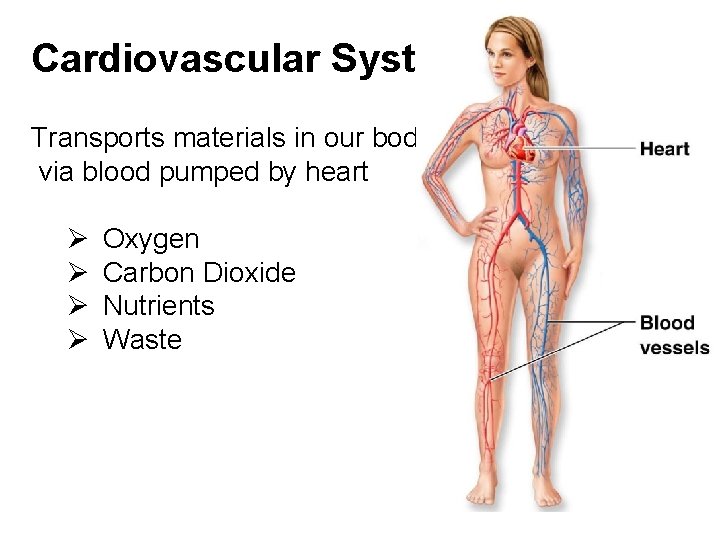
Cardiovascular System Transports materials in our body via blood pumped by heart Ø Ø Oxygen Carbon Dioxide Nutrients Waste
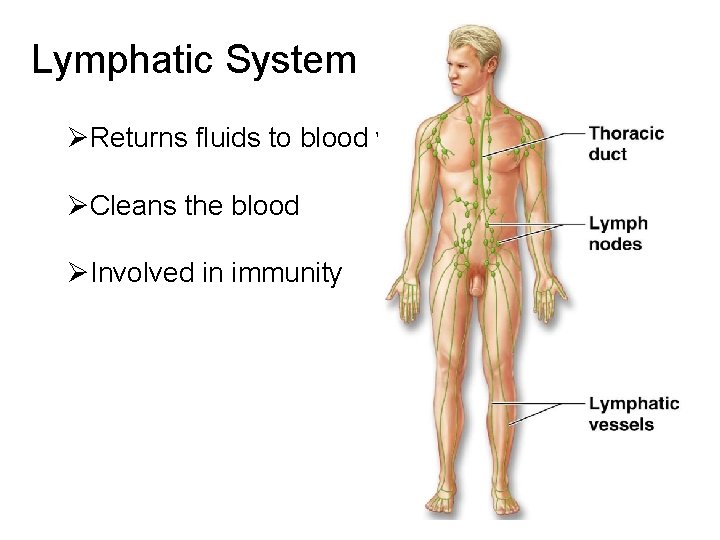
Lymphatic System ØReturns fluids to blood vessels ØCleans the blood ØInvolved in immunity
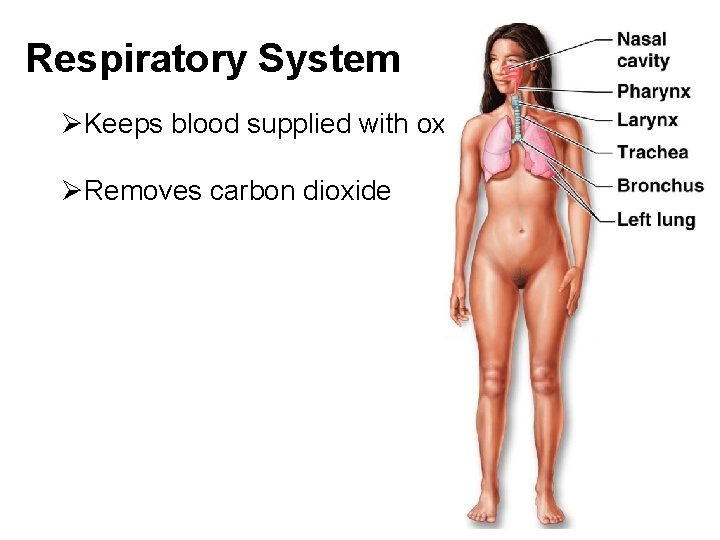
Respiratory System ØKeeps blood supplied with oxygen ØRemoves carbon dioxide
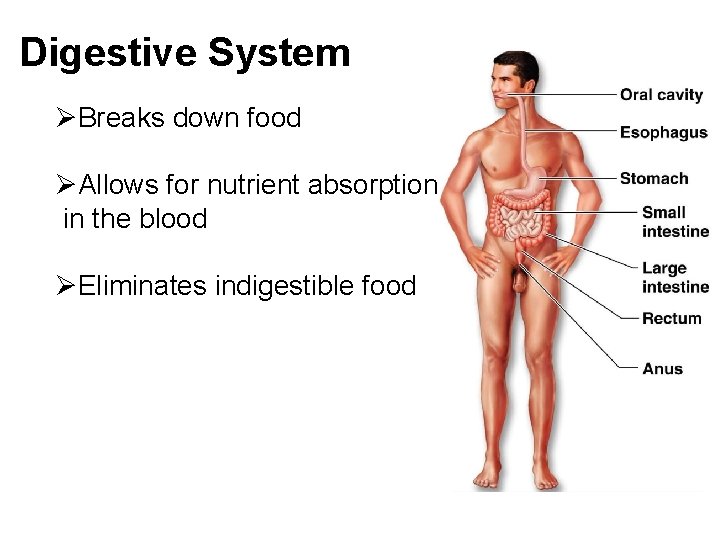
Digestive System ØBreaks down food ØAllows for nutrient absorption in the blood ØEliminates indigestible food
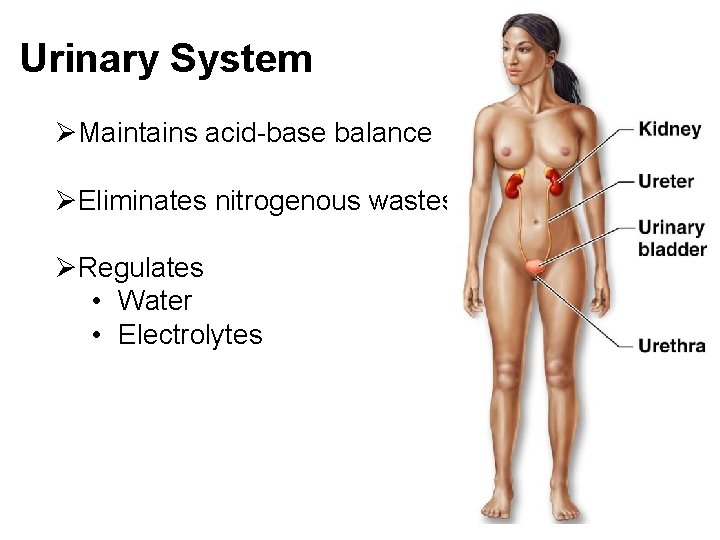
Urinary System ØMaintains acid-base balance ØEliminates nitrogenous wastes ØRegulates • Water • Electrolytes
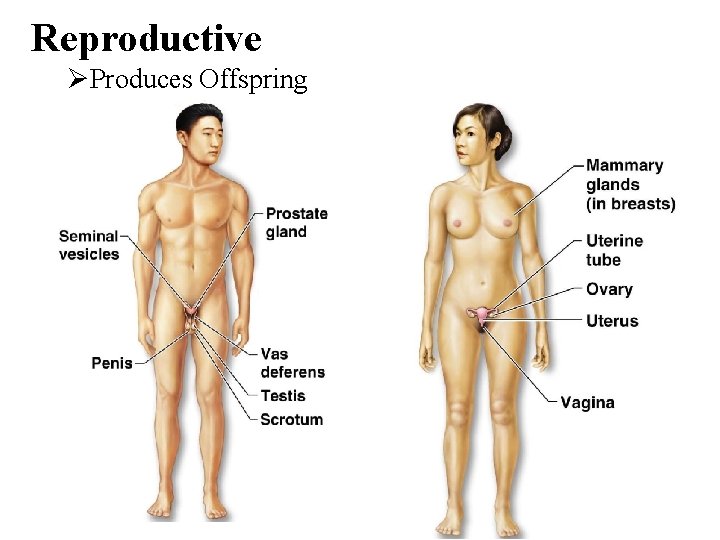
Reproductive ØProduces Offspring
8 Necessary Life Functions For Maintenance of Life Maintain Boundaries - The internal environment remains separate from the external environment ØCellular level – accomplished by plasma membranes Movement – includes activities promoted ØOrganismal level – all accomplished by theskin muscular system (running, swimming, etc…) as well as the movements we are not even aware of or able to physically control (heart beating, blood running through your veins, food traveling the alimentary canal, etc…)
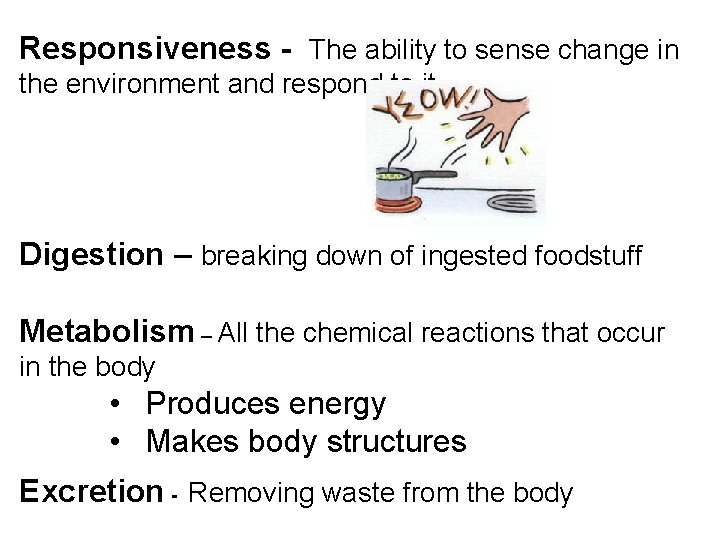
Responsiveness - The ability to sense change in the environment and respond to it Digestion – breaking down of ingested foodstuff Metabolism – All the chemical reactions that occur in the body • Produces energy • Makes body structures Excretion - Removing waste from the body
Reproduction – Produces future generation. Can occur at the cellular and organismal levels Cellular level- an original cell divides and produces two identical daughter cells Organismal level – Sperm and egg unite to make a whole new being Growth – an increase in the size of a body part, cell or number of cells
5 Survival The ultimate goal of all Needs body systems is to maintain life Nutrients – chemical substances used for energy and cell building. Includes: • Carbohydrates Vitamins • Proteins Minerals • Lipids Oxygen- needed for metabolic reactions Water – provides the necessary environments for chemical reactions • 60 -80% of your body is composed of water!
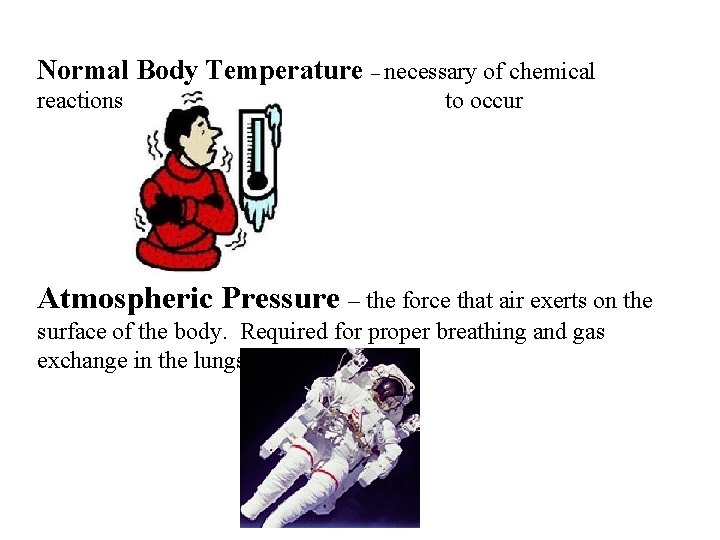
Normal Body Temperature – necessary of chemical reactions to occur Atmospheric Pressure – the force that air exerts on the surface of the body. Required for proper breathing and gas exchange in the lungs
Homeostasis ØThe ability to maintain relatively steady internal conditions even though the outside world changes continuously ØRefers to a state of “balance” or equilibrium, in which internal conditions vary, but always within narrow limits ØChemical, thermal and neural factors interact to maintain homeostasis
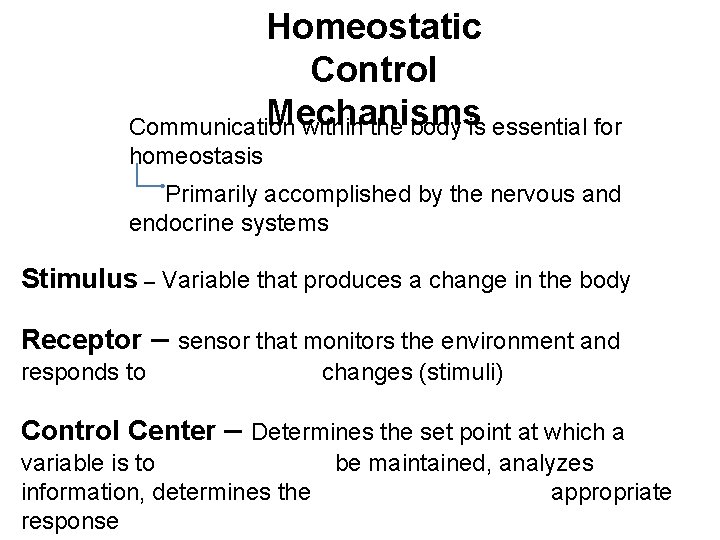
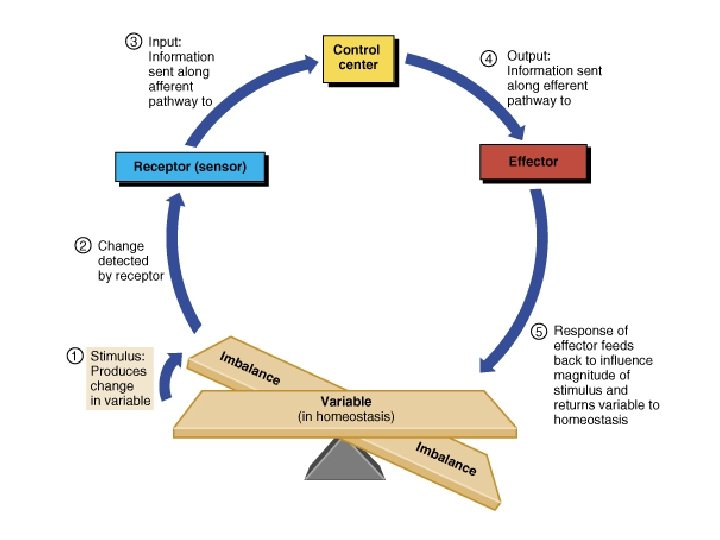
Homeostatic Control Mechanisms Communication within the body is essential for homeostasis Primarily accomplished by the nervous and endocrine systems Stimulus – Variable that produces a change in the body Receptor – sensor that monitors the environment and responds to changes (stimuli) Control Center – Determines the set point at which a variable is to be maintained, analyzes information, determines the appropriate response
Negative Feedback Mechanisms • Most homeostatic control mechanisms are negative feedback mechanisms • In negative feedback systems, the output shuts off the original stimulus • Said to be “negative” because the variable changes in the opposite direction of the initial change, thus returning it to its “ideal” value Examples: • Regulation of blood sugar • Regulation of body temperature
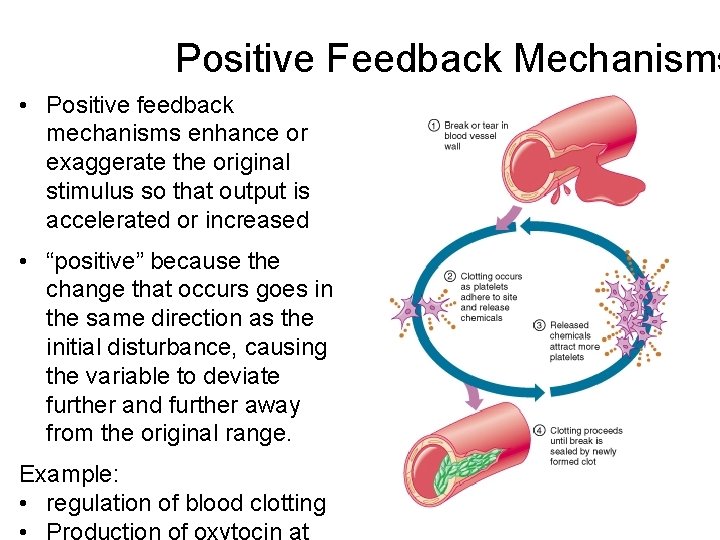
Positive Feedback Mechanisms • Positive feedback mechanisms enhance or exaggerate the original stimulus so that output is accelerated or increased • “positive” because the change that occurs goes in the same direction as the initial disturbance, causing the variable to deviate further and further away from the original range. Example: • regulation of blood clotting • Production of oxytocin at
Homeostatic Imbalance ØMost disease is a result of homeostatic imbalance ØAs we age, our body’s control systems become less efficient resulting in our internal environment becoming less stable ØIncreases our risk for illness and produces the changes we associate with aging
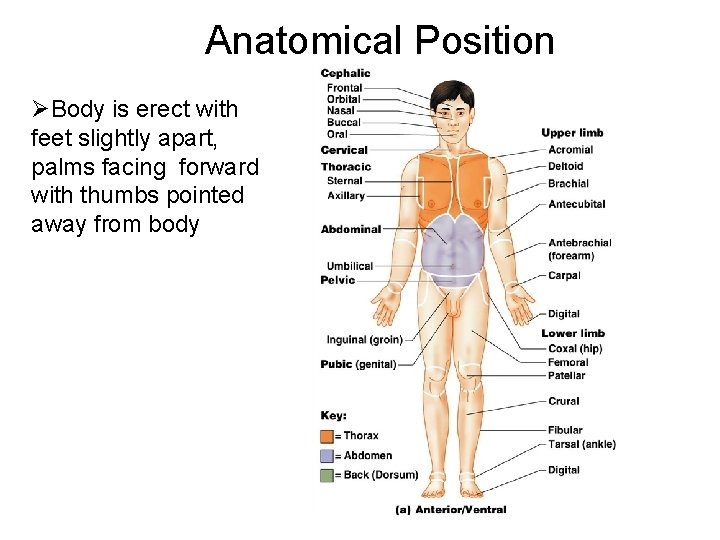
Anatomical Position ØBody is erect with feet slightly apart, palms facing forward with thumbs pointed away from body
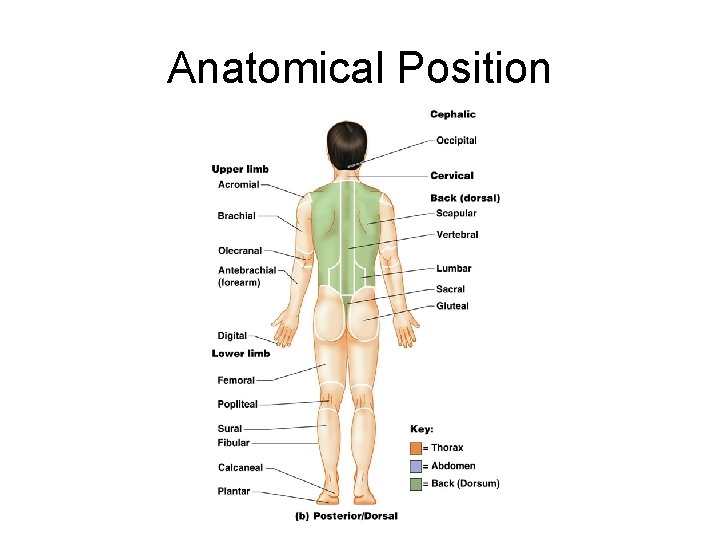
Anatomical Position
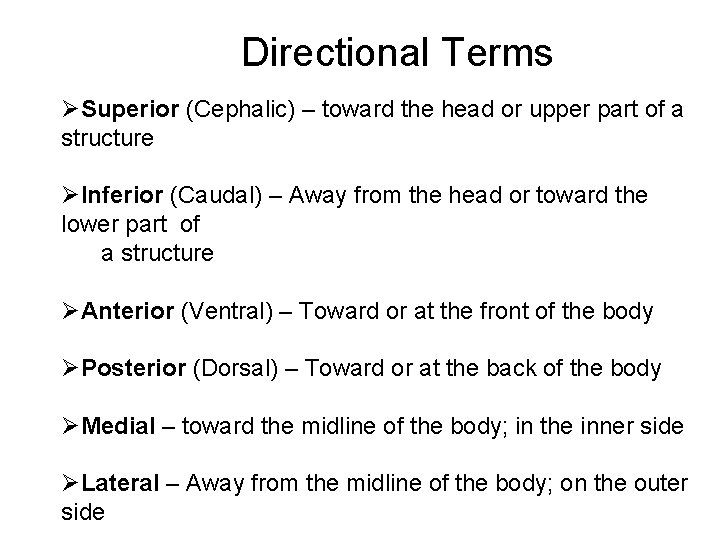
Directional Terms ØSuperior (Cephalic) – toward the head or upper part of a structure ØInferior (Caudal) – Away from the head or toward the lower part of a structure ØAnterior (Ventral) – Toward or at the front of the body ØPosterior (Dorsal) – Toward or at the back of the body ØMedial – toward the midline of the body; in the inner side ØLateral – Away from the midline of the body; on the outer side
Directional Terms Proximal – closer to the origin of the body part or the point of attachment of a limb to the body trunk Distal – Farther from the origin of a body party or the point of attachment of a limb to the body trunk Superficial (external) – Toward or at the body surface Deep (internal) – Away from the body surface; more internal
Regional Terms Axial Part ØMakes up the main axis of our body ØIncluded the head, neck, and trunk Appendicular Part ØConsists of the appendages or limbs which are attached to the body’s axis
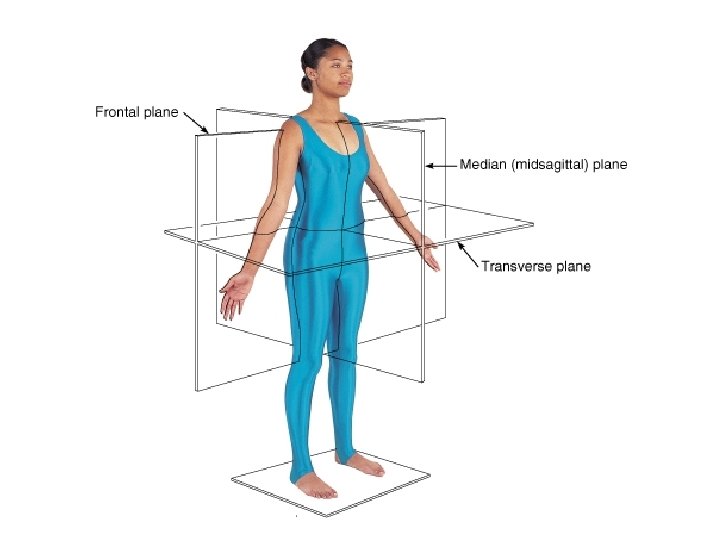
Body Planes and Sections Sagittal plane – a vertical plane that divides the body into riht and left parts Midsagittal plane – a sagittal plane that is exactly in the midline Frontal plane – also called a coronal plane. Divides the body into anterior (ventral) and posterior (dorsal) parts Transverse plane – runs horizontally from left to right dividing the body into superior and inferior parts. Also called a cross section
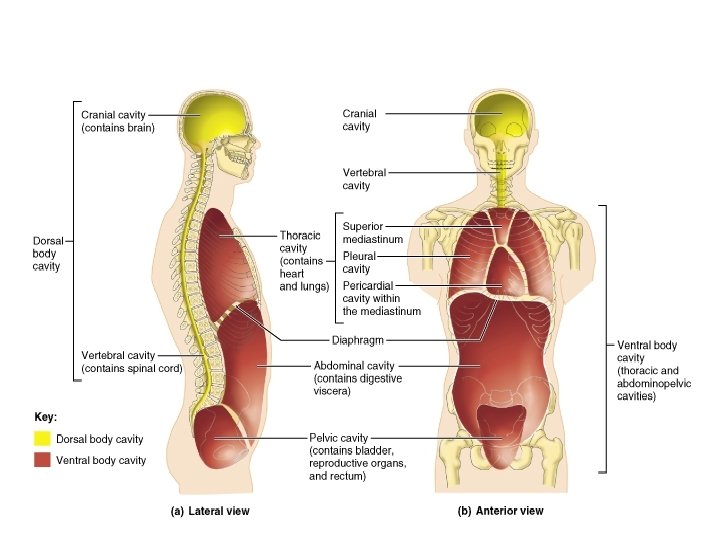
Body Cavities & Membranes Dorsal Body Cavity ØProtects the nervous system organs ØHas 2 subdivisions • Cranial cavity – within the skull encases the brain • Vertebral or spinal cavity – runs within the vertebral column, encloses the spinal cord Ventral Body Cavity ØHouses the ventral organs (viscera) Ødivided into 2 subdivisions: • Thoracic • Abdominopelvic
Body Cavities & Membranes Thoracic cavity – is divided into the pleural cavities, the mediastinum, and the pericardial cavity Ø Pleural Cavities – contain the lungs ØMediastinum – contains the pericardial cavity and surrounds the remaining thoracic organs (esophagus, trachea, etc…) ØPericardial Cavity – contains the heart
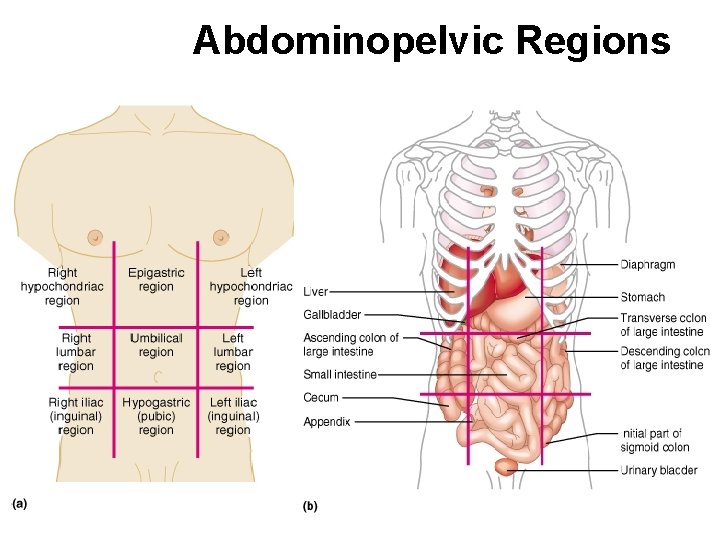
Body Cavities & Membranes Abdominopelvic cavity Ø Separated from the thoracic cavity by the diaphram (dome shaped muscle used in breathing) ØComposed of 2 subdivisions: • Abdominal cavity – contains the stomach, intestines, spleen, liver and other organs • Pelvic cavity – located within the pelvis and contains the bladder, reproductive organs, and the rectum
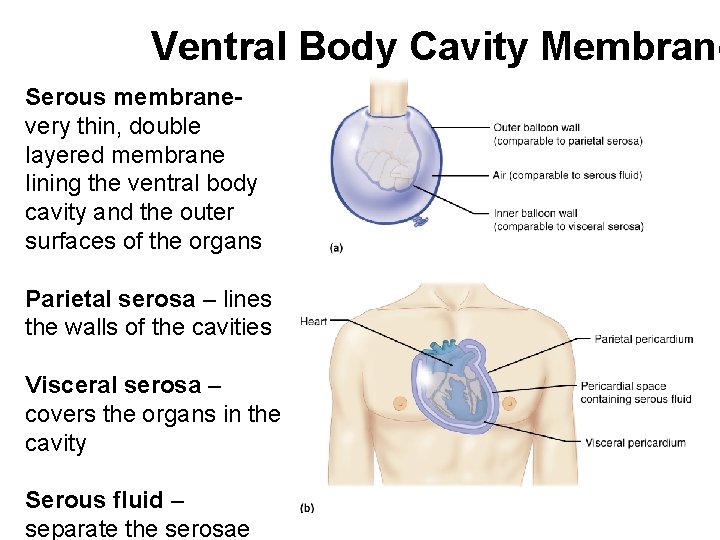
Ventral Body Cavity Membrane Serous membranevery thin, double layered membrane lining the ventral body cavity and the outer surfaces of the organs Parietal serosa – lines the walls of the cavities Visceral serosa – covers the organs in the cavity Serous fluid – separate the serosae
Abdominopelvic Regions
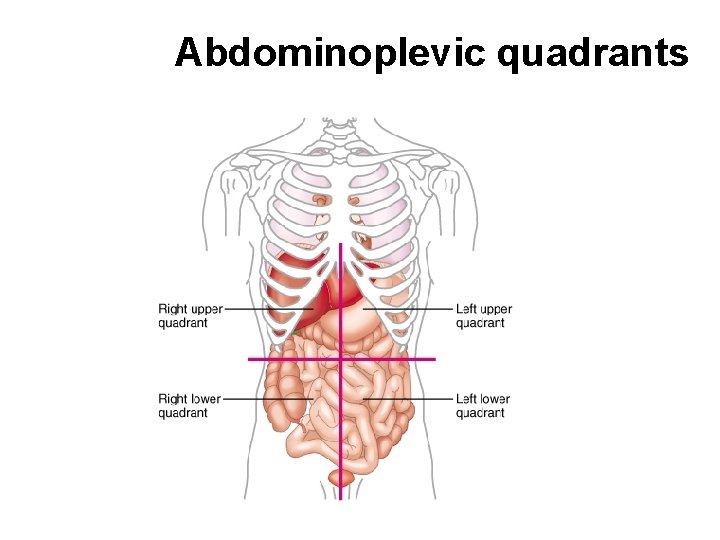
Abdominoplevic quadrants
The End