
What is Anaphylaxis Is this a problem at
What is Anaphylaxis? Is this a problem at school?
Goals for today • Understand what anaphylaxis is and what the signs and symptoms of a reaction are • Learn how we are going to manage anaphylaxis at school • Practice using an Epi. Pen and Twinjet auto-Injector for epinephrine
Anaphylaxis is. . . • An allergic reaction that can affect the entire body • It can be fatal • It happens quickly • It often has an identifiable cause
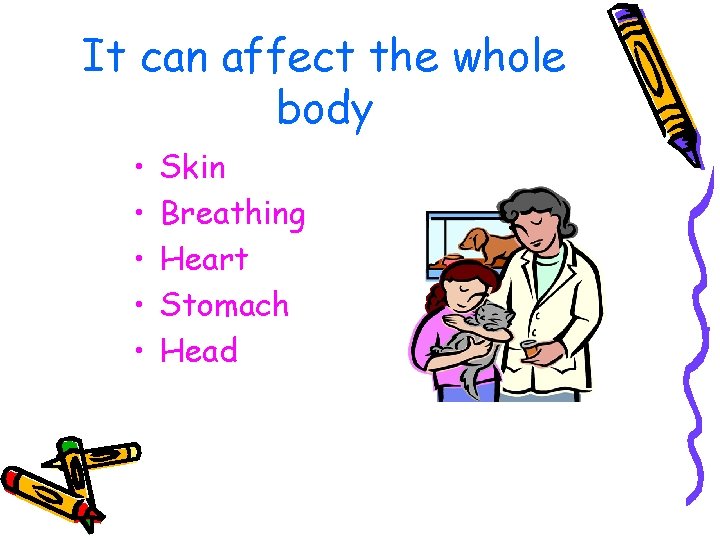
It can affect the whole body • • • Skin Breathing Heart Stomach Head

How fast is fast? • Symptoms can occur within minutes to two hours after contact with the allergy causing substance • In rare instances, it may occur up to four hours later
Common Causes • • • Food Medication Insect stings Latex Some have an unknown cause
Who is at risk? • Anyone with a previous history • Individuals with food allergies (Particularly allergies to shellfish, peanuts, and tree nuts) • People with asthma are at an increased risk
Signs and symptoms • • • Tingling sensation Rash. . . itching. . . burning Metallic taste Sensation of warmth Breathing difficulty. . . Changes in skin color Nausea, vomiting, diarrhea, or cramps Anxiety, dizziness, headache Drop in blood pressure Loss of consciousness
Essentials of school Management… • Written Classroom Health Care Plan developed by the school nurse and signed by the health care provider. • Able to recognize of the signs and symptoms of anaphylaxis at school • Prompt administration of epinephrine. • Transport to closest emergency facility
Management of Anaphylaxis at school This is really a 4 tiered effort. . . • Developing a Classroom Health Care Plan that includes the emergency plan • The Immediate phase at exposure • The phase after the initial treatments • The Prevention Plan
Developing the Classroom Health Care Plan Your school nurse can help here. • The plan should cover the emergency steps to follow. • It should include the necessary trainings. • It also should cover prevention plans as well.
Immediately • Clear and secure the airway as needed. Observe for breathing. • Rapidly assess level of consciousness • Consider Epinephrine. . . Is this anaphylaxis? • Have someone call 911
Second Phase • If this is anaphylaxis, give the epinephrine and/or benedryl as ordered by the Health Care Provider • Stay with the student • Have them stay laying down. Elevate their legs if possible. • Make sure 911 has been called
Transport… 3 rd Phase • Once epinephrine has been given, the student must have further care at the closest emergency facility • Epinephrine lasts for only about 1520 minutes. • Follow the advice of the emergency responders.
What is Epinephrine? • It is a hormone produced by all of us in the adrenal glands • It is often referred to as Adrenaline
How Does Epinephrine Work? • Epinephrine has three major actions that are of critical importance in the treatment of anaphylaxis because it: – Constricts blood vessels and – It is a Bronchodilator – Help keeps the blood pressure stable.
Epinephrine. . . • Adverse reactions to epinephrine include a fast heart rate; transient, moderate anxiety; apprehensiveness; restlessness; tremor; weakness; shakiness; dizziness; sweating; palpitations; pallor; nausea and vomiting; headache; and/or respiratory difficulties.
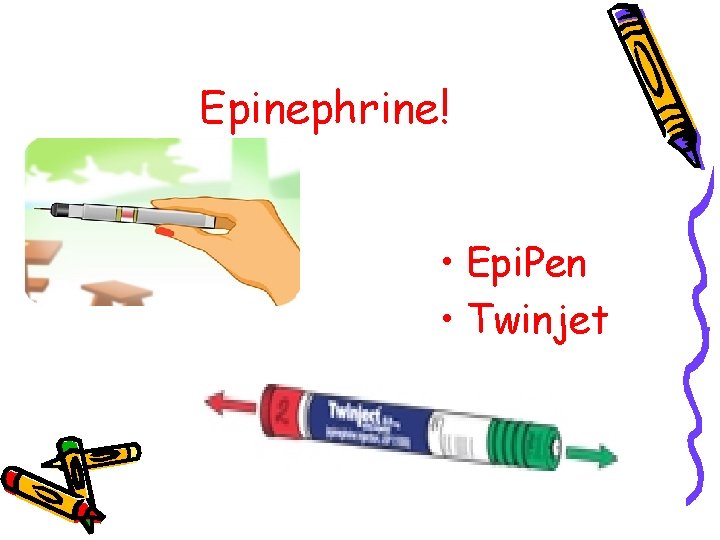
Epinephrine! • Epi. Pen • Twinjet
Prevention of anaphylaxisis the 4 th Phase • Medic-Alert identification • Teach appropriate avoidance measures • Be observant. . . watch for the signs and symptoms of an anaphylactic reaction.

Avoidance! • What about nut free zones? • Consider a nut free table in the cafeteria. • A nut free classroom is another consideration
Quiz Time • What is anaphylaxis? • What are the symptoms of a reaction? • Who is at risk for an anaphylactic reaction?
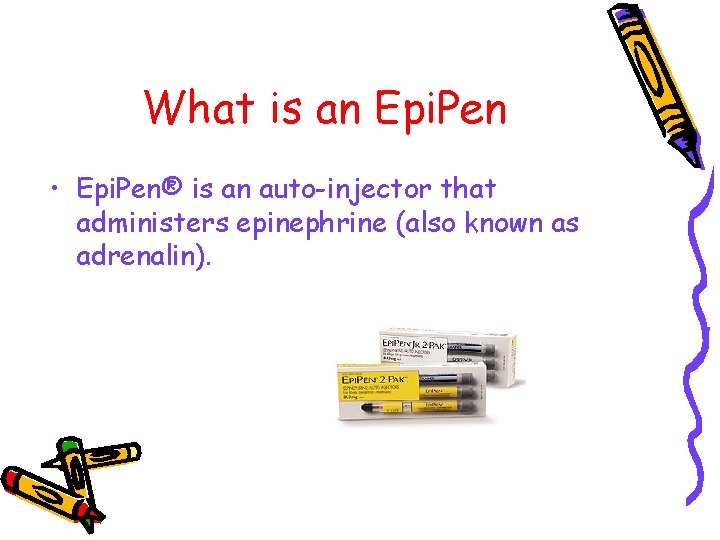
What is an Epi. Pen • Epi. Pen® is an auto-injector that administers epinephrine (also known as adrenalin).
How to use the Epi. Pen
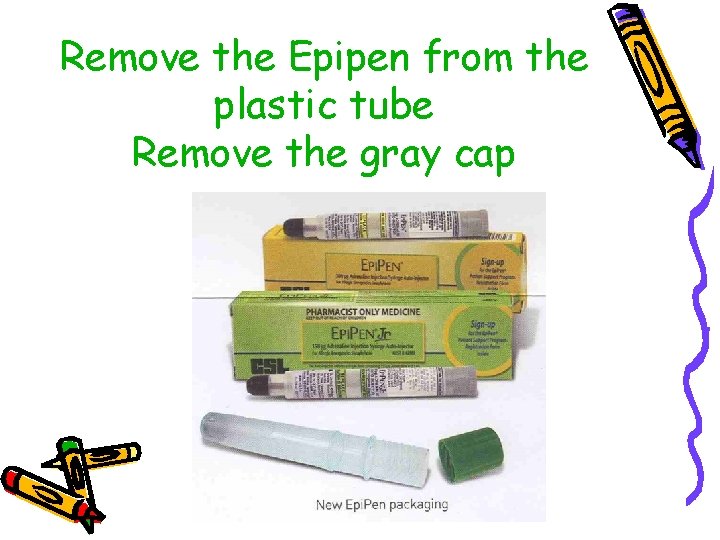
Remove the Epipen from the plastic tube Remove the gray cap
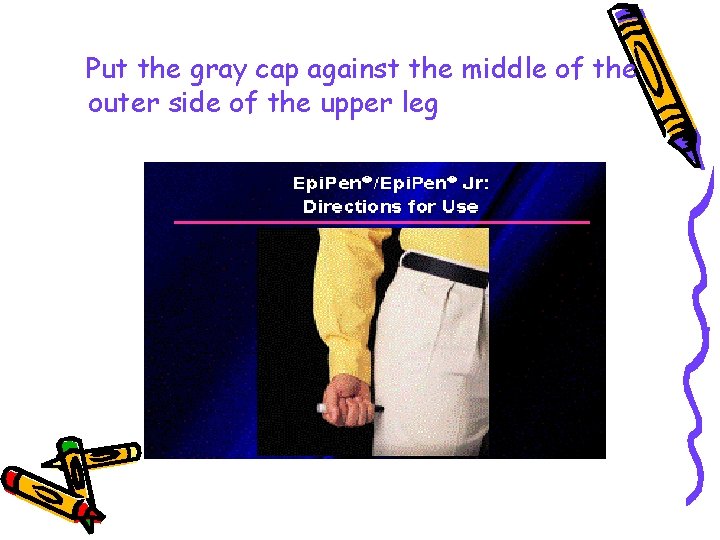
Put the gray cap against the middle of the outer side of the upper leg
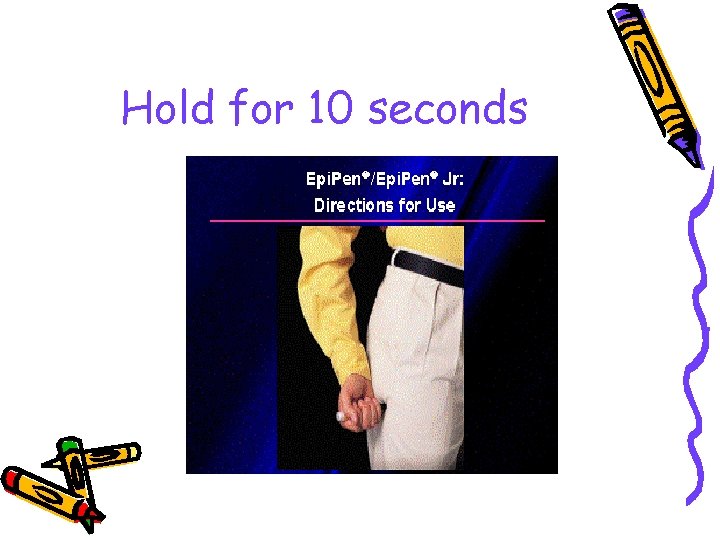
Hold for 10 seconds
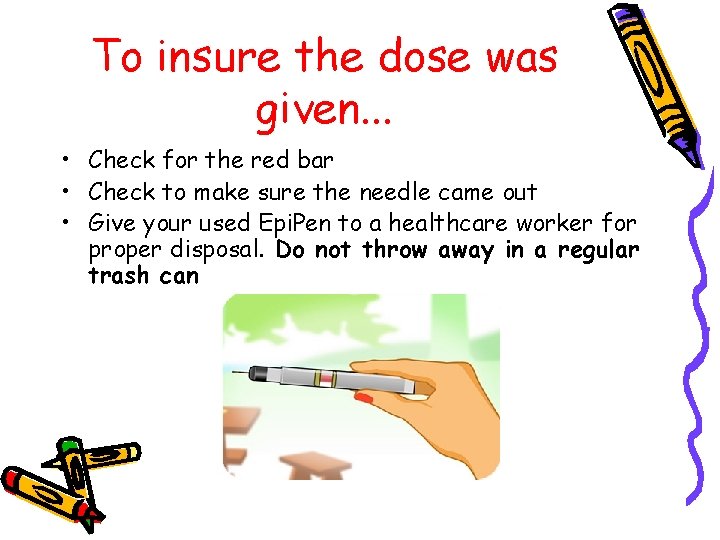
To insure the dose was given. . . • Check for the red bar • Check to make sure the needle came out • Give your used Epi. Pen to a healthcare worker for proper disposal. Do not throw away in a regular trash can
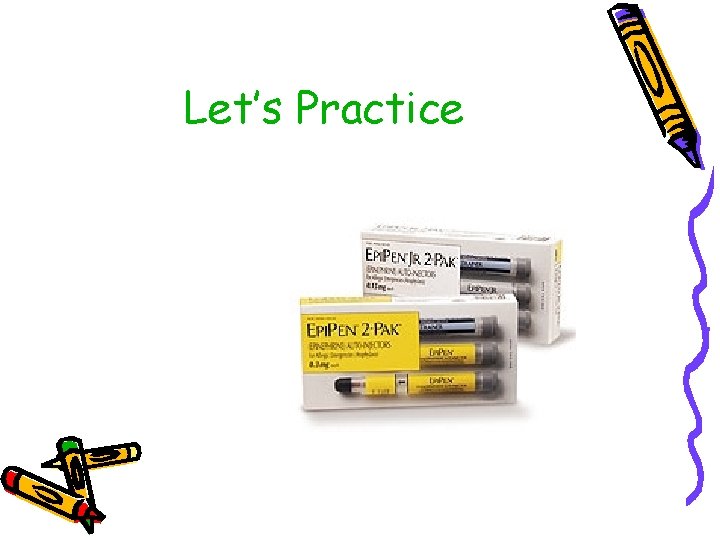
Let’s Practice
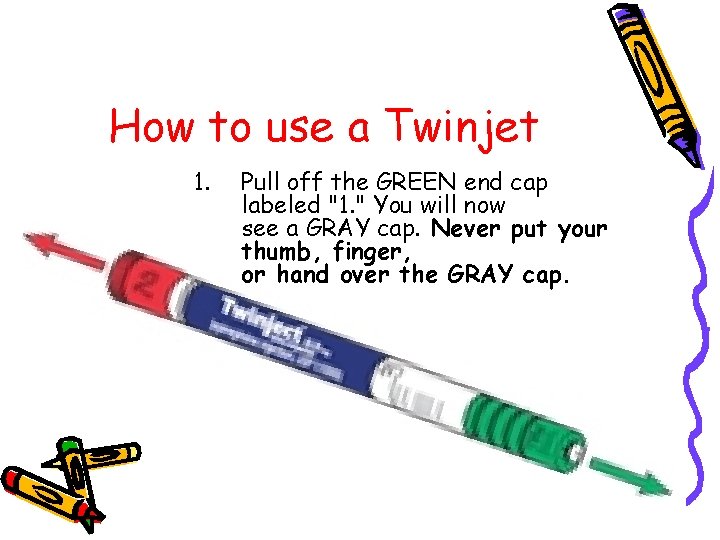
How to use a Twinjet 1. Pull off the GREEN end cap labeled "1. " You will now see a GRAY cap. Never put your thumb, finger, or hand over the GRAY cap.
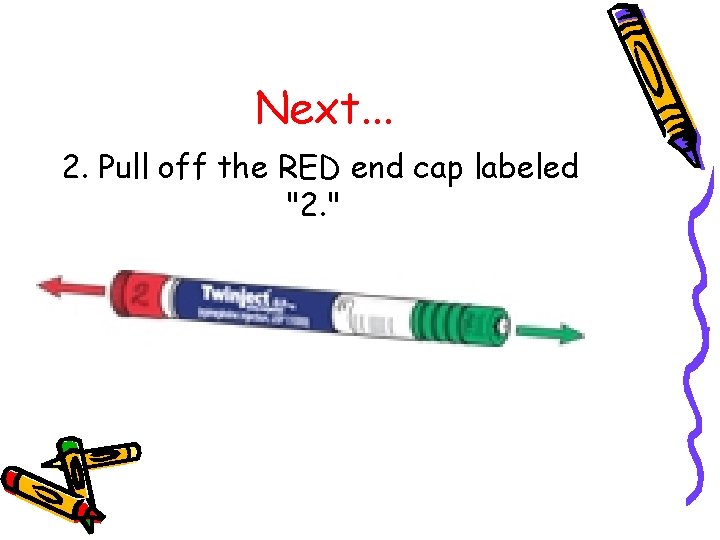
Next. . . 2. Pull off the RED end cap labeled "2. "
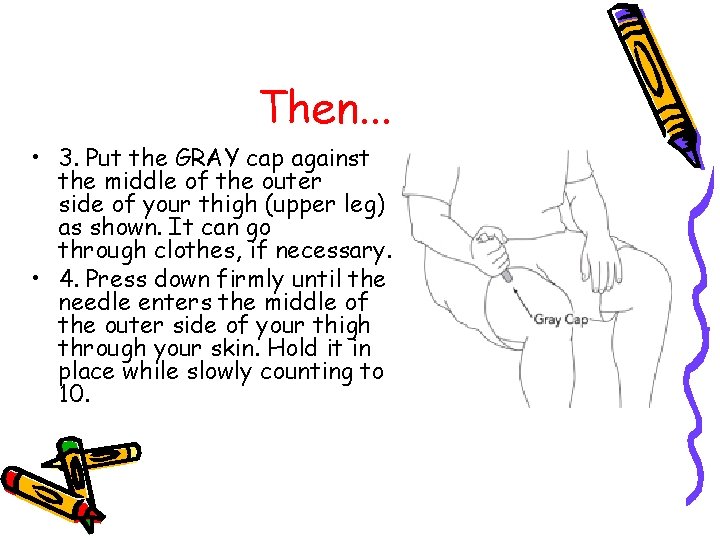
Then. . . • 3. Put the GRAY cap against the middle of the outer side of your thigh (upper leg) as shown. It can go through clothes, if necessary. • 4. Press down firmly until the needle enters the middle of the outer side of your thigh through your skin. Hold it in place while slowly counting to 10.
After 10 Seconds • • Remove the Twinjet from your skin. Check the GRAY cap; if the needle is exposed, the dose was given. If not, repeat #3 and #4. Get ready for the second dose. Get emergency medical help right away.
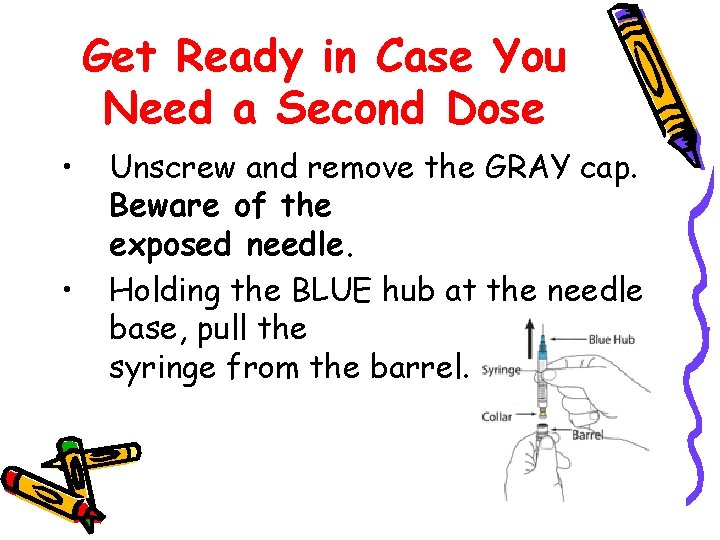
Get Ready in Case You Need a Second Dose • • Unscrew and remove the GRAY cap. Beware of the exposed needle. Holding the BLUE hub at the needle base, pull the syringe from the barrel.
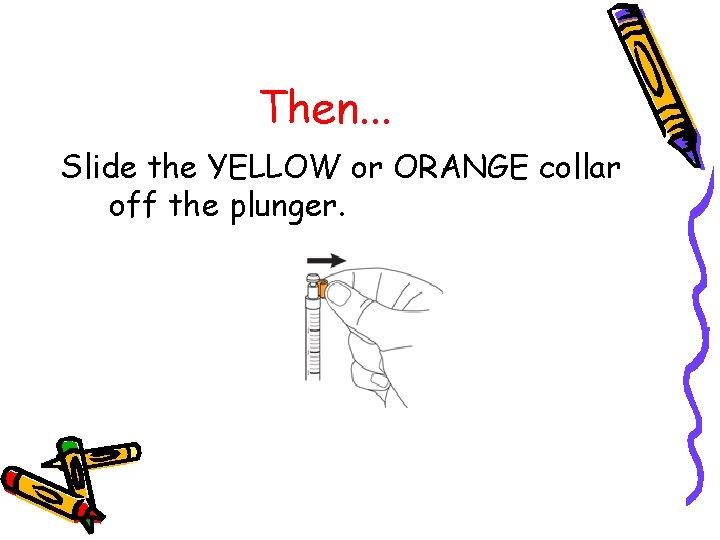
Then. . . Slide the YELLOW or ORANGE collar off the plunger.
Decide if You Need a Second Dose • If your symptoms have not improved within about 5 minutes since the first injection, you need a second injection. • If a second dose is not needed, throw away the unused medication as directed.

Inject the Second Dose • • • Put the needle into your thigh (upper leg), through your skin, as shown. Push the plunger down all the way. Remove Twinjet from your skin.
Proper Disposal • Give your used Twinjet to a healthcare worker for proper disposal. Do not throw away in a regular trash can.
• Prepared by: Mary Clark RN, NCSN • • • Reviewed by: Paula Peterson APNP Primary Children’s Hospital Salt Lake City, Utah JMJ Publishers 1156 Wilson Ave. Salt Lake City, Utah 84105 801 467 -5083
- Slides: 38