
What is an RTA in the WTO Types
- Slides: 20
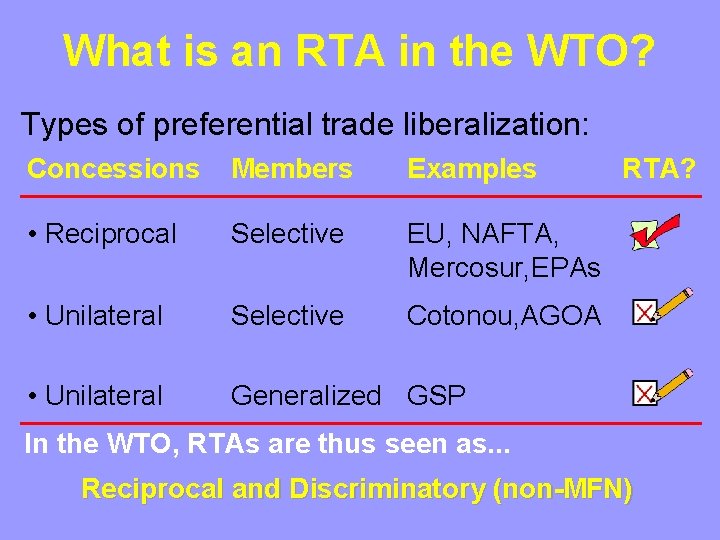
What is an RTA in the WTO? Types of preferential trade liberalization: Concessions Members Examples • Reciprocal Selective EU, NAFTA, Mercosur, EPAs • Unilateral Selective Cotonou, AGOA • Unilateral Generalized GSP RTA? In the WTO, RTAs are thus seen as. . . Reciprocal and Discriminatory (non-MFN)
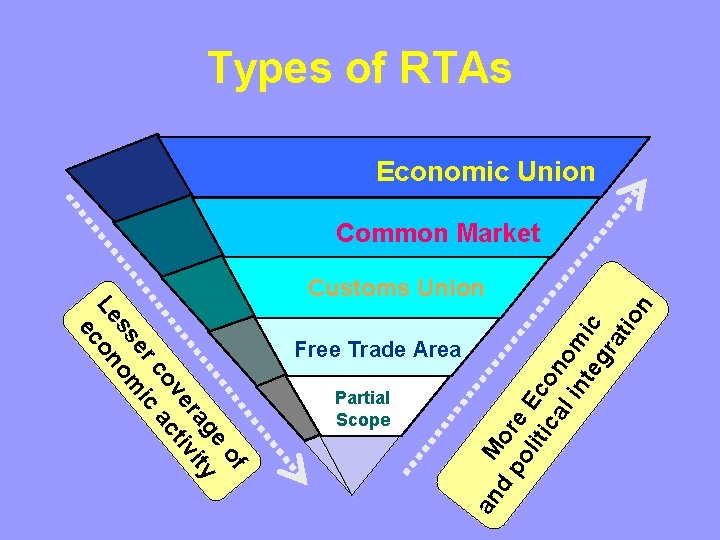
Types of RTAs Economic Union Common Market Partial Scope an of ge y ra vit ve cti co a er ic ss om Le on ec Free Trade Area d Mor po e lit Ec ic on al in om te ic gr at io n Customs Union
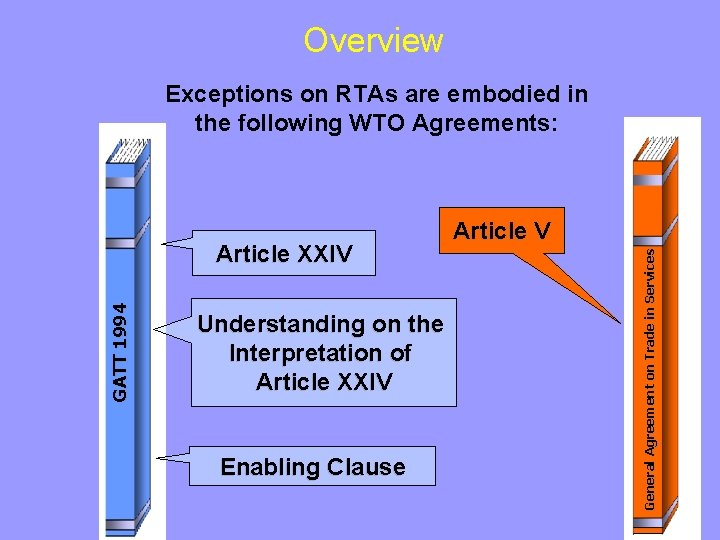
Overview Exceptions on RTAs are embodied in the following WTO Agreements: Understanding on the Interpretation of Article XXIV Enabling Clause General Agreement on Trade in Services GATT 1994 Article XXIV Article V
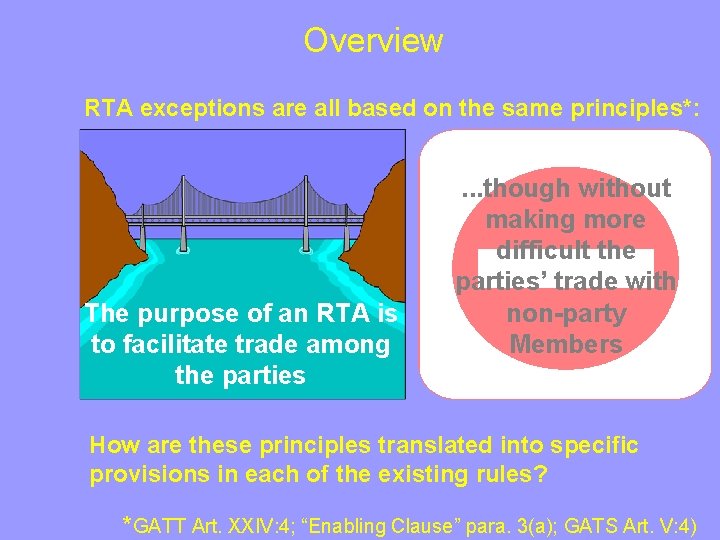
Overview RTA exceptions are all based on the same principles*: The purpose of an RTA is to facilitate trade among the parties . . . though without making more difficult the parties’ trade with non-party Members How are these principles translated into specific provisions in each of the existing rules? *GATT Art. XXIV: 4; “Enabling Clause” para. 3(a); GATS Art. V: 4)
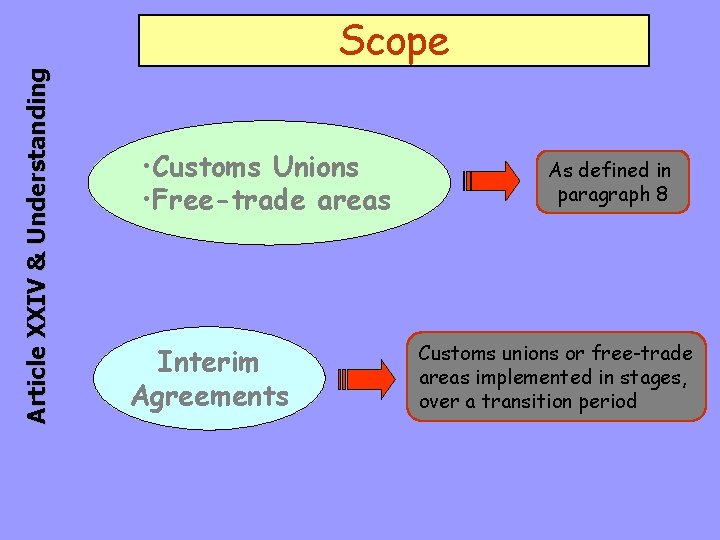
Article XXIV & Understanding Scope • Customs Unions • Free-trade areas Interim Agreements As defined in paragraph 8 Customs unions or free-trade areas implemented in stages, over a transition period
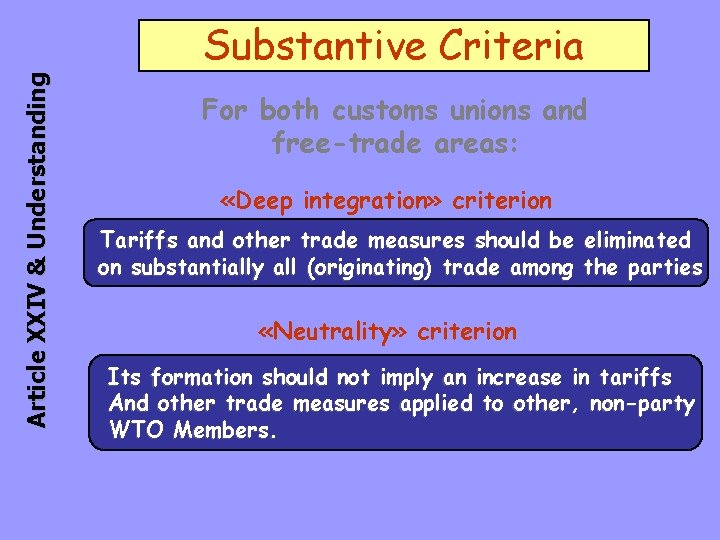
Article XXIV & Understanding Substantive Criteria For both customs unions and free-trade areas: «Deep integration» criterion Tariffs and other trade measures should be eliminated on substantially all (originating) trade among the parties «Neutrality» criterion Its formation should not imply an increase in tariffs And other trade measures applied to other, non-party WTO Members.
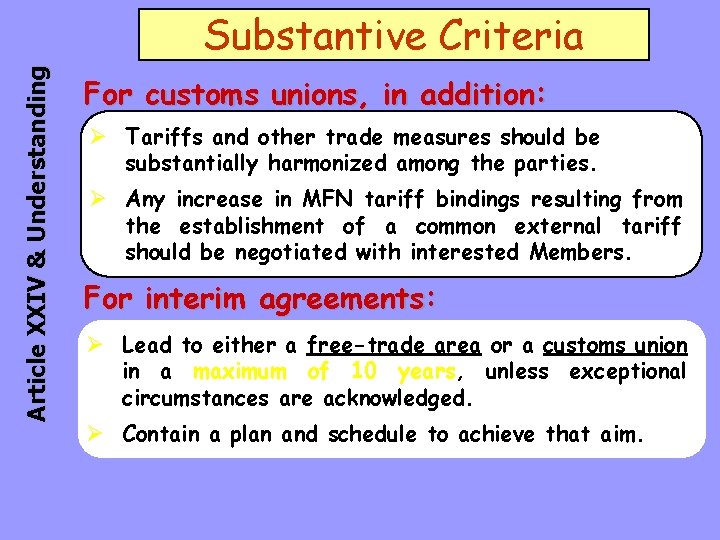
Article XXIV & Understanding Substantive Criteria For customs unions, in addition: Tariffs and other trade measures should be substantially harmonized among the parties. Any increase in MFN tariff bindings resulting from the establishment of a common external tariff should be negotiated with interested Members. For interim agreements: Lead to either a free-trade area or a customs union in a maximum of 10 years, unless exceptional circumstances are acknowledged. Contain a plan and schedule to achieve that aim.
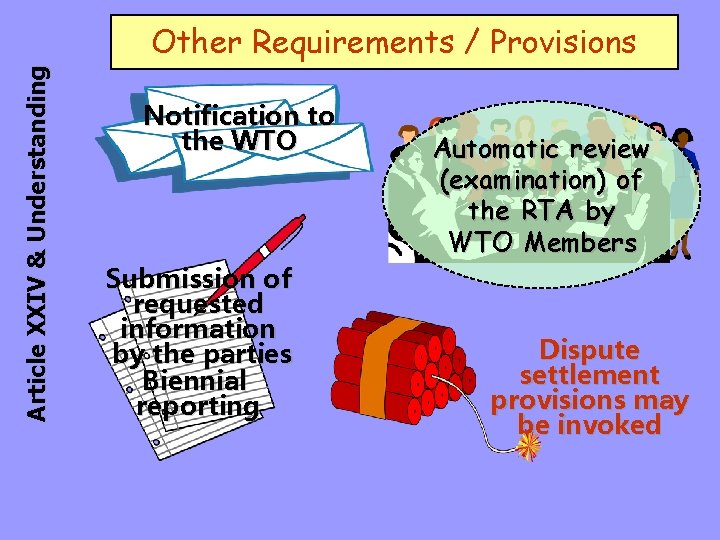
Article XXIV & Understanding Other Requirements / Provisions Notification to the WTO Submission of requested information by the parties Biennial reporting Automatic review (examination) of the RTA by WTO Members Dispute settlement provisions may be invoked
The Enabling Clause Scope Paragraph 2(c) : WTO developing country Members are authorized to depart from the MFN clause (Article I), to enter into reciprocal regional or global arrangements with other developing countries, establishing tariff and (subject to WTO approval, in principle) non-tariff preferences in their mutual goods trade.
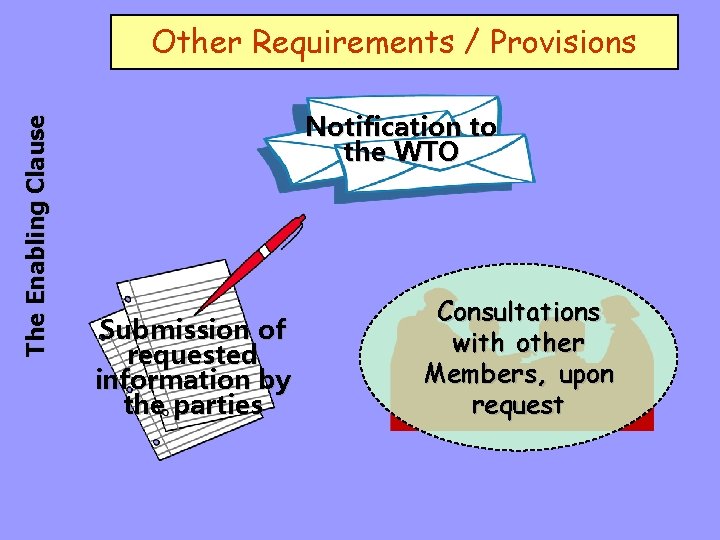
The Enabling Clause Other Requirements / Provisions Notification to the WTO Submission of requested information by the parties Consultations with other Members, upon request
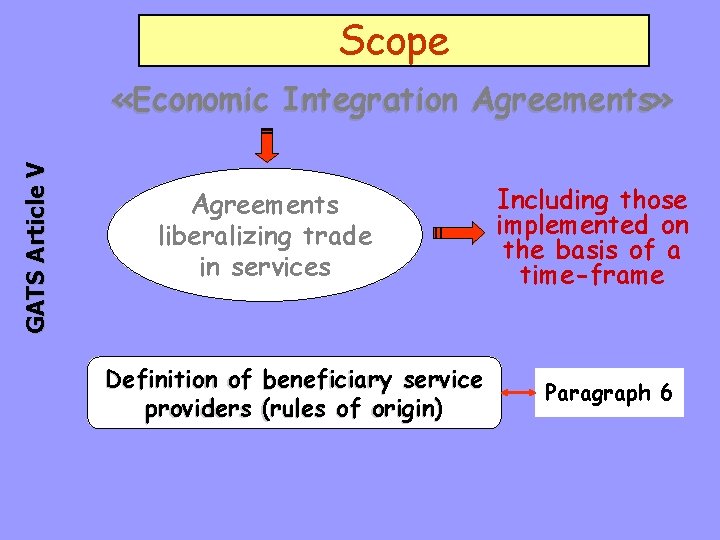
Scope GATS Article V «Economic Integration Agreements» Agreements liberalizing trade in services Definition of providers beneficiary service (rules of origin) Including those implemented on the basis of a time-frame Paragraph 6
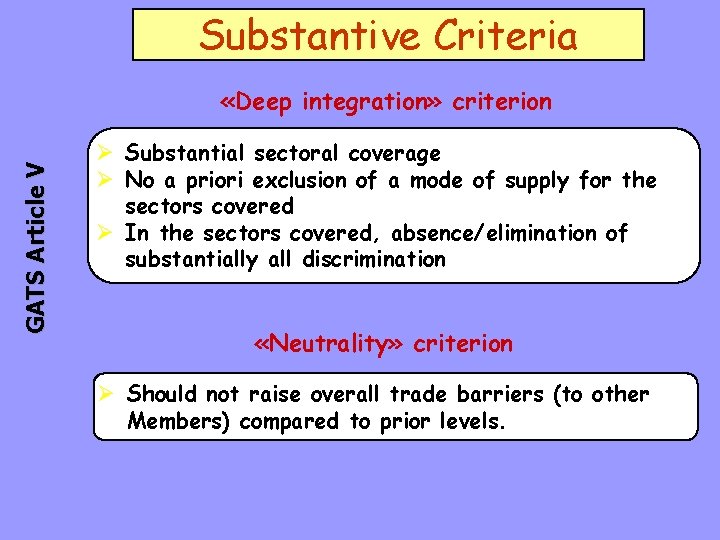
Substantive Criteria GATS Article V «Deep integration» criterion Substantial sectoral coverage No a priori exclusion of a mode of supply for the sectors covered In the sectors covered, absence/elimination of substantially all discrimination «Neutrality» criterion Should not raise overall trade barriers (to other Members) compared to prior levels.
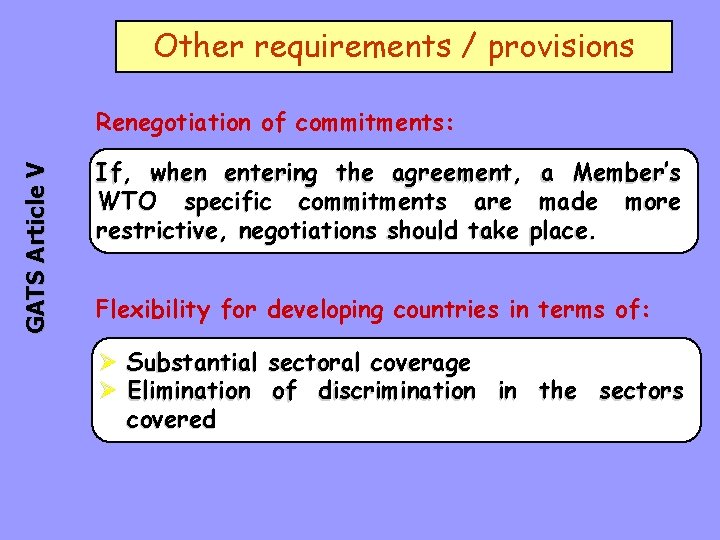
Other requirements / provisions GATS Article V Renegotiation of commitments: If, when entering the agreement, a Member’s WTO specific commitments are made more restrictive, negotiations should take place. Flexibility for developing countries in terms of: Substantial sectoral coverage Elimination of discrimination in the sectors covered
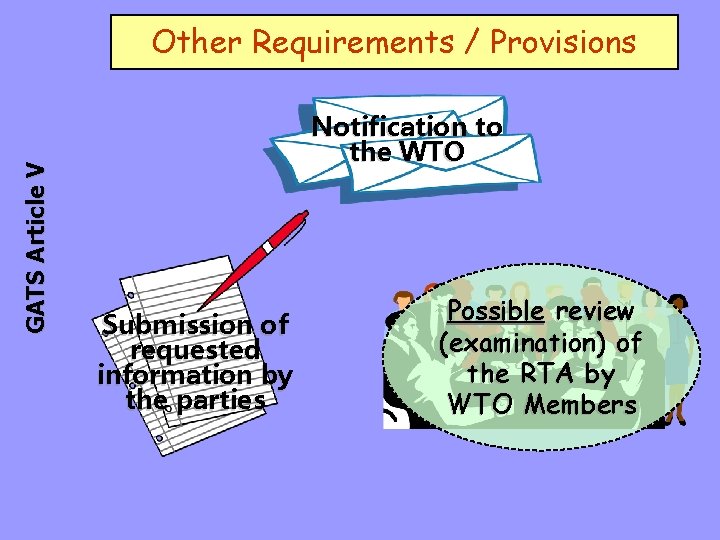
GATS Article V Other Requirements / Provisions Notification to the WTO Submission of requested information by the parties Possible review (examination) of the RTA by WTO Members
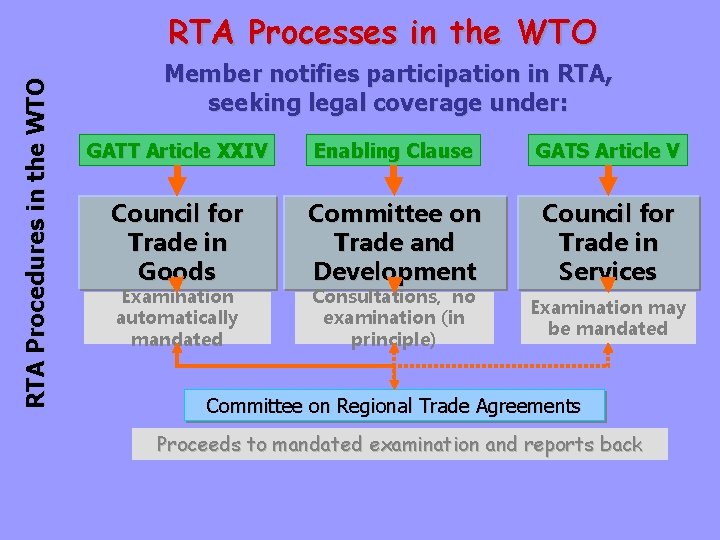
RTA Procedures in the WTO RTA Processes in the WTO Member notifies participation in RTA, seeking legal coverage under: GATT Article XXIV Enabling Clause GATS Article V Council for Trade in Goods Committee on Trade and Development Council for Trade in Services Examination automatically mandated Consultations, no examination (in principle) Examination may be mandated Committee on Regional Trade Agreements Proceeds to mandated examination and reports back
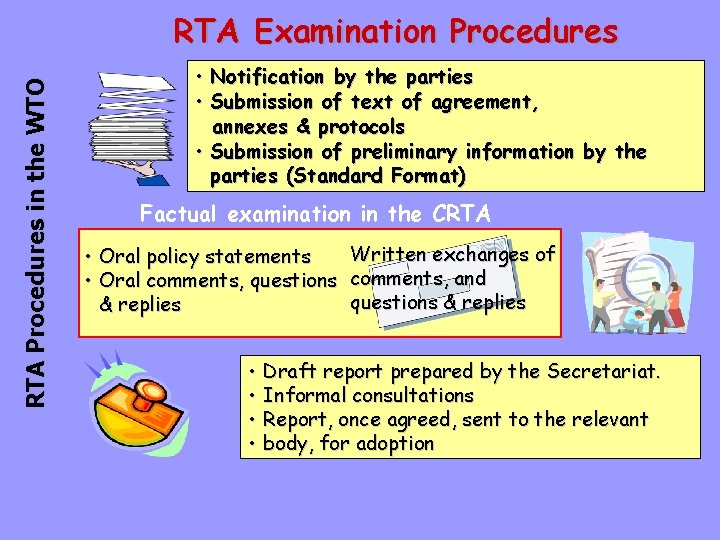
RTA Procedures in the WTO RTA Examination Procedures • Notification by the parties • Submission of text of agreement, annexes & protocols • Submission of preliminary information by the parties (Standard Format) Factual examination in the CRTA Written exchanges of • Oral policy statements • Oral comments, questions comments, and questions & replies • • Draft report prepared by the Secretariat. Informal consultations Report, once agreed, sent to the relevant body, for adoption
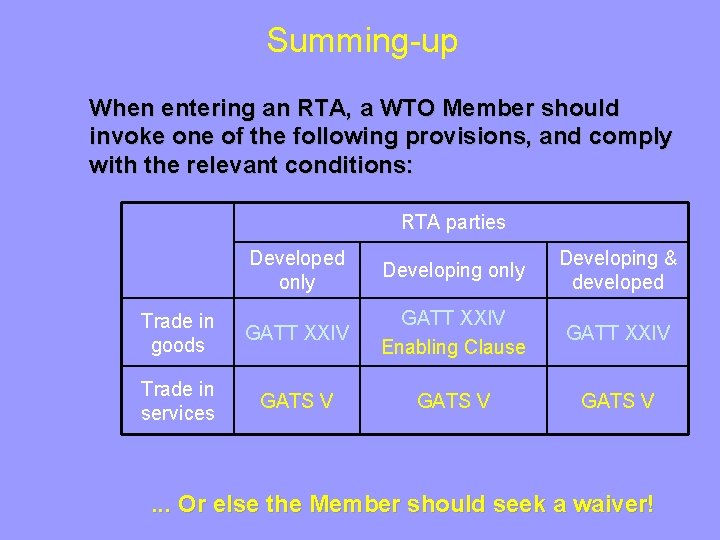
Summing-up When entering an RTA, a WTO Member should invoke one of the following provisions, and comply with the relevant conditions: RTA parties Developed only Developing & developed Trade in goods GATT XXIV Enabling Clause GATT XXIV Trade in services GATS V . . . Or else the Member should seek a waiver!
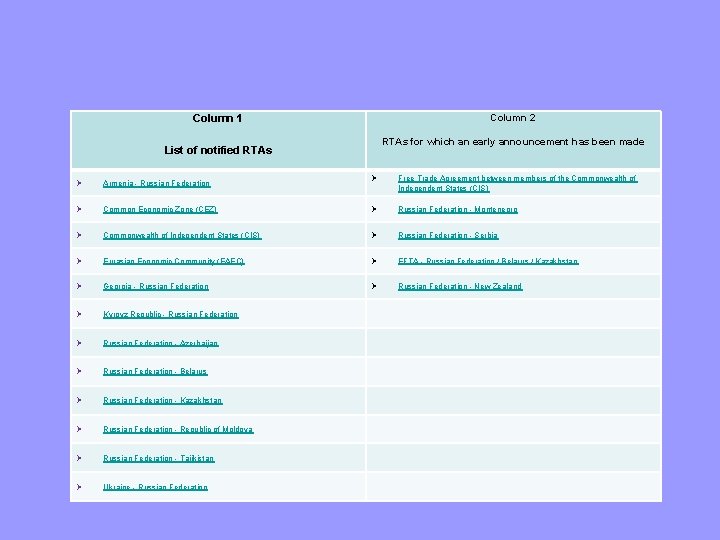
Column 2 Column 1 RTAs for which an early announcement has been made List of notified RTAs Free Trade Agreement between members of the Commonwealth of Independent States (CIS) Common Economic Zone (CEZ) Russian Federation - Montenegro Commonwealth of Independent States (CIS) Russian Federation - Serbia Eurasian Economic Community (EAEC) EFTA - Russian Federation / Belarus / Kazakhstan Georgia - Russian Federation - New Zealand Kyrgyz Republic - Russian Federation - Azerbaijan Russian Federation - Belarus Russian Federation - Kazakhstan Russian Federation - Republic of Moldova Russian Federation - Tajikistan Ukraine - Russian Federation Armenia - Russian Federation
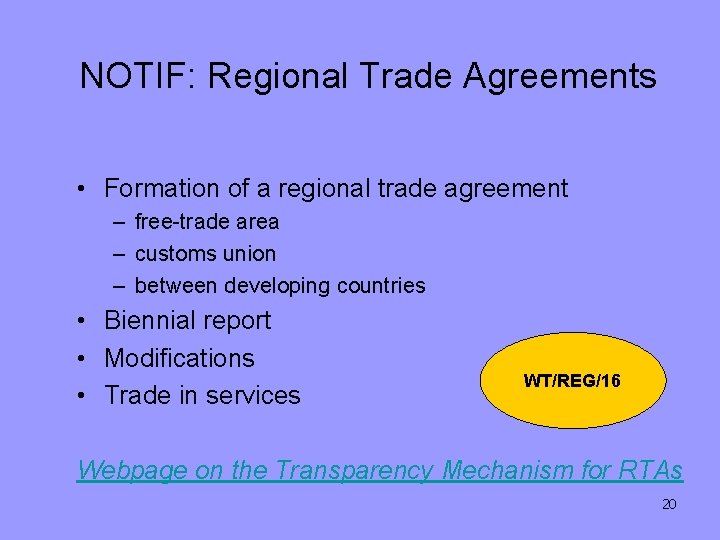
NOTIF: Regional Trade Agreements • Formation of a regional trade agreement – free-trade area – customs union – between developing countries • Biennial report • Modifications • Trade in services WT/REG/16 Webpage on the Transparency Mechanism for RTAs 20