
What is an enzyme Enzymes are proteins which

- Slides: 12
What is an enzyme? ▫ Enzymes are proteins, which means they are organic. ▫ They are catalyst: used to accelerate a reaction.
Properties of enzymes: ▫ ▫ ▫ They are reusable! They are not changed in the process/reaction. End in –ase (Ex: Sucrase, Lactase, Maltase) Enzymes are specific for what they will catalyze. (Ex: lactase breaks down lactose)
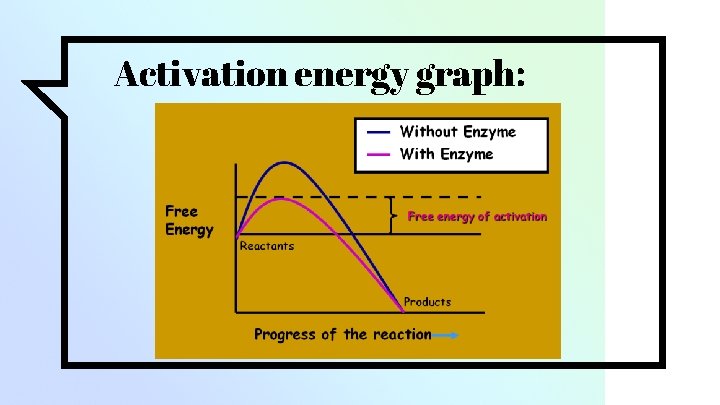
Why do we need enzymes? ▫ Most chemical reactions occur very slow. ▫ Enzymes work by reducing or lowering the activation energy. This causes the reaction to occur faster. ▫ Activation energy is the energy needed to initially start a reaction.
Activation energy graph:
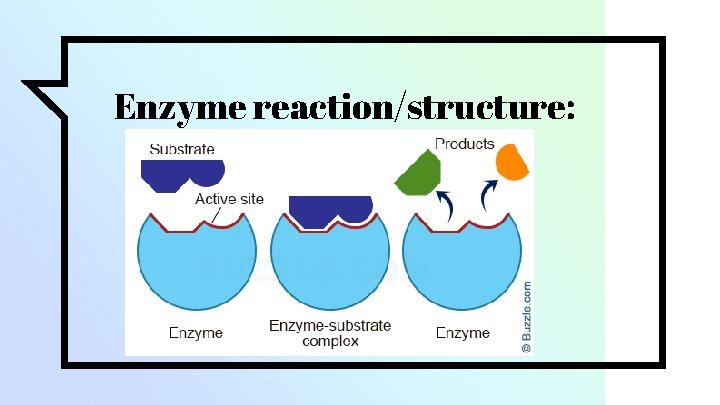
Enzyme reaction/structure:
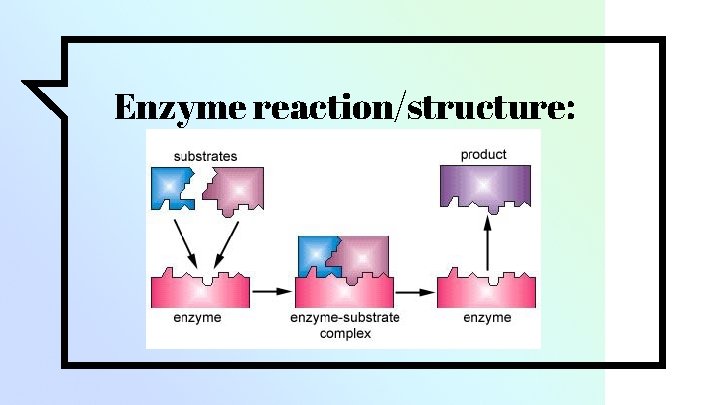
Enzyme reaction/structure:
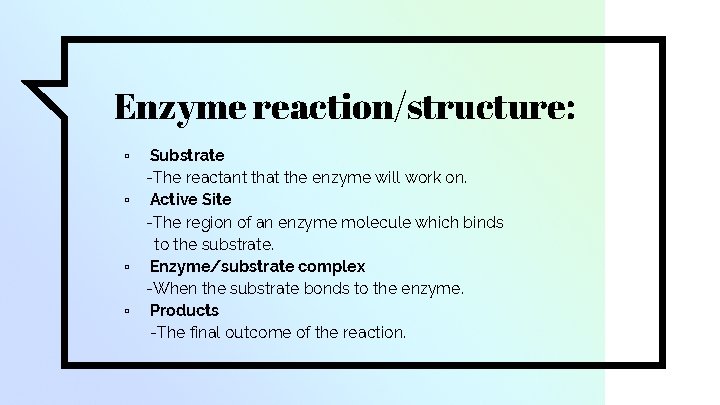
Enzyme reaction/structure: ▫ ▫ Substrate -The reactant that the enzyme will work on. Active Site -The region of an enzyme molecule which binds to the substrate. Enzyme/substrate complex -When the substrate bonds to the enzyme. Products -The final outcome of the reaction.
How do enzymes work? ▫ ▫ ▫ The enzyme and substrate are extremely specific. They are shaped to fit together like a “lock and key” at the active site. If they do not fit, there will be no reaction!
Factors the affect enzymes? Denature-An enzyme’s active site becomes misshapen, and the reaction cannot occur. Factors: 1. Extreme Temperature 2. p. H-most enzymes function at a specific p. H. 3. Salinity 4. Concentration (enzyme or substrate)
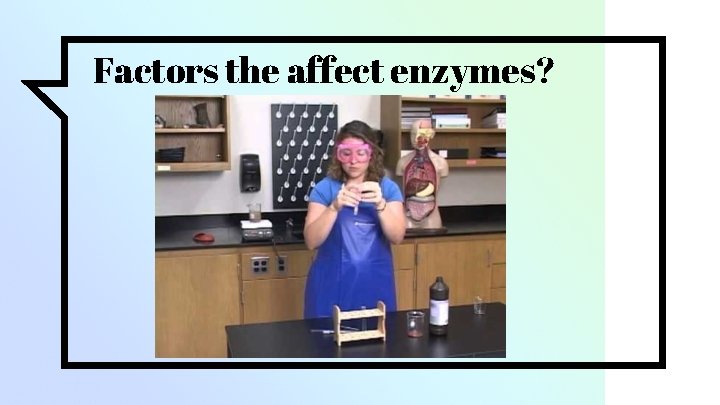
Factors the affect enzymes?