
What is an Emotion EQ What are emotions



- Slides: 14
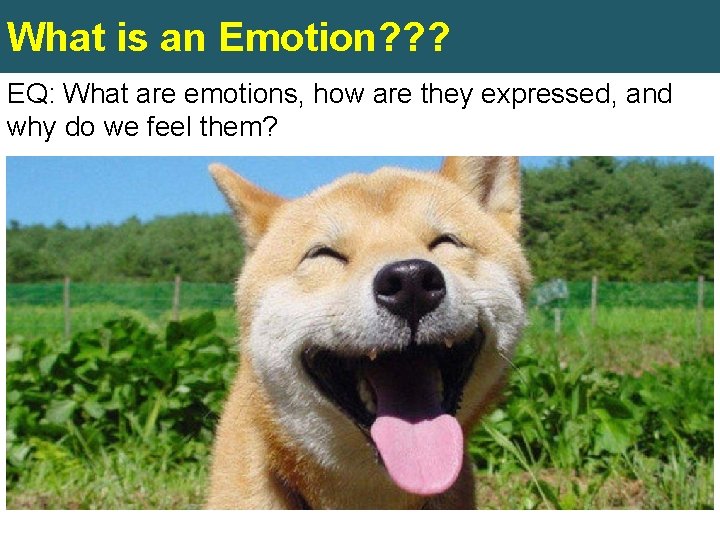
What is an Emotion? ? ? EQ: What are emotions, how are they expressed, and why do we feel them?
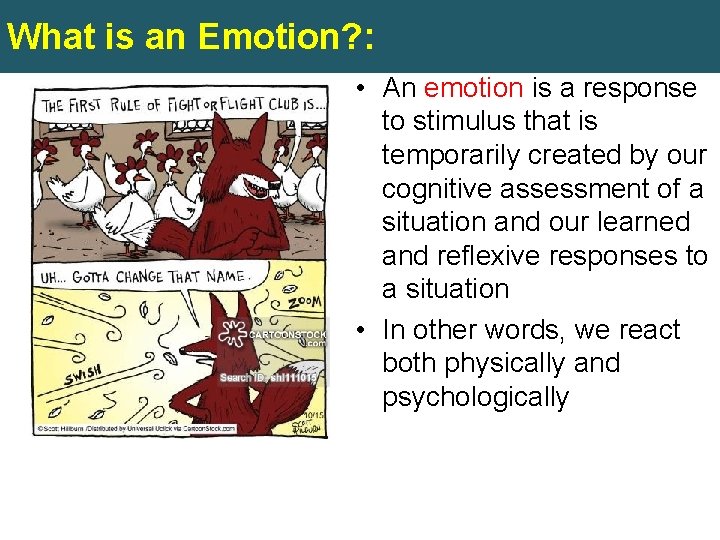
What is an Emotion? : • An emotion is a response to stimulus that is temporarily created by our cognitive assessment of a situation and our learned and reflexive responses to a situation • In other words, we react both physically and psychologically
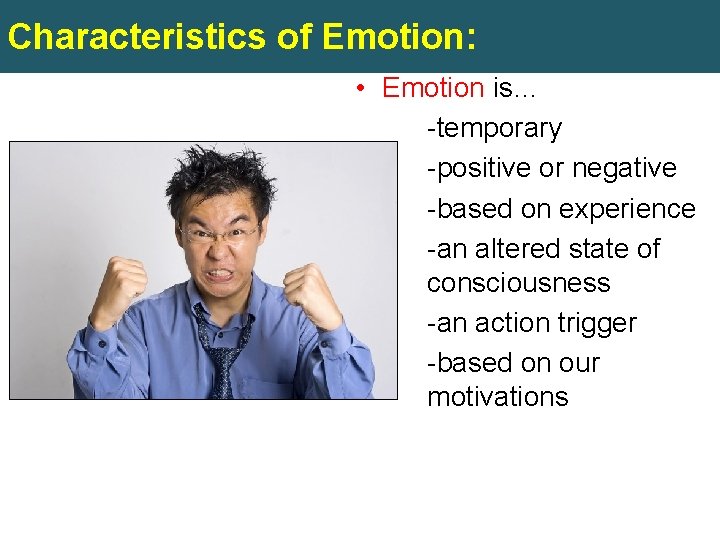
Characteristics of Emotion: • Emotion is… -temporary -positive or negative -based on experience -an altered state of consciousness -an action trigger -based on our motivations
Emotion and Mood are Different: • Emotions are temporary and can change quickly while moods last for extended periods of time • When I see an old friend, for example, my emotion might initially be happiness, but when he explains that his daughter just got diagnosed with cancer, my emotion would change to sadness • A mood is when you feel in a certain emotional range (sadness, happiness, anger, etc…) for a period of time, even if you are unaware of what is causing this
Biology of Emotion: • When we “feel” an emotion, it is actually a complex process that involves multiple systems within the body • First we must sense the stimulus that is around us • Second we must perceive the information • Third, we must react by using the appropriate part of the brain • Finally, we must express the emotion using our automatic nervous system (ANS) -But wait, there’s more!!!
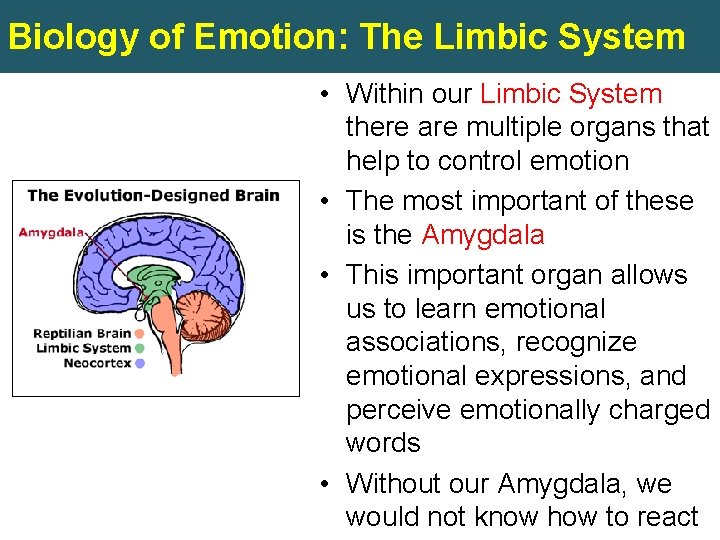
Biology of Emotion: The Limbic System • Within our Limbic System there are multiple organs that help to control emotion • The most important of these is the Amygdala • This important organ allows us to learn emotional associations, recognize emotional expressions, and perceive emotionally charged words • Without our Amygdala, we would not know how to react
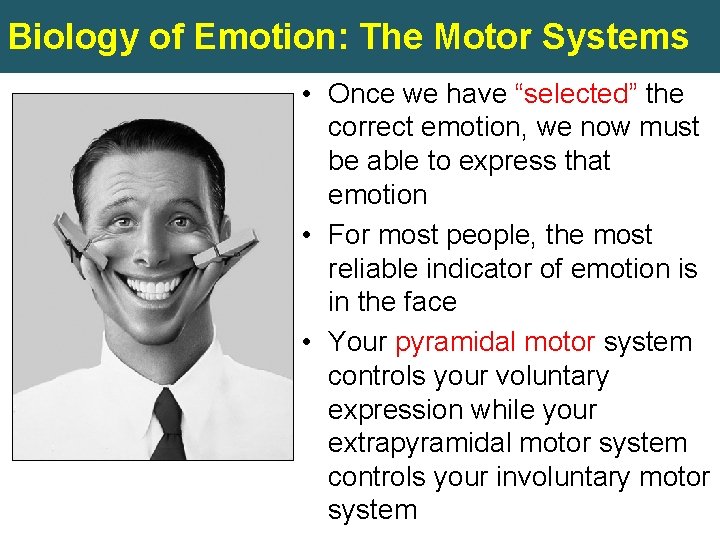
Biology of Emotion: The Motor Systems • Once we have “selected” the correct emotion, we now must be able to express that emotion • For most people, the most reliable indicator of emotion is in the face • Your pyramidal motor system controls your voluntary expression while your extrapyramidal motor system controls your involuntary motor system
A “Tell”?
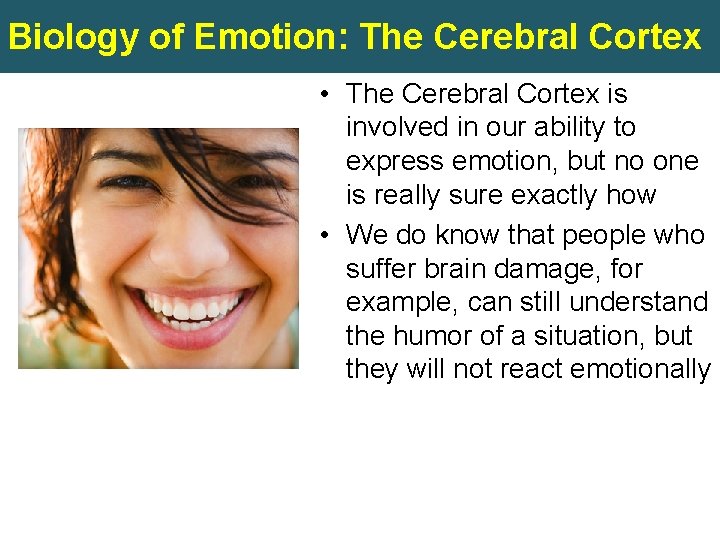
Biology of Emotion: The Cerebral Cortex • The Cerebral Cortex is involved in our ability to express emotion, but no one is really sure exactly how • We do know that people who suffer brain damage, for example, can still understand the humor of a situation, but they will not react emotionally
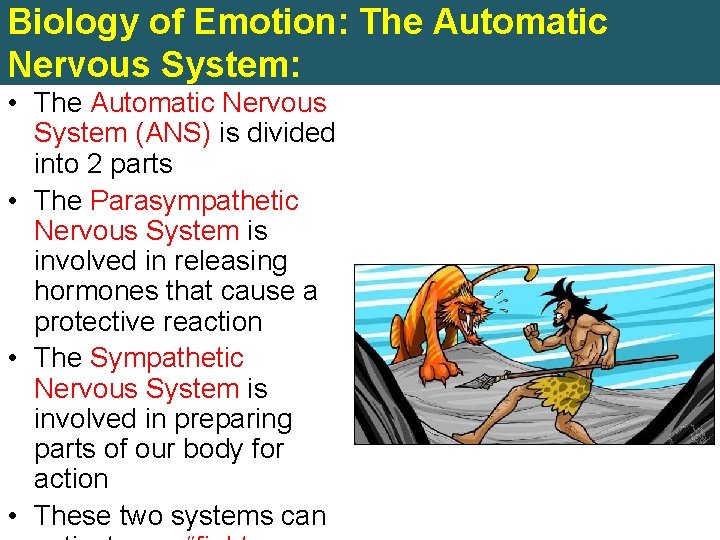
Biology of Emotion: The Automatic Nervous System: • The Automatic Nervous System (ANS) is divided into 2 parts • The Parasympathetic Nervous System is involved in releasing hormones that cause a protective reaction • The Sympathetic Nervous System is involved in preparing parts of our body for action • These two systems can
Biology of Emotion: The Endocrine System • The hormones that are emitted by our endocrine system can drastically change our emotional responses and our mood • These hormones make us more susceptible to certain emotions • If we have a build-up of serotonin, for example, we may be more susceptible to happy emotions
I Love You!!!
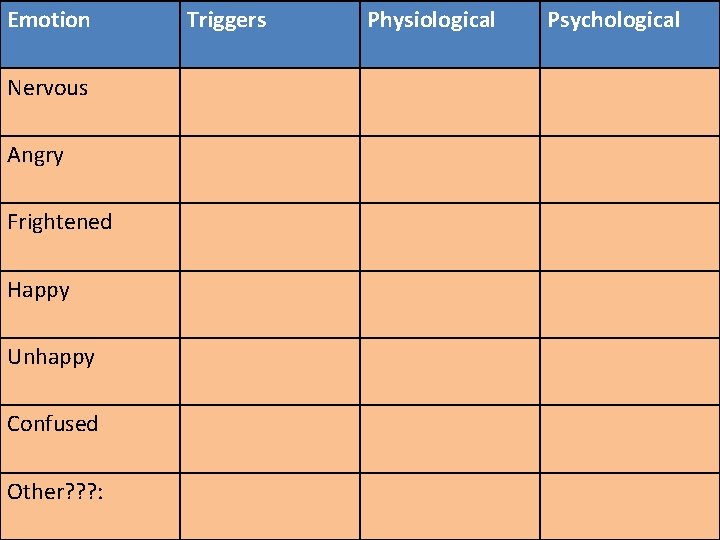
Emotional Study Project: Due 02/29 (25 pts. ) • You will conduct a survey of your own emotions • You do not need to force yourself to feel these emotions since you will have experienced them before • For each emotion, you must explain what kinds of stimuli triggers each emotion • You must also explain the psychological and physiological reactions that you have to each emotion. • Use a chart like the on the following page and do your work on a separate piece of paper
Emotion Nervous Angry Frightened Happy Unhappy Confused Other? ? ? : Triggers Physiological Psychological