
What is an animal Multicellular Need water food

- Slides: 46
What is an animal? - Multicellular - Need water, food, and oxygen to survive - Heterotrophs * Carnivores (Predators of Prey) (Eat other animals) * Herbivores (Eat plants) * Omnivores (Eat plants and other animals)
Backbone of Classification of Animals 95 % Invertebrates (No backbone) - jellyfish, worms, snails, spiders, insects) 5 % Vertebrates (Backbone) – fish, amphibians, reptiles, birds, mammals)
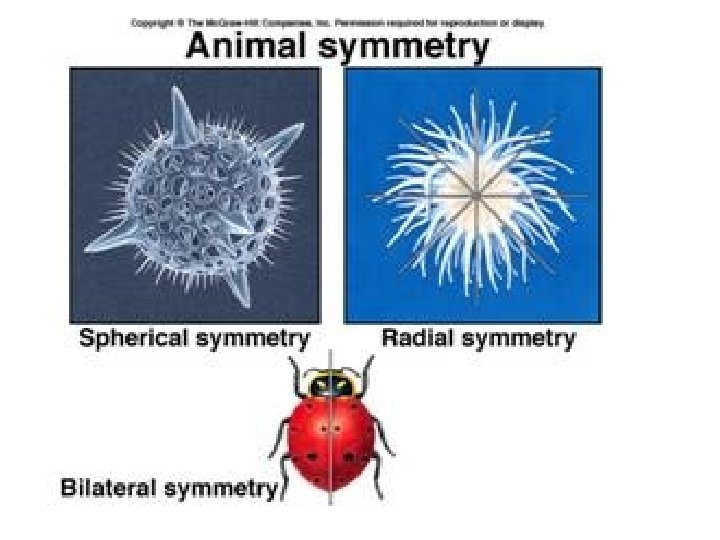
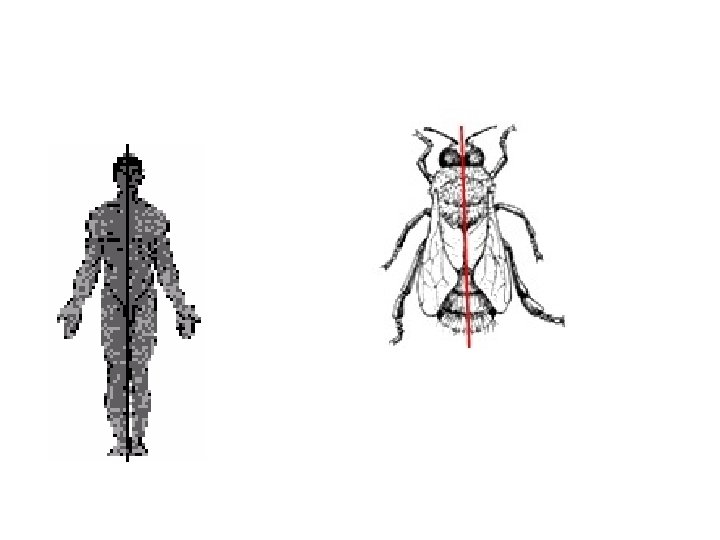
Symmetry & Body Direction When studying and describing animals, some basic body characteristics are important. These include: Animal Body Symmetry - the way body parts are arranged around a center point. Directions on the body - used to describe areas on the body of an animal.
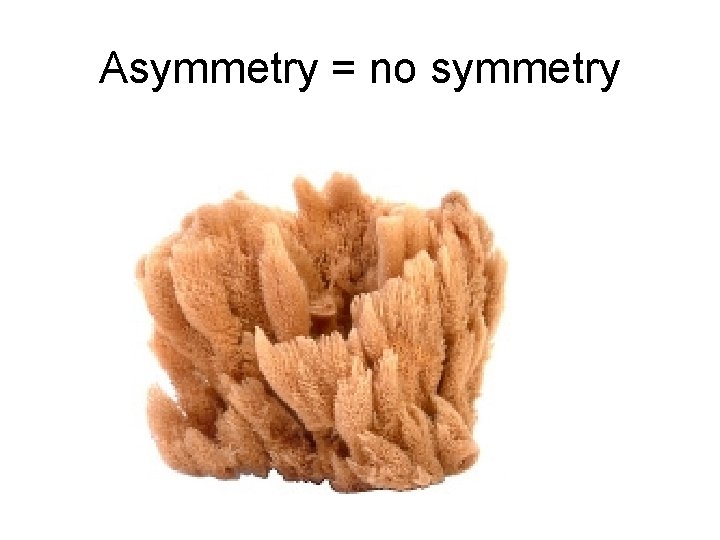
Asymmetry = no symmetry
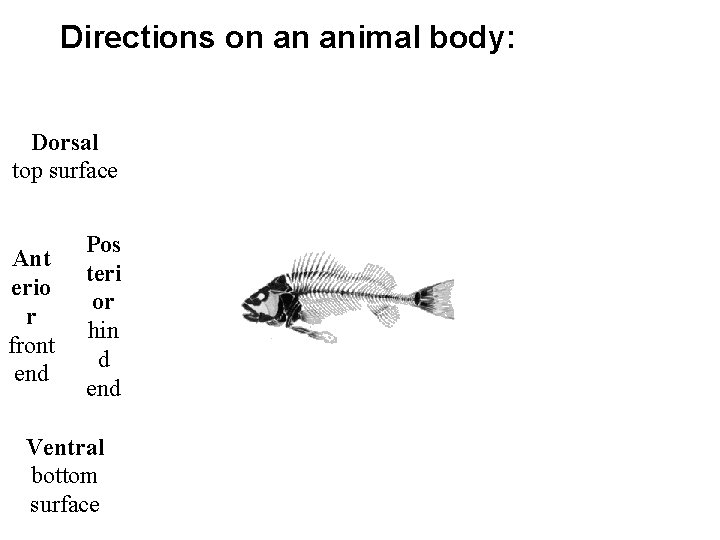
Directions on an animal body: Dorsal top surface Ant erio r front end Pos teri or hin d end Ventral bottom surface
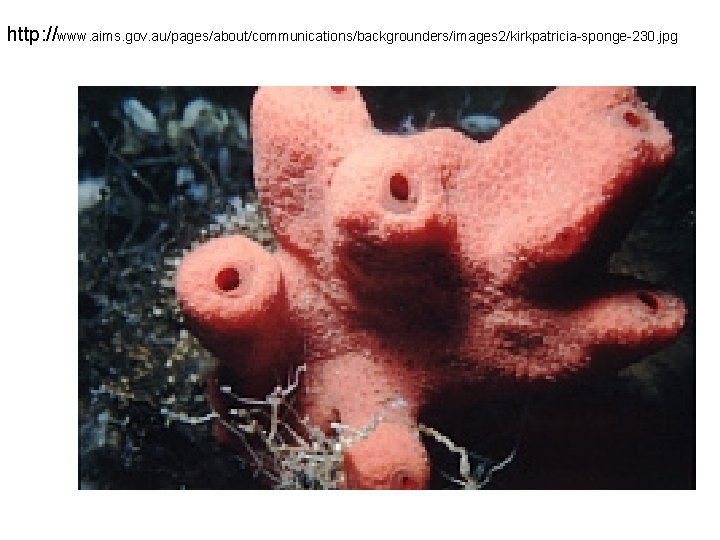
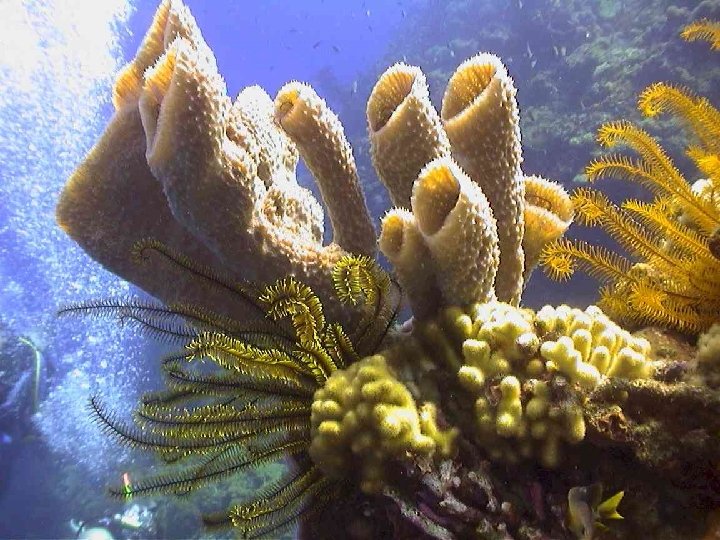
Sponges Asymmetrical Live in both salt and fresh water. Not plants, since they are heterotrophs (take food into their bodies).
http: //www. aims. gov. au/pages/about/communications/backgrounders/images 2/kirkpatricia-sponge-230. jpg
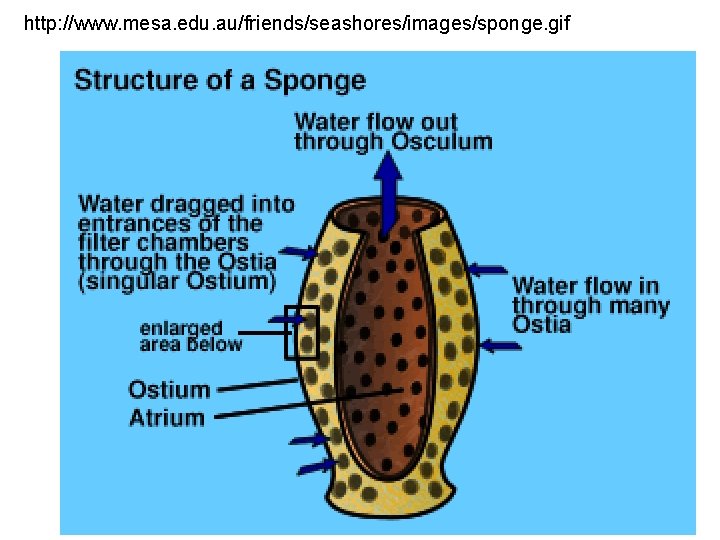
http: //www. mesa. edu. au/friends/seashores/images/sponge. gif
A sponge’s body is like a bag with lots of holes called pores. * No specialized tissues. It feeds by filtering (straining) food particles from the water. It gets oxygen from the water by diffusion into its cells. “Spikes” all throughout its body give it extra support. Reproduction is both asexual and sexual. - Asexual (budding) - Sexual (each can produce eggs and sperm) * After fertilization, a larva is produced. * The larva looks very different from an adult.
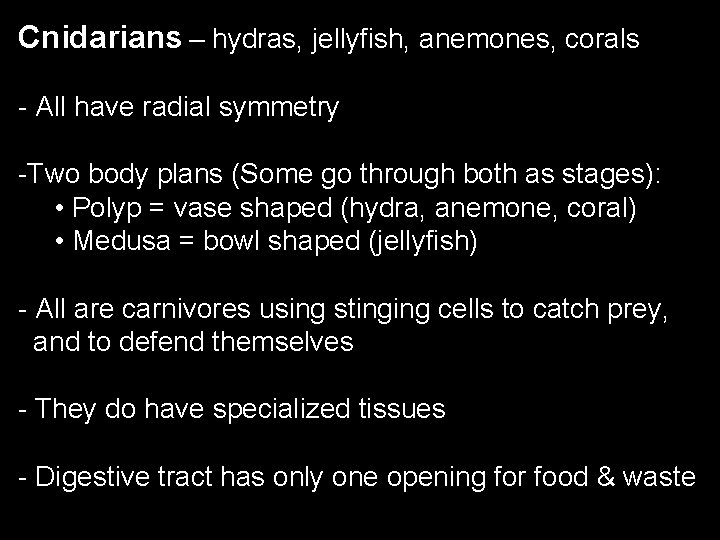
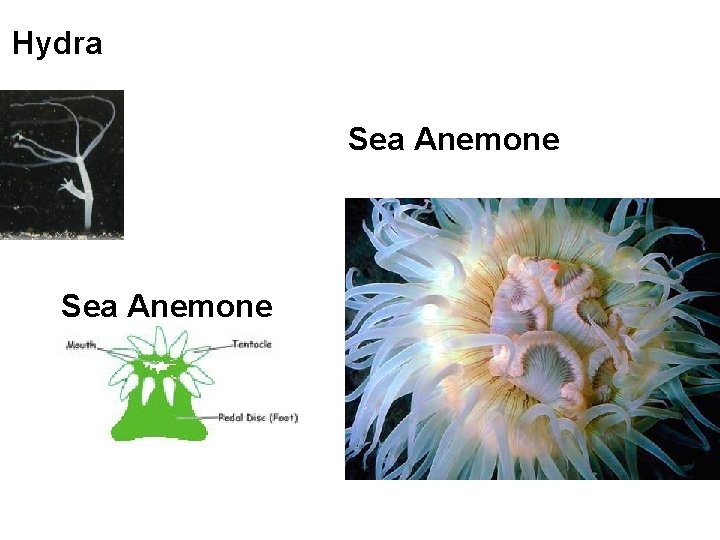
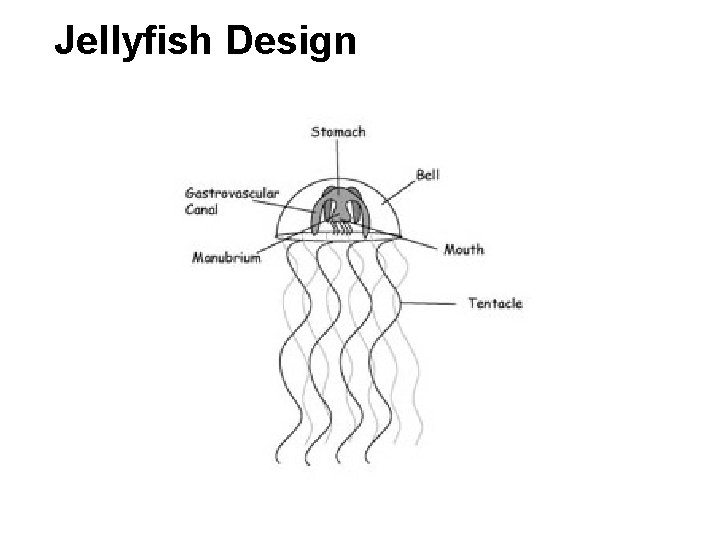
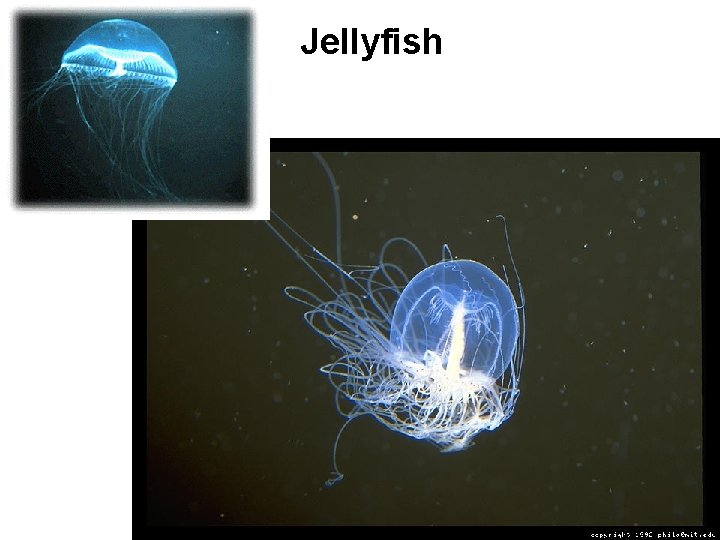
Cnidarians – hydras, jellyfish, anemones, corals - All have radial symmetry -Two body plans (Some go through both as stages): • Polyp = vase shaped (hydra, anemone, coral) • Medusa = bowl shaped (jellyfish) - All are carnivores using stinging cells to catch prey, and to defend themselves - They do have specialized tissues - Digestive tract has only one opening for food & waste
Hydra Sea Anemone
Jellyfish Design
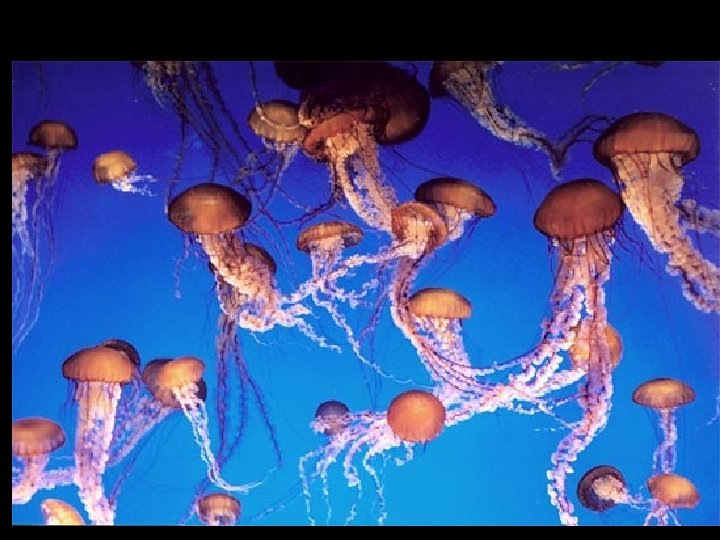
Jellyfish
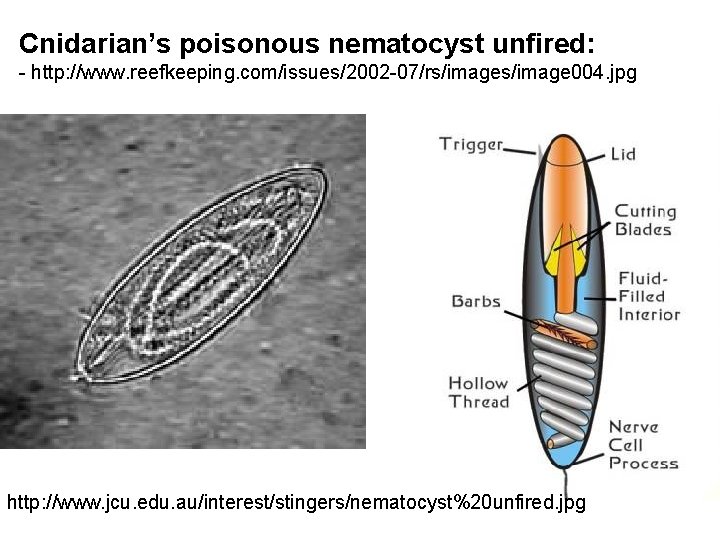
Cnidarian’s poisonous nematocyst unfired: - http: //www. reefkeeping. com/issues/2002 -07/rs/image 004. jpg http: //www. jcu. edu. au/interest/stingers/nematocyst%20 unfired. jpg
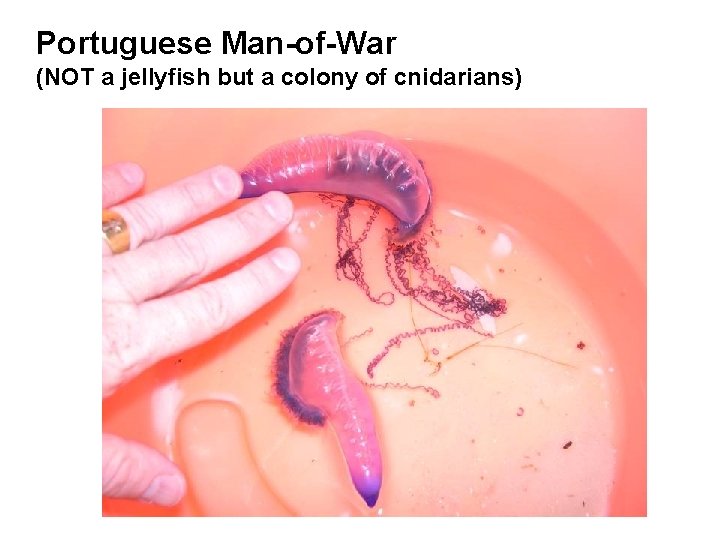
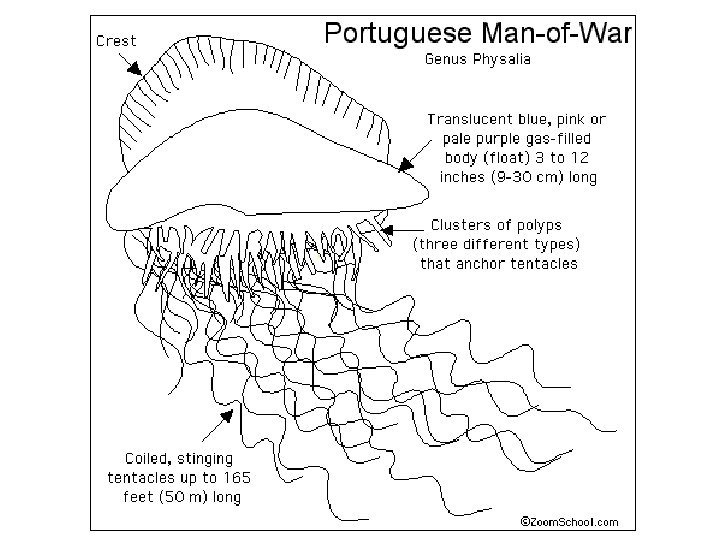
Portuguese Man-of-War (NOT a jellyfish but a colony of cnidarians)
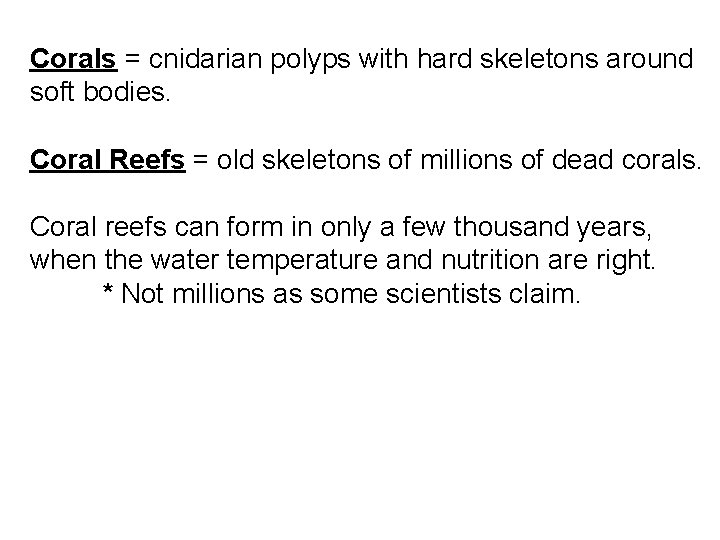
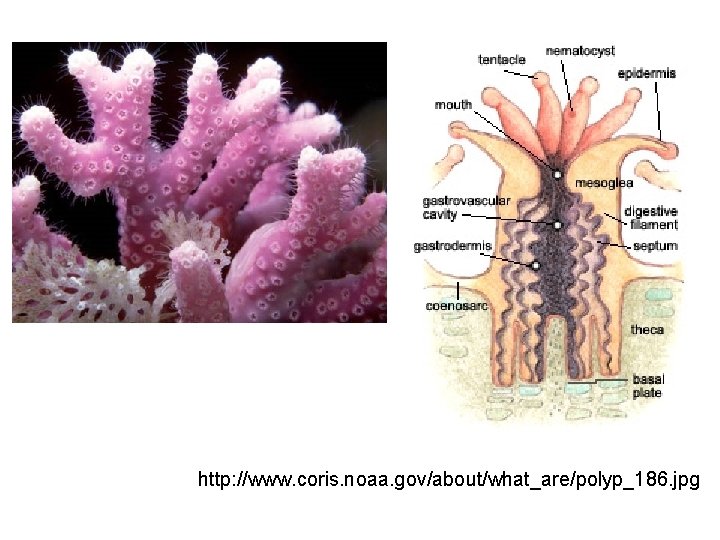
Corals = cnidarian polyps with hard skeletons around soft bodies. Coral Reefs = old skeletons of millions of dead corals. Coral reefs can form in only a few thousand years, when the water temperature and nutrition are right. * Not millions as some scientists claim.
http: //www. coris. noaa. gov/about/what_are/polyp_186. jpg
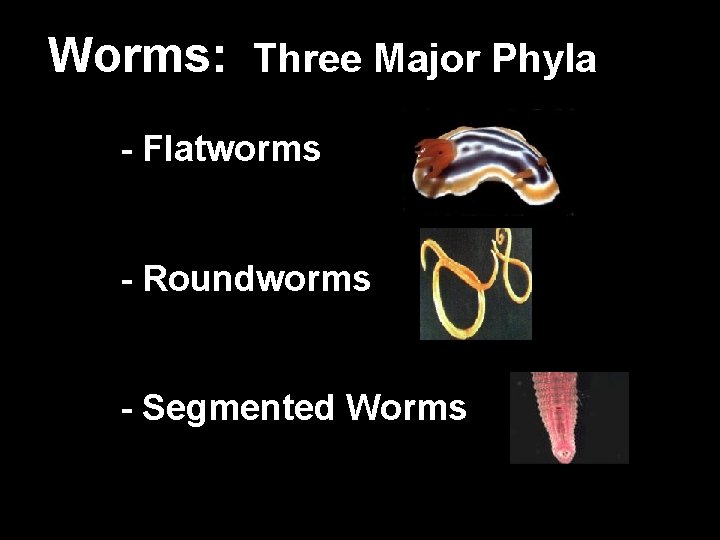
Worms: Three Major Phyla - Flatworms - Roundworms - Segmented Worms
What Worms Have in Common: - Invertebrates - Bilateral symmetry - Long bodies without legs - Tissues, organ systems - Heads and tails (Brain = knot of nerves in head) - Reproduction • Both asexual and sexual types of worms • Asexual by breaking off pieces that grow • Some have separate male and females • Others are hermaphroditic (both in one) - Regeneration = regrowth of body parts (earthworm tail)
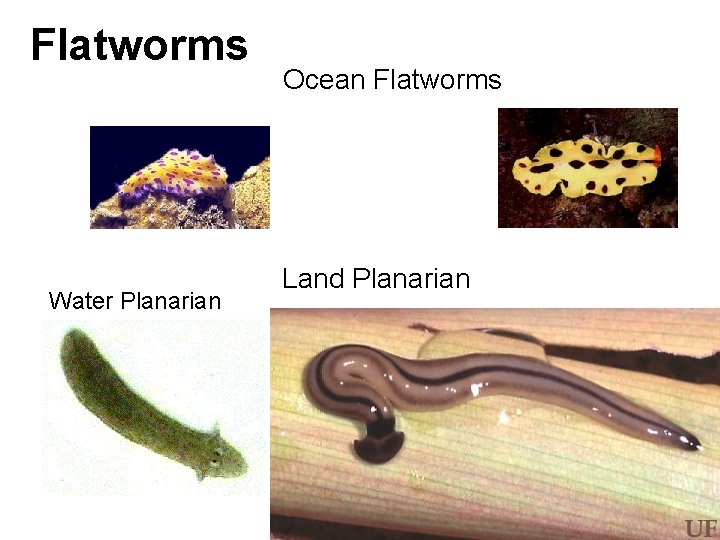
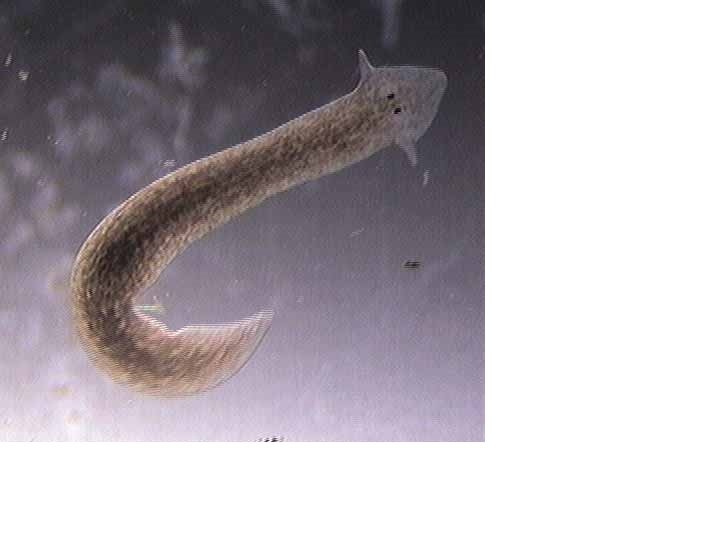
Flatworms Water Planarian Ocean Flatworms Land Planarian
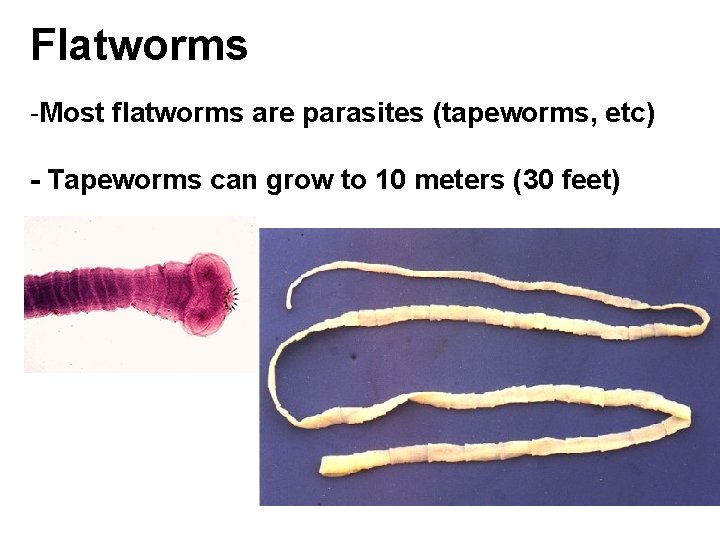
Flatworms -Most flatworms are parasites (tapeworms, etc) - Tapeworms can grow to 10 meters (30 feet)
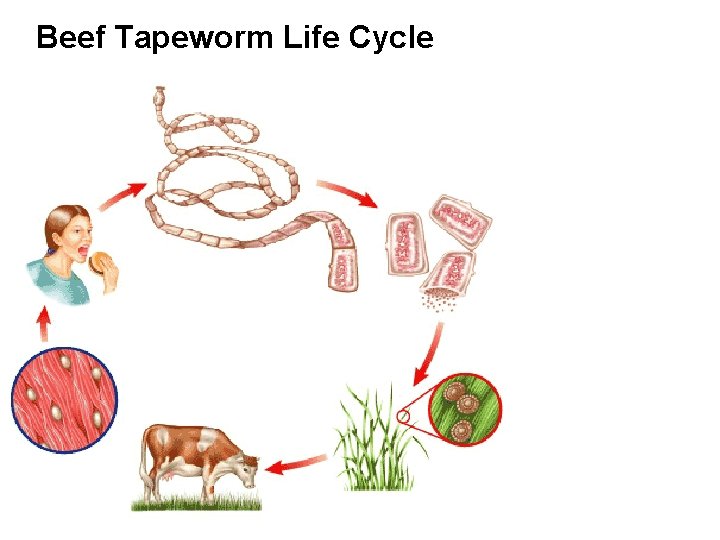
Beef Tapeworm Life Cycle
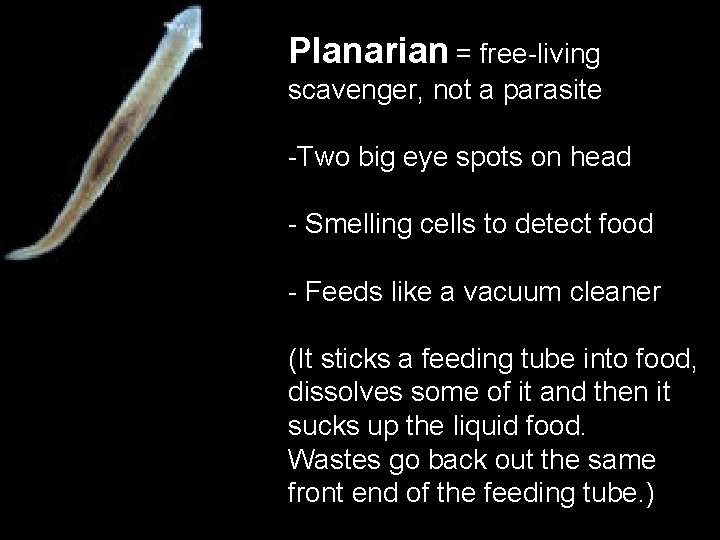
Planarian = free-living scavenger, not a parasite -Two big eye spots on head - Smelling cells to detect food - Feeds like a vacuum cleaner (It sticks a feeding tube into food, dissolves some of it and then it sucks up the liquid food. Wastes go back out the same front end of the feeding tube. )
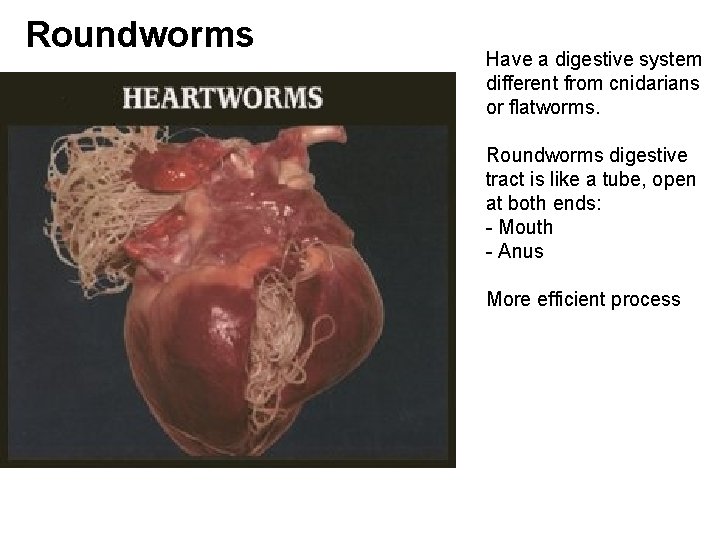
Roundworms Have a digestive system different from cnidarians or flatworms. Roundworms digestive tract is like a tube, open at both ends: - Mouth - Anus More efficient process
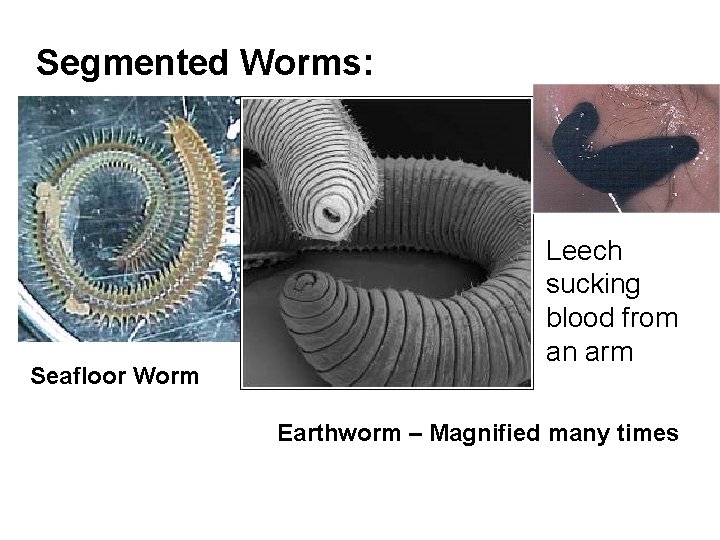
Segmented Worms: Seafloor Worm Leech sucking blood from an arm Earthworm – Magnified many times
Segmented Worms: -Bodies made of linked sections called segments (Earthworms have more than 100) - Each segment has repeated sets of organs - Nerve cords and a digestive tube run length of the body - Digestive tract like roundworms (one-way tract) - Closed circulatory (blood) system (blood moves only within blood vessels) - Earthworms tunnel in the ground, eating decayed material (They are good for gardens and farmers’ fields. )
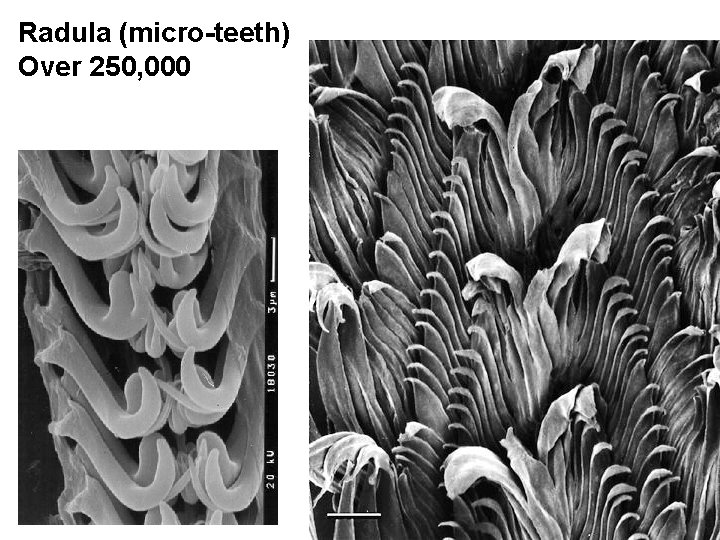
Mollusks, Arthropods, Insects, 11. 1 Mollusks – Invertebrates with soft bodies - Bilateral symmetry - MANTLE = thin layer of tissue which produces the shell - Kidneys which remove wastes - Gills on water-dwelling mollusks to get oxygen from water - Radula = flexible ribbon of tiny teeth (like sandpaper) (250, 000 teeth or more) - Foot (snails crawl on it) Three Major groups: 1. Gastropods – snails and slugs 2. Bivalves – two shelled (clams, oysters, etc. ) 3. Cephalopods – tentacles (octopuses, squids, etc. )
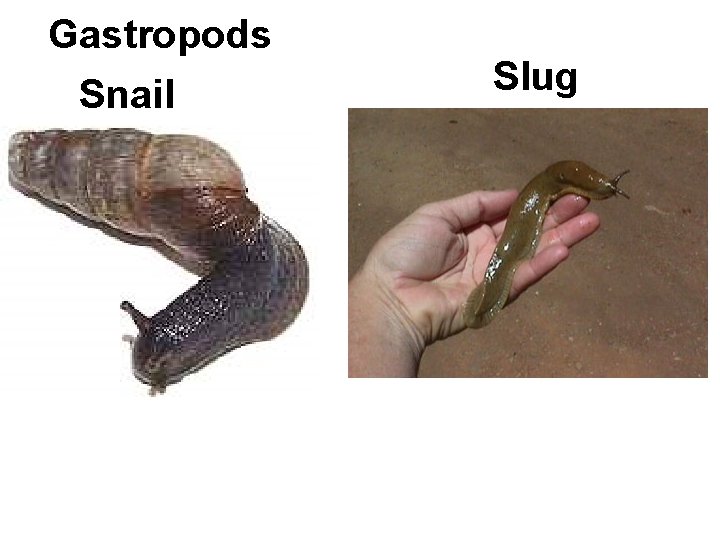
Gastropods Snail Slug
Radula (micro-teeth) Over 250, 000
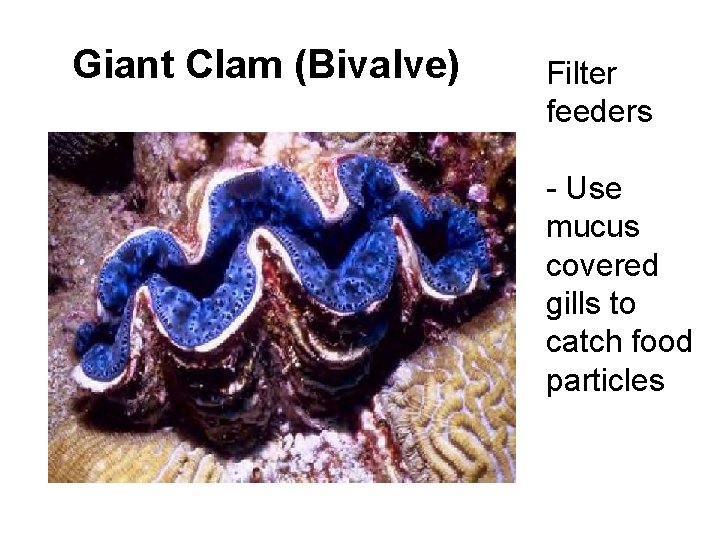
Giant Clam (Bivalve) Filter feeders - Use mucus covered gills to catch food particles
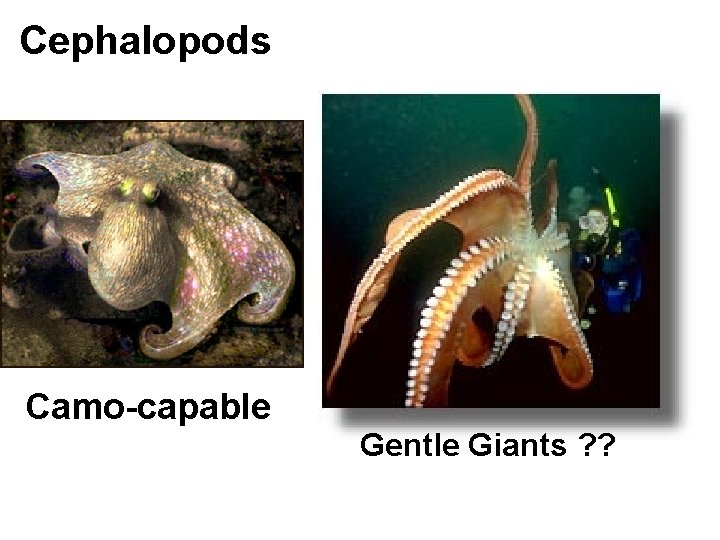
Cephalopods Camo-capable Gentle Giants ? ?
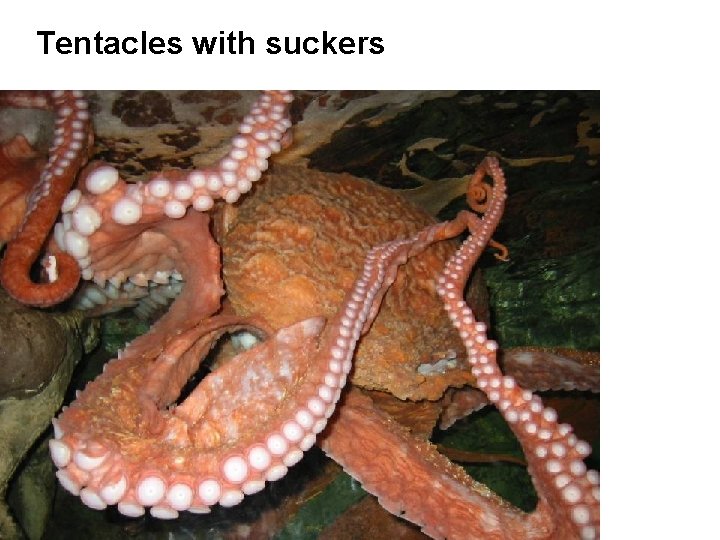
Tentacles with suckers
Cephalopods -Suckers sense touch and taste - Large eyes with great vision - Most complex invertebrate nervous system and brain - Very smart and learn quickly
11. 2 Phylum – Arthropod (“Joint Leg”) - Invertebrate - Exoskeleton made of Chitin, so it must molt (shed old skin to get bigger) - Segmented body (Insects 3) (Arachnids 2) (Crustaceans 2 or 3) - Jointed appendages * Legs (Insects 3 pairs) (Arachnids 4 pairs) (Crustaceans 5 or more) * Antennae (Insects 1 pair) (Arachnids 4 pairs) Crustaceans 2 pair) - Open circulatory system (blood flows freely, not in tubes/vessels) - Most reproduce sexually, with internal fertilization - Metamorphosis (body changes dramatically during life cycle)
Major Groups of Arthropods: Crustaceans – Crawfish, crabs, lobsters, etc Arachnids – spiders, mites, ticks, scorpions Centipedes – venomous predators with 1 pair of legs for each segment (“centipede” means “hundred feet - 100 pairs) Millipedes – herbivores with two pairs of legs on each segment (“Millipede” means “thousand feet”) Insects – 3 sections, six legs, 1 pair antennae, usually 1 or 2 pair of wings
11. 4 Chemistry of Communication: Pheromones = a chemical released by one animal that affects the behavior of another of the same species. - Animals use them to attract mates, to recognize colony members, to leave a trail to food, etc. - Pest Control * Pheromones can be used to control pest, by attracting them and killing them (electric light bug zappers) Bioluminescence (Fireflies, etc. ) Chemical light
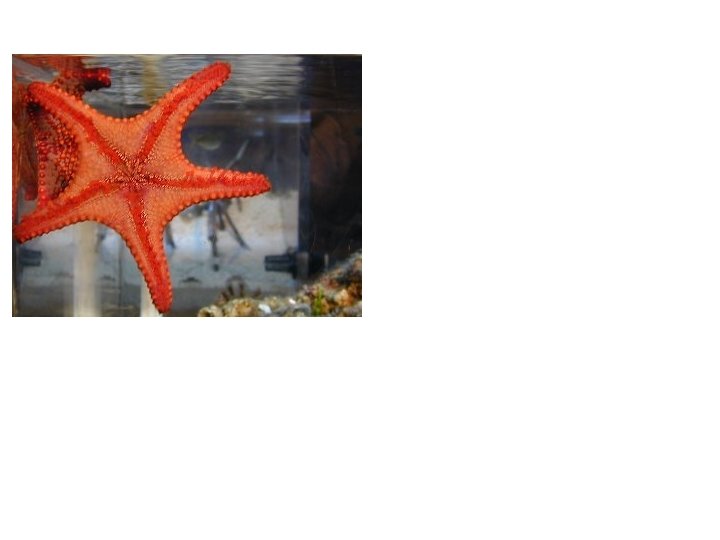
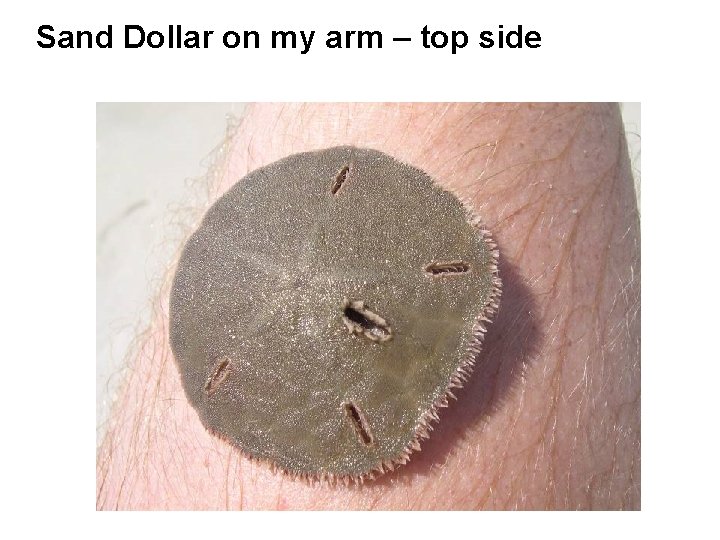
11. 5 Echinoderms (Sea stars, sea urchin, etc. ) - Radial Symmetry - “Spiny skinned”, yet supported by an endoskeleton of spiny plates made of calcium. - Legs are 5 or multiples of 5 - Internal water vascular system, to control tube feet. - No brain, yet sea stars hunt for crabs, etc.
Sand Dollar on my arm – top side
Sand Dollar– bottom side