
What is an adjective DESCRIPTIVE ADJECTIVES Adjectives are

- Slides: 16
What is an adjective?
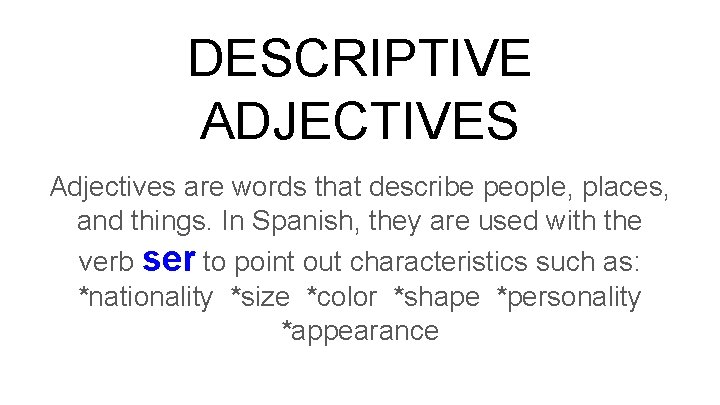
DESCRIPTIVE ADJECTIVES Adjectives are words that describe people, places, and things. In Spanish, they are used with the verb ser to point out characteristics such as: *nationality *size *color *shape *personality *appearance
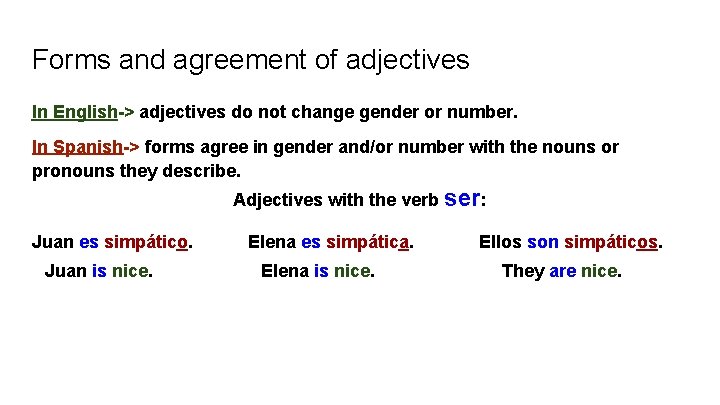
Forms and agreement of adjectives In English-> adjectives do not change gender or number. In Spanish-> forms agree in gender and/or number with the nouns or pronouns they describe. Adjectives with the verb ser: Juan es simpático. Juan is nice. Elena es simpática. Elena is nice. Ellos son simpáticos. They are nice.
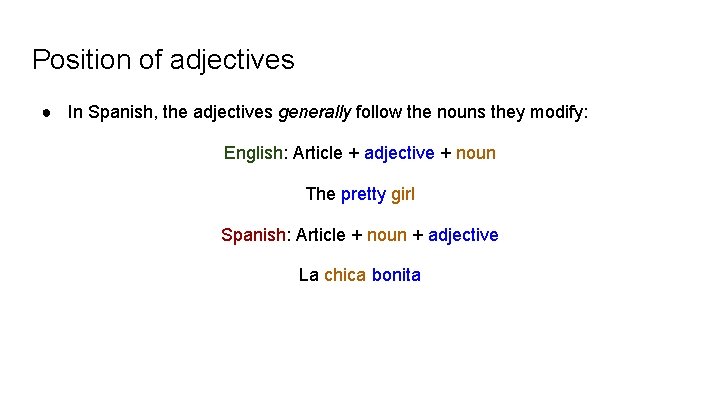
Position of adjectives ● In Spanish, the adjectives generally follow the nouns they modify: English: Article + adjective + noun The pretty girl Spanish: Article + noun + adjective La chica bonita
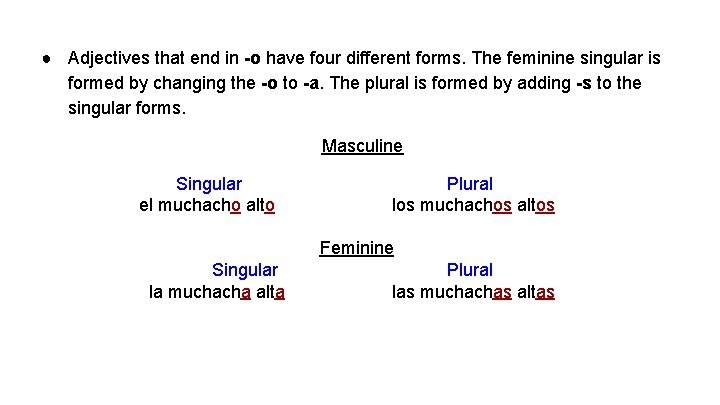
● Adjectives that end in -o have four different forms. The feminine singular is formed by changing the -o to -a. The plural is formed by adding -s to the singular forms. Masculine Singular el muchacho alto Plural los muchachos altos Feminine Singular la muchacha alta Plural las muchachas altas
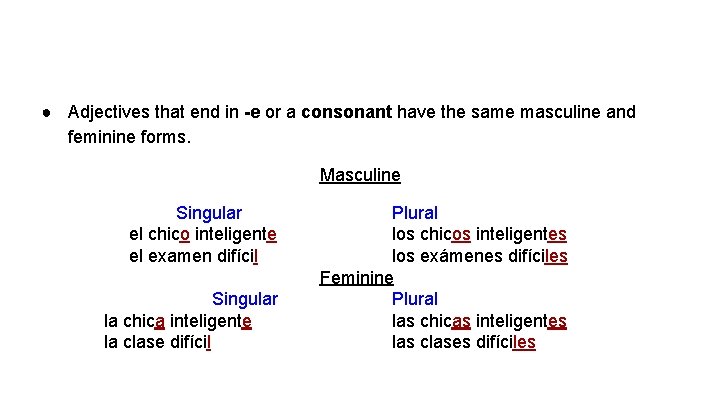
● Adjectives that end in -e or a consonant have the same masculine and feminine forms. Masculine Singular el chico inteligente el examen difícil Singular la chica inteligente la clase difícil Plural los chicos inteligentes los exámenes difíciles Feminine Plural las chicas inteligentes las clases difíciles
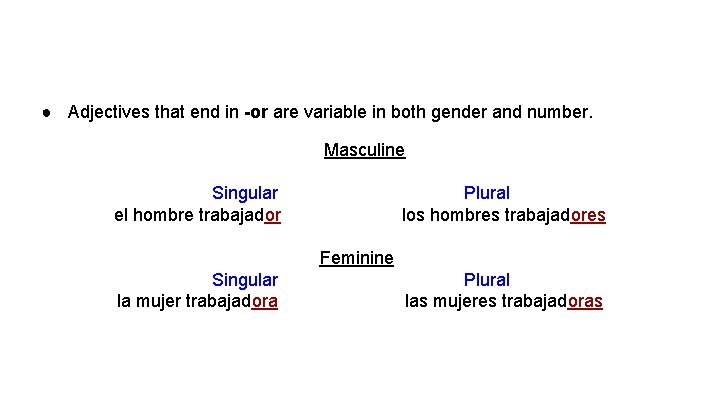
● Adjectives that end in -or are variable in both gender and number. Masculine Singular el hombre trabajador Plural los hombres trabajadores Feminine Singular la mujer trabajadora Plural las mujeres trabajadoras
● Use the masculine plural form to refer to groups that include males and females. Manuel es alto Lola es alta. Manuel y Lola son altos. When referring to people, bonito/a can only be used for females, but guapo/a can be used for both males and females. Some heritage speakers may use moreno/a to refer to someone with dark skin, and rubio/a for someone with light brown hair.
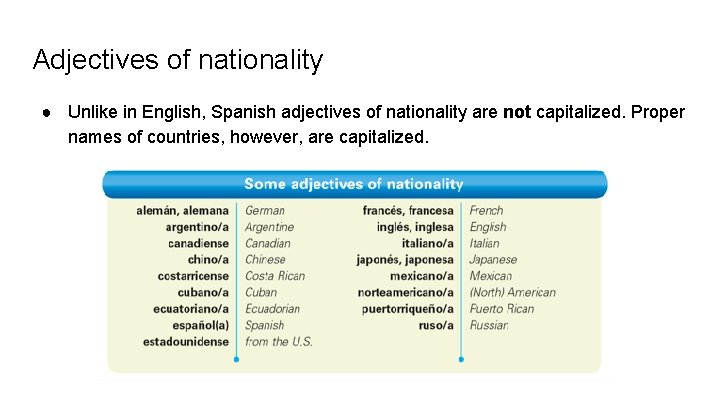
Adjectives of nationality ● Unlike in English, Spanish adjectives of nationality are not capitalized. Proper names of countries, however, are capitalized.
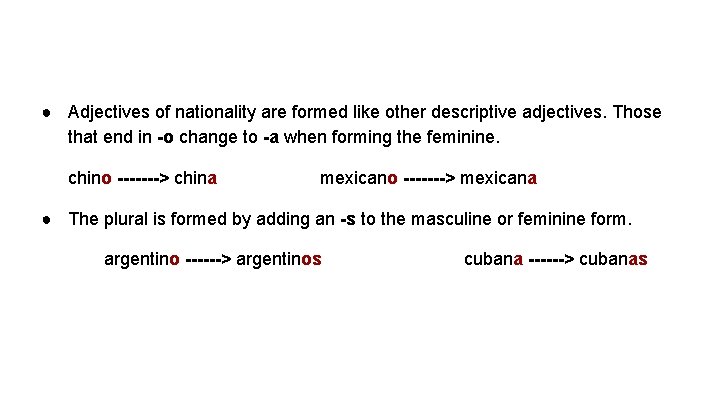
● Adjectives of nationality are formed like other descriptive adjectives. Those that end in -o change to -a when forming the feminine. chino -------> china mexicano -------> mexicana ● The plural is formed by adding an -s to the masculine or feminine form. argentino ------> argentinos cubana ------> cubanas
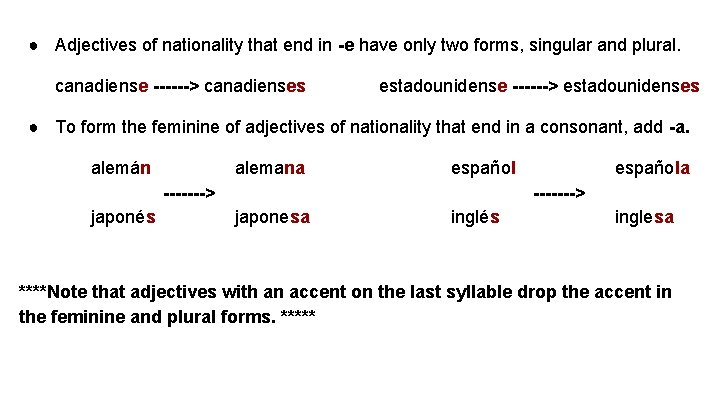
● Adjectives of nationality that end in -e have only two forms, singular and plural. canadiense ------> canadienses estadounidense ------> estadounidenses ● To form the feminine of adjectives of nationality that end in a consonant, add -a. alemán alemana español -------> japonés española -------> japonesa inglés inglesa ****Note that adjectives with an accent on the last syllable drop the accent in the feminine and plural forms. *****
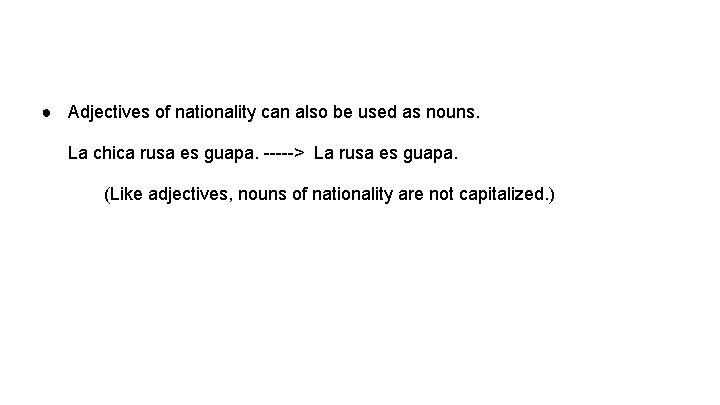
● Adjectives of nationality can also be used as nouns. La chica rusa es guapa. -----> La rusa es guapa. (Like adjectives, nouns of nationality are not capitalized. )
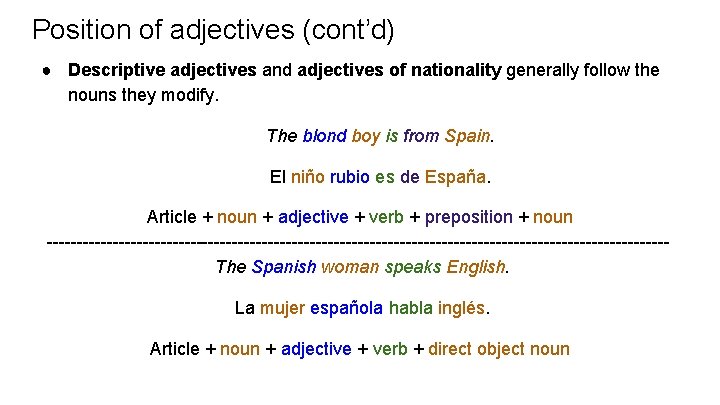
Position of adjectives (cont’d) ● Descriptive adjectives and adjectives of nationality generally follow the nouns they modify. The blond boy is from Spain. El niño rubio es de España. Article + noun + adjective + verb + preposition + noun ----------------------------------------------------The Spanish woman speaks English. La mujer española habla inglés. Article + noun + adjective + verb + direct object noun
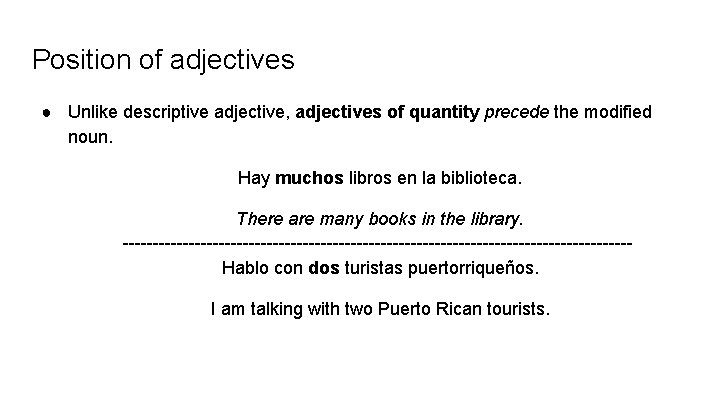
Position of adjectives ● Unlike descriptive adjective, adjectives of quantity precede the modified noun. Hay muchos libros en la biblioteca. There are many books in the library. ------------------------------------------Hablo con dos turistas puertorriqueños. I am talking with two Puerto Rican tourists.
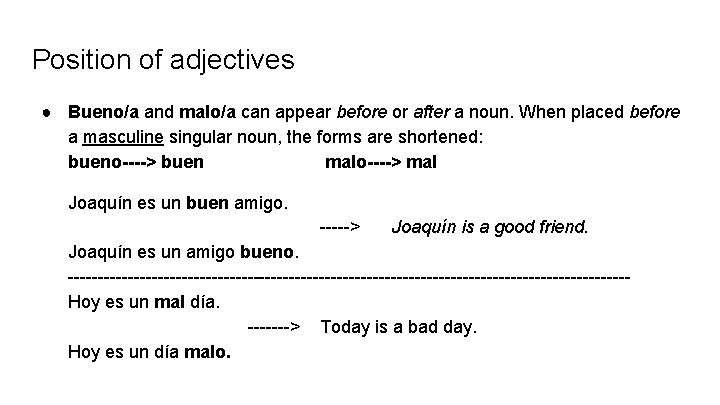
Position of adjectives ● Bueno/a and malo/a can appear before or after a noun. When placed before a masculine singular noun, the forms are shortened: bueno----> buen malo----> mal Joaquín es un buen amigo. -----> Joaquín is a good friend. Joaquín es un amigo bueno. -----------------------------------------------Hoy es un mal día. -------> Today is a bad day. Hoy es un día malo.
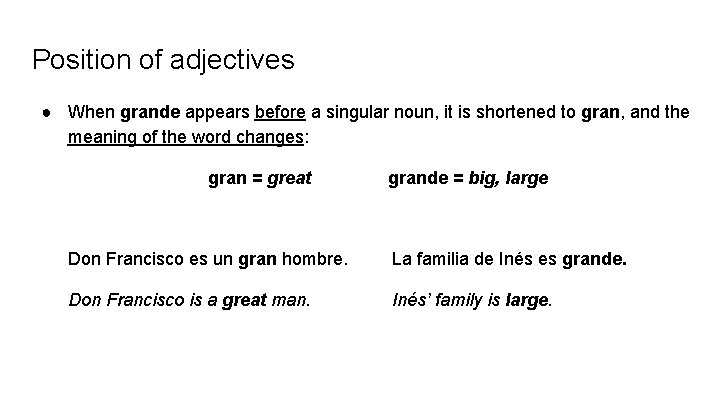
Position of adjectives ● When grande appears before a singular noun, it is shortened to gran, and the meaning of the word changes: gran = great grande = big, large Don Francisco es un gran hombre. La familia de Inés es grande. Don Francisco is a great man. Inés’ family is large.