
What is Adolescence Adolescence The period between childhood
What is Adolescence?
Adolescence • The period between childhood and adulthood • From puberty (the start of sexual maturation) to independence from parents
Physical Development in Adolescence
Puberty • The period of sexual maturation where the person becomes capable of reproducing • Starts at approximately age 11 in females and age 13 in males • Major growth spurt
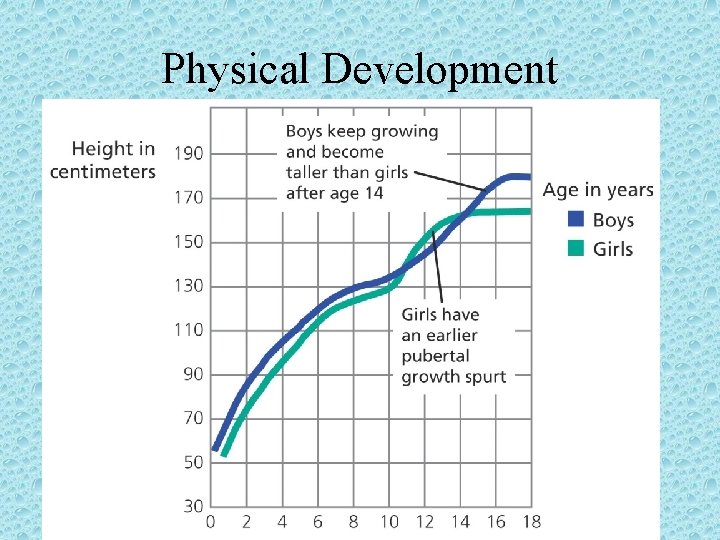
Physical Development
Primary Sex Characteristics • The body structures that make sexual reproduction possible • Ovaries in females • Testes in males
Secondary Sex Characteristics • Nonreproductive sexual characteristics • Breasts and hips in females • Facial hair and voice changes in males
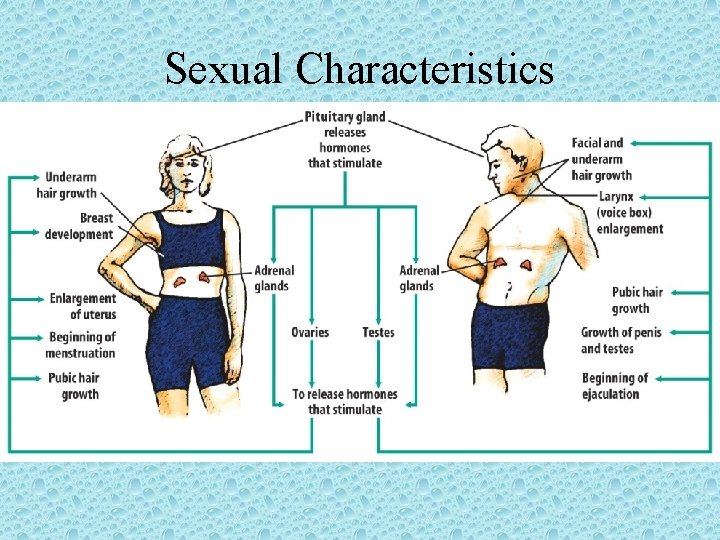
Sexual Characteristics
Sexual Orientation • One’s attraction toward people of a particular gender • Usually heterosexual or homosexual; small minority bisexual
Heterosexual • A sexual orientation in which a person is attracted to members of the opposite sex • “straight”
Homosexual • A sexual orientation in which a person is attracted to members of the same sex • Approximately 6 -8% of the male population and 3 -4% of the female population
Social Development in Adolescence
Erikson • Constructed an 8 -stage theory of social development • Each stage has its own psychosocial, developmental task a “crisis”.
Trust v. mistrust • Infancy to 1 year • If needs met infant develops a sense of basic trust, or will develop mistrust
Autonomy v. shame and doubt • 1 to 2 years • Learn to exercise and do things for self or they will doubt their abilities
Initiative v. guilt • 3 to 5 • Learn to initiate tasks and carry out plans or they feel guilty about efforts to be independent
Competence (industry) v. inferiority • 6 years to puberty • Learn pressure of applying themselves to a tasks, or they feel inferior
Identity v. role confusion • Teens into 20 s • Refining sense of self by testing roles – challenging authority eventually find SELF or become confused about who they are
Intimacy v. isolation • 20 s to 40 s • Forming close relationships • Deeper love or socially isolated
Generativity v. stagnation • 40 s to 60 s • discover sense of contributing to the world or they may feel lack of purpose
Ego integrity v. despair • 60 and up • Reflecting on life either feel satisfied or failure
Social Development in Adolescence: Developing Identity
Identity • A strong, consistent sense of who and what a person is, search through: –Experimentation –Rebellion –“Self”-ishness –Optimism and energy
Intimacy • A close, sharing, emotional, and honest relationship with other people (primary task of early adulthood) • Not necessarily one’s spouse or a sexual relationship
Adulthood –How easily one passes between stages depends on cultural and economic factors –Erickson showed that development is an ongoing process that is never finished
Are Adults Prisoners of Childhood? • Traumatized children are more likely to have emotional and behavioral problems • Evidence from the following suggest that negative effects are not inevitable
• Partnerships formed • Parenthood • Work (double shift) • Midlife crisis/transition
• Menopause • Retirement • Change in relationshipsempty nest, death of family & friends
- Slides: 28