
What Is Addiction or Dependence A syndrome defined
- Slides: 4
What Is Addiction or Dependence? A syndrome defined by the presence of 3 or more features as defined in ICD-10 (and DSM-IV) consisting of: – 4 psychological features – 2 biological features (tolerance & withdrawal) • I. e. It is primarily a psychological state, the treatment of which is primarily psychological • Not just “physical addiction” - a characteristic withdrawal state (which need not be present) The ICD-10 Criteria for Drug Dependency • Need 3 of 6 criteria in last 12 months: • 2 drug related criteria: – Compulsion/cravings to take drug – Difficulties in controlling drug use • 2 consequences of use criteria: – Progressive neglect of alternative pleasures/interests due to drug use – Persistent drug use despite harmful consequences • 2 physiological criteria: – Characteristic drug withdrawal state – Evidence of tolerance to the drug • Note: No mention of frequency or amount or chronicity of drug use
Drugs Licensed for Use in Opiate Addiction Treatment Substitute opiates: • Methadone oral soln or mixture 1 mg/ml (& branded Methadose® 10 mg/ml & 20 mg/ml for dilution - but not recommended) – NOT injectable methadone, tablets or linctus (2 mg/5 ml) • Buprenorphine (Subutex/Suboxone or generic) sublingual tabs 0. 4, 2, 8 mg (Suboxone also contains naloxone) – NOT Temgesic (0. 2 & 0. 4 mg tablets or 0. 3 mg ampoules) , not the patches, films or depot • NOT codeine, DF 118, MST, diamorphine or any other opiate Detox agents: • Lofexidine (NOT clonidine) Maintenance of abstinence: • Naltrexone tablets (NOT implant or depot)
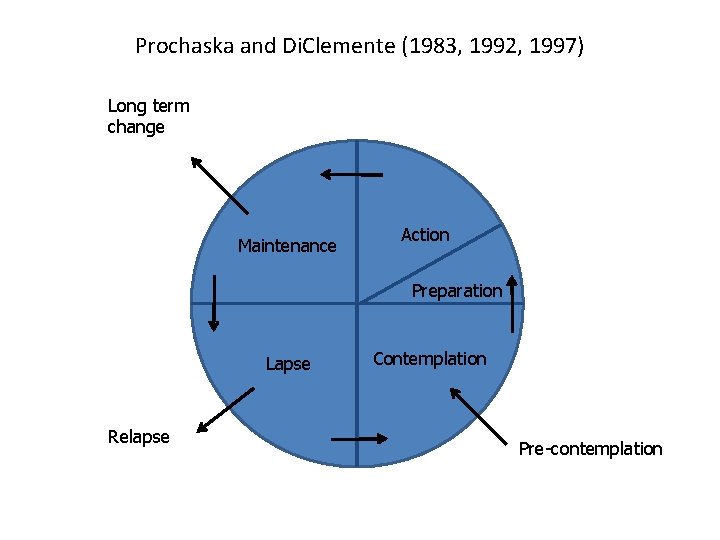
Prochaska and Di. Clemente (1983, 1992, 1997) Long term change Maintenance Action Preparation Lapse Relapse Contemplation Pre-contemplation
Four Simple Steps to Recovery: 1. Connect… With people around you. Go to meetings (AA, NA, CA, SMART) 2. Be Active…do something, go for a walk, exercise, do anything. 3. Give… Do something for someone else. Volunteer. 4. Keep Learning… Try something new. Become a student of recovery? 5. Take Notice… Be curious. Be present. ‘The Power of Now’ (Ekhart Tolle)