
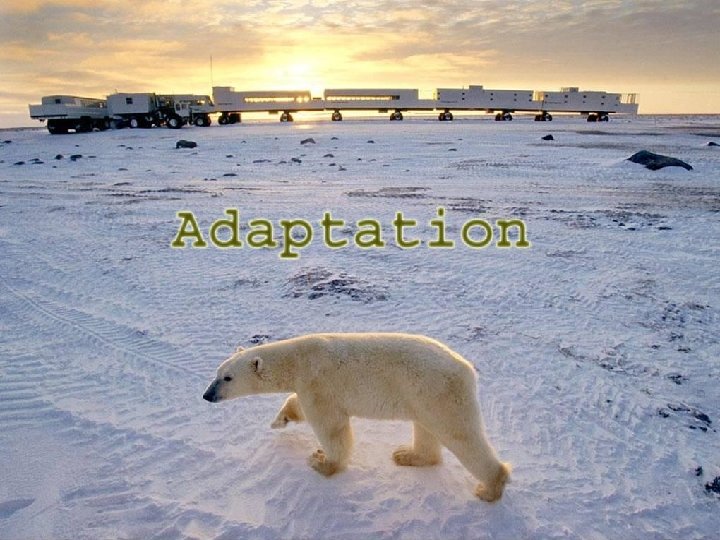
What is Adaptation Inherited traits that increase the



- Slides: 34
What is Adaptation ? Inherited traits that increase the chances of 1. Survival 2. Reproduction of an organism in a particular environment
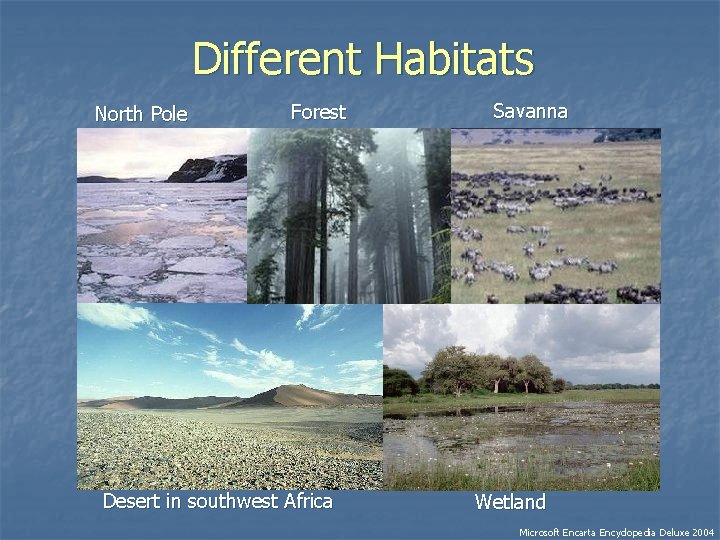
Different Habitats North Pole Forest Desert in southwest Africa Savanna Wetland Microsoft Encarta Encyclopedia Deluxe 2004
How Does Evolution Work l l Natural selection leads to adaptation Natural selection involves genetic variation and selection among variants present in a population
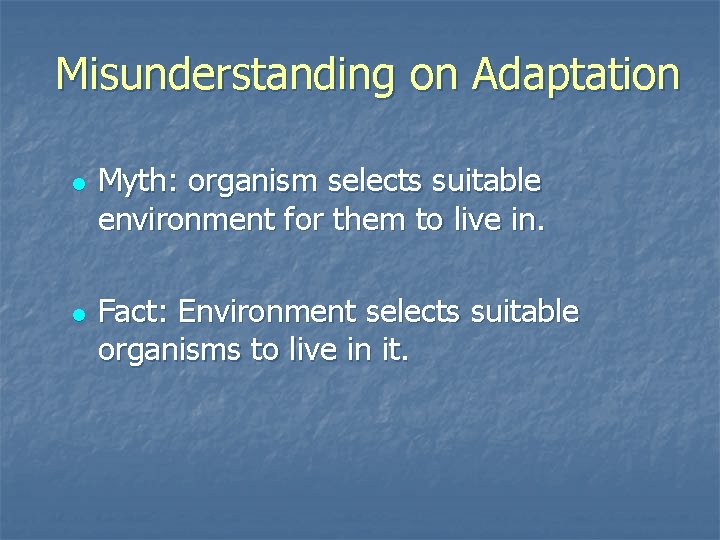
Misunderstanding on Adaptation l l Myth: organism selects suitable environment for them to live in. Fact: Environment selects suitable organisms to live in it.
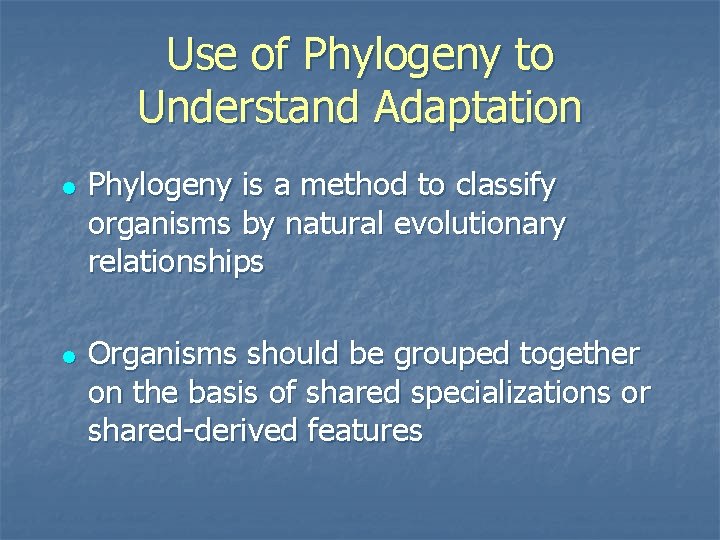
Use of Phylogeny to Understand Adaptation l l Phylogeny is a method to classify organisms by natural evolutionary relationships Organisms should be grouped together on the basis of shared specializations or shared-derived features
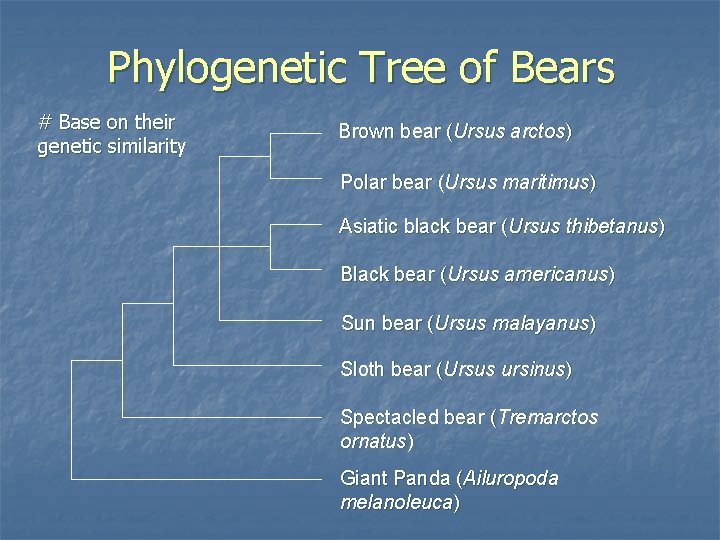
Phylogenetic Tree of Bears # Base on their genetic similarity Brown bear (Ursus arctos) Polar bear (Ursus maritimus) Asiatic black bear (Ursus thibetanus) Black bear (Ursus americanus) Sun bear (Ursus malayanus) Sloth bear (Ursus ursinus) Spectacled bear (Tremarctos ornatus) Giant Panda (Ailuropoda melanoleuca)
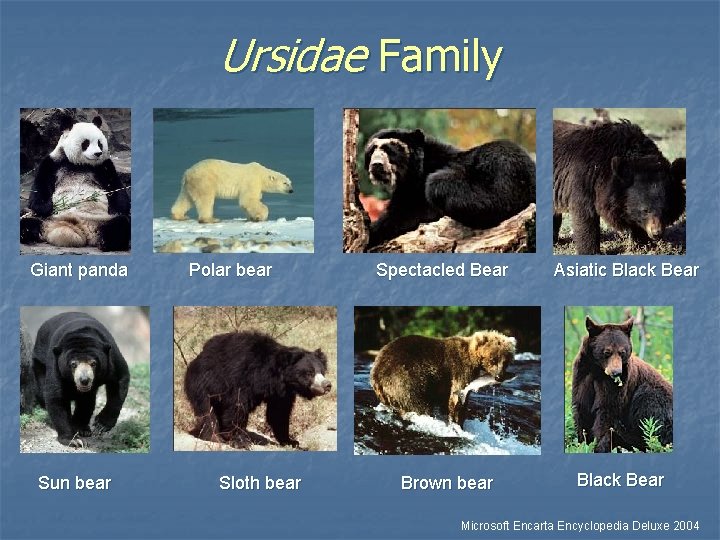
Ursidae Family Giant panda Sun bear Polar bear Sloth bear Spectacled Bear Brown bear Asiatic Black Bear Microsoft Encarta Encyclopedia Deluxe 2004
What Problems Do Polar Bear Face ? l Cold l Unstable food source l Geographical change (melting ice) l Over heat
Three Major Types of Adaptation l Morphological Adaptation l Physiological Adaptation l Behavioral Adaptation
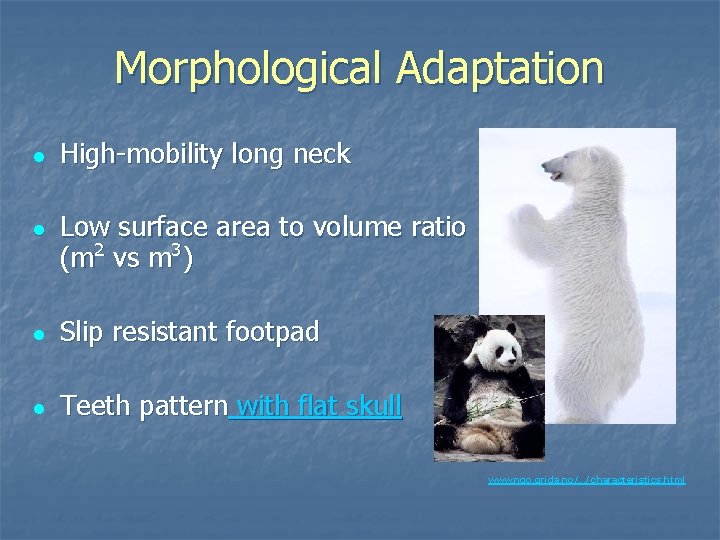
Morphological Adaptation l l High-mobility long neck Low surface area to volume ratio (m 2 vs m 3) l Slip resistant footpad l Teeth pattern with flat skull www. ngo. grida. no/. . . / characteristics. html
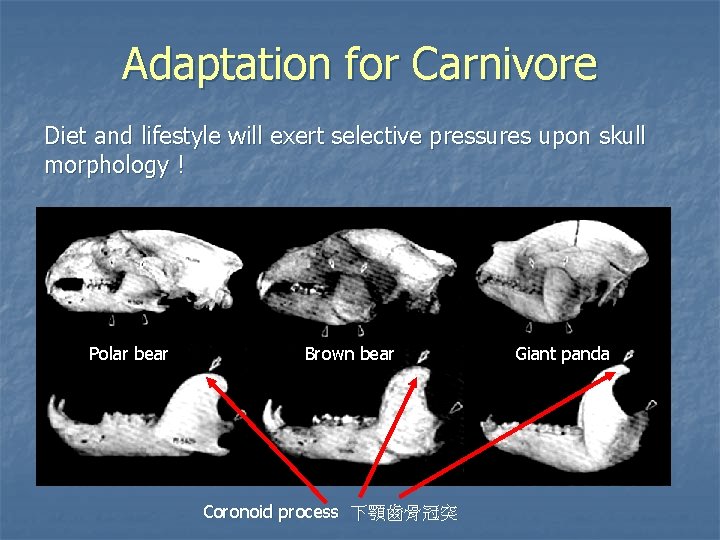
Adaptation for Carnivore Diet and lifestyle will exert selective pressures upon skull morphology ! Polar bear Brown bear Coronoid process 下顎齒骨冠突 Giant panda
Physiological Adaptation l Thick pelt l Fat storage l Blubber system l Haemoglobin
Thick Pelt l Inner short fur l Outer long transparent fur l Black skin
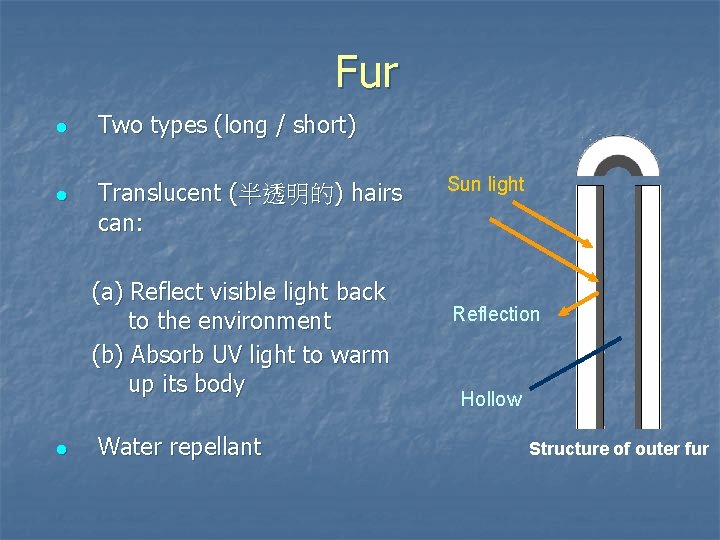
Fur l l Two types (long / short) Translucent (半透明的) hairs can: (a) Reflect visible light back to the environment (b) Absorb UV light to warm up its body l Water repellant Sun light Reflection Hollow Structure of outer fur
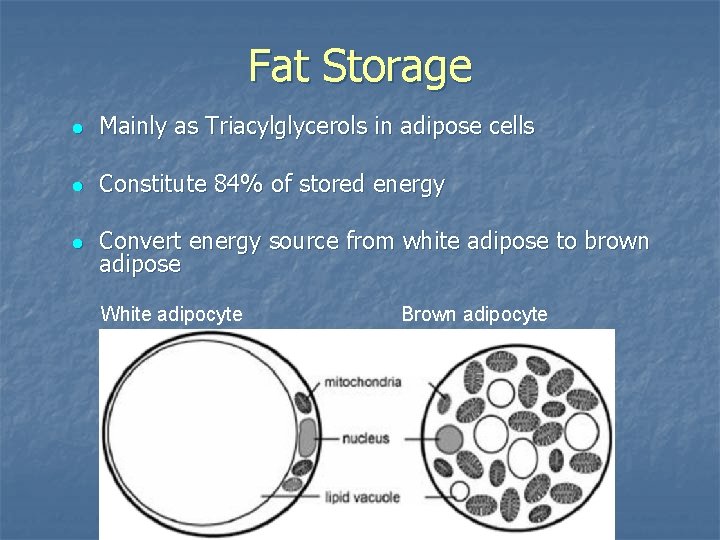
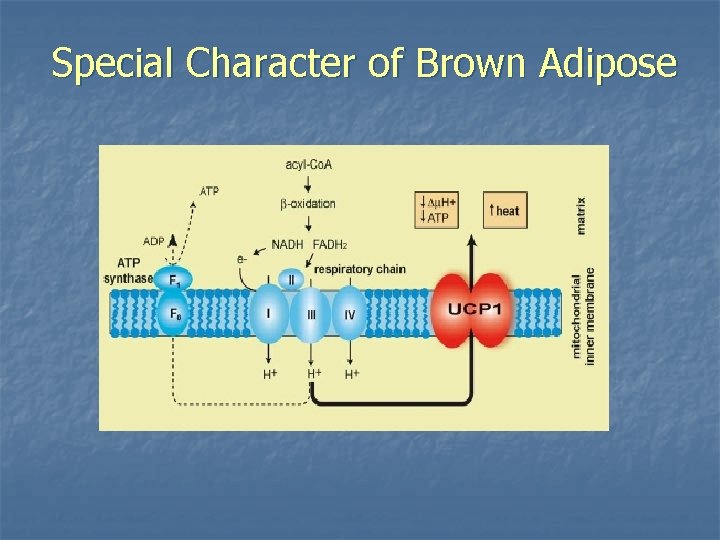
Fat Storage l Mainly as Triacylglycerols in adipose cells l Constitute 84% of stored energy l Convert energy source from white adipose to brown adipose White adipocyte Brown adipocyte
Special Character of Brown Adipose
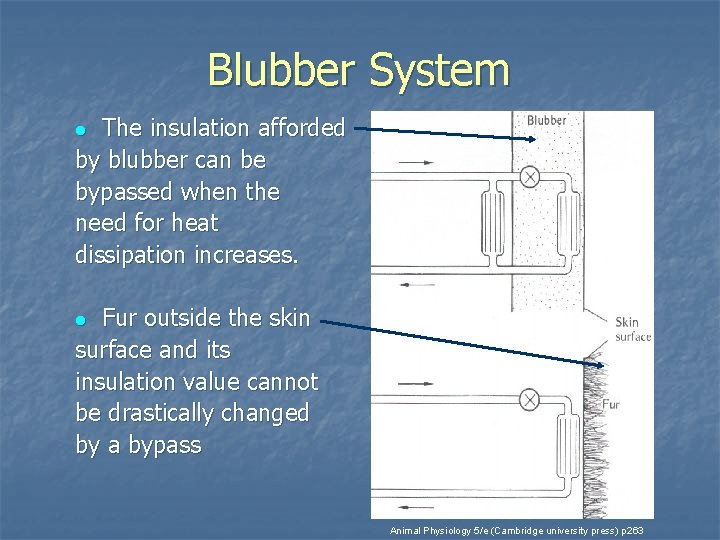
Blubber System The insulation afforded by blubber can be bypassed when the need for heat dissipation increases. l Fur outside the skin surface and its insulation value cannot be drastically changed by a bypass l Animal Physiology 5/e (Cambridge university press) p 263
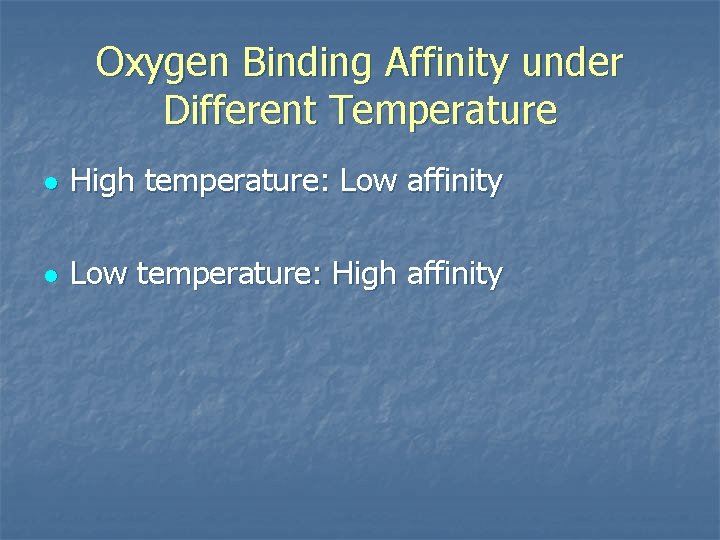
Oxygen Binding Affinity under Different Temperature l High temperature: Low affinity l Low temperature: High affinity
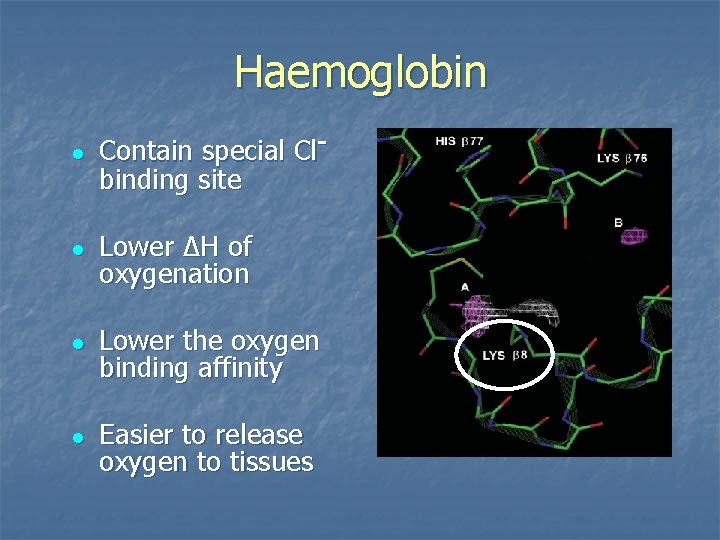
Haemoglobin l Contain special Clbinding site l Lower ∆H of oxygenation l Lower the oxygen binding affinity l Easier to release oxygen to tissues
Behavioral Adaptation l Posture l Swimming l Annual migration l Hibernation (Denning)
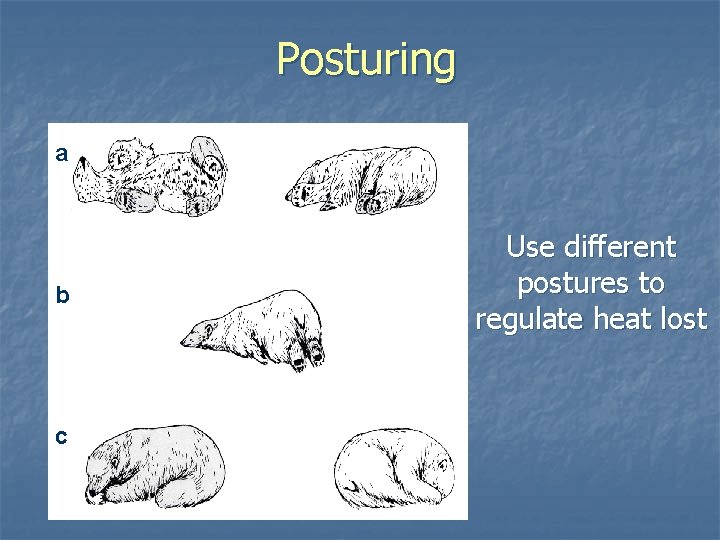
Posturing a b c Use different postures to regulate heat lost
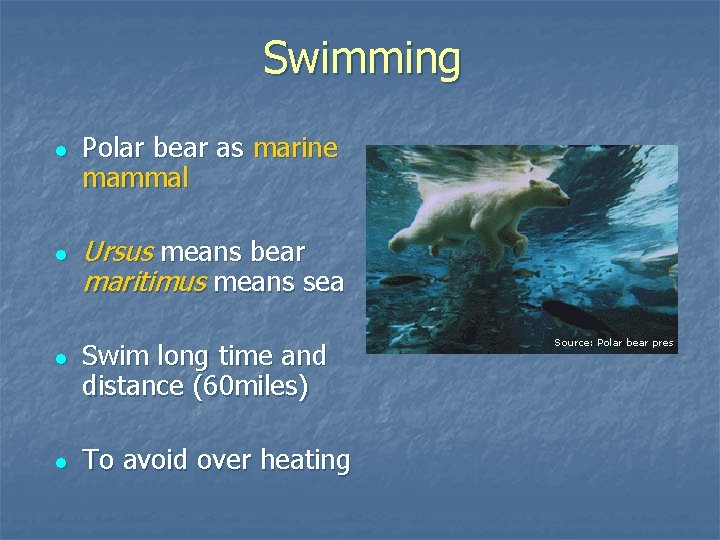
Swimming l l Polar bear as marine mammal Ursus means bear maritimus means sea Swim long time and distance (60 miles) To avoid over heating Source: Polar bear pres
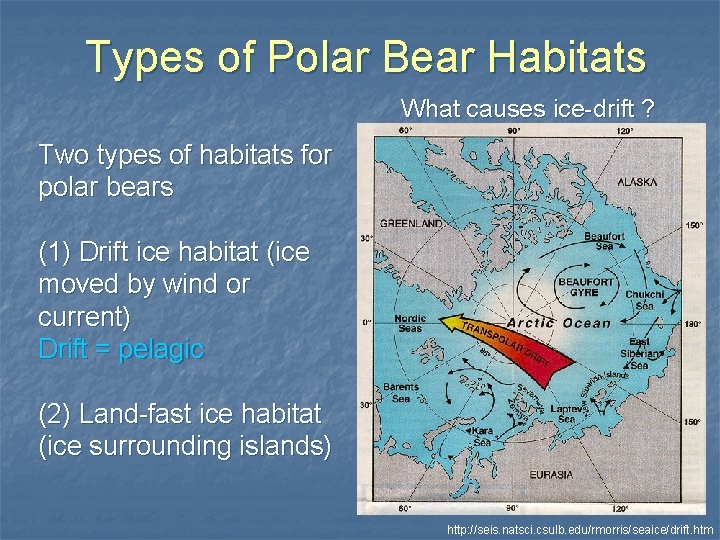
Types of Polar Bear Habitats What causes ice-drift ? Two types of habitats for polar bears (1) Drift ice habitat (ice moved by wind or current) Drift = pelagic (2) Land-fast ice habitat (ice surrounding islands) http: //seis. natsci. csulb. edu/rmorris/seaice/drift. htm
Annual Migration l l Pelagic polar bears move northwards (summer) when ice melting at the ice edge to counteract a continuous southwards ice drift. While it moves southwards (autumn) during sea ice advance
Hibernation True hibernation (does not occur in polar bears) l Body-core temperature close to freezing Walking hibernation (denning for pregnant female) l l When no food is available In order to save energy Using fat as the major energy source in order to preserve essential protein and carbohydrate
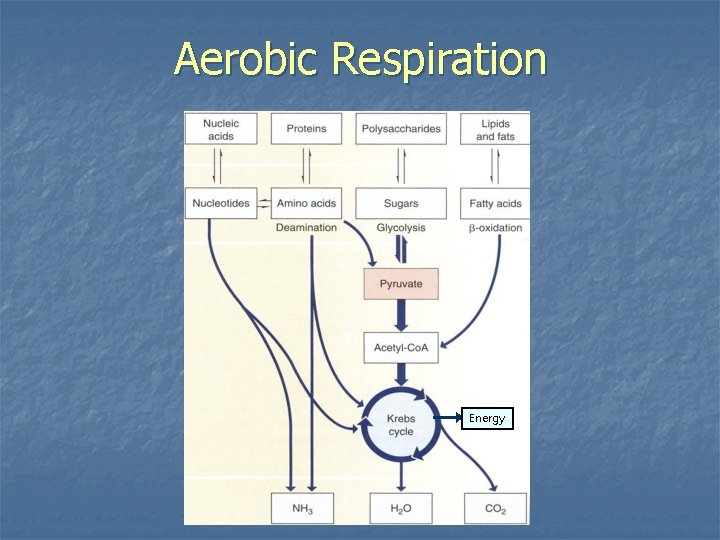
Aerobic Respiration Energy
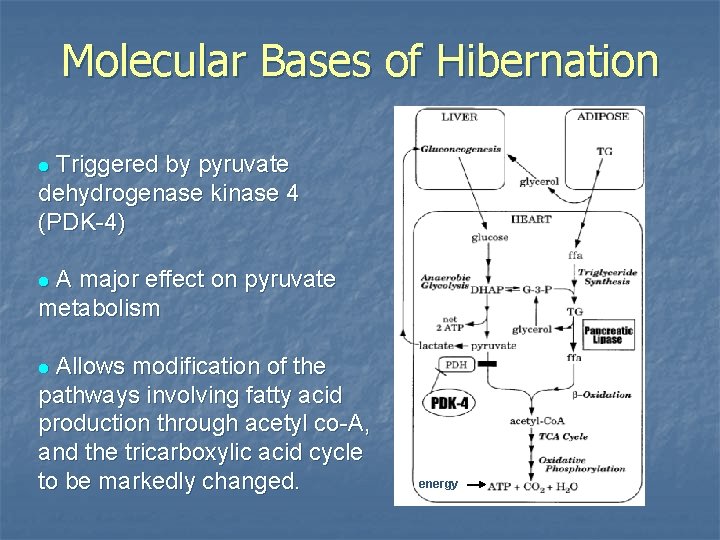
Molecular Bases of Hibernation Triggered by pyruvate dehydrogenase kinase 4 (PDK-4) l A major effect on pyruvate metabolism l Allows modification of the pathways involving fatty acid production through acetyl co-A, and the tricarboxylic acid cycle to be markedly changed. l energy
Quick Summary l l l Environment selects the suitable guests to live in its room. Only organisms with suitable characters can survive in a particular habitat. Environment does change thus population changes as well.
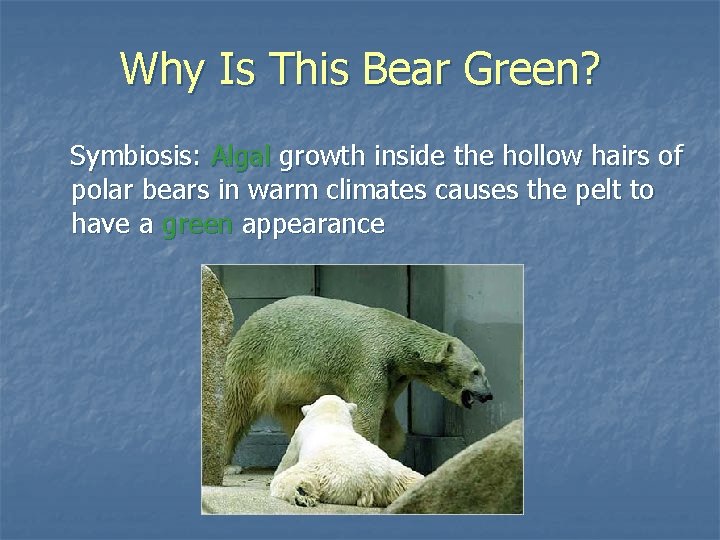
Why Is This Bear Green? Symbiosis: Algal growth inside the hollow hairs of polar bears in warm climates causes the pelt to have a green appearance
How Do Polar Bears Relate to Us ?
Enjoy the Nature
Acknowledgements n n n n n Prof. K. L. CHOW Prof. WONG Prof. SO Dr. T. K. GOH Dr. Maggie LI Dr. Ice KO Dr. Y. Y. REN Mr. Wilfred LEUNG Mr. Jack LI Center for Enhanced Learning and Teaching This project is supported by the funding from Center for Enhanced Learning and Teaching
HKUST l l l http: //www. ust. hk Way: bo_lkwag@stu. ust. hk John: bo_ssl@stu. ust. hk