
What is Abnormal Psychological Disorders Basic Concepts and
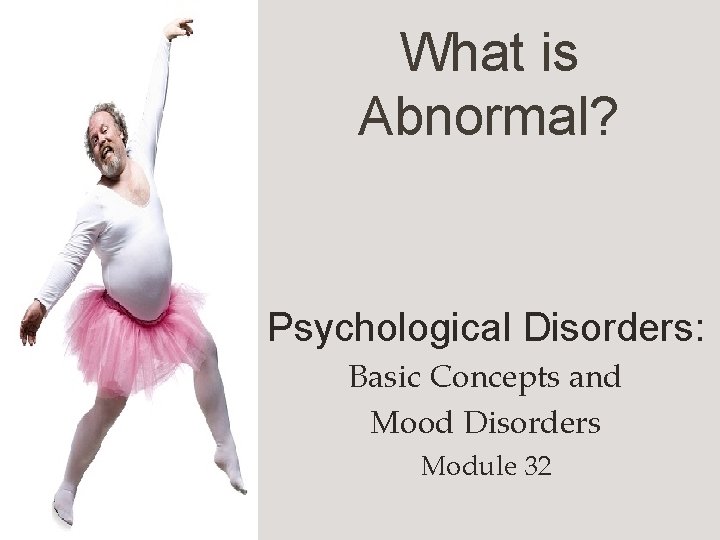
What is Abnormal? Psychological Disorders: Basic Concepts and Mood Disorders Module 32
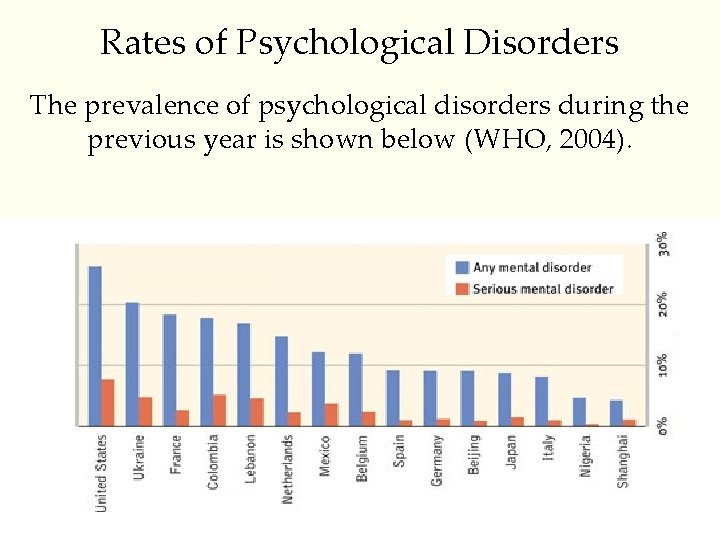
Rates of Psychological Disorders The prevalence of psychological disorders during the previous year is shown below (WHO, 2004). 2
Behavior? Abnormal behavior is characterized as: – _____________ Statistically infrequent or deviates from the norm – Maladaptive _____________________________________ _________
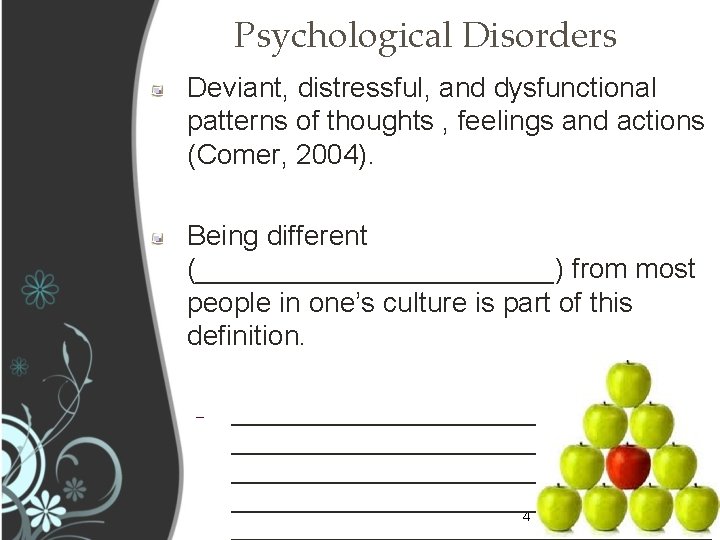
Psychological Disorders Deviant, distressful, and dysfunctional patterns of thoughts , feelings and actions (Comer, 2004). Being different (____________) from most people in one’s culture is part of this definition. – ____________________________________ 4 __________________
Abnormal Psychology Is the field of psychology concerned with assessment, ______________________ – “Clinical Psychology”

How are disorders diagnosed? The DSM IV is the most widely used classification system currently used to make a diagnosis.
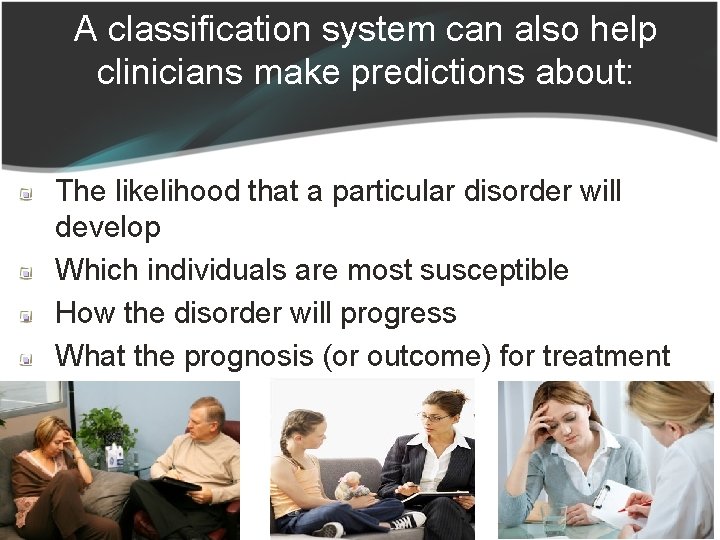
A classification system can also help clinicians make predictions about: The likelihood that a particular disorder will develop Which individuals are most susceptible How the disorder will progress What the prognosis (or outcome) for treatment
History The mentally ill were once subjected to terrible conditions in “insane asylums” This resulted in Deinstitutionalization: – This effected treatment methods – Accounts for a large majority
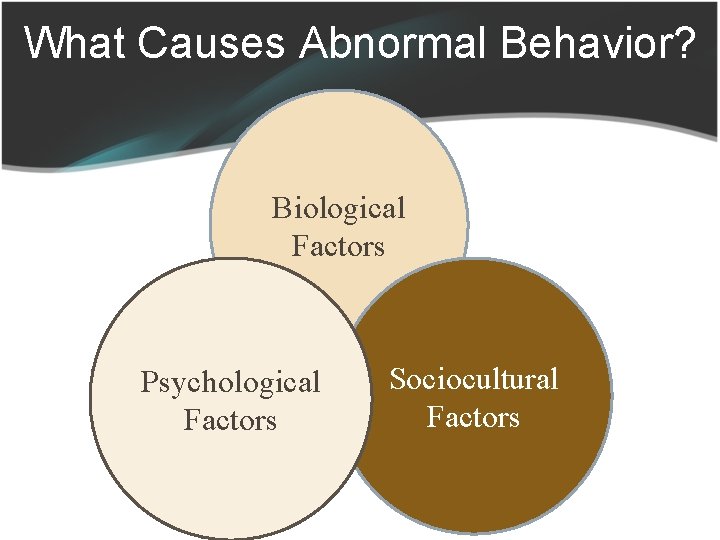
What Causes Abnormal Behavior? Biological Factors Psychological Factors Sociocultural Factors
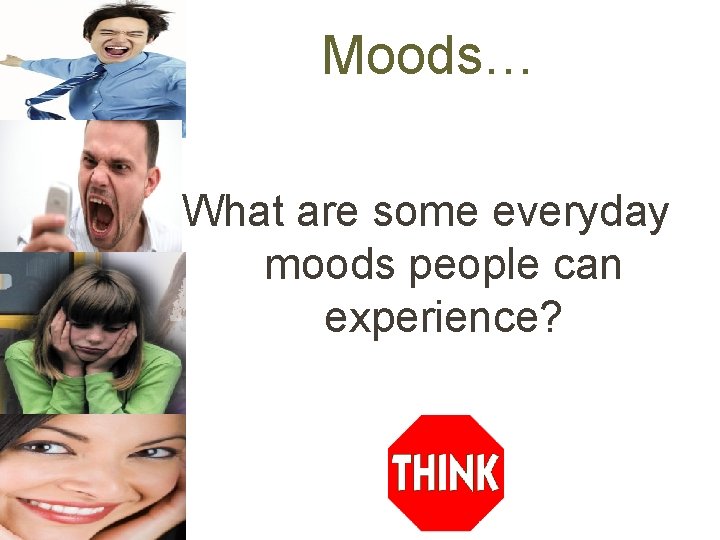
Moods… What are some everyday moods people can experience?
Mood Disorders Mood disorders are psychological disorders in which there is a primary disturbance of mood: – _________________________ ______
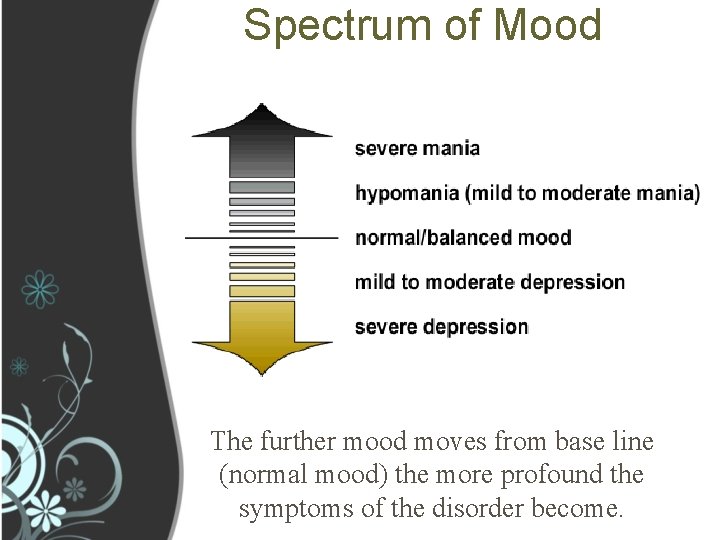
Spectrum of Mood The further mood moves from base line (normal mood) the more profound the symptoms of the disorder become.

(MDD) Major Depressive Disorder (MDD) which is characterized by more depressive severe features which lasts for two or more weeks: – _______________________________
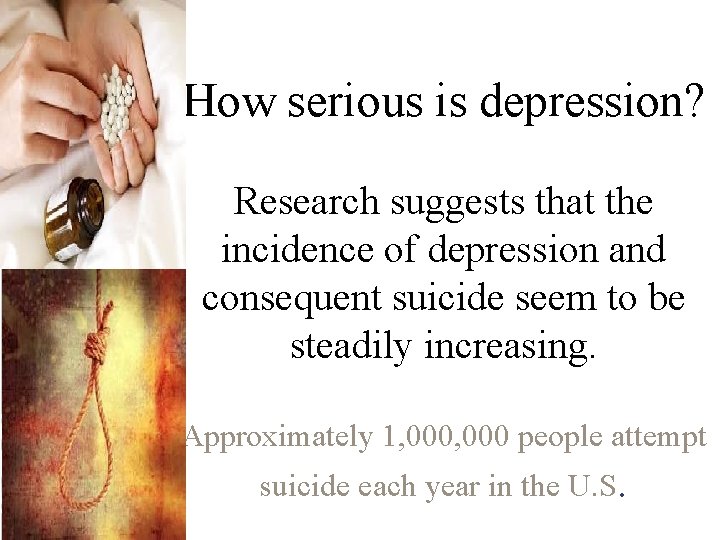
How serious is depression? Research suggests that the incidence of depression and consequent suicide seem to be steadily increasing. Approximately 1, 000 people attempt suicide each year in the U. S.
College students are very at risk for depression and suicide. If you or someone you know is battling with feelings of suicide please refer them to a professional. Help is always available: 1 -800 -SUICIDE
The flip side of depressionextreme pleasure in every activity… This abnormally and persistently elevated or euphoric mood or is _______________ -Hyperactivity -Impulsivity -Flights of ideas
_________________________ ______ (formerly called Manic-Depressive illness. ) This disorder is a roller coaster ride of mood
disorders? Biological factors: – – genetic pre-disposition regulation of neurotransmitters psychological factors: – – – learned helplessness ruminating on negative, self-defeating thoughts pessimistic perception Sociocultural factors – – Poverty gender differences
What is Schizophrenia? Module 33
How would you describe Schizophrenia? How would you describe a person with this disorder?
Who has Schizophrenia? A middle-aged man walks the streets of New York with aluminum foil under his hat, so the Martians can’t read his mind. A young woman sits in her college classroom and hears the voice of God telling her she is a vile and disgusting person. You try to strike up a conversation with the supermarket bagger, but he stares at you vacantly and will say only one or two words in a flat, monotone voice.
_______________ Schizophrenia is classified as a psychotic ____ disorder. These disorders are characterized by hallucinations and delusions, which involve a loss of contact with reality
Schizophrenia A Psychotic Disorder that is ________________________________ – Effecting 1% of the population about 2 million Americans each year (Ho et al. , 2003). Schizophrenia is a devastating brain disorder that impacts almost every area of functioning.
Positive Symptoms of Schizophrenia _____________________________ ________ – Hallucinations, delusions, racing thoughts Disorders of movement – Unusual mannerisms, body movements, and facial expressions.
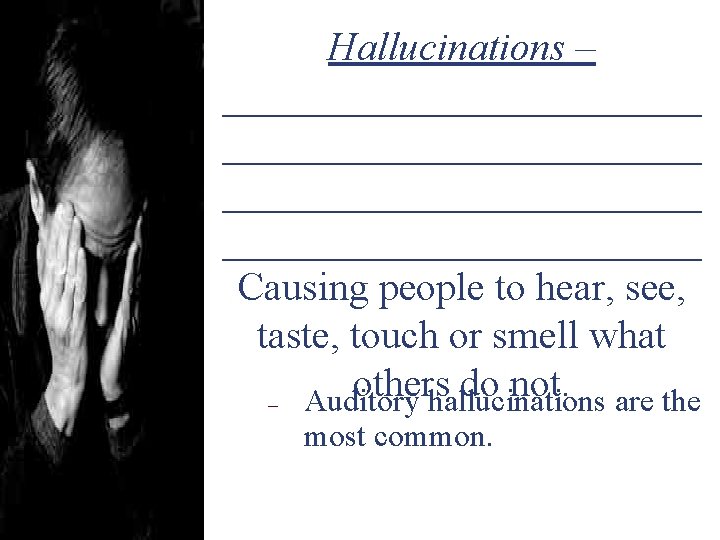
Hallucinations – ________________________ Causing people to hear, see, taste, touch or smell what others do not. – Auditory hallucinations are the most common.

Hi, Jesus Christ…nice to meet you. Delusions______________ _______ – – “I’m the King of England” “That streetlight is sending me secret messages” “I’m from the planet “Gwarnon” The CIA, FBI, and mafia are “out to get me!”
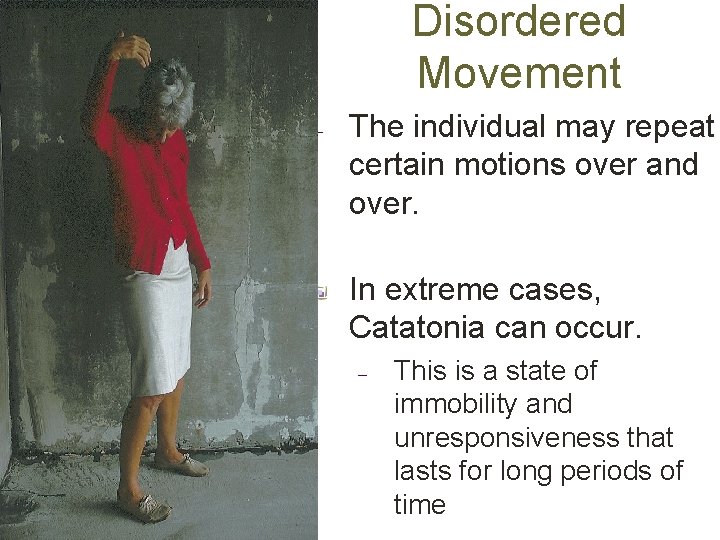
Disordered Movement – The individual may repeat certain motions over and over. In extreme cases, Catatonia can occur. – This is a state of immobility and unresponsiveness that lasts for long periods of time
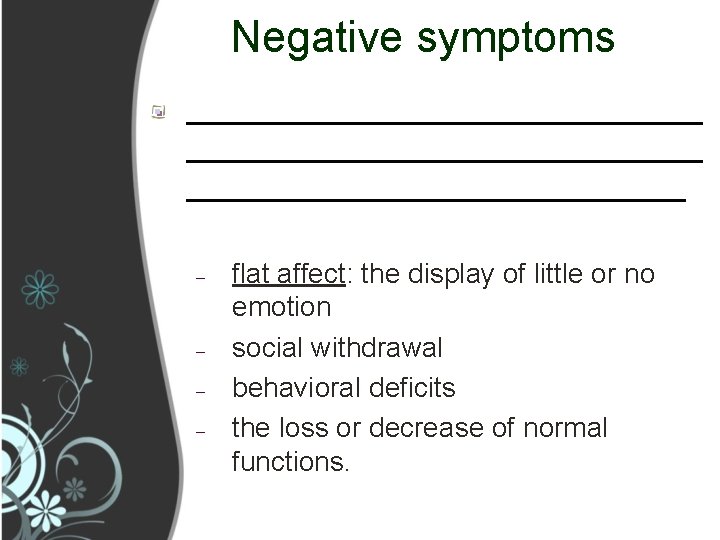
Negative symptoms _____________________________ – – flat affect: the display of little or no emotion social withdrawal behavioral deficits the loss or decrease of normal functions.
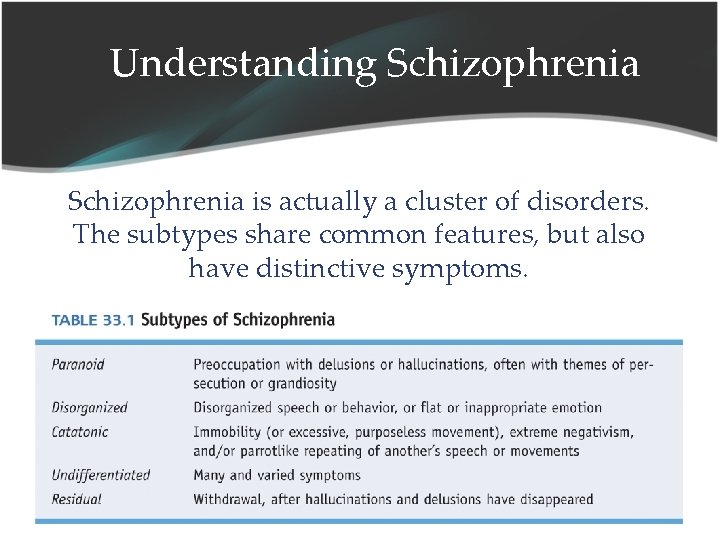
Understanding Schizophrenia is actually a cluster of disorders. The subtypes share common features, but also have distinctive symptoms. 29
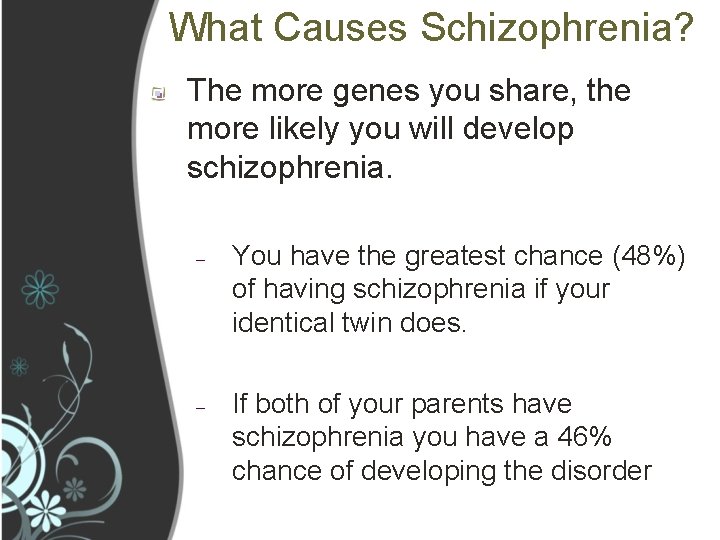
What Causes Schizophrenia? The more genes you share, the more likely you will develop schizophrenia. – – You have the greatest chance (48%) of having schizophrenia if your identical twin does. If both of your parents have schizophrenia you have a 46% chance of developing the disorder
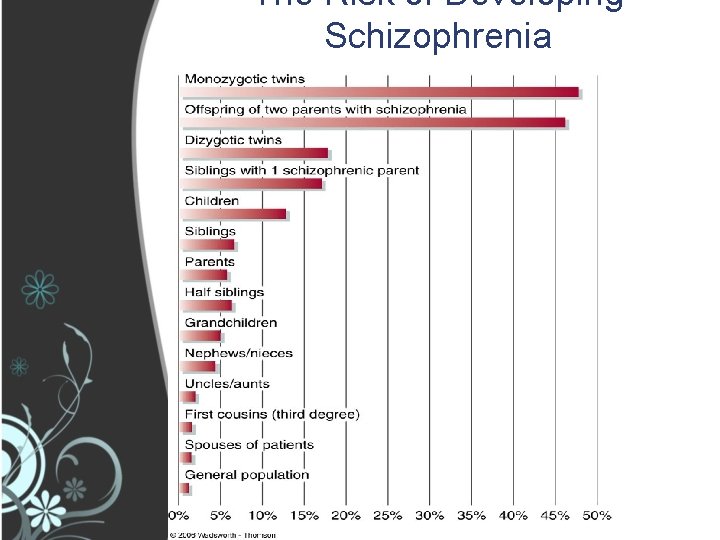
The Risk of Developing Schizophrenia
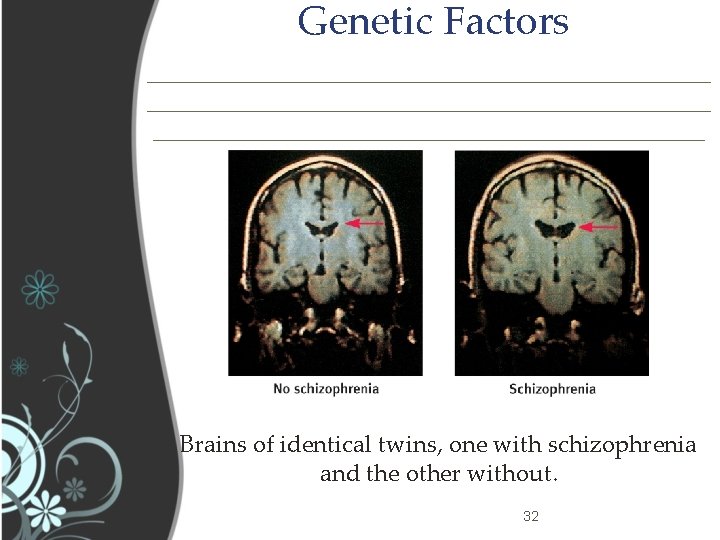
Genetic Factors _______________________________________________ Brains of identical twins, one with schizophrenia and the other without. 32
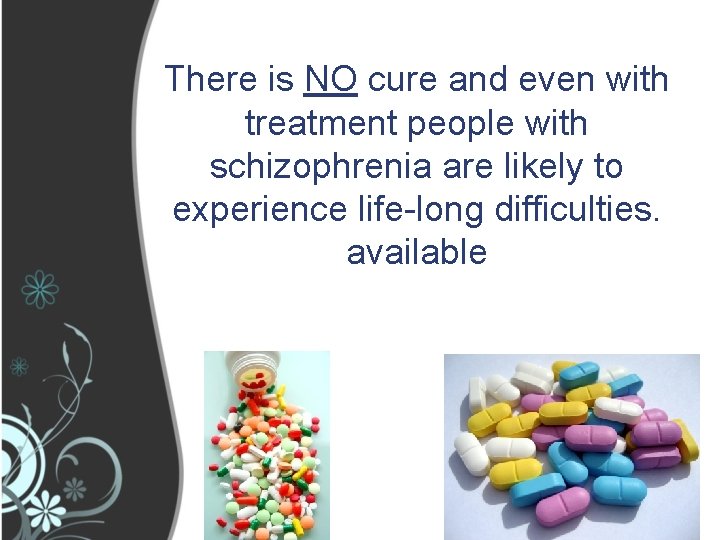
There is NO cure and even with treatment people with schizophrenia are likely to experience life-long difficulties. available
Feeling Anxious? Module 34 Other Disorders
What does anxiety feel like? Anxiety is a generalized feeling of fear ______________________________ Anxiety is often accompanied by increased physiological arousal – increase heart rate, blood pressure, and respiration
Anxiety disorders are marked by ________________________________ There are several types of anxiety disorders: – – – (GAD) Generalized Anxiety Disorder (PTSD) Post Traumatic Stress Disorder (OCD) Obsessive- Compulsive Disorder Phobic Disorder Panic Disorder
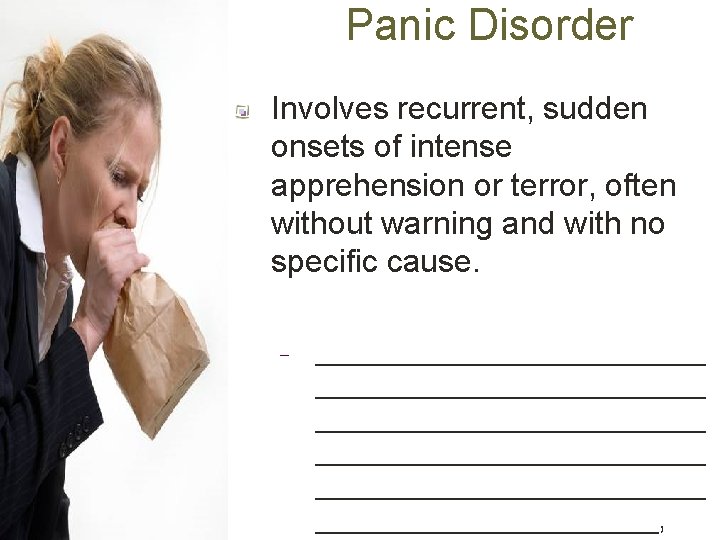
Panic Disorder Involves recurrent, sudden onsets of intense apprehension or terror, often without warning and with no specific cause. – _________________________ _____________,
Causes Biological theories suggest that this may stem from problems involving either or both of two ___________________________ Another theory suggests that individuals misinterpret harmless ___________________________

What are you afraid of?
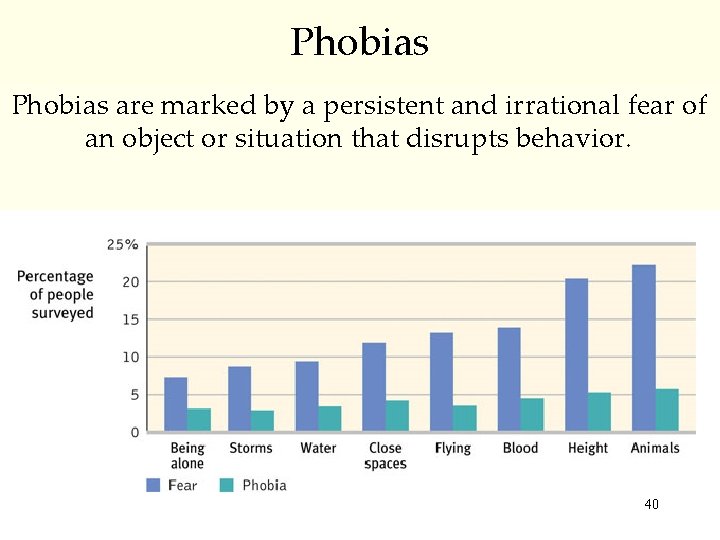
Phobias are marked by a persistent and irrational fear of an object or situation that disrupts behavior. 40

Phobias should not to be confused with _______

If you know what to look for you can learn from the Maury Show!
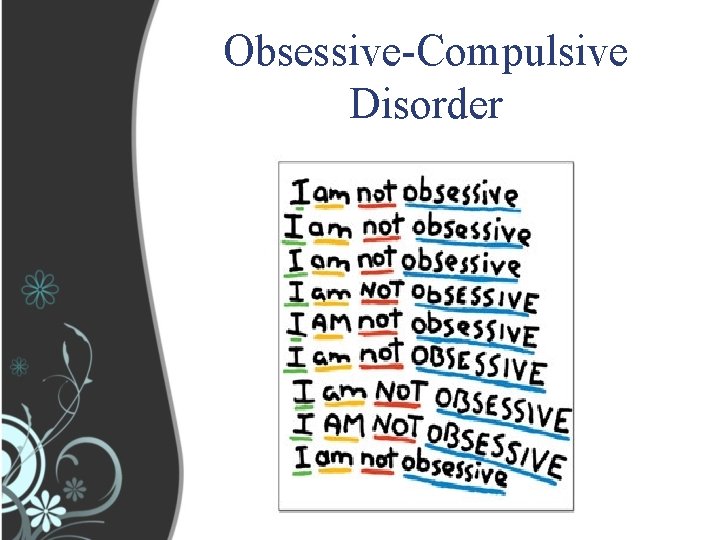
Obsessive-Compulsive Disorder
Obsessive-Compulsive Disorder (OCD) Obsessive-compulsive disorder is marked by _______________________________ ________________ _ 2 -3% of the U. S. population suffers from this disorder.
How Can OCD be Treated? Medication Therapy _____________________________ ______________
Causes of OCD There is research which supports the idea that this disorder has both ___________________________ _ The cognitive perspective suggests that individuals with OCD have an inability to turn off negative, intrusive ______________

PTSD…does trauma ever really go away?
What is PTSD? PTSD involves exposure to a ___________________________ PTSD is an enduring and distressing emotional disorder that follows exposure to a threat. – ___________________________
Symptoms of PTSD Re-experiencing of the trauma in some way. – _________________________ Avoidance of places or people that remind you of the trauma. Dysfunctional emotional response. – _______________
PTSD? One cause of PTSD is the traumatic event itself, but not everyone who experiences the a traumatic event develops PTSD. – Other factors influence the development of this disorder: – __________________________________ _________________
Some researchers are more interested in the resiliency _________________________
- Slides: 51