
What is a worldview A worldview refers to









- Slides: 56
What is a worldview? A “worldview” refers to a comprehensive conception of the world from a specific standpoint. A “Christian worldview, ” then, is a comprehensive conception of the world from a Christian standpoint. An individual’s worldview is his “big picture, ” a harmony of all his beliefs about the world. It is his way of understanding reality. One’s worldview is the basis for making daily decisions and is therefore extremely important.
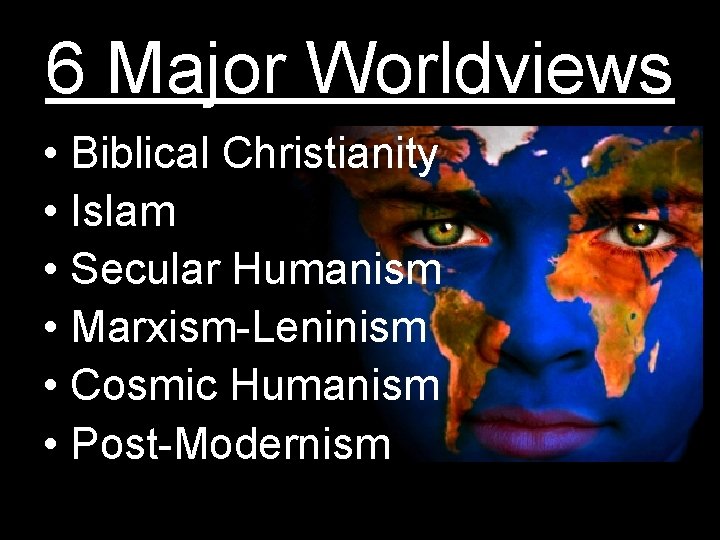
6 Major Worldviews • Biblical Christianity • Islam • Secular Humanism • Marxism-Leninism • Cosmic Humanism • Post-Modernism
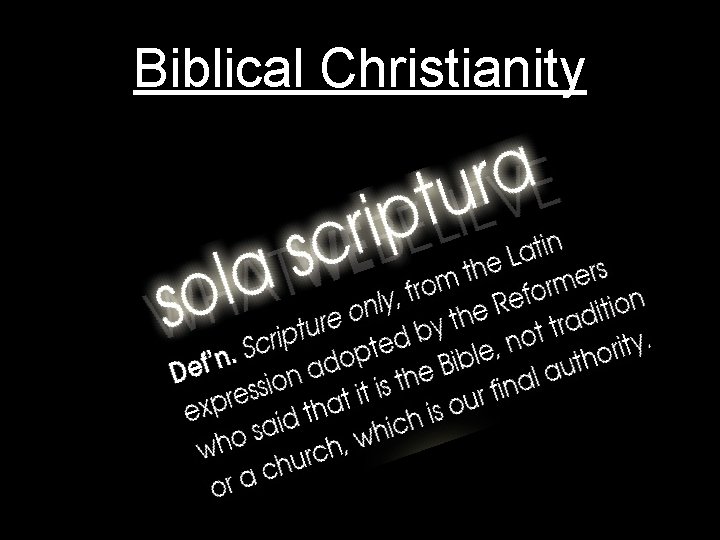
Biblical Christianity
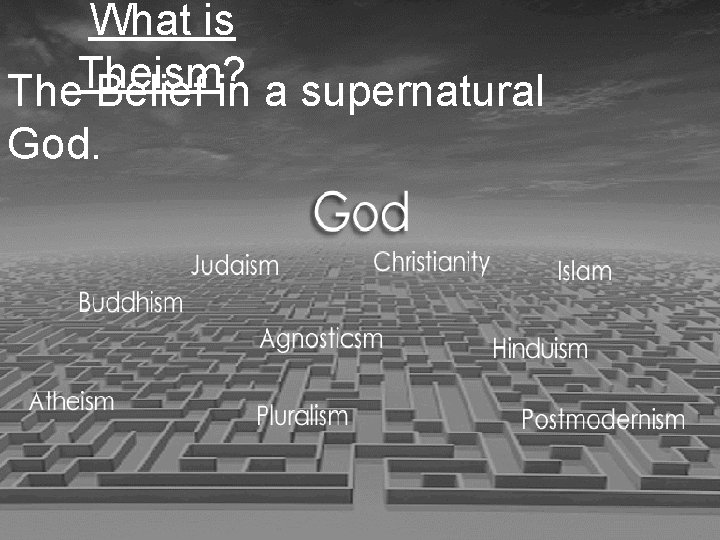
What is Theism? The Belief in a supernatural God.
What are the 2 foundations upon which. General Christian Revelation theism Special rests? _____ Revelation
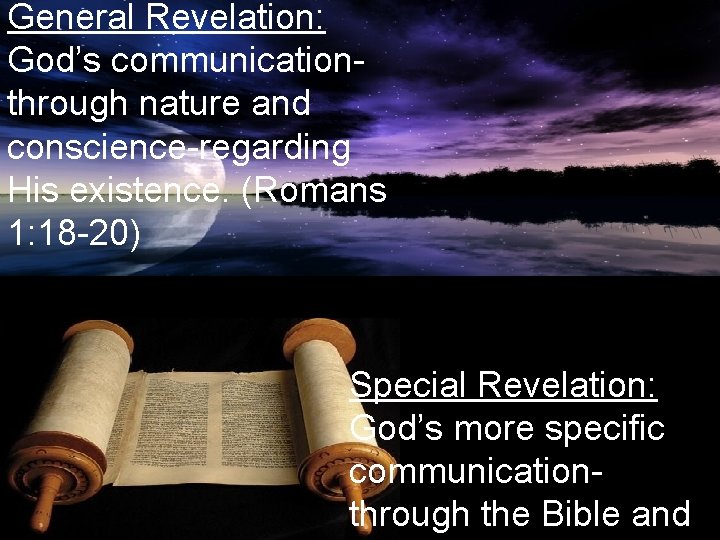
General Revelation: God’s communicationthrough nature and conscience-regarding His existence. (Romans 1: 18 -20) Special Revelation: God’s more specific communicationthrough the Bible and
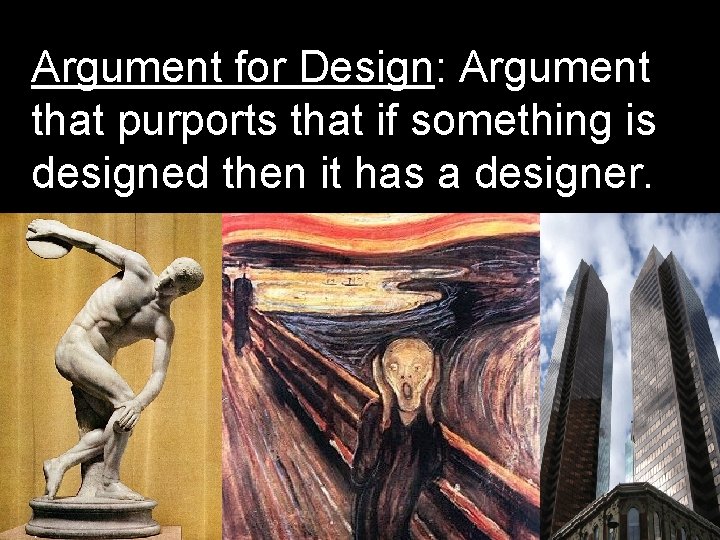
Argument for Design: Argument that purports that if something is designed then it has a designer.
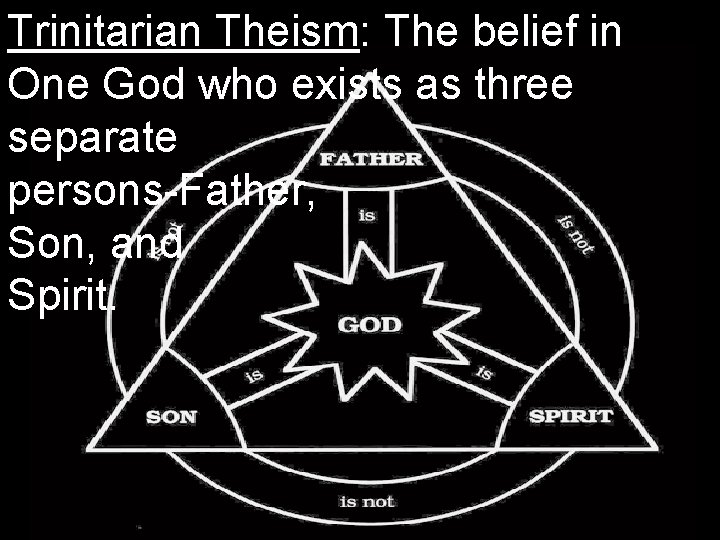
Trinitarian Theism: The belief in One God who exists as three separate persons-Father, Son, and Spirit.
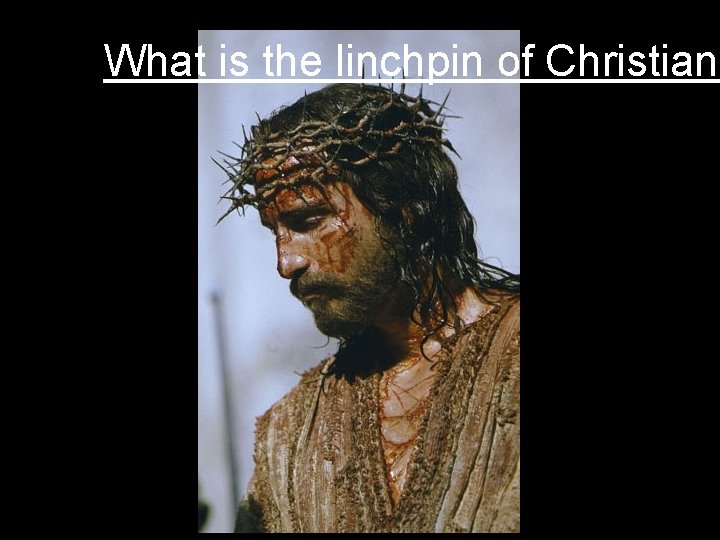
What is the linchpin of Christiani
Test Question When C. S. Lewis says, “Unless I believe in God, I can’t believe in thought, ” what does he mean? (see page 46 in your textbooks) It makes much more sense to think that our own rational thought processes are the product of some higher intelligence rather than billions of years of random incidents. Human reasoning must be suspect if it is not the result of a previous reasoning process.
What are some of the characteristics of the personal God? From the following biblical references what do we learn about these characteristics? -------------------------Daniel 4: 35 -Proverbs 15: 3 -Exodus 32: 11 -14 -John 10: 28 -Hebrews 1: 10 -Isaiah 46: 8 -11 -Genesis 6: 17 -7: 24
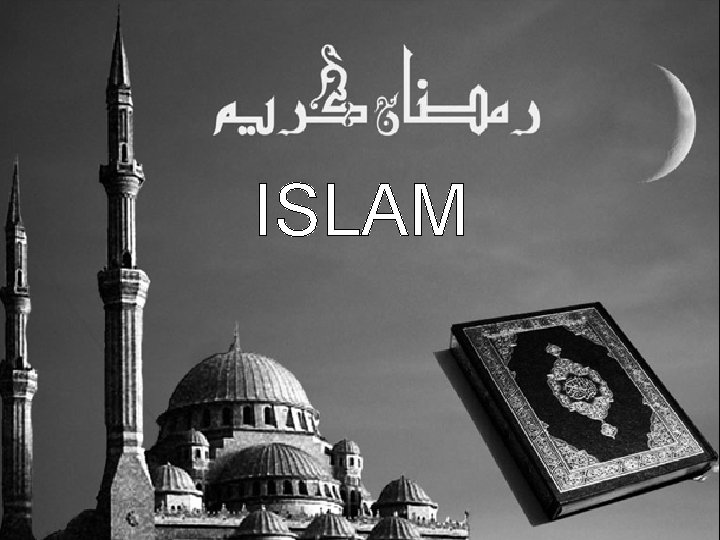
ISLAM
Monotheism: The belief in one God
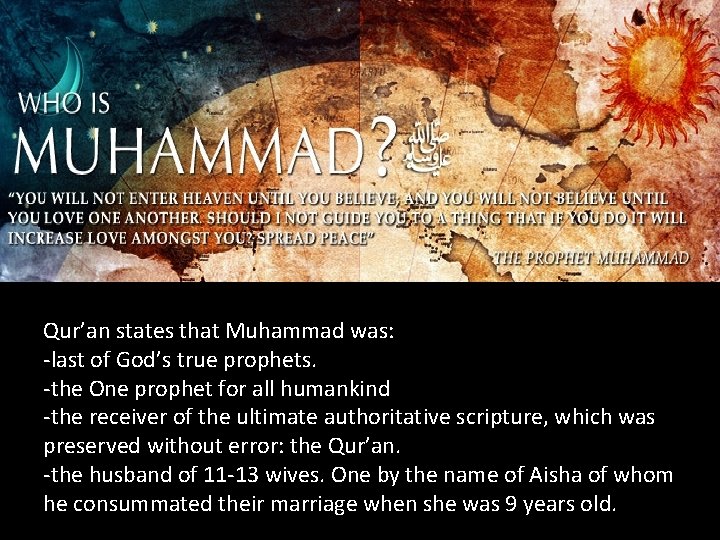
Qur’an states that Muhammad was: -last of God’s true prophets. -the One prophet for all humankind -the receiver of the ultimate authoritative scripture, which was preserved without error: the Qur’an. -the husband of 11 -13 wives. One by the name of Aisha of whom he consummated their marriage when she was 9 years old.
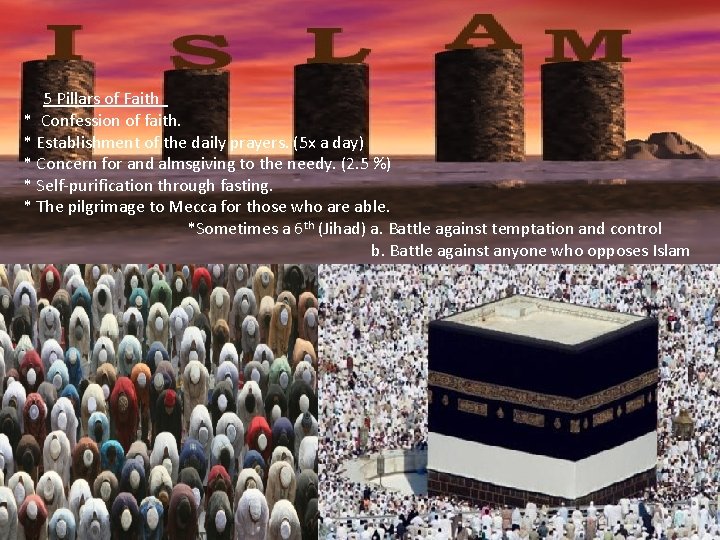
5 Pillars of Faith * Confession of faith. * Establishment of the daily prayers. (5 x a day) * Concern for and almsgiving to the needy. (2. 5 %) * Self-purification through fasting. * The pilgrimage to Mecca for those who are able. *Sometimes a 6 th (Jihad) a. Battle against temptation and control b. Battle against anyone who opposes Islam
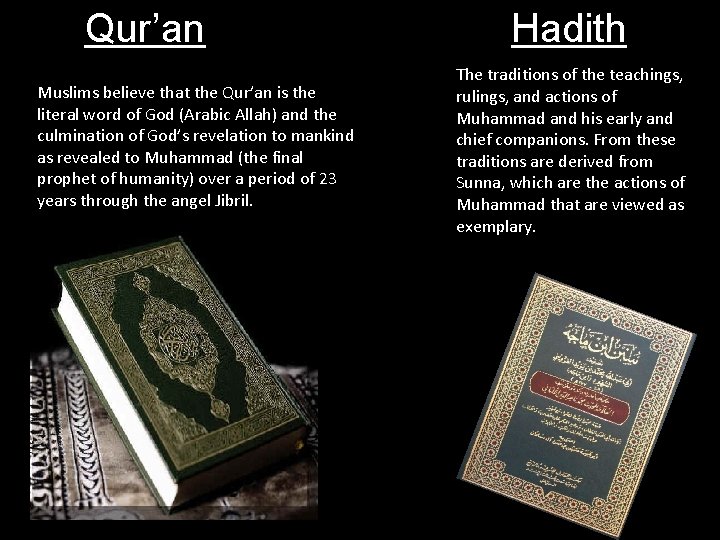
Qur’an Muslims believe that the Qur’an is the literal word of God (Arabic Allah) and the culmination of God’s revelation to mankind as revealed to Muhammad (the final prophet of humanity) over a period of 23 years through the angel Jibril. Hadith The traditions of the teachings, rulings, and actions of Muhammad and his early and chief companions. From these traditions are derived from Sunna, which are the actions of Muhammad that are viewed as exemplary.
How does Christianity fulfill Judaism? Islam claims to fulfill Christianity, but why can this not be true?
Unitarian Theism: The belief in one God in one person (i. e. no trinity)
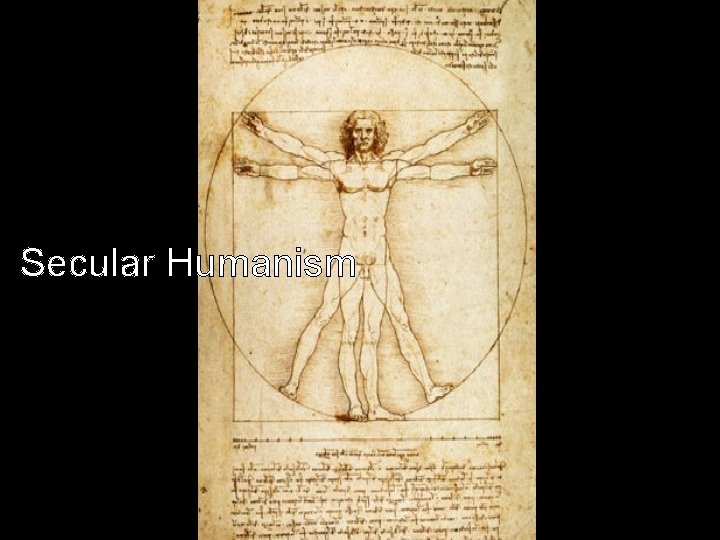
Secular Humanism
ATHEIST VS. AGNOSTIC The denial of the existence of a supernatural God. The philosophical belief that evidence for the existence of God is lacking or inconclusive.
Humanism: The belief that humanity is the highest of all beings and truth and knowledge rest in science and human (Finite vs. Infinite) reason. Isaiah 55: 8 -9: For my thoughts are not your thoughts, neither are your ways my ways, declares the Lord. For as the heavens are higher than the earth. So are my ways higher than your ways and my thoughts than your thoughts.
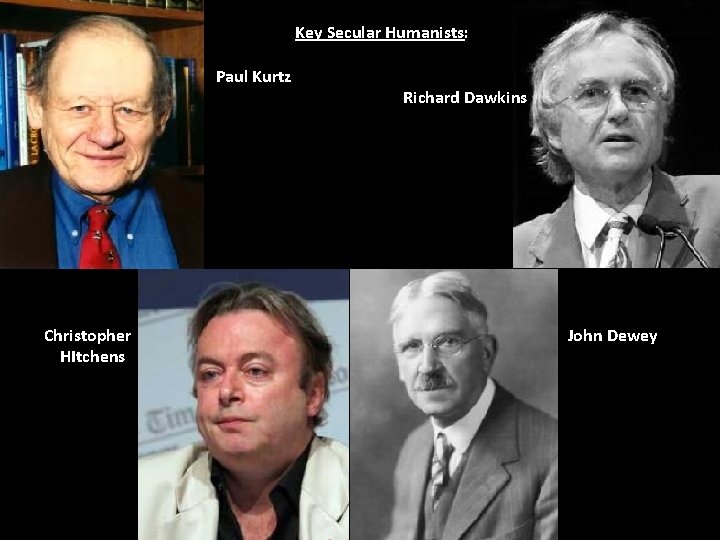
Key Secular Humanists: Paul Kurtz Christopher HItchens Richard Dawkins John Dewey
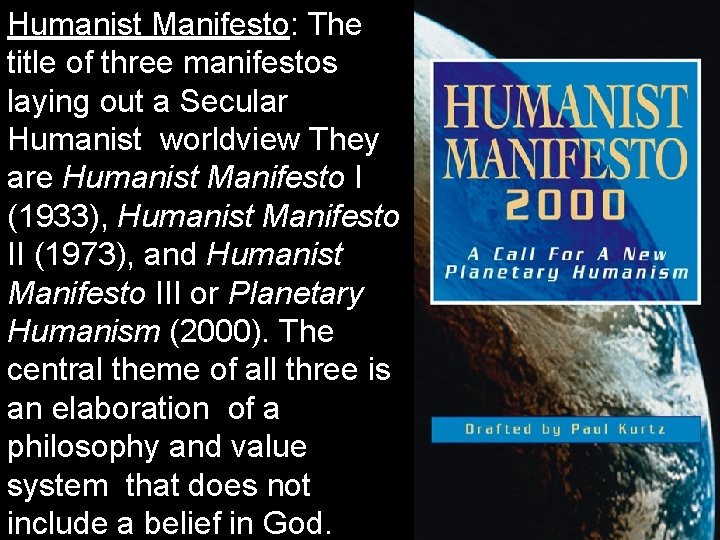
Humanist Manifesto: The title of three manifestos laying out a Secular Humanist worldview They are Humanist Manifesto I (1933), Humanist Manifesto II (1973), and Humanist Manifesto III or Planetary Humanism (2000). The central theme of all three is an elaboration of a philosophy and value system that does not include a belief in God.
MARXISM-LENINISM
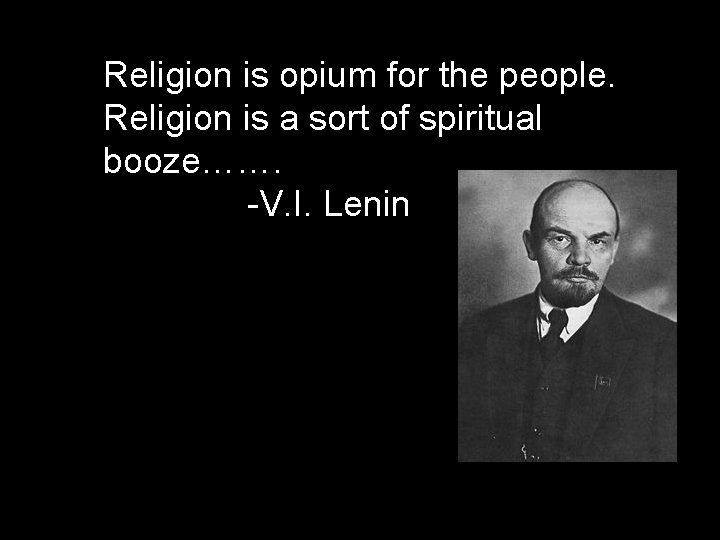
Religion is opium for the people. Religion is a sort of spiritual booze……. -V. I. Lenin
To be a Marxist means one must adhere to atheism. Why?
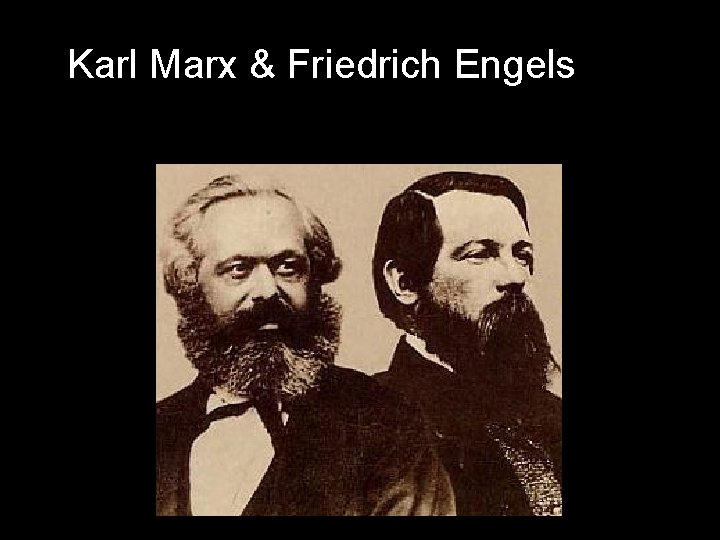
Karl Marx & Friedrich Engels
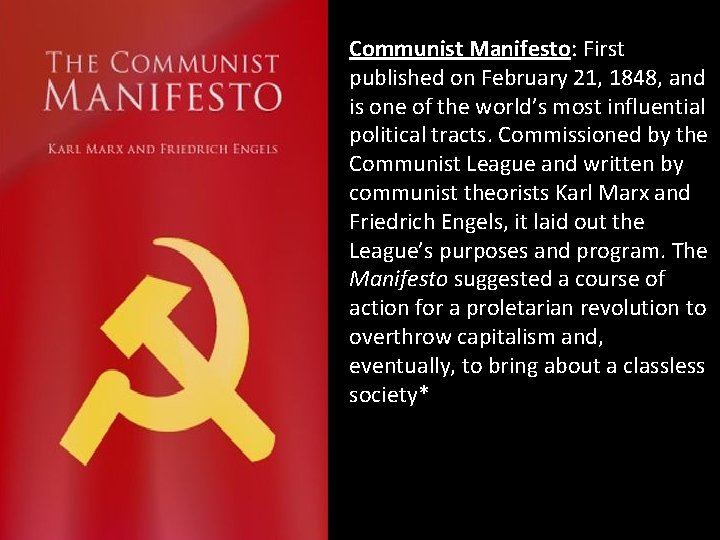
Communist Manifesto: First published on February 21, 1848, and is one of the world’s most influential political tracts. Commissioned by the Communist League and written by communist theorists Karl Marx and Friedrich Engels, it laid out the League’s purposes and program. The Manifesto suggested a course of action for a proletarian revolution to overthrow capitalism and, eventually, to bring about a classless society*
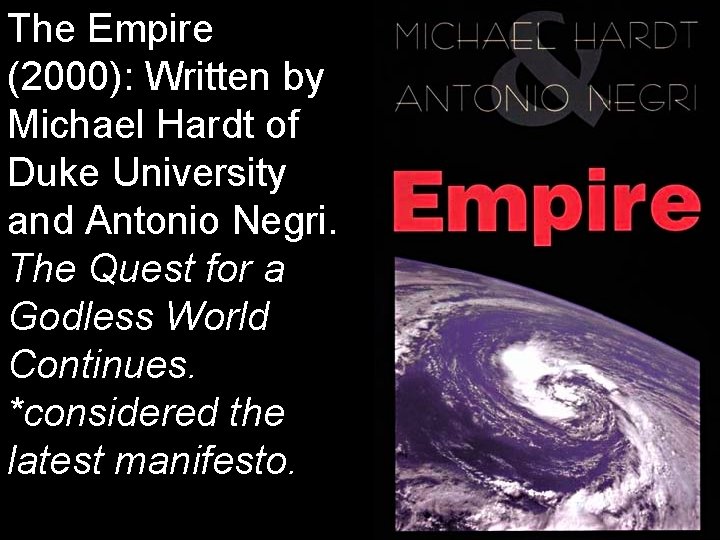
The Empire (2000): Written by Michael Hardt of Duke University and Antonio Negri. The Quest for a Godless World Continues. *considered the latest manifesto.
Ideas have Consequences
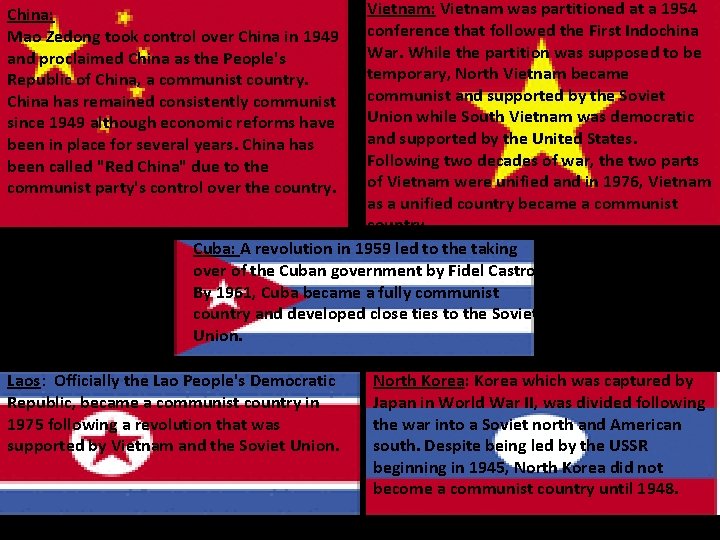
Vietnam: Vietnam was partitioned at a 1954 conference that followed the First Indochina War. While the partition was supposed to be temporary, North Vietnam became communist and supported by the Soviet Union while South Vietnam was democratic and supported by the United States. Following two decades of war, the two parts of Vietnam were unified and in 1976, Vietnam as a unified country became a communist country. Cuba: A revolution in 1959 led to the taking over of the Cuban government by Fidel Castro. By 1961, Cuba became a fully communist country and developed close ties to the Soviet Union. China: Mao Zedong took control over China in 1949 and proclaimed China as the People's Republic of China, a communist country. China has remained consistently communist since 1949 although economic reforms have been in place for several years. China has been called "Red China" due to the communist party's control over the country. Laos: Officially the Lao People's Democratic Republic, became a communist country in 1975 following a revolution that was supported by Vietnam and the Soviet Union. North Korea: Korea which was captured by Japan in World War II, was divided following the war into a Soviet north and American south. Despite being led by the USSR beginning in 1945, North Korea did not become a communist country until 1948.
Cosm. Ic Human. Is m EMBRACES NEITHER THei. SM OR ATHEISM
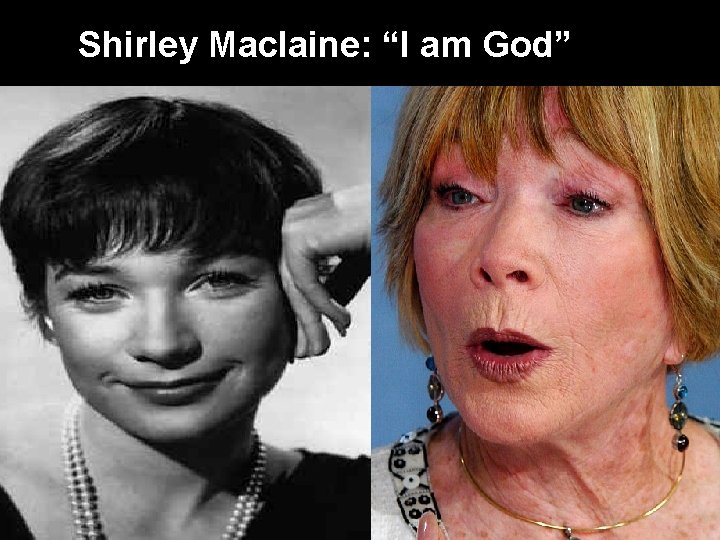
Shirley Maclaine: “I am God”
Pantheism: the belief that god is everything and that everything is god.
Cosmic Humanism is like all fairytales, it has a happy ending. So if we’re wrong about Cosmic Humanism don’t worry. But it begs us to ask this question, “What if they’re wrong? ”
“The wayward stepchild of Marxism”
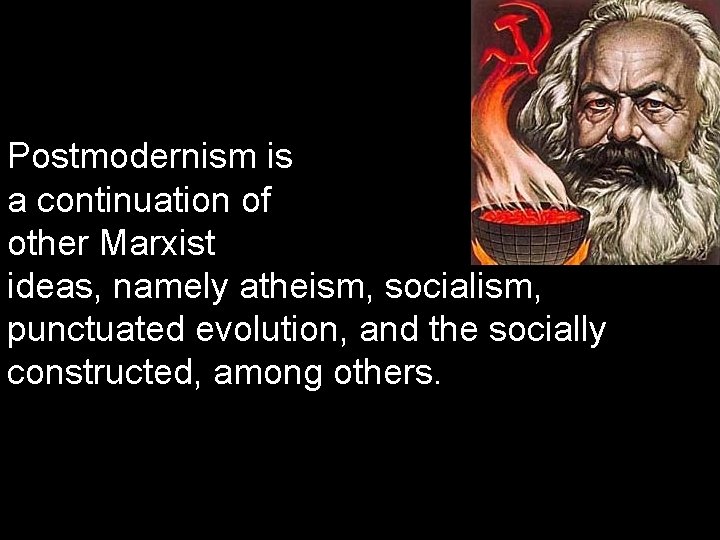
Postmodernism is a continuation of other Marxist ideas, namely atheism, socialism, punctuated evolution, and the socially constructed, among others.
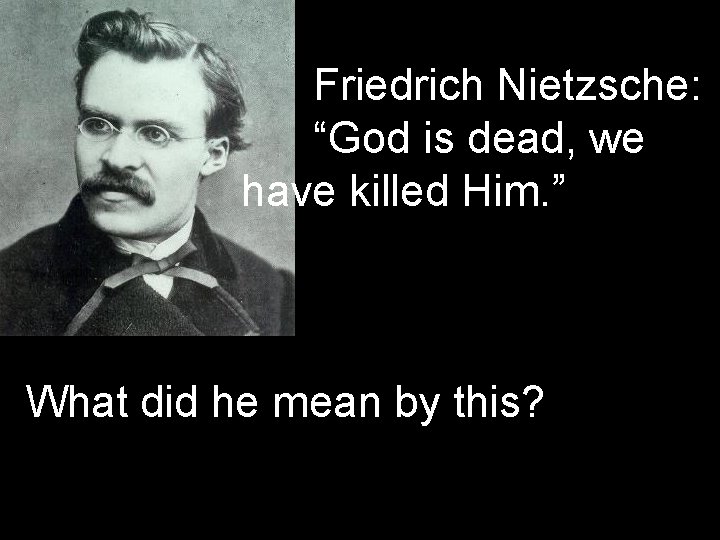
Friedrich Nietzsche: “God is dead, we have killed Him. ” What did he mean by this?
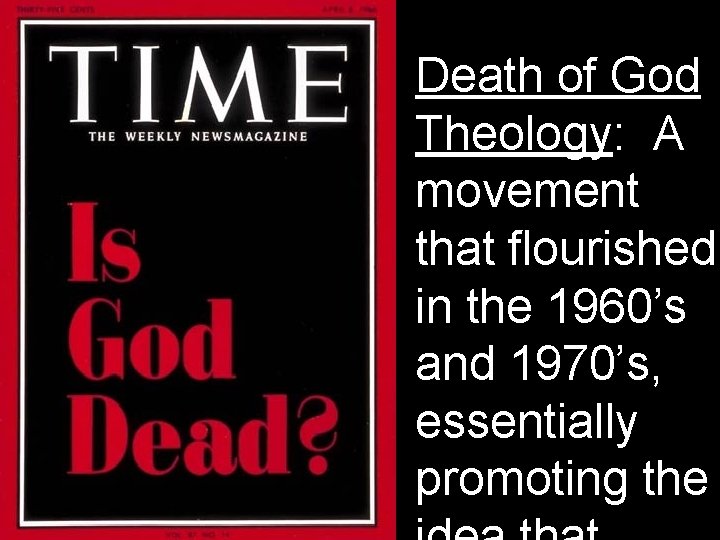
Death of God Theology: A movement that flourished in the 1960’s and 1970’s, essentially promoting the
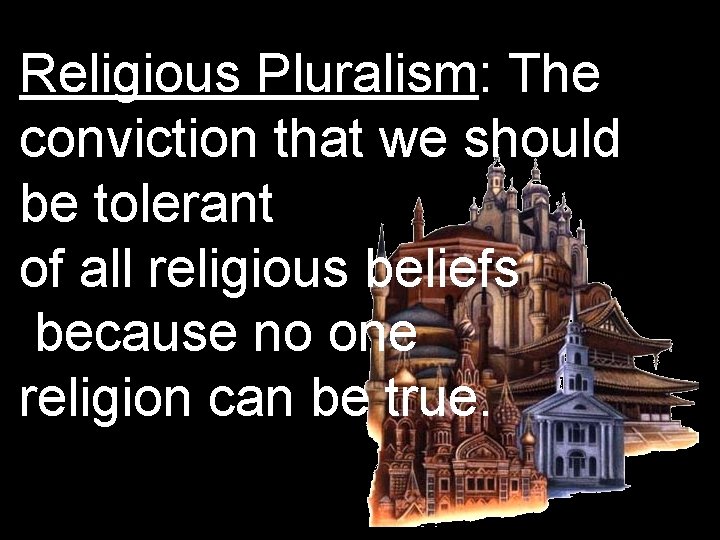
Religious Pluralism: The conviction that we should be tolerant of all religious beliefs because no one religion can be true.
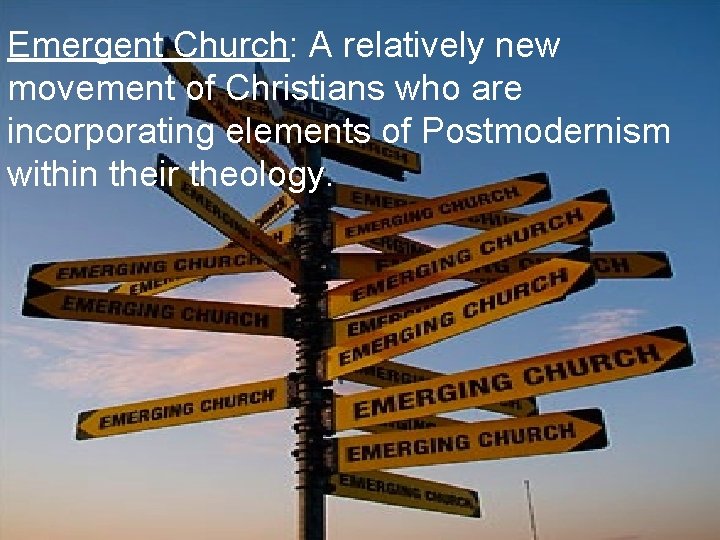
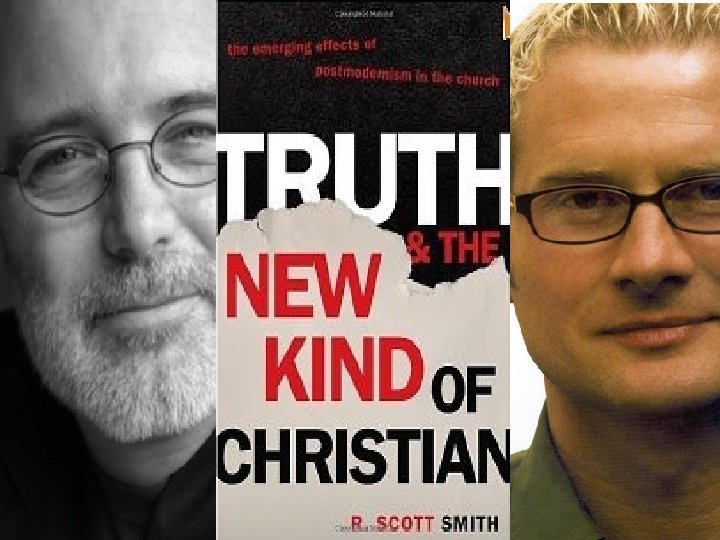
Emergent Church: A relatively new movement of Christians who are incorporating elements of Postmodernism within their theology.
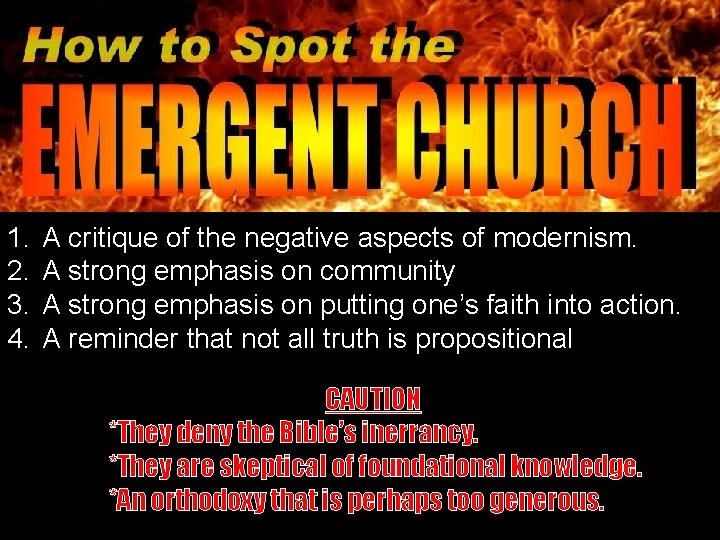
1. 2. 3. 4. A critique of the negative aspects of modernism. A strong emphasis on community A strong emphasis on putting one’s faith into action. A reminder that not all truth is propositional CAUTION *They deny the Bible’s inerrancy. *They are skeptical of foundational knowledge. *An orthodoxy that is perhaps too generous.