
What is a wave A wave is simply

- Slides: 14
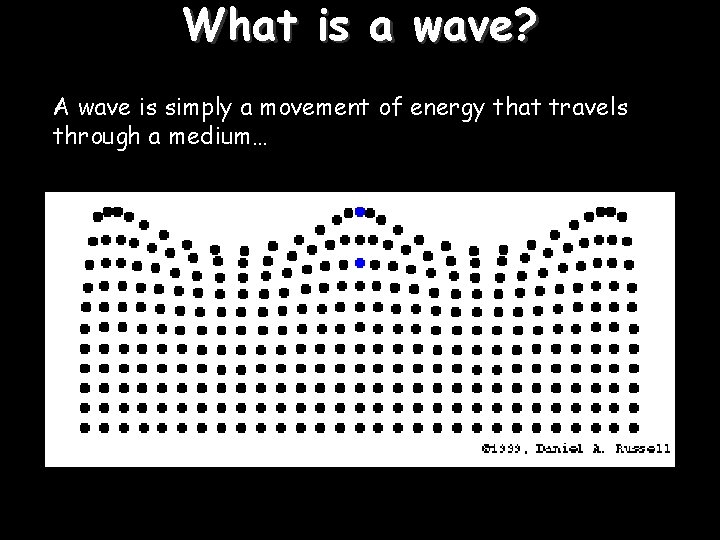
What is a wave? A wave is simply a movement of energy that travels through a medium…
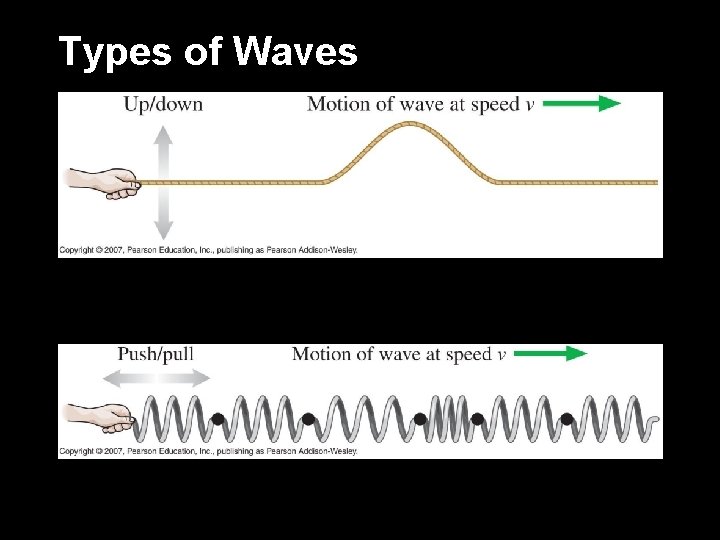
Types of Waves Slide 15 -
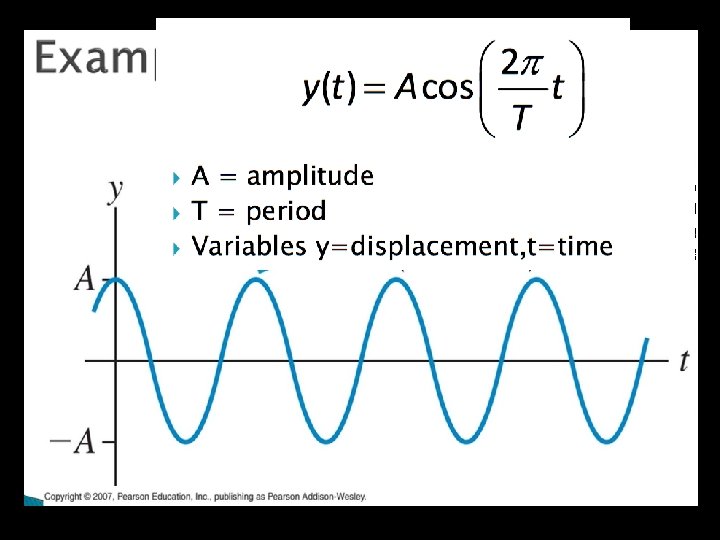
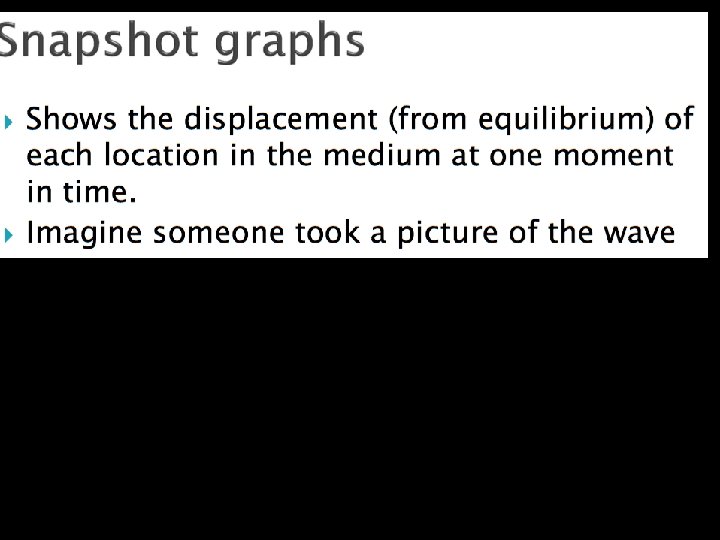
How to graph a wave?
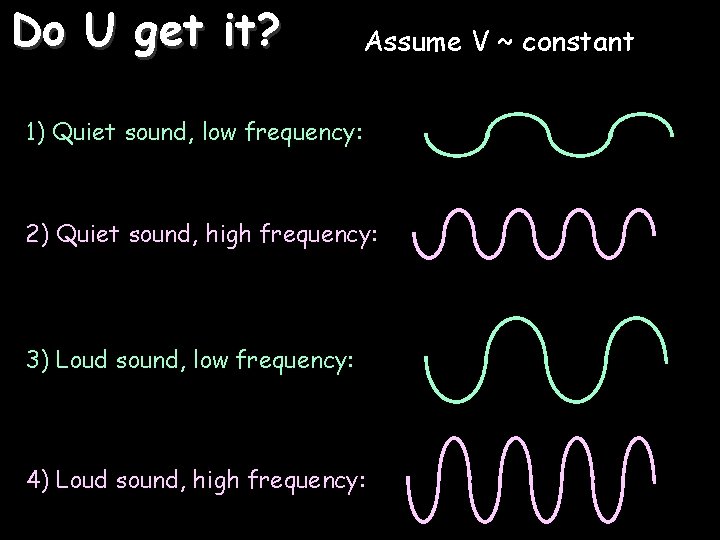
Do U get it? Assume V ~ constant 1) Quiet sound, low frequency: 2) Quiet sound, high frequency: 3) Loud sound, low frequency: 4) Loud sound, high frequency:
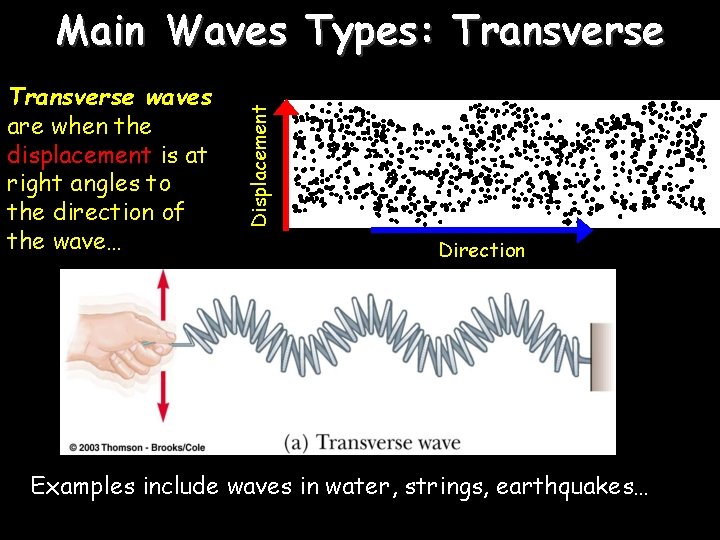
Transverse waves are when the displacement is at right angles to the direction of the wave… Displacement Main Waves Types: Transverse Direction Examples include waves in water, strings, earthquakes…
30/01/2022
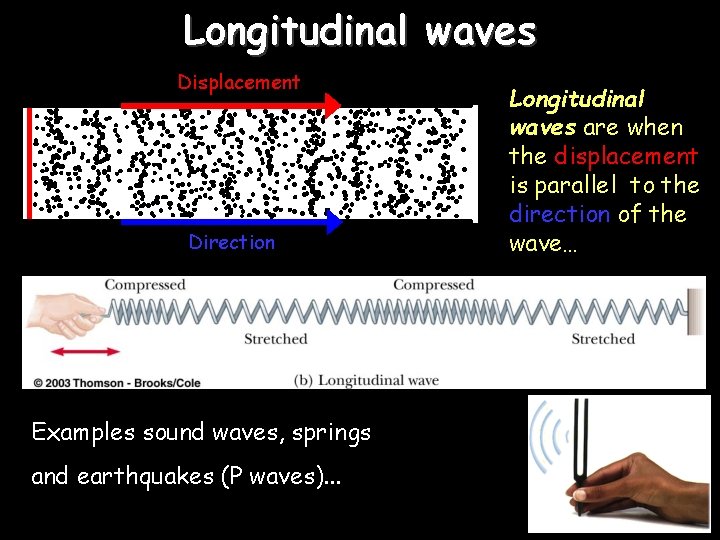
Longitudinal waves Displacement Direction Examples sound waves, springs and earthquakes (P waves). . . Longitudinal waves are when the displacement is parallel to the direction of the wave…
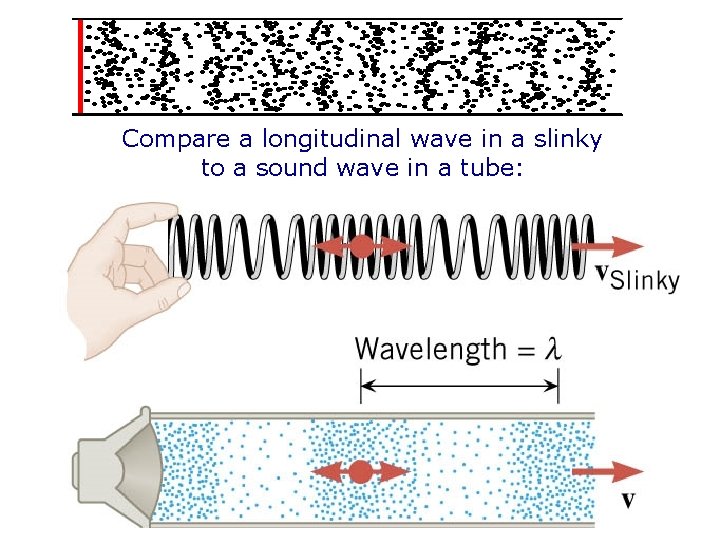
Compare a longitudinal wave in a slinky to a sound wave in a tube:
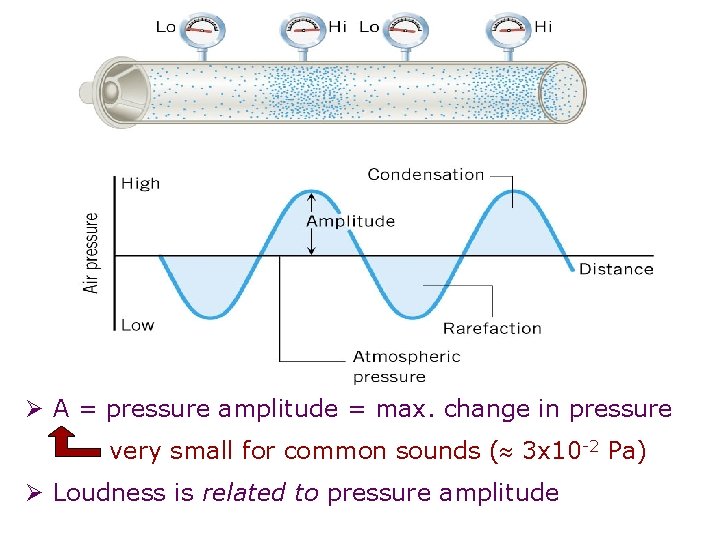
Ø A = pressure amplitude = max. change in pressure very small for common sounds ( 3 x 10 -2 Pa) Ø Loudness is related to pressure amplitude
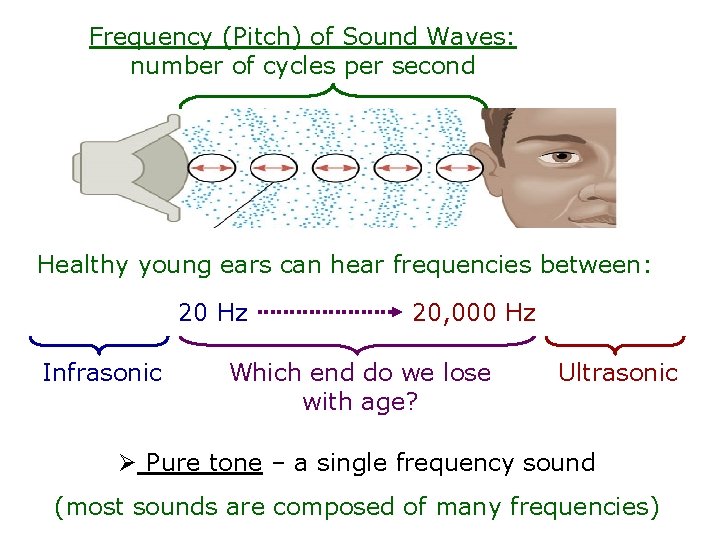
Frequency (Pitch) of Sound Waves: number of cycles per second Healthy young ears can hear frequencies between: 20 Hz Infrasonic 20, 000 Hz Which end do we lose with age? Ultrasonic Ø Pure tone – a single frequency sound (most sounds are composed of many frequencies)
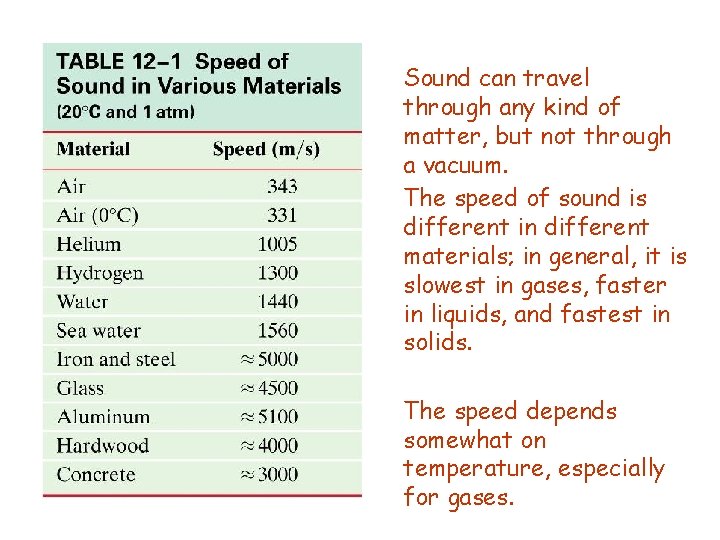
Sound can travel through any kind of matter, but not through a vacuum. The speed of sound is different in different materials; in general, it is slowest in gases, faster in liquids, and fastest in solids. The speed depends somewhat on temperature, especially for gases.