
What is a theme A theme is a

- Slides: 14
What is a theme? • A theme is a key idea that the writer explores. • There are usually overlaps with themes in a text
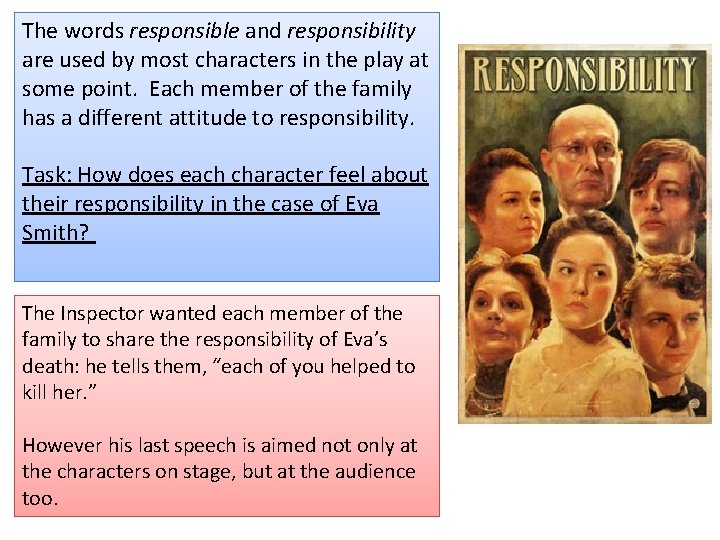
The words responsible and responsibility are used by most characters in the play at some point. Each member of the family has a different attitude to responsibility. Task: How does each character feel about their responsibility in the case of Eva Smith? The Inspector wanted each member of the family to share the responsibility of Eva’s death: he tells them, “each of you helped to kill her. ” However his last speech is aimed not only at the characters on stage, but at the audience too.
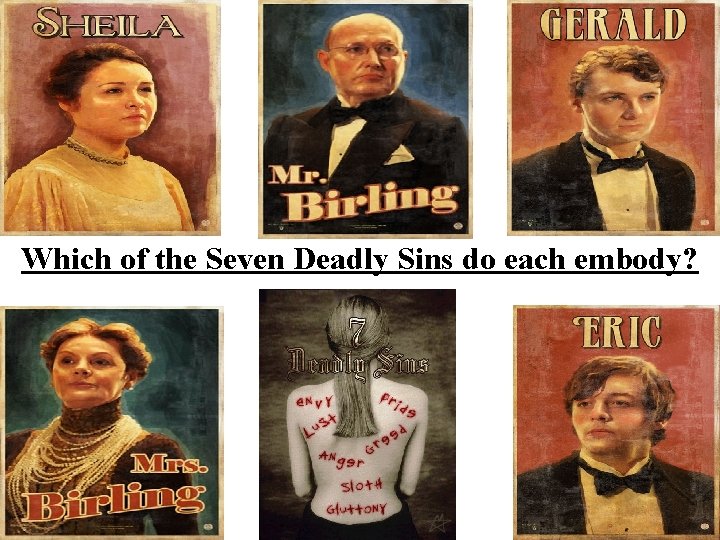
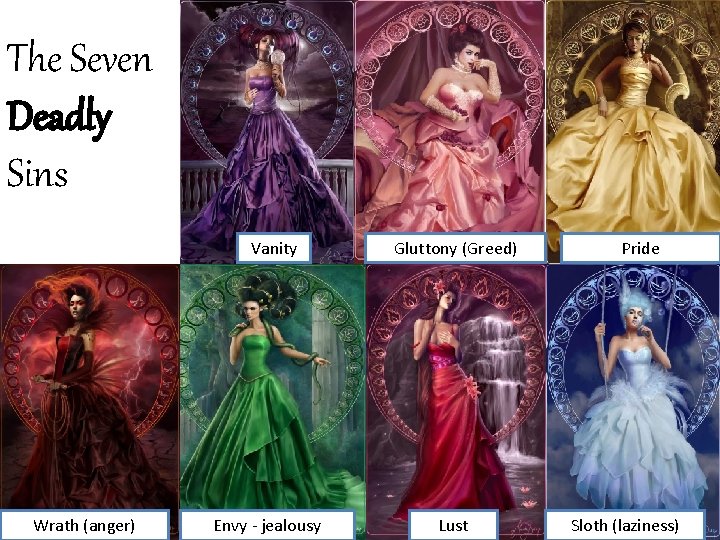
Which of the Seven Deadly Sins do each embody?
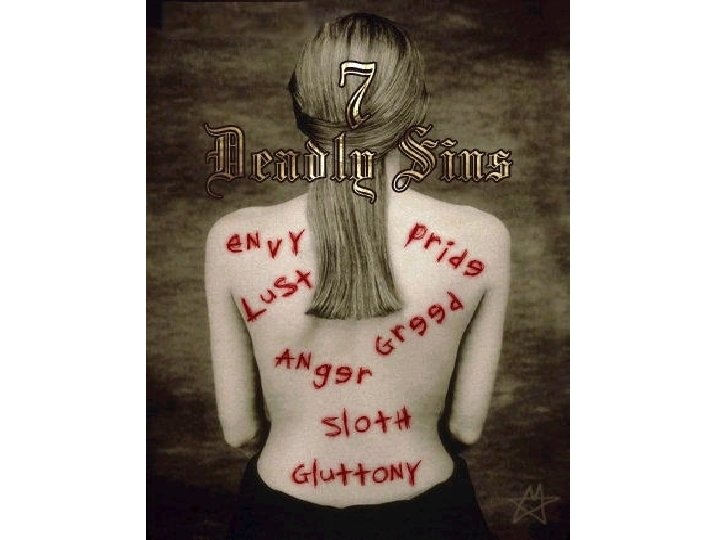
The Seven Deadly Sins Vanity Wrath (anger) Envy - jealousy Gluttony (Greed) Lust Pride Sloth (laziness)
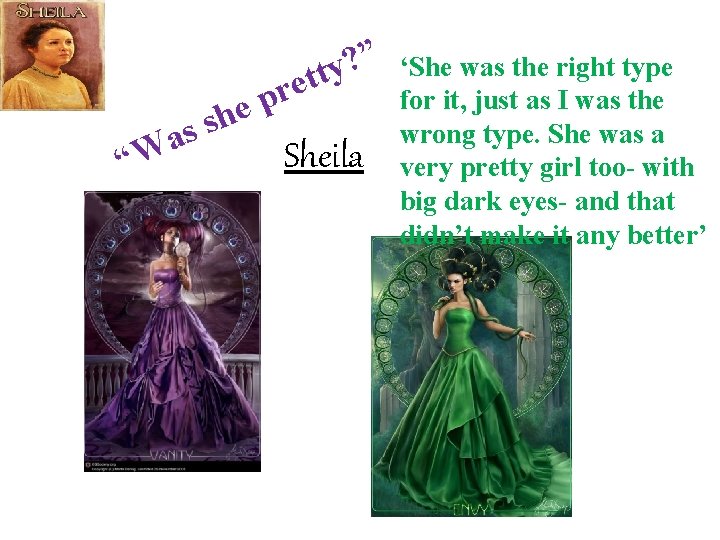
re p e “W h s s a ” ? tty Sheila ‘She was the right type for it, just as I was the wrong type. She was a very pretty girl too- with big dark eyes- and that didn’t make it any better’
Task! • Think about Mr Birling, Mrs Birling, Eric and Gerald; Which of the Seven Deadly Sins do they represent? • Find a quote that shows this. Example • Sheila – Vanity – ‘Was she pretty? ’
• Apart from Edna the maid, the cast of the play does not include any lower class characters. We see only the rich, upwardly mobile Birlings and the upper class Gerald Croft. • Yet we learn a lot about the lower class as we hear of each stage in Eva's life and we see the attitude the Birlings had for them
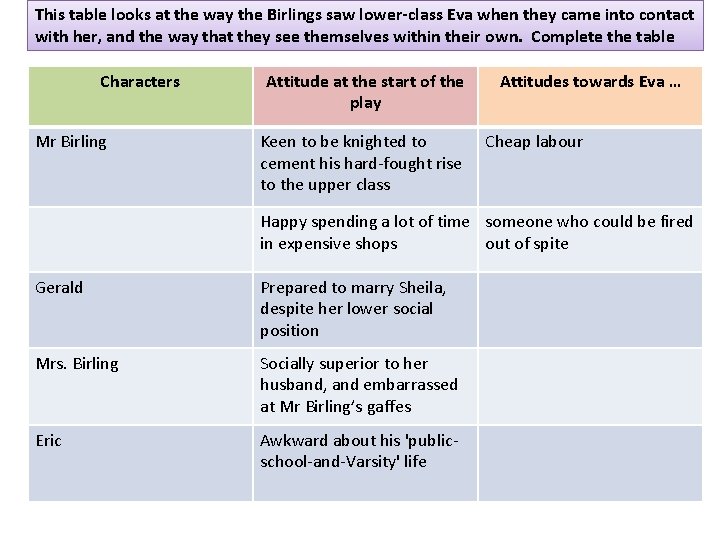
This table looks at the way the Birlings saw lower-class Eva when they came into contact with her, and the way that they see themselves within their own. Complete the table Characters Mr Birling Attitude at the start of the play Keen to be knighted to cement his hard-fought rise to the upper class Attitudes towards Eva … Cheap labour Happy spending a lot of time someone who could be fired in expensive shops out of spite Gerald Prepared to marry Sheila, despite her lower social position Mrs. Birling Socially superior to her husband, and embarrassed at Mr Birling’s gaffes Eric Awkward about his 'publicschool-and-Varsity' life
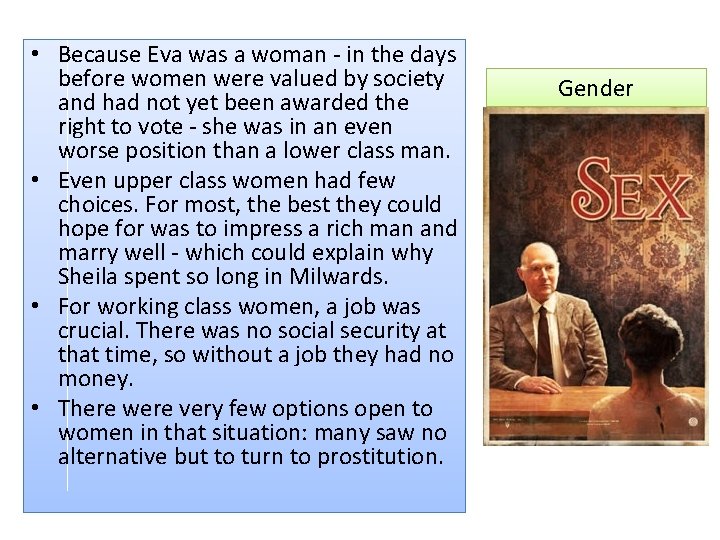
• Because Eva was a woman - in the days before women were valued by society and had not yet been awarded the right to vote - she was in an even worse position than a lower class man. • Even upper class women had few choices. For most, the best they could hope for was to impress a rich man and marry well - which could explain why Sheila spent so long in Milwards. • For working class women, a job was crucial. There was no social security at that time, so without a job they had no money. • There were very few options open to women in that situation: many saw no alternative but to turn to prostitution. Gender
What do the following quotes say about the characters’ attitudes to women? • "We were paying the usual rates and if they didn't like those rates, they could go and work somewhere else. ” – Mr. Birling • "young and fresh and charming” – Gerald • “as if a girl of that sort would ever refuse money. ” – Mrs. Birling
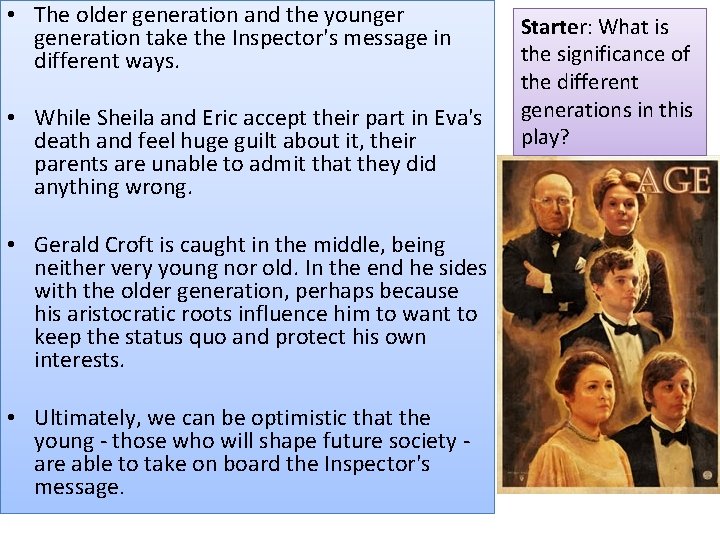
• The older generation and the younger generation take the Inspector's message in different ways. • While Sheila and Eric accept their part in Eva's death and feel huge guilt about it, their parents are unable to admit that they did anything wrong. • Gerald Croft is caught in the middle, being neither very young nor old. In the end he sides with the older generation, perhaps because his aristocratic roots influence him to want to keep the status quo and protect his own interests. • Ultimately, we can be optimistic that the young - those who will shape future society are able to take on board the Inspector's message. Starter: What is the significance of the different generations in this play?
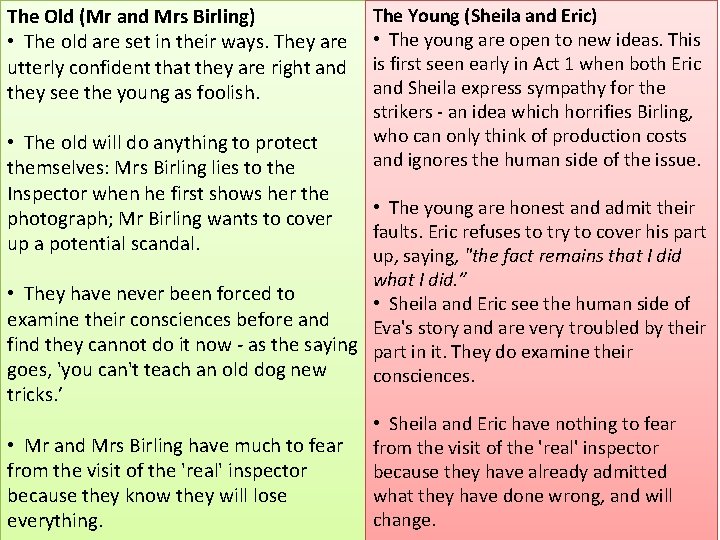
The Old (Mr and Mrs Birling) • The old are set in their ways. They are utterly confident that they are right and they see the young as foolish. • The old will do anything to protect themselves: Mrs Birling lies to the Inspector when he first shows her the photograph; Mr Birling wants to cover up a potential scandal. The Young (Sheila and Eric) • The young are open to new ideas. This is first seen early in Act 1 when both Eric and Sheila express sympathy for the strikers - an idea which horrifies Birling, who can only think of production costs and ignores the human side of the issue. • The young are honest and admit their faults. Eric refuses to try to cover his part up, saying, "the fact remains that I did what I did. ” • They have never been forced to • Sheila and Eric see the human side of examine their consciences before and Eva's story and are very troubled by their find they cannot do it now - as the saying part in it. They do examine their goes, 'you can't teach an old dog new consciences. tricks. ’ • Sheila and Eric have nothing to fear • Mr and Mrs Birling have much to fear from the visit of the 'real' inspector because they have already admitted because they know they will lose what they have done wrong, and will change. everything.
Theme Style Questions