
What is a species What is a liger
- Slides: 49
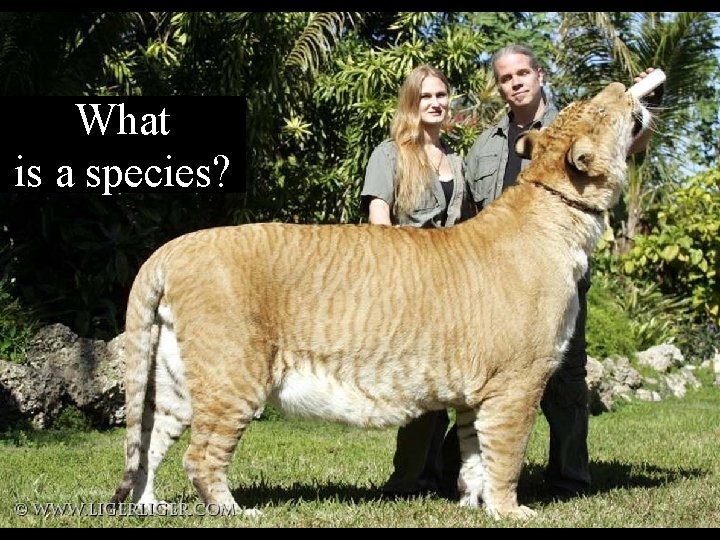
What is a species?
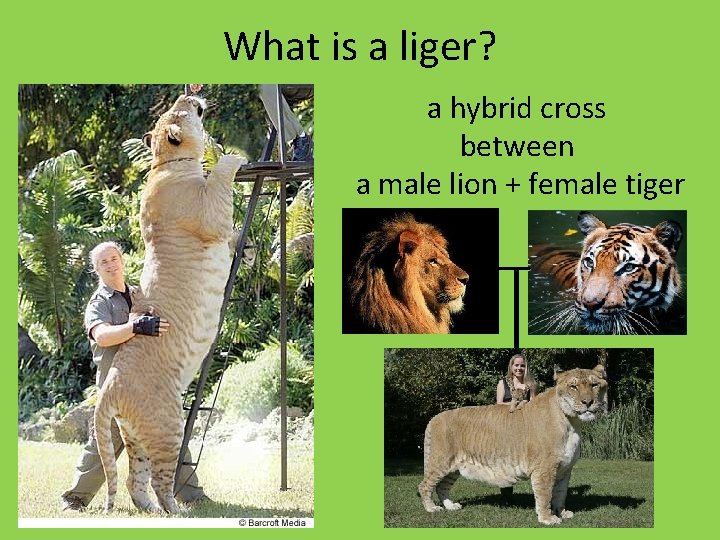
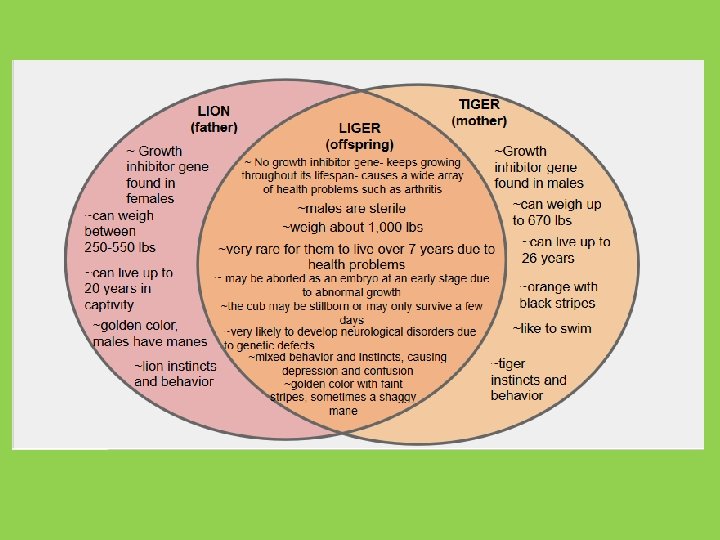
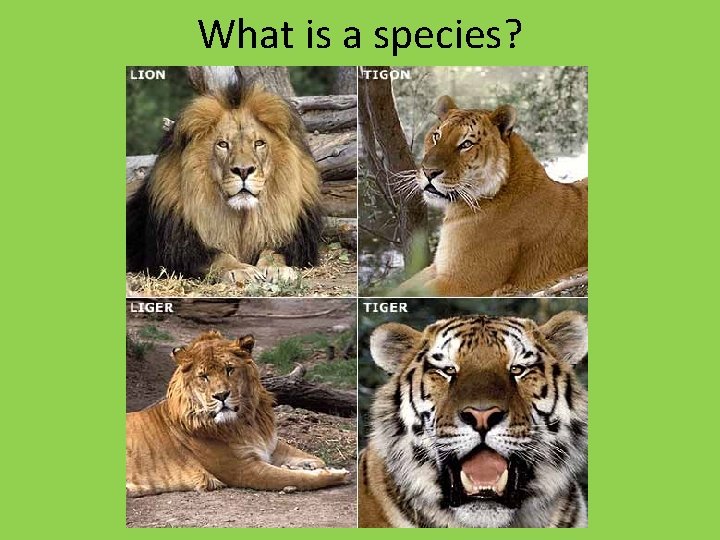
What is a liger? a hybrid cross between a male lion + female tiger __
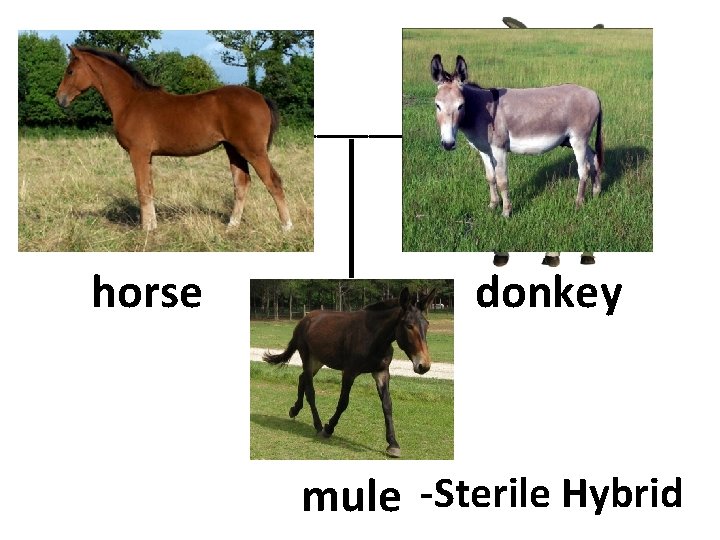
______ horse donkey ? mule -Sterile Hybrid
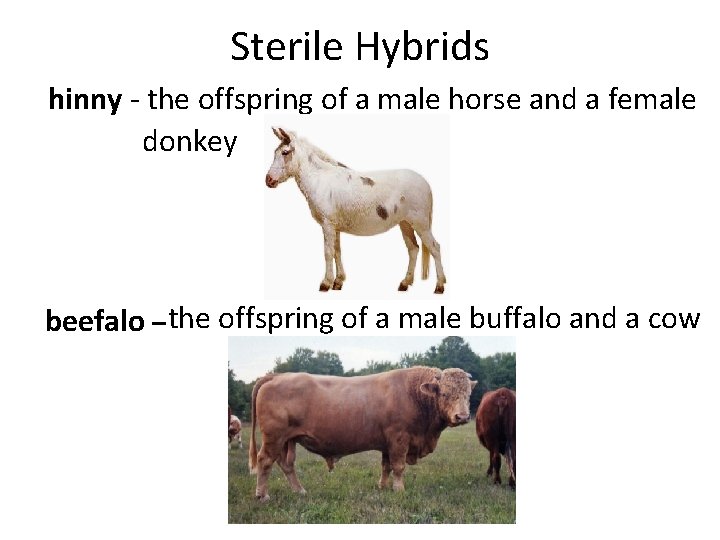
Sterile Hybrids hinny - the offspring of a male horse and a female donkey beefalo – the offspring of a male buffalo and a cow
Why are hybrids sterile?
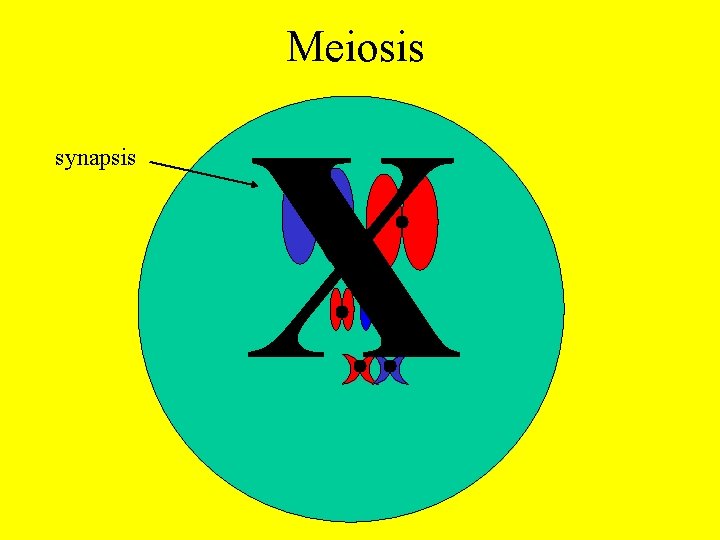
Meiosis synapsis X
What is a species?
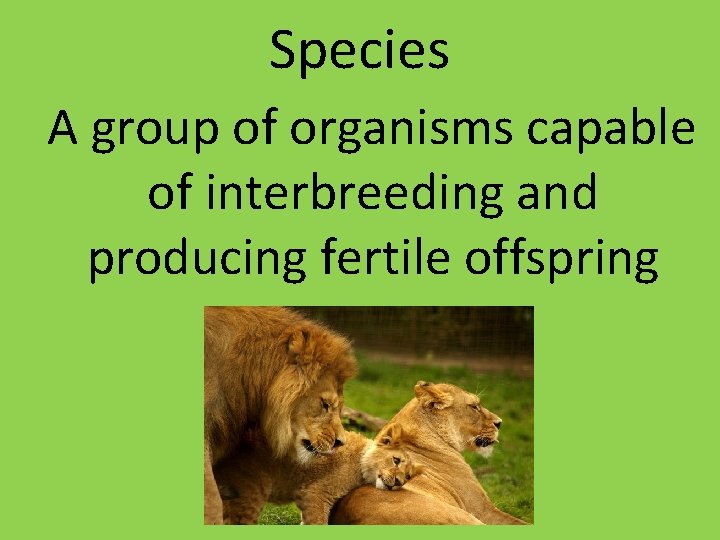
Species A group of organisms capable of interbreeding and producing fertile offspring
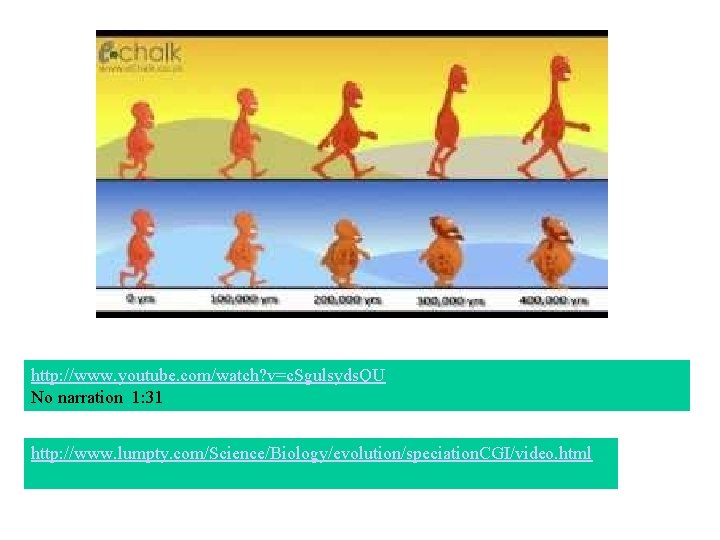
http: //www. youtube. com/watch? v=c. Sgulsyds. QU No narration 1: 31 http: //www. lumpty. com/Science/Biology/evolution/speciation. CGI/video. html
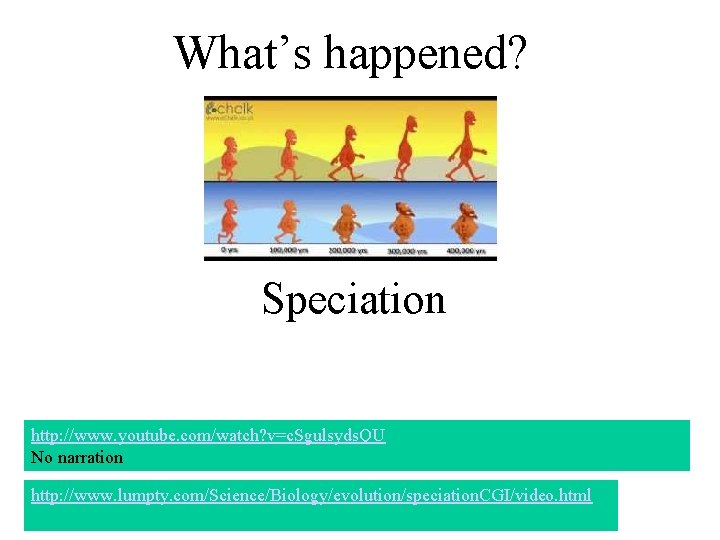
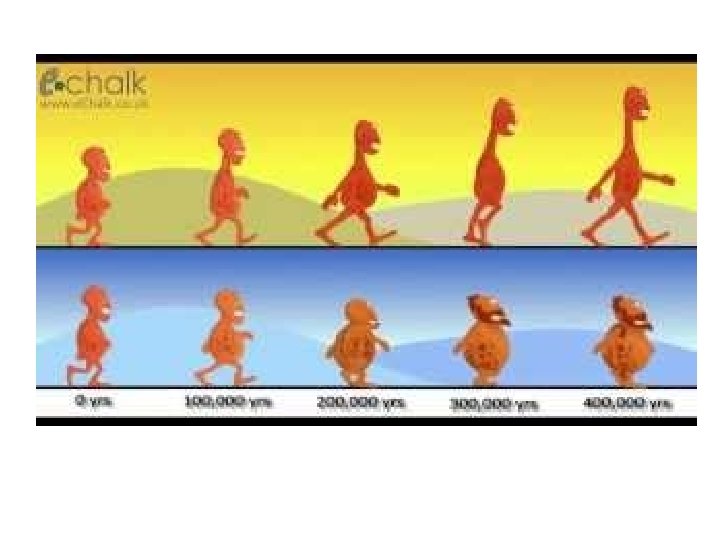
What’s happened? Speciation http: //www. youtube. com/watch? v=c. Sgulsyds. QU No narration http: //www. lumpty. com/Science/Biology/evolution/speciation. CGI/video. html
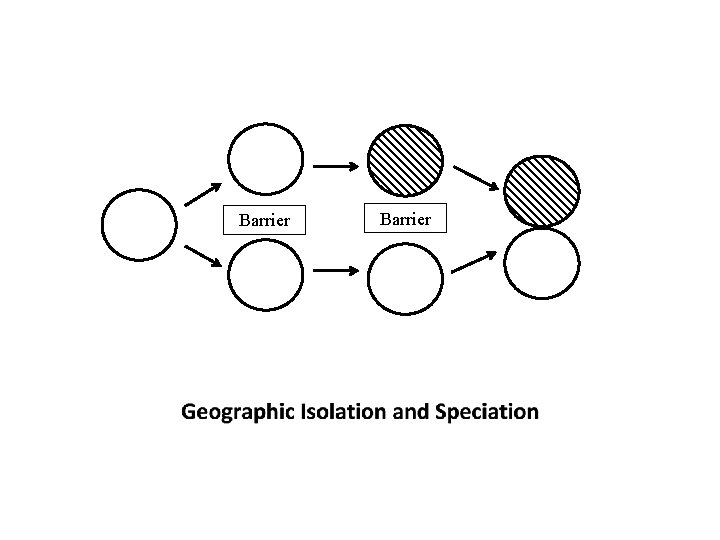
Barrier
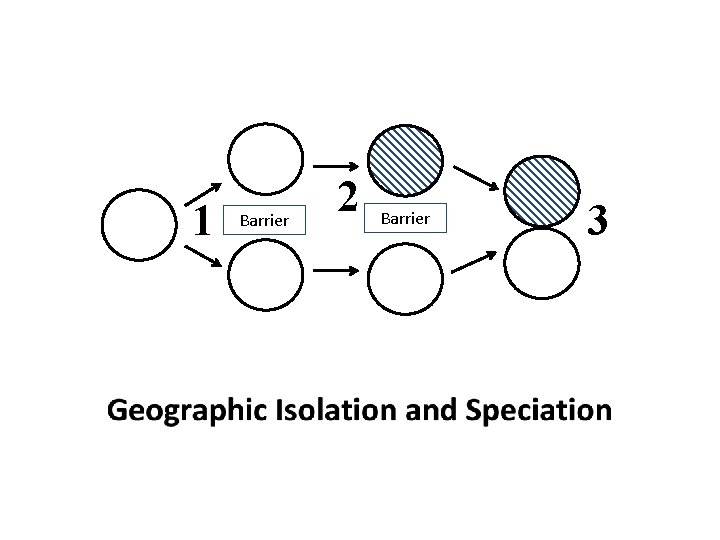
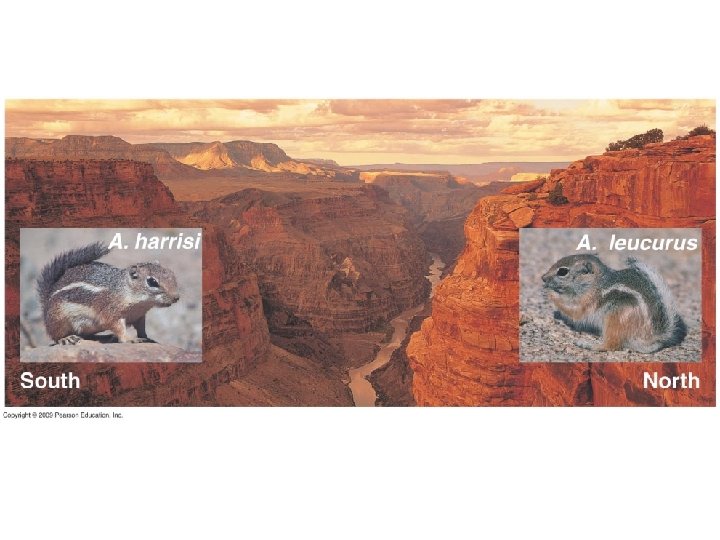
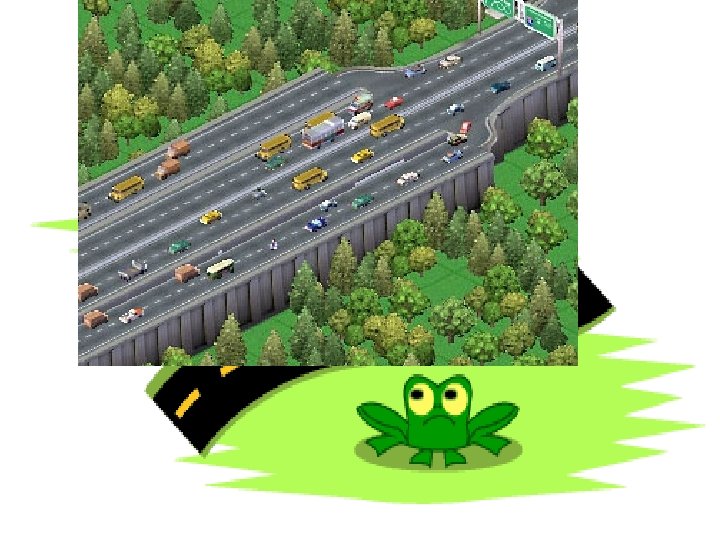
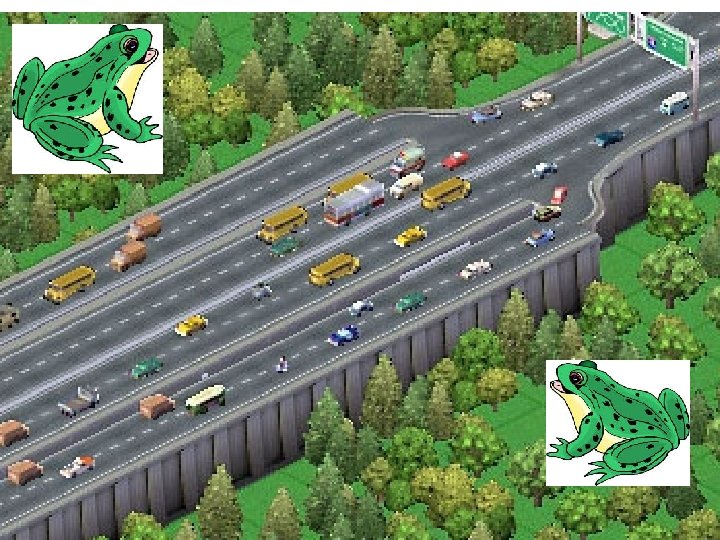
Geographic Isolation The first stage of speciation, in which a population of organisms is prevented from interbreeding with other populations of that species by a natural barrier Natural barriers - oceans, rivers, mountains, canyons Human-made barriers – highways, subdivisions, cities
1 Barrier 2 Barrier 3
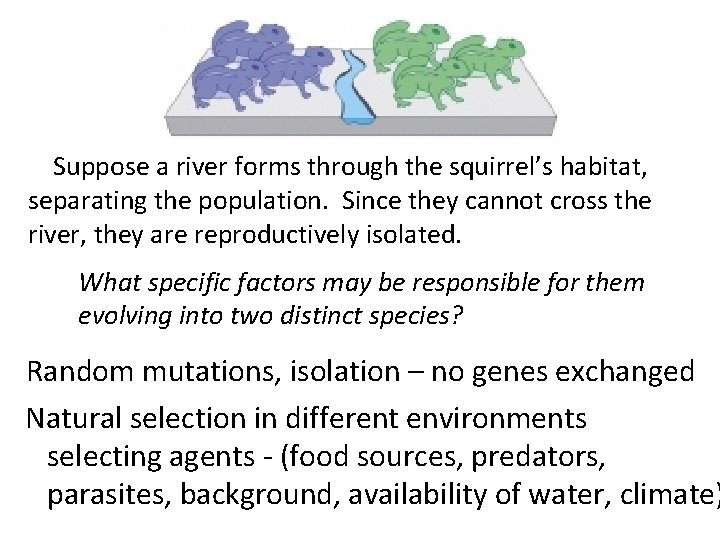
Suppose a river forms through the squirrel’s habitat, separating the population. Since they cannot cross the river, they are reproductively isolated. What specific factors may be responsible for them evolving into two distinct species? Random mutations, isolation – no genes exchanged Natural selection in different environments selecting agents - (food sources, predators, parasites, background, availability of water, climate)
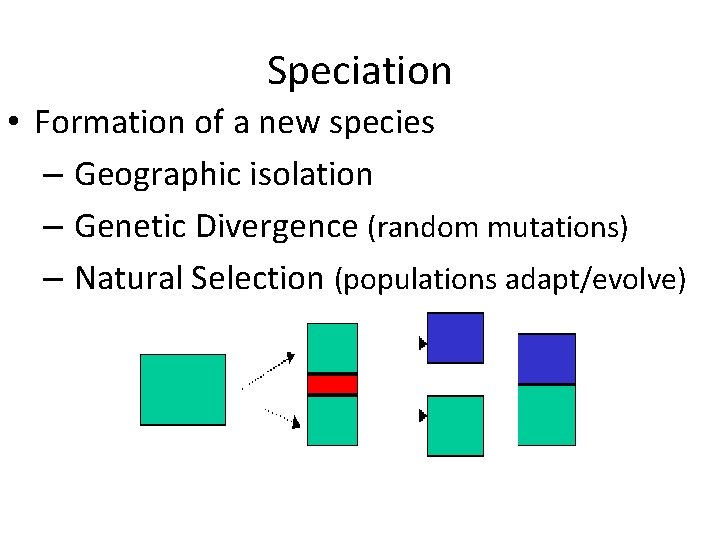
Speciation • Formation of a new species – Geographic isolation – Genetic Divergence (random mutations) – Natural Selection (populations adapt/evolve)
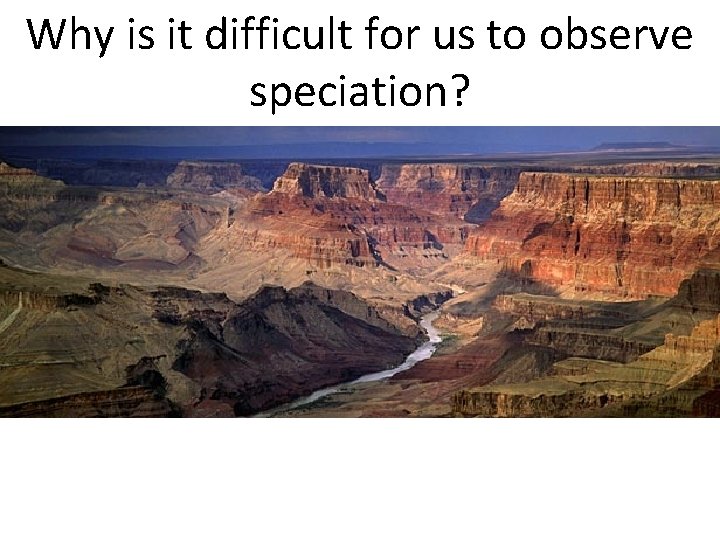
Why is it difficult for us to observe speciation?
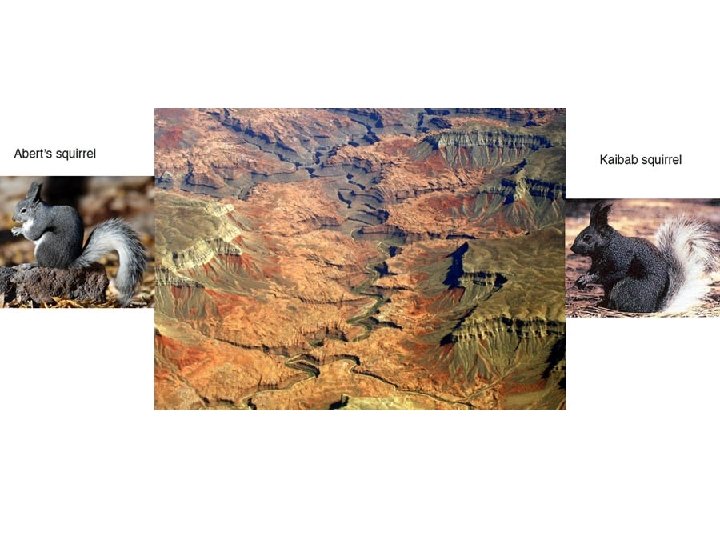
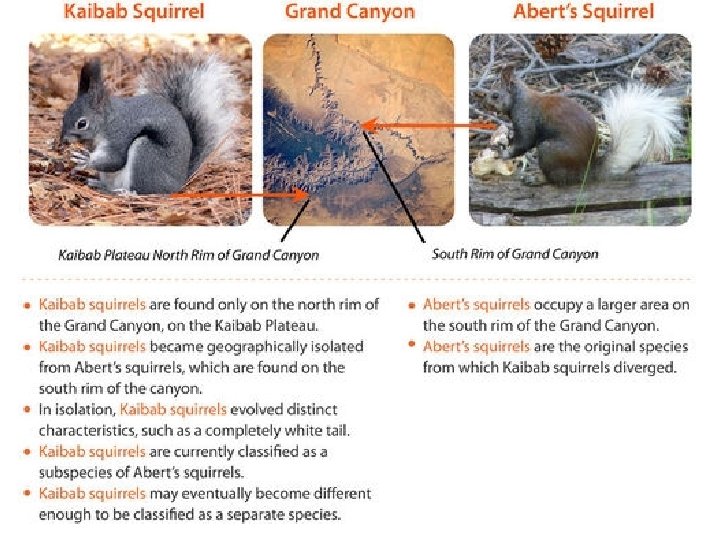
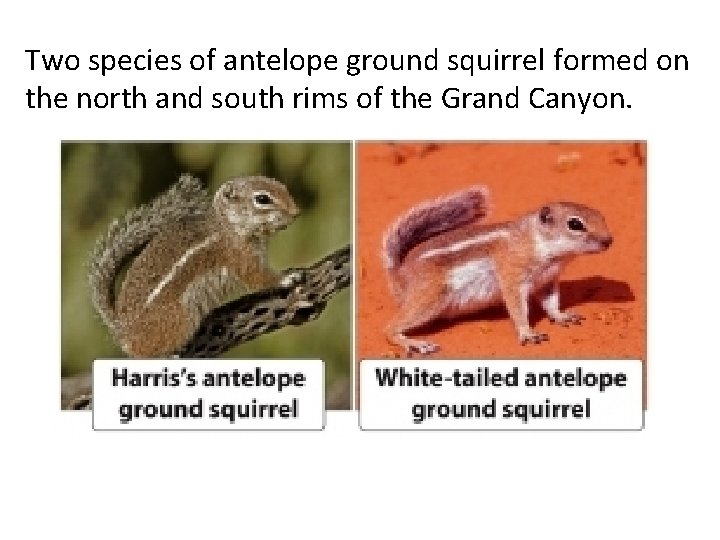
Two species of antelope ground squirrel formed on the north and south rims of the Grand Canyon.
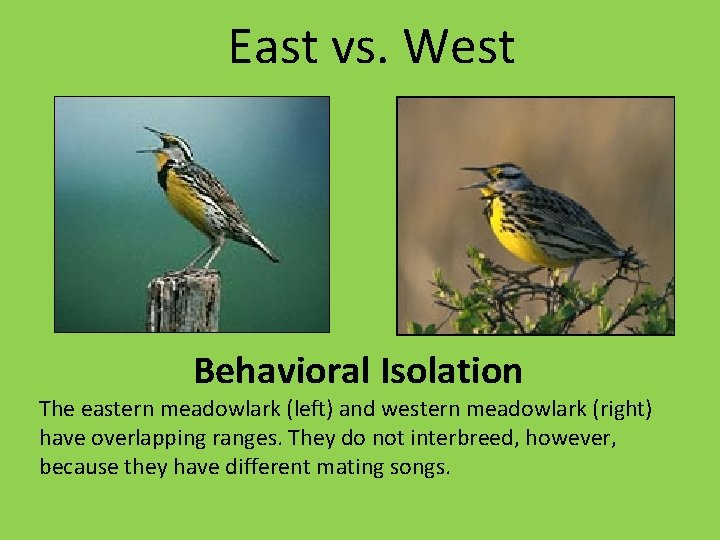
East vs. West Behavioral Isolation The eastern meadowlark (left) and western meadowlark (right) have overlapping ranges. They do not interbreed, however, because they have different mating songs.
How do scientists test their ideas?
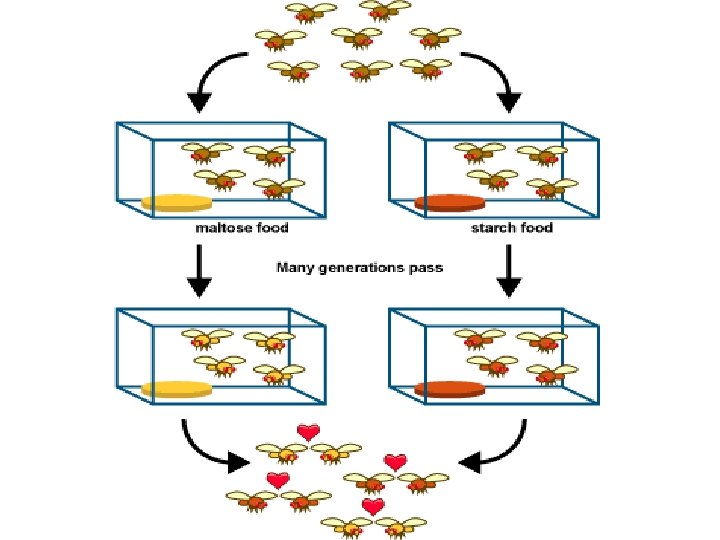
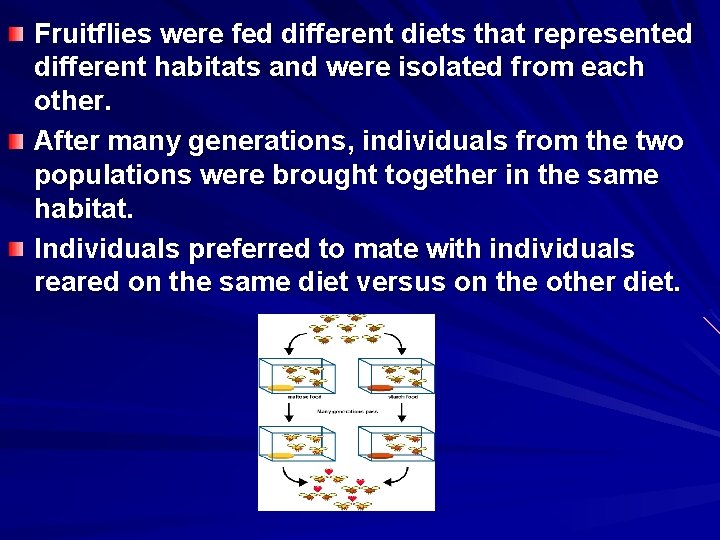
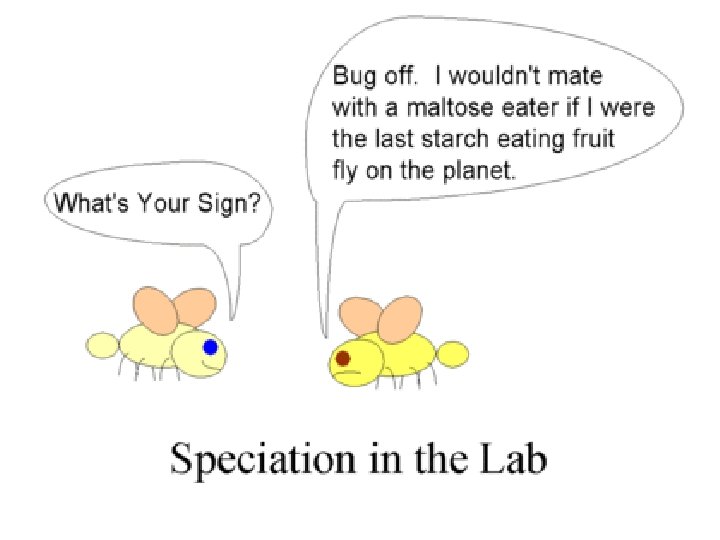
Fruitflies were fed different diets that represented different habitats and were isolated from each other. After many generations, individuals from the two populations were brought together in the same habitat. Individuals preferred to mate with individuals reared on the same diet versus on the other diet.
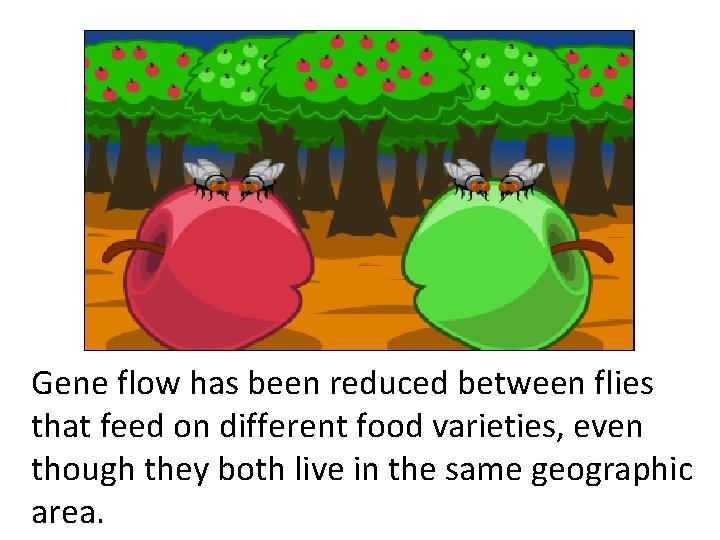
Gene flow has been reduced between flies that feed on different food varieties, even though they both live in the same geographic area.
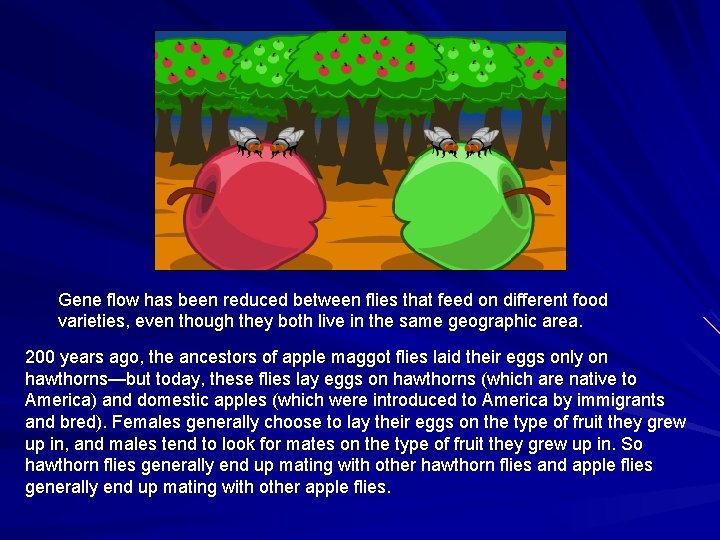
Gene flow has been reduced between flies that feed on different food varieties, even though they both live in the same geographic area. 200 years ago, the ancestors of apple maggot flies laid their eggs only on hawthorns—but today, these flies lay eggs on hawthorns (which are native to America) and domestic apples (which were introduced to America by immigrants and bred). Females generally choose to lay their eggs on the type of fruit they grew up in, and males tend to look for mates on the type of fruit they grew up in. So hawthorn flies generally end up mating with other hawthorn flies and apple flies generally end up mating with other apple flies.
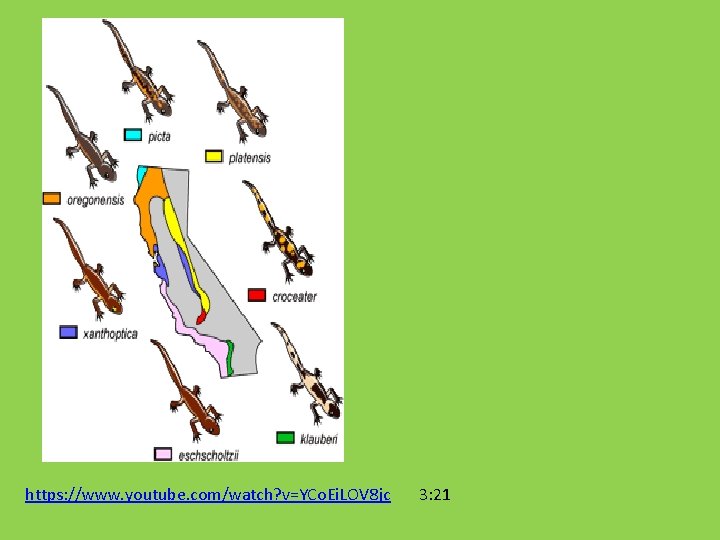
https: //www. youtube. com/watch? v=YCo. Ei. LOV 8 jc 3: 21
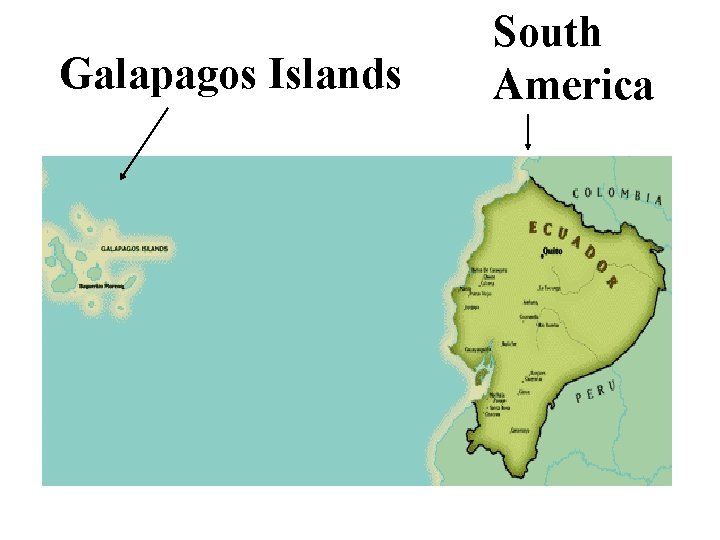
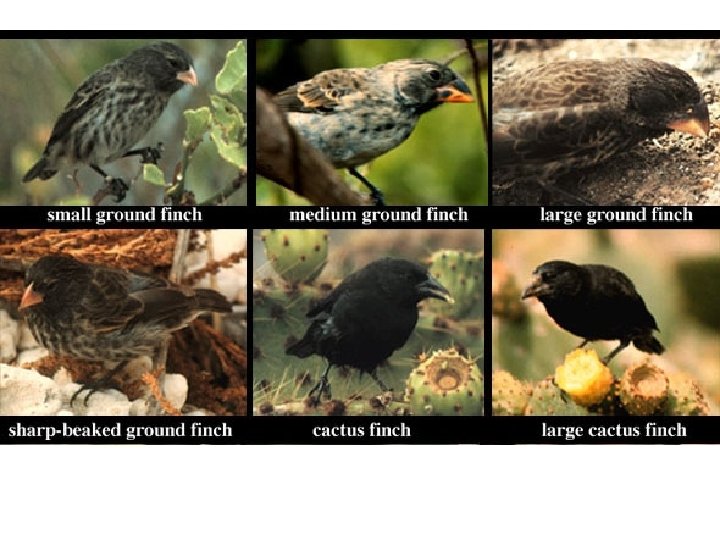
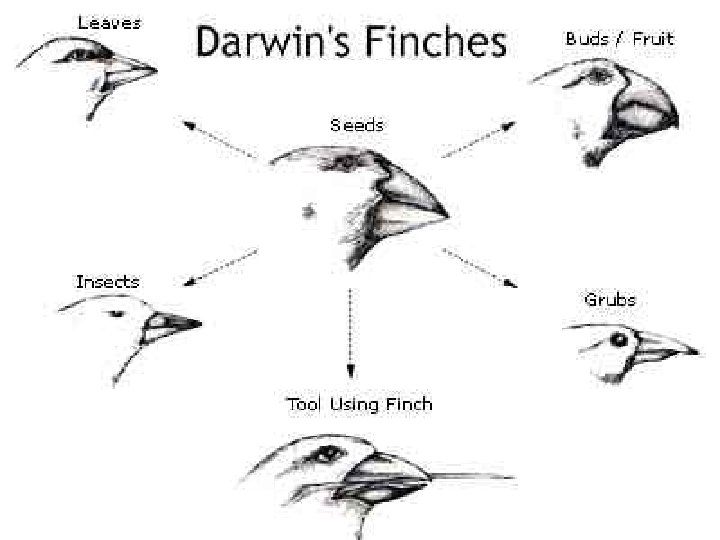
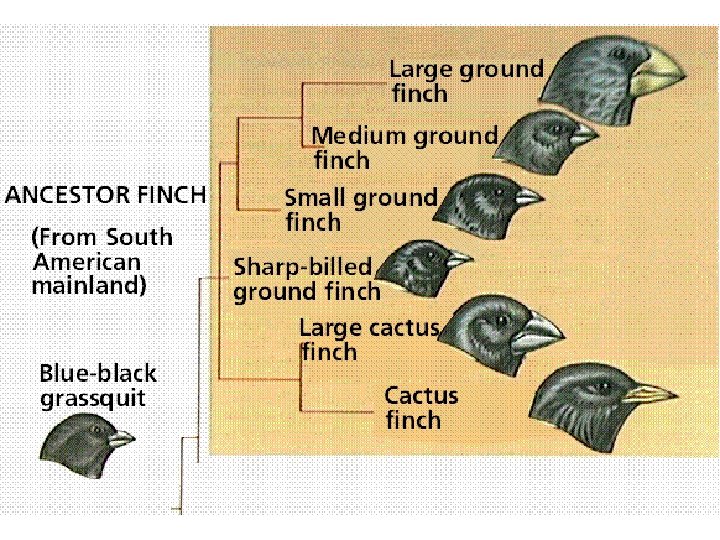
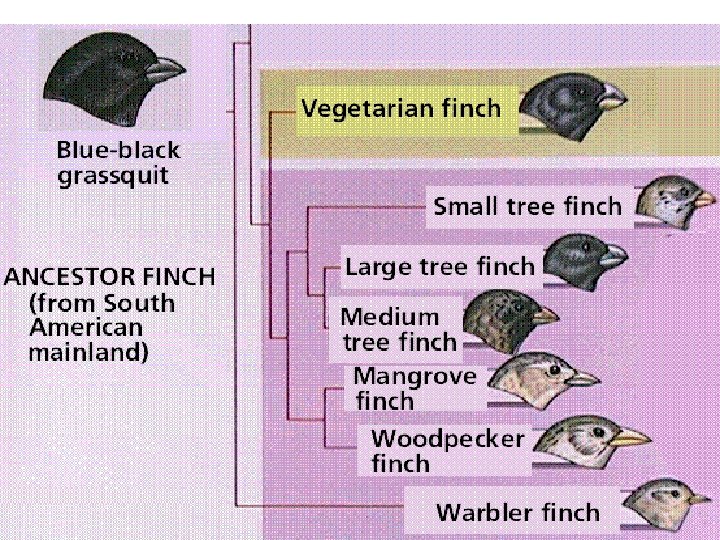
Galapagos Islands South America
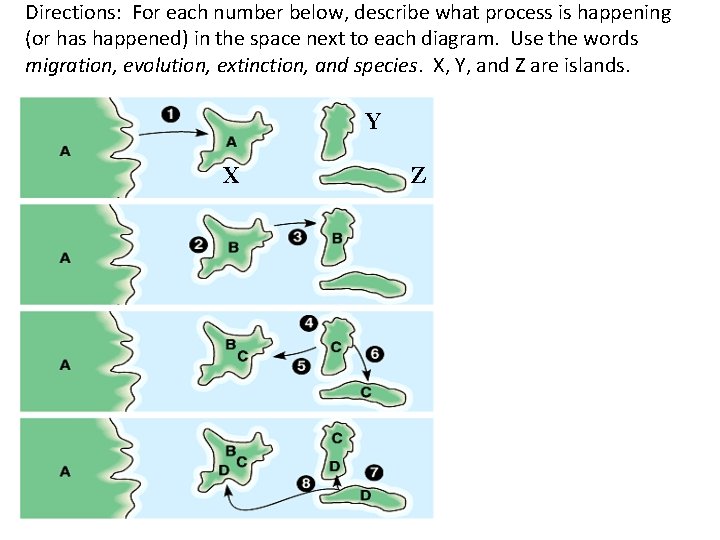
Directions: For each number below, describe what process is happening (or has happened) in the space next to each diagram. Use the words migration, evolution, extinction, and species. X, Y, and Z are islands. Y X Z
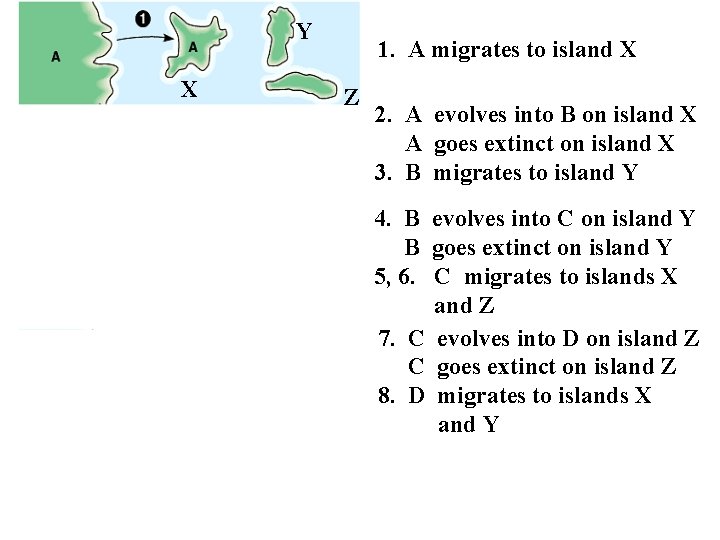
Y X 1. A migrates to island X Z Y X Y X 4. B evolves into C on island Y B goes extinct on island Y 5, 6. C migrates to islands X Z and Z 7. C evolves into D on island Z C goes extinct on island Z 8. D migrates to islands X Z and Y Y X 2. A evolves into B on island X A goes extinct on island X 3. B migrates to island Y Z
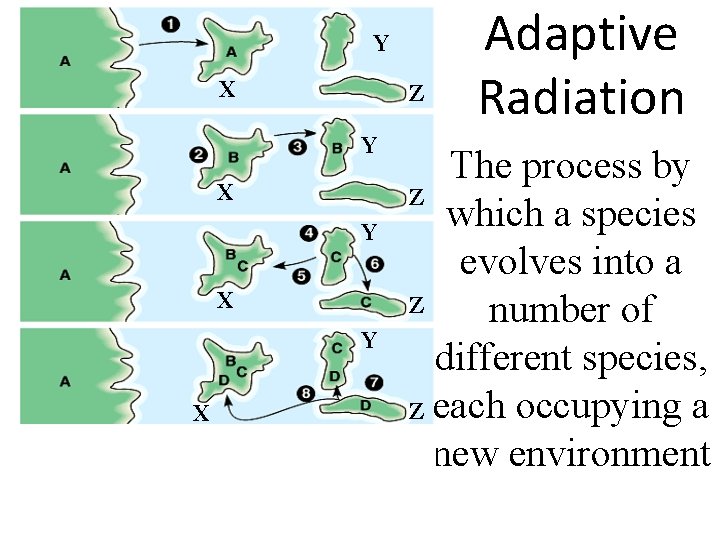
Y X Z Y X Y X Adaptive Radiation The process by Z which a species evolves into a Z number of different species, Z each occupying a new environment Z
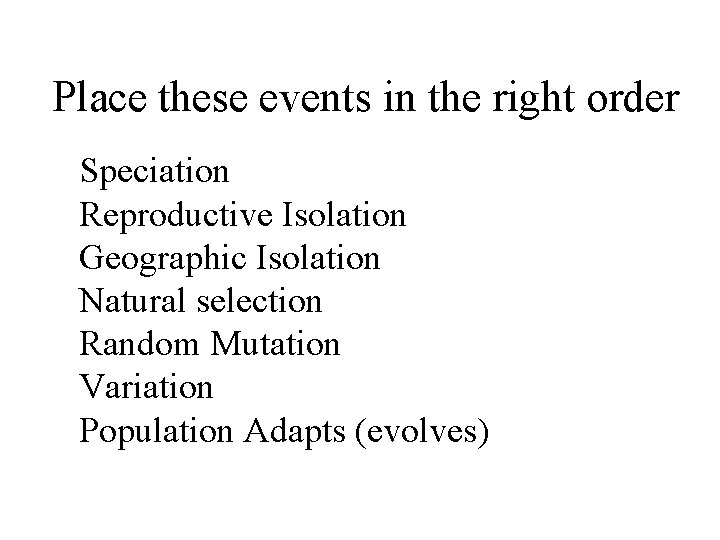
Place these events in the right order Speciation Reproductive Isolation Geographic Isolation Natural selection Random Mutation Variation Population Adapts (evolves)
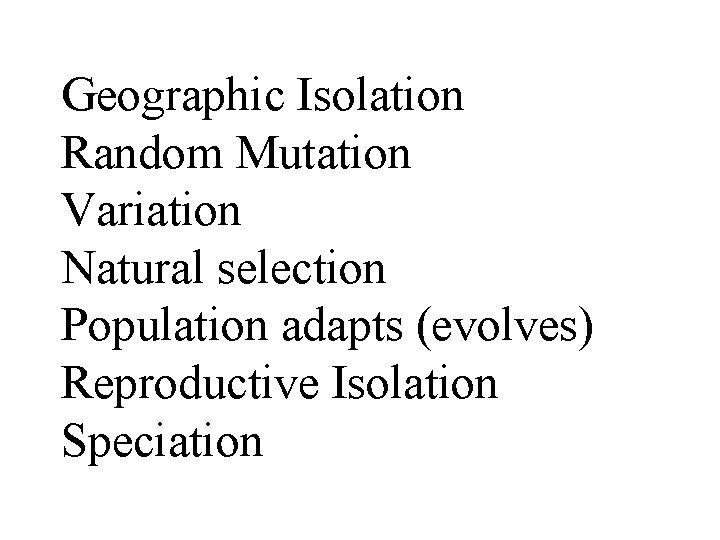
Geographic Isolation Random Mutation Variation Natural selection Population adapts (evolves) Reproductive Isolation Speciation
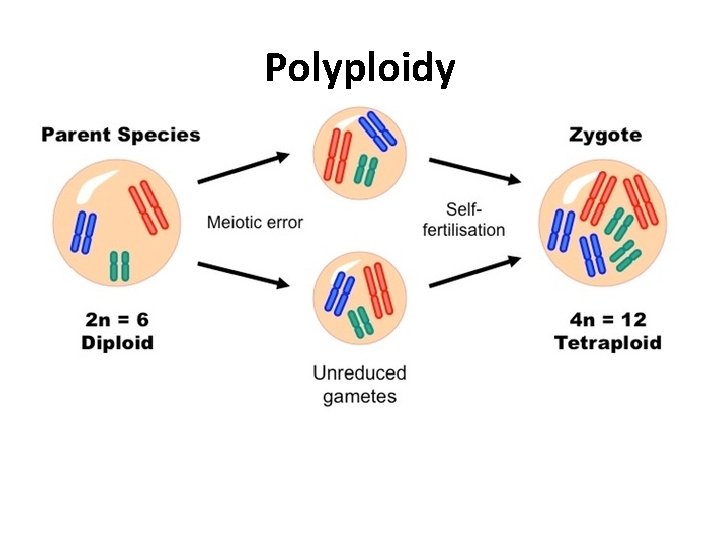
Speciation by Polyploidy is when the number of chromosomes in a cell becomes doubled. This can happen by a mutation that simply makes two copies. It can also happen when the chromosomes from two different species are mixed. One obvious consequence is that the resulting creature has no one it can breed with. However, this is not necessarily a problem. For example, many plants are both male and female, so they can simply fertilize themselves. Some earthworms can do this too.
Polyploidy
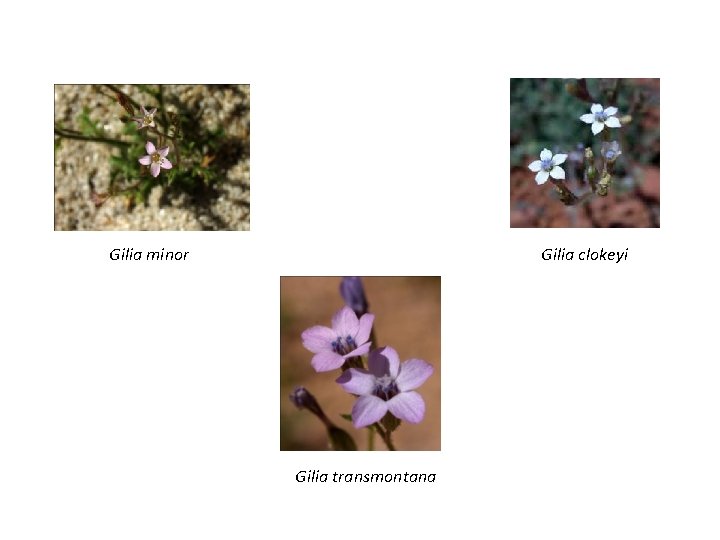
An example is the gilia plant from the Mojave desert in California. The species Gilia transmontana turned out to be a hybrid of Gilia minor and Gilia clokeyi. It has as many chromosomes as the other two combined, and its flowers have an intermediate shape. Since chromosomes are not all the same length, we can even say which transmontana chromosomes came from which ancestor.
Gilia minor Gilia clokeyi Gilia transmontana
How do we know that this is possible? • We caused it. Many species of common garden flowers - tulips, crocuses, irises and primroses have been created artificially in this way. (We have a chemical, colchicine, which encourages the process. ) Even better, we have deliberately re -created wild plants. The first one was the mint Galeopsis tetrahit, which was made artificially by hybridizing G. pubescens and G. speciosa. The artificial hybrid was identical to the wild plant and could breed freely with it.
Is this a common method of speciation? • About half of angiosperm (flowering plant) species seem to have originated this way. Relatively few animal species are thought to have originated this way, because not all animals can self-fertilize or reproduce asexually. However, brine shrimp, weevils, bagworm moths and flies seem to have arisen this way.
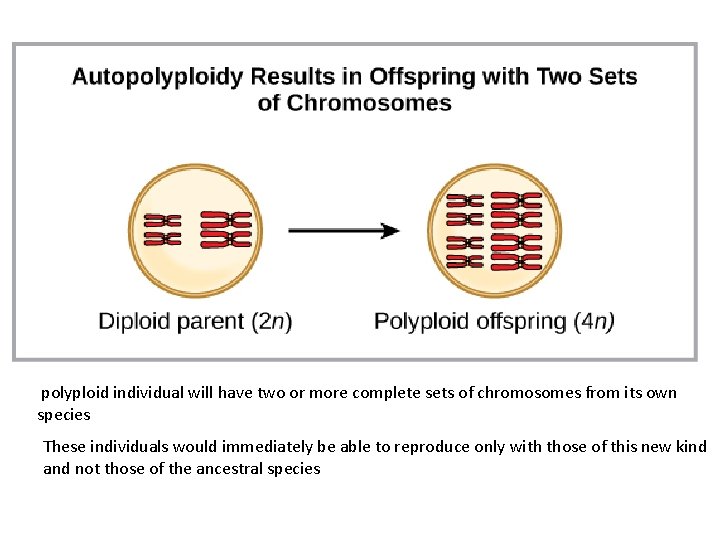
polyploid individual will have two or more complete sets of chromosomes from its own species These individuals would immediately be able to reproduce only with those of this new kind and not those of the ancestral species