
What is a short story A short prose
- Slides: 12
What is a short story? A short prose fiction usually depicting a single incident (unlike most novels). A newer form than the novel, the modern short story dates from the early nineteenth century.
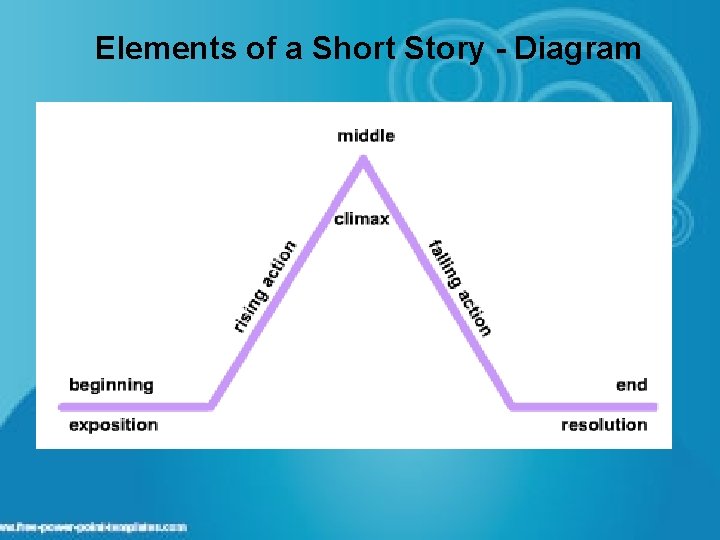
What are the elements of a short story? Most have a specific plot structure with the following: 1) EXPOSITION 2) RISING ACTION 3) 3) CLIMAX 4) 4) FALLING ACTION 5) 5) RESOLUTION
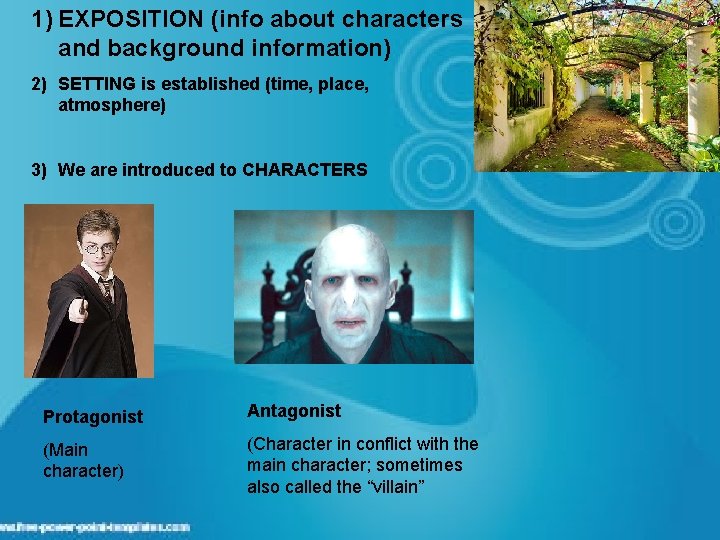
1) EXPOSITION (info about characters and background information) 2) SETTING is established (time, place, atmosphere) 3) We are introduced to CHARACTERS Protagonist Antagonist (Main character) (Character in conflict with the main character; sometimes also called the “villain”
2) RISING ACTION - This is where the events in the story become complicated and the conflict in the story is revealed (the problem). The rising action is comprised of the events between the introduction and climax. 3) CLIMAX – turning point or the highest point of tension in the story with more interest and suspense 4) FALLING ACTION – the events that lead up to solving the problem or conflict of the story 5) RESOLUTION - which includes a tying up of loose ends to the complications built up in the beginning of the story (mysteries are solved, questions are answered, and the main conflict is settled)
Elements of a Short Story - Diagram
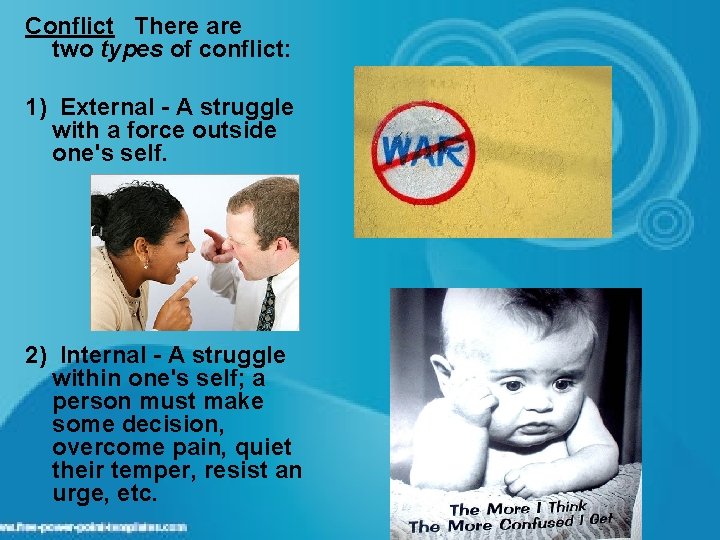
Conflict There are two types of conflict: 1) External - A struggle with a force outside one's self. 2) Internal - A struggle within one's self; a person must make some decision, overcome pain, quiet their temper, resist an urge, etc.
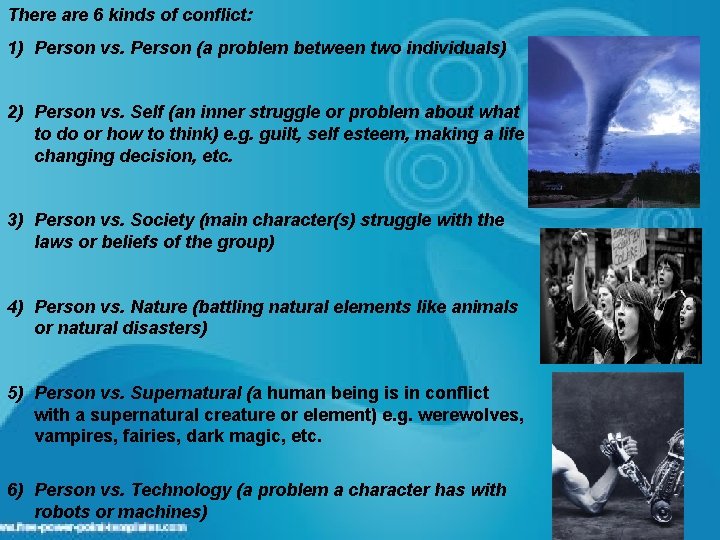
There are 6 kinds of conflict: 1) Person vs. Person (a problem between two individuals) 2) Person vs. Self (an inner struggle or problem about what to do or how to think) e. g. guilt, self esteem, making a life changing decision, etc. 3) Person vs. Society (main character(s) struggle with the laws or beliefs of the group) 4) Person vs. Nature (battling natural elements like animals or natural disasters) 5) Person vs. Supernatural (a human being is in conflict with a supernatural creature or element) e. g. werewolves, vampires, fairies, dark magic, etc. 6) Person vs. Technology (a problem a character has with robots or machines)
TYPES OF NARRATION - NARRATIVE POINT OF VIEW Whose eyes do we see the story from? In the first person, the narrator uses pronouns like “I” and “me”. a) First Person Involved - the narrator is the main character in the story. 1. This is a very personal type of narration that makes the reader feel involved with the character who is telling the story. 2. The reader may decide over the course of the story whether the narrator is trustworthy and reliable. 3. b) First Person Observer – the narrator may be a secondary or minor character in the story who is observing the protagonist and the action. c) The writer creates some distance between the main events and characters by using this type of narration.
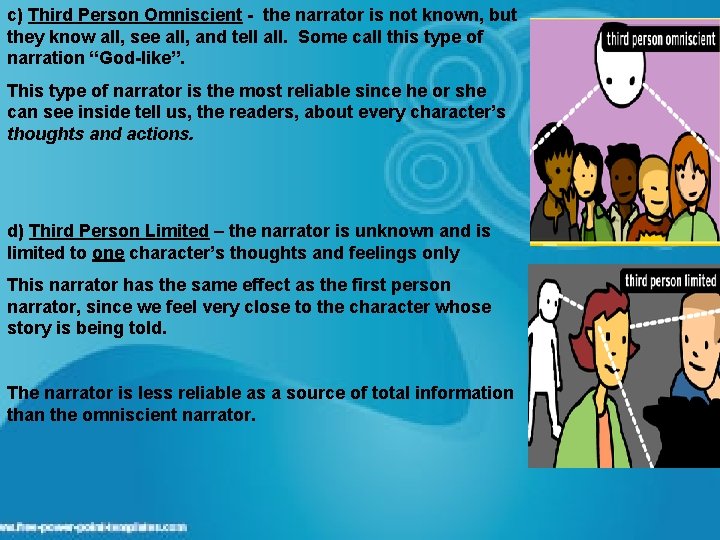
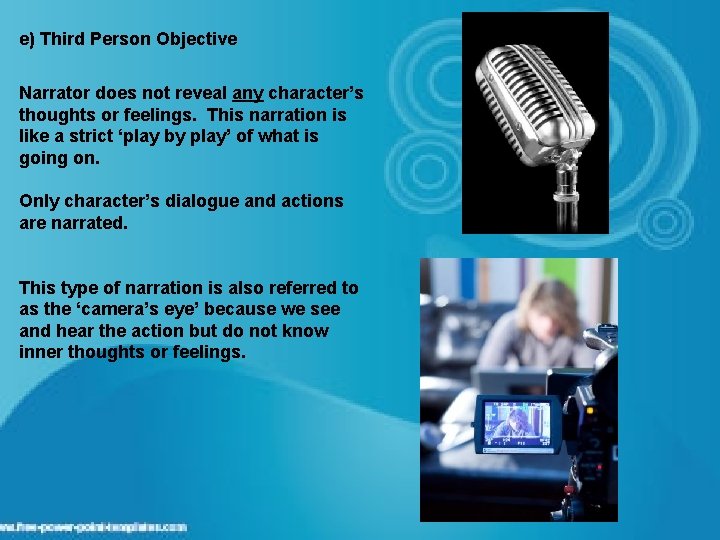
c) Third Person Omniscient - the narrator is not known, but they know all, see all, and tell all. Some call this type of narration “God-like”. This type of narrator is the most reliable since he or she can see inside tell us, the readers, about every character’s thoughts and actions. d) Third Person Limited – the narrator is unknown and is limited to one character’s thoughts and feelings only This narrator has the same effect as the first person narrator, since we feel very close to the character whose story is being told. The narrator is less reliable as a source of total information than the omniscient narrator.
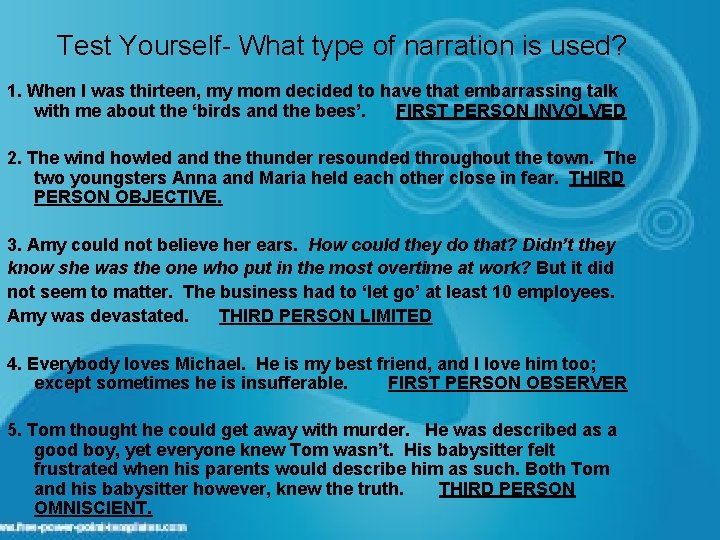
e) Third Person Objective Narrator does not reveal any character’s thoughts or feelings. This narration is like a strict ‘play by play’ of what is going on. Only character’s dialogue and actions are narrated. This type of narration is also referred to as the ‘camera’s eye’ because we see and hear the action but do not know inner thoughts or feelings.
Test Yourself- What type of narration is used? 1. When I was thirteen, my mom decided to have that embarrassing talk with me about the ‘birds and the bees’. 2. The wind howled and the thunder resounded throughout the town. The two youngsters Anna and Maria held each other close in fear. 3. Amy could not believe her ears. How could they do that? Didn’t they know she was the one who put in the most overtime at work? But it did not seem to matter. The business had to ‘let go’ at least 10 employees. Amy was devastated. 4. Everybody loves Michael. He is my best friend, and I love him too; except sometimes he is insufferable. 5. He was described as a good boy, yet everyone knew Tom wasn’t. His babysitter felt frustrated when his parents would describe him as such. Both Tom and his babysitter however, knew the truth.
Test Yourself- What type of narration is used? 1. When I was thirteen, my mom decided to have that embarrassing talk with me about the ‘birds and the bees’. FIRST PERSON INVOLVED 2. The wind howled and the thunder resounded throughout the town. The two youngsters Anna and Maria held each other close in fear. THIRD PERSON OBJECTIVE. 3. Amy could not believe her ears. How could they do that? Didn’t they know she was the one who put in the most overtime at work? But it did not seem to matter. The business had to ‘let go’ at least 10 employees. Amy was devastated. THIRD PERSON LIMITED 4. Everybody loves Michael. He is my best friend, and I love him too; except sometimes he is insufferable. FIRST PERSON OBSERVER 5. Tom thought he could get away with murder. He was described as a good boy, yet everyone knew Tom wasn’t. His babysitter felt frustrated when his parents would describe him as such. Both Tom and his babysitter however, knew the truth. THIRD PERSON OMNISCIENT.