
What is a SAE Supervised Agricultural Experience SAE



- Slides: 42
What is a SAE? Supervised Agricultural Experience (SAE) Programs consist of planned practical activities conducted outside of class time in which students develop and apply agricultural knowledge and skills.
Examples of SAE Projects Operating a lawn care business Raising show rabbits Working at a nursery Growing a vegetable garden Landscaping Working at a dairy farm Operating a pet sitting service Working with a veterinarian Improving wildlife habitat
Why Have a SAE Project? Develop skills that can be used in getting a job Earn money Win FFA awards! FFA proficiency awards are based on your SAE
Develop skills to start your own business Obtain skills and knowledge that will be helpful in college
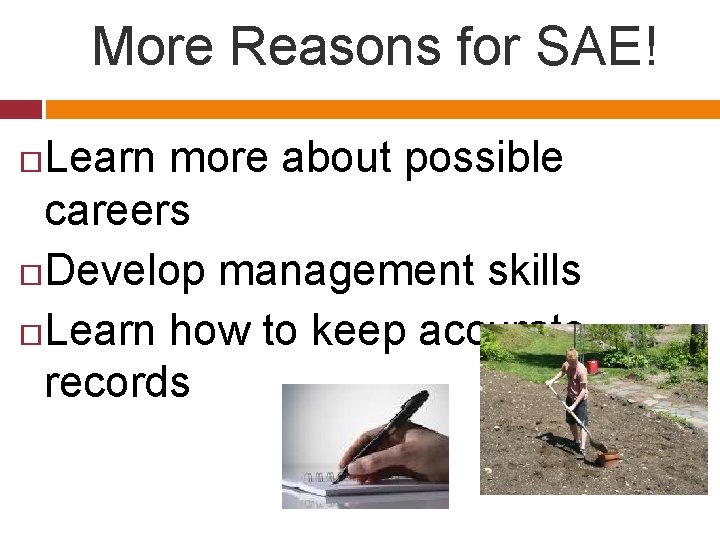
More Reasons for SAE! Learn more about possible careers Develop management skills Learn how to keep accurate records
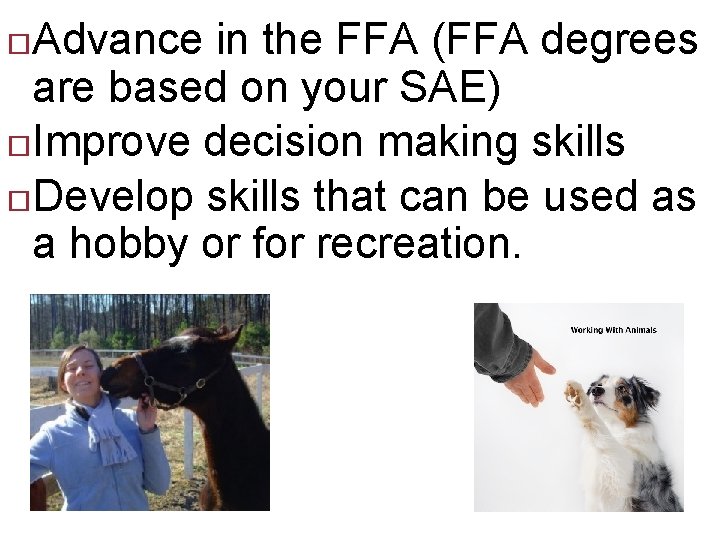
Advance in the FFA (FFA degrees are based on your SAE) Improve decision making skills Develop skills that can be used as a hobby or for recreation.
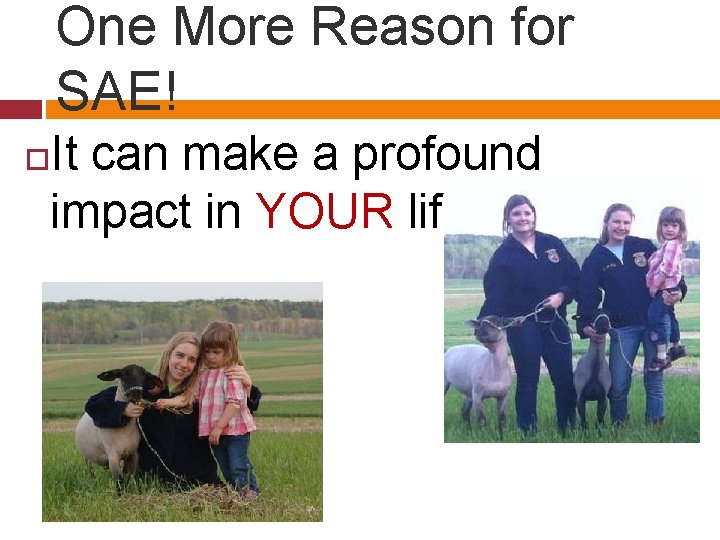
One More Reason for SAE! It can make a profound impact in YOUR life!
Experiential Learning “All genuine education comes about through experience. ” John Dewey
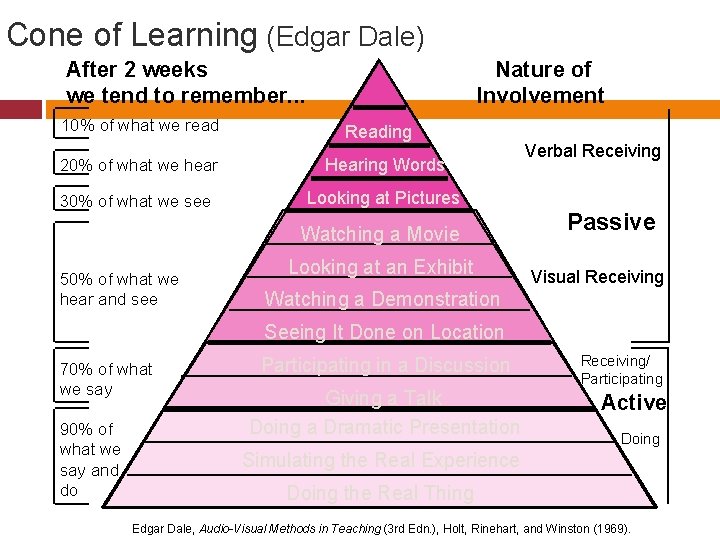
Cone of Learning (Edgar Dale) Nature of Involvement After 2 weeks we tend to remember. . . 10% of what we read Reading 20% of what we hear Hearing Words 30% of what we see Looking at Pictures Watching a Movie 50% of what we hear and see Looking at an Exhibit Verbal Receiving Passive Visual Receiving Watching a Demonstration Seeing It Done on Location 70% of what we say 90% of what we say and do Participating in a Discussion Giving a Talk Doing a Dramatic Presentation Receiving/ Participating Active Doing Simulating the Real Experience Doing the Real Thing Edgar Dale, Audio-Visual Methods in Teaching (3 rd Edn. ), Holt, Rinehart, and Winston (1969).
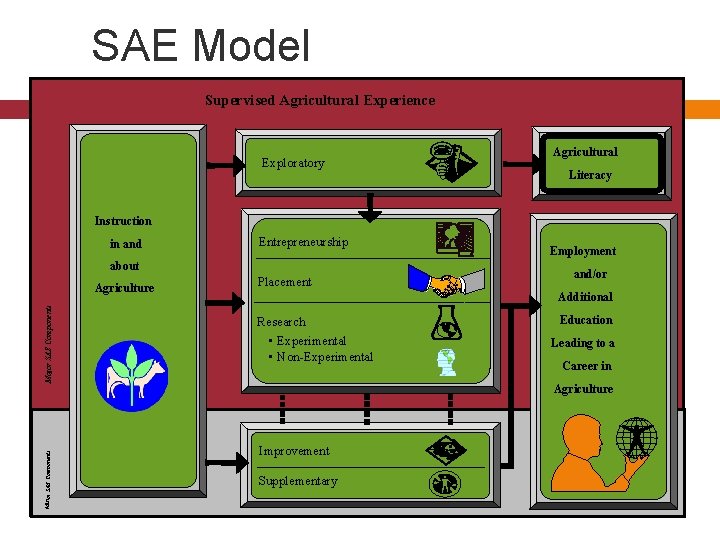
SAE Model Supervised Agricultural Experience Exploratory Agricultural Literacy Instruction in and Entrepreneurship about Minor SAE Components Major SAE Components Agriculture Placement Employment and/or Additional Research • Experimental • Non-Experimental Education Leading to a Career in Agriculture Improvement Supplementary
What is the legal basis for SAE? The Smith-Hughes Act of 1917 (a federal law) required all students in agriculture classes to have "directed or supervised practice in agriculture. ”
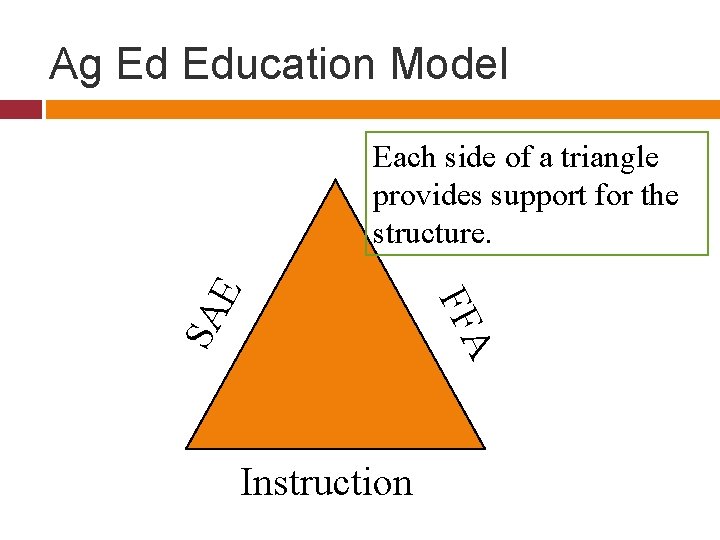
Ag Ed Education Model SA A FF E Each side of a triangle provides support for the structure. Instruction
Types of SAE Programs
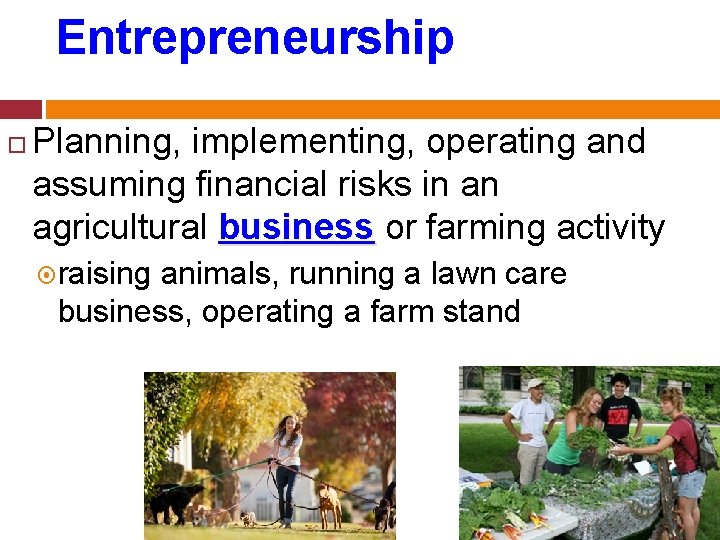
Entrepreneurship Planning, implementing, operating and assuming financial risks in an agricultural business or farming activity raising animals, running a lawn care business, operating a farm stand
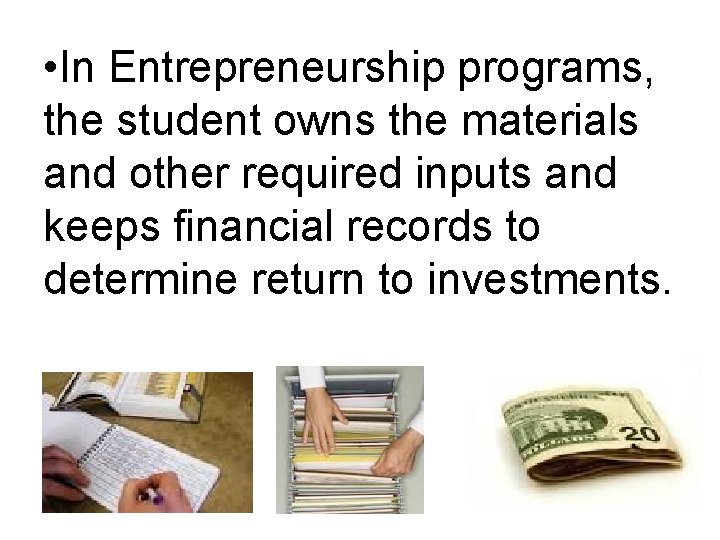
• In Entrepreneurship programs, the student owns the materials and other required inputs and keeps financial records to determine return to investments.
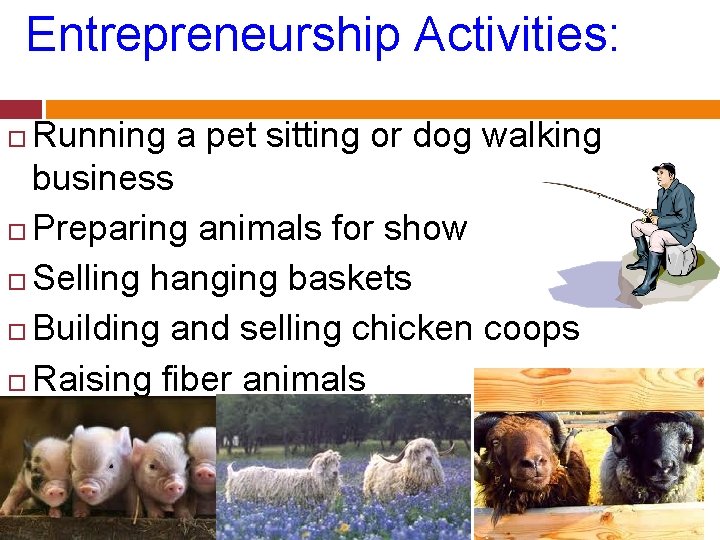
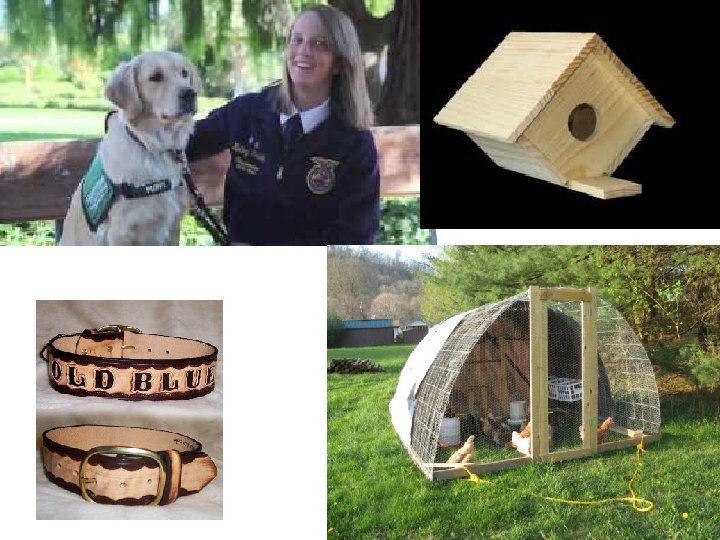
Entrepreneurship Activities: Running a pet sitting or dog walking business Preparing animals for show Selling hanging baskets Building and selling chicken coops Raising fiber animals
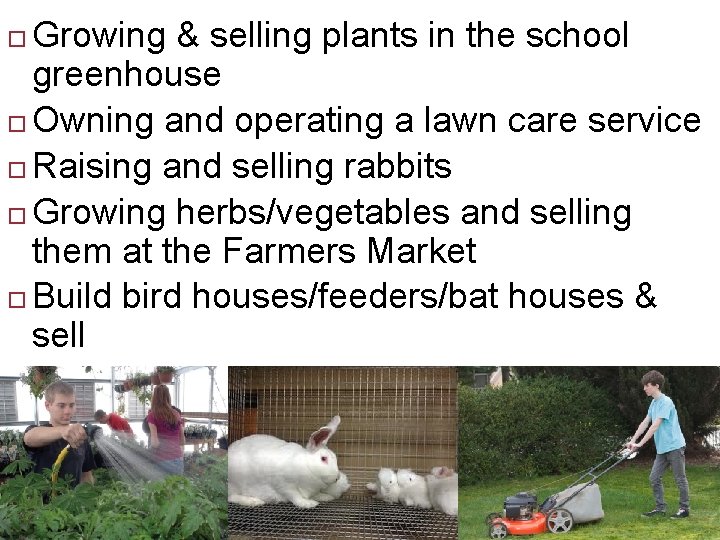
Growing & selling plants in the school greenhouse Owning and operating a lawn care service Raising and selling rabbits Growing herbs/vegetables and selling them at the Farmers Market Build bird houses/feeders/bat houses & sell
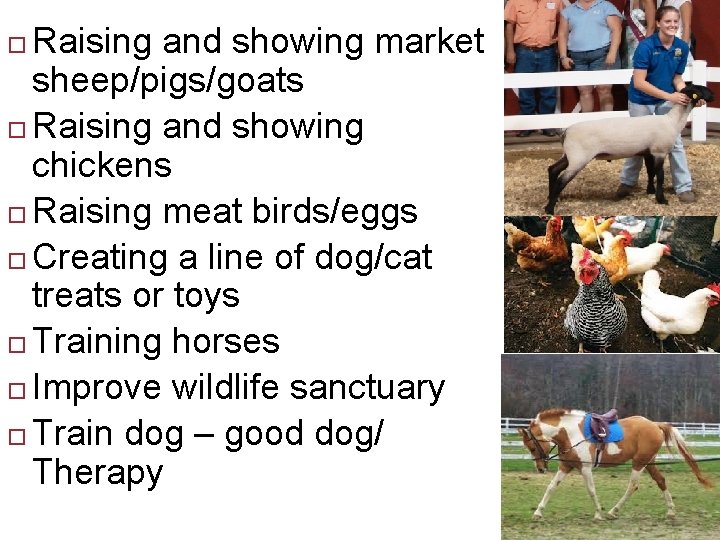
Raising and showing market sheep/pigs/goats Raising and showing chickens Raising meat birds/eggs Creating a line of dog/cat treats or toys Training horses Improve wildlife sanctuary Train dog – good dog/ Therapy
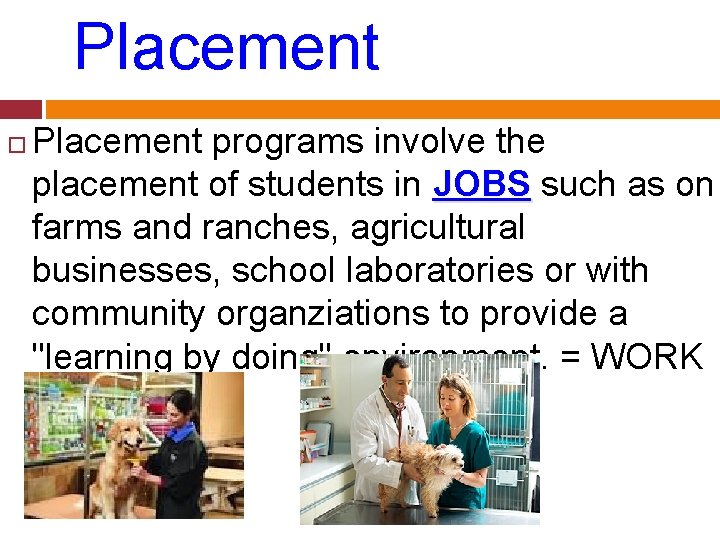
Placement programs involve the placement of students in JOBS such as on farms and ranches, agricultural businesses, school laboratories or with community organziations to provide a "learning by doing" environment. = WORK
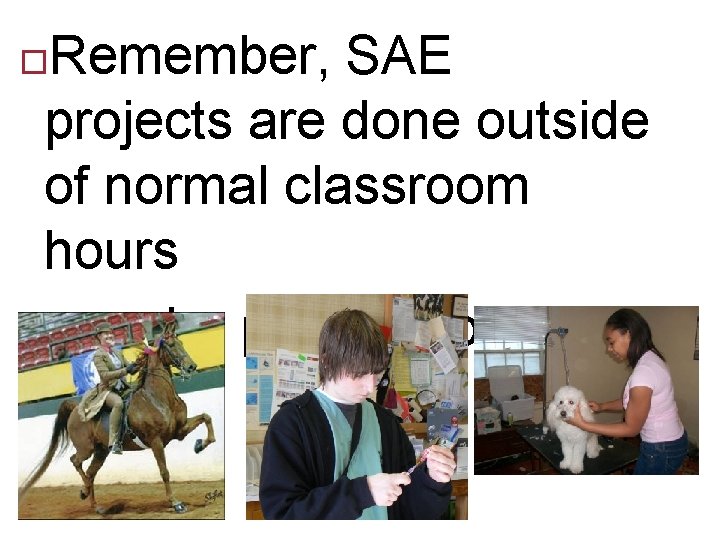
Remember, SAE projects are done outside of normal classroom hours may be paid or non-paid.
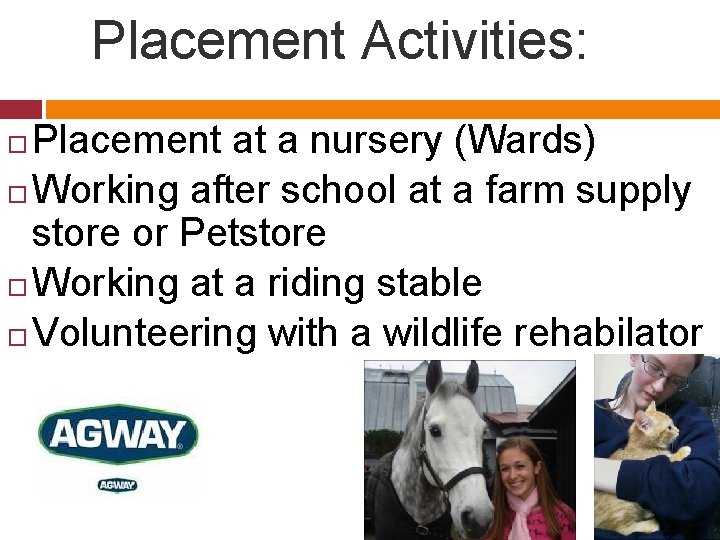
Placement Activities: Placement at a nursery (Wards) Working after school at a farm supply store or Petstore Working at a riding stable Volunteering with a wildlife rehabilator
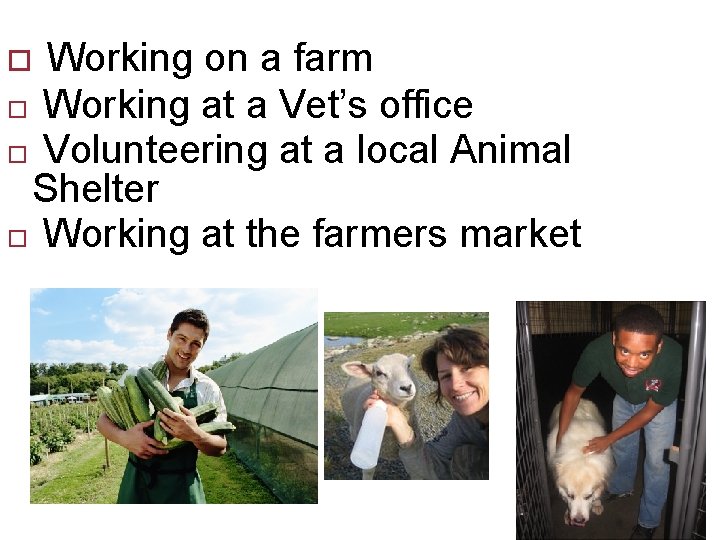
Working on a farm Working at a Vet’s office Volunteering at a local Animal Shelter Working at the farmers market
Placement activities Hancock Shaker Village Local farms!! Berkshire Grown Keep Berkshires Farming Co-Op, Guido’s, Big Y, Price. Chopper – meat dept, produce dept, florist Working at an Agricultural non-profit organization
Farms! Wolfe Spring Farm Moon in the Pond Pine Island Farm Taft farm Turner farm Kinderhook Farm Twin Rivers farm Will Conklin’s farm The Meat Market Indian Line farm Ward’s nursery Windy Hill Farm Girl Farm Howden Project Native Fish Hatchery High Lawn Farm North Plain Farm
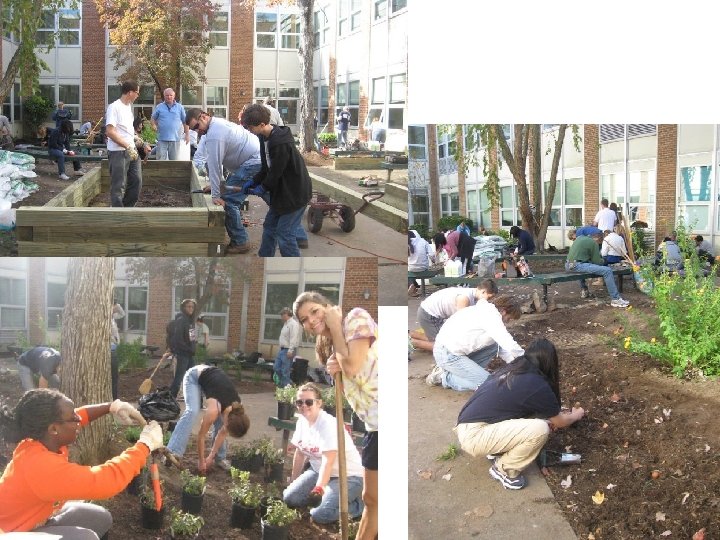
Improvement SAE’s Improve your home, neighborhood, community, school or place of business. Can involve: Landscaping Container gardens Picking up trash Setting up recycling/compost Signage
A training agreement signed by student, teacher, employer and parent/guardian stating which each will do, record of work, hours and compensation must be completed.
Experimental An extensive activity where the student plans and conducts a major agricultural experiment using the scientific process or scientific method
The purpose of the experiment is to provide students "handson" experience in: 1. Verifying, learning or demonstrating scientific principles in agriculture. 2. Discovering new knowledge. 3. Using the scientific process.
Experimental SAE Examples: Comparing the effect of various planting media on plant growth Determining the impact of different levels of protein on fish growth
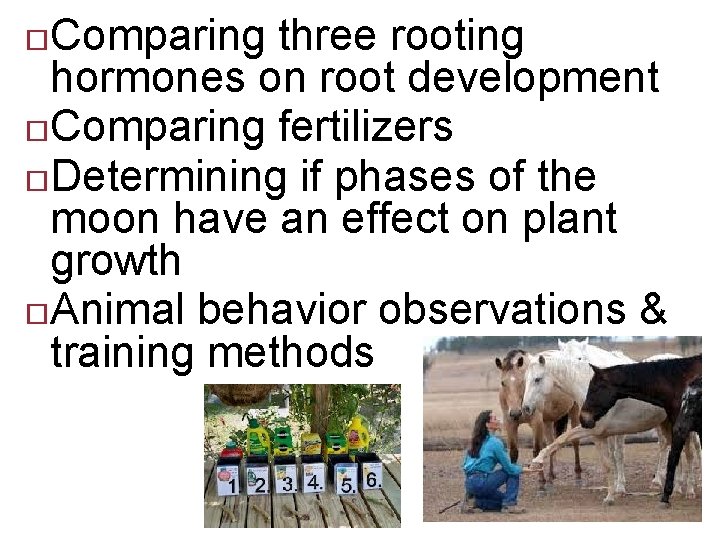
Comparing three rooting hormones on root development Comparing fertilizers Determining if phases of the moon have an effect on plant growth Animal behavior observations & training methods
Analytical Identify an agricultural problem that cannot be solved by experiments and design a plan to investigate and analyze the problem such as a marketing display.
The student gathers and evaluates data from a variety of sources and then produce some type of finished product.
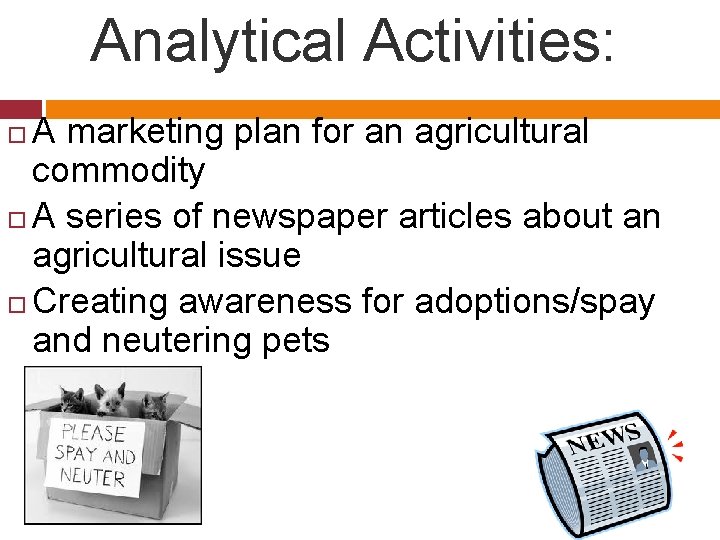
Analytical Activities: A marketing plan for an agricultural commodity A series of newspaper articles about an agricultural issue Creating awareness for adoptions/spay and neutering pets
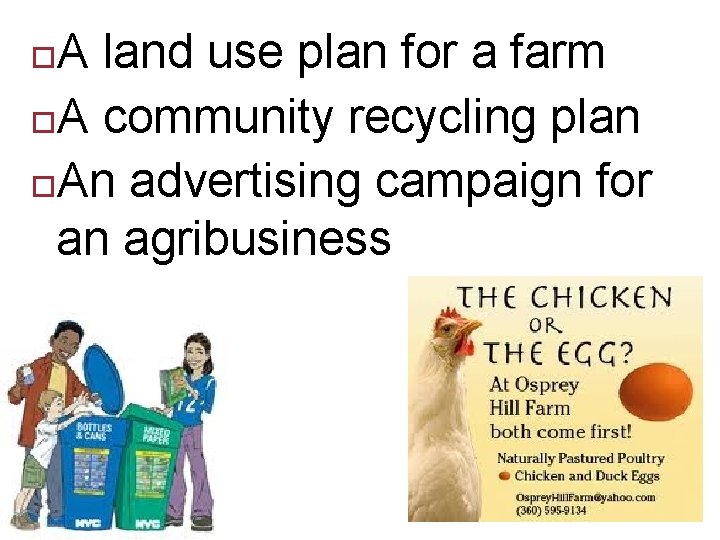
A land use plan for a farm A community recycling plan An advertising campaign for an agribusiness
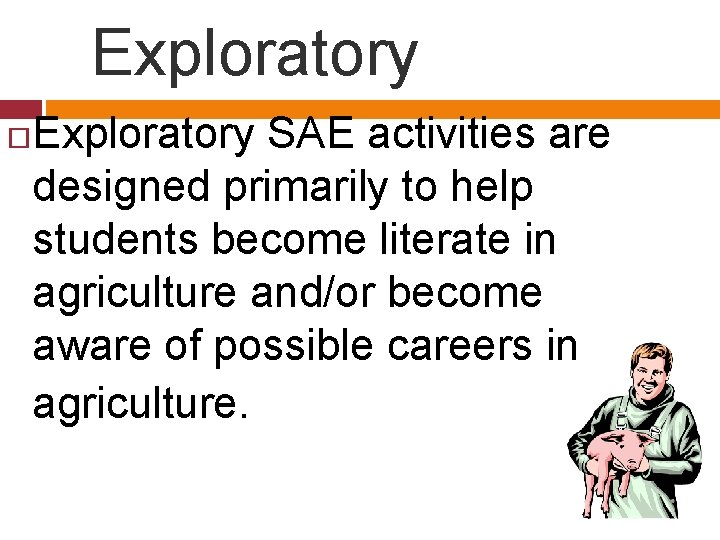
Exploratory SAE activities are designed primarily to help students become literate in agriculture and/or become aware of possible careers in agriculture.
Exploratory Helps students learn about agriculture and become aware of possible agricultural careers through short times spent observing, shadowing or helping such as attending a career day, interviewing a veterinarian or assisting a horse owner.
Exploratory SAE activities are appropriate for beginning agricultural students
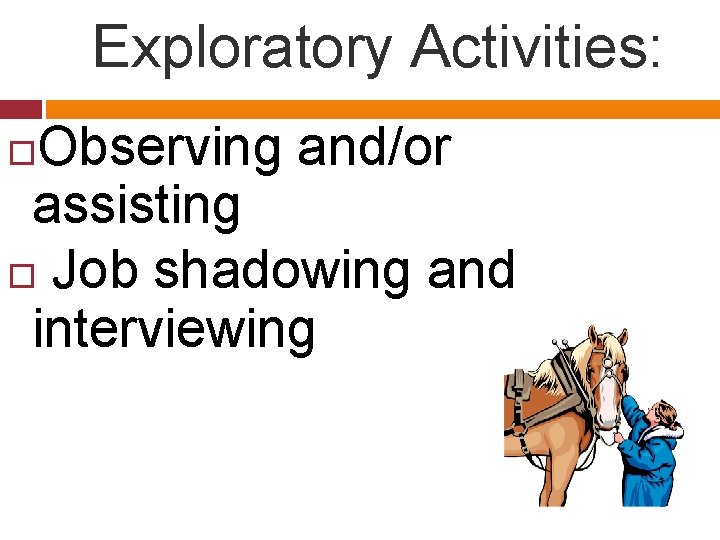
Exploratory Activities: Observing and/or assisting Job shadowing and interviewing
Assisting on a horse farm for a day Interviewing an agricultural loan officer in a bank Preparing a scrapbook on the work of an animal behaviorist Attending an agricultural career day at the university
Group Activity! 1. 2. 3. 4. Get into groups of 3 -4 and make a list of feasible SAE projects that you could do this semester (specific farms, businesses, home projects, experiments etc…) Each group will add their ideas to the board, discuss as a class. After discussing the ideas, eliminating non-feasible and duplicates, you will then create classroom posters listing all your great ideas! Put up in room