
What is a Quadrilateral A polygon with 4

- Slides: 13
What is a Quadrilateral? A polygon with 4 sides!
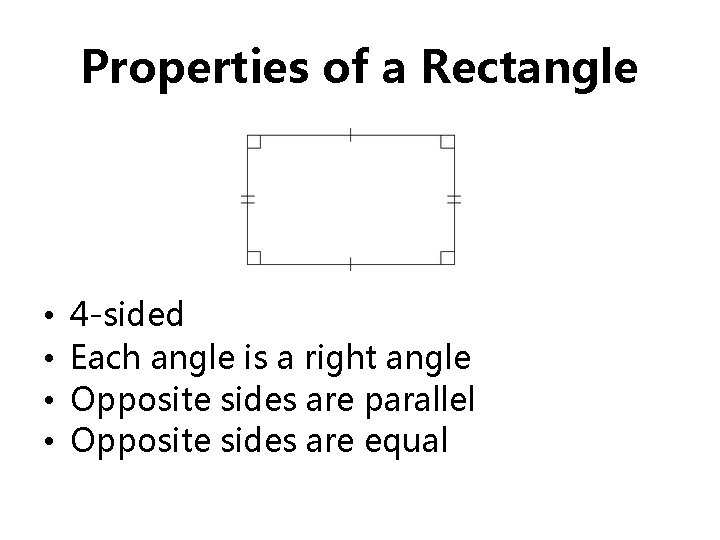
Properties of a Rectangle • • 4 -sided Each angle is a right angle Opposite sides are parallel Opposite sides are equal
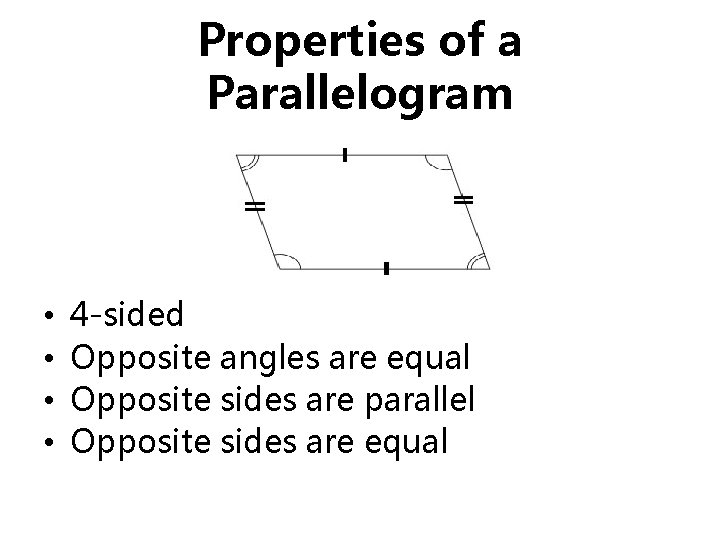
Properties of a Parallelogram • • 4 -sided Opposite angles are equal Opposite sides are parallel Opposite sides are equal
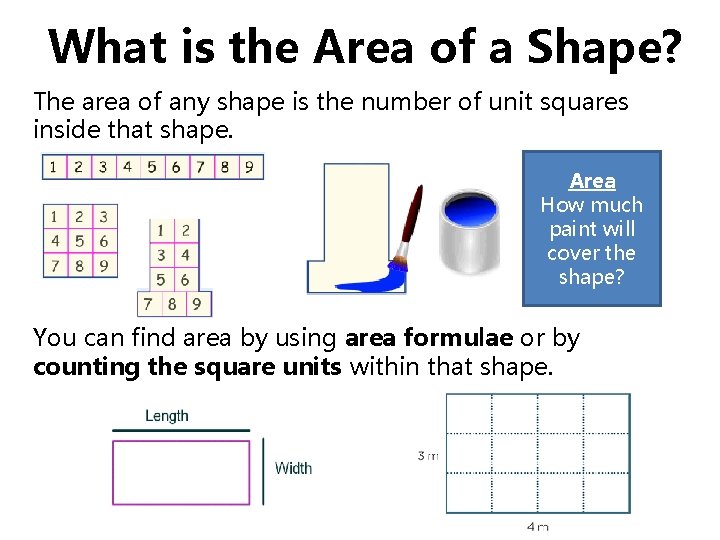
What is the Area of a Shape? The area of any shape is the number of unit squares inside that shape. Area How much paint will cover the shape? You can find area by using area formulae or by counting the square units within that shape.
L. O. To be able to find the formula for the area of a parallelogram Activity Time! • Ideally in Pairs • Pair of Scissors needed • SHEETS
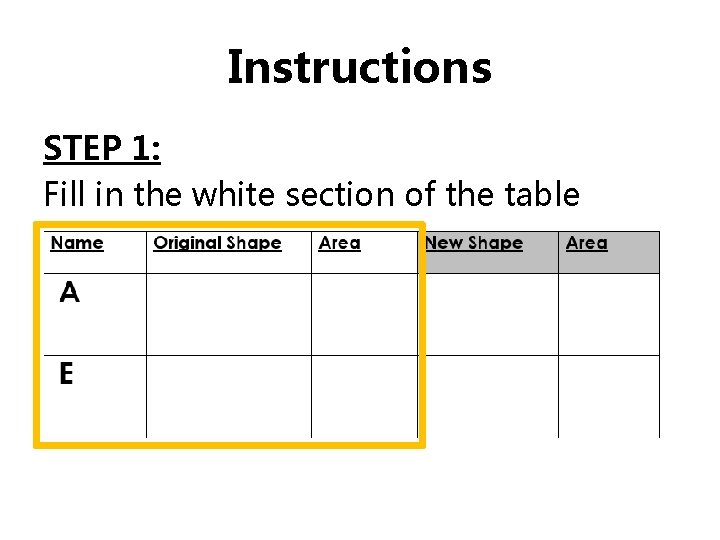
Instructions STEP 1: Fill in the white section of the table
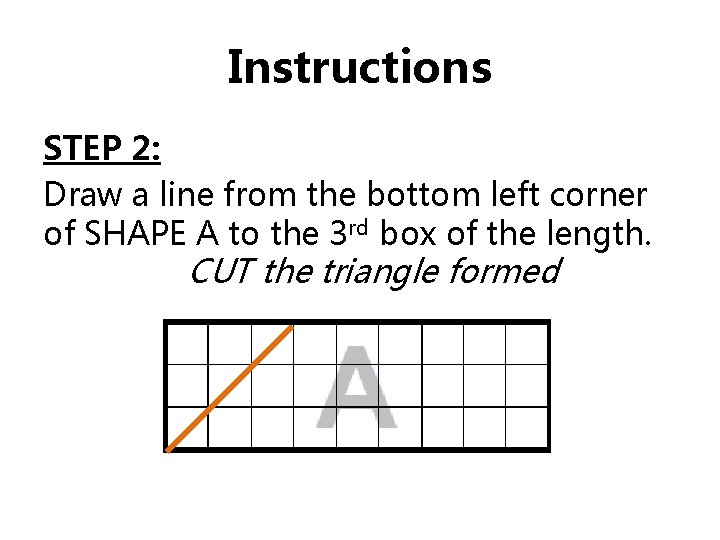
Instructions STEP 2: Draw a line from the bottom left corner of SHAPE A to the 3 rd box of the length. CUT the triangle formed
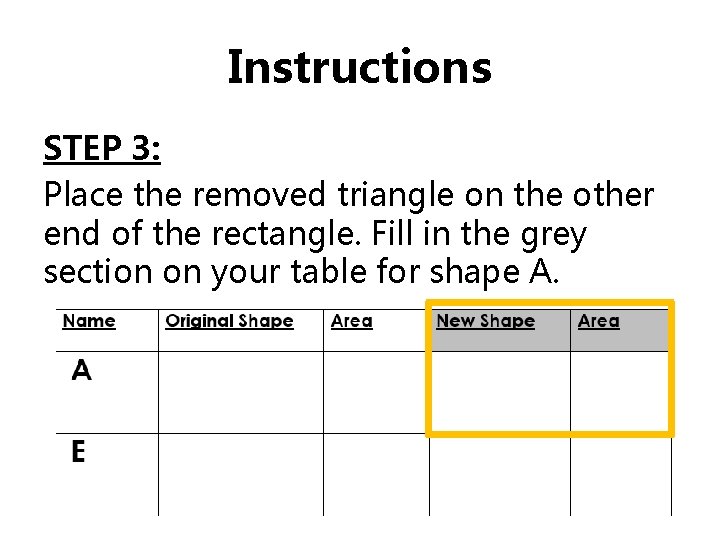
Instructions STEP 3: Place the removed triangle on the other end of the rectangle. Fill in the grey section on your table for shape A.
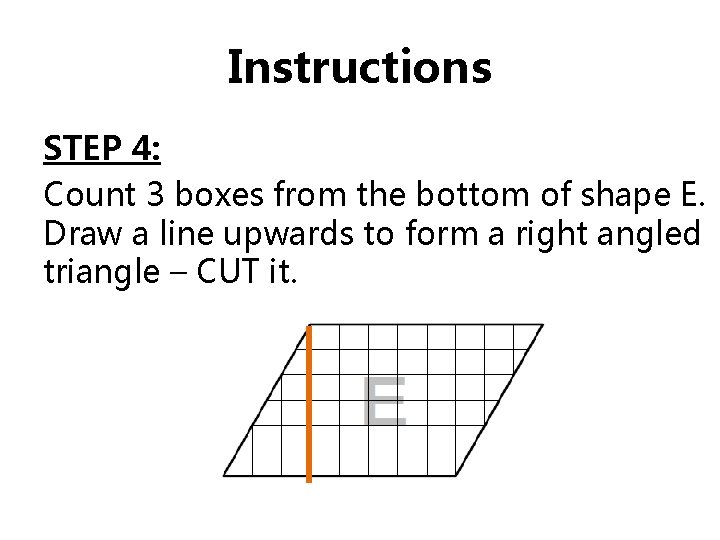
Instructions STEP 4: Count 3 boxes from the bottom of shape E. Draw a line upwards to form a right angled triangle – CUT it.
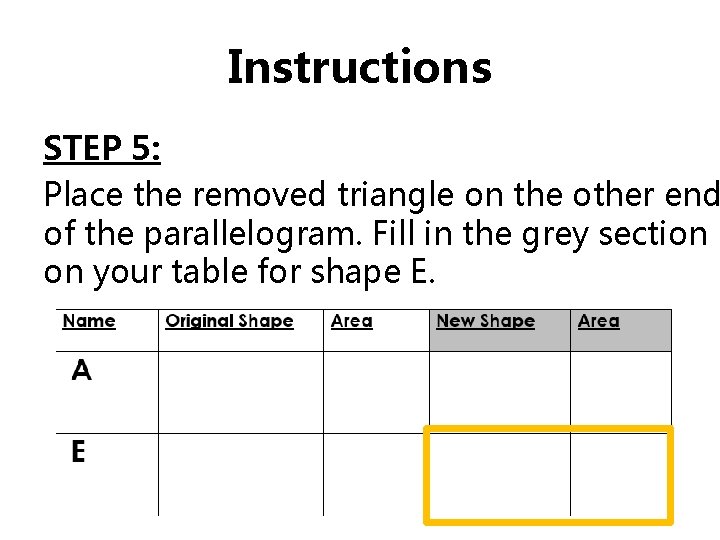
Instructions STEP 5: Place the removed triangle on the other end of the parallelogram. Fill in the grey section on your table for shape E.
Instructions STEP 6: Once your table is complete, answer the questions underneath the table. Dimensions are sides (lengths, widths, heights)
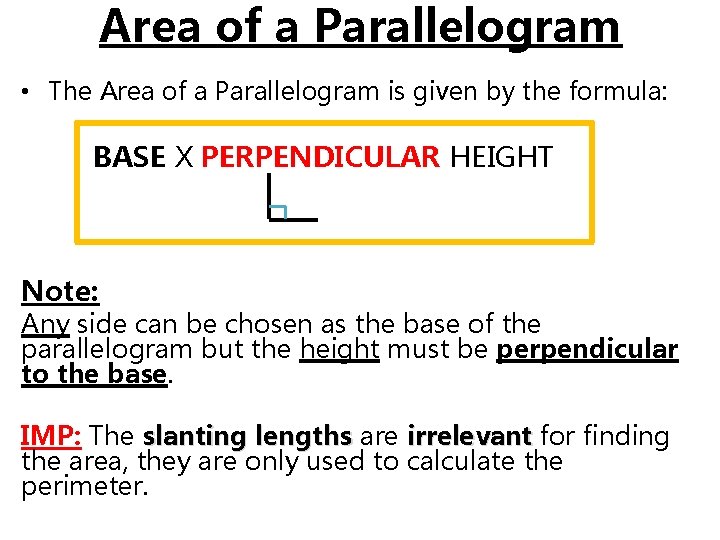
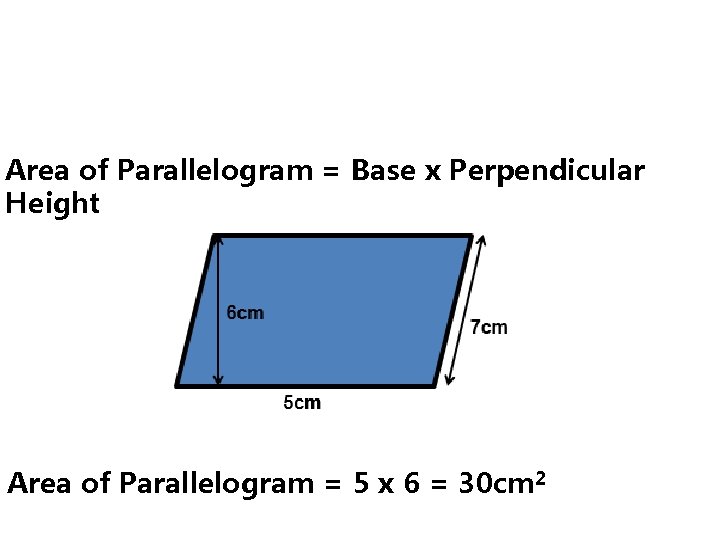
Area of a Parallelogram • The Area of a Parallelogram is given by the formula: BASE X PERPENDICULAR HEIGHT Note: Any side can be chosen as the base of the parallelogram but the height must be perpendicular to the base. IMP: The slanting lengths are irrelevant for finding the area, they are only used to calculate the perimeter.
Area of Parallelogram = Base x Perpendicular Height Area of Parallelogram = 5 x 6 = 30 cm 2