
What Is a Program A program is like
- Slides: 15
What Is a Program? A program is like an algorithm, but describes a process that is ready or can be made ready to run on a real computer Retrieved from: http: //home. wlu. edu/~lambertk/classes/111/
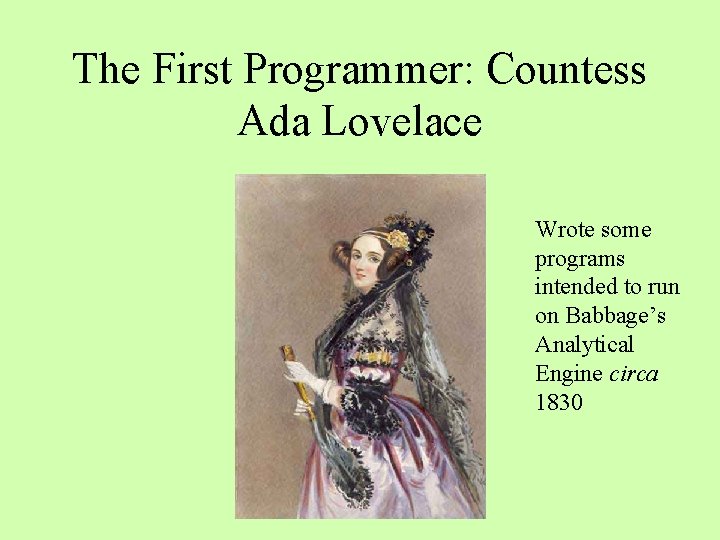
The First Programmer: Countess Ada Lovelace Wrote some programs intended to run on Babbage’s Analytical Engine circa 1830
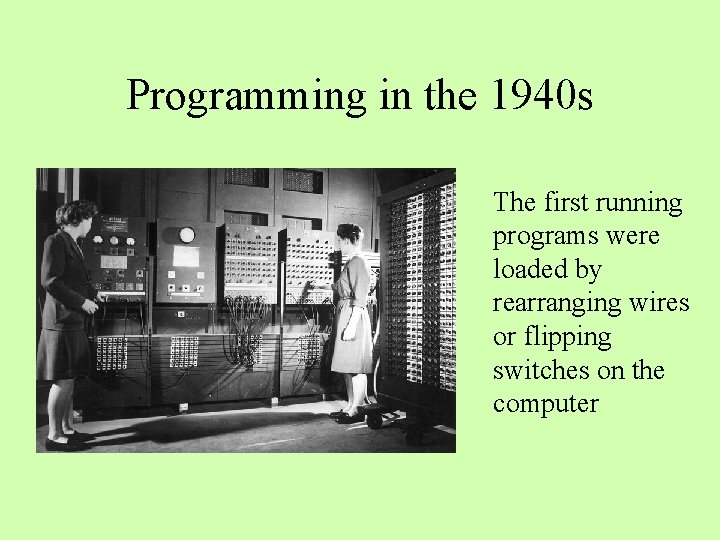
Programming in the 1940 s The first running programs were loaded by rearranging wires or flipping switches on the computer
High-Level Programming Languages • Code a program in a high level language that’s close to English • Run another program to translate it to instructions that the computer hardware can understand • Such translator programs are called compilers
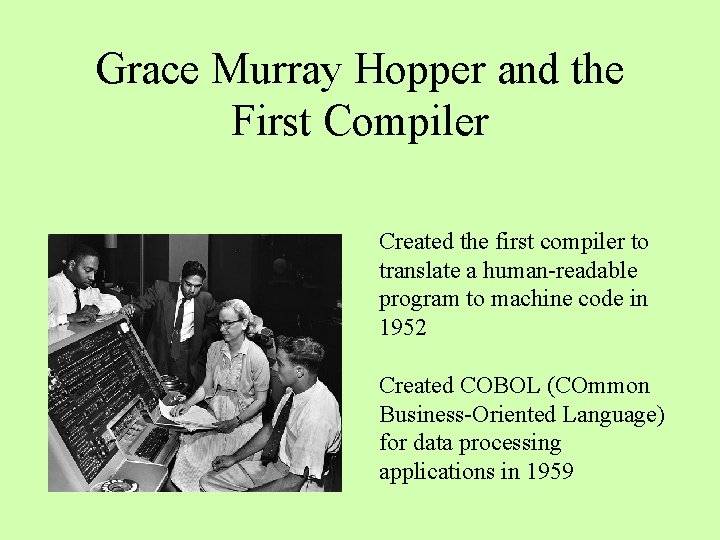
Grace Murray Hopper and the First Compiler Created the first compiler to translate a human-readable program to machine code in 1952 Created COBOL (COmmon Business-Oriented Language) for data processing applications in 1959
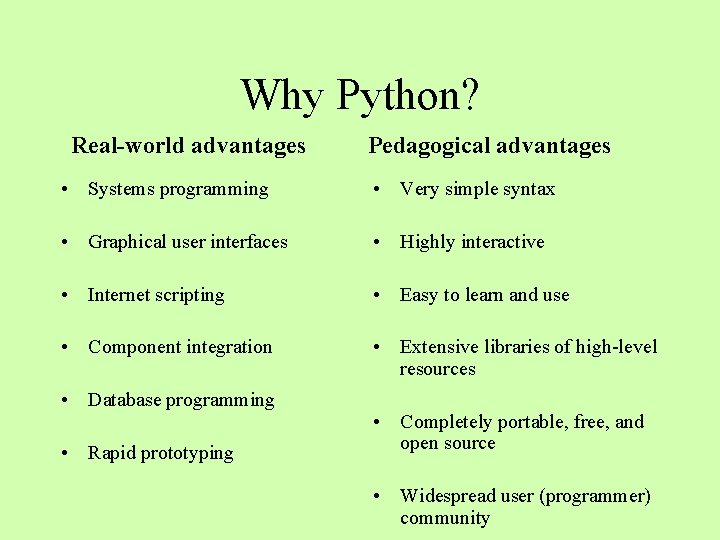
Why Python? Real-world advantages Pedagogical advantages • Systems programming • Very simple syntax • Graphical user interfaces • Highly interactive • Internet scripting • Easy to learn and use • Component integration • Extensive libraries of high-level resources • Database programming • Rapid prototyping • Completely portable, free, and open source • Widespread user (programmer) community
Obtaining Python • Python was invented by Guido van Rossum in 1992 • Python comes with most Unix-based computer systems • Python for Windows or any other operating system can be downloaded from http: //www. python. org/
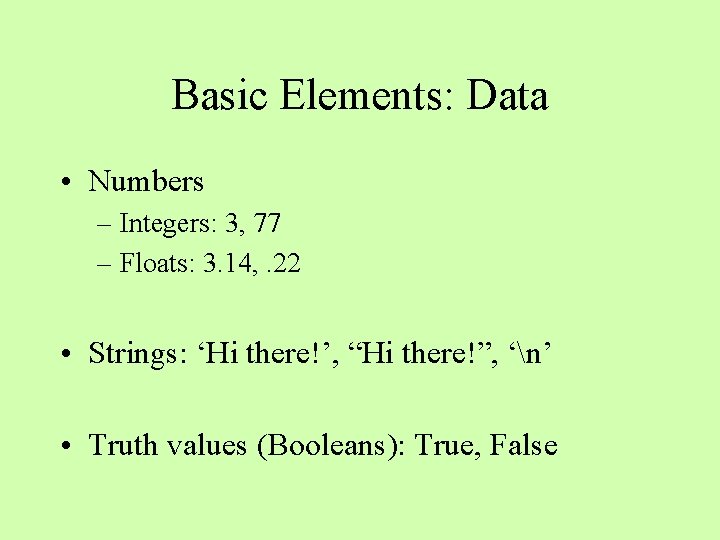
Basic Elements: Data • Numbers – Integers: 3, 77 – Floats: 3. 14, . 22 • Strings: ‘Hi there!’, “Hi there!”, ‘n’ • Truth values (Booleans): True, False
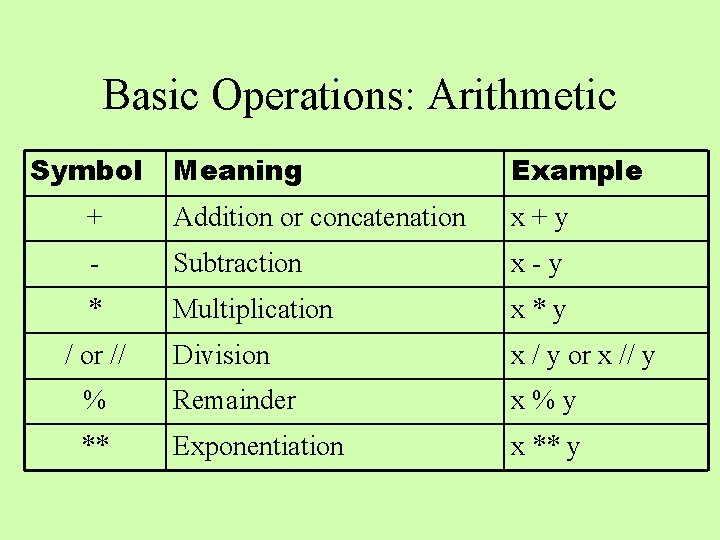
Basic Operations: Arithmetic Symbol Meaning Example + Addition or concatenation x+y - Subtraction x-y * Multiplication x*y Division x / y or x // y % Remainder x%y ** Exponentiation x ** y / or //
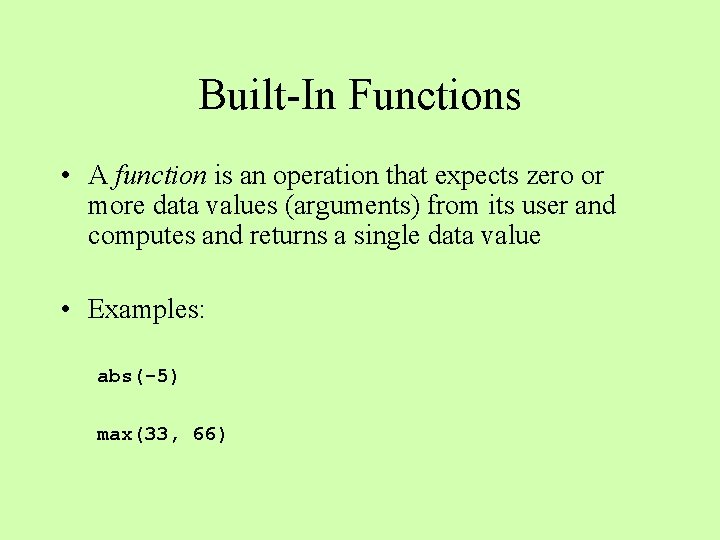
Built-In Functions • A function is an operation that expects zero or more data values (arguments) from its user and computes and returns a single data value • Examples: abs(-5) max(33, 66)
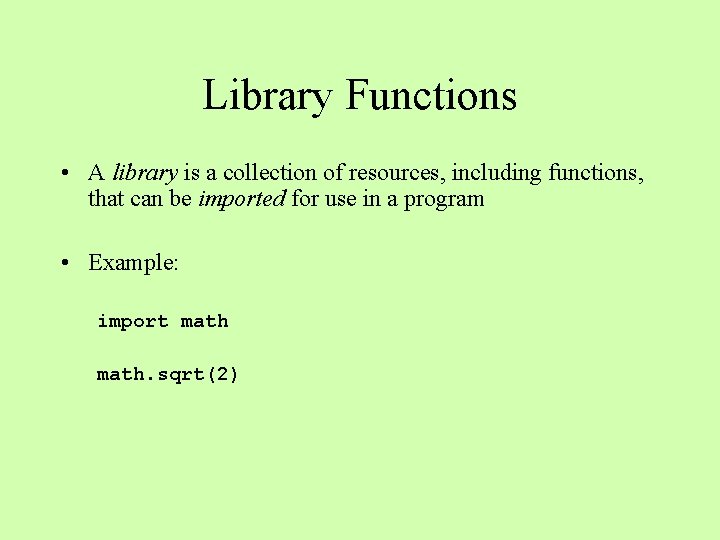
Library Functions • A library is a collection of resources, including functions, that can be imported for use in a program • Example: import math. sqrt(2)
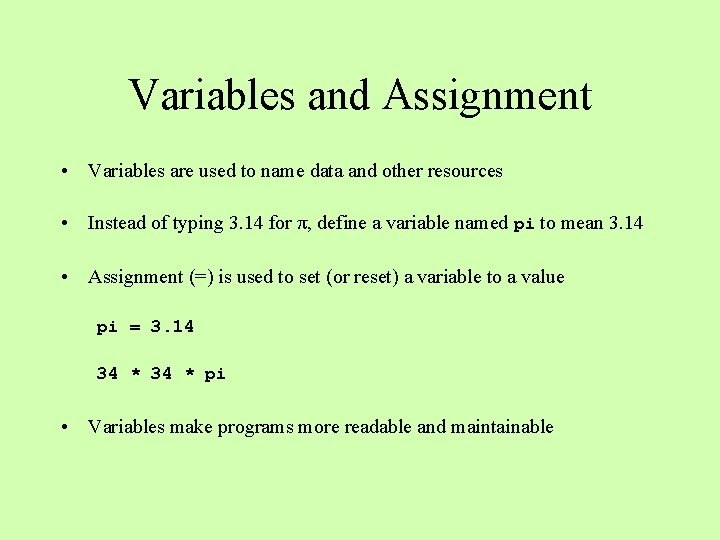
Variables and Assignment • Variables are used to name data and other resources • Instead of typing 3. 14 for π, define a variable named pi to mean 3. 14 • Assignment (=) is used to set (or reset) a variable to a value pi = 3. 14 34 * pi • Variables make programs more readable and maintainable
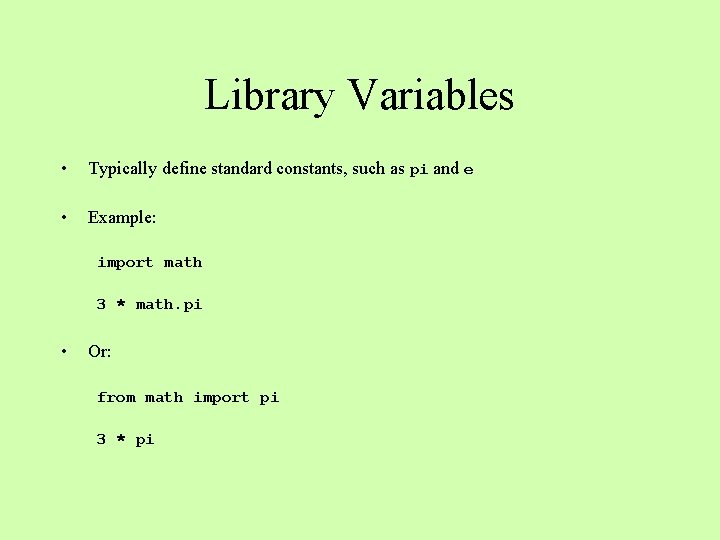
Library Variables • Typically define standard constants, such as pi and e • Example: import math 3 * math. pi • Or: from math import pi 3 * pi
Script Mode • Longer programs can be edited and saved to a file and then run as scripts (synonymous with programs) • Repl. it
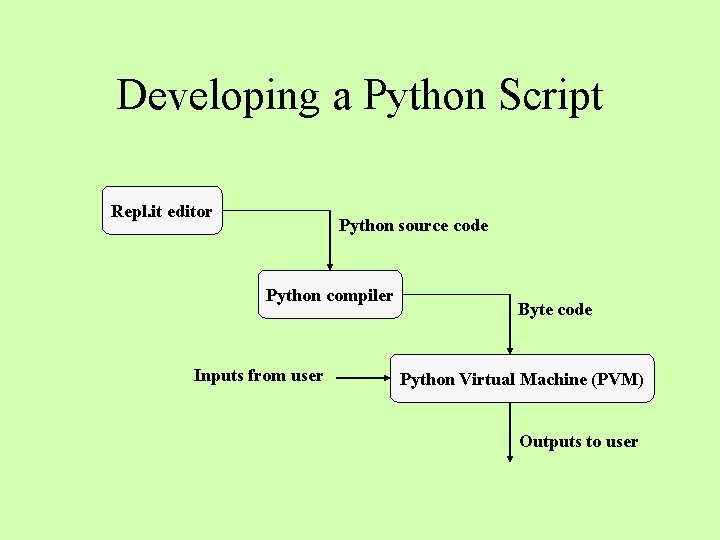
Developing a Python Script Repl. it editor Python source code Python compiler Inputs from user Byte code Python Virtual Machine (PVM) Outputs to user