
What is a polymer Polymers that you know
- Slides: 8
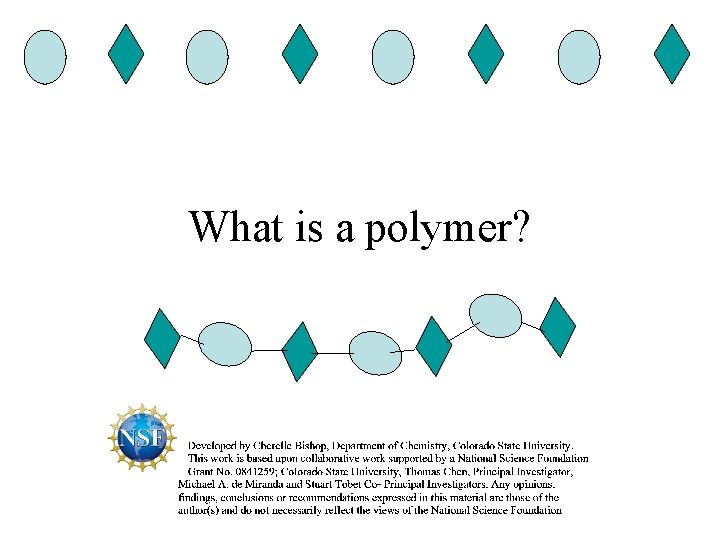
What is a polymer?
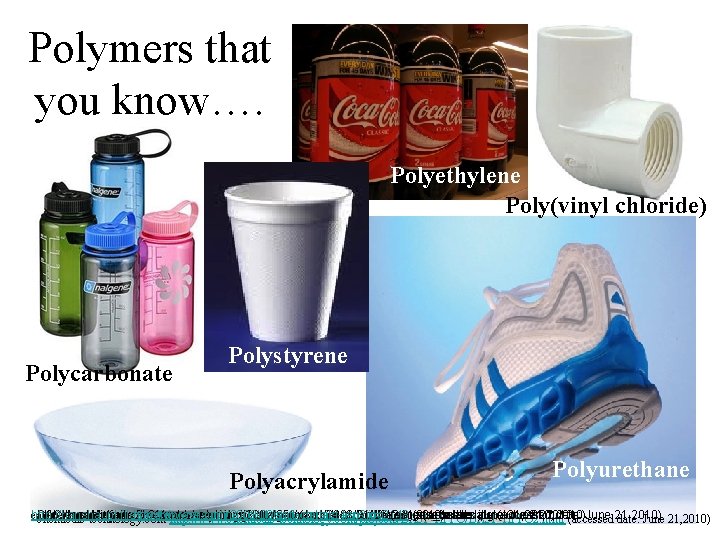
Polymers that you know…. Polyethylene Poly(vinyl chloride) Polycarbonate Polystyrene Polyacrylamide Polyurethane earth 911. comhttp: //earth 911. com/recycling/plastic/pvc/ (accesssed date: June 21, 2010) http: //hanshaupt. files. wordpress. com/2009/06/soft-contact-lens. jpg http: //reusablebags. typepad. com/photos/uncategorized/2008/01/16/nalgene_bottles. jpg http: //mypatiofarm. files. wordpress. com/2009/05/coke_2 litre_bottles 2. jpg Catering Hygiene http: //www. slsonline. co. uk/showdetails. asp? id=2148 (accessed date: June date: (accessed June 21, 2010) date: June 21, 2010). chemicals-technology. com http: //www. chemicals-technology. com/projects/BASF-HPPO 2. html (accessed date: June 21, 2010)
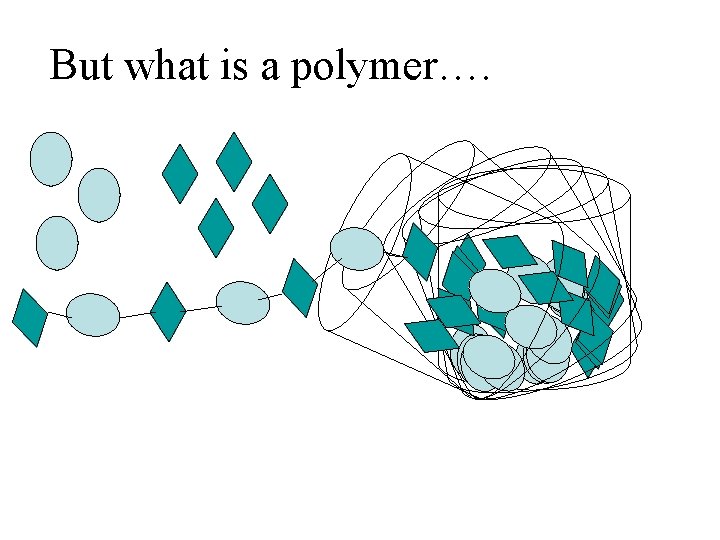
But what is a polymer…. A B
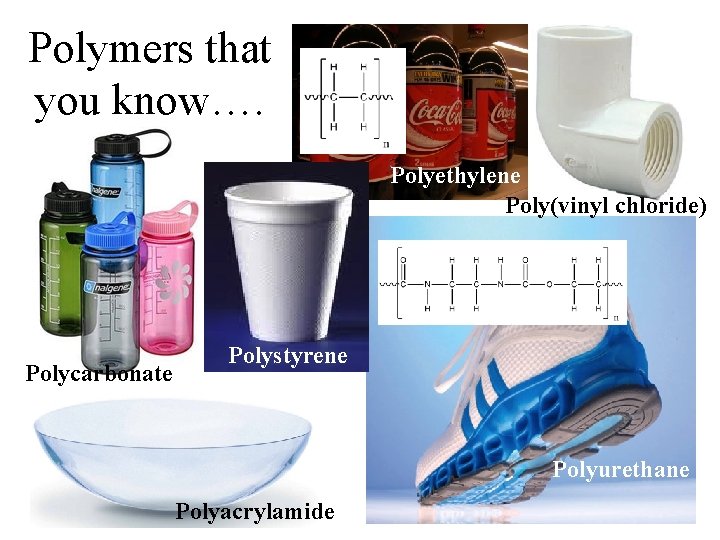
Polymers that you know…. Polyethylene Poly(vinyl chloride) Polycarbonate Polystyrene Polyurethane Polystyrene Polyacrylamide
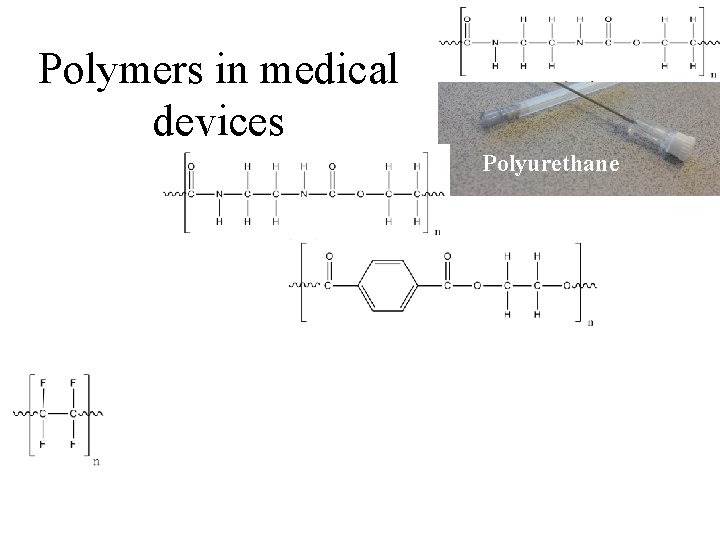
Polymers in medical devices Polyurethane Polytetrafluoroethylene Polyurethane (inner) Polyethylene terephthalate (outer) Poly(vinyl chloride)
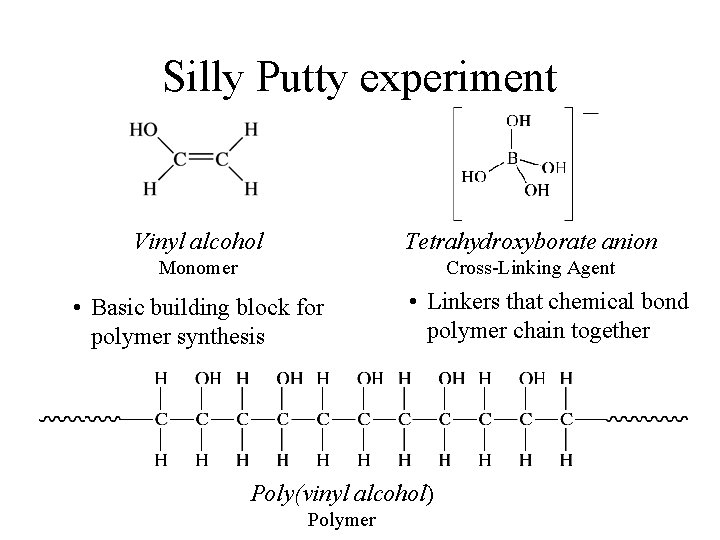
Silly Putty experiment Vinyl alcohol Tetrahydroxyborate anion Monomer Cross-Linking Agent • Basic building block for polymer synthesis • Linkers that chemical bond polymer chain together Poly(vinyl alcohol) Polymer
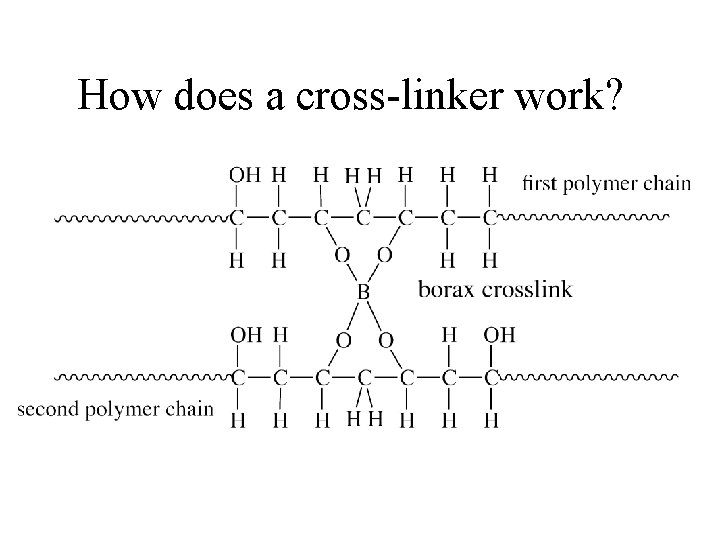
How does a cross-linker work?
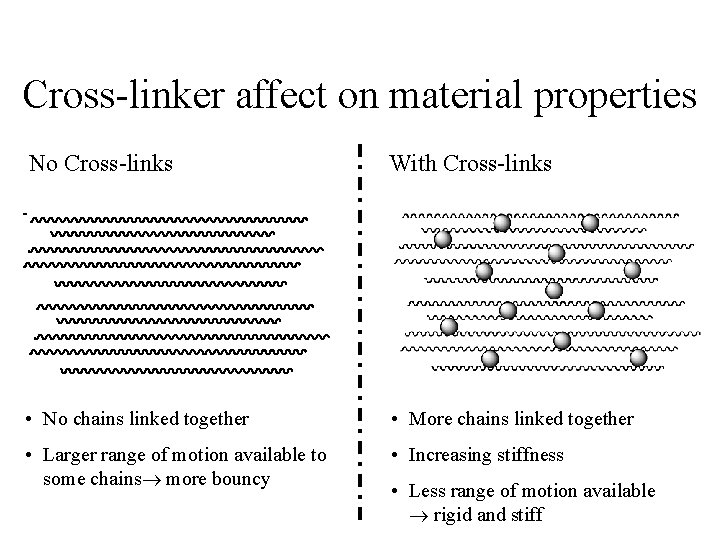
Cross-linker affect on material properties No Cross-links With Cross-links • No chains linked together • More chains linked together • Larger range of motion available to some chains more bouncy • Increasing stiffness • Less range of motion available rigid and stiff