
What is a plant Plants are multicellular eukaryotes
- Slides: 13
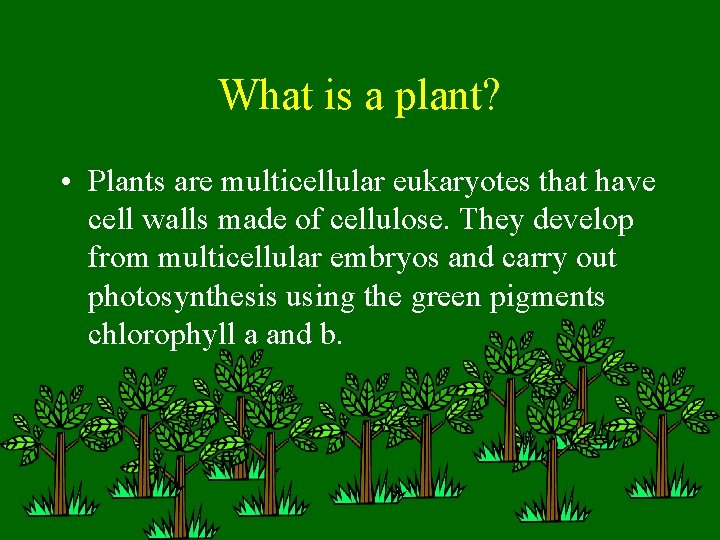
What is a plant? • Plants are multicellular eukaryotes that have cell walls made of cellulose. They develop from multicellular embryos and carry out photosynthesis using the green pigments chlorophyll a and b.
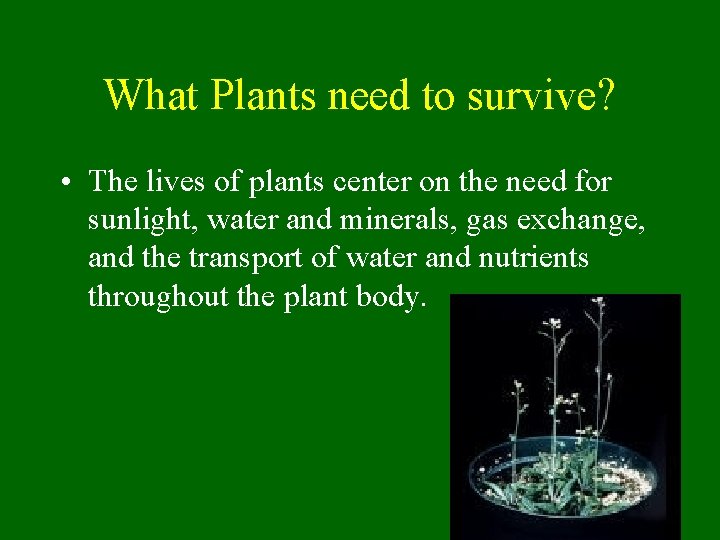
What Plants need to survive? • The lives of plants center on the need for sunlight, water and minerals, gas exchange, and the transport of water and nutrients throughout the plant body.
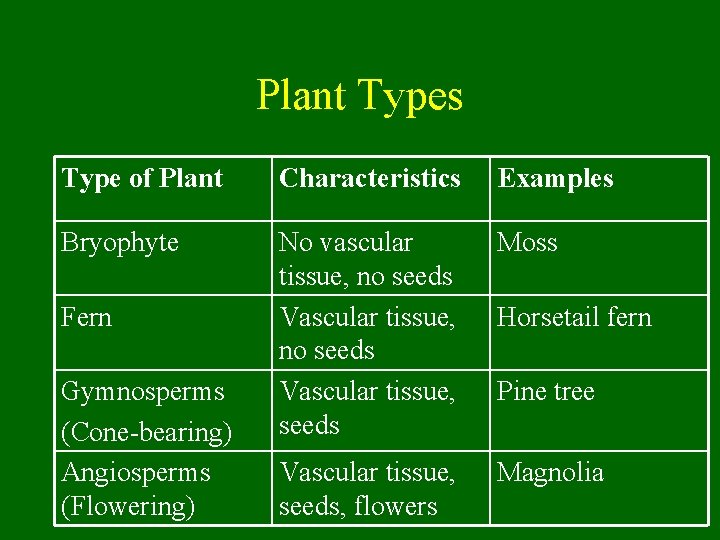
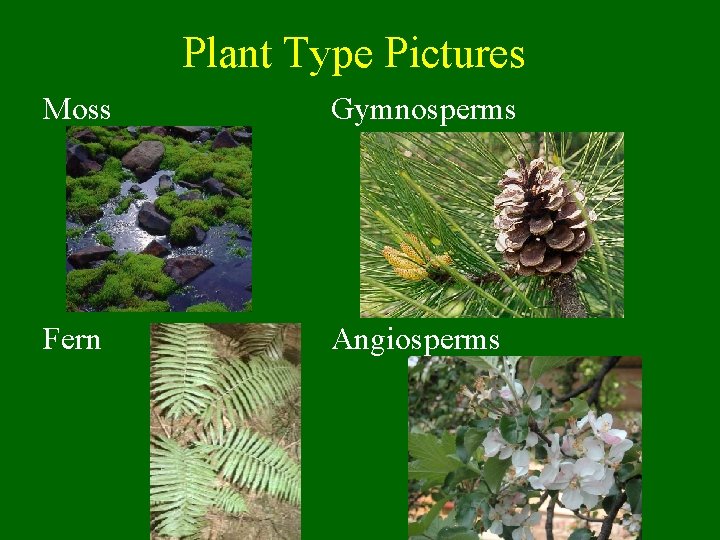
Plant Types Type of Plant Characteristics Examples Bryophyte No vascular tissue, no seeds Vascular tissue, seeds Moss Vascular tissue, seeds, flowers Magnolia Fern Gymnosperms (Cone-bearing) Angiosperms (Flowering) Horsetail fern Pine tree
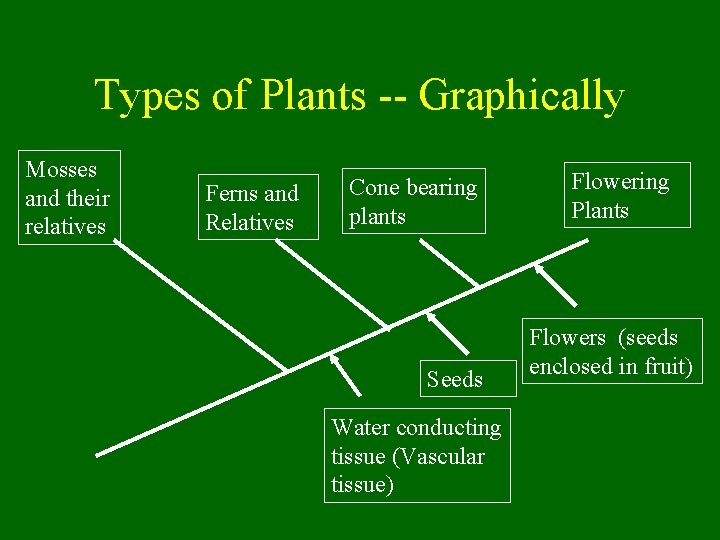
Types of Plants -- Graphically Mosses and their relatives Ferns and Relatives Cone bearing plants Seeds Water conducting tissue (Vascular tissue) Flowering Plants Flowers (seeds enclosed in fruit)
Plant Type Pictures Moss Gymnosperms Fern Angiosperms
Functions of Plant Parts • Root: Anchor plant in the ground absorb water and dissolved nutrients from the soil • Stem: Produce leaves, branches, and flowers; support plant leaves; transport materials between roots and leaves • Leaves: Photosynthesis, transpiration, and gas exchange
Vocabulary • Photosynthesis: Using light energy to power chemical reactions that convert carbon dioxide and water into oxygen and energy-rich carbohydrates like sugars and starches. • Transpiration: evaporation of water from leaves • Gas Exchange: Taking in carbon dioxide and giving off oxygen
Vascular Systems • First tracheids developed to transport water from the bottom of the plant to the top, and glucose produced through Photosynthesis to the bottom of the plant from the leaves. • More complex: Phloem (Ph = f for food) and Xylem (W. X. Y. = Water) to transport the materials.
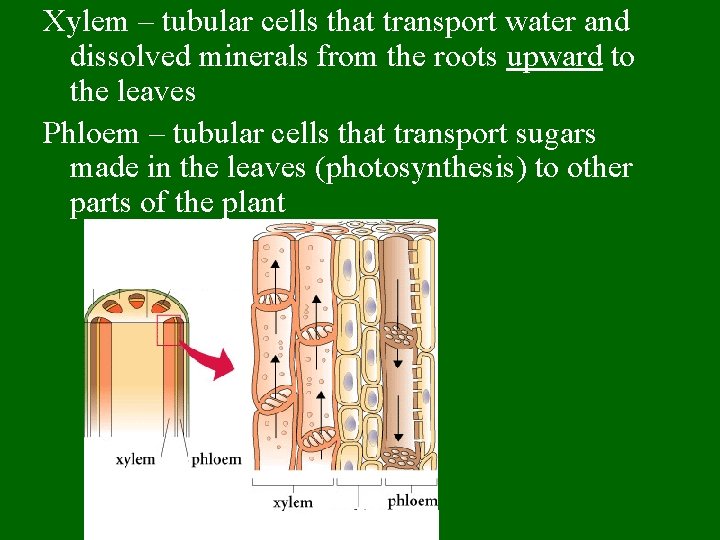
Xylem – tubular cells that transport water and dissolved minerals from the roots upward to the leaves Phloem – tubular cells that transport sugars made in the leaves (photosynthesis) to other parts of the plant
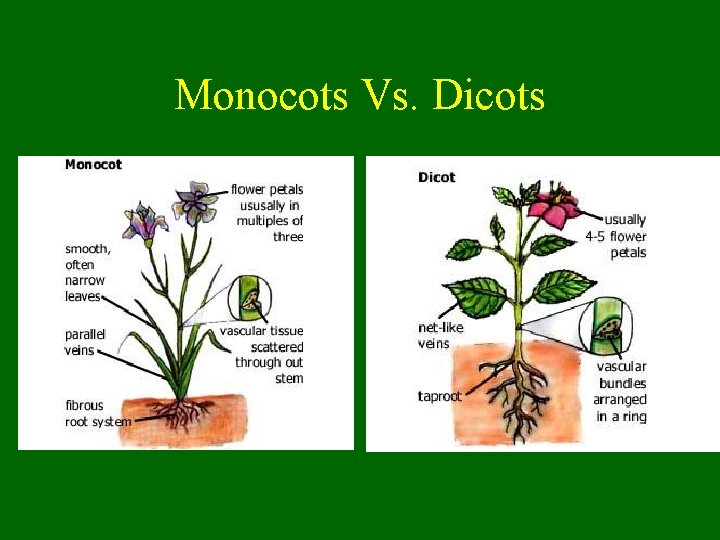
Monocots and Dicots MONOCOTS • Angiosperms that have 1 seed leaf (cotyledon) • parallel veins on leaves • 3 part symmetry for flowers • fibrous roots • Example: lilies, onions, corn, grasses, wheat DICOTS • Angiosperms that have 2 seed leaves (cotyledons) • net veins on leaves • flowers have 4 -5 parts • taproots • Examples: trees and ornamental flowers
Monocots Vs. Dicots
Nature Walk • We’re going out behind the portables. • The goal is to collect one monocot leaf and one dicot leaf with a partner. • Once you have the leaves, identify the veins, look for stoma, and inspect the stem for xylem and phloem.