
What is a Plant Basic Plant Characteristics 1
What is a Plant?
Basic Plant Characteristics 1. Eukaryotic 2. Multicellular 3. Autotrophs Green Algae are the likely ancestors to today’s plants.
Shared Characteristics �Cell walls made of cellulose �Chlorophyll (green pigment) �Stores food as starch
Adaptations for Life on Land �Prevent water loss cuticle �Carry out photosynthesis leaves �Need to anchor into soil roots �Transporting materials vascular tissue
Two Plant Categories Vascular plants have tube-like cells for transporting food and water Nonvascular plants don’t have tube-like vessels for transport �Must use diffusion and osmosis to get food and water into cells
Plant Reproduction �Early plants used spores �Later/newer plants used seeds �All plants go through the alternation of generations life cycle where an organism alternates between a haploid gametophyte stage and a diploid sporophyte stage


Plant Diversity
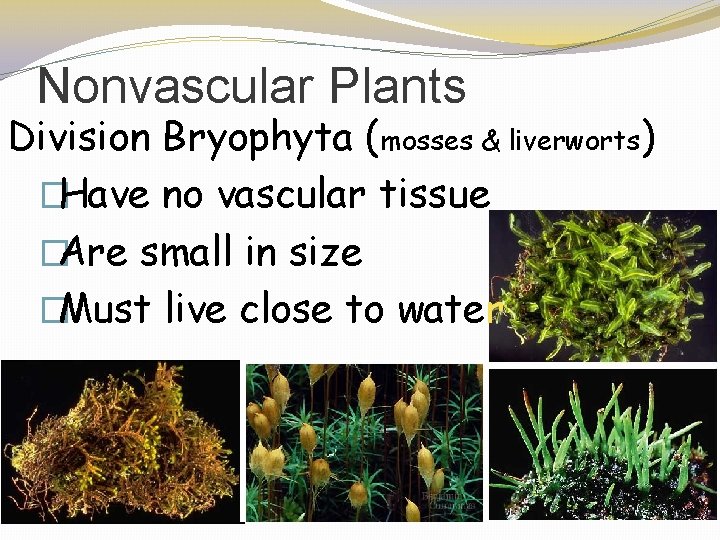
Nonvascular Plants Division Bryophyta (mosses & liverworts) �Have no vascular tissue �Are small in size �Must live close to water
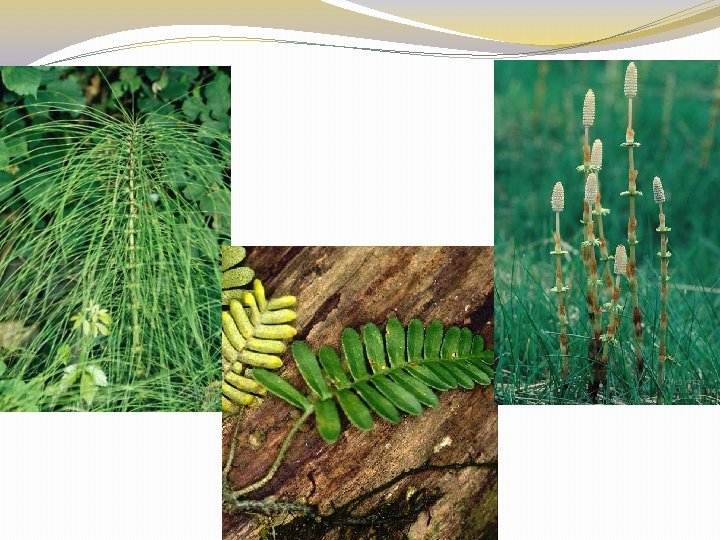
Seedless Vascular Plants (club mosses, horsetails, ferns) �Contain vascular tissue for transport: a) Xylem = dead cells that transport water up from roots b) Phloem = living cells that transport sugar �Have roots and stems
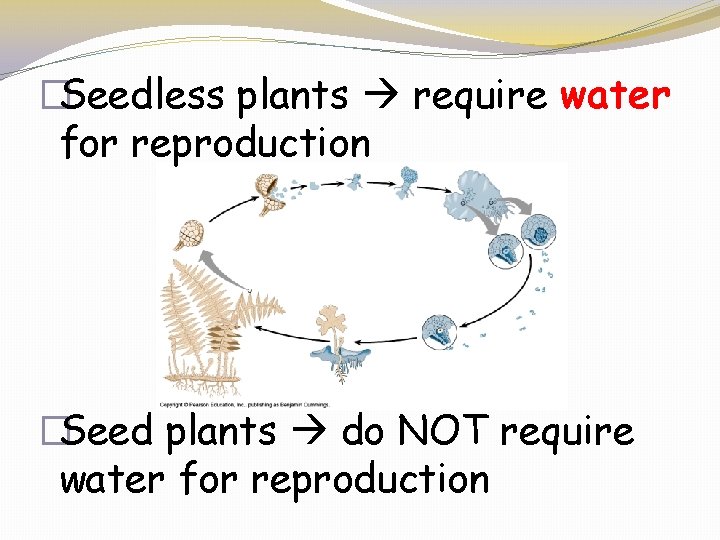
�Seedless plants require water for reproduction �Seed plants do NOT require water for reproduction
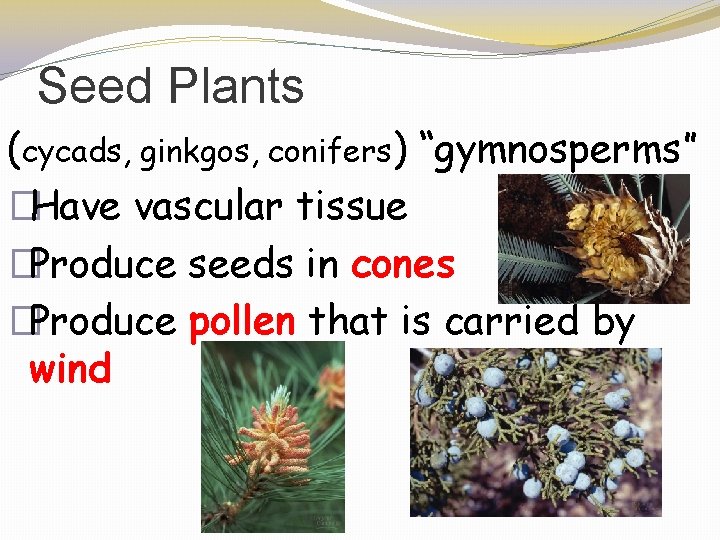
Seed Plants (cycads, ginkgos, conifers) “gymnosperms” �Have vascular tissue �Produce seeds in cones �Produce pollen that is carried by wind
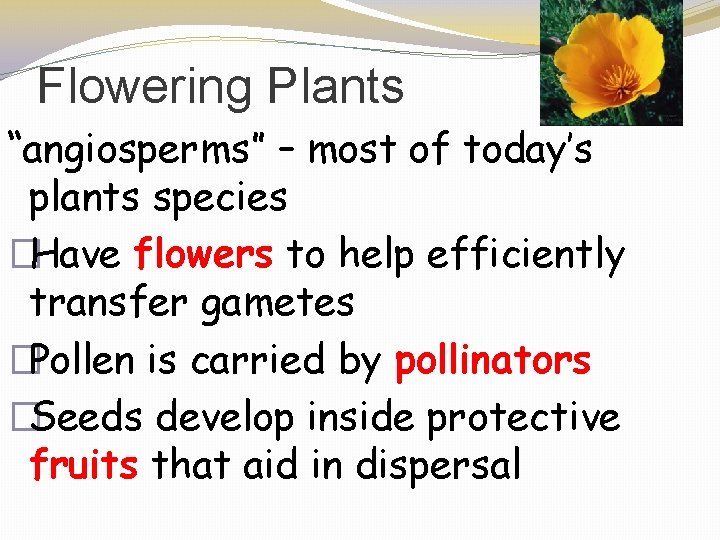
Flowering Plants “angiosperms” – most of today’s plants species �Have flowers to help efficiently transfer gametes �Pollen is carried by pollinators �Seeds develop inside protective fruits that aid in dispersal
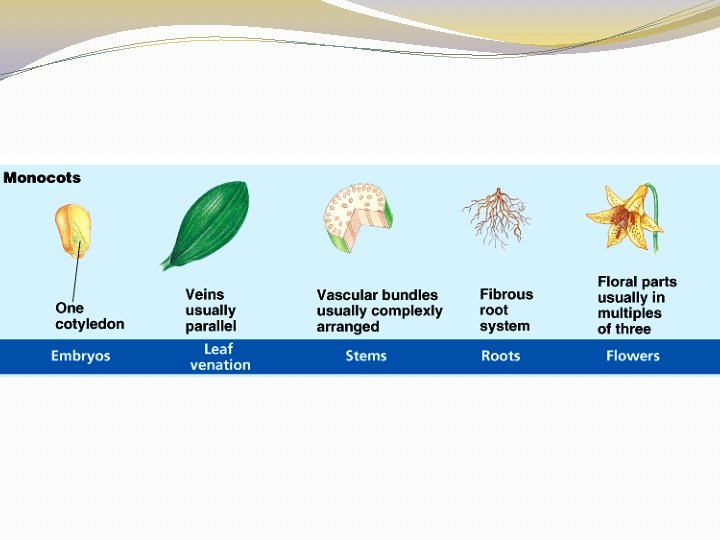
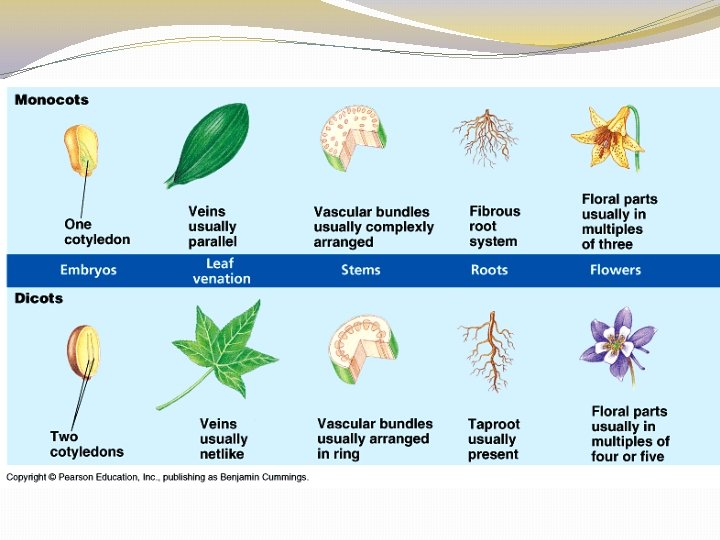
Monocotyledons “monocots” Corn, grasses, grains, tulips, daffodils �Have one cotyledon �Have parallel leaf veins �Have fibrous root systems �Have floral parts in multiples of 3 �Vascular bundles are scattered throughout stem
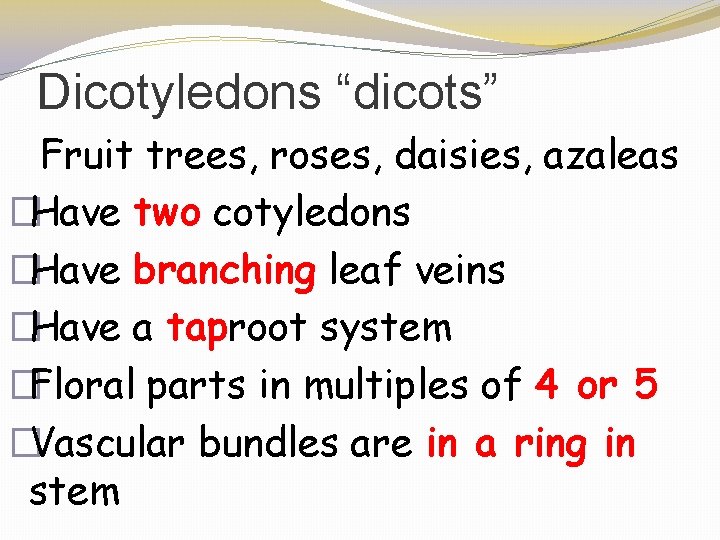
Dicotyledons “dicots” Fruit trees, roses, daisies, azaleas �Have two cotyledons �Have branching leaf veins �Have a taproot system �Floral parts in multiples of 4 or 5 �Vascular bundles are in a ring in stem
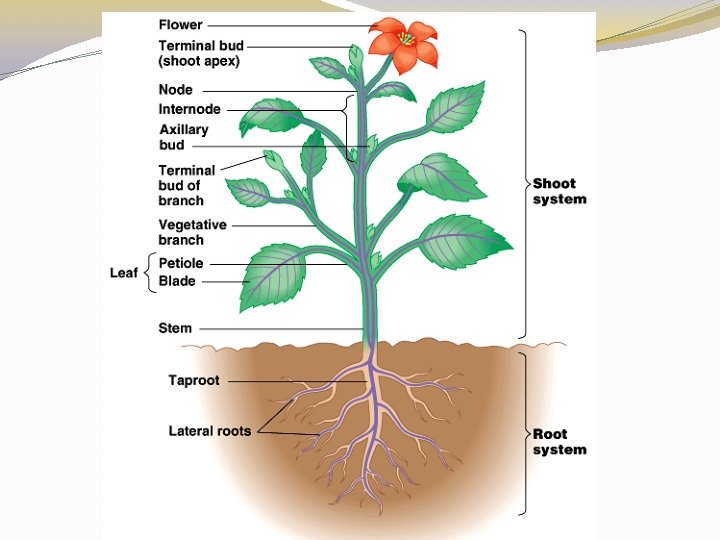
Plant Anatomy
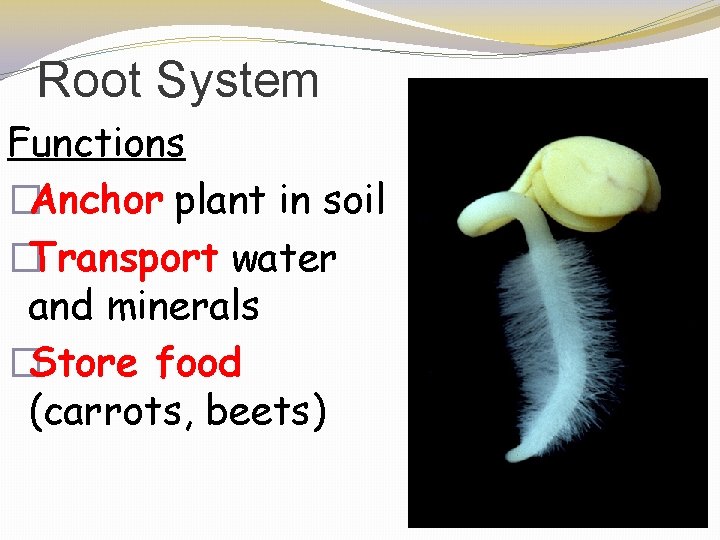
Root System Functions �Anchor plant in soil �Transport water and minerals �Store food (carrots, beets)
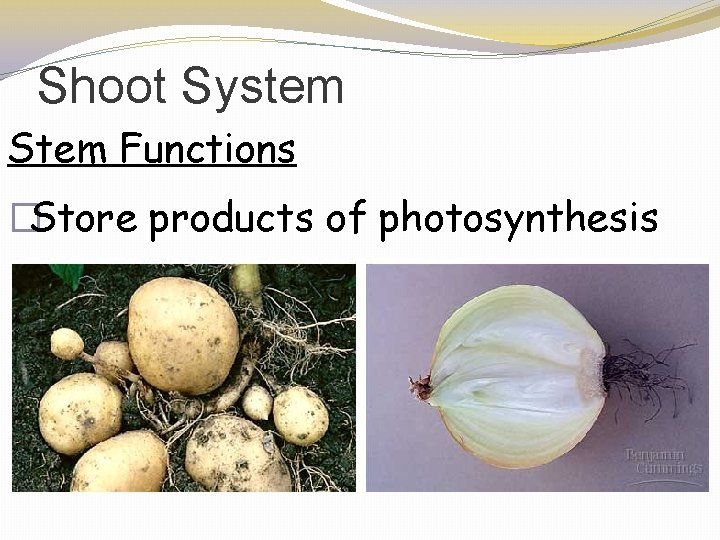
Shoot System Stem Functions �Store products of photosynthesis
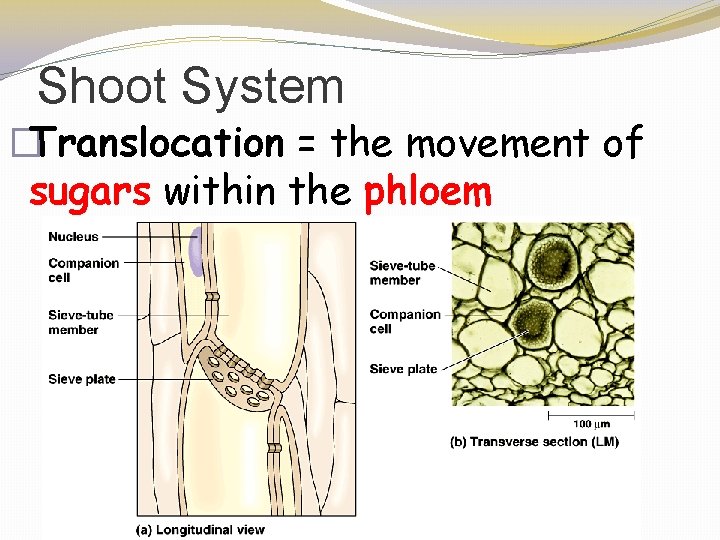
Shoot System �Translocation = the movement of sugars within the phloem
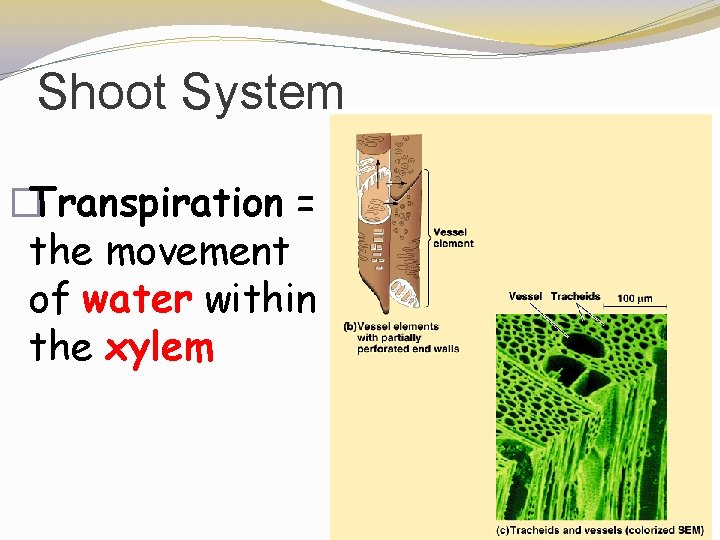
Shoot System �Transpiration = the movement of water within the xylem
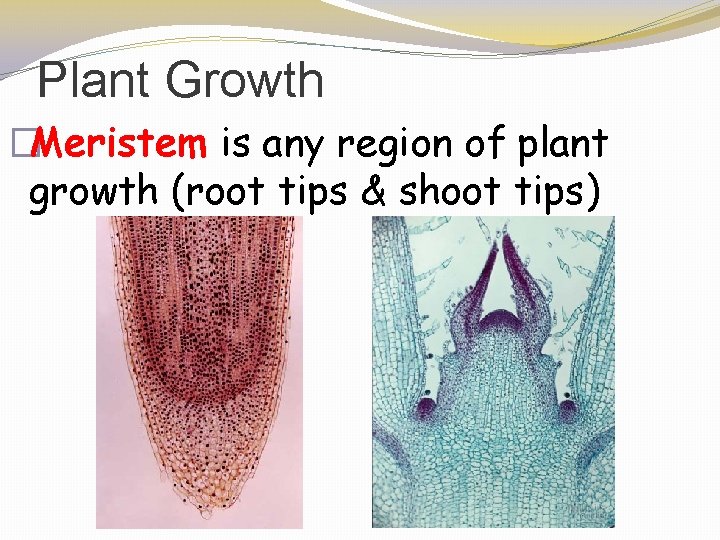
Plant Growth �Meristem is any region of plant growth (root tips & shoot tips)
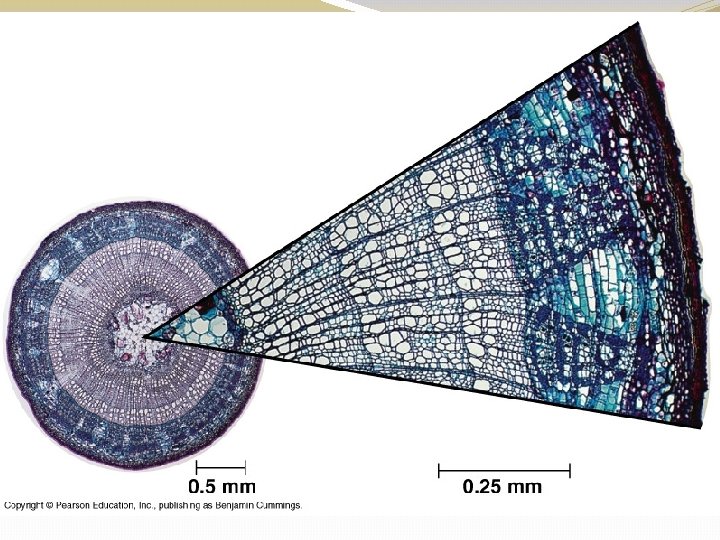
Plant Growth �Primary growth occurs when plants grow vertically (longer) �Secondary growth occrus when plants increase in girth (width)
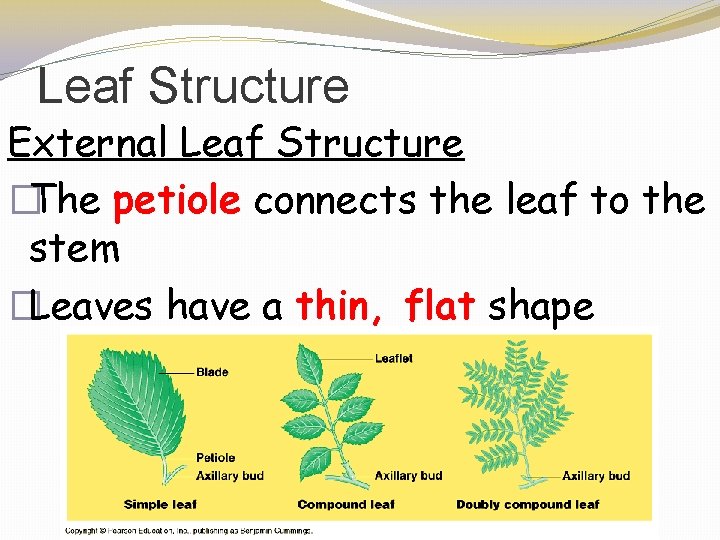
Leaf Structure External Leaf Structure �The petiole connects the leaf to the stem �Leaves have a thin, flat shape
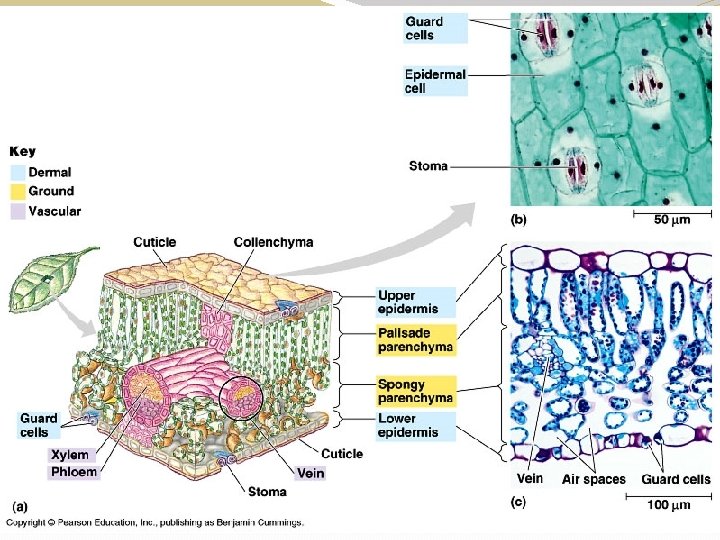
Leaf Structure Internal Leaf Structure �Cuticle – waxy, waterproof layer �Epidermis – outermost layer of cells �Stomata – openings in the leaf �Guard cells – surround stomata; let gases into and out of leaf
Leaf Structure �Palisade mesophyll – column-shaped cells where most photosynthesis occurs �Spongy mesophyll – cells surrounded by air spaces �Vein – tranports water into leaf
Plant Reproduction
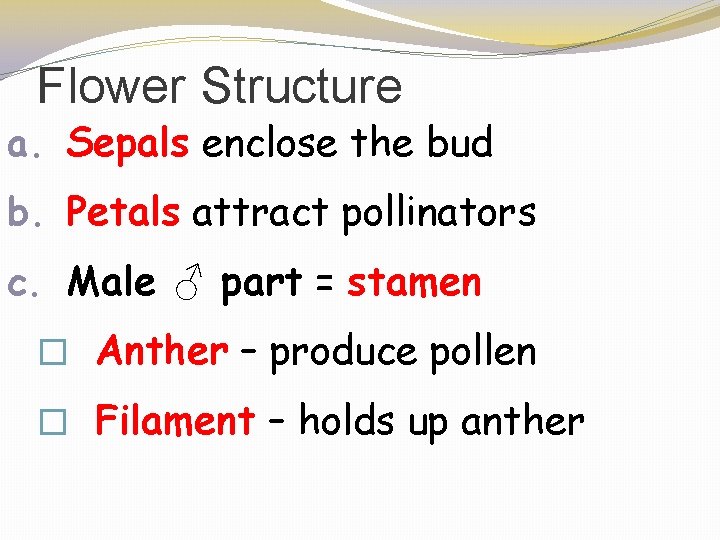
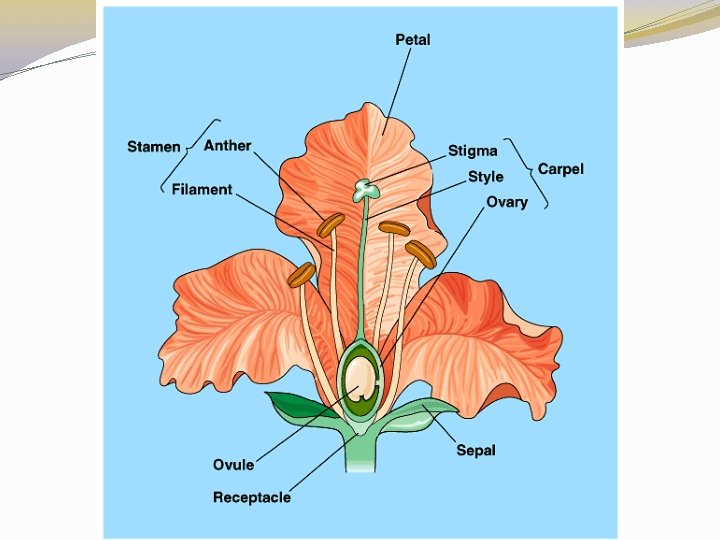
Flower Structure a. Sepals enclose the bud b. Petals attract pollinators c. Male ♂ part = stamen � Anther – produce pollen � Filament – holds up anther
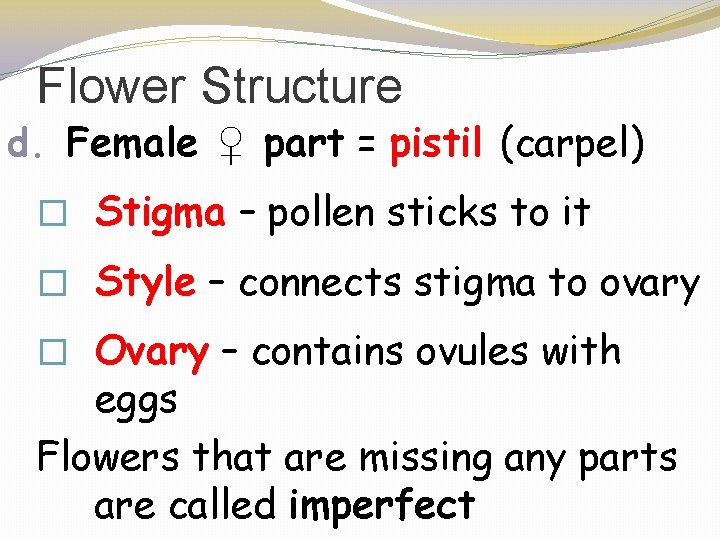
Flower Structure d. Female ♀ part = pistil (carpel) � Stigma – pollen sticks to it � Style – connects stigma to ovary � Ovary – contains ovules with eggs Flowers that are missing any parts are called imperfect
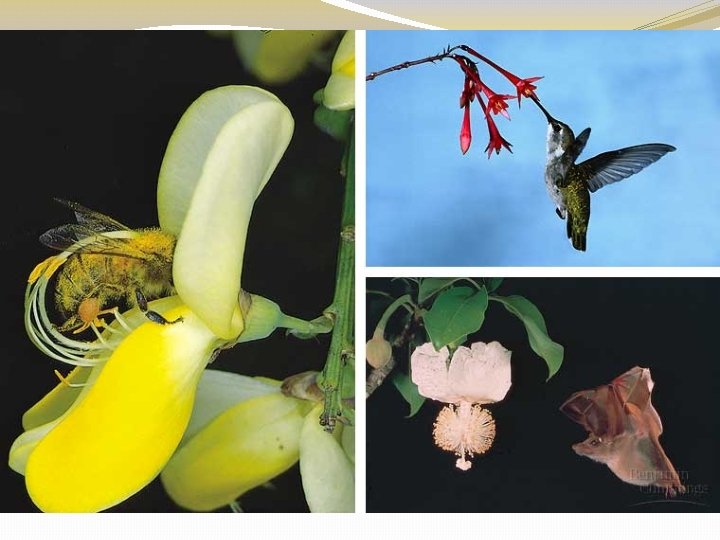
Pollination = the transfer of pollen from one flower to another Adaptations for pollination �Bright petal colors (attract bees & butterflies) �Fragrant odors (attract flies & beetles) �Nectar (provides food)
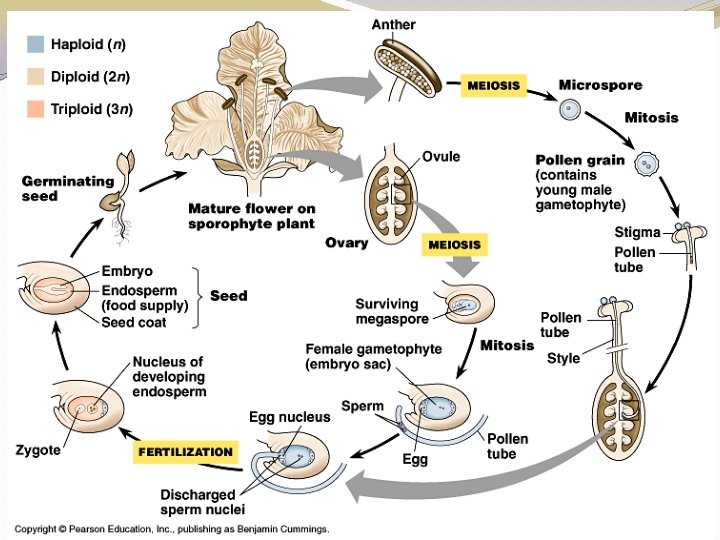
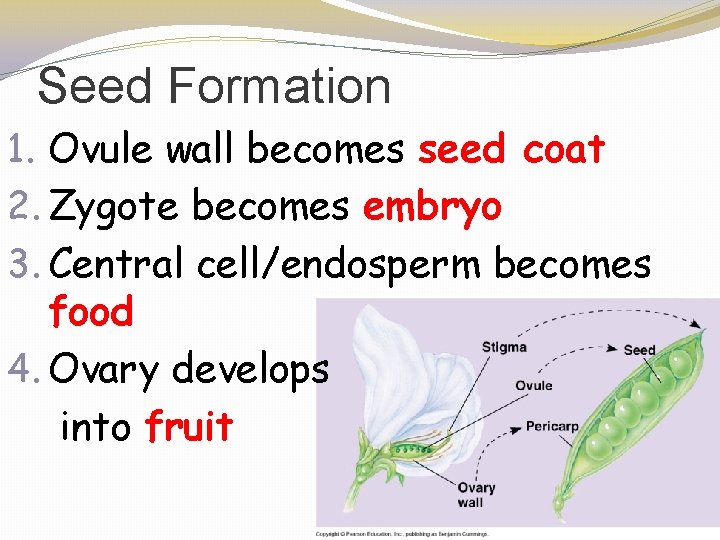
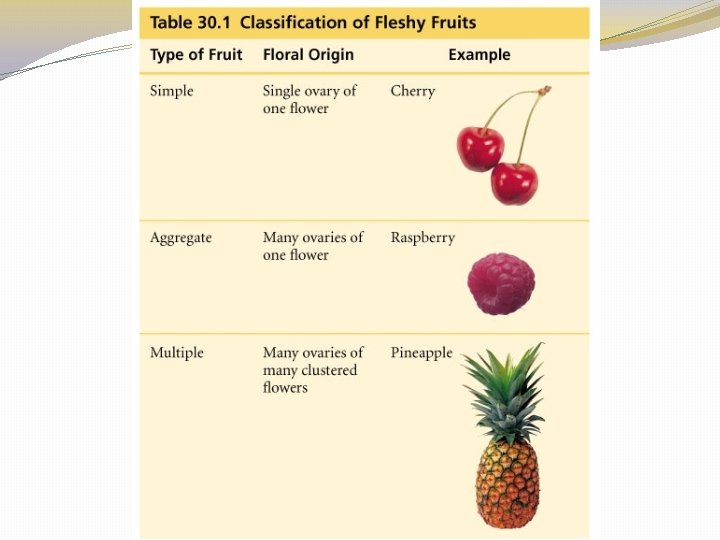
Seed Formation 1. Ovule wall becomes seed coat 2. Zygote becomes embryo 3. Central cell/endosperm becomes food 4. Ovary develops into fruit
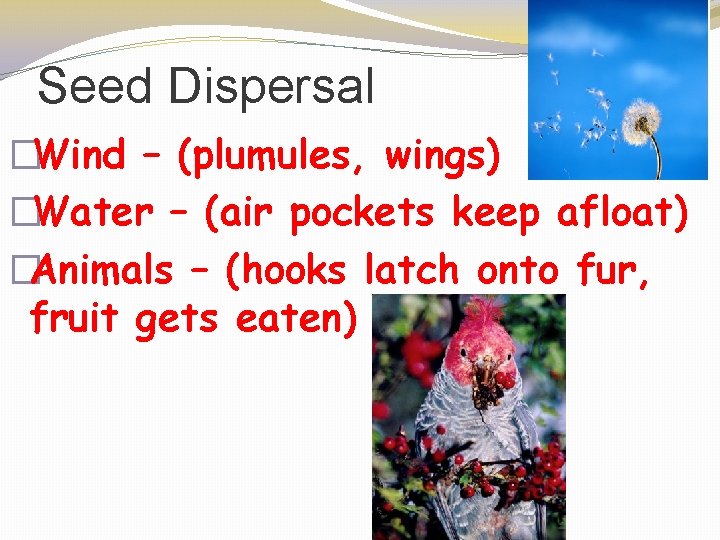
Seed Dispersal �Wind – (plumules, wings) �Water – (air pockets keep afloat) �Animals – (hooks latch onto fur, fruit gets eaten)
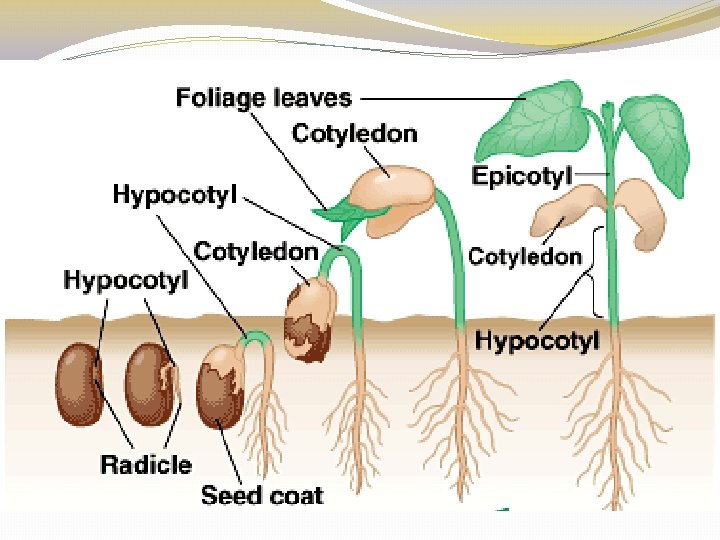
Seed Germination 1. All seeds have a period of inactivity called dormancy 2. Germination (seed sprouting) occurs when dormancy is broken � Requires water, oxygen, and proper temperature � Some species require other conditions: frost, fire
Plant Tropisms are growth responses to external stimuli 1. phototropism – response to light 2. thigmotropism – response to touch 3. hydrotropism – response to water 4. gravitropism – response to gravity
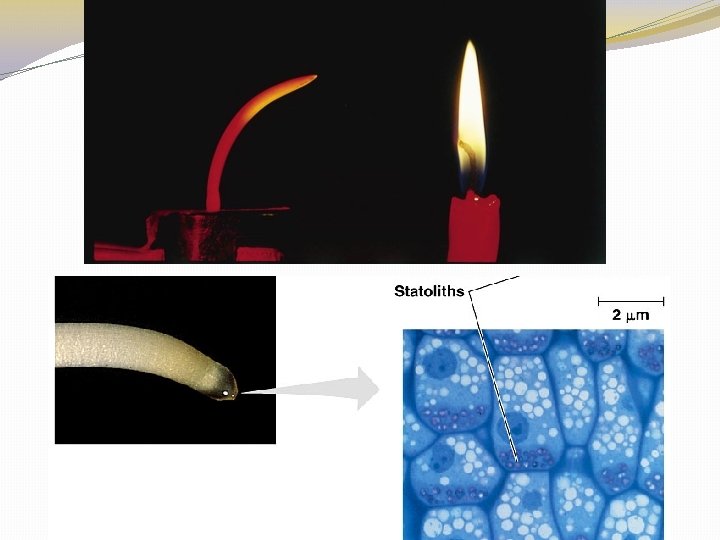
Plant Tropisms �A negative tropism occurs when the plant grows AWAY from a stimulus �A positive tropism occurs when the plant grows TOWARDS a stimulus �the plant hormone involved with most tropisms is auxin
- Slides: 46