
What is a physical change and how can


- Slides: 14
What is a physical change and how can we identify them? Worksheet Science Miss Couves 1
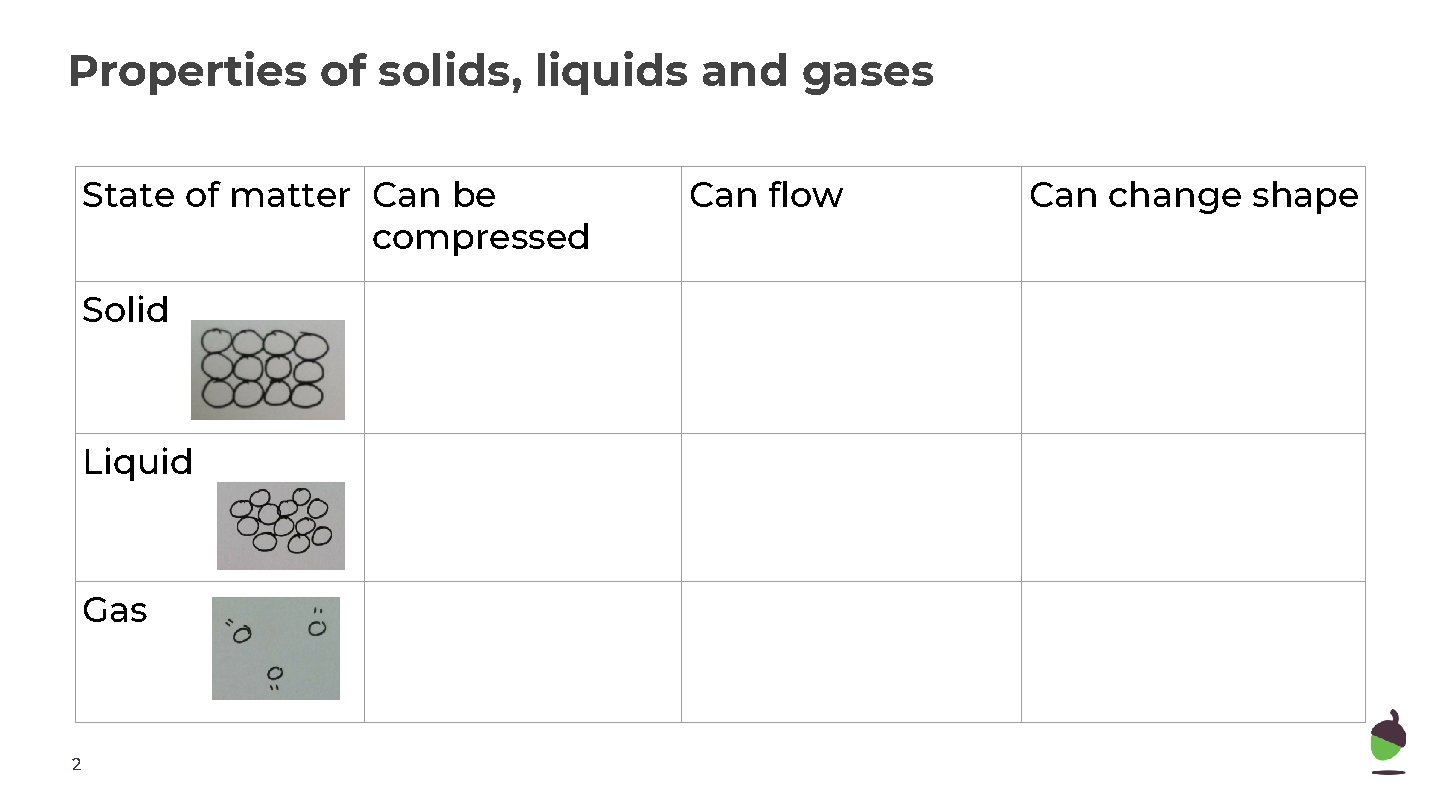
Properties of solids, liquids and gases State of matter Can be compressed Solid Liquid Gas 2 Can flow Can change shape
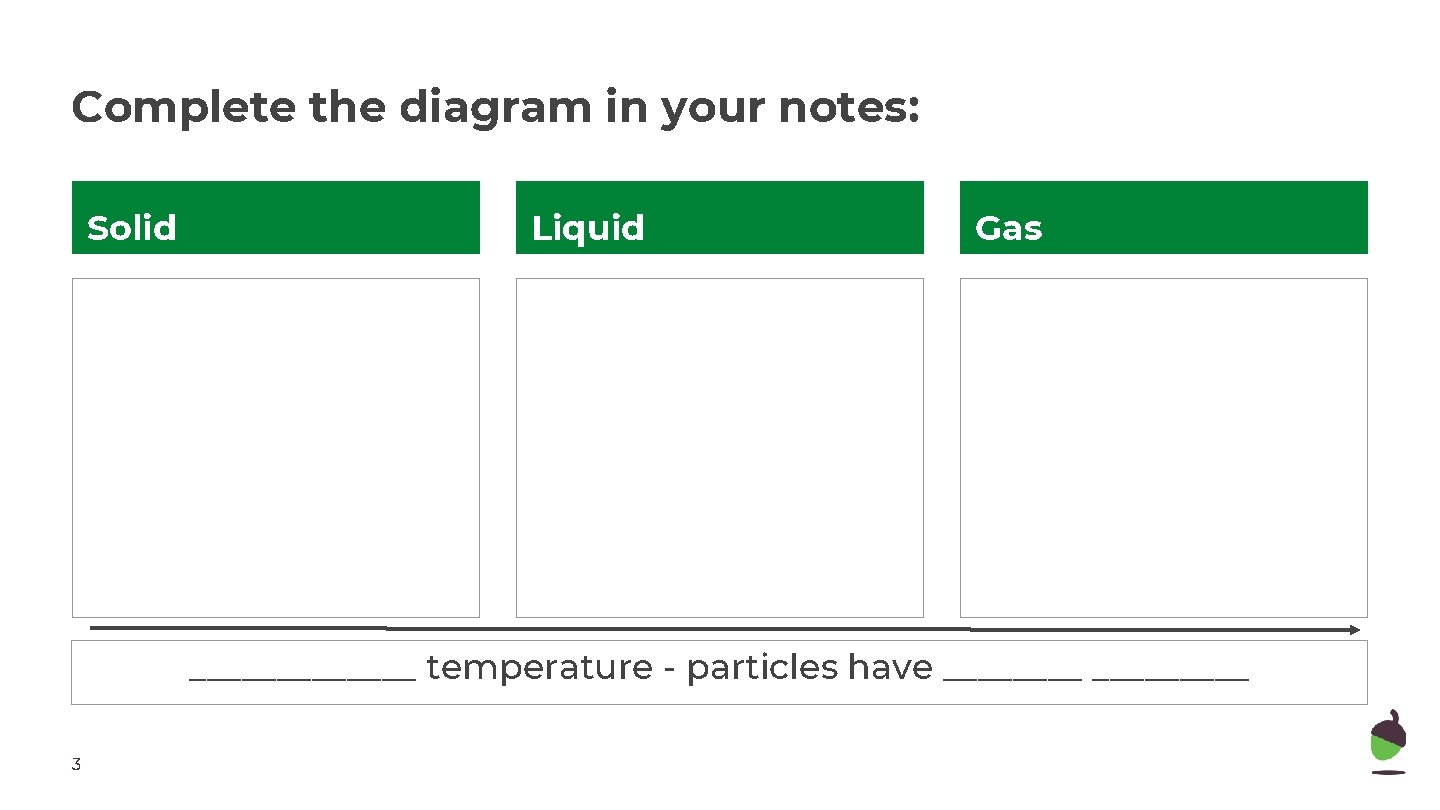
Complete the diagram in your notes: Solid Liquid Gas _______ temperature - particles have _________ 3
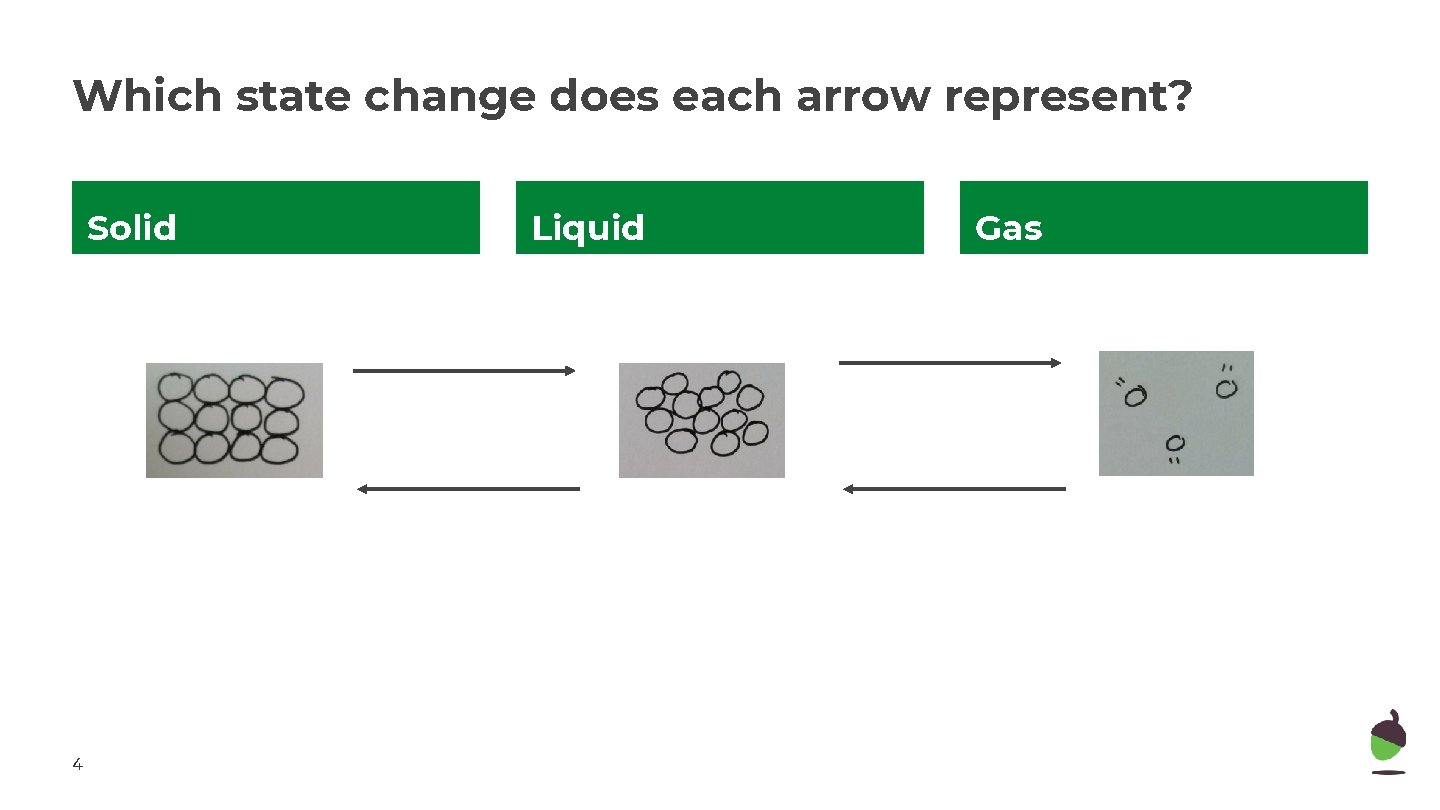
Which state change does each arrow represent? Solid 4 Liquid Gas
What is a physical change? 5
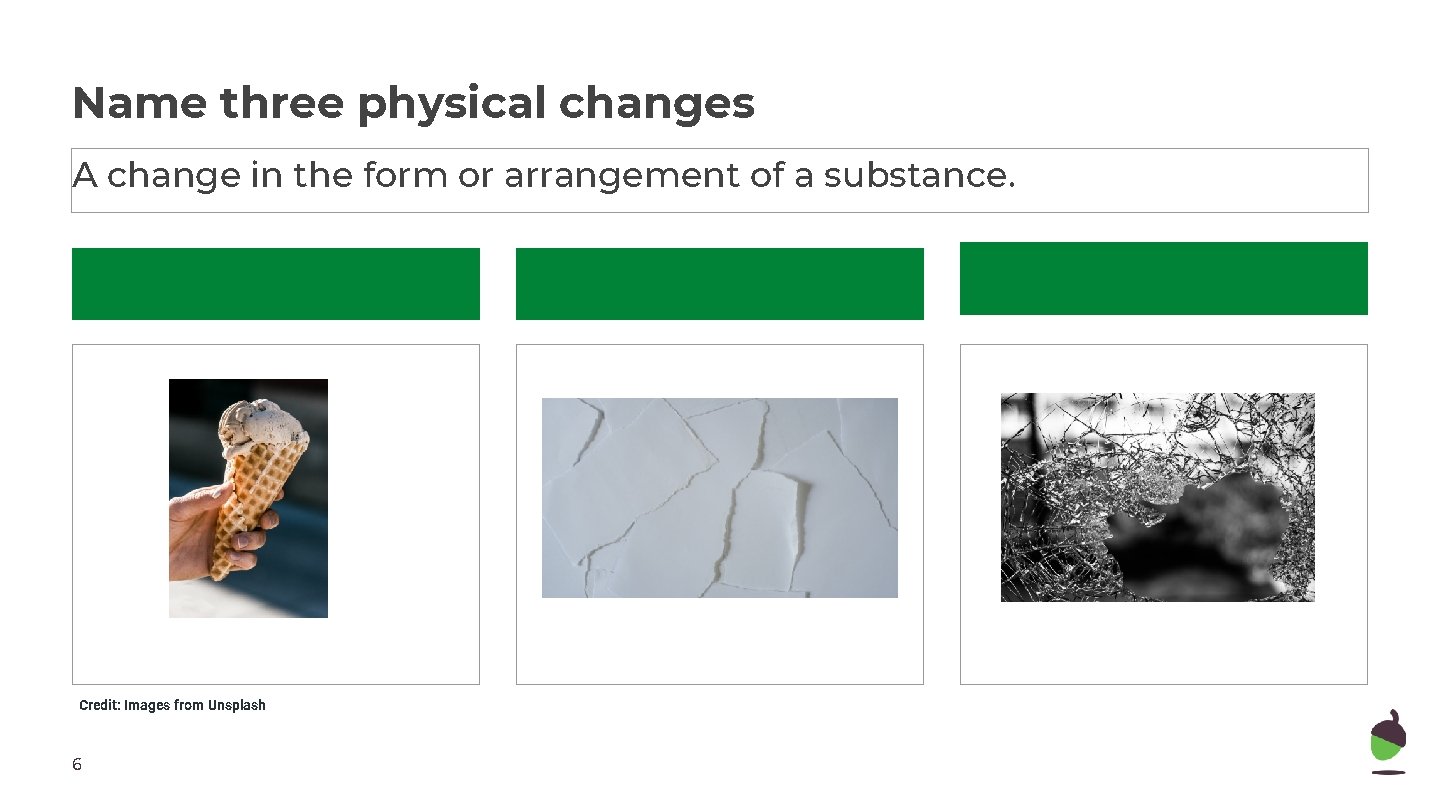
Name three physical changes A change in the form or arrangement of a substance. Credit: Images from Unsplash 6
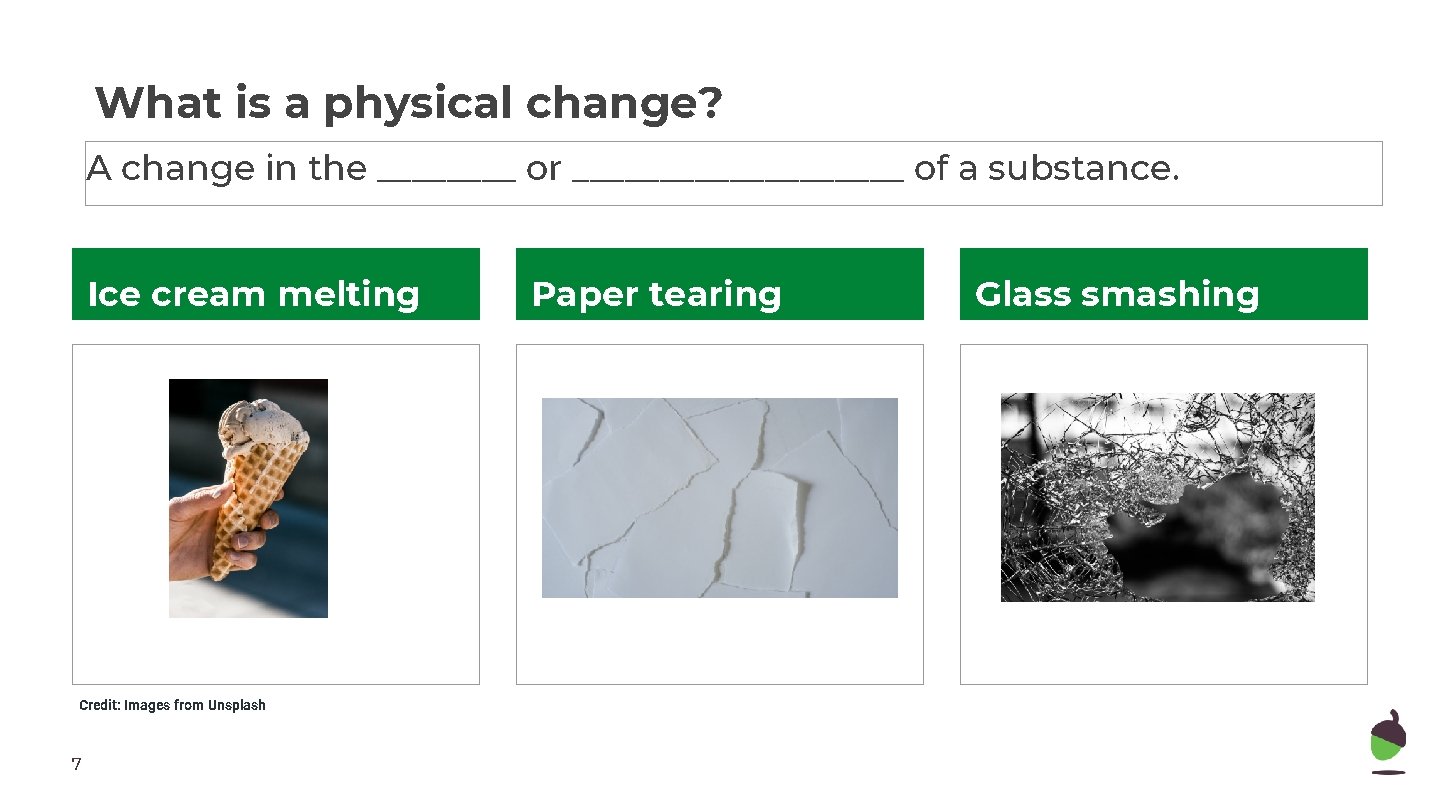
What is a physical change? A change in the ____ or __________ of a substance. Ice cream melting Credit: Images from Unsplash 7 Paper tearing Glass smashing
Is this a physical change? Water boiling in a saucepan. ● What particles are present at the start? ● What particles are present at the end? ● Has the arrangement of the particles changed? 8
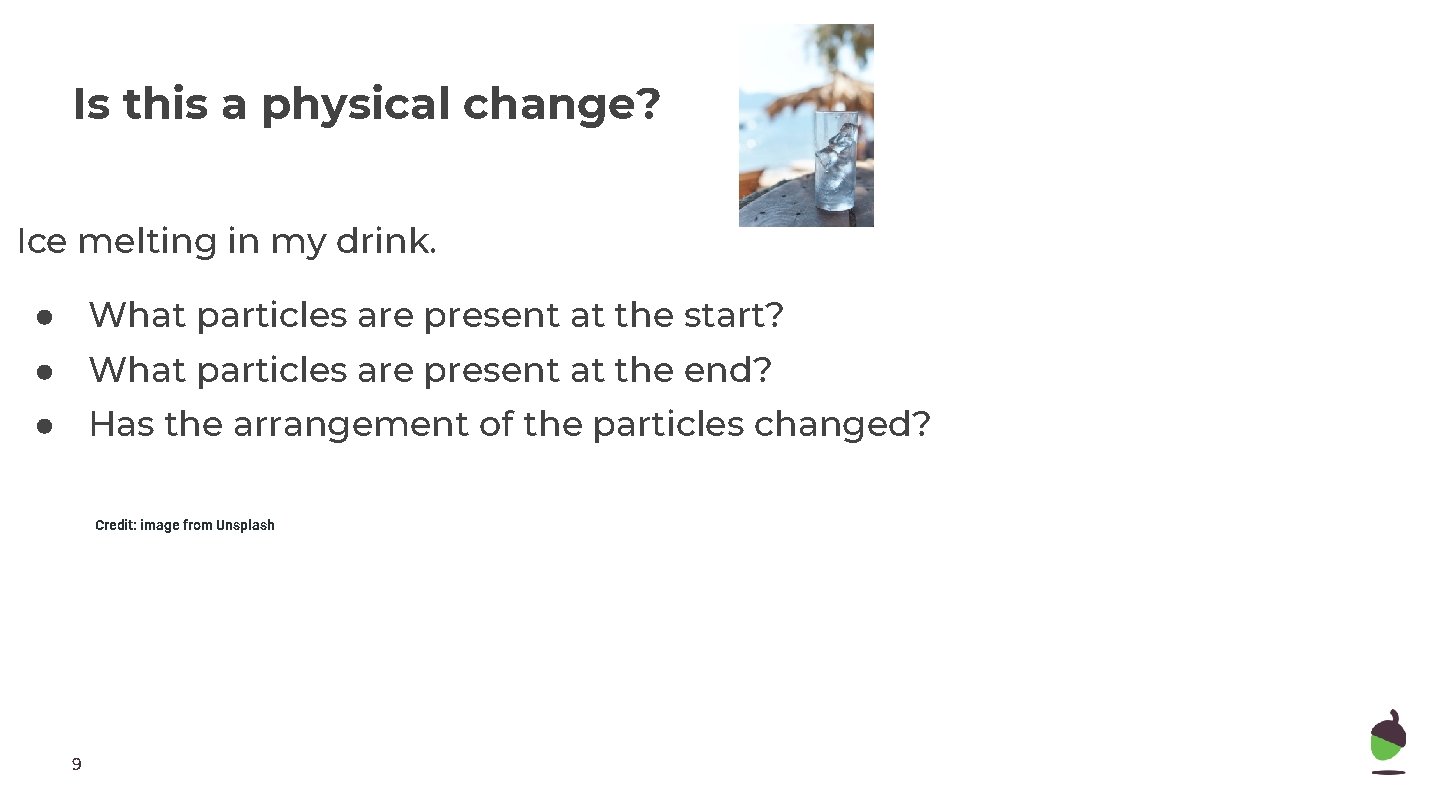
Is this a physical change? Ice melting in my drink. ● What particles are present at the start? ● What particles are present at the end? ● Has the arrangement of the particles changed? Credit: image from Unsplash 9
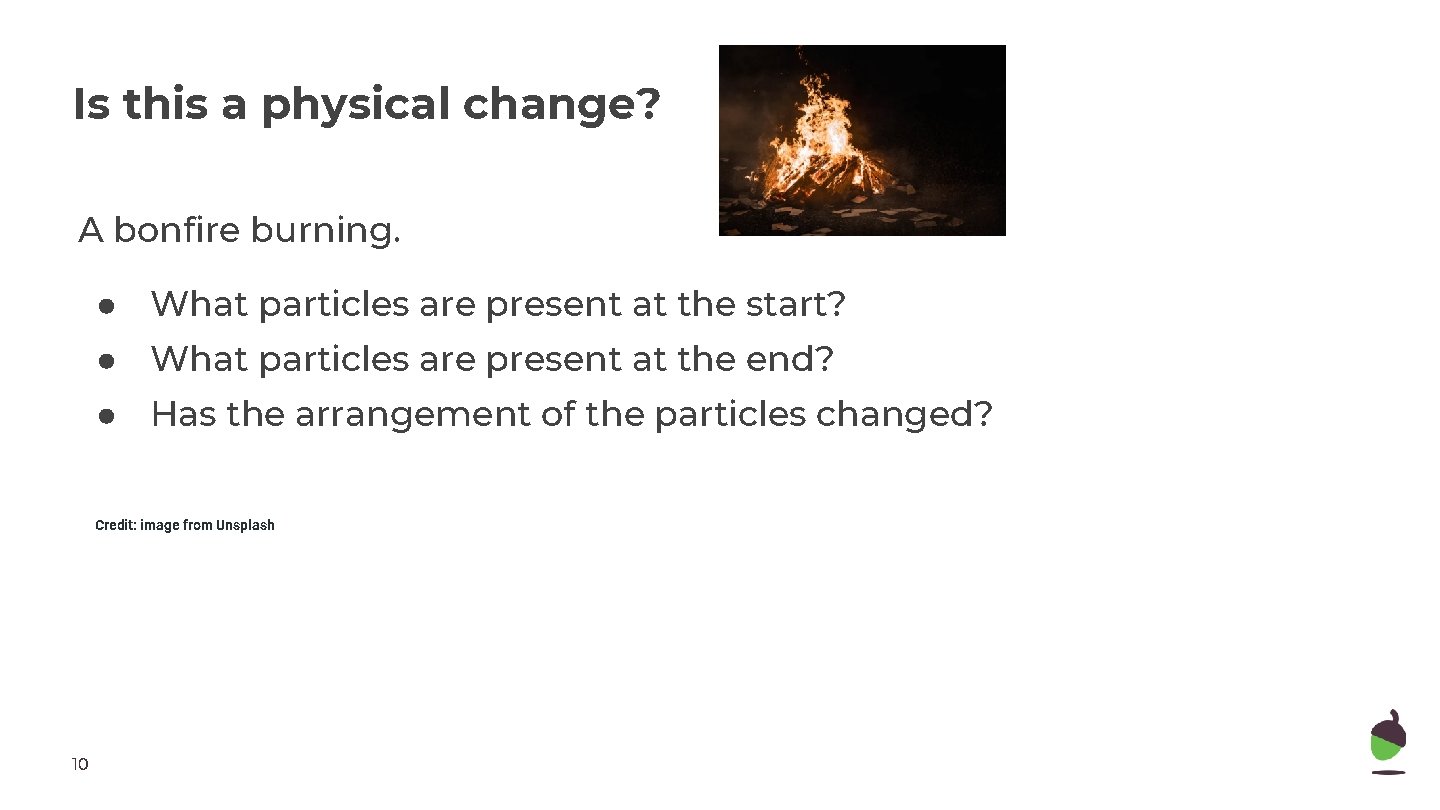
Is this a physical change? A bonfire burning. ● What particles are present at the start? ● What particles are present at the end? ● Has the arrangement of the particles changed? Credit: image from Unsplash 10
Is this a physical change? Salt dissolving in water. ● What particles are present at the start? ● What particles are present at the end? ● Has the arrangement of the particles changed? 11
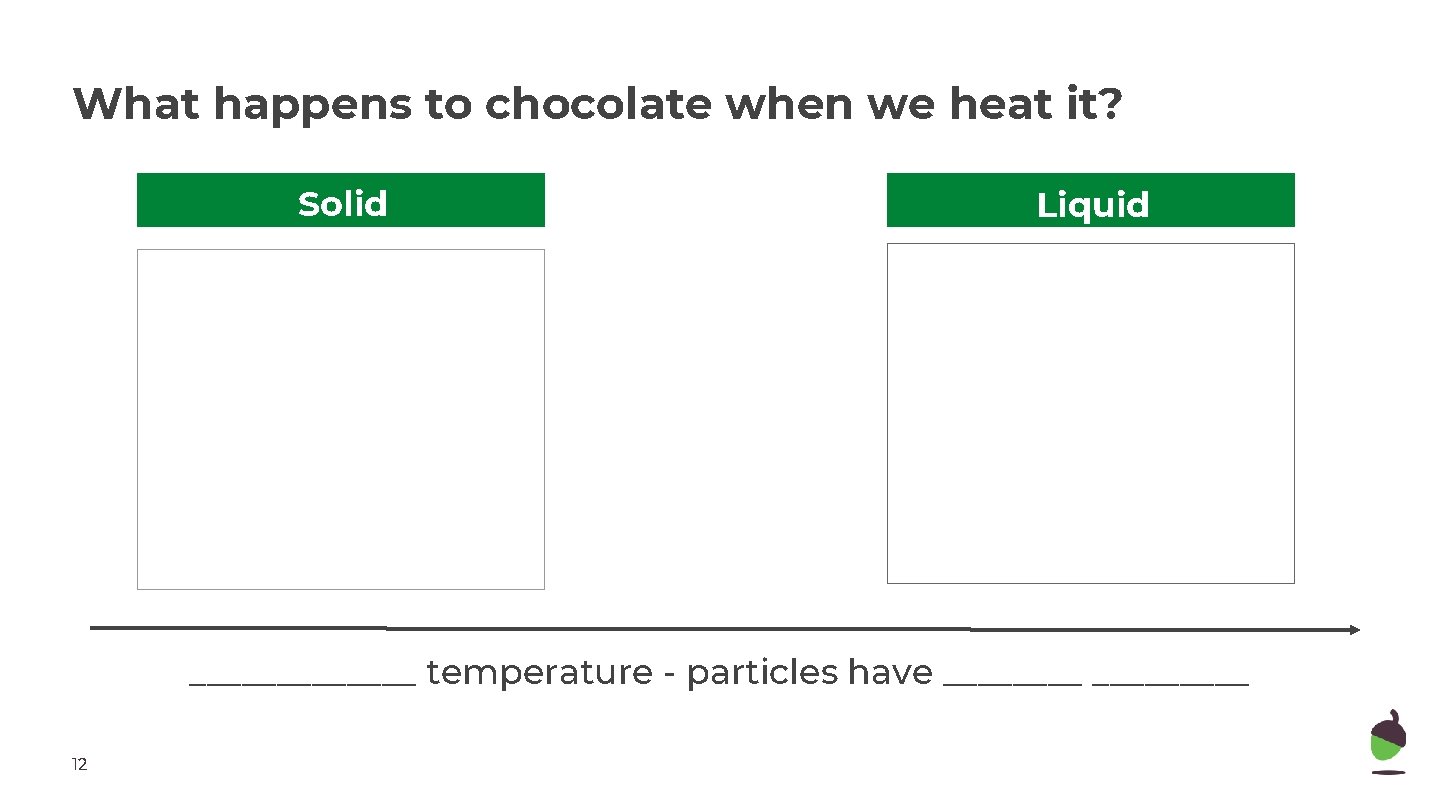
What happens to chocolate when we heat it? Solid Liquid _______ temperature - particles have _________ 12
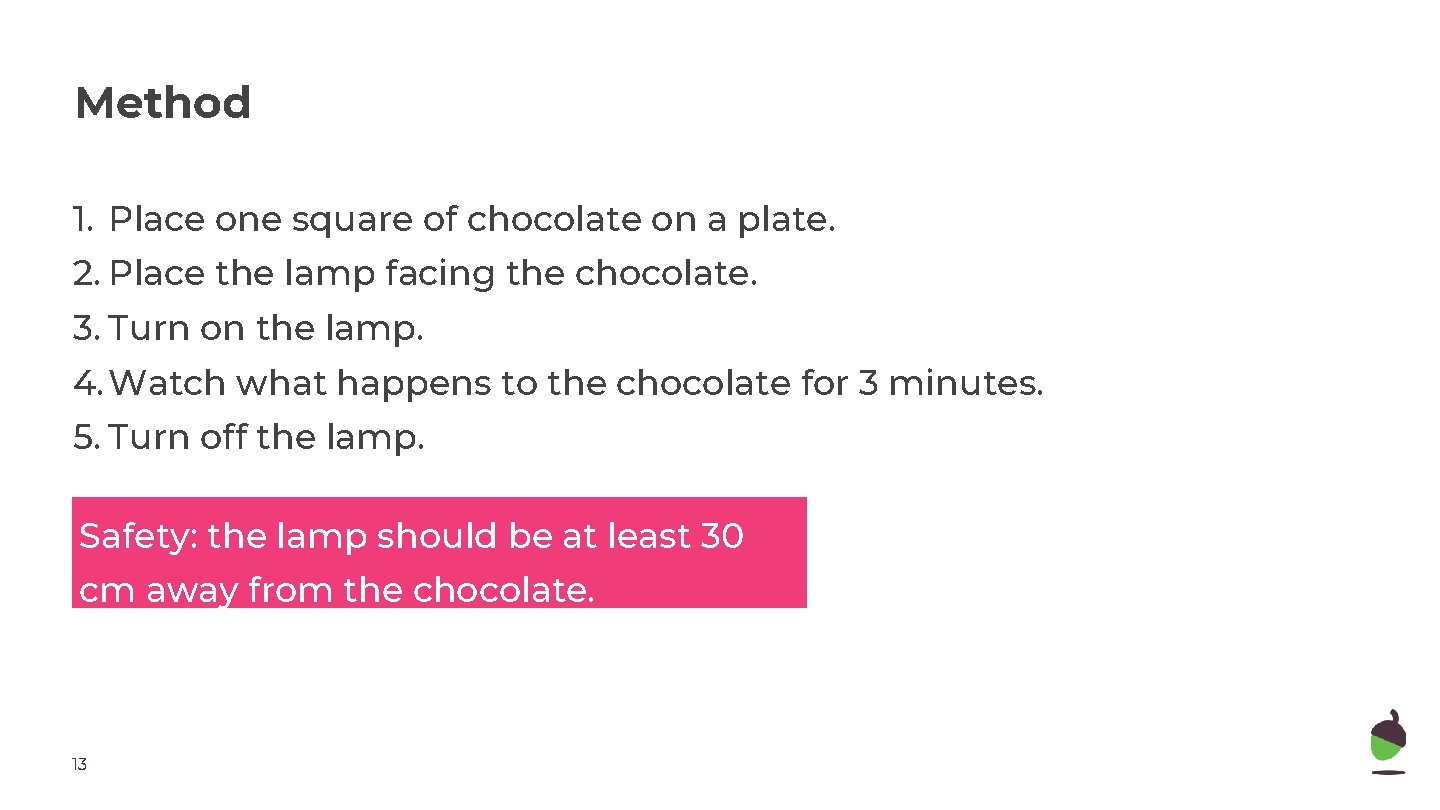
Method 1. Place one square of chocolate on a plate. 2. Place the lamp facing the chocolate. 3. Turn on the lamp. 4. Watch what happens to the chocolate for 3 minutes. 5. Turn off the lamp. Safety: the lamp should be at least 30 cm away from the chocolate. 13
Conclusion questions 1. What happened to the chocolate when you placed it under the lamp? 2. What happened to the energy of the particles during this process? 3. Draw a particle diagram to represent the particles at the end of the investigation. 4. Is this a physical change? 5. How do you know? 14